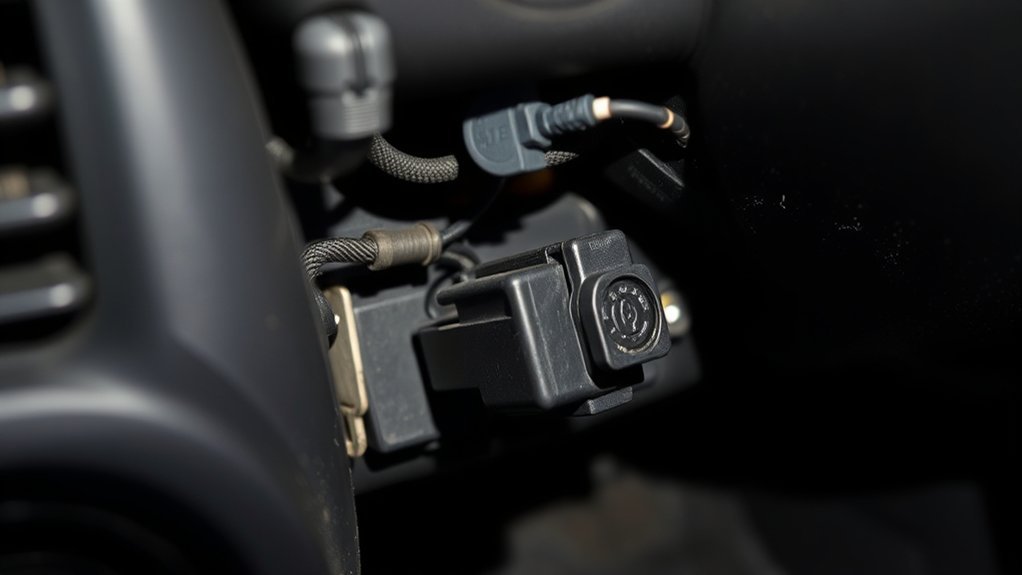
A Toyota Camry blend door actuator has no scheduled replacement interval. Replace it only after diagnosis confirms that the air-mix actuator, its position feedback, or the door it drives is faulty. Common clues include repeated clicking behind the dashboard, a temperature setting that does not change, or different temperatures from the left and right vents on a dual-zone system. Before buying a part, confirm that the complaint is not caused by the mode door, recirculation door, coolant flow, refrigerant system, wiring, or another HVAC fault.
Last updated: September 19, 2026.
Quick Answer
Toyota does not publish a fixed replacement interval for a Camry blend door actuator. It may last the life of the vehicle or fail earlier. Replace it only after confirming the fault. Common signs include clicking behind the dashboard, a temperature setting that does not change, or different temperatures from the left and right vents.
Key Takeaways
- There is no universal mileage or age at which a Camry blend door actuator must be replaced.
- Clicking, a stuck temperature, or left-to-right temperature differences can point to an actuator problem, but they are not proof by themselves.
- Camry model year, trim, single-zone or dual-zone climate control, and actuator position all affect part fitment and repair access.
- A clogged cabin filter, low refrigerant, low engine coolant, a heater-core problem, wiring damage, or a binding HVAC door can create similar symptoms.
- Use a VIN-specific Toyota parts lookup and the correct Toyota repair procedure before removing dashboard trim or installing an actuator.
Understanding the Role of the Blend Door Actuator in Your Camry
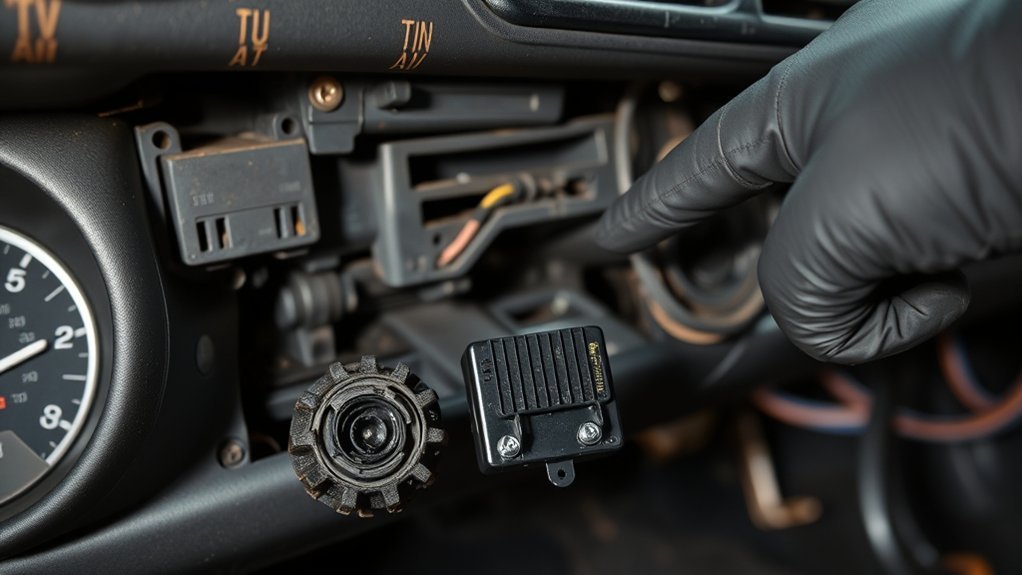
The blend door actuator, often called an air-mix damper servo in Toyota service information, moves a door inside the HVAC case. That door changes how much air passes through or around the heater core, allowing the system to deliver warmer or cooler air.
A Camry may have several HVAC actuators. The exact number and location depend on the model year and climate-control system. A dual-zone system can use separate left and right air-mix controls, while other actuators may control vent mode or outside-air recirculation. For that reason, a clicking actuator near the glove box is not automatically the temperature blend actuator.
Blend Door vs. Mode Door vs. Recirculation Door
| HVAC Door | What It Controls | Typical Failure Clue |
|---|---|---|
| Blend or air-mix door | Outlet temperature | Air stays hot or cold, or one zone differs from the other |
| Mode door | Dash, floor, and defrost outlet selection | Air comes from the wrong vents |
| Recirculation door | Fresh outside air or recirculated cabin air | Recirculation does not change or noise occurs near the intake door |
Toyota Camry Blend Door Actuator Lifespan: How Long Does It Last?
There is no scheduled replacement interval for a Toyota Camry blend door actuator. Unlike engine oil, filters, or brake fluid, the actuator is normally replaced only after diagnosis confirms a failure. Some units continue working for the life of the vehicle, while others fail earlier because of worn internal gears, an electrical fault, a damaged position sensor, a binding door, water intrusion, or previous dashboard work.
A claim that every actuator lasts five to ten years is too specific to use as a rule. Vehicle age can increase the chance of wear, but mileage alone does not predict failure well because the actuator moves according to climate-control use, system design, and the condition of the door it drives.
Treat a blend door actuator as an on-condition part: diagnose it when symptoms appear, not when the odometer reaches a preset number.
Common Symptoms of a Failing Blend Door Actuator
A failing actuator often creates a repeatable temperature or noise complaint. The strongest clues are changes that occur when you command the system from full cold to full hot or adjust one climate zone at a time.
Temperature Regulation Issues
- The air remains hot after you select a cold setting.
- The air remains cold after the engine is warm and you select heat.
- The driver’s side and passenger’s side deliver different temperatures in a dual-zone system.
- The temperature changes only at one end of the control range.
- The temperature changes by itself or responds intermittently.
These symptoms can also come from low engine coolant, a restricted heater core, low refrigerant, a faulty temperature sensor, a control-head problem, or a damaged HVAC door. Diagnosis should separate those causes before the actuator is replaced.
Unusual Noises While Operating
Repeated clicking, tapping, or knocking behind the dashboard while changing the temperature can indicate stripped actuator gears or a door that is binding. A single soft movement sound can be normal. Continuous cycling, loud clicking, or a noise that repeats each time the ignition is switched on deserves inspection.
| Noise or Behavior | Possible Cause |
|---|---|
| Fast repeated clicking | Worn actuator gears, lost position feedback, or a jammed door |
| No sound and no temperature change | Failed motor, open circuit, poor connector contact, control fault, or seized door |
| Actuator moves but temperature does not change | Broken or disconnected door shaft, internal HVAC-case damage, or a separate heating or cooling fault |
| Air comes from the wrong vent | Mode-door actuator problem rather than the blend-door actuator |
What Impacts the Lifespan of Your Blend Door Actuator?
The actuator’s internal motor, reduction gears, electrical contacts, and position-feedback components wear with use. A door that is stiff, obstructed, or damaged can increase load on the actuator. Water intrusion or connector corrosion can also create electrical problems.
Frequent temperature changes may increase the number of actuator cycles, but there is no Toyota service interval based on climate-control use. Extreme weather can make an HVAC complaint more noticeable because the system is asked to move from one end of its range to the other, but temperature alone does not prove why an actuator failed.
What Maintenance Can and Cannot Do
A blend door actuator does not have a lubrication or adjustment service listed for owners. Replacing the cabin air filter as specified for your model supports normal airflow and cabin air quality, but it does not repair worn actuator gears. Likewise, a refrigerant leak can cause poor cooling, but it does not prove that the blend door actuator is faulty.
Use your exact Camry year and model in the Toyota Manuals and Warranties portal to check the correct cabin-filter and maintenance guidance.
Diagnosing Blend Door Actuator Issues
At a Glance
| Time Required | Basic functional checks do not require dashboard disassembly. Diagnostic and replacement time varies by generation, actuator position, and access. |
| Difficulty | Basic diagnosis is moderate. Replacement can be advanced when dashboard, console, SRS-adjacent, or hard-to-reach components must be removed. |
| Tools Needed | Flashlight, trim tool, screwdrivers, small socket set, thermometer, and ideally a scan tool that can access Toyota HVAC or body control data. |
| Cost | RepairPal’s Camry-wide estimate, updated August 7, 2026, is $827–$1,111 before taxes, fees, location adjustments, and related repairs. Model-year estimates can differ substantially. |
How Much Does Toyota Camry Blend Door Actuator Replacement Cost?
RepairPal’s Toyota Camry estimate, updated August 7, 2026, places blend door actuator replacement at $827–$1,111 before taxes, fees, location adjustments, and related repairs. Treat that as a budgeting reference rather than a quote because RepairPal’s year-specific Camry estimates vary substantially.
Labor can become the largest part of the bill when the failed actuator is difficult to reach or dashboard components must be removed. Before authorizing replacement, confirm the exact actuator by VIN and position and ask whether the quote includes diagnosis, trim or dashboard access, initialization, and any additional HVAC-door repair.
1. Confirm the Exact Symptom
Warm the engine if you are testing heat. Set the blower to a medium speed, then command full cold and full hot. In a dual-zone Camry, test each side separately. Note which vents change, how long the response takes, and whether a noise occurs.
2. Identify the HVAC System and Actuator
Confirm the model year, trim, and whether the car has manual, automatic, single-zone, or dual-zone climate control. Use the official Toyota parts catalog or a dealer parts department with the VIN. Do not order a part only because an online photo looks similar.
3. Listen and Watch for Movement
If the actuator is accessible, watch it while an assistant changes the temperature setting. An actuator that clicks without completing its travel, stops partway, or does not move may be faulty. If the actuator moves normally, the problem may be inside the HVAC case or elsewhere in the heating and cooling system.
4. Check Electrical and Scan Data
Inspect the connector for looseness, damaged terminals, corrosion, or pinched wiring. A capable scan tool may reveal HVAC diagnostic trouble codes, command the actuator, or display position data. Generic engine-code readers usually cannot access these body and climate-control functions.
5. Rule Out Other Heating and Cooling Faults
- Poor heat: Check engine coolant level only when the engine is cold, then consider thermostat, heater-core, coolant-flow, and temperature-sensor faults.
- Poor cooling: Consider refrigerant charge, compressor operation, condenser airflow, evaporator temperature, and sensor faults.
- Weak airflow: Inspect the cabin filter, blower operation, evaporator icing, and duct restrictions.
- Wrong vent outlet: Diagnose the mode-door system rather than assuming the blend door is responsible.
Pro Tip: Before removing an actuator, record a short video of the noise and the vent-temperature behavior. It helps you match the symptom after the repair and gives a technician useful evidence if the fault is intermittent.
Steps to Replace a Faulty Blend Door Actuator
Replacement access differs greatly across Camry generations and actuator positions. Some actuators sit near the glove box or lower dash, while others require more extensive trim or console removal. Use the model-specific procedure in Toyota’s Technical Information System, which provides repair manuals, wiring diagrams, and service information for North American Toyota vehicles.
Warning: Dashboard work can place you near airbag wiring and components. Disconnect and reconnect the 12-volt battery only as directed by the correct Toyota repair procedure. On a Camry Hybrid, do not touch orange high-voltage cables or components. Stop if the repair requires SRS, high-voltage, or refrigerant-system work beyond your training.
- Verify the part and location. Match the VIN, climate-control type, and actuator function. Confirm that you are replacing the air-mix actuator, not the mode or recirculation actuator.
- Prepare the vehicle. Park on a level surface, switch the ignition off, protect interior trim, and follow the model-specific battery and SRS precautions.
- Remove the required trim. Use a plastic trim tool and the correct fastener sequence to avoid broken clips, damaged panels, or hidden screws.
- Disconnect the actuator. Unplug the electrical connector, remove the mounting screws, and note the original actuator position.
- Check the door shaft. Inspect for cracks, looseness, or binding. Do not force the door through its range. A jammed or broken door can damage a new actuator.
- Install the replacement. Align the actuator output with the door shaft without using the mounting screws to pull misaligned parts together. Tighten the fasteners evenly and reconnect the plug.
- Reassemble and initialize. Refit the trim, reconnect the battery as directed, and perform any initialization or calibration required for that model. Do not rely on a universal fuse-pull or pedal sequence.
- Test every function. Check full hot, full cold, both zones, defrost, floor, dash vents, and recirculation. Confirm that the clicking is gone and no warning lights remain.
Why Regular HVAC Maintenance Matters
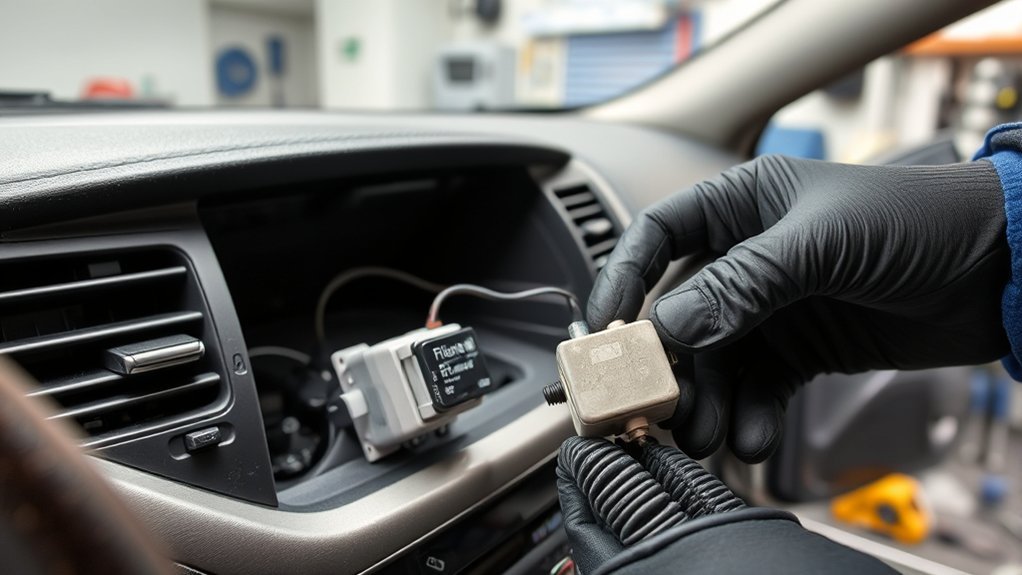
Routine HVAC care helps the overall system work as designed, but it cannot prevent every actuator failure. Replace the cabin air filter at the interval and under the conditions listed for your Camry. Keep the cowl intake and evaporator drain area clear, and address water leaks that could reach connectors or the HVAC case.
Do not treat repeated temperature sweeps as preventive maintenance. Moving the control from full cold to full hot will not repair worn gears or recalibrate every Toyota system. Use the controls normally and investigate new noises or temperature changes before a minor fault becomes a larger dashboard repair.
How to Extend the Lifespan of Your Blend Door Actuator
There is no guaranteed method to extend actuator life, but you can avoid preventable damage and catch related problems early.
- Use the climate controls normally rather than rapidly cycling them back and forth to test the system repeatedly.
- Replace, rather than wash, a disposable cabin air filter unless its manufacturer specifically states that it is reusable.
- Repair water leaks or blocked drains that allow moisture near dashboard wiring and connectors.
- Do not force an HVAC door or use the actuator screws to overcome misalignment.
- Diagnose clicking promptly because a binding door can overload a replacement actuator.
- Use the correct VIN-matched part and follow the specified initialization procedure.
Keep the Cabin Air Filter Service Up to Date
A clogged filter can reduce airflow and make the cabin slower to heat or cool. That can feel like a blend-door problem even when the actuator is working. Inspect or replace the filter according to the owner and maintenance information for your exact model, especially if you drive in dusty or high-pollen conditions.
Monitor Temperature Changes
Watch for a repeatable left-to-right difference, a setting that no longer changes, or clicking during startup. Early diagnosis can prevent unnecessary parts replacement and may reveal a loose connector or binding linkage before additional damage occurs.
What to Expect After Replacing the Blend Door Actuator
A successful repair should restore smooth and predictable temperature changes. Clicking should stop, and each zone should respond correctly. Initialization requirements vary by model year and HVAC system, so use the applicable Toyota repair procedure or scan-tool function rather than assuming one reset method applies to every Camry.
If the symptom remains, recheck part fitment, connector seating, actuator alignment, door movement, wiring, and HVAC control data. A replacement part will not solve a broken door shaft, damaged HVAC case, control-head fault, refrigerant problem, or low-coolant condition.
Note: Battery disconnection may erase clock, window, steering, or other learned settings on some model years. Follow the owner and repair manuals for any required reinitialization.
When Should You Call a Mechanic for Help?
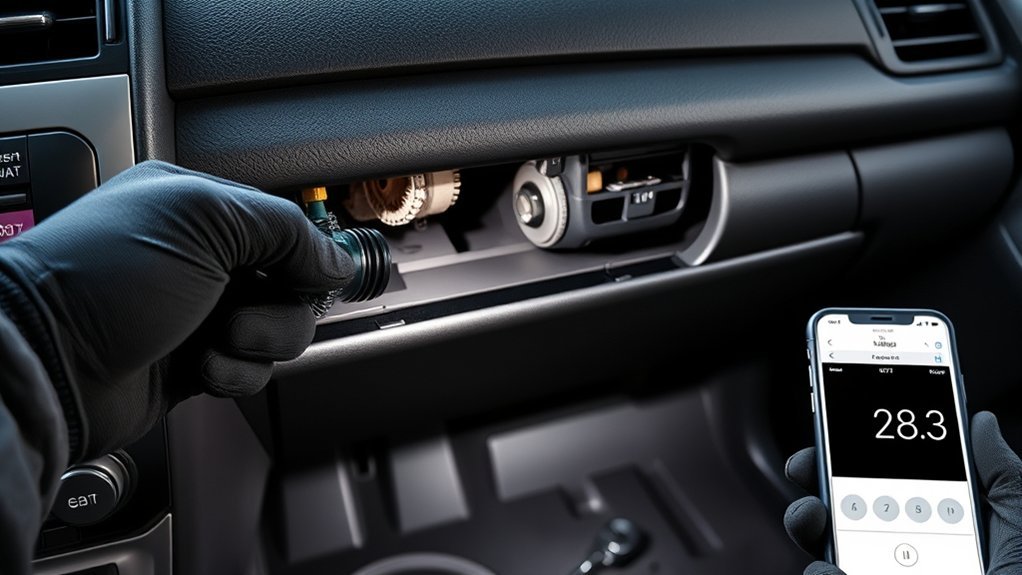
Professional diagnosis is a sensible choice when the actuator is difficult to reach, the dashboard must be removed, or scan-tool data is needed to separate an actuator fault from a wiring, sensor, control-module, or internal-door problem.
- Call a technician if windshield defrost airflow or temperature is unreliable and visibility could be affected.
- Get help if the repair area is close to airbag components or orange hybrid high-voltage wiring.
- In the United States, use a Section 609-certified technician for paid MVAC service involving refrigerant recovery, charging, or sealed-system repair.
- Seek diagnosis if a new actuator clicks, will not initialize, or does not correct the original symptom.
- Have the system inspected if there is water under the dashboard, an electrical burning smell, blown fuses, or damaged wiring.
Ensuring Proper Installation for Heat Functionality
Correct alignment matters as much as the replacement part itself. The actuator output and blend-door shaft must be in compatible positions before the screws are tightened. Forcing the actuator into place can strip gears, crack the shaft, or leave the door at the wrong angle.
| Check | Why It Matters |
|---|---|
| Correct VIN and actuator position | Prevents installing a similar-looking but incompatible part |
| Door moves without binding | Protects the new actuator from overload |
| Connector fully seated | Prevents intermittent operation and diagnostic codes |
| Correct initialization completed | Allows the control system to recognize the actuator’s travel and position |
| Full hot, full cold, both zones, and defrost tested | Confirms the repair before all trim is finalized |
Related Guides
Frequently Asked Questions
How long do Toyota Camry HVAC actuators last?
Toyota does not specify a routine replacement age or mileage. An actuator may last for the vehicle’s service life or fail earlier. Diagnose and replace it when symptoms and testing confirm the fault.
How can I tell whether a blend door actuator is going bad?
Common clues include clicking behind the dash, a temperature that does not respond to the control, or different left and right outlet temperatures. Confirm the diagnosis by observing actuator movement, checking wiring, reading HVAC codes, and ruling out coolant or refrigerant problems.
When should I replace a blend door actuator?
Replace it after testing shows that the motor, internal gears, or position feedback has failed and the HVAC door itself is not jammed or broken. Do not replace it only because the vehicle is a certain age.
How much does Toyota Camry blend door actuator replacement cost?
RepairPal’s Camry-wide estimate, updated August 7, 2026, is $827–$1,111 before taxes, fees, location adjustments, and related repairs. The amount can differ substantially by model year and by which actuator is being replaced because dashboard access can change the labor required.
How often do blend door actuators need to be replaced?
There is no periodic replacement schedule. Most owners replace an actuator only when it fails. If several actuators show symptoms, diagnose each one instead of replacing all of them automatically.
Can I drive with a bad blend door actuator?
The car may still drive normally, but cabin comfort and windshield clearing can be affected. Do not drive when you cannot maintain clear visibility through the windshield. Repair the problem promptly in very hot or cold weather or when carrying temperature-sensitive passengers.
Will disconnecting the battery reset the actuator?
It may trigger initialization on some systems, but it is not a universal repair. A stripped gear, failed motor, bad sensor, wiring fault, or jammed door will remain. Use the model-specific Toyota procedure rather than relying on a generic reset trick.
How do I know which Camry actuator to buy?
Use the VIN, model year, trim, climate-control type, and actuator function. A Camry can have separate air-mix, mode, and recirculation actuators, and dual-zone systems may use more than one temperature actuator.
Could a blend door actuator be covered by Toyota’s warranty?
Coverage depends on the vehicle’s age, mileage, market, warranty terms, and cause of failure. Toyota’s U.S. basic new-vehicle warranty is generally 36 months or 36,000 miles, whichever comes first, but you should confirm coverage for your VIN with Toyota or a dealer before paying for repair.
Conclusion
A Toyota Camry blend door actuator has no fixed replacement interval. Watch for repeatable clicking, a temperature setting that no longer changes, or a left-to-right temperature difference, then test the actuator and rule out other HVAC faults before ordering a part. Confirm the correct actuator by VIN and position, follow the model-specific installation and initialization procedure, and get professional help when dashboard access, airbag wiring, hybrid high-voltage components, or refrigerant service is involved.
Sources
- Toyota Manuals and Warranties – model-specific owner, warranty, and maintenance information.
- Toyota Technical Information System – factory repair manuals, wiring diagrams, service bulletins, and diagnostic information.
- Toyota Genuine Parts Catalog – vehicle and VIN-based parts verification.
- Toyota Safety Recall and Service Campaign Lookup – VIN-based recall and campaign checks for U.S.-market vehicles.
- U.S. EPA Section 609 Technician Certification – requirements for paid motor-vehicle air-conditioning service involving refrigerants.
- RepairPal Toyota Camry HVAC Blend Door Actuator Replacement Cost – current general Camry repair-cost estimate and model-year estimates.
