
A flat tire can become a bigger problem when your vehicle has no spare wheel. The Toyota RAV4 PHEV puncture repair kit is standard on certain versions, but equipment differs by country, model year, and trim. Understanding what your RAV4 carries—and what the kit can actually repair—will help you handle a puncture safely.
Quick Answer
Yes, many Toyota RAV4 Plug-in Hybrid models include an emergency puncture repair kit containing tire sealant and an air compressor. The 2026 UK RAV4 PHEV lists a repair kit, while 2025 and 2026 US models include a temporary spare tire. Equipment varies, so identify your vehicle’s exact market, year, and trim.
Last checked: October 23, 2026. Model equipment and repair procedures were verified against Toyota and tire-industry sources.
Key Takeaways
Key Takeaways
- A puncture repair kit works only on certain small tread punctures, not sidewall damage or a badly damaged tire.
- Toyota’s sealant is generally single-use, while the compressor may be reusable.
- Do not remove a nail or screw before applying the emergency sealant.
- After a temporary repair, drive cautiously and arrange professional tire inspection promptly.
- Sealant may affect tire pressure monitoring system sensors and complicate professional repair.
- Check your kit’s expiry date and make sure any replacement products match your tire and vehicle.
Does the Toyota RAV4 PHEV Have a Puncture Repair Kit?
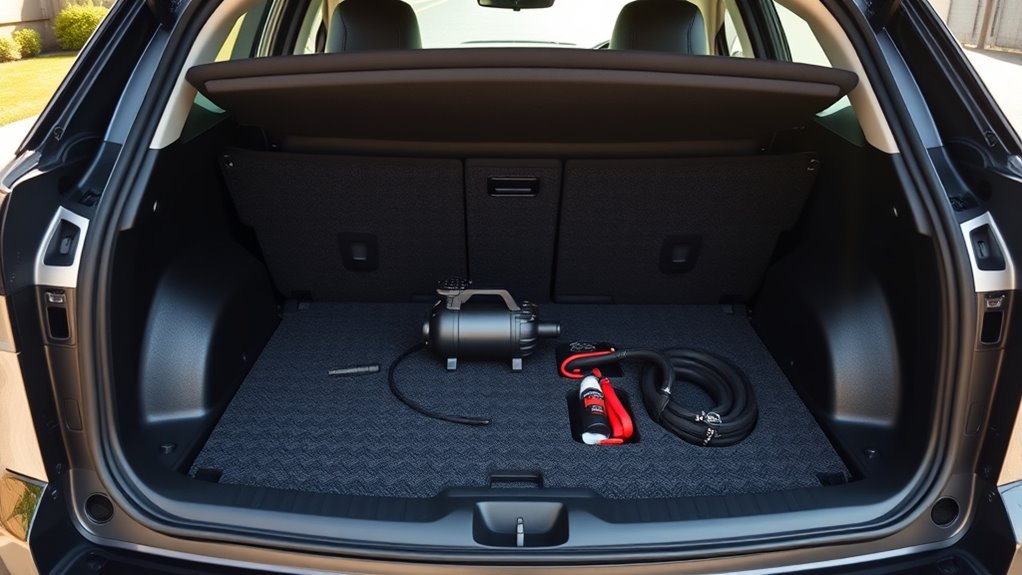
Yes, several Toyota RAV4 PHEV versions come with a puncture repair kit instead of a spare tire. However, this is not true for every vehicle sold worldwide. Equipment depends on the market and specific configuration.
For example, the 2026 Toyota UK RAV4 specifications list a Tyre Repair Kit as included equipment on the new plug-in hybrid models.
By contrast, Toyota’s 2026 US RAV4 Plug-in Hybrid comparison lists a spare or temporary tire as standard equipment. Toyota also identifies a temporary spare on the 2025 US RAV4 Plug-in Hybrid SE.
Older UK models demonstrate why the trim matters. An earlier Toyota UK RAV4 Plug-in brochure lists a temporary spare wheel for the Design grade and a tire repair kit for the GR SPORT.
Therefore, a plug-in hybrid badge alone does not tell you which emergency equipment is fitted.
To identify your setup, lift the rear cargo floor and look for either a compact spare wheel or a container holding a compressor and sealant. You can also match the equipment against the owner’s manual supplied with your vehicle.
What’s Included in the RAV4 PHEV Repair Kit?
The standard emergency repair system usually combines liquid tire sealant and a compact electric compressor. Together, these parts allow a driver to seal certain punctures and restore tire pressure without removing the wheel.
Some Toyota kits also include a pressure gauge, connecting hose, electrical plug, air-release cap, and warning sticker. Contents may differ between generations.
Kit Components Overview
The main components have different jobs. The sealant reduces air loss, while the compressor inflates the affected tire to the required pressure.
- Sealant canister: Contains a liquid designed to temporarily close small holes in the tread.
- Air compressor: Uses a vehicle power outlet to inflate the tire.
- Air hose: Connects the repair system to the tire valve.
- Pressure gauge: Helps you monitor inflation pressure.
- Warning sticker: Reminds the driver that the tire has received a temporary repair and may have a speed restriction.
The repair kit is generally stored beneath the cargo floor or in an assigned compartment in the luggage area.
Check the equipment occasionally. Make sure the compressor, hose, cable, and sealant container are present and undamaged.
The sealant bottle has an expiry date. Expired material may not seal a puncture correctly and should be replaced before it is needed.
Sealant and Compressor
The liquid sealant and compressor work together to help the tire retain air after certain punctures. As the wheel rotates, the sealant spreads inside the tire and reaches the damaged area.
This is particularly useful for a small nail or screw puncture through the tread.
The important limitations are:
- Sealant is normally intended for temporary use on one damaged tire.
- The compressor can often be reused when maintained correctly.
- Liquid sealant may affect the tire pressure monitoring system (TPMS).
- A replacement sealant canister is needed after use.
Replacement containers can be requested through Toyota service departments. Actual availability and pricing depend on the country and dealer.
The compressor may also be usable without injecting sealant, depending on its hose arrangement. Do not assume every factory kit supports air-only operation.
How Do You Use the Repair Kit?
Use a Toyota RAV4 PHEV puncture repair kit only when the tire has a suitable small tread puncture and the vehicle is safely parked. Follow the instructions supplied with your exact kit, because bottle connections and compressor controls can differ.
The basic process involves inspecting the damage, applying sealant, inflating the tire, and checking that pressure remains stable.
| Step | Action |
|---|---|
| 1 | Stop safely and check tire damage |
| 2 | Apply sealant and inflate as instructed |
| 3 | Drive briefly, recheck pressure, and seek service |
Step-by-Step Emergency Repair
- Park safely. Stop on firm, level ground away from moving traffic. Apply the parking brake, select Park, and switch on the hazard warning lights.
- Inspect the tire. Look for a small puncture in the tread. If a nail or screw remains embedded, leave it in place for the emergency sealing procedure.
- Find the kit. Open the cargo-floor compartment and remove the sealant bottle and compressor.
- Read the instructions. Check the sealant expiry date and connect the bottle, hose, and compressor exactly as directed.
- Connect power. Plug the compressor into the specified vehicle power outlet. Follow the instructions for operating the hybrid system during inflation.
- Inflate the tire. Start the compressor and monitor the gauge. Stop if the system cannot reach the required pressure within the limit stated in the manual.
- Distribute the sealant. If inflation succeeds, drive the short distance specified by Toyota so the liquid spreads inside the tire.
- Recheck pressure. Stop somewhere safe and measure the pressure again. If it drops below Toyota’s minimum safe level, stop driving and arrange recovery.
Toyota’s 2025 RAV4 emergency repair instructions for vehicles without a spare tire explain that a suitable nail or screw should not be removed before using the kit. They also give a 4 mm tread-damage limit for that specific repair system.
In Toyota UK’s tire repair guide, the suggested initial drive is approximately two to three miles before checking the tire again. Toyota advises remaining below 50 mph after temporary sealing.
Those figures describe Toyota’s published repair guidance, not a universal rule for every aftermarket product. Follow the limits printed on your own kit and in your vehicle manual.
Warning: Never use sealant for sidewall damage, a tire separated from its wheel, major tread damage, or a tire driven while completely flat. If the wheel is damaged or the tire cannot maintain the specified pressure, stop and request roadside assistance.
What Can Go Wrong With Sealant?
Tire sealant can restore limited mobility, but it also has disadvantages. The main concerns are TPMS contamination, incomplete sealing, and more complicated professional repairs.
These issues do not occur with every sealant or tire. The risk depends on the product, tire condition, and how the repair kit is used.
- TPMS problems: Liquid sealant may enter the tire pressure sensor area and interfere with its operation. Some sensor designs may require replacement after exposure.
- Repair complications: Sealant residue can make the tire harder to inspect and clean before a permanent repair.
- Incomplete sealing: A puncture may continue leaking even after the compressor initially restores pressure.
- Compressor limitations: A compressor may overheat or fail to inflate the tire if it is operated incorrectly or the damage is too severe.
- Replacement costs: Used sealant, damaged sensors, and tires that cannot be repaired may lead to additional expenses.
Some tire sealants are specifically labelled TPMS-safe. That can reduce compatibility concerns, but it does not eliminate the need for inspection.
For example, a sealant may be suitable for the sensor yet still fail to close a puncture near the tire shoulder.
Another important limitation is the power source. A 12V compressor cannot help if its connector, fuse, or power cable is damaged.
Test the compressor’s condition according to its instructions and inspect the electrical cable before a long trip.
Can You Repair a Tyre After Sealant?
Yes, some tires can still receive a professional puncture repair after emergency sealant has been used. However, sealant does not guarantee that the tire will remain repairable.
A technician must inspect the puncture, internal tire condition, and any sealant contamination before deciding whether a safe repair is possible.
The following factors affect the outcome.
| Factor | Effect on Professional Repair |
|---|---|
| Sealant residue | May require additional cleaning and inspection |
| TPMS contact | May require sensor cleaning or replacement |
| Puncture location | Tread punctures may qualify; sidewall damage does not |
| Tire condition and shop policy | Severe damage or manufacturer restrictions may require replacement |
For conventional passenger tires, the U.S. Tire Manufacturers Association puncture repair procedures limit professional repairs to qualifying damage within the repairable tread area.
The guidance describes a maximum puncture injury of 6 mm for conventional repairs and requires the tire to be removed from the wheel for an internal inspection.
A proper permanent repair includes sealing the inner liner and filling the puncture injury. An outside-only plug or sealant is not considered a complete repair.
These professional repair limits should not be confused with the smaller damage limits stated for particular Toyota emergency sealant kits.
A tire shop may refuse repair if the tire has been driven while underinflated, has sidewall damage, or no longer meets the tire manufacturer’s repair requirements.
Note: Tell the tire technician that liquid sealant was used before any tire inspection or removal. A qualified tire professional should decide whether the tire and TPMS components can be safely reused.
Repair Kit or Spare Tyre: Which Is Better?
A puncture repair kit is usually more compact and convenient for minor tread damage. A correctly fitted spare tire offers greater flexibility when the original tire cannot be sealed.
Neither option is universally better. Your driving habits, storage space, and access to roadside assistance determine which is more useful.
Advantages of a Puncture Repair Kit
- Compact storage: The sealant and compressor take up less room than a spare wheel.
- Lower weight: Carrying a small kit avoids some of the added mass of a complete wheel and tire.
- No wheel removal: Suitable punctures can be treated without lifting the vehicle.
- Quick response: A minor puncture may be sealed and inflated without waiting for a repair truck.
The main drawback is limited damage coverage. A puncture repair kit cannot solve every flat tire, particularly when the sidewall or wheel is damaged.
Advantages of Carrying a Spare Tire
- Broader emergency coverage: A spare can replace a wheel assembly with damage that sealant cannot fix, provided the vehicle and spare are suitable.
- No sealant contamination: You avoid introducing repair chemicals into the punctured tire.
- Remote travel: A spare may be more useful on journeys far from tire-repair facilities.
- Independent replacement: Drivers with the correct equipment can change the wheel at a safe location.
A spare also has limitations. You need a suitable jack, wheel wrench, safe working surface, and enough space to store it securely.
A temporary spare is not the same as a full-size tire. It is designed for emergency use and has specific driving restrictions.
For vehicles that come with sealant only, an aftermarket spare may be worth considering if you frequently drive through remote areas.
Before buying one, confirm wheel diameter, bolt pattern, brake clearance, tire rolling circumference, load capacity, and compatibility with the RAV4 PHEV’s all-wheel-drive system.
Also confirm that the wheel can be stored securely. Do not assume that a spare from a non-hybrid RAV4 will fit every plug-in hybrid configuration.
What Are Cheaper Alternatives to Toyota’s Kit?
RAV4 PHEV owners can consider aftermarket puncture repair products instead of buying a complete replacement Toyota kit. Options include separate sealant bottles, compressor-and-sealant packages, and tire plug tools.
However, not every alternative offers the same level of protection or works with the original Toyota compressor.
Toyota’s puncture repair kit isn’t the only choice; RAV4 PHEV owners can find cheaper roadside alternatives.
Slime Emergency Tire Repair Kits
Slime is one alternative mentioned by owners seeking a replacement emergency repair system.
The manufacturer’s Flat Tire Repair Kit for trucks, SUVs, and vans combines emergency sealant with a 12V air compressor.
It also has a pressure gauge, replaceable sealant cartridge, and the ability to operate as an air source without injecting sealant.
Slime identifies this product’s sealant as tire-sensor safe. However, the manufacturer’s instructions still require a prompt professional tire repair.
Its listed temporary-use limit is three days or 100 miles, whichever comes first. That limit belongs to this Slime product and should not be applied automatically to Toyota’s factory sealant.
Separate Compressor and Sealant
Another option is buying a portable air compressor and a compatible emergency sealant bottle separately.
This arrangement may be useful because the compressor can also assist with routine tire inflation if its instructions permit air-only use.
Before choosing a compressor, confirm its power requirements, maximum pressure capability, and suitability for the RAV4’s tires.
If purchasing a replacement sealant bottle, check its expiry date, compatibility with TPMS sensors, and instructions for passenger-vehicle use.
Manual Tire Plug Kits
Portable plug kits are another roadside option. They use rubber repair material inserted into a puncture rather than liquid sealant.
However, an externally inserted plug is not a complete professional tire repair. It also requires locating the puncture and using the correct tools.
Such kits should not be treated as a substitute for professional internal inspection and repair.
Which Alternative Should You Choose?
For drivers who want a compact emergency solution, a compatible sealant-and-compressor kit is generally the most convenient option.
If you want to inflate tires without adding sealant, a separate air compressor provides more flexibility.
Drivers who regularly travel far from repair facilities may prefer an approved spare wheel and appropriate tire-changing tools.
Costs can vary considerably between Toyota replacement parts, basic sealant bottles, complete aftermarket kits, and spare wheel packages. Compare the actual contents and compatibility, not just the advertised price.
Frequently Asked Questions
Does a RAV4 Plug-In Hybrid Have a Spare Tire?
Yes, some Toyota RAV4 Plug-in Hybrid models have a spare tire. US 2025 and 2026 models include a temporary spare, while the 2026 UK RAV4 PHEV lists a tire repair kit. Earlier UK configurations also varied by trim. Check the equipment supplied with your particular vehicle before relying on either option.
Will the 2026 RAV4 Hybrid Have a Spare Tire?
Yes, the US-market 2026 Toyota RAV4 Hybrid owner’s manual confirms that the vehicle is equipped with a spare tire. It also explains the location of the spare and the tire-changing equipment. This should not be confused with UK-market plug-in hybrid specifications, which list a puncture repair kit.
Why Do Hybrids Not Have a Spare Tire?
Some hybrid vehicles omit a spare tire to save weight and cargo space or accommodate vehicle packaging. A repair kit is smaller and can address certain minor punctures. However, many hybrids still include a temporary spare. The absence of a spare is a vehicle design choice, not a requirement of hybrid technology.
Where Is the Jack Located on a 2026 Toyota RAV4?
On the US-market 2026 RAV4 Hybrid, the jack is stored beneath the rear cargo-floor area in the designated under-tray compartment, according to the owner’s manual. Vehicles equipped only with a repair kit may not include the same tools. Check the cargo compartment and your vehicle’s equipment list before attempting a wheel change.
Can You Use the RAV4 PHEV Repair Kit for Sidewall Damage?
No. Emergency puncture sealant is intended for limited damage within the tire tread, not cuts or holes in the sidewall. Sidewall damage can weaken the tire’s structure and create a serious safety risk. Do not continue driving with a damaged sidewall; arrange professional roadside assistance instead.
Conclusion
The Toyota RAV4 PHEV may include either an emergency puncture repair kit or a temporary spare tire, depending on its market and configuration. A sealant kit can provide useful short-term mobility after a minor tread puncture, but it cannot replace proper tire inspection and repair.
Before your next trip, confirm what equipment your vehicle carries, inspect its condition, and learn the correct emergency procedure. That preparation matters more than discovering the kit’s limitations after a flat tire.
Sources
- Toyota UK – All-New RAV4: Current UK equipment listings, including the Tyre Repair Kit.
- Toyota USA – 2026 RAV4 Plug-in Hybrid Comparison: US-market temporary spare tire availability.
- Toyota UK – Earlier RAV4 Plug-in Hybrid Brochure: Differences between Design and GR SPORT emergency tire equipment.
- Toyota USA – 2025 RAV4 Emergency Tire Repair Instructions: Repair kit components, puncture restrictions, usage, and TPMS precautions.
- Toyota UK – How to Use a Tyre Repair Kit: Temporary roadside sealing procedures, speed precautions, and professional follow-up.
- U.S. Tire Manufacturers Association – Puncture Repair Procedures: Professional tire repair limits and internal inspection requirements.
- Slime – SUV Flat Tire Repair Kit: Aftermarket kit components, compatibility, and temporary-use limits.
- Toyota USA – 2026 RAV4 Hybrid Flat Tire Instructions: Spare tire confirmation, jack location, and wheel-changing precautions.

