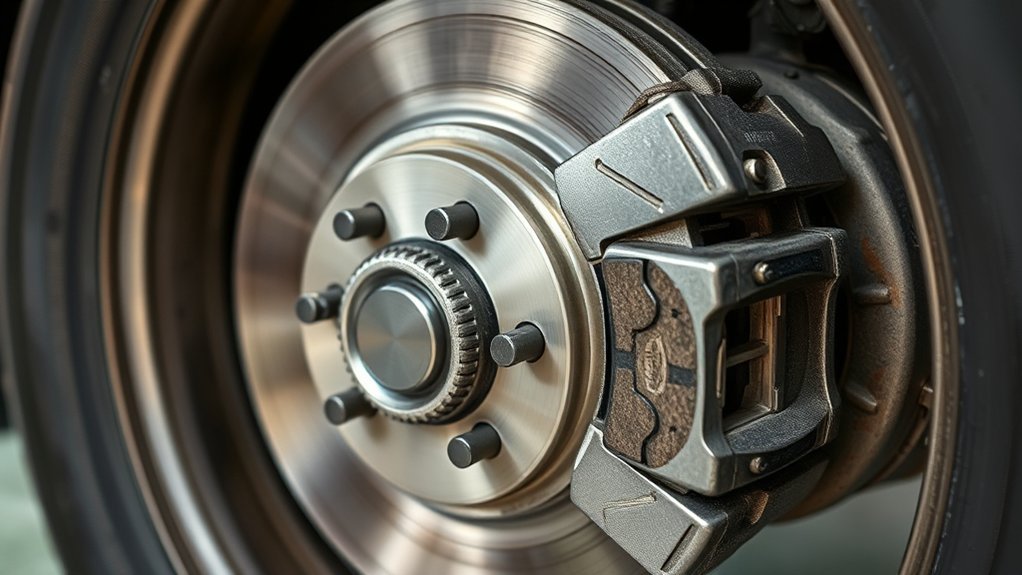
How long do Toyota Camry brake pads last? There is no fixed Toyota replacement mileage. As a broad non-Toyota benchmark, AAA says brake pads generally last about 30,000–80,000 miles, but your Camry can wear them sooner or later depending on the model year, axle, traffic, terrain, pad material, corrosion, brake condition, and how you drive. Measured friction-material thickness and condition are more reliable than mileage alone.
Last updated: September 19, 2026. U.S.-market Toyota maintenance guidance, current Camry hybrid context, brake-wear guidance, and recall references were rechecked for this revision.
Quick Answer
A broad brake-pad lifespan benchmark is about 30,000–80,000 miles, but Toyota does not specify one universal Camry replacement mileage. Inspect the friction material, inner-versus-outer wear, rotor condition, and braking behavior instead. Around 3 mm is a practical service-planning point rather than a universal Toyota discard specification. Grinding, fluid leaks, a soft or sinking pedal, or a major loss of braking force requires immediate attention.
Key Takeaways
- There is no universal Toyota Camry brake-pad replacement mileage.
- A broad 30,000–80,000-mile benchmark is useful for planning, but measured condition decides when your Camry actually needs service.
- Measure the friction material, not the metal backing plate, and check the inner and outer pads on both sides of the axle.
- Around 3 mm is a sensible proactive replacement-planning point, but the exact service limit comes from repair information for your Camry’s model year and brake package.
- Squealing may come from a wear tab, while grinding can mean the friction material is exhausted.
- A red brake warning, soft pedal, fluid leak, or major loss of stopping power may indicate a system fault rather than normal pad wear.
At a Glance
| Typical Lifespan | About 30,000–80,000 miles as a broad industry benchmark; not a Toyota Camry replacement interval |
| Time Required | About 5–10 minutes for a basic visual check; longer if a wheel must be removed |
| Difficulty | Basic for a visible check; moderate if lifting the vehicle or removing wheels |
| Tools Needed | Flashlight, small ruler or brake gauge, and safe lifting equipment if wheel removal is necessary |
| Cost | No cost for a basic visual check; inspection and replacement pricing varies by vehicle, parts, shop, and region |
How Brake Pads and Rotors Work in Your Toyota Camry
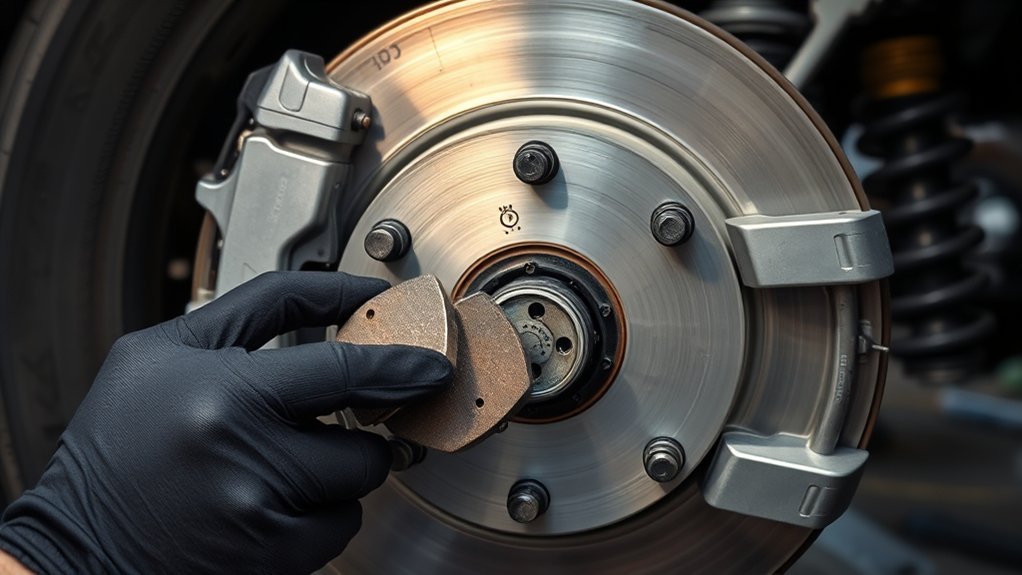
Your Camry’s disc-brake system uses a caliper to press friction material against a rotating metal disc called a rotor. That friction converts the vehicle’s movement into heat and slows the wheels.
The brake pad includes friction material bonded to a metal backing plate. The friction material is the part you measure for wear. Do not include the backing plate when checking pad thickness.
The rotor also wears, but rotor condition cannot be judged by mileage alone. A technician should check its thickness, surface condition, runout, corrosion, cracks, and heat damage. The rotor must remain above the minimum thickness specified for the exact part and vehicle.
For a broader measurement checklist, see the Toyota Camry brake inspection interval guide.
What Are the Signs Your Camry Brakes Need Attention?
Noise is one warning sign, but it is not the only one. Changes in pedal feel, stopping distance, steering response, or vibration may point to worn pads, damaged rotors, sticking calipers, contaminated friction surfaces, or hydraulic problems.
What Do Squealing and Grinding Noises Mean?
A high-pitched squeal may come from a metal wear tab touching the rotor as the friction material becomes thin. It can also come from moisture, rust, glazing, debris, vibration, or pad material that is naturally noisy.
Grinding is more serious. It may mean the friction material has worn through and the backing plate is contacting the rotor. Continued driving can damage the rotor and reduce braking performance.
Warning: Do not keep driving normally if you hear continuous grinding, see a brake-fluid leak, feel a soft or sinking pedal, experience severe pulling, or notice a major loss of braking force. Have the vehicle inspected immediately and use towing when safe braking is uncertain.
What Do the Brake and ABS Warning Lights Mean?
Do not assume that a dashboard brake light is an electronic brake-pad wear indicator. Warning-light meanings vary by Camry year and equipment.
A red brake-system warning may relate to the parking brake, low brake fluid, or a hydraulic-system problem. An ABS warning points to the anti-lock braking system. Some faults may allow basic braking to remain, but safety assistance can be reduced.
Use Toyota’s warning-light resource and the owner’s manual for your exact Camry. If a red brake warning stays on after you release the parking brake, treat it as an urgent inspection issue. For deeper diagnosis, see the Toyota Camry brake-system warning-light guide.
What Other Brake Symptoms Should You Watch For?
- Steering-wheel vibration or brake-pedal pulsation during braking
- The vehicle pulling strongly to one side
- Longer stopping distance
- A soft, low, or sinking pedal
- A burning smell after repeated braking
- One wheel becoming much hotter than the others
- Uneven inner and outer pad wear
- Brake-fluid loss or visible moisture around a hose, caliper, or wheel
These symptoms are not always caused by thin pads. They can result from rotor variation, a seized caliper slide, a sticking piston, contaminated pads, a damaged hose, air in the hydraulic system, or a fluid leak. Use the dedicated guides for Camry steering-wheel vibration while braking and a soft Camry brake pedal when those symptoms are the main problem.
How Thick Should Toyota Camry Brake Pads Be?
You may be able to see the outer pad through an opening in the wheel. Use a flashlight and look for the friction material between the rotor and the metal backing plate. A wheel-off inspection gives a better view of both the inner and outer pads.
Warning: Work on a level surface, let the brakes cool, secure the vehicle against movement, and never place any part of your body under a vehicle supported only by a jack. Use correctly rated jack stands at approved lifting points.
Toyota’s general brake-pad guidance says that if visible pad material is less than about 1/4 inch thick, it is time to consider new pads. That is consumer guidance rather than a universal Camry discard specification. The repair limit for your exact front or rear brake assembly can be different, so use the model-year service information when making a final replacement decision.
The following table is a practical inspection guide, not a Toyota factory specification. The exact service limit for your Camry and brake components takes priority.
| Measured Friction Material | General Condition | Suggested Action |
|---|---|---|
| About 1/4 in. (6.4 mm) or more | Not below Toyota’s general consumer “consider replacement” visual threshold | Continue scheduled inspections and watch for uneven wear or symptoms |
| Below about 1/4 in. but above 3 mm | Noticeably worn; exact remaining service life varies | Get an accurate inner-and-outer-pad measurement and plan future service |
| About 3 mm | Near a common proactive replacement-planning point | Schedule replacement soon and compare the measurement with the exact Camry service limit |
| At or below the model-specific service minimum | At the applicable wear limit | Replace the axle set promptly and inspect the rotors, calipers, and hardware |
| Uneven inner and outer readings | Possible caliper, slide, hardware, or hose problem | Diagnose the cause before installing new pads |
Pro Tip: The inner pad may wear faster than the outer pad. A quick view through the wheel can miss this difference, so request measurements for the inner and outer pads on both sides of the axle.
When Should You Replace Toyota Camry Brake Pads?
Replace or service the pads when an inspection shows that they are at or near the applicable wear limit, when a wear tab is contacting the rotor, or when damage, contamination, cracking, separation, or severe uneven wear is present.
Around 3 mm can be used as a proactive planning point, but do not confuse it with one universal Toyota factory minimum. The applicable service specification for the exact model year, axle, caliper, and brake package takes priority.
Do not wait for a specific odometer number if the pads are already thin or the braking system has symptoms. Likewise, do not replace healthy pads only because the vehicle has reached a broad online mileage estimate.
Brake pads should normally be replaced as a complete set on the same axle. Installing new pads on only one wheel can create inconsistent friction and braking balance.
How Often Should You Inspect Toyota Camry Brake Pads?

Toyota’s Camry maintenance guidance relies on repeated brake-pad, lining, and disc inspections rather than one fixed pad-replacement mileage. Use the Warranty & Maintenance Guide for your exact model year because the listed maintenance items and operating-condition notes can vary.
Routine inspections can find thin pads before the backing plates damage the rotors. They can also uncover problems that new pads alone will not fix, including seized slides, torn caliper boots, leaking hoses, uneven rotor wear, contaminated friction material, and loose or damaged hardware.
A useful time to inspect the brakes is during tire rotation or other scheduled service, since wheel removal provides a clear view. Inspect them sooner when you hear noise, notice vibration, see a warning light, or feel a change in braking response.
Review the Toyota manuals and warranty portal for the maintenance information that applies to your exact model year. The separate Camry brake inspection interval guide explains what should be checked during those inspections.
How Long Do Toyota Camry Brake Pads Usually Last?
As a broad industry benchmark, AAA says brake pads generally last about 30,000–80,000 miles. That range is useful for budgeting and planning, but it is not a Toyota Camry factory replacement interval. A Camry can wear pads sooner or keep them longer depending on its route, driver, climate, brake design, pad compound, and component condition.
Toyota’s own brake guidance does not promise one lifespan. It emphasizes driving habits, road conditions, pad type, vehicle weight, maintenance, visible wear, and model-specific owner information instead.
Why Is There No Fixed Camry Brake-Pad Replacement Interval?
Brake pads are condition-based wear parts. Their remaining thickness, wear pattern, and physical condition matter more than the calendar or odometer alone.
Highway driving with gradual stops may produce slow wear. Short urban trips, repeated hard braking, mountain roads, heavy traffic, corrosion, and sticking brake components can shorten service life.
What Makes Toyota Camry Brake Pads Wear Faster?
- Driving style: Late, hard braking creates more heat and wear.
- Traffic: Stop-and-go driving uses the friction brakes more often.
- Terrain: Long downhill grades can raise brake temperature.
- Vehicle load: More weight requires more braking energy.
- Pad compound: Different materials balance noise, dust, cold response, heat tolerance, and rotor wear differently.
- Caliper condition: A sticking piston or slide can keep a pad in contact with the rotor.
- Climate: Moisture and road salt can corrode rotors, hardware, and caliper components.
- Front versus rear axle: The two axles do not necessarily wear at the same rate.
Do Camry Hybrid Brake Pads Last Longer?
A Camry Hybrid uses regenerative braking during many deceleration events. NHTSA explains that an electrified vehicle’s motor can help slow the vehicle while capturing energy that would otherwise be lost as heat through conventional braking. Friction brakes still operate during braking events when additional stopping force is needed or regeneration is limited.
This can reduce friction-pad use during normal driving, so hybrid pads may last longer under similar conditions. However, actual pad life still depends on route, braking style, corrosion, brake condition, and how freely the calipers and hardware move.
For U.S.-market vehicles, this is now especially relevant: Toyota made the 2025 Camry exclusively hybrid, and the 2026 Camry remains exclusively hybrid. Earlier Camry generations included both gasoline-only and hybrid versions.
Less frequent friction-brake use can also make corrosion and sticking hardware worth watching in wet or salty climates. For more detail on how the two braking systems share the work, see Toyota Camry brake blending explained.
NHTSA provides more information about regenerative and conventional braking in hybrid vehicles.
Do Camry Brake Rotors Need Replacement With the Pads?
No. New pads do not automatically require new rotors, but every rotor should be inspected when pads are replaced. A rotor may remain serviceable when its surfaces are acceptable, its thickness is above the minimum limit, and its runout and thickness variation are within specification.
A rotor may require resurfacing or replacement when it has:
- Thickness at or below the marked or specified minimum
- Deep scoring or grooves
- Cracks or severe heat checking
- Heavy corrosion on the braking surface or cooling vanes
- Excessive runout or thickness variation
- Blue heat spots or structural damage
- Too little material remaining for safe resurfacing
Rotor decisions should be based on measurements, not appearance or mileage alone.
How Do You Choose the Right Camry Replacement Brake Pads?
Start with your Camry’s model year, trim, engine or hybrid configuration, axle, and VIN. Different brake packages may be used within the same model year, so do not choose pads only because a listing says “fits Toyota Camry.”
Consider the following:
- Confirmed fit for the exact front or rear brake system
- Normal commuting, mountain driving, commercial use, or performance driving
- Cold braking response
- Noise and dust preferences
- Heat resistance
- Included shims, clips, and hardware
- Manufacturer reputation, traceability, and warranty
Do not install racing or high-temperature pads simply because they are advertised as an upgrade. Some performance compounds can be noisy, dusty, or less suitable for ordinary cold street use. For a focused comparison, see Toyota Camry ceramic vs. semi-metallic brake pads.
Are Toyota Genuine Brake Pads the Best Choice?
Toyota Genuine brake pads are designed around Toyota fitment and expected braking characteristics. They can be a practical choice when you want predictable pedal feel, noise control, hardware compatibility, and straightforward parts identification.
Toyota states that its genuine parts are made to fit the specifications of Toyota vehicles. You can verify fitment through the Toyota Genuine Parts resource.
However, OEM is not the only acceptable choice. Reputable aftermarket manufacturers also offer application-specific pads. The important points are correct fit, suitable friction characteristics, quality control, and proper installation. Avoid untraceable or counterfeit safety parts.
What Should a Complete Camry Brake-Pad Service Include?
A professional brake-pad replacement should involve more than sliding new pads into the caliper. The technician should:
- Measure the inner and outer pads on both sides.
- Inspect the rotors and compare their thickness with the applicable service limit.
- Check the caliper piston, slide pins, boots, hose, and mounting hardware.
- Clean and lubricate approved contact points with the correct brake lubricant.
- Replace damaged clips, shims, or hardware.
- Install the correct pads on both sides of the axle.
- Torque fasteners and wheel nuts to the applicable specification.
- Confirm the brake-fluid level without overfilling the reservoir.
- Restore pedal pressure before moving the vehicle.
- Follow the pad manufacturer’s bedding or burnishing procedure when required.
- Road-test the vehicle in a safe area and verify normal braking response.
Note: Brake fluid rising in the reservoir as caliper pistons are retracted can be normal. Brake-fluid loss is not. Any leak requires diagnosis and repair.
Should You Check Your Toyota Camry for Brake-Related Recalls?
Yes. Brake-pad wear is usually routine maintenance, but a separate safety recall or service campaign can create braking symptoms that new pads will not fix. Use the 17-digit VIN because recall applicability can depend on production date and configuration rather than model year alone.
For example, NHTSA recall 21V-890 covered certain 2018–2019 Toyota Camrys with a vacuum-pump defect that could cause a sudden loss of power brake assist. NHTSA reported 227,490 potentially involved vehicles and noted that U.S. hybrid Camrys were not equipped with the affected vacuum-pump design. That recall is separate from normal pad wear, and VIN lookup remains the correct way to determine whether a specific car is involved.
Related Guides
Frequently Asked Questions
How long do Toyota Camry brake pads last?
A broad industry benchmark is about 30,000–80,000 miles, but Toyota does not give one universal Camry replacement mileage. Traffic, hills, corrosion, pad material, braking style, hybrid regeneration, and sticking brake components can move actual life well outside a general estimate. Use measured thickness and condition to make the replacement decision.
What is the life expectancy of Toyota brake pads?
Brake pads are condition-based wear items rather than parts with one guaranteed lifespan. Toyota says pad life varies with driving habits, road conditions, pad type, vehicle load, maintenance, and other factors. Inspect them during scheduled service and whenever braking behavior changes.
Is 3 mm of brake-pad material okay?
About 3 mm is a sensible proactive point to schedule replacement soon, but it is not one universal Toyota discard specification. Compare the measurement with the repair information for your exact Camry, and check the inner and outer pads for uneven wear.
Is 20% brake life left safe?
A percentage estimate is only useful if it is tied to an actual friction-material measurement and a defined starting thickness. Ask for the remaining thickness in millimeters, compare it with the exact service specification, and arrange service sooner when wear is uneven, noise is present, or braking behavior has changed.
Do Camry Hybrid brake pads last longer?
They can. Regenerative braking uses the electric motor to provide part of the vehicle’s deceleration, which can reduce friction-brake use during many normal stops. Actual life still depends on driving conditions, corrosion, pad condition, and whether calipers and hardware move freely. All U.S.-market 2025 and 2026 Camrys are hybrids.
Do rotors have to be replaced with every set of pads?
No. Rotors can remain in service when they are above minimum thickness and within specification for surface condition, runout, and thickness variation. They should always be measured and inspected during pad replacement.
How often should Toyota Camry brake pads be inspected?
Follow the Warranty & Maintenance Guide for your exact Camry model year. Toyota uses recurring brake-pad, lining, and disc inspections rather than one fixed pad-replacement mileage. Inspect sooner whenever you notice noise, vibration, pulling, a warning light, fluid loss, or a change in pedal feel.
How much does Toyota Camry brake-pad replacement cost?
AAA gives a broad U.S. average of about $150–$350 per axle for brake-pad replacement, but that is not a Camry-specific quote. Your actual price depends on model year, axle, pad choice, labor rates, hardware, rotor condition, taxes, and local shop pricing. Ask for a written estimate that separates pads, rotors, hardware, and labor.
Sources
- Toyota: Signs You May Need New Brake Pads — Toyota guidance on brake-pad lifespan factors, wear symptoms, and visible pad thickness
- Toyota Manuals and Warranties — model-specific owner and maintenance information
- Toyota Warning Lights — vehicle-specific dashboard indicator guidance
- Toyota Genuine Parts — Toyota parts fitment and maintenance-parts information
- Toyota USA Newsroom: 2026 Toyota Camry — current U.S. Camry hybrid-powertrain information
- National Highway Traffic Safety Administration: Electric and Hybrid Vehicles — regenerative and conventional braking information
- AAA Automotive: Brake-Pad Lifespan and Replacement Cost — broad U.S. lifespan and service-cost benchmarks
- NHTSA Recall 21V-890 — certain 2018–2019 Camry vacuum-pump and brake-assist recall information
- Toyota Safety Recall and Service Campaign Lookup — VIN-based Toyota campaign information
- National Highway Traffic Safety Administration Recall Lookup — VIN-based safety-recall information
Conclusion
A broad brake-pad lifespan benchmark is about 30,000–80,000 miles, but your Toyota Camry should not receive new pads simply because it reaches a particular odometer reading. Toyota treats pad wear as a condition-based maintenance item, so measured friction material, inner-versus-outer wear, rotor condition, caliper operation, and braking symptoms matter more than mileage alone.
Use about 3 mm as a proactive service-planning point rather than a universal Toyota discard specification, and compare the actual measurement with the repair information for your exact Camry. Seek immediate help for grinding, fluid leaks, a soft or sinking pedal, severe pulling, a persistent red brake warning, or reduced stopping power. Use your model year and VIN when checking manuals, parts, service information, and recalls.
