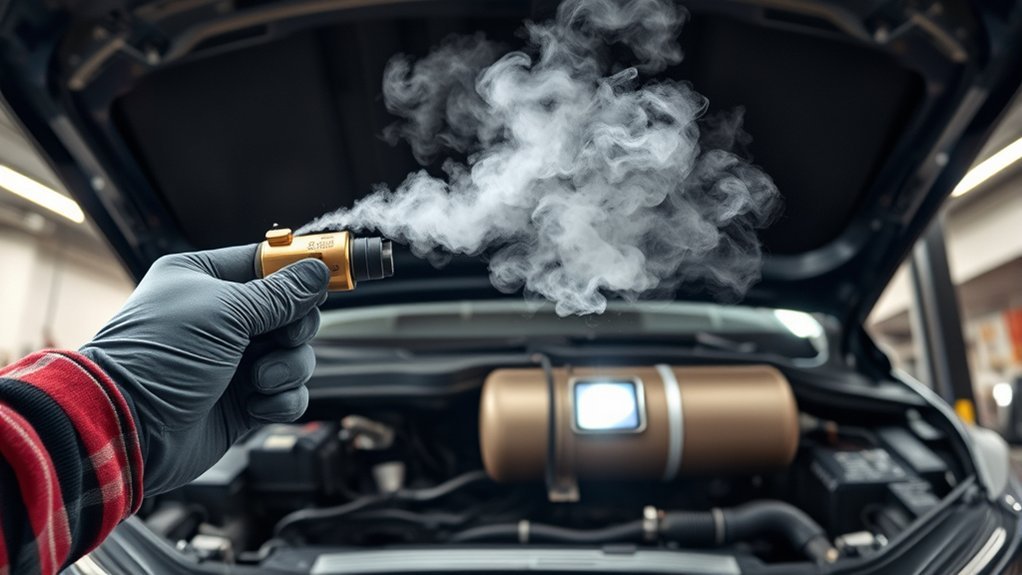
If your Toyota Camry shows a P0456 code, the engine control module has detected a very small leak—or a condition that appears to be a leak—in the evaporative emissions (EVAP) system. A loose or damaged fuel cap, cracked vapor hose, leaking valve, charcoal canister problem, or model-specific control issue can all be responsible. Most Camrys with P0456 still drive normally, but the fault should be diagnosed so the EVAP system can properly contain fuel vapors and the vehicle can complete emissions monitoring.
Quick Answer
On a Toyota Camry, P0456 means the EVAP monitor detected a very small fuel-vapor leak or a system condition that looks like one. Start with the fuel cap and visible hoses, then check model-specific service information. If the code returns, use proper EVAP testing rather than replacing parts at random.
Key Takeaways
- P0456 is a very small EVAP leak code; it does not automatically identify the failed part.
- Check the fuel cap, filler-neck sealing surface, hoses, and connections before buying expensive parts.
- Most vehicles with P0456 have little or no noticeable drivability change.
- Some 2010–2011 Camrys with the 2.5L 2AR-FE engine have a Toyota bulletin covering false P0456 detection caused by ECM calibration.
- A professional EVAP smoke test is the safest next step when visual checks do not reveal the leak.
At a Glance
| Time Required | About 10–20 minutes for basic cap and visual checks; advanced EVAP diagnosis may take longer. |
| Difficulty | Beginner for fuel-cap and hose inspection; intermediate/professional for valve testing, bidirectional scan-tool checks, or smoke testing. |
| Tools Needed | OBD-II scan tool and flashlight for basic diagnosis; an EVAP-rated smoke tester and model-specific service information for advanced testing. |
| Cost | Basic inspection may cost nothing if you do it yourself. Actual repair cost depends on whether the problem is the cap, a hose, a valve, wiring/control issue, or the charcoal canister. |
Understanding the P0456 Code: Definition and Importance
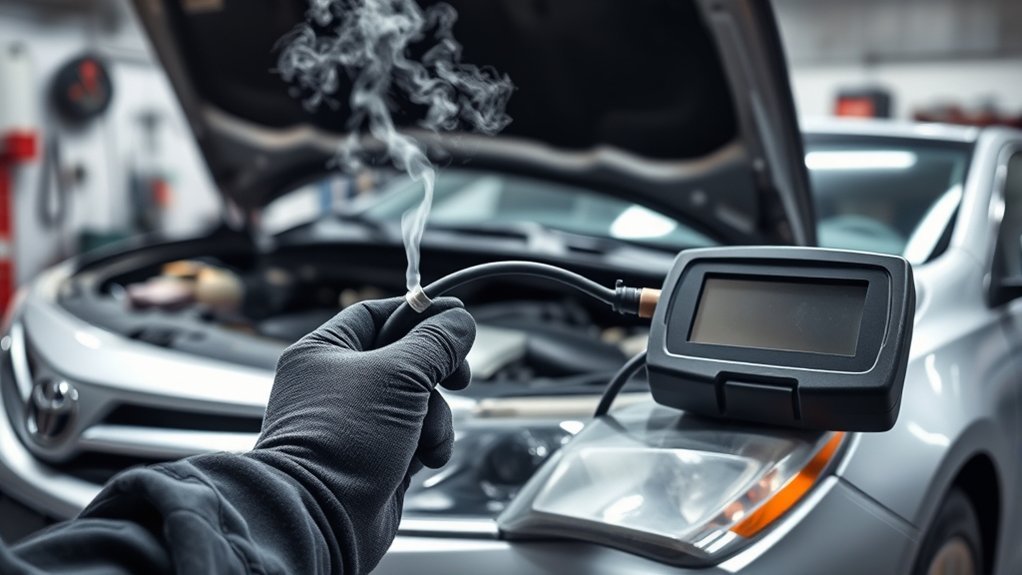
P0456 is an OBD-II diagnostic trouble code associated with a very small leak in the evaporative emissions system. The EVAP system prevents gasoline vapors from freely escaping into the atmosphere. It stores vapors in a charcoal canister and later routes them into the engine to be burned under controlled conditions.
For applicable modern light-duty vehicles, U.S. EPA OBD requirements include EVAP leak monitoring around a 0.020-inch equivalent leak threshold. The exact test strategy, hardware, and enable conditions vary by Camry model year and engine, so P0456 should be treated as a diagnostic starting point rather than proof that one specific component has failed.
Common causes include an improperly sealed or damaged fuel cap, a cracked vapor hose, a leaking purge or vent valve, a damaged charcoal canister, a poor connection, or another fault that prevents the system from holding the pressure or vacuum expected during its self-test.
Note: P0456 does not always mean there is a visible hole. The EVAP monitor judges system behavior, so a valve that does not seal correctly—or, on certain model years, a control/calibration issue—can also produce the code.
Symptoms of the P0456 Code
The most common symptom is an illuminated check engine light. In many cases, the Camry continues to start, idle, accelerate, and cruise normally because a very small EVAP leak does not directly interrupt the engine’s main fuel-delivery system.
You may also notice a fuel-vapor odor if the leak is large enough or located near the passenger compartment. A strong gasoline smell should be investigated promptly because it can indicate a more significant fuel or vapor leak than P0456 alone suggests.
Illuminated Check Engine Light
The engine control module performs EVAP self-tests when the required operating conditions are met. If the system does not behave as expected, it can store P0456 and illuminate the malfunction indicator lamp.
A loose or damaged fuel cap is one possible cause. Toyota owner information notes that an improperly tightened cap can contribute to a check-engine warning on applicable models. After correcting the problem, the light may require several successful monitoring trips to turn off on its own.
Minor Performance Issues
P0456 by itself usually causes little or no drivability change. If you also have rough idle, hard starting after refueling, stalling, or unusual fuel-trim symptoms, scan for additional trouble codes and investigate the purge system rather than assuming the small leak alone is responsible.
A vehicle with an active malfunction indicator lamp may also fail an OBD-based emissions inspection where local rules require the MIL to be off and the applicable readiness monitors to be complete.
Common Causes of EVAP Leaks in Toyota Camrys
Start with the simplest sealing points first. P0456 identifies a very small EVAP-system fault, not the component that caused it.
The most common areas to inspect include:
- Fuel cap: A cap that is loose, cross-threaded, damaged, contaminated, or fitted with a hardened/cracked seal may not hold the required seal.
- Filler-neck sealing surface: Dirt, rust, damage, or deformation where the cap seals can create a leak even when the cap itself is good.
- EVAP hoses and connectors: Age, heat, road debris, or previous service can crack small vapor lines or loosen connections.
- Purge valve: A purge valve that does not fully close can create an unintended flow path during an EVAP monitor test.
- Vent valve or canister pump module: Depending on the Camry generation, faults here can prevent the system from sealing or being tested correctly.
- Charcoal canister: A cracked or damaged canister can leak. Liquid fuel from repeated overfilling can also damage EVAP components.
- Electrical/control faults: Wiring, connectors, sensors, valves, or control logic can sometimes interfere with proper EVAP testing, especially when other DTCs are present.
[Amazon Products Picked for You]
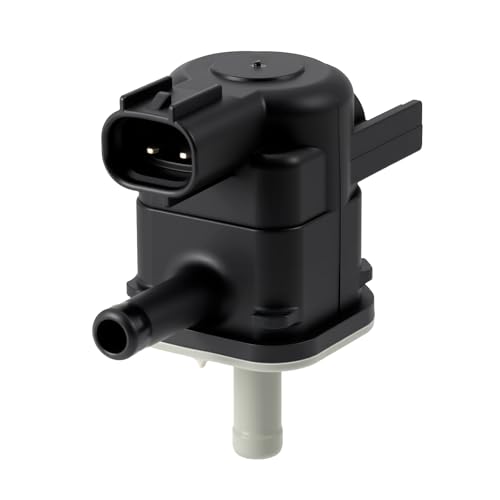
[Vehicle Fitment-1]- EVAP Vapor Canister Purge Valve Solenoid compatible with 2006-2013 Toyota Yaris, 2007-2015 Toyota Camry 2.5L, 2007-2010 Toyota Sienna, 2007-2014 Toyota Tundra, 2009-2013 Toyota Corolla 1.8L, 2009-2014 Toyota FJ Cruiser .0L, 2009-2018 Toyota Highlander 2.7L, 2009-2014 Toyota Matrix 1.8L, 2010-2018 Toyota 4Runner 4.0L, 2011-2015 Toyota Tacoma 4.0L, 2016-2018 Toyota Prius, 2016-2018 Toyota Prius V 1.8L

Compatibility & Fitment – Designed to match Camry 2010–2017 2.5L L4 and Venza 2009–2016 2.7L L4, replacing 258600V040 and CP623 for precise integration with the factory evap canister system, resulting in a perfect fit that installs smoothly with no adjustment required and fits exactly as expected

Replace Part Number: 90910-12276, 136200-7010, 9091012276, 90910TC001, 1362007010, 90910-TC001, 911394, 2M1310
Check for Model-Year-Specific Toyota Information
Do not assume every Camry uses exactly the same EVAP hardware or diagnostic logic. For example, Toyota bulletin T-SB-0049-12 covered certain 2010–2011 Camry models with the 2.5L 2AR-FE engine that could set P0456 even when no physical EVAP leak was present. Toyota revised the ECM calibration for the affected vehicles.
Pro Tip: Before replacing a charcoal canister or other expensive part, check your exact year, engine, emissions specification, and applicable Toyota service bulletins. A code tells you which system failed a test; it does not prove which part is bad.
Diagnosing an EVAP Leak: A Step-by-Step Approach
A good P0456 diagnosis moves from the easiest checks to the more specialized tests.
- Scan all codes. Confirm P0456 and look for stored or pending companion codes such as P0441, P0442, P0455, P0457, valve-circuit codes, or sensor-related codes. Those can change the diagnostic path.
- Record useful scan data. If your scanner provides freeze-frame or EVAP monitor information, save it before clearing codes.
- Inspect the fuel cap. Check the seal for cracks, hardening, contamination, or deformation. Inspect the filler-neck sealing surface and reinstall the cap exactly as specified in the owner’s manual.
- Inspect visible EVAP hoses and connectors. Look for splits, rubbed-through areas, loose connections, broken retaining clips, and damaged wiring.
- Check model-specific service information. Verify whether a Toyota bulletin or known calibration issue applies before replacing parts.
- Test the purge and vent functions. A qualified technician can use the factory procedure and, where supported, a bidirectional scan tool to command valves and evaluate whether they seal and operate correctly.
- Perform an EVAP-rated smoke test if necessary. This can reveal very small leaks that are invisible during a normal inspection.
- Repair the confirmed fault and verify the monitor. After repair, check for pending codes and allow the EVAP monitor to complete under the conditions specified for your Camry.
Warning: The EVAP system contains flammable fuel vapors. Do not use an open flame or improvise high-pressure testing with compressed air. Professional EVAP smoke equipment is designed for controlled testing; Bosch documentation recommends an inert gas such as nitrogen or CO₂ when testing fuel-vapor systems.
If you use professional smoke equipment, follow the tool manufacturer’s procedure and the applicable Toyota service information. The Bosch SMT 300 operator manual, for example, specifically addresses safe fuel-vapor leak testing.
[Amazon Products Picked for You]

HyperSmoke Technology – Creates Thick Visible Smoke for Easy Leak Testing. Adjustable Pressure. Infinite Smoke. Instant Warmup. Built-In Air Compressor Motor. OEM Approved Smoke Fluid. Designed and Engineered by AutoLine Pro USA, an American Team of Individuals bringing the latest innovation to you.

HyperSmoke Technology – Creates Thick Visible Smoke for Easy Leak Testing. Adjustable Pressure. Infinite Smoke. Instant Warmup. Built-In Air Compressor Motor. OEM Approved Smoke Fluid. Designed and Engineered by AutoLine Pro USA, an American Team of Individuals bringing the latest innovation to you.

HyperSmoke Technology – Creates Thick Visible Smoke for Easy Leak Testing. Adjustable Pressure. Infinite Smoke. Instant Warmup. Built-In Air Compressor Motor. OEM Approved Smoke Fluid. Designed and Engineered by AutoLine Pro USA, an American Team of Individuals bringing the latest innovation to you.
Step-by-Step Fixes for the P0456 Code
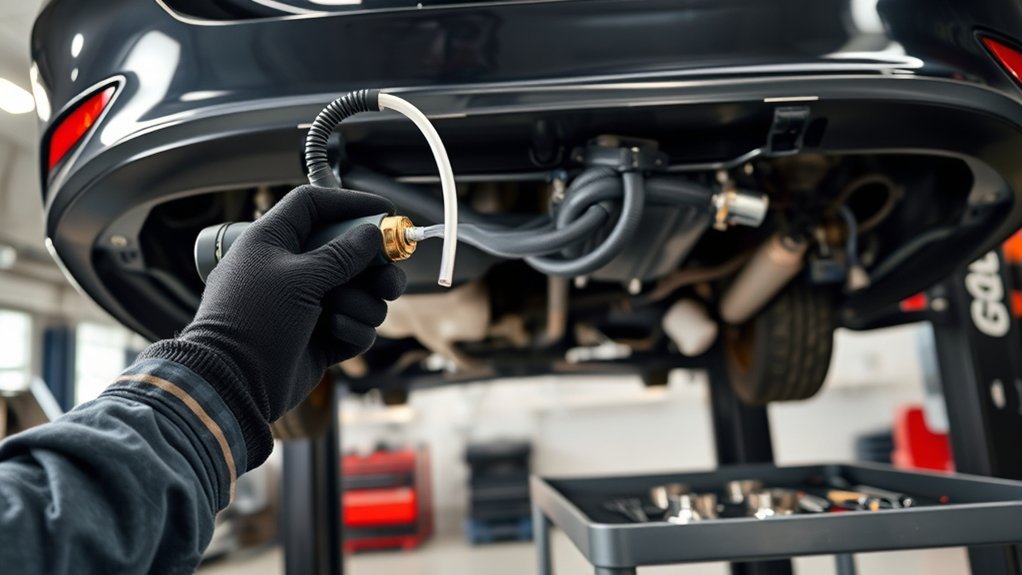
Do not replace every EVAP component simply because P0456 is present. Start with low-cost inspections, then repair the component that testing identifies.
[Amazon Products Picked for You]

【COMPATIBLE WITH】Gas Cap, Fuel Cap Replaces 77300-06040, 7730006040, Gas Cap Is 100% Rigorously Tested Before Shipping. Check The Part Number To Confirm The Compatibility Before Purchase.

【Gas Cap Fuel Cap Replacement】77300-07030,77300-53030, Check The Part Number Before Your Order, It saves you the time of buying back and forth, and also helps you save money.

Inspect Gas Cap Seal
The fuel cap is one of the easiest things to check. Remove it and inspect the rubber sealing surface, cap threads, and filler-neck contact area. Dirt or damage can prevent a proper seal.
| Action | What to Do |
|---|---|
| Inspect the Cap | Look for a cracked, hardened, distorted, or contaminated seal and damaged cap threads. |
| Clean the Sealing Surfaces | Wipe dirt or debris from the cap seal and filler-neck contact surface with a clean cloth. Do not use unapproved sealants or lubricants as a substitute for a damaged cap. |
| Reinstall Correctly | Close the cap according to your Camry owner’s manual. Toyota’s current Camry instructions specify tightening the cap until it clicks. |
| Replace if Defective | Use the correct cap for your exact model year and emissions configuration if the original cap or seal is damaged. |
| Verify the Repair | Check for pending codes and allow the EVAP monitor to run. Clearing the code immediately resets readiness information, so keep inspection requirements in mind. |
Toyota’s Camry owner’s manual also instructs drivers not to top off the fuel tank after the pump automatically stops.
Check EVAP System Hoses
Inspect accessible EVAP hoses for:
- Cracks and splits: Flex exposed rubber hose gently and look closely near bends and connection points.
- Loose connections: Make sure quick-connect fittings and clamps are fully seated and undamaged.
- Chafing: Check where lines pass near brackets, body panels, or other components.
- Contamination or liquid fuel: Evidence of fuel where vapor should normally be present can point to overfilling or another system fault.
Replace damaged vapor hose with the correct fuel-vapor-rated part. Do not substitute ordinary vacuum or coolant hose unless it is specifically rated for that application.
Test the Purge Valve, Vent System, and Canister
If the cap and visible lines look good, the next step is to test components rather than guess. Depending on the Camry generation, diagnosis may include the purge valve, vent valve, vapor-pressure sensor, leak-detection pump/canister pump module, and charcoal canister.
The correct electrical values, valve commands, test connections, and monitor procedures vary by engine and model year. Follow Toyota service information for your exact vehicle rather than applying a generic resistance, pressure, or voltage specification.
Verify the Repair Before Calling It Fixed
After correcting the fault, confirm that P0456 does not return as a pending or stored code. Remember that EVAP monitors are non-continuous: they only run when certain temperature, fuel-level, vehicle-state, and operating conditions are satisfied. The system may therefore need multiple trips before it reports a final pass.
If you clear codes with a scan tool, emissions readiness monitors also reset. If an inspection is approaching, make sure all required monitors have returned to a ready/complete state before going to the test station.
P0456 vs. Other Common EVAP Codes
| Code | General Meaning | Why It Matters |
|---|---|---|
| P0441 | Incorrect EVAP purge flow | Can point more directly toward purge-flow or purge-valve operation. |
| P0442 | EVAP small leak detected | Closely related to P0456 but represents a different leak-monitor classification. |
| P0455 | Large/gross EVAP leak | A loose/missing cap or disconnected vapor line becomes more likely. |
| P0456 | Very small EVAP leak detected | Requires careful leak detection because the fault may be too small to see. |
| P0457 | EVAP leak associated with fuel-cap condition on systems that support the code | Makes the cap/sealing area an especially important first check. |
When to Call in the Pros for EVAP Problems?
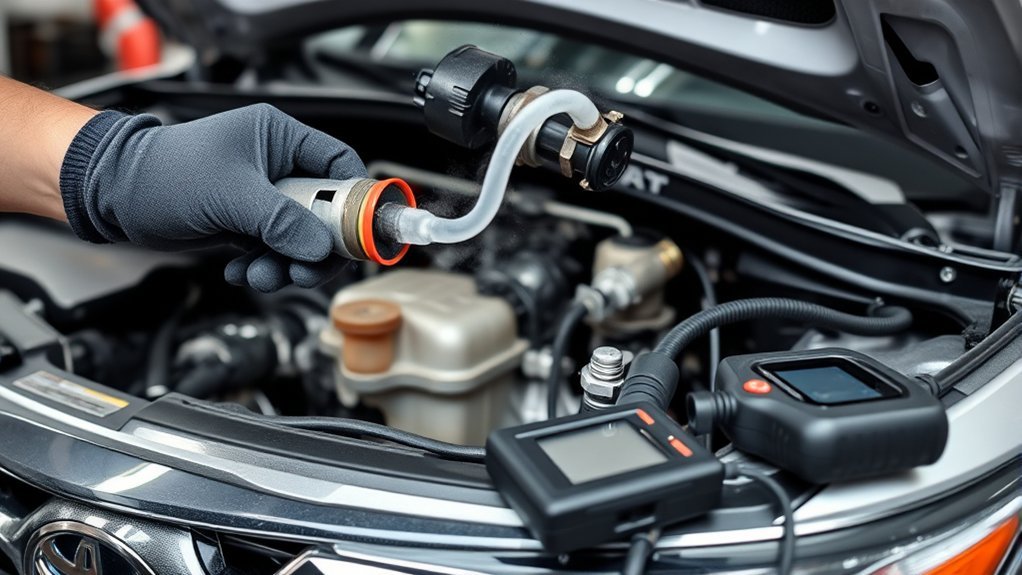
Professional diagnosis makes sense when the fuel cap and visible lines look normal but P0456 keeps returning. Very small EVAP leaks can be difficult to find without the correct scan-tool functions and smoke-testing equipment.
Call a qualified technician if:
- P0456 returns after the fuel cap and visible lines have been checked.
- Several EVAP-related codes appear together.
- You smell strong gasoline fumes or see signs of liquid fuel leakage.
- The purge or vent system needs electrical or functional testing.
- A charcoal canister or canister pump module is suspected.
- Your Camry may fall under a model-specific Toyota bulletin or calibration update.
- You do not have EVAP-rated leak-detection equipment.
A proper diagnosis can cost less than repeatedly replacing parts that are still working. If a shop recommends an expensive canister or multiple components without showing how the leak was confirmed, asking for the test results or getting a second opinion is reasonable.
Is It Safe to Drive With P0456?
A Camry with P0456 alone will usually remain drivable because the code normally concerns vapor containment rather than an immediate loss of engine oil pressure, cooling, braking, or primary fuel delivery.
However, do not ignore a strong raw-fuel smell, visible fuel leak, difficult starting, stalling, or additional warning lights. Those symptoms may indicate a different or more serious problem that deserves immediate inspection.
Tips for Maintaining Your Camry’s EVAP System to Prevent Leaks
- Close the fuel cap correctly after refueling. Check the seal if the cap stops clicking, becomes difficult to install, or shows visible damage.
- Do not top off the tank. Toyota instructs drivers to stop filling after the fuel nozzle automatically clicks off. Overfilling can send liquid fuel where the EVAP system is designed to handle vapor.
- Inspect aging hoses during routine service. Heat, age, and road exposure can harden or crack vapor lines.
- Do not ignore recurring EVAP codes. Repeatedly clearing the light without finding the cause can hide useful diagnostic information and reset readiness monitors.
- Use the correct replacement parts. Fuel caps, vapor hoses, valves, and canisters must match the vehicle’s model year and emissions configuration.
Frequently Asked Questions
What is the most common cause of a P0456 EVAP code?
A loose, damaged, or poorly sealing fuel cap is one of the first things to check because it is simple and inexpensive to inspect. However, P0456 can also come from hoses, purge or vent valves, the charcoal canister, leak-detection hardware, or a model-specific control issue. Do not replace the cap automatically if it passes inspection.
How much does it cost to fix code P0456 on a Toyota Camry?
There is no single normal price for P0456 because the code does not identify the failed part. Tightening a loose cap may cost nothing, while replacing a cap or hose is usually much less expensive than replacing a purge valve, vent assembly, or charcoal canister. Diagnosis should come before a repair estimate.
What is the code for a very small EVAP leak on a Toyota Camry?
P0456 is the OBD-II code commonly used for an EVAP-system very small leak. It means the Camry’s EVAP monitor detected system behavior consistent with a very small leak; it does not identify the exact component that failed.
How do you fix an EVAP-system leak detected on a Camry?
Confirm the code, inspect the fuel cap and visible vapor lines, check for additional EVAP codes and Toyota service information, then test the purge/vent system. If the leak is not visible, an EVAP-rated smoke test can locate small leaks. Repair the confirmed fault and verify that the monitor passes afterward.
Will P0456 clear itself after I tighten the gas cap?
It can if the cap was the only problem, but the check-engine light may not turn off immediately. The EVAP monitor must run again under its required conditions and pass enough times for the control module to stop reporting the fault. Clearing the code with a scan tool is faster, but it also resets readiness monitors.
Can I keep driving my Toyota Camry with P0456?
P0456 alone usually does not cause an immediate breakdown, and most vehicles continue to drive normally. Schedule a diagnosis, especially if an emissions inspection is approaching. Stop and investigate sooner if you notice a strong gasoline odor, visible fuel leakage, stalling, hard starting, or additional serious warning lights.
Sources
- U.S. EPA — Tier 3 Evap/OBD Summary — EVAP leak-monitoring requirements and the 0.020-inch monitoring threshold for applicable vehicles.
- U.S. EPA — Performing Onboard Diagnostic System Checks — OBD EVAP monitoring and small-leak detection background.
- Toyota — 2025 Camry Owner’s Manual: Opening the Fuel Tank Cap — correct cap closure, refueling safety, and Toyota’s instruction not to top off the fuel tank.
- Toyota — 2016 Camry Quick Reference Guide — fuel-cap tightening and check-engine-light guidance.
- Bosch Automotive Service Solutions — SMT 300 Smoke Tester Operator Manual — safe EVAP smoke-testing procedure and inert-gas guidance.
Conclusion
A P0456 code on a Toyota Camry means the EVAP system failed a very-small-leak test, but it does not tell you which part to replace. Begin with the fuel cap, filler-neck sealing area, hoses, and other easy inspections. Check for companion codes and model-specific Toyota information before moving to valve testing or an EVAP smoke test.
Most P0456 cases do not create an immediate drivability problem, but repairing the underlying fault helps keep fuel vapors contained, allows the emissions monitor to operate correctly, and reduces the chance of an inspection failure or a larger EVAP problem later.
