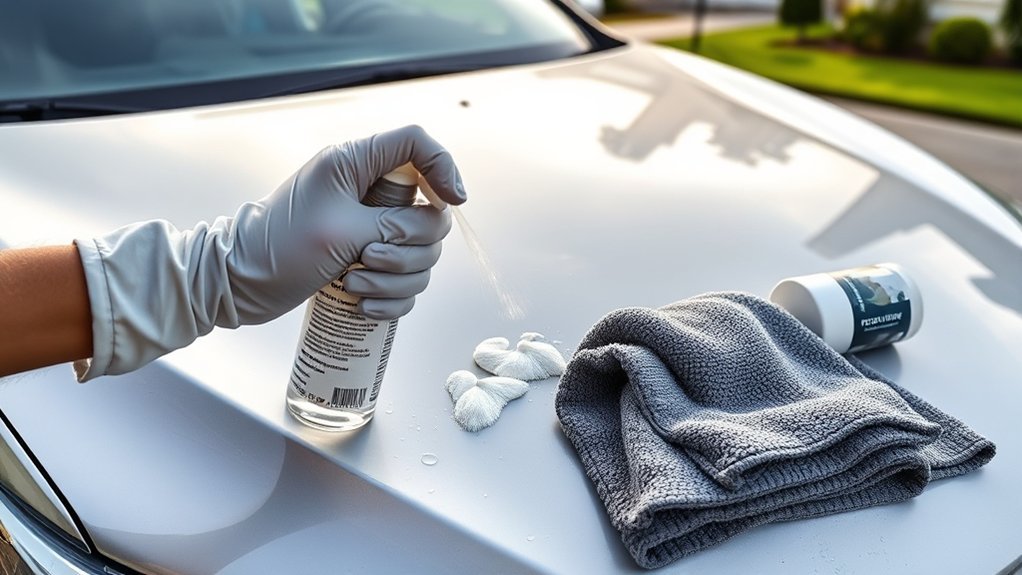
Bird droppings can leave stubborn stains or dull etched marks on a Toyota Camry’s clear coat, especially when they dry on a hot panel. The safest approach is simple: reduce exposure when parking, remove deposits promptly without scrubbing, and maintain a protective layer that makes future cleanup easier. Wax, sealant, ceramic coating, paint-protection film, and a properly used car cover can all help, but none replaces careful cleaning.
Quick Answer
Protect your Camry’s paint by parking away from trees, wires, ledges, and streetlights; removing bird droppings as soon as practical; and keeping wax, sealant, or ceramic protection in good condition. Soften dried deposits with water or a paint-safe cleaner, lift them with clean microfiber, rinse, and never scrub or scrape them dry.
Key Takeaways
- Remove droppings promptly, but do not trade speed for aggressive rubbing.
- Soften hardened material before lifting it, and repeat the soak if it resists.
- Use clean microfiber, water, pH-neutral car shampoo, rinseless wash, or a product labeled safe for automotive paint.
- Wax and ceramic coatings add sacrificial protection, but neither makes the paint immune to etching.
- Install a car cover only on a reasonably clean, dry vehicle so trapped grit does not rub against the finish.
At a Glance
| Time Required | About 5–15 minutes for one spot; longer if the deposit is dry and needs repeated soaking |
| Difficulty | Easy for cleaning; professional help may be needed for remaining etching |
| Tools Needed | Clean water, spray bottle or hose, pH-neutral car shampoo or paint-safe detail spray, several clean microfiber towels, and optional disposable gloves |
| Cost | About $0–$25 for spot-cleaning supplies; covers, wax, ceramic coating, and paint-protection film cost extra |
Why Protect Your Car From Bird Droppings?
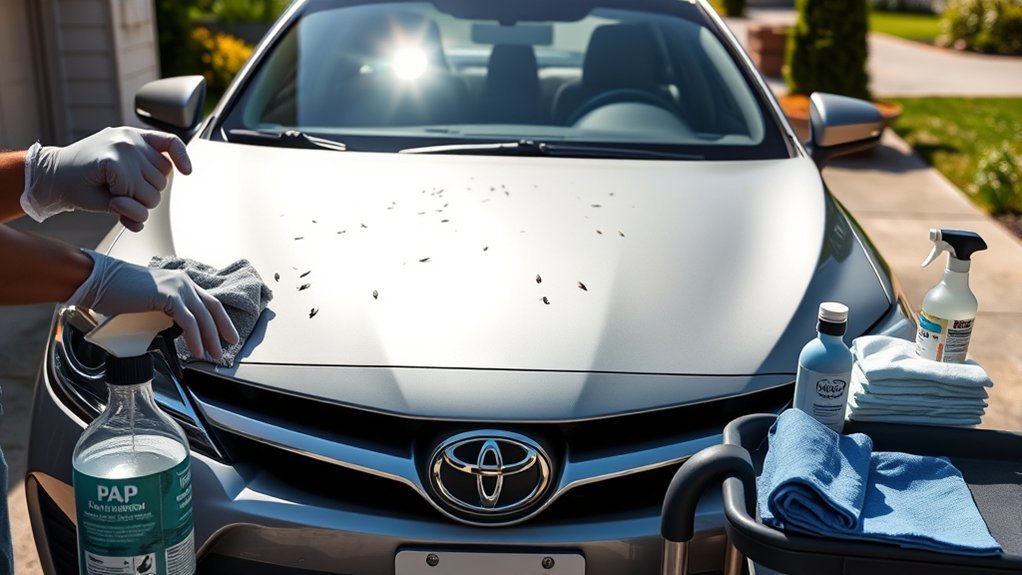
Bird droppings contain moisture, mineral compounds, organic material, and sometimes grit from a bird’s diet. Their exact composition is not identical in every deposit, so there is no single pH or universal number of safe exposure hours that applies to every car.
What matters in practice is that a deposit can dry tightly against the clear coat, stain the surface, or contribute to a dull etched mark. Heat and direct sunlight can make the material dry faster and can increase stress on the paint around the deposit. Rubbing the dried material can create additional scratches if it contains sand, seeds, or other particles.
There is no guaranteed safe exposure window. Remove a deposit as soon as practical, but soften it first and use gentle technique rather than scrubbing for speed.
A maintained wax, sealant, ceramic coating, or paint-protection film provides a sacrificial surface between the contamination and the factory finish. These products can make cleaning easier and may reduce the chance that a brief exposure reaches the clear coat, but they cannot make bird droppings harmless.
Park Smart to Avoid Bird Droppings
Smart parking cannot eliminate every incident, but it can significantly reduce how often your Camry is exposed. Before leaving the vehicle, look above the space as well as around it.
- Choose parking spots away from trees, utility wires, utility poles, signs, and streetlights where birds commonly perch.
- Use an open area with no branches, wires, or other perches directly above the vehicle.
- Avoid building ledges, roof edges, awnings, and overhangs with visible nests or accumulated droppings.
- When possible, park in a garage, carport, or other covered area.
- On your own property, remove open food, pet food, and overflowing trash that attract birds near the parking area.
- Use only humane and lawful bird deterrents on private property. Reflective devices may lose effectiveness as birds become accustomed to them, so they should not be treated as a complete solution.
Pro Tip: Before parking, spend five seconds checking the pavement. Repeated white spotting on the ground is a strong sign that birds regularly perch above that space.
Quickly Clean Bird Droppings
Even with careful parking, droppings can still land on your Camry. Clean them as soon as practical, preferably after moving the vehicle into shade and allowing a hot panel to cool. Work gently and use enough liquid to keep the surface lubricated.
Supplies for Safe Cleaning
- Clean water in a spray bottle, watering can, or hose
- Several clean, soft microfiber towels
- pH-neutral automotive shampoo, rinseless wash, waterless wash, or quick detailer labeled safe for the vehicle’s finish
- Optional disposable gloves
- A small sealable bag for the used towel if you are cleaning away from home
A paint-safe quick detailer can be useful when the rest of the vehicle is already clean. For a heavily dusty or gritty panel, rinsing the area first is safer than wiping contamination across dry paint.
Warning: Never scrape a dry deposit with a fingernail, plastic card, razor, brush, paper towel, or abrasive pad. Do not rub harder when it resists. Add more liquid, let it soften, and try again with a clean section of microfiber.
How to Remove a Fresh Bird Dropping
| Step | Action |
|---|---|
| 1 | Move into shade if practical and let a hot panel cool. |
| 2 | Flood the deposit and the surrounding area with clean water or a paint-safe cleaner. |
| 3 | Lay a wet microfiber towel over the spot for one or two minutes so the material loosens. |
| 4 | Lift or gently roll the towel away. Avoid grinding the deposit across the paint. |
| 5 | Use a fresh towel face and additional liquid for any remaining residue. |
| 6 | Rinse or wash the cleaned area, then blot it dry with another clean microfiber towel. |
How to Remove Dried or Baked-On Droppings
A dried deposit needs more soaking, not more force. Saturate a microfiber towel with lukewarm water or a paint-safe cleaning solution and lay it over the deposit for five minutes. Keep the towel wet. If the material is still firm, re-saturate it and wait another five minutes.
Once softened, lift the material in small sections. Turn to a clean part of the towel after each pass so grit is not dragged back across the finish. Repeat the soak-and-lift process until the deposit is gone, then wash and rinse the area.
Note: Lukewarm water can help soften a deposit, but avoid pouring very hot water onto cold glass or paint. Sudden temperature changes can stress materials, and hot liquid is unnecessary for safe removal.
What Not to Use
- Dry paper towels, napkins, tissues, or newspaper
- Scouring pads, brushes, magic-eraser-type abrasives, or steel wool
- Household bleach, bathroom cleaner, oven cleaner, or strong degreaser
- Undiluted vinegar or other homemade acidic mixtures
- Unapproved solvents, adhesive removers, or bug-and-tar products on wraps, matte paint, coatings, or PPF
- Machine polishers, compound, or sandpaper unless you understand clear-coat correction and can measure the remaining finish
Always read the cleaner’s label and test an unfamiliar product in an inconspicuous area. Owners of matte paint, vinyl wraps, paint-protection film, or professionally installed ceramic coatings should use products approved by the finish or coating manufacturer.
Basic Hygiene
For one or two spots on a vehicle, basic precautions are usually sufficient: avoid touching your face, wear disposable gloves if desired, discard or isolate the contaminated towel, and wash your hands with soap and water afterward.
Do not dry-sweep, blow, or scrape a large accumulation of old droppings. The CDC and NIOSH advise that disturbing material contaminated by substantial bird or bat droppings can release fungal spores in some environments. Large deposits in a garage, carport, building, or long-abandoned vehicle may require more protective controls or professional cleanup.
Protect Your Car With a Quality Cover
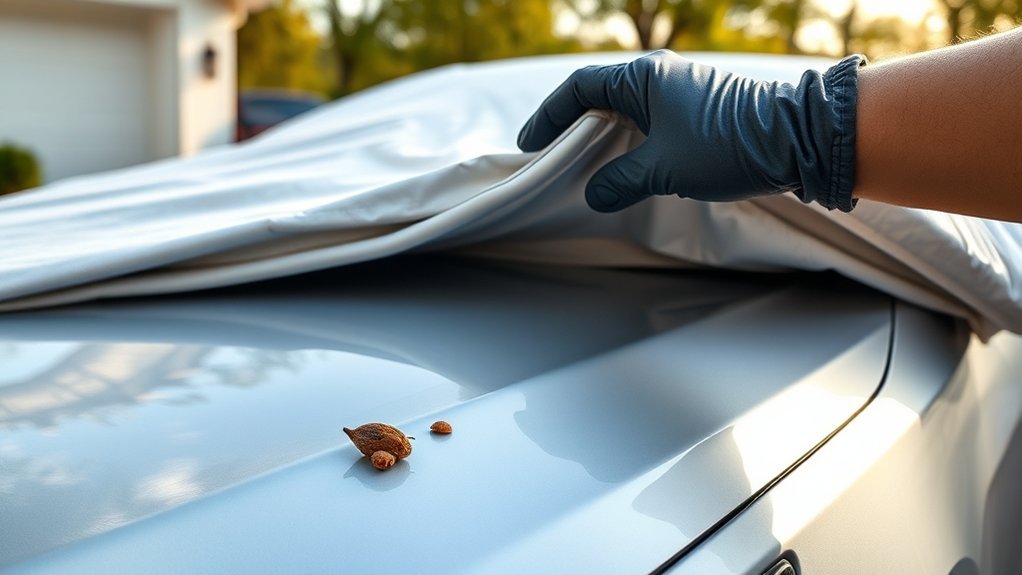
A quality car cover can shield your Camry from droppings while it is parked, but the cover must fit properly and be used on a reasonably clean, dry vehicle. Dirt trapped between the fabric and paint can act like an abrasive when wind moves the cover.
Choose the Right Cover
Select a cover designed for the Camry’s body shape and for the environment in which it will be used. Useful features include:
- Breathable material that allows trapped moisture to escape
- Water-resistant construction suited to outdoor use
- UV-resistant fabric for prolonged sun exposure
- A soft inner surface that is clean and free from embedded grit
- Secure straps or hems that reduce movement in wind
- Light-colored fabric that absorbs less heat in sunny climates
- Washable material that can be maintained according to the manufacturer’s instructions
Ensure Proper Fitment
A loose cover can flap against the hood, roof, mirror caps, and fenders. A cover that is too tight may strain seams or rub against sharp edges. Choose the correct Camry generation and body configuration, secure every supplied strap, and check that the fabric does not drag on the ground.
Inspect the cover regularly for sand, leaves, hardened droppings, torn lining, or damaged fasteners. Clean and fully dry it before reinstalling it. If the vehicle is wet, muddy, or heavily dusty, wash and dry it before covering whenever practical.
Warning: Do not place a dirty cover on clean paint or a clean cover on dirty paint. Both situations can trap abrasive particles against the finish.
Apply High-Quality Wax for Enhanced Defense
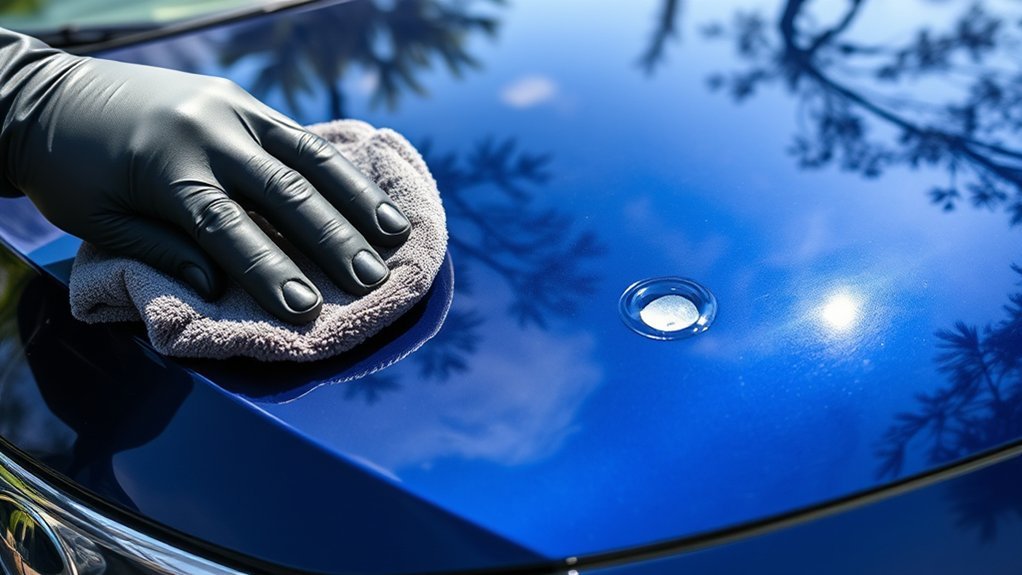
Automotive wax creates a sacrificial layer over the clear coat. It can make fresh contamination easier to release, improve water behavior, and reduce direct contact between environmental residue and the factory finish. Wax is not permanent, so its condition must be checked and renewed.
Benefits of High-Quality Wax
- Adds a temporary barrier between contamination and clear coat
- Makes many fresh deposits easier to rinse or lift
- Improves gloss on compatible glossy paint
- Helps water and light grime release during routine washing
- Provides an inexpensive protection option that can be applied at home
Wax should not be used on matte finishes unless the product specifically states that it is matte-safe. Traditional wax can create uneven shine on matte paint or matte vinyl.
Application Tips for Wax
- Wash the Camry thoroughly and remove bonded contamination before waxing.
- Dry the paint completely and work in shade on a cool surface.
- Use an automotive wax compatible with the vehicle’s finish and any existing coating.
- Apply a thin layer with a clean applicator using straight, overlapping passes or the pattern directed on the label.
- Allow the product to haze or cure only for the time specified by the manufacturer.
- Buff gently with a clean microfiber towel, turning the towel frequently.
- Inspect seams, emblems, and trim for residue.
More product does not usually create more protection. A thin, even coat is easier to cure and remove than a heavy application.
How Often Should You Wax?
There is no single schedule that fits every wax. A traditional carnauba product, synthetic liquid wax, spray wax, and polymer sealant can have very different service lives. Sun exposure, outdoor parking, frequent washing, strong detergents, winter salt, and high mileage can shorten protection.
Follow the product label first. As a practical check, inspect whether the paint has become harder to clean and whether water behavior has noticeably weakened compared with the freshly protected surface. Some owners may reapply every few months, while a short-life spray product may need more frequent use and a durable sealant may last longer.
Ceramic Coating for Longer-Term Protection
Ceramic coating chemically bonds to a properly prepared surface and creates a durable sacrificial layer. Compared with a basic wax, a quality coating may offer longer service life, stronger chemical resistance, and easier washing. It can be useful for a Camry that spends substantial time outdoors or is repeatedly exposed to birds, tree residue, and road contamination.
However, ceramic coating does not prevent every stain, water spot, scratch, or etched mark. Bird droppings should still be removed promptly. If a deposit remains long enough to damage the coating, the affected area may need decontamination, polishing, or recoating.
Coating longevity depends on the selected product, paint preparation, installation quality, mileage, storage, wash method, maintenance products, and warranty conditions. Some professional products are sold with multi-year service expectations, while consumer spray coatings may require much more frequent renewal. Review the installer’s aftercare instructions before using strong cleaners, clay, polish, or compound.
Compare Paint-Protection Options
| Protection | Best For | Main Limitation |
|---|---|---|
| Wax | Affordable DIY gloss and short-term sacrificial protection | Needs regular reapplication |
| Synthetic sealant | Owners who want easier DIY application with potentially longer durability than basic wax | Still does not prevent physical scratches or neglect damage |
| Ceramic coating | Longer-term chemical resistance and easier routine washing | Requires careful preparation and maintenance; not immune to etching |
| Paint-protection film | A physical barrier on high-exposure panels such as the hood, roof edge, mirrors, and front fenders | Higher cost; film can still stain or require replacement if neglected |
| Car cover | A parked Camry regularly exposed beneath roosting areas | Can abrade paint if the vehicle, cover, or fit is poor |
These protections can be combined. For example, paint-protection film may be installed on vulnerable panels and topped with a compatible coating. Confirm compatibility with the film or coating installer before layering products.
What to Do if a Stain or Etched Mark Remains
After cleaning, dry the panel and inspect it in indirect light. A remaining mark may be leftover residue, a mineral stain, a temporary outline in the protection product, or actual clear-coat etching.
- Rewash the area: Use pH-neutral car shampoo and clean microfiber to rule out remaining residue.
- Inspect after the panel cools: Heat and moisture can change how a mark appears.
- Check the protection layer: Wax or sealant may have been weakened and may need local reapplication.
- Contact the installer: For ceramic coating or PPF, ask the installer before using clay, polish, solvent, or compound.
- Stop if the mark is dull or textured: A persistent dull halo may be etching that requires controlled polishing.
Warning: Wet sanding and aggressive machine compounding remove measurable clear coat. If you cannot identify the defect, measure paint thickness, and control the polishing process, take the Camry to a reputable detailer or body shop.
Frequently Asked Questions
How do I protect Camry paint from bird droppings?
Park away from overhead perches, clean deposits promptly, maintain wax or another compatible protective layer, and use a fitted car cover when the vehicle will remain beneath a high-risk area. Keep water, paint-safe cleaner, and clean microfiber towels in the trunk for quick removal.
Will bird droppings ruin my car paint?
They can stain or etch the clear coat when left in place, particularly when the deposit dries on a hot panel. The outcome depends on the deposit, exposure time, paint condition, temperature, and existing protection. Prompt, gentle removal lowers the risk.
Does car wax protect paint from bird droppings?
Wax provides a temporary sacrificial barrier and can make fresh contamination easier to remove. It does not make droppings harmless, and worn wax may offer little benefit. Reapply it according to the product instructions and the conditions in which the Camry is stored and washed.
Does ceramic coating protect paint from bird droppings?
Ceramic coating can improve chemical resistance and make cleaning easier, but it is not immune to staining or etching. Remove deposits promptly and follow the coating manufacturer’s aftercare instructions. A neglected deposit may damage the coating and require polishing or recoating.
How do I remove dried bird droppings without scratching the paint?
Saturate the deposit with water or a paint-safe cleaner, cover it with a wet microfiber towel for about five minutes, and repeat if it remains hard. Lift the softened material instead of scrubbing it, use a fresh towel face for each pass, and wash the area afterward.
What should I do if a bird-dropping outline remains after cleaning?
Rewash and dry the area first. If a dull halo remains, the clear coat or protective coating may be etched. Avoid aggressive compound or sandpaper. Ask a professional detailer or body shop to inspect it, especially if the panel has ceramic coating, paint-protection film, matte paint, or a vinyl wrap.
Conclusion
The best defense against bird-dropping damage is a combination of prevention, gentle removal, and maintained paint protection. Park away from common perches, keep a small cleaning kit in the Camry, soften every dried deposit before lifting it, and never scrub grit across the clear coat.
A fitted cover, wax, synthetic sealant, ceramic coating, or paint-protection film can add useful protection, but each has limits. Continue to inspect and clean the vehicle rather than relying on a coating alone. When a dull mark remains after washing, stop before aggressive correction and have the finish assessed professionally.
Sources
- Toyota Warranty and Owner’s Manuals — model- and year-specific vehicle care information
- CDC/NIOSH: Histoplasmosis and Work — risks associated with disturbing material contaminated by large accumulations of bird or bat droppings
- Meguiar’s Ultimate Quik Detailer — example of a manufacturer-labeled automotive spot-cleaning product
- Progressive: How Often to Wash a Car — maintenance frequency factors including climate, storage, and contamination exposure
