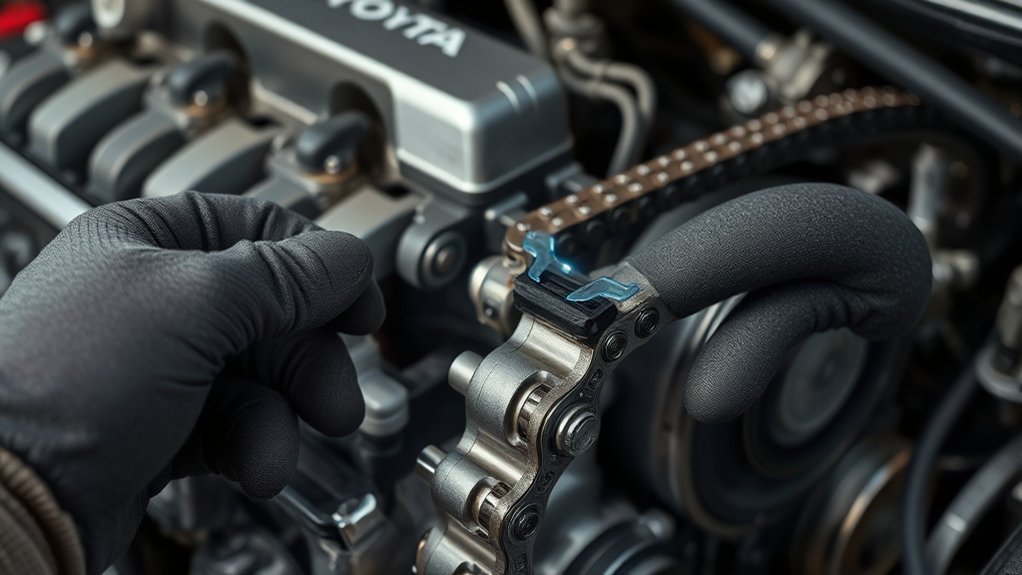
On a chain-equipped Toyota Camry, the timing chain is not normally treated like a routine replacement item with a fixed mileage interval. Its service life depends heavily on the exact model year and engine, oil condition, and whether the tensioner and guides stay healthy. If you hear a persistent rattle, see a check-engine light, or notice rough running, diagnose the cause promptly rather than replacing the chain based on mileage alone.
Quick Answer
Most chain-equipped Toyota Camrys do not have a routine timing-chain replacement interval. The chain can last a very long time when the engine is properly maintained, but there is no guaranteed 200,000- or 300,000-mile lifespan. Replace it only when inspection and diagnosis confirm excessive wear, stretch, guide damage, or tensioner failure.
Key Takeaways
- Confirm your Camry’s model year and engine first. Some older Camrys used timing belts rather than chains.
- There is no universal Toyota rule that a timing chain must be replaced at 100,000, 200,000, or 300,000 miles.
- Persistent startup rattle, cam/crank correlation faults, rough running, or poor performance justify diagnosis, but none of these symptoms proves the chain is bad by itself.
- Use the oil grade and service interval in the maintenance guide for your exact Camry; incorrect oil level, degraded oil, or sludge can affect hydraulic tensioners and variable valve timing.
Note: Camry timing hardware varies by year and engine. Toyota maintenance guides for some older V6 Camrys specify a timing-belt replacement interval, while newer chain-equipped Camrys follow different maintenance requirements. Verify the engine and year before applying any replacement advice.
Understanding the Function of Timing Chains in Your Toyota Camry
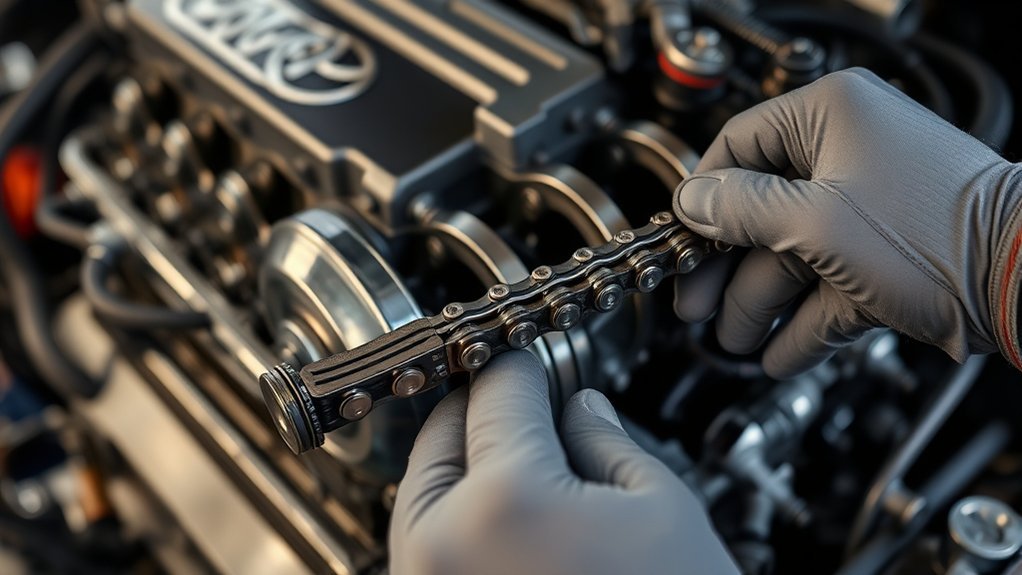
The timing chain connects the crankshaft to one or more camshafts so the valves operate in step with piston movement. A chain-driven system also depends on guides and a tensioner to control slack. On many modern engines, the tensioner uses engine oil pressure, so oil level, viscosity, cleanliness, and pressure can affect how quietly and accurately the system works.
Unlike a timing belt, a timing chain is generally not replaced simply because the vehicle reaches a certain mileage. Toyota’s 2025 Camry Warranty & Maintenance Guide lists scheduled maintenance through 150,000 miles without a routine timing-chain replacement item. That does not mean a chain cannot wear; it means condition and symptoms matter more than a blanket mileage rule.
Signs That Your Timing Chain May Be Failing
A worn chain, weak tensioner, or damaged guide can create symptoms, but the same symptoms can also come from oil-pressure problems, variable-valve-timing components, ignition faults, sensors, or other engine issues. Treat these as reasons to inspect the system, not as proof that the chain must be replaced.
- Persistent rattling or slapping: Noise from the timing-cover area, especially for more than a brief moment after startup, deserves attention.
- Check-engine light: Camshaft/crankshaft correlation or valve-timing faults can appear when timing is no longer where the engine control module expects it to be.
- Rough idle, misfires, hesitation, or reduced power: Incorrect cam timing can affect combustion and engine performance.
- Hard starting or stalling: A severely worn or jumped chain can interfere with normal starting and running.
- Metal or plastic debris: Debris found during oil service or inside the timing area can point to wear of guides, sprockets, or related components.
Oil leaks near the timing cover should also be repaired, but a leak by itself does not prove the chain is worn. The concern is that a low oil level or oil-pressure problem can reduce lubrication and interfere with tensioner operation.
Warning: If the engine develops a loud continuous timing-area rattle, suddenly loses power, stalls, or runs very roughly with warning lights, avoid continued driving. A chain that jumps timing can cause major engine damage on engines where piston-to-valve clearance is limited. Have the vehicle towed for diagnosis if the symptoms are severe.
What Happens When a Timing Chain Breaks?
If a timing chain breaks or jumps far enough out of position, the camshaft and crankshaft can lose synchronization. The engine may stop immediately or refuse to restart. On an interference-type engine, incorrect valve timing can allow pistons and valves to contact each other, which may bend valves or damage pistons and the cylinder head.
The actual damage depends on the engine design and how far the timing moved. That is why a mechanic should confirm the Camry’s exact engine before estimating the repair. Even when internal contact does not occur, a failed chain system can still require replacement of the chain, guides, tensioner, seals, and any damaged sprockets or timing-cover components.
Top Causes of Timing Chain Problems
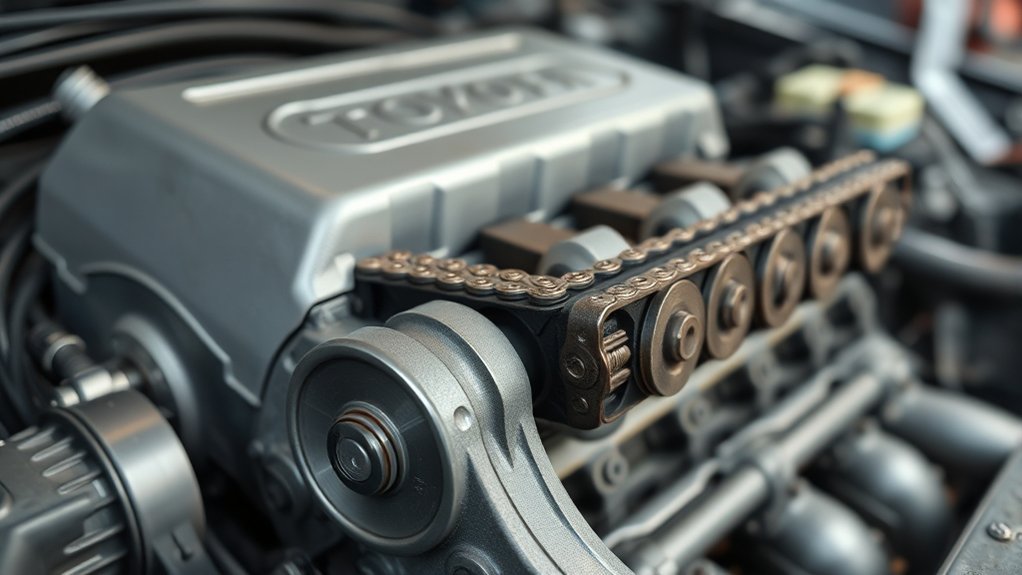
Timing-chain problems are usually related to wear, lubrication, or a failed supporting component rather than one single cause. Common contributors include:
- Low oil level or extended oil service: Poor lubrication can accelerate wear and can affect oil-fed tensioners.
- Incorrect oil viscosity: Using oil that does not meet the specification for the exact engine can affect oil flow and variable valve timing.
- Sludge or restricted oil passages: Deposits can reduce oil delivery to the tensioner or cam-timing hardware.
- Worn guides or tensioner: A weak tensioner or damaged guide allows extra chain movement and noise.
- High mileage and normal mechanical wear: Chains, sprockets, and guides can wear over time even with good maintenance.
- Previous repair or installation errors: Incorrect timing alignment, reused damaged parts, or improper fastener torque can create serious problems.
Overheating can damage engine oil and other components, but faded factory paint marks on a chain are not a valid wear measurement. Chain condition should be judged by diagnostic data, physical inspection, tensioner travel, guide condition, timing alignment, and manufacturer service procedures.
Why Regular Maintenance Matters for Your Timing Chain
Good oil maintenance is one of the most important things you can control. However, “change the oil every 5,000 miles” is not a universal Camry rule. Toyota schedules vary by model year, engine, oil specification, and operating conditions, so the correct interval is the one listed for your specific vehicle.
Oil Change Frequency
For one current example, the 2025 Camry maintenance guide calls for engine oil and filter replacement after 12 months or 10,000 miles under the normal schedule, while 5,000 miles or six months applies under listed special operating conditions such as frequent dirt/dust exposure or repeated very short trips in below-freezing temperatures. Older Camrys can have different oil requirements, so do not copy the 2025 interval to every model year.
Use the oil grade and viscosity specified in your owner’s manual, check the level between services, and address abnormal oil consumption or low-pressure warnings promptly.
Early Detection Benefits
Early diagnosis can prevent a small tensioner, guide, or lubrication problem from becoming a much larger repair. Pay attention to changes in startup noise, idle quality, warning lights, and performance. If symptoms appear, a technician can check oil condition and pressure, scan for diagnostic trouble codes, compare camshaft and crankshaft timing data, and inspect the timing components as required.
Pro Tip: Before authorizing a full timing-chain replacement, ask what test confirmed the diagnosis. Low oil, a faulty camshaft actuator, sensor problems, or a tensioner fault can create similar symptoms. A code number or startup rattle alone is not enough to prove the chain itself is stretched.
How Long Can You Expect Your Timing Chain to Last?
There is no single mileage at which every Toyota Camry timing chain fails, and Toyota does not publish a universal 200,000- or 300,000-mile replacement rule for chain-equipped Camrys. A well-maintained chain may remain serviceable for a very high mileage, while another can develop problems earlier because of lubrication issues, tensioner wear, guide damage, previous repairs, or severe operating conditions.
Instead of replacing the chain at an arbitrary mileage, use three checks:
- Follow the maintenance guide: Keep oil and other engine service current for your exact model year and engine.
- Watch for symptoms: Investigate new rattle, rough running, hard starting, or warning lights.
- Confirm before replacing: Have the timing system tested and inspected when symptoms or diagnostic data point to a mechanical timing problem.
A Toyota Camry timing chain should be replaced because its condition or diagnosis calls for it—not simply because the odometer reached a round number.
Timing Chain Replacement Costs
Timing-chain replacement is usually a labor-intensive engine repair, so professional bills can run into the thousands of dollars. A reliable estimate cannot be based on “Toyota Camry” alone because labor time, parts, and access differ by model year and engine, and prices vary by location.
Before approving the job, ask for a written estimate that separates:
- Timing chain, guides, tensioner, and related sprockets or actuators
- Gaskets, seals, engine oil, coolant, and other one-time-use items
- Labor for disassembly, timing setup, reassembly, and verification
- Any additional repair for valve, piston, cylinder-head, or timing-cover damage
DIY parts cost alone is not a safe way to judge this job. Timing-chain replacement requires accurate engine timing, proper torque procedures, specialty tools on some engines, and careful sealing of the timing cover. An error can cause a no-start condition or serious engine damage.
How to Extend Your Timing Chain’s Lifespan
You cannot guarantee a timing chain will last forever, but you can reduce avoidable wear:
- Follow the correct oil interval: Use the maintenance schedule for your model year, engine, and driving conditions rather than a universal mileage rule.
- Use the specified oil: Match the Toyota-required viscosity and quality standard for your engine.
- Keep the oil level correct: Check it regularly, especially on an older or high-mileage engine that may consume oil.
- Fix leaks and oil-pressure problems: Low oil supply can affect lubrication and hydraulic timing components.
- Do not ignore new startup rattle: A brief sound can have several causes, but a persistent or worsening rattle deserves diagnosis.
- Address check-engine lights promptly: Early diagnosis may prevent a timing-control problem from progressing.
Why Choose OEM Parts for Timing Chain Replacement?
Toyota Genuine Parts are designed for the intended Toyota application and come with Toyota’s parts warranty when the warranty conditions are met. That makes OEM components a straightforward choice for fit and documentation, especially for a major internal-engine repair.
However, using non-OEM parts does not automatically void a U.S. vehicle warranty. The Federal Trade Commission’s auto-warranty guidance states that warranty coverage generally remains in effect when aftermarket or recycled parts are used, although coverage can be denied for damage caused by a defective or improperly installed part. Choose parts based on quality, exact compatibility, installer confidence, and warranty terms—not on the mistaken idea that federal law always requires OEM parts.
If you choose Toyota Genuine components, verify the exact part numbers by VIN. Toyota’s official parts catalog can help confirm vehicle-specific fitment and warranty information.
How to Identify Timing Chain Wear During Inspections
A timing chain is inside the engine, so a proper diagnosis usually combines symptoms, scan data, oil checks, and physical inspection rather than a quick visual check from outside the engine.
Listen for Unusual Noises
Listen for a metallic rattle or slapping sound from the timing-cover area, especially at startup. Note how long it lasts, whether it changes when the engine warms up, and whether it returns under acceleration. A technician can use that pattern along with scan data and oil-pressure checks to narrow the cause.
Inspect for Oil Leaks
Look for oil leaks around the timing cover, valve cover, and nearby seals. A leak is not proof of timing-chain wear, but a low oil level can reduce lubrication and may affect a hydraulic tensioner. Repair leaks and keep the oil at the correct level before assuming the chain is the root cause.
Monitor Engine Performance Regularly
Watch for rough idle, misfires, hard starting, stalling, reduced power, or a check-engine light. If a scan shows camshaft/crankshaft correlation or valve-timing faults, the next step is diagnosis—not automatic chain replacement. The technician should rule out oil, actuator, solenoid, sensor, wiring, and other causes before opening the engine.
Frequently Asked Questions
How long does a timing chain last on a Toyota Camry?
There is no guaranteed mileage. Toyota’s maintenance schedule for chain-equipped Camrys does not set a universal replacement interval. A well-maintained chain can last a very long time, but oil problems, worn guides, or a failing tensioner can shorten its service life.
What happens if your timing chain starts to go bad?
You may hear rattling, see a check-engine light, or notice rough running, hard starting, or reduced power. If the chain jumps timing, the engine can stall or fail to start, and some engine designs can suffer internal piston-to-valve damage.
How do you know when a timing chain needs replacing?
Replacement should follow a confirmed diagnosis. Useful evidence includes timing correlation faults that remain after other causes are ruled out, excessive chain slack, a worn or extended tensioner, damaged guides, abnormal mechanical timing, or visible component damage during inspection.
Can a timing chain last 300,000 miles?
It is possible for a chain to remain serviceable at very high mileage, but 300,000 miles is not a Toyota guarantee or a standard expected lifespan. Condition, maintenance history, oil control, and the health of the tensioner and guides matter more than a single odometer target.
Conclusion
A Toyota Camry timing chain can provide long service when the engine is maintained correctly, but there is no universal mileage guarantee. Follow the oil requirements for your exact model year and engine, investigate persistent rattle or timing-related faults early, and replace the chain only when proper diagnosis confirms wear or failure. If your Camry is an older model, verify first whether it uses a chain or a timing belt.
Sources
- Toyota 2025 Camry Warranty & Maintenance Guide — current Camry maintenance intervals and timing-chain warranty coverage.
- Toyota Scheduled Maintenance Guide for 2005 Models — documents the 90,000-mile timing-belt service for specified older Camry V6 engines.
- Toyota Maintenance Schedule — directs owners to year- and vehicle-specific factory maintenance information.
- Federal Trade Commission: Auto Warranties and Auto Service Contracts — explains U.S. warranty rights when aftermarket parts or independent service are used.
- Toyota Genuine Parts — vehicle-specific parts fitment and Toyota parts-warranty information.
