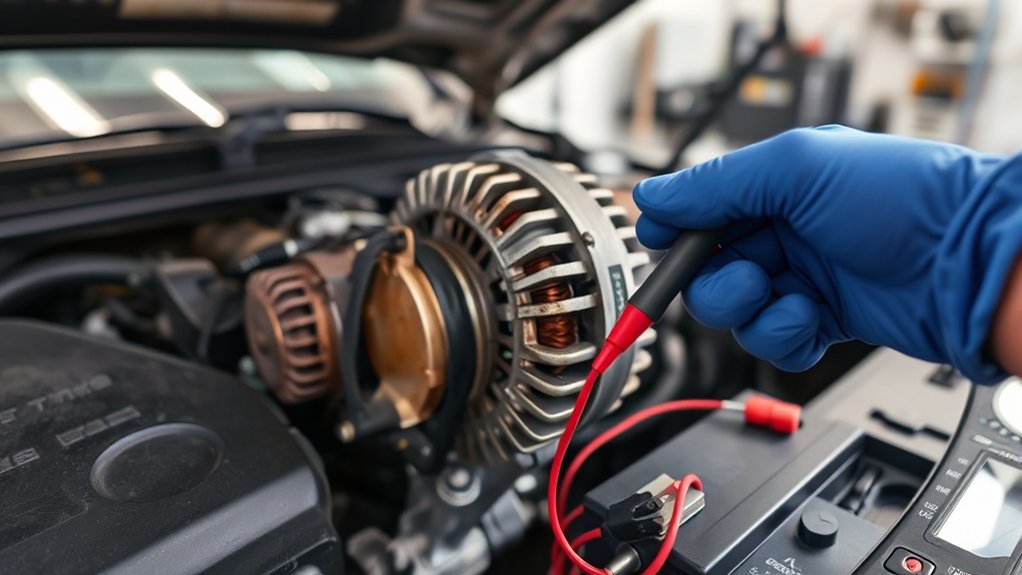
A Toyota Camry alternator does not have one guaranteed lifespan or a Toyota-mandated replacement mileage. On a conventional gasoline Camry, it may work for many years, but heat, battery condition, belt problems, wiring resistance, and electrical load can shorten its life. The right time to replace it is after testing confirms that the charging system cannot meet the specification for your model.
Quick Answer
A Camry alternator has no universal replacement interval. It may work for many years, but age and mileage alone cannot prove its condition. Warning signs include a charging-system light, dim or erratic lights, slow electrical accessories, and belt or bearing noise. Test the battery, belt, wiring, and alternator output before replacing parts.
Key Takeaways
- Toyota does not specify one mileage at which every Camry alternator must be replaced.
- The battery-shaped dashboard light warns about the charging system as a whole, not only the alternator.
- A weak battery, loose belt, blown fuse, damaged cable, poor ground, or excessive electrical load can imitate alternator failure.
- Camry Hybrid models use a motor-generator and power electronics rather than the conventional belt-driven alternator discussed here.
- Diagnosis should follow the owner’s manual or service information for the exact year, engine, and trim.
At a Glance
| Time Required | 10 to 20 minutes for basic visual and voltage checks; longer for a professional load or voltage-drop test |
| Difficulty | Basic for inspection and battery-terminal voltage checks; advanced for circuit, belt, or alternator removal work |
| Tools Needed | Safety glasses, flashlight, digital multimeter, and the correct Toyota owner’s or service manual |
| Cost | Basic checks may cost nothing if you own a meter; diagnostic and repair prices vary by model year, labor rate, and part quality |
Understanding the Role of a Toyota Camry Alternator
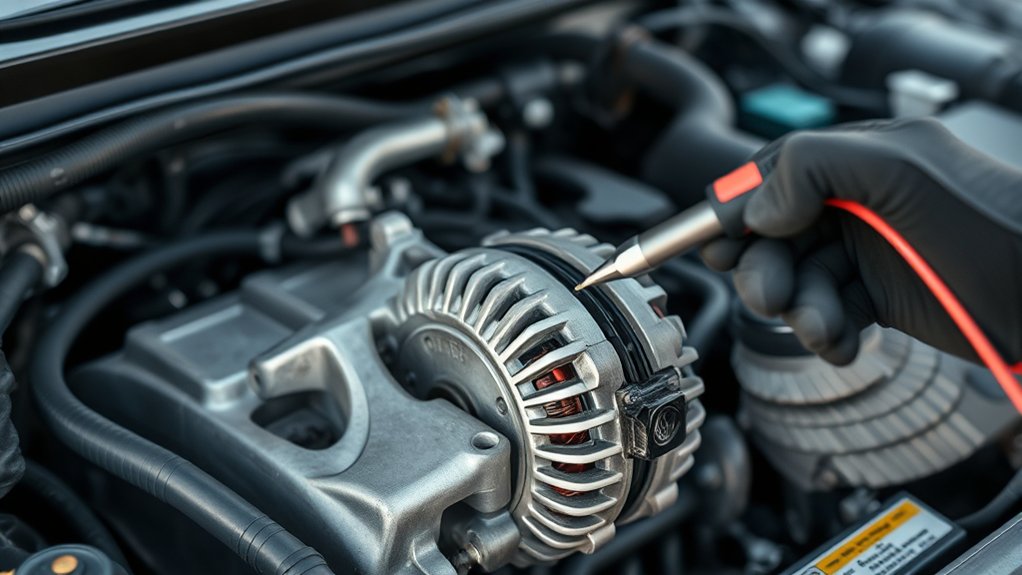
In a conventional gasoline Camry, the engine turns the alternator through a drive belt. The alternator supplies electrical power while the engine is running and helps recharge the 12-volt battery after starting. Its internal voltage regulator controls output, while the rectifier changes the alternator’s generated current into the direct current used by the vehicle.
A healthy charging system must support the ignition system, engine controls, lights, climate-control blower, audio equipment, and other accessories. A general engine-running reading of about 13.0 to 14.5 volts is common in conventional charging systems, but the correct value and test conditions depend on the vehicle. DENSO advises using the original equipment manufacturer’s service information for model-specific procedures and specifications.
Note: A Camry Hybrid is different. Toyota’s hybrid system uses motor-generators, a high-voltage battery, and power-control electronics. Do not apply conventional alternator tests or replacement advice to a hybrid without the correct Toyota service procedure.
Toyota Camry Alternator Lifespan: What to Expect
There is no single mileage or age that predicts when every Camry alternator will fail. Some units need attention earlier because of heat, contamination, belt trouble, a weak battery, or heavy electrical demand. Others remain serviceable for a high mileage. Figures such as 100,000, 150,000, or 200,000 miles are rough owner and repair-industry estimates, not a Toyota replacement schedule.
Instead of replacing the alternator at a preset mileage, watch for symptoms and test the complete charging circuit. Toyota provides owner’s manuals by model year, and those manuals should be your first reference for dashboard warnings and vehicle-specific maintenance information.
Replace a Camry alternator because testing shows it is faulty, not because the odometer has reached an arbitrary number.
Factors That Affect Alternator Life
An alternator normally has no routine internal service interval, but the condition of the parts around it can affect how hard it works and how long it lasts.
- Weak or failing battery: A battery that cannot hold a charge can make the alternator work harder and can also create symptoms that resemble alternator failure.
- Drive-belt condition and tension: A loose or worn belt may slip and reduce charging. Excessive tension can damage alternator bearings.
- Heat and contamination: High under-hood temperature, oil leaks, coolant, road splash, and dirt can damage electrical components and bearings.
- Electrical load: High-power aftermarket lighting, audio equipment, inverters, or poorly installed accessories may overload the system.
- Corroded or loose connections: Resistance at battery terminals, grounds, connectors, or fusible links can reduce charging voltage even when the alternator itself is usable.
- Frequent short trips: Repeated starts followed by very short drives may not give the system enough time to restore the energy used during starting, especially when the battery is cold or aging.
Key Warning Signs of Alternator or Charging-System Trouble
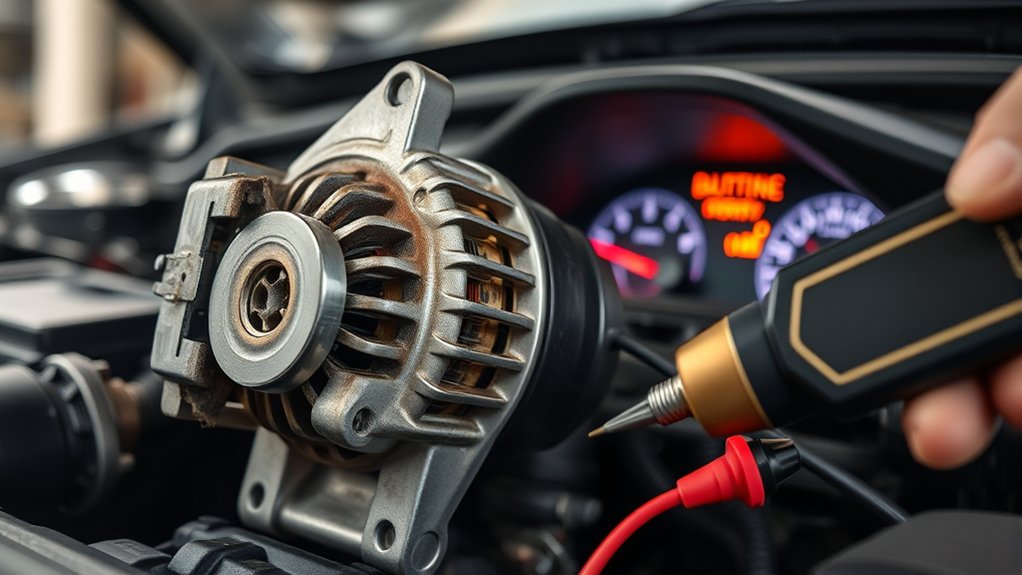
No single symptom proves the alternator is bad. Look for a pattern, then test the battery and charging circuit before buying parts.
| Symptom | What It May Mean | Best Next Step |
|---|---|---|
| Charging-system or battery-shaped light stays on | Low output, belt slip, wiring resistance, fuse or fusible-link trouble, weak battery, or regulator fault | Reduce electrical load and arrange prompt diagnosis |
| Headlights or interior lights dim, brighten, or pulse | Unstable system voltage, loose connection, belt slip, or charging fault | Check voltage at the battery and inspect connections |
| Slow power windows, weak blower, or electronic resets | Low system voltage or a discharged battery | Test the battery first, then test charging output under load |
| Hard starting or repeated need for a jump-start | Weak battery, parasitic drain, poor terminals, starter issue, or inadequate charging | Charge and load-test the battery before condemning the alternator |
| Grinding, rumbling, chirping, or whining near the belt drive | Alternator bearing, belt, tensioner, idler pulley, or another accessory | Have the noise isolated before replacing the alternator |
| Burning-rubber or hot-electrical smell | Slipping belt, overheated wiring, or overloaded component | Stop driving if smoke, severe heat, or belt damage is present |
What the Dashboard Battery Warning Light Means
The battery-shaped light is better understood as a charging-system warning. It does not automatically mean the battery needs replacement, and it does not prove the alternator has failed. DENSO lists weak battery condition, low idle, poor wiring, belt problems, open fuses, and alternator faults among the possible causes of charging warnings.
If the light remains on after the engine starts, check the owner’s manual for your exact Camry. Toyota advises giving immediate attention to red warning icons. Turn off nonessential loads such as the rear defroster, seat heaters, and high-volume audio, then move to a safe location. The engine may stop once the battery can no longer power the vehicle’s controls.
Warning: Do not disconnect a battery cable while the engine is running to “test” the alternator. The resulting voltage spike can damage electronic modules. Keep hands, clothing, tools, and meter leads away from the moving belt and pulleys.
Dim or Flickering Lights: What They Can Tell You
Lights that dim at idle, pulse with engine speed, or become unusually bright can point to unstable voltage. However, the cause may be a loose terminal, corroded ground, slipping belt, weak battery, regulator problem, or alternator fault. Compare the symptom with a voltage reading and inspect the connections instead of relying on brightness alone.
Normal voltage can also vary with temperature, battery state, and computer-controlled charging strategy. Use the Toyota specification for your year and engine whenever it is available.
How to Check a Camry Charging System Before Replacing the Alternator
1. Confirm the Powertrain
Verify whether the vehicle is a conventional gasoline Camry or a Camry Hybrid. The steps below apply to a conventional 12-volt alternator system. Hybrid high-voltage diagnosis should be left to trained technicians with the correct equipment.
2. Inspect the System With the Engine Off
- Look for loose or corroded battery terminals.
- Check visible ground cables and alternator connections for looseness, fraying, or heat damage.
- Inspect the drive belt for cracks, glazing, missing ribs, contamination, or obvious slack.
- Check the relevant fuses and fusible links using the owner’s manual or service information.
3. Check and Test the Battery First
A discharged or defective battery can distort charging-system results. DENSO recommends visually inspecting and performance-testing the battery before diagnosing the charging system. A fully charged conventional 12-volt battery is commonly near 12.6 volts with the engine off after surface charge has settled, but temperature and battery condition affect the reading.
4. Measure Engine-Running Voltage
Set a digital multimeter to DC volts and measure across the battery posts. On a conventional system, a general engine-running range is about 13.0 to 14.5 volts. A value below roughly 13.2 volts may indicate an alternator problem or excessive resistance in wiring or connections. A reading above about 14.5 volts may indicate a regulator, battery, or connection problem. These are general guides, not a substitute for Toyota’s model-specific specification.
5. Repeat the Check Under Electrical Load
With the engine running and the vehicle secure, switch on the headlights, blower, and rear defroster. A technician can compare alternator output at the unit and at the battery, perform a voltage-drop test on the positive and ground sides, and use a load or bench test when needed. This separates an alternator fault from cable resistance or another circuit problem.
Pro Tip: Record engine-off voltage, engine-running voltage, loaded voltage, warning-light behavior, and any noise. Those details help a technician reproduce the fault and avoid replacing a good alternator.
What to Do When You Hear Grinding or Whining Noises
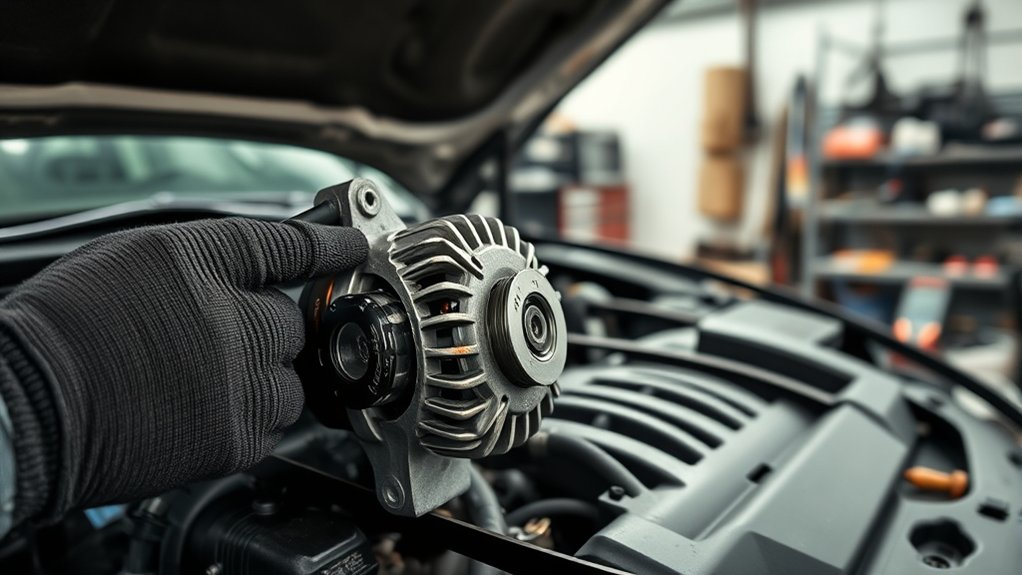
A noise near the alternator does not always come from inside the alternator. The drive belt, automatic tensioner, idler pulley, air-conditioning compressor, or another accessory may produce a similar sound.
Identify the Noise Source
Notice when the sound occurs. A squeal during startup or when electrical load increases may point to belt slip. A rough growl or rumble that changes with engine speed may come from a bearing. A high electrical whine may require output and diode testing. Do not lean over the running belt drive or use a loose tool near rotating parts.
Inspect the Belt and Pulleys Safely
With the engine off, inspect the belt and visible pulleys for damage, misalignment, looseness, or contamination. Internal alternator bearings cannot be confirmed by looking at the outside of the unit. A technician may remove the belt and rotate each pulley by hand, following the service procedure, to find roughness or play.
Seek Professional Assistance When Needed
Arrange professional diagnosis if the warning light stays on, the belt is damaged, the alternator or wiring is hot, the vehicle stalls, or you lack safe access to the components. Prompt testing can prevent a roadside shutdown and may reveal a less expensive belt, connection, fuse, or battery problem.
Alternator vs. Battery vs. Belt Problems
| Likely Area | Common Clues | Confirmation |
|---|---|---|
| Battery | Slow cranking after sitting, low reserve capacity, repeated discharge, swollen or leaking case | Charge and load-test the battery; inspect terminals and check for parasitic draw if it goes flat again |
| Alternator or regulator | Charging light while running, low or excessive output, unstable voltage, bearing noise, failed bench test | Output, load, diode-ripple, voltage-drop, or bench testing |
| Belt, tensioner, or pulley | Squeal, visible belt wear, irregular charging, pulley wobble, noise that changes with accessory load | Physical inspection and pulley check using the correct service procedure |
| Wiring, fuse, or ground | Intermittent warning light, heat at a connection, corrosion, normal alternator output but low battery voltage | Fuse inspection, continuity checks, and positive- and negative-side voltage-drop tests |
Consequences of Ignoring Charging-System Problems
A charging fault can progress from minor electrical symptoms to a no-start or engine shutdown. It can also damage the battery if the system repeatedly undercharges or overcharges it.
| Problem | Possible Result | Recommended Action |
|---|---|---|
| Undercharging | Discharged battery, slow cranking, electronic malfunctions, or engine shutdown | Test output, belt, battery, connections, and voltage drop promptly |
| Overcharging | Battery overheating, shortened battery life, bulb failure, or electronic damage | Stop unnecessary driving and inspect the regulator and sensing circuit |
| Belt or bearing failure | Loss of charging and possible damage to nearby belt-driven components | Inspect immediately, especially if there is smoke, heat, or a damaged belt |
Tips for Supporting Alternator Reliability
- Keep the battery healthy: Test an aging or repeatedly discharged battery instead of making the alternator compensate for it.
- Inspect the drive belt: Replace a cracked, glazed, contaminated, or incorrectly tensioned belt according to the proper service procedure.
- Keep connections clean and tight: Repair corrosion, loose terminals, damaged cables, and poor grounds.
- Fix leaks: Oil or coolant reaching the alternator can shorten component life.
- Install accessories correctly: Match added electrical equipment to the system’s capacity and use proper fusing, wire size, and grounds.
- Investigate warning signs early: A small voltage-drop or belt issue is often easier to correct before it causes a breakdown.
When the Alternator Should Be Repaired or Replaced
Replacement is justified when a bench or in-vehicle test shows that output is outside specification, the regulator cannot control voltage, the rectifier has failed, the pulley or bearings are damaged, or the housing and windings are compromised. On some alternators, a regulator or other component may be serviceable, but many shops replace the complete unit for reliability and warranty coverage.
Before authorizing replacement, ask for the test results and confirm that the battery, belt, fuses, cables, and grounds were checked. Also verify fitment by VIN, model year, engine, connector, amperage rating, and pulley design. Camry alternators are not interchangeable across every generation and powertrain.
Frequently Asked Questions
What are the warning signs that a Camry alternator may be failing?
Common clues include a charging-system light that stays on, dim or pulsing lights, slow electrical accessories, repeated battery discharge, unstable voltage, and grinding or whining near the belt drive. These symptoms can also come from the battery, belt, wiring, fuses, or grounds, so testing is necessary.
How long does an alternator last in a Toyota Camry?
There is no guaranteed age or mileage. A conventional Camry alternator may last for many years, but operating conditions and surrounding components matter more than a fixed number. Toyota does not call for routine replacement at one universal mileage.
How can I tell whether the alternator or battery is bad?
Charge and load-test the battery first, then measure charging voltage with the engine running and electrical loads on. A technician can perform voltage-drop, diode-ripple, output, and bench tests. A jump-start alone cannot identify which component is faulty.
How often should a Toyota Camry alternator be replaced?
Do not replace it on a calendar or mileage schedule unless the service information for your exact vehicle says otherwise. Replace or repair it when proper diagnosis confirms an internal fault or output outside the required specification.
Can I drive a Camry with the battery warning light on?
Driving is risky because the vehicle may be running only on stored battery energy and can shut down without much warning. Turn off nonessential electrical loads, move to a safe place, follow the owner’s manual, and arrange diagnosis or towing rather than continuing a long trip.
Does a Toyota Camry Hybrid have a conventional alternator?
No. Toyota hybrid systems use motor-generators and power electronics to manage electrical energy and charge the vehicle’s batteries. Hybrid diagnosis involves high voltage and requires the correct model-specific procedure and safety training.
Conclusion
A Toyota Camry alternator should be judged by symptoms and test results, not by a fixed mileage estimate. If the charging-system light, unstable lights, repeated battery discharge, or belt-drive noise appears, inspect the battery, belt, fuses, wiring, and grounds before replacing the unit. Use the manual and service specifications for the exact model year, and leave hybrid high-voltage work or difficult belt-drive diagnosis to a qualified technician.
Sources
- Toyota Manuals and Warranties: model-specific owner’s manuals and maintenance references
- Toyota Dashboard Warning Lights: official warning-light guidance
- DENSO Charging System Diagnosis: battery-first diagnosis, general voltage ranges, belt, fuse, wiring, and ground checks
- DENSO Charging System Troubleshooting: systematic output, belt, cable, and voltage-drop testing
- Toyota Hybrid System II: official overview of Toyota motor-generator and hybrid power-control architecture
