
On 2025–2026 U.S.-market Toyota Camrys, Toyota lists lower anchors on the outboard rear seats and tether anchors on all rear seats. The top tether secures the upper part of a compatible forward-facing child restraint and works with either an approved seat-belt installation or an approved lower-anchor installation. Older Camry generations differ in center-seat lower-anchor use, so check both your exact Camry owner’s manual and the child-restraint manual before attaching the strap.
Last updated: September 19, 2026 · Fact-checked against Toyota, NHTSA, IIHS, and American Academy of Pediatrics guidance.
Quick Answer
Toyota Camry top tether anchors are on the rear deck/package shelf behind the rear seats and beneath marked covers on recent U.S.-market models. For 2025–2026, all three rear seating positions have tether anchors, while only the two outboard positions have dedicated lower anchors. Install the forward-facing restraint first with the vehicle belt or approved lower anchors, route the tether exactly as both manuals show, connect it to the matching anchor, and remove the slack.
Toyota Camry Tether-Anchor Layout by Model Year
| U.S. Model Years | Outboard Rear Seats | Center Rear Seat | Top-Tether Location |
|---|---|---|---|
| 2025–2026 | Two complete LATCH positions with dedicated lower anchors and tether anchors. | Has a tether anchor but no dedicated center lower anchors. Toyota’s 2025 and 2026 manuals allow the inboard outboard lower anchors to be used only when the child-restraint manufacturer permits the stated 16.1-inch (410 mm) spacing; rigid lower attachments cannot be used this way. | Rear deck/package shelf, one tether anchor for each rear seating position. |
| 2018–2024 | Two complete LATCH positions. | IIHS lists a center tether anchor and the ability to borrow lower anchors from the outboard positions; follow both manuals before using that method. | Rear deck/package shelf. |
| 2015–2017 | Two complete LATCH positions. | Tether anchor present; IIHS lists no lower LATCH hardware for the center position. | Rear deck/package shelf. |
Source check: Toyota’s current Camry e-brochure lists lower anchors on the outboard rear seats and tether anchors on all rear seats. IIHS documents the seating-position layouts for 2025–2026, 2018–2024, and 2015–2017. Use Toyota’s exact owner’s manual for the center lower-anchor spacing and routing instructions.
This model-year split matters because “center LATCH” is not the same across Camry generations. The tether anchor may be present even when the center seat has no dedicated lower anchors.
Key Takeaways
- Use the top tether with a forward-facing harnessed car seat whenever the Camry and child-restraint manufacturers permit it.
- For 2025–2026 U.S. Camrys, Toyota lists tether anchors for all three rear seats and dedicated lower anchors at the two outboard seats; center lower-anchor use requires the exact manual procedure and compatible anchor spacing.
- Secure the seat with either the vehicle seat belt or approved lower anchors, not both unless both manuals specifically allow that method.
- Lower-anchor limits are based on the combined weight of the child and restraint; the lower permitted limit in the manuals or label controls.
- Never confuse a top tether anchor with a lower anchor, cargo hook, speaker bracket, or another metal fitting.
- Test movement at the forward-facing belt path. The installed seat should move no more than one inch side to side or front to back.
- Never drill, modify, or install a universal tether point. Use only a Toyota-authorized, vehicle-specific procedure.
Where Are Toyota Camry Tether Anchors, and What Do They Do?

A tether anchor is a vehicle attachment point designed to accept the hook on a compatible child restraint’s top tether strap. The tether secures the upper portion of a forward-facing harnessed seat and helps limit how far the seat and child move forward during a sudden stop or crash.
The tether is not the car seat’s primary attachment. Install the restraint first with either the vehicle seat belt or the approved lower-anchor connectors. Then connect and tighten the top tether as the additional upper attachment.
NHTSA recommends using a tether with a forward-facing car seat when both the vehicle and child-restraint manufacturers permit it. This recommendation applies whether the primary installation uses the vehicle seat belt or lower anchors.
A forward-facing harnessed seat relies on three separate elements: the primary vehicle attachment, the child’s internal harness, and the top tether.
Understanding How Tether Anchors Work
The tether strap runs from the upper rear of a compatible child restraint to the designated tether anchor for that seating position. During a sudden stop or crash, the anchor transfers tether forces into the vehicle structure and helps control forward rotation of the restraint’s upper portion.
A complete vehicle child-restraint anchorage system contains two lower anchorages and one tether anchorage. Under the current requirements in 49 CFR 571.225, vehicles with at least three forward-facing rear designated seating positions generally must provide complete systems at no fewer than two positions and a tether anchorage at a third, subject to the rule’s exceptions and phase-in provisions.
That federal framework does not replace model-specific instructions. For 2025–2026 U.S. Camrys, Toyota states that lower anchors are provided for the outboard rear seats and anchor brackets for the top tether are provided for each rear seat. The center has no dedicated lower anchors; Toyota permits using the inboard outboard anchors only when the child-restraint manufacturer allows the stated 16.1-inch (410 mm) spacing. IIHS separately classifies the center as a tether-only position because it has no dedicated center lower hardware. Older Camry generations differ, so the exact manual still controls.
Note: Most rear-facing car seats sold in the United States do not use a top tether, but specialized designs vary. Never add or omit a tether based only on the direction the seat faces; follow the instructions for the exact restraint.
Know the Lower-Anchor and Tether Weight Limits
Lower anchors have weight limits. Check the car-seat label, car-seat manual, and Camry owner’s manual before using them. NHTSA explains that when no lower limit is stated, the maximum child weight for lower-anchor use is calculated by subtracting the car seat’s weight from 65 pounds:
Maximum child weight for lower-anchor use = 65 pounds minus the weight of the child restraint, unless either manufacturer specifies a lower limit.
The 65-pound combined-weight rule concerns the lower anchors. Do not assume it is automatically the top tether’s limit. Follow any tether-use or weight restrictions in the Camry and child-restraint manuals. When the lower-anchor limit is reached, reinstall the seat with the vehicle belt and continue using the tether when both manuals permit it.
How to Use a Toyota Camry Top Tether Anchor
This section focuses on the top-tether portion of a forward-facing installation. For the complete seat-belt or LATCH setup and harness checks, see the Toyota Camry car seat installation guide. Your exact Toyota Camry manual and child-restraint instructions control whenever they give more specific directions.
At a Glance
| 2025–2026 U.S. Layout | Three rear tether anchors; dedicated lower anchors at both outboard seats; no dedicated lower anchors at the center seat |
| Primary Attachment | Use either the vehicle seat belt or approved lower anchors for the primary installation; add the top tether for a compatible forward-facing restraint |
| Tightness Checks | No more than one inch of movement at the forward-facing belt path; tether routed correctly and snug with slack removed |
| Required References | Exact Camry owner’s manual and child-restraint manual; optional flashlight if the marked tether cover is hard to see |
- Confirm forward-facing use. Keep the child rear-facing until the child reaches the rear-facing height or weight limit stated by the child-restraint manufacturer.
- Select an approved rear seating position. Identify the matching top-tether anchor in the exact Camry manual. For 2025–2026 U.S. Camrys, Toyota provides a tether anchor for each rear seat.
- Secure the restraint with one approved primary method. Use the vehicle seat belt or approved lower anchors. Do not use both unless the vehicle and child-restraint manufacturers specifically allow it. Confirm the lower-anchor weight limit before choosing LATCH.
- Test the primary installation at the belt path. Hold the restraint at the forward-facing belt path and move it side to side and front to back. Movement should not exceed one inch in either direction.
- Set the head restraint and route the tether. Raise, remove, reinstall, or route under or around the head restraint exactly as the Camry and child-restraint manuals show. Do not guess based on another model year.
- Attach the tether hook to the matching anchor. Use only the designated tether anchor for that seating position. Do not use a cargo hook, lower anchor, seat-frame opening, speaker bracket, or other metal fitting.
- Remove the slack. Keep the tether webbing flat and untwisted, then tighten it until the obvious slack is gone. Do not keep pulling in a way that lifts, tilts, or distorts the restraint contrary to its instructions.
- Complete the final check. Recheck the primary attachment, belt-path movement, tether route, hook engagement, tether tension, harness fit, and every applicable weight or height limit before travel.
These steps follow NHTSA’s forward-facing child-seat installation guidance.
Warning: Never attach a top tether to a cargo hook, lower anchor, seat-frame opening, speaker bracket, package-shelf brace, or unmarked metal loop. Use only the tether anchor identified for that seating position in the exact Camry owner’s manual.
Pro Tip: After a verified installation, take a clear photo showing the correct anchor, hook orientation, and head-restraint routing. The photo can help another caregiver reproduce the setup, but both manuals should remain available in the vehicle.
The Role of Tether Anchors in Child-Seat Safety
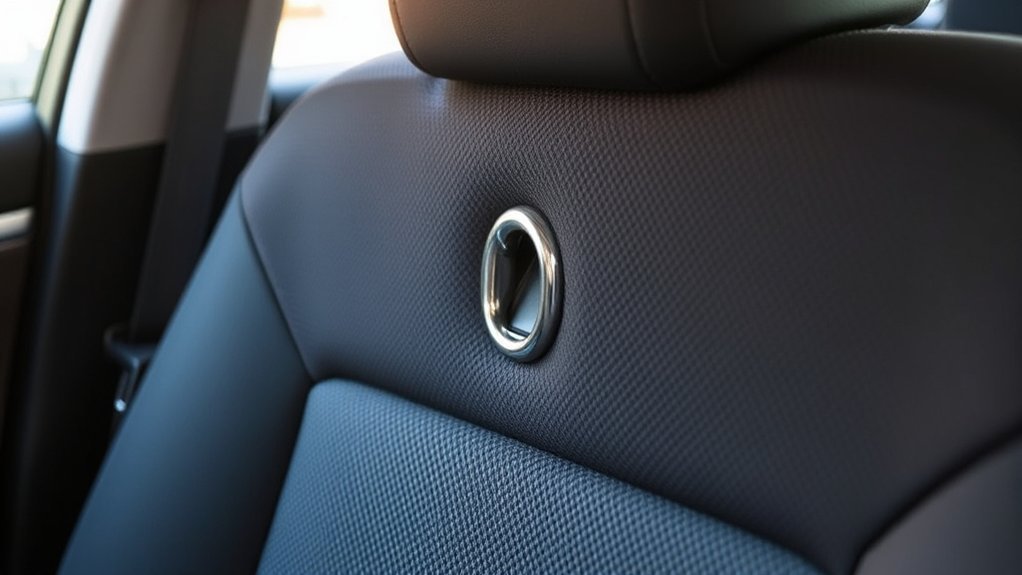
A correctly used tether improves the stability of a forward-facing harnessed restraint by controlling movement of its upper portion. It does not replace the primary installation or the child’s harness.
- Limits forward rotation: The tether helps keep the top of the restraint from pitching as far forward during a crash.
- Works with either primary method: It can normally be used with an approved vehicle-belt installation or an approved lower-anchor installation.
- Reduces upper-seat movement: Limiting rotation helps reduce how far the restraint and the child’s head move forward.
- Remains useful after lower-anchor limits are reached: When both manuals permit it, reinstall the seat with the vehicle belt and continue using the top tether.
A tether cannot correct a loose primary installation, an unlocked seat belt, an incorrect belt path, an over-limit lower-anchor installation, or a loose child harness. Every part must be set up correctly.
Avoid These Common Mistakes With Tether Anchors
Most tether errors come from using the wrong hardware, skipping model-specific instructions, overlooking a weight limit, or failing to remove slack. Recheck the complete installation whenever the seat is moved or another caregiver reinstalls it.
Common Installation Errors
- Skipping the top tether: A forward-facing restraint may appear secure at the belt path while missing the upper connection intended to limit forward movement.
- Using the seat belt and lower anchors together without approval: Most installations use one primary method, not both.
- Exceeding the lower-anchor limit: Check the child-restraint label and both manuals. When the limit is reached, switch to an approved vehicle-belt installation and continue using the tether when permitted.
- Treating the 65-pound lower-anchor formula as a tether limit: Lower-anchor and tether instructions are not interchangeable. Follow the specific limit for each component.
- Testing at the wrong location: Check movement at the forward-facing belt path, not by pulling the shell’s top, head restraint, or tether strap.
- Leaving the tether loose or twisted: Remove slack and make sure the webbing lies flat.
- Incorrect head-restraint routing: Do not assume the strap always runs under the head restraint or that the head restraint should always remain installed.
- Sharing an anchor: Do not connect two child restraints to one tether anchor unless the vehicle manufacturer specifically permits it.
- Assuming every Camry center seat has the same lower-anchor setup: Current 2025–2026 manuals show no dedicated center lower anchors, but permit the inboard outboard anchors when the child-restraint manufacturer allows the stated 16.1-inch (410 mm) spacing. IIHS lists borrowed lower anchors for 2018–2024, while 2015–2017 is listed as center tether-only. Check the exact year and restraint before using a center lower-anchor installation.
- Using the tether by itself: A tether is an additional upper connection, not a substitute for the vehicle seat belt or approved lower anchors.
Misidentifying Anchor Points
A tether anchor may be hidden beneath a small plastic cover or positioned close to unrelated hardware. Look for the standardized child-restraint anchor symbol, then confirm the location and assigned seating position in the owner’s manual.
Lower anchors are horizontal bars in the seat bight, where the seatback meets the seat cushion. A top tether anchor is a separate upper attachment point. Cargo hooks, speaker supports, luggage tie-downs, and holes in the seat frame are not substitutes.
If the symbol, cover, or manual diagram does not clearly identify the attachment point, stop before connecting the hook. Use Toyota’s manual and warranty portal to choose the exact model year or locate the manual associated with the vehicle’s VIN. For a step-by-step lookup, see how to find the Toyota Camry owner’s manual online.
Tether Anchors vs. Lower Anchors: Key Differences
Tether anchors and lower anchors are separate vehicle components with different jobs. A complete anchorage position is commonly called LATCH, meaning Lower Anchors and Tethers for Children, but the tether can also be used with an approved seat-belt installation.
| Component | Primary Job | Typical Camry Location | Key Limit |
|---|---|---|---|
| Lower anchors | Provide an alternative to the vehicle seat belt for the primary installation. | Between the rear seatback and cushion in approved positions. | Combined child-and-restraint weight limits apply. Follow the lowest stated limit. |
| Top tether anchor | Secures the upper part of a compatible forward-facing restraint and limits forward rotation. | Commonly on the rear package shelf beneath a marked cover. | Must match the seating position, approved routing, and any tether instructions or limits in both manuals. |
| Vehicle seat belt | Provides the primary installation when lower anchors are not used or their permitted limit has been reached. | At each equipped seating position. | Must use the correct belt path and be locked by the approved vehicle or child-restraint method. |
How to Make Sure Your Tether Anchor Is Secure
Verify the anchor location, primary installation, strap routing, hook engagement, tether tension, and webbing condition. Do not judge the installation only by how tight the tether feels.
Locate the Correct Tether Anchor
- Open the exact model-year manual: Find the child-restraint, child-safety, or top-tether section.
- Match the seating position: Use the anchor assigned to the left, center, or right rear position where the restraint is installed.
- Look for the anchor symbol: Camry anchors are commonly beneath marked covers on the rear package shelf.
- Confirm the head-restraint procedure: Follow the diagram for raising, lowering, removing, replacing, or routing around the restraint.
- Exclude unrelated hardware: Do not use a cargo fitting, lower anchor, seat-frame hole, or unmarked opening.
Check for Proper Tightness
First, confirm that the primary installation is secure. Hold the child restraint close to the forward-facing belt path and apply firm pressure from side to side and front to back. Movement should not exceed one inch.
Next, inspect the tether. The strap should lie flat, follow the approved route, connect fully to the designated anchor, and have no obvious slack. Do not perform the one-inch test by pulling the top of the restraint because some movement above the belt path can be normal.
| Check | What You Should Confirm |
|---|---|
| Primary attachment | The vehicle belt or lower-anchor strap uses the forward-facing belt path and is tightened and locked correctly. |
| Belt-path movement | The restraint moves no more than one inch side to side or front to back at the belt path. |
| Tether routing | The strap follows the approved route and the head restraint is positioned or reinstalled as directed. |
| Tether hook | The hook is fully engaged with the correct anchor and oriented as the child-restraint manual shows. |
| Webbing condition | The tether lies flat and is free from cuts, fraying, melted areas, damaged stitching, or severe abrasion. |
| Weight limits | The child, restraint, and selected installation method remain within every applicable limit. |
Confirm All Installation Instructions Were Followed
Complete a final manual-to-installation check before placing the child in the seat:
- Confirm that the selected seating position is approved for that restraint.
- Verify that you used the forward-facing belt path.
- Confirm that the vehicle belt is locked or the lower-anchor connectors are attached correctly.
- Check the applicable child, restraint, lower-anchor, and tether limits.
- Verify the tether’s anchor, route, hook orientation, and tension.
- Confirm that the head restraint is positioned or reinstalled as directed.
- Check the harness height, chest-clip position, webbing condition, and snugness.
Recheck the installation after another caregiver moves the restraint, after folding or servicing the rear seat, whenever the tether has been disconnected, or when the child has grown enough to approach a stated limit.
What to Do If Your Toyota Camry Appears to Lack Tether Anchors

If you cannot find a tether anchor, do not assume the Camry lacks one and do not connect the hook to nearby hardware. Covers may be small, flush with the rear package shelf, hidden by trim, or missing while the metal anchor remains in place.
- Check the exact Toyota manual: Select the correct model year and production information or use the VIN through Toyota’s manual portal.
- Inspect each approved rear seating position: A position may have a tether anchor even when it does not have its own pair of lower anchors.
- Check for missing covers or replaced trim: A previous owner or repair shop may have removed a plastic cover without removing the structural anchor.
- Ask a Toyota dealer to inspect the vehicle: This is especially important if the rear shelf, seatback, interior trim, or body structure has been repaired or replaced.
- Ask Toyota to verify any retrofit: Do not assume that a kit or procedure exists. Use a retrofit only when Toyota confirms that factory documentation and approved parts apply to the exact VIN and seating position.
- Seek installation help: A certified Child Passenger Safety Technician can help interpret both manuals and inspect the setup.
Warning: Never drill a hole, install a universal eye bolt, use an aftermarket cargo fitting, or improvise a tether point. A valid tether anchor must be engineered and attached to transfer crash forces into the vehicle structure.
Checking for Tether Anchors in Your Toyota Camry
Use this inspection sequence when identifying the anchors in a Camry:
- Park safely and clear the rear shelf. Remove loose items that may hide an anchor cover or interfere with the tether path.
- Read the model-year diagram. Search the manual for “child restraint,” “top tether,” “anchor bracket,” or “LATCH.”
- Inspect the rear package shelf. Look behind the rear head restraints for covers marked with the child-restraint anchor symbol.
- Open only the specified cover. The approved location should contain a rigid metal anchor designed to accept the tether hook.
- Match it to the seating position. The strap should run to the assigned anchor without crossing into another seating position unless the Camry manual expressly shows that route.
- Check accessibility. Make sure cargo, seat covers, cushions, mats, and aftermarket accessories do not obstruct the strap or anchor.
- Inspect for visible damage. Stop using the position if the anchor is loose, bent, cracked, heavily corroded, or surrounded by damaged structure.
Do not infer an approved center lower-anchor position from the spacing of visible bars. On 2025–2026 U.S. Camrys, the center has no dedicated lower anchors; Toyota allows the two inboard outboard anchors to be used only when the child-restraint manufacturer permits the 16.1-inch (410 mm) spacing. The exact model-year manual and restraint instructions control.
Tips for Maintaining and Inspecting Tether Anchors
Tether anchors normally require little maintenance, but they must remain accessible and structurally sound. Inspect the anchor, hook, and strap whenever you install or move a child restraint.
| Task | What to Check | Action if a Problem Is Found |
|---|---|---|
| Inspect the anchor | Bent metal, looseness, heavy corrosion, cracks, damaged welds, or damaged surrounding structure. | Stop using that position and request a Toyota inspection. |
| Clear the area | Objects trapped beneath the hook, strap, or anchor cover. | Remove the obstruction before reconnecting the tether. |
| Inspect the tether strap | Twists, cuts, fraying, melted areas, damaged stitching, or a bent or damaged hook. | Contact the child-restraint manufacturer and do not improvise a repair. |
| Check the cover | A missing, jammed, or broken plastic cover. | Replace the cover if needed, but do not treat cosmetic cover damage as proof that the structural anchor is damaged. |
| Avoid unauthorized treatment | Paint, grease, lubricant, bending, drilling, filing, or an attempted load test. | Do not alter the anchor. Ask Toyota how the affected area should be inspected or serviced. |
| Recheck after service | Rear-seat, package-shelf, body, glass, trim, or collision repairs near the anchorage. | Have the anchor and surrounding structure inspected before reuse. |
| Review after a crash | Possible damage to the vehicle anchorage, restraint shell, belt path, tether, or connectors. | Follow Toyota and child-restraint manufacturer instructions. NHTSA recommends replacing restraints after moderate or severe crashes; qualifying minor crashes require a separate review. |
NHTSA does not require automatic replacement after every minor crash, but the restraint manufacturer may set stricter rules. A vehicle tether anchor or surrounding structure that is bent, loose, cracked, or involved in a repair should be inspected by Toyota before reuse.
Frequently Asked Questions
What is a car-seat tether anchor?
A tether anchor is a vehicle attachment point for the top tether on a compatible child restraint. It helps secure the upper portion of a forward-facing harnessed seat and limit forward rotation during a crash.
What is the purpose of the tether strap?
The tether connects the upper rear of a compatible child restraint to the vehicle’s designated tether anchor. It works with the primary seat-belt or lower-anchor installation to reduce forward rotation and movement.
Can I use a top tether without the seat belt or lower anchors?
No. The tether is an additional upper attachment. The child restraint must first be installed with an approved vehicle-belt method or approved lower anchors.
What is the difference between a tether anchor and a lower anchor?
Lower anchors sit in the seat bight and can replace the vehicle belt as the primary installation method within their limits. The tether anchor is a separate upper attachment used mainly with forward-facing harnessed restraints.
What are child-seat anchor points?
Child-seat anchor points are vehicle components designed for attaching compatible restraints. A complete anchorage position includes two lower anchors and one tether anchor, although a seating position may have a tether anchor without its own pair of lower anchors.
Where are the tether anchors in a Toyota Camry?
On 2025–2026 U.S. Camrys, the three rear tether anchors are on the rear deck/package shelf, one for each rear seating position. They are accessed beneath marked covers. Older Camrys also commonly place tether anchors on the rear deck, but confirm the exact seating position and strap route in the model-year owner’s manual.
Do all rear seating positions in every Camry have the same anchors?
No. For 2025–2026 U.S. Camrys, all three rear seats have tether anchors, but only the outboard seats have dedicated lower anchors. Toyota permits center use of the inboard outboard anchors only when the child-restraint manufacturer allows the stated 16.1-inch (410 mm) spacing. Older model years differ, so check both manuals.
Can I use the seat belt, lower anchors, and tether together?
Use either the vehicle belt or lower anchors as the primary attachment, then add the tether for a compatible forward-facing restraint. Do not use the vehicle belt and lower anchors together unless both the Camry and child-restraint manuals specifically approve it.
Does the 65-pound lower-anchor rule also limit the top tether?
Not automatically. The 65-pound combined child-and-restraint formula applies to lower-anchor use when no lower labeled limit controls. Tether use and any tether limit must be checked separately in the Camry and child-restraint manuals.
How tight should the top tether be?
The tether should be flat and snug with the obvious slack removed. Follow the child-restraint instructions and stop tightening if continued pulling begins to lift, tilt, or distort the restraint contrary to its manual.
Can a rear-facing car seat use a top tether?
Most rear-facing car seats sold in the United States do not use a tether, but some specialized restraints do. Use a rear-facing tether only when the child-restraint and vehicle instructions approve the method and identify the correct attachment point.
Where can I get help checking the installation?
Use NHTSA’s inspection resources or the National Child Passenger Safety Certification technician directory. A certified technician can inspect the installation and teach you how to reproduce it correctly.
Conclusion
Toyota Camry tether anchors are an important part of a compatible forward-facing child-restraint installation. On 2025–2026 U.S. models, Toyota provides a tether anchor for each rear seat and dedicated lower anchors at the two outboard positions; the center has no dedicated lower anchors, so any permitted borrowed-anchor setup must follow the exact Toyota and child-restraint instructions. Install the seat with one approved primary method, verify the applicable limits, confirm no more than one inch of movement at the belt path, and then attach and snug the matching top tether.
Never use a cargo hook, improvise an attachment point, borrow center lower anchors without approval, or assume that a universal retrofit is safe. When the anchor location, routing, weight limit, or condition is uncertain, stop and check both manuals or have the installation reviewed by Toyota and a certified Child Passenger Safety Technician.
Sources
- National Highway Traffic Safety Administration: Car Seats and Booster Seats — tether use, lower-anchor limits, restraint selection, and inspection help.
- NHTSA: How to Install Forward-Facing Car Seats — seat-belt and lower-anchor installation, tether use, harness fit, and the one-inch test.
- Toyota Manuals and Warranties — model-year and VIN-specific Toyota owner’s manuals and child-restraint instructions.
- 49 CFR 571.225: Child Restraint Anchorage Systems — current federal anchorage definitions, installation requirements, markings, and exceptions.
- American Academy of Pediatrics: Car Seats—Information for Families — rear-facing duration, forward-facing tether use, lower-anchor limits, and seating guidance.
- NHTSA: Car-Seat Use After a Crash — replacement guidance after minor, moderate, and severe crashes.
- Toyota Camry e-Brochure — current U.S. LATCH summary showing outboard lower anchors and tether anchors on all rear seats.
- IIHS: 2025 Toyota Camry Child Seat Anchors — 2025–2026 rear-seat LATCH layout and rear-deck tether locations.
- IIHS: 2024 Toyota Camry Child Seat Anchors — 2018–2024 center tether and borrowed-lower-anchor configuration.
- IIHS: 2015 Toyota Camry Child Seat Anchors — 2015–2017 outboard LATCH and center tether-only configuration.
