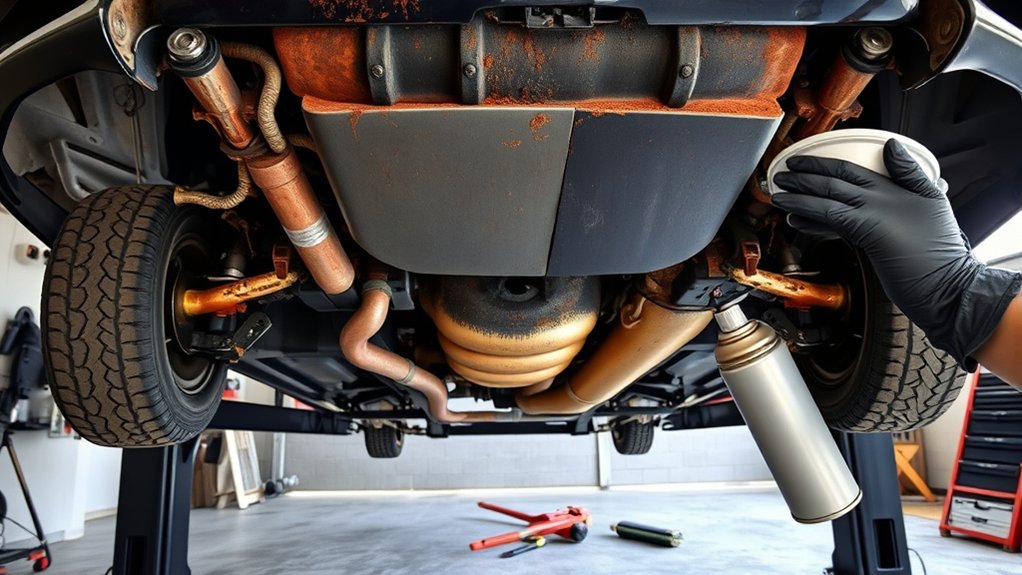
Road salt, brine, moisture, and damaged factory coatings can expose your Toyota Camry’s underbody to corrosion. The right treatment can slow that process, but only when you first inspect the rust, prepare the surface, choose a compatible product, and keep the coating away from brakes, exhaust parts, tires, sensors, and drainage openings.
Last updated: September 19, 2026. This U.S.-focused guide was checked against current Toyota warranty guidance and current manufacturer instructions for Fluid Film, WoolWax, CRC Heavy Duty Corrosion Inhibitor, and Evapo-Rust.
Quick Answer
Protect a Toyota Camry’s underbody by checking the rust level, cleaning and drying the metal, then applying one compatible corrosion-control system. Soft lanolin or wool-grease coatings suit many salt-belt cars because they stay flexible and can be renewed. Keep coating off brakes, exhaust parts, tires, sensors, and drain holes.
Key Takeaways
- Inspect the underbody before coating it. Flaking metal, holes, weakened mounting points, or heavily corroded brake and fuel lines need professional repair.
- Use one compatible treatment system and follow its label instead of mixing several coatings.
- Mask brake friction surfaces, tire tread, hot exhaust parts, sensors, belts, electrical connectors, and drainage holes.
- Soft coatings need regular inspection and touch-ups. They are not permanent repairs for structural rust.
- Salt-belt vehicles usually need more frequent washing, inspection, and reapplication than Camrys driven in dry climates.
At a Glance
| Time Required | Varies by rust condition, access, cleaning and drying time, masking, application method, and the product’s settling or curing instructions |
| Difficulty | Moderate; professional service is safer when lifting access, rust repair, or cavity treatment is needed |
| Tools Needed | Approved ramps or jack stands, wheel chocks, light, scraper or wire brush, masking material, gloves, eye protection, and the product’s recommended applicator |
| Cost | Varies by coating, applicator, rust condition, vehicle access, and local labor; rust repair costs extra |
Why Your Toyota Camry Needs Underbody Rust Treatment
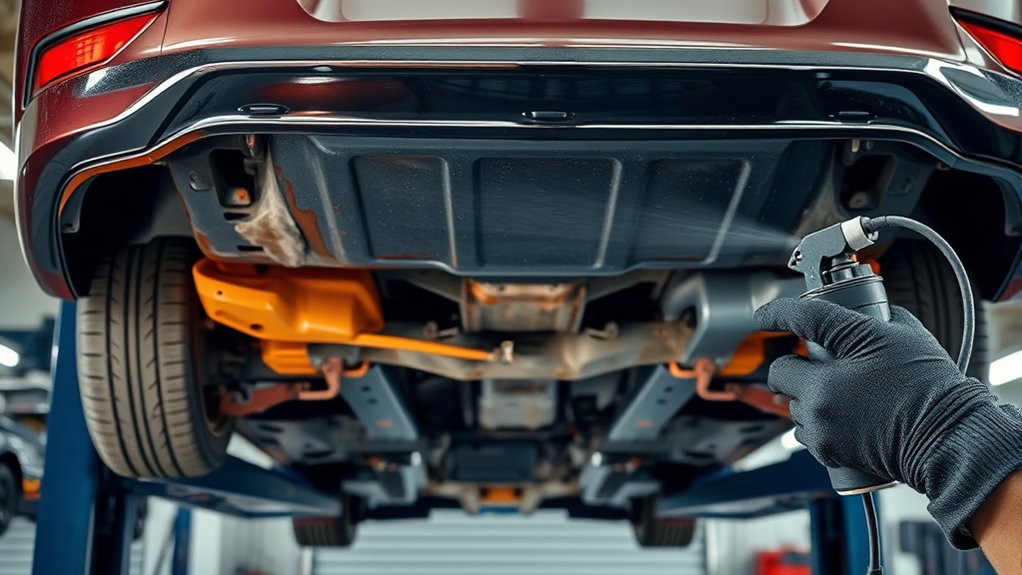
Your Camry already has factory corrosion protection, but it is not immune to years of road salt, brine, moisture, stone chips, mud, and damaged seam sealer. The U.S. Environmental Protection Agency notes that road salt has corrosive effects on cars, trucks, roads, and bridges.
Salt-laden moisture collects around wheel wells, seams, splash shields, subframes, suspension mounting areas, fasteners, and rocker-panel openings. Once a coating is chipped or a seam stays wet, exposed steel can begin to oxidize.
Snow-belt locations such as Buffalo create a higher exposure risk than warm, dry regions. Frequent winter driving, coastal air, gravel roads, and repeated salt or brine exposure can also shorten the life of underbody protection.
Rust treatment works best as preventive maintenance. It cannot restore metal that has already become thin, cracked, perforated, or structurally weak.
Inspect the Rust Before Choosing a Treatment
Do not cover the underbody until you know what type of corrosion is present. Use a bright inspection light and look at the subframes, control-arm mounting areas, rocker seams, pinch welds, brake and fuel lines, exhaust hangers, fasteners, wheel wells, and areas hidden by plastic shields.
| Condition | What It Looks Like | Recommended Action |
|---|---|---|
| Clean metal or intact factory coating | No bubbling, cracking, exposed steel, or loose coating | Clean, inspect, and apply preventive treatment where appropriate |
| Light surface rust | Thin orange or brown staining with solid metal beneath | Remove loose contamination and use a coating approved for application over surface rust |
| Scaling or flaking rust | Loose layers, swollen seams, crumbling coating, or deep pitting | Remove loose scale and have questionable areas inspected before coating |
| Perforation or structural corrosion | Holes, cracked mounts, soft metal, leaking lines, or severe thinning | Do not hide it with undercoating. Arrange professional repair or component replacement |
Warning: Corrosion near suspension mounts, subframes, brake lines, fuel lines, steering parts, seat-belt anchors, or other load-bearing areas requires professional inspection. A coating is not a structural repair.
Top Causes of Underbody Rust in Toyota Camrys
- Road salt and liquid brine: Chloride-rich moisture can remain in seams, wheel wells, and shielded areas after winter driving.
- Trapped moisture and mud: Packed debris holds moisture against metal and slows drying.
- Stone chips and scrapes: Gravel, road debris, and improper lifting can damage paint, seam sealer, and factory coatings.
- Blocked drainage openings: Dirt or excess coating can prevent rocker panels and body cavities from draining.
- Aging or damaged undercoating: Cracks, lifting edges, and missing areas can expose the metal beneath.
- Coastal exposure: Salt in coastal air and water can increase corrosion even where road deicing is uncommon.
Regular inspection is most important after winter, off-road travel, flood exposure, or contact with deep mud and standing saltwater.
What Is the Difference Between Rust Proofing and Undercoating?
Rust proofing is the broader corrosion-control job. It can include seams, rocker-panel interiors, door cavities, fasteners, and other hidden areas where moisture can collect. Undercoating usually refers to material applied to suitable exposed surfaces beneath the vehicle. A Camry may need only targeted underbody protection, or it may benefit from a professional cavity treatment as well, depending on age, climate, existing rust, and how long you plan to keep the car.
| Service | Main Area Treated | What to Ask Before Paying |
|---|---|---|
| Rust proofing | May include seams, cavities, rocker interiors, body panels, and selected underbody areas | Which cavities are treated, whether access holes are drilled, what is masked, and how often inspection or renewal is required |
| Undercoating | Suitable exposed surfaces on the underside and wheel-well areas | Whether the product stays soft or cures hard, what surface preparation is required, and how existing rust or factory coating is handled |
Do not buy either service by name alone. Ask for the exact product, preparation process, treatment map, no-spray areas, drilling policy, and reinspection schedule. A service that treats only the visible underside is not the same as one that also reaches enclosed cavities.
What Rust Treatment Works Best for a Toyota Camry?
The best treatment depends on the rust level, the existing factory finish, your climate, and whether you want a soft maintenance coating or a harder finish. Do not assume that every product can be applied over every paint, rubber part, or existing undercoating.
| Treatment Type | Best Use | Advantages | Limitations |
|---|---|---|---|
| Soft lanolin or wool-grease film | Salt-belt prevention, seams, exposed metal, and annual or periodic maintenance | Remains flexible, creeps into seams, and can be touched up | Can collect dust, wash away in exposed areas, affect some rubber, or soften some coatings |
| Waxy dry-film inhibitor | Fasteners, linkages, stored components, and compatible exposed metal | Dries to a less-wet film and resists salt spray | Some aerosols contain flammable solvents and require strict PPE and ventilation |
| Hard rubberized or asphalt coating | Properly prepared clean metal when the product is compatible with the factory finish | Provides a durable physical barrier and may reduce stone impact | Can conceal corrosion or trap moisture when applied over rust, dirt, or a failing coating |
| Rust remover or converter | Preparing removable parts or localized bare-steel areas | Removes or changes existing oxidation before protection | Not a substitute for a final corrosion-protection coating |
Note: Do not layer Fluid Film, WoolWax, CRC products, rubberized undercoating, or another coating unless the manufacturers confirm that the products and surfaces are compatible.
Should You DIY Toyota Camry Undercoating or Use a Professional?
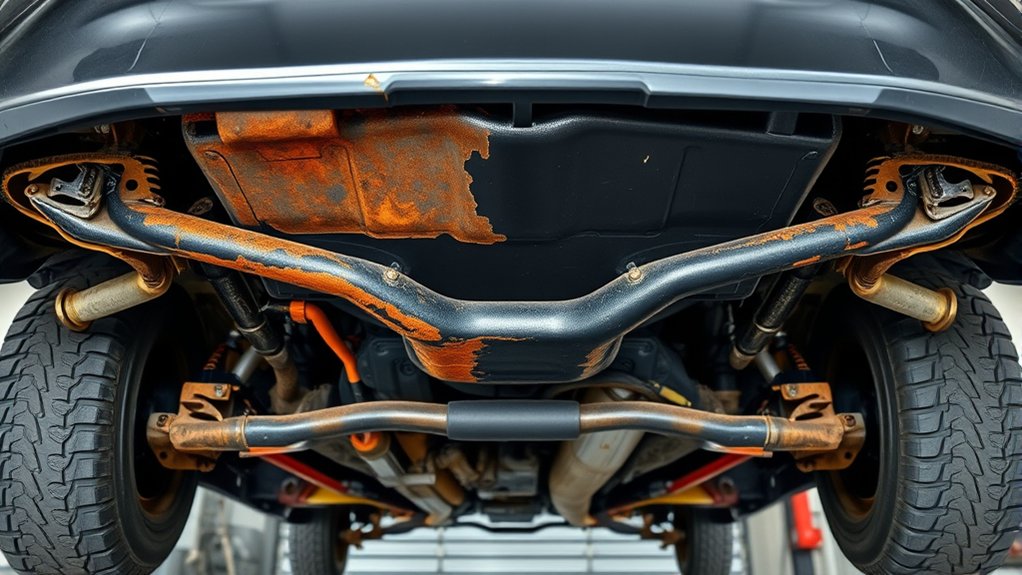
A DIY application can work well when the Camry has little or no serious rust, you have safe access beneath the car, and you can mask sensitive parts. Professional service is the better choice when the vehicle needs rust repair, cavity treatment, lift access, old-coating removal, or detailed warranty documentation.
When DIY Makes Sense
- The underbody is structurally sound.
- You have approved ramps, jack stands, wheel chocks, lighting, and ventilation.
- You can remove loose scale and clean the surface properly.
- You understand the product label and have the correct applicator.
- You can inspect and touch up the coating later.
When Professional Service Is Safer
- Rust is scaling, perforated, or close to suspension, steering, brake, or fuel components.
- The Camry needs access inside rocker panels, doors, or enclosed cavities.
- Plastic shields must be removed for proper coverage.
- You cannot safely raise and support the vehicle.
- You want a written treatment map, inspection schedule, or service warranty.
Companies such as Krown and Ziebart offer professional rust-control services in many areas, but service details vary. Compare the preparation process, products used, drilling policy, areas covered, annual inspection terms, and written warranty rather than choosing only by brand name.
Pro Tip: Ask a professional applicator to show you which shields are removed, which cavities are treated, which parts are masked, and how future touch-ups are handled.
How Should You Prepare a Toyota Camry for Underbody Treatment?
- Choose a safe work area. Use a level, hard surface with good ventilation and no flames, heaters, sparks, smoking, or other ignition sources.
- Let the vehicle cool. The exhaust, catalytic converter, engine, and hybrid components must be cool before cleaning or spraying.
- Raise the Camry safely. Follow the jacking and support points in the manual for your exact model year. Use approved ramps or jack stands and wheel chocks. Never work beneath a vehicle supported only by a jack.
- Remove loose dirt and salt. Rinse the wheel wells and underbody. Use a suitable cleaner only where the coating manufacturer permits it.
- Allow the underbody to dry. Water trapped in seams or behind shields can interfere with inspection and some coatings.
- Remove loose scale. Use a hand scraper or wire brush on solid, accessible metal. Do not grind near fuel, brake, electrical, or hybrid components unless you have the proper training.
- Inspect the factory coating. Look for lifted edges, cracks, missing seam sealer, and hidden rust beneath damaged areas.
- Mask no-spray areas. Cover brake rotors, pads, calipers near friction surfaces, tire tread, exhaust parts, oxygen sensors, belts, pulleys, electrical plugs, and drainage holes.
Warning: On a Camry Hybrid, do not spray, disconnect, scrape, or disturb orange high-voltage cables or high-voltage components. Check the manual for your exact model year and use a qualified technician when component identification is uncertain.
Toyota provides model-specific manuals and warranty information through its Manuals and Warranties portal. Toyota currently lists rust-through coverage as 60 months with unlimited mileage for corrosion perforation of sheet metal, subject to the applicable warranty guide. Toyota warranty guidance also states that additional rust-inhibiting material is not required to keep the corrosion-perforation warranty in effect. That does not make every aftermarket application risk-free: damage caused by improper repair, alteration, tampering, or installation is subject to the exclusions in the applicable guide. If you need help locating the correct document, see how to find the Toyota Camry owner’s manual online.
How Do You Apply Underbody Rust Treatment to a Toyota Camry?
- Read the complete label and safety data. Confirm temperature, surface preparation, ventilation, PPE, material compatibility, and required film thickness.
- Stir or shake the product. Soft bulk coatings can thicken while stored and may need thorough mixing.
- Test a small area. Check compatibility with existing paint, plastic, rubber, seam sealer, and factory undercoating.
- Start with seams and sheltered areas. Use the approved wand or nozzle to reach accessible seams and cavities without blocking drain openings.
- Coat exposed metal evenly. Apply the specified film thickness instead of assuming that several heavy coats are better.
- Avoid overspray. Stop and clean the area immediately if product reaches a brake rotor, tire tread, exhaust surface, sensor, or another prohibited component.
- Inspect coverage with a light. Look for missed edges, thin areas, blocked holes, heavy drips, and displaced masking.
- Remove masking carefully. Check every brake, tire, exhaust, sensor, cable, and drain area before lowering the vehicle.
- Follow curing or settling instructions. Some coatings remain wet, while others need time to become tack-free.
- Document the work. Record the date, product, areas treated, and any rust that needs follow-up inspection.
Examples of Toyota Camry Underbody Rust Protection Products
Fluid Film
Fluid Film is a non-drying lanolin-based corrosion inhibitor. Its manufacturer says approximately one gallon should cover one vehicle and may provide up to a full year of underbody protection. Bulk application normally requires a suitable undercoating gun or approved spraying equipment.
Fluid Film is useful on compatible exposed metal, wheel wells, rocker areas, fasteners, and seams. However, the manufacturer warns that it may swell non-oil-resistant rubber and may soften some existing undercoatings. Test compatibility and protect nearby rubber components.
WoolWax
WoolWax is a thick, non-drying wool-grease-based maintenance coating designed for vehicle undercarriages. Its manufacturer recommends treating exposed underbody areas about every other year or as needed, with more frequent touch-ups possible in severe winter use.
It remains soft and is intended to be renewed rather than treated as a permanent structural coating. Follow its current label for application pressure, film thickness, rubber compatibility, and cleaning requirements.
CRC Heavy Duty Corrosion Inhibitor
CRC Heavy Duty Corrosion Inhibitor forms a flexible waxy film and is listed for metal surfaces, fasteners, steering and throttle linkages, stored engine components, salt spray, and high humidity.
It is best treated as a targeted product unless CRC confirms full-underbody use for your exact application. Its aerosol is extremely flammable and requires adequate ventilation, gloves, eye protection, and control of all sparks, flames, pilot lights, heaters, and other ignition sources.
Evapo-Rust
Evapo-Rust is a water-soluble rust remover rather than a final underbody coating. It is most useful for removable rusty parts that can be soaked, rinsed, dried, and protected afterward. Current manufacturer guidance lists the liquid as safe for plastic, PVC, Viton, most paints, and other compatible surfaces, and says it is not for magnesium or magnesium alloys. Confirm compatibility with the exact part before soaking it.
Do not apply a remover broadly across the installed underbody without confirming that it is suitable for every metal, coating, connector, seal, and component in the area.
How Often Should You Reapply Underbody Rust Treatment to a Toyota Camry?
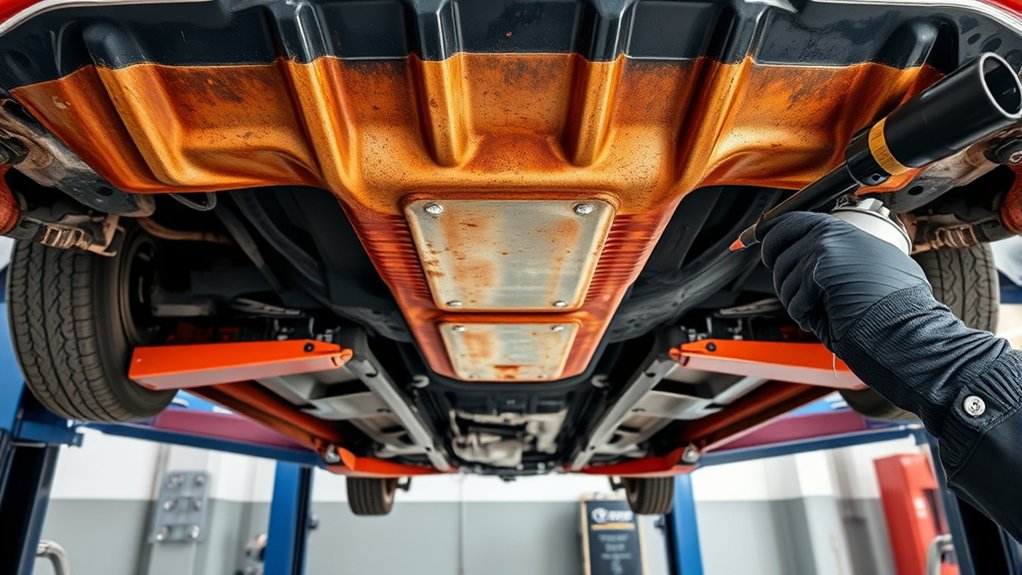
There is no single interval for every coating. Reapplication depends on the product, climate, mileage, road treatments, underbody washing, gravel exposure, and the amount of coating that remains.
- Fluid Film: Inspect at least annually. The manufacturer describes vehicle-underbody protection lasting up to a full year.
- WoolWax: The manufacturer says exposed underbody areas are commonly retreated about every other year or as needed. Severe salt exposure may justify yearly touch-ups.
- Waxy aerosol coatings: Follow the product label and inspect high-impact areas, fasteners, and linkages regularly.
- Hard undercoating: Inspect at least yearly for chips, cracks, lifted edges, and rust spreading underneath.
A practical schedule is to inspect the Camry before winter, again after winter, and after any event that could strip or damage the coating. Touch up thin or bare areas instead of applying heavy material over the entire underbody without inspection.
Maintaining Your Camry’s Underbody After Treatment
Regular Washing Schedule
Toyota corrosion-care guidance says to hose off the undercarriage at least once a month when the vehicle is driven on salted or dust-controlled roads or near the ocean, and to keep the drain holes in the lower edges of doors and rocker panels clear. If you use a soft maintenance coating, follow its washing instructions because aggressive pressure washing or strong cleaners can remove the film.
Avoid strong degreasers unless the coating manufacturer approves them. Fluid Film, for example, can be removed by pressure washing, detergent washing, steam cleaning, or grease-removing cleaners.
After any underbody wash, check exposed edges, wheel wells, splash zones, and fasteners. Reapply compatible material where the film has washed away.
Inspecting for Damage
Use a light to check suspension components, subframes, pinch welds, rocker seams, brake and fuel lines, wheel wells, fasteners, and shield mounting points. Look for:
- Fresh orange or brown corrosion
- Flaking scale or bubbling beneath a coating
- Cracked or lifted hard undercoating
- Missing soft film in high-splash areas
- Blocked drainage openings
- Wet dirt packed behind shields
- Corroded brake, fuel, or suspension hardware
If a plastic panel blocks the view, have it removed during a professional inspection rather than assuming the protected area is clean.
Touch-Up Applications
Touch up bare or thin areas with the same compatible system whenever possible. Rocker seams, wheel wells, subframes, exposed fasteners, and areas behind the wheels often wear faster than sheltered sections.
Do not spray new material over heavy dirt, loose scale, trapped water, brake contamination, or a failing hard coating. Clean and inspect the area first.
Pro Tip: Take clear photos after each inspection. Comparing the same suspension mounts, seams, and brake-line areas each year makes changes easier to spot.
Signs Your Camry Needs Immediate Rust Attention
Arrange a professional inspection when you find any of the following:
- Holes or perforation in sheet metal
- Flaking layers or deep scale around suspension mounts
- Rusty, swollen, damp, or leaking brake and fuel lines
- Cracked subframe or control-arm mounting areas
- Loose brackets, shields, exhaust hangers, or fasteners
- Rust spreading beneath a hard undercoating
- Water trapped inside rocker panels or seams
- New underbody noise or vibration combined with visible corrosion
Noise or vibration alone does not prove that rust is the cause. It can also come from tires, wheel bearings, exhaust parts, suspension joints, shields, or drivetrain components. Have the vehicle diagnosed rather than covering the area with more coating. If the concern is specifically a rigid brake line, use the separate Toyota Camry brake-line corrosion guide for the safety signs and next steps.
Related Guides
Frequently Asked Questions
How long does Toyota Camry rust proofing last?
Factory corrosion protection and aftermarket treatments are different. Fluid Film states that its vehicle-underbody treatment may last up to one year. WoolWax says exposed areas commonly need retreatment about every other year or as conditions require. Hard coatings may last longer but still need yearly inspection for chips, cracks, and trapped corrosion.
Does Evapo-Rust damage plastic or rubber?
Current manufacturer guidance lists Evapo-Rust as compatible with plastic, PVC, Viton, most paints, and other compatible surfaces, but it is not for magnesium or magnesium alloys. It is a rust remover rather than a permanent underbody coating. Confirm the exact part is compatible, then follow the label for soaking, rinsing, drying, and follow-up protection.
Is undercarriage rust protection worth it?
It can be worthwhile when your Camry is exposed to road salt, brine, coastal air, gravel, mud, or long winters. The benefit is greatest when treatment begins before serious corrosion develops and is followed by washing, inspection, and timely touch-ups.
What happens if you underseal over rust?
A hard coating applied over moisture, dirt, loose scale, or active corrosion can hide the damage and may trap contamination against the metal. Remove loose material, repair structural damage, and use only a product approved for the prepared surface.
Can Fluid Film be applied over existing rust?
Fluid Film says it can penetrate existing rust and rust scale, but it is not a rust remover or a repair for weakened metal. Remove loose scale first and have deep, structural, or perforated corrosion repaired before coating.
Will undercoating void my Toyota warranty?
Toyota currently lists rust-through coverage as 60 months with unlimited mileage for corrosion perforation of sheet metal, subject to the applicable warranty guide. Toyota guidance also says extra rust-inhibiting material is not required to keep that corrosion-perforation coverage in effect. However, damage caused by improper repair, alteration, tampering, or installation can be excluded, so review the guide for your exact model year before drilling panels or modifying factory coatings.
Conclusion
A good Toyota Camry underbody rust treatment begins with inspection, not spraying. Clean the underbody, identify whether the corrosion is light or structural, mask sensitive components, and apply one compatible product according to its label. Soft lanolin or wool-grease coatings can work well in salt-heavy climates, but they need inspection and periodic renewal.
Keep records, check the underbody before and after winter, and act quickly when you see scaling, perforation, leaking lines, or corrosion near suspension mounting points. Preventive treatment can slow future damage, but serious rust must be repaired rather than hidden beneath a new coating.
Sources
- U.S. Environmental Protection Agency: Winter Is Coming, and With It Tons of Salt on Our Roads — supports road-salt corrosion information.
- Fluid Film Automotive Applications — supports coverage, service-life, compatibility, and underbody-use guidance.
- Fluid Film Spraying Instructions — supports equipment, film-thickness, pressure, and removal guidance.
- CRC Heavy Duty Corrosion Inhibitor — supports product applications, film type, and performance claims.
- WoolWax Official Product Guidance — supports product type and exposed-area maintenance intervals.
- Toyota Manuals and Warranties — supports model-specific manual access and current rust-through warranty wording.
- Toyota corrosion-care guidance — supports regular underbody rinsing in salt exposure and keeping body drain holes clear.
- 2026 Toyota Camry Warranty & Maintenance Guide — supports corrosion-perforation coverage, exclusions, and model-year warranty terms.
- Fluid Film FAQ — supports rust, rubber, plastic, and application-compatibility guidance.
- Evapo-Rust Heavy Duty Rust Remover — supports material compatibility, soak/rinse use, and the magnesium warning.
- Ziebart: Rust Protection vs. Undercoating — supports the distinction between underbody-only treatment and broader cavity/panel rust protection.

