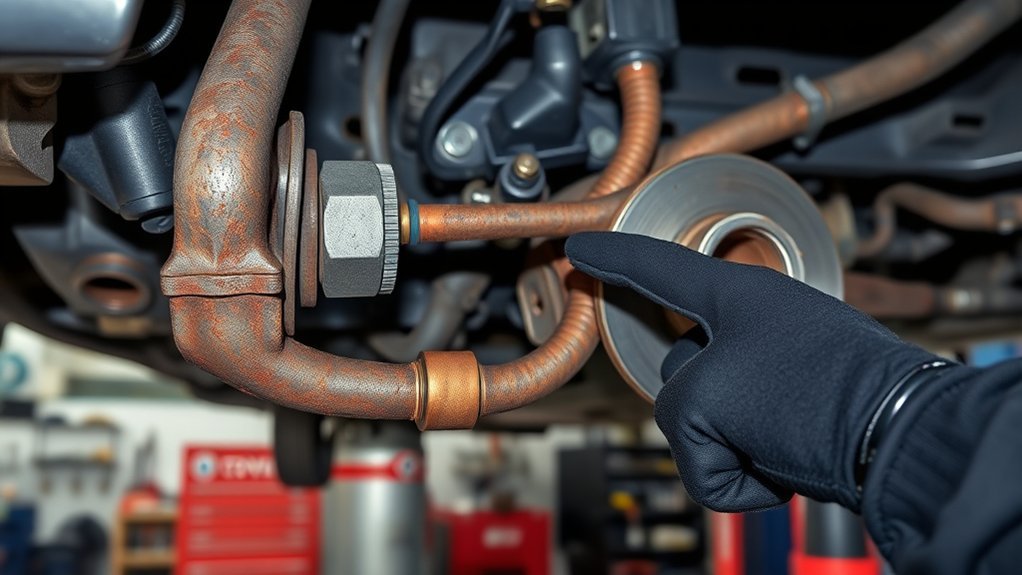
Brake line corrosion can turn a small rust problem into a serious braking hazard. Your Toyota Camry’s rigid brake lines carry pressurized fluid from the master cylinder to the brakes. If a line becomes deeply pitted, cracked, or perforated, fluid can escape and braking performance can drop quickly. Salt exposure, damaged coatings, trapped debris, and age all increase the risk.
Quick Answer
Inspect your Camry’s brake lines for wetness, heavy scaling, deep pitting, damaged coating, and rust around clips or fittings. A soft pedal, falling brake-fluid level, red brake warning light, or visible leak needs immediate professional attention. Do not drive a car with a suspected brake-fluid leak. Have it towed.
Key Takeaways
- Road salt and moisture speed up corrosion, especially where dirt collects around brackets, clips, fittings, and bends.
- Light surface discoloration is not the same as deep pitting, flaking metal, swelling, or an active fluid leak.
- Follow the maintenance guide for your exact Camry model year. Inspection timing is not identical for every generation.
- Brake-line repair requires the correct tubing, flare type, fittings, routing, bleeding procedure, and leak test.
- Never rely on topping off the reservoir or covering rust with coating as a repair.
Warning: Do not drive if the brake pedal suddenly feels soft or sinks, the brake-fluid reservoir is unexpectedly low, you see fresh fluid near a line, or the red brake warning light stays on. Park safely and arrange a tow. A visual check cannot prove that a corroded line is safe under braking pressure.
At a Glance
| Time Required | About 10 to 15 minutes for a basic check of visible areas; a complete shop inspection may take longer. |
| Difficulty | Basic visual check: easy. Lifting the car, pressure testing, fabrication, and repair: professional level. |
| Tools Needed | Flashlight, gloves, eye protection, and an inspection mirror. Use a professional lift or correctly rated support equipment for underbody access. |
| Cost | A basic visual check costs nothing. Repair cost depends on the model year, line location, number of damaged sections, labor access, and related brake-system work. |
How Brake Line Corrosion Affects Your Safety
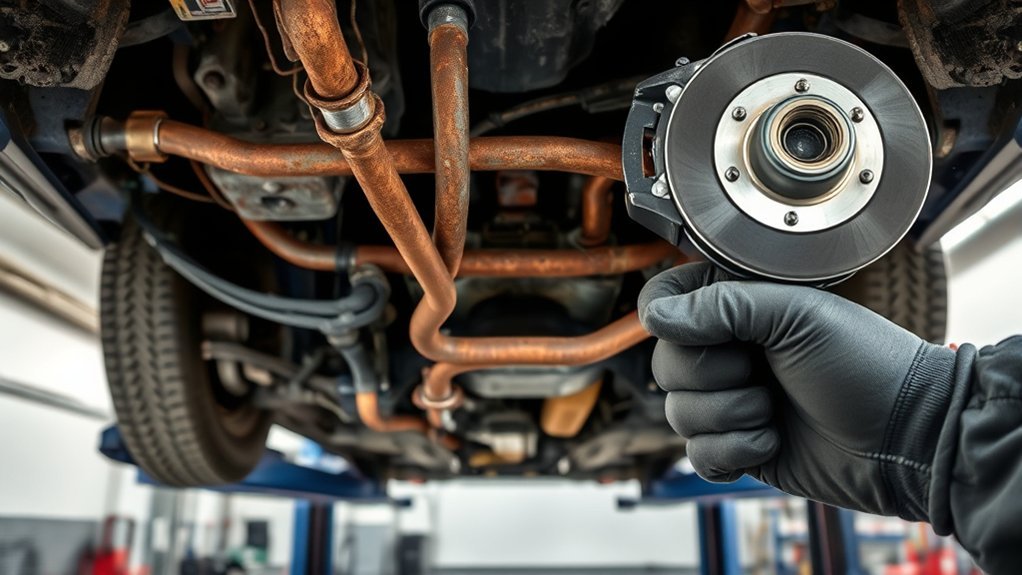
Brake lines work as part of a sealed hydraulic system. When you press the pedal, brake fluid transfers force to the wheel brakes. Severe corrosion can reduce the thickness of a steel line until it begins to seep or bursts under pressure. The result may be a longer stopping distance, a soft or sinking pedal, or reduced braking force.
Modern brake systems use separate hydraulic circuits, so one leak may not remove all braking at once. That design is a backup, not permission to keep driving. Remaining braking can be weak or uneven, and the car may need much more distance to stop.
A soft pedal is not proof that a metal line has corroded. Air in the system, a damaged rubber hose, a caliper leak, a master-cylinder problem, or another hydraulic fault can create similar symptoms. Treat any sudden change in pedal feel as a reason for immediate diagnosis.
Corrosion becomes dangerous when it removes enough metal to weaken the line or creates a path for brake fluid to escape. Appearance alone cannot confirm how much pressure a line can still hold.
Common Causes of Brake Line Rust in Toyota Camrys
A Camry can develop brake-line rust for the same reasons other vehicles do. Risk depends more on climate, road treatment, storage, cleaning, age, routing, and prior damage than on the Camry name alone.
- Road salt and deicing brine: Chloride salts hold moisture against metal and speed corrosion. The U.S. Environmental Protection Agency notes that road salt has corrosive effects on cars, trucks, bridges, and roads.
- Damaged protective coating: Stone strikes, abrasion, poor handling during earlier repairs, or contact with another part can expose bare steel.
- Trapped dirt and moisture: Debris often collects near clips, brackets, bends, unions, and low points, creating small areas that stay wet longer.
- Age and repeated winter exposure: Corrosion risk generally rises as coatings weather and the vehicle goes through more salt seasons, but there is no universal age at which every line fails.
- Improper previous repairs: Incorrect routing, mixed fittings, unsupported tubing, or contact with moving and vibrating parts can damage a replacement line.
Moisture absorbed by brake fluid can affect the fluid’s boiling performance and internal hydraulic components. It should not be confused with the main cause of external rust on the outside of a metal brake line. External corrosion is driven by exposure at the line surface.
How Moisture Accelerates Brake Line Corrosion
Water allows an electrochemical reaction to occur on exposed metal. Salt makes the water more conductive, so corrosion can progress faster than it would with clean water alone. The worst areas are often not the most visible ones. Moisture may remain around a retaining clip, above a splash shield, near a fitting, or on the upper side of a line.
Frequent freeze-and-thaw cycles can add to the problem. Salty slush enters small gaps, melts in a warm garage, and remains on the underbody. Dirt can then hold that salty moisture against the line.
Pro Tip: After driving on heavily salted roads, rinse the underbody when temperatures and local rules allow. Focus on wheel wells and underbody areas without directing high pressure into electrical connectors, boots, or damaged components.
Warning Signs Your Brake Lines May Be Compromised
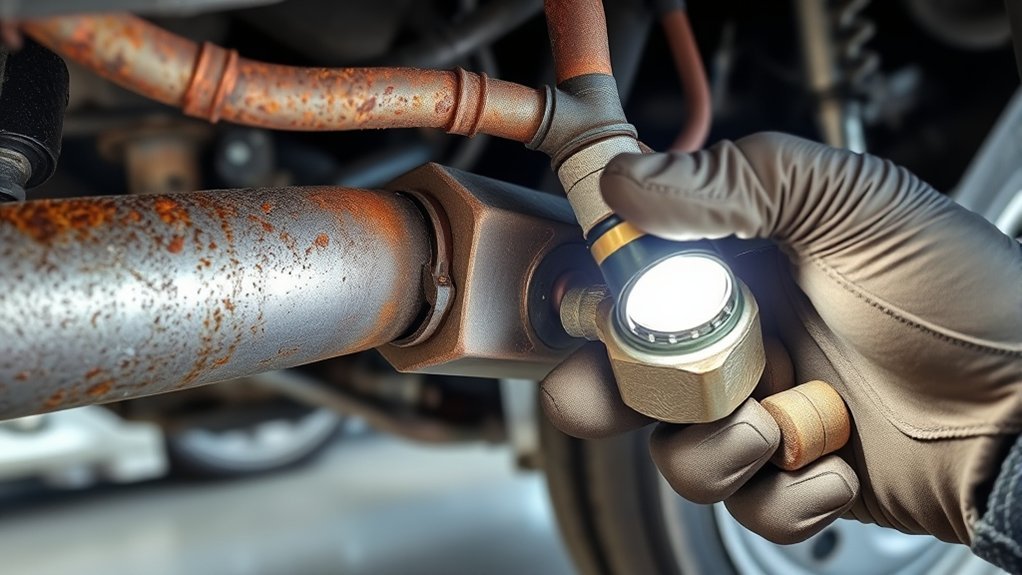
Look for a combination of visual and driving symptoms. One symptom can have several causes, so a qualified technician should confirm the fault.
| Warning Sign | What It May Mean | Action |
|---|---|---|
| Wet line, fitting, or underbody area | Possible brake-fluid leak or fluid from another source | Do not drive until the source is identified. |
| Deep pitting, swelling, heavy flaking, or scaling | Metal loss that may have weakened the line | Arrange a professional inspection promptly. |
| Soft, sinking, or suddenly different pedal | Leak, air, hose expansion, master-cylinder fault, or another brake problem | Stop driving and have the car towed. |
| Brake-fluid level drops without a known reason | Hydraulic leak or advanced pad wear | Do not simply refill it. Find the cause. |
| Red brake warning light remains on | Parking brake engagement, low fluid, or a brake-system warning, depending on model year | Stop safely and follow the owner’s manual. Toyota says red icons require immediate attention. |
Light orange or brown surface staining does not automatically mean a line must be replaced. The concern rises when rust is concentrated, layered, swollen, deeply pitted, damp, or located at a fitting or support point. Do not scrape aggressively, sand, or wire-brush a questionable line while it is installed. That can damage a thin area or hide the original condition from the technician.
How to Inspect Toyota Camry Brake Lines Safely
- Park on a level surface. Turn the car off, set the parking brake, and keep the vehicle in Park. Allow hot exhaust and brake parts to cool.
- Use basic protection. Wear safety glasses and gloves. Use a bright flashlight and inspection mirror for visible areas.
- Check the reservoir from above. Look at the brake-fluid level without opening the cap unless service is required. A low level needs diagnosis, not an automatic top-off.
- Follow the visible metal lines. Look from the engine compartment toward the underbody where access allows. Check bends, clips, brackets, fittings, and areas near splash exposure.
- Look for active warning signs. Wetness, fresh drips, deep pits, heavy scale, crushed tubing, cracked coating, or a line rubbing another part needs professional attention.
- Inspect the flexible hoses too. Cracks, bulges, chafing, twists, or damp fittings can cause symptoms similar to a failed metal line.
- Get a complete lift inspection. Some sections are hard to see from the ground. A technician can inspect routing, hidden areas, fittings, hoses, calipers, the master cylinder, and related components.
Note: Never crawl under a vehicle supported only by a jack. If safe access requires lifting the Camry, use a professional lift or correctly rated ramps and stands at the approved lift points.
What You Should Know About Regular Brake Line Inspections
Use the maintenance guide for your exact model year instead of a one-size-fits-all mileage rule. For example, the 2024 Toyota Camry Warranty and Maintenance Guide lists brake-line and hose inspection at 15,000 miles or 18 months and at later scheduled intervals. Toyota describes the inspection as checking installation, chafing, cracks, deterioration, and leakage.
Other Camry years may use different schedules or wording. Find the correct book through Toyota’s manuals and warranties portal. If your car sees road salt, coastal air, floodwater, long outdoor storage, or known underbody rust, ask for extra checks during tire changes or other lift service.
Importance of Regular Inspections
Brake-line corrosion often starts in a small area that is easy to miss from the driveway. A lift inspection gives the technician a better view of the upper side of lines, retaining clips, subframe areas, fittings, and sections hidden by shields. Finding a weak section before it leaks can prevent a breakdown and reduce the chance that corrosion spreads to nearby fittings and components.
Identifying Corrosion Early
- Compare both clean, exposed areas and sections around clips or brackets.
- Look for a change from light staining to rough scale, swelling, deep pits, or flaking layers.
- Check whether the line is rubbing, unsupported, bent sharply, or contacting another component.
- Record the location and photograph it so a technician can compare changes over time.
- Request immediate evaluation if there is any wetness or fluid loss.
Professional Solutions for Preventing Brake Line Corrosion
Professional service is most useful when it finds hidden damage, distinguishes harmless staining from structural metal loss, and confirms that the full hydraulic system is dry and operating correctly.
Professional Inspection Services
A complete brake inspection may include the rigid lines, flexible hoses, master cylinder, ABS hydraulic unit connections, calipers or wheel cylinders, reservoir level, pedal behavior, and signs of leakage. The technician should also check that the lines are routed and supported correctly and are not rubbing against the body, suspension, steering, exhaust, or drivetrain.
A visual inspection is the starting point. If the condition is uncertain, the shop may clean a small area carefully, measure or compare tubing condition, and perform an appropriate leak and pedal test. Severe pitting or leakage normally calls for replacement, not patching or cosmetic treatment.
Protective Coatings and Rust Prevention
A corrosion inhibitor can help protect sound metal by reducing direct exposure to moisture and salt. It cannot restore metal that has already been lost. Coating over heavy rust may also hide worsening damage and make later inspection harder.
Have questionable lines inspected before applying any product. A technician should avoid contaminating brake friction surfaces, rubber parts, exhaust components, electrical connectors, and areas that must remain visible for service. Product compatibility and application method matter.
Routine Maintenance Plans
- Follow the brake inspection schedule in the maintenance guide for your exact Camry year.
- Ask for an underbody check after severe winters, flood exposure, or underbody impact.
- Rinse salt buildup from the underbody when practical.
- Keep drain paths and splash shields in good condition so water and debris do not remain trapped.
- Have brake-fluid level and condition inspected at scheduled service. Replace fluid according to the applicable Toyota guidance, test results, or repair procedure rather than assuming one universal interval.
- Document repairs, tubing material, fittings, and the sections replaced.
What Materials Should You Use for Brake Line Replacement?
The safest choice is tubing and hardware that match the vehicle’s required diameter, wall construction, flare type, fitting thread, routing, and pressure demands. Preformed original-equipment or high-quality direct-fit lines can reduce fabrication errors when available.
Common replacement choices include corrosion-protected steel and automotive copper-nickel tubing. Copper-nickel is easier to form and resists external corrosion well, but the installer must confirm that the product is approved for automotive hydraulic brake use and permitted in the location where the car is registered. Material alone does not make a repair safe.
- Use the exact flare style and fittings required for the Camry’s model year.
- Support the line at the correct points and keep it away from heat, movement, and abrasion.
- Do not improvise with household plumbing parts or unapproved fittings.
- Bleed the system with the correct fluid and procedure.
- Perform a leak check and verify pedal operation before the car returns to service.
Brake-line fabrication and bleeding are not good first-time repair jobs. A small error in a flare, fitting, or route can create a leak under pressure.
The Risks of Driving With Corroded Brake Lines
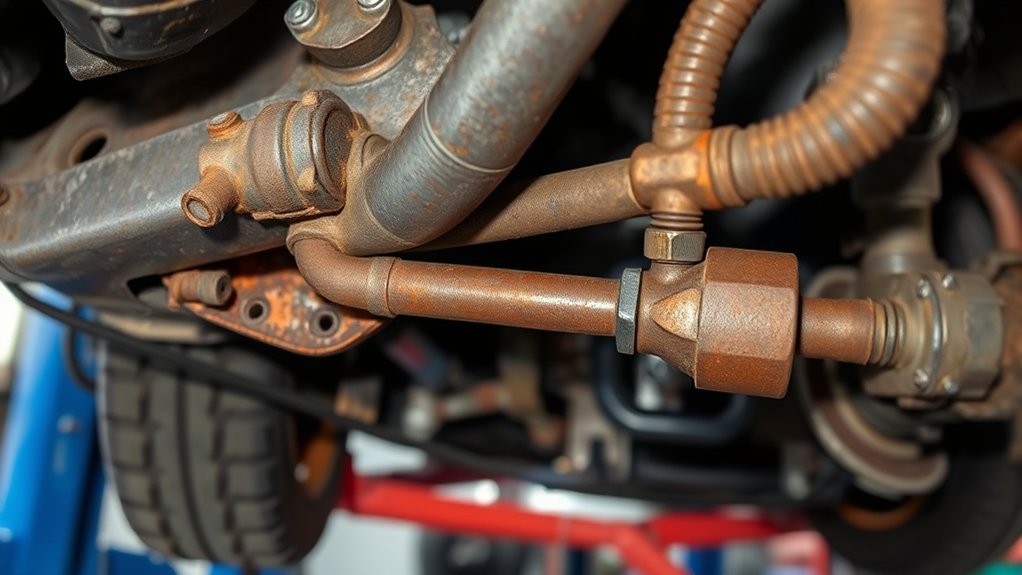
A weakened line can remain dry during normal driving and fail during a hard stop, when hydraulic pressure rises. That is why waiting for a visible puddle is unsafe. Advanced corrosion can also seize fittings or damage connected parts, increasing the scope of repair.
- Reduced braking force: Fluid loss lowers available hydraulic pressure.
- Longer stopping distance: The remaining brake circuit may not stop the car normally.
- Unpredictable failure: A thin area can open suddenly under high pressure.
- Secondary damage: Leaking fluid can affect painted surfaces and nearby components, and neglected rust can make fittings difficult to remove.
Do not test a suspected leak by driving the car or making repeated hard stops. Arrange a tow and let a repair facility test the system safely.
Maintenance Tips to Extend the Life of Your Brake Lines
| Maintenance Activity | When to Do It | Why It Helps |
|---|---|---|
| Inspect lines and hoses | At the model-year schedule and after unusual exposure | Finds chafing, deterioration, rust, and leakage early |
| Rinse the underbody | After heavy road-salt exposure when conditions allow | Removes some chloride and dirt buildup |
| Repair damaged clips or shields | As soon as damage is found | Prevents rubbing and debris traps |
| Inspect brake-fluid level and condition | At scheduled service or when symptoms appear | Helps identify leaks and fluid service needs |
| Use approved replacement materials | During repair | Supports correct fit, pressure integrity, and corrosion resistance |
What to Do When You Notice Brake Line Issues
- Stop driving if there is a leak or pedal change. Move to a safe location if possible, turn on the hazard lights, and arrange a tow.
- Do not top off and continue. Added fluid may leak out again and can hide how quickly the system is losing fluid.
- Record what you found. Note the warning light, pedal feel, reservoir level, drip location, and when the symptom began.
- Request a complete brake-system inspection. The visible rust may not be the only fault.
- Ask what will be replaced. The estimate should identify the line section, fittings, tubing type, bleeding, fluid, and any related parts.
- Check for open recalls by VIN. Use the Toyota recall lookup and the NHTSA recall search. Corrosion by itself does not prove that a model-wide recall exists.
What Affects Toyota Camry Brake-Line Repair Cost?
There is no reliable single price for this repair. Replacing one accessible section is different from replacing several lines routed above a subframe or fuel tank. Labor rates and corrosion at surrounding fittings also vary by region.
The estimate may include formed or fabricated tubing, fittings, brake fluid, bleeding, seized fastener removal, shields or clips, diagnostic time, and replacement of related hoses or components. Ask whether the quote covers the full damaged route and a post-repair leak and pedal test.
Frequently Asked Questions
What causes Toyota Camry brake lines to corrode?
The main causes are salt, moisture, damaged coating, trapped dirt, age, and abrasion around clips or nearby parts. Climate and vehicle history matter more than the badge alone.
How much does it cost to replace corroded brake lines?
Cost varies widely with the number and location of damaged lines, access, tubing choice, seized fittings, local labor rates, and related repairs. Get a written estimate that lists the affected route, materials, bleeding, fluid, and leak testing.
How long do Toyota brake lines last?
There is no fixed lifespan. Some lines remain serviceable for many years, while heavy salt exposure, coating damage, trapped debris, or poor repairs can shorten life. Condition and inspection findings are more useful than vehicle age alone.
Is it safe to drive with a brake-line leak?
No. A leak can reduce hydraulic pressure and may worsen without warning. Park the car and have it towed for inspection and repair.
Does surface rust mean the brake line must be replaced?
Not always. Light staining can be superficial. Deep pits, heavy scale, swelling, flaking metal, wetness, or corrosion concentrated at fittings and clips is more concerning. A technician should decide whether the remaining line is sound.
How often should Camry brake lines be inspected?
Follow the maintenance guide for your exact model year. The 2024 Camry guide lists brake-line and hose inspection at 15,000 miles or 18 months and at later scheduled intervals. Extra checks are sensible after heavy salt exposure, underbody impact, or floodwater.
Is brake-line corrosion covered by a recall?
Coverage depends on the specific VIN and campaign. Check both Toyota and NHTSA databases. A rusty line does not automatically mean your Camry is included in a recall.
Conclusion
Brake-line corrosion deserves prompt attention because the damage can remain hidden until pressure opens a weak spot. Inspect visible lines, follow the schedule for your exact Camry year, rinse away winter salt when practical, and treat wetness, fluid loss, a soft pedal, or a red brake warning as urgent. When corrosion is advanced, proper replacement is the repair. Coating, topping off fluid, or ignoring a small leak is not.
Sources
- Toyota 2024 Camry Warranty and Maintenance Guide — brake-line and hose inspection schedule and inspection points.
- Toyota Manuals and Warranties — model-year-specific owner and maintenance documents.
- Toyota Warning Lights — general guidance on red dashboard warnings and owner-manual review.
- Toyota Safety Recall and Service Campaign Lookup — VIN-based Toyota campaign search.
- NHTSA Recall Search — VIN, model, investigation, complaint, and recall information.
- U.S. EPA: Winter Is Coming, and With It Tons of Salt on Our Roads — road-salt use and corrosive effects on vehicles and infrastructure.
