If your Toyota Camry suddenly accelerates poorly, will not rev normally, idles roughly, or displays an engine-power warning, it may be operating in a fail-safe strategy often called reduced power mode or limp mode. The phrase does not identify one failed part. Your model year, gasoline or hybrid powertrain, exact dashboard message, warning lights, driving conditions, and stored diagnostic trouble codes determine the correct diagnostic path.
Last updated: September 19, 2026. Editorial basis: Toyota owner/service information and NHTSA-hosted Toyota service bulletins. This guide does not claim a hands-on diagnosis of a specific Camry.
Quick Answer
A Toyota Camry can lose power when a control system detects a fault affecting engine, transmission, electrical, cooling, or hybrid operation. Move to a safe place, record every warning, and scan all available modules before clearing codes or disconnecting the battery. Do not assume the throttle body is the cause: Toyota has documented model-specific reduced-power conditions, including a freezing-temperature issue on certain 2020–2022 A25A-FKS Camrys and an inverter-temperature condition on certain 2023 Camry Hybrids.
Key Takeaways
- “Reduced power mode” is a general description. The exact message, warning lights, and fail-safe behavior vary by Camry year and powertrain.
- Throttle-control faults are important possibilities, but misfires, overheating, low system voltage, airflow faults, transmission problems, and hybrid-system faults can also limit power.
- Certain 2020–2022 Camrys with the A25A-FKS engine have a Toyota service bulletin for reduced power or a MIL with specific throttle-related DTCs in freezing temperatures.
- Certain 2023 Camry Hybrids have a separate Toyota bulletin for the message “Hybrid System Overheated Reduced Output Power” and/or DTC X0528.
- Save diagnostic codes and freeze-frame data before disconnecting the battery or clearing anything.
- Do not keep driving if the engine is overheating, the check engine light is flashing, the car is shaking or stalling, or a red warning requires you to stop.
At a Glance
| Time Required | 10 to 30 minutes for basic checks; longer for circuit, fuel-pressure, transmission, or hybrid diagnosis |
| Difficulty | Beginner for visual checks; intermediate to professional for electrical testing and active scan-tool tests |
| Tools Needed | OBD-II scan tool, flashlight, gloves, basic hand tools, digital multimeter, and model-appropriate service information |
| Cost | Basic inspection may cost little if you own the tools; professional diagnosis and repairs vary widely by the failed system |
Warning: Stop driving and arrange a tow if you see a red oil-pressure or high-temperature warning, a flashing check engine light, smoke, a burning smell, severe shaking, repeated stalling, or a hybrid-system warning that the owner’s manual identifies as requiring an immediate stop. Never remove a radiator cap from a hot engine.
What Does Reduced Power Mode Mean on a Toyota Camry?
Reduced power mode is not one single repair or one universal Toyota warning. It describes a fail-safe response in which an engine, transmission, or hybrid control module limits output after detecting a fault. Depending on the Camry’s year and powertrain, you may see a master warning, check engine light, hybrid-system message, transmission warning, or another message describing limited acceleration or output.
The control modules compare signals from the accelerator pedal, electronic throttle body, airflow and pressure sensors, ignition system, transmission, cooling system, charging system, and other components. If monitored values are implausible or indicate a condition requiring protection, the vehicle may restrict throttle opening, engine speed, transmission operation, or hybrid-system output.
Because Toyota’s wording and required response vary by model year, check the owner’s manual for your exact Camry. Toyota also directs owners to use the model-specific manual when interpreting warning lights and indicators.
What Should You Do Immediately When Camry Power Is Reduced?
- Reduce demand: Ease off the accelerator, avoid hard acceleration, and turn off unnecessary electrical loads when doing so is safe.
- Move to a safe location: Signal, leave fast-moving traffic, and stop on a level surface when possible.
- Record the evidence: Photograph the dashboard, note whether the engine was hot or cold, and record speed, weather, outside temperature, fuel level, recent repairs, and whether the problem started during acceleration, cruising, or idling.
- Check for urgent signs: Look for overheating, oil-pressure warnings, smoke, fluid loss, severe vibration, repeated stalling, or a flashing check engine light.
- Restart only when appropriate: If there is no stop-now warning and the vehicle remains safe, one restart may temporarily restore normal operation or allow you to move to a safer location. Do not repeatedly cycle the ignition or treat temporary recovery as proof that the fault is fixed.
- Scan before clearing: Retrieve stored, pending, permanent, and manufacturer-specific codes. Save freeze-frame data before disconnecting the battery or erasing codes.
Pro Tip: A basic code reader may show only powertrain or emissions-related information. A Toyota-capable scan tool that can access the transmission, ABS, body, vehicle-control, and hybrid-control modules can reveal faults a generic reader misses.
What Causes Reduced Power Mode on a Toyota Camry?
A dirty or failing electronic throttle body can restrict airflow or create a mismatch between commanded and actual throttle position. Faults in the accelerator pedal position sensors, throttle position sensors, throttle actuator motor, wiring, connectors, fuses, or power supply can produce similar symptoms.
Airflow and fuel-control problems can also reduce performance. Examples include an intake hose that has split or come loose, a contaminated mass airflow sensor, a major vacuum leak, low fuel pressure, an injector problem, or a severe lean condition. If the fault points toward airflow measurement, see the site’s Toyota Camry mass airflow sensor guide. An oxygen-sensor or catalyst code should be diagnosed in context because the code may be secondary to another fault rather than the direct reason for power limitation.
Misfires, overheating, low oil pressure, low 12-volt system voltage, charging-system faults, blocked exhaust flow, transmission faults, and hybrid-system faults can also trigger protective operation. If P0300 is present, the Toyota Camry P0300 diagnostic guide explains why a random/multiple-cylinder misfire code does not identify one failed part. A failed ECU is possible, but power, ground, wiring, connector, sensor, actuator, or other system faults should be tested before condemning a control module.
| System | Possible Faults | Useful Clues |
|---|---|---|
| Electronic throttle control | Throttle body contamination, actuator fault, pedal or throttle sensor correlation fault, power-supply fault, damaged connector | Poor pedal response, unstable idle, throttle-related DTCs |
| Air and fuel metering | Loose intake duct, MAF fault, vacuum leak, low fuel pressure, injector problem | Lean codes, hesitation, hard starting, abnormal fuel trims |
| Ignition and combustion | Worn spark plug, ignition-coil fault, injector fault, compression problem | Flashing check engine light, shaking, P0300-series codes |
| Cooling and lubrication | Low coolant, coolant leak, fan fault, thermostat problem, low oil pressure | High temperature, red warning, steam, unusual mechanical noise |
| Electrical supply and communication | Weak 12-volt battery, charging fault, poor ground, damaged harness, network fault | Multiple unrelated warnings, intermittent faults, U-codes, low-voltage history |
| Transmission or hybrid system | Transmission-control fault, inverter or inverter-cooling problem, hybrid battery or isolation fault | Shift problems, hybrid warning, limited READY-mode power, module-specific codes |
Are There Toyota Service Bulletins for Camry Reduced Power?
Yes. Toyota has issued service bulletins for specific Camry reduced-power conditions. A bulletin applies only when the vehicle, engine, operating conditions, codes, production information, and diagnostic findings match its applicability. A TSB is not a universal diagnosis and should not be used to justify replacing parts on an unrelated Camry.
| Camry | Documented Condition | Toyota Guidance |
|---|---|---|
| Certain 2020–2022 Camry models with the A25A-FKS engine | Reduced engine power and/or MIL in freezing temperatures with P01201C, P210015, P210019, and/or P211172 | Toyota T-SB-0005-24 Rev1 documents the condition and a Toyota repair procedure involving the ECM and fuel-pump assembly. The bulletin has been revised since its original release, so use current Toyota service information and VIN-specific applicability before authorizing a repair. |
| Certain 2023 Camry Hybrid vehicles | “Hybrid System Overheated Reduced Output Power” and/or vehicle-control-history DTC X0528, Generator Inverter Temperature High | Toyota T-SB-0096-22 Rev1 identifies affected production ranges and an inverter-with-converter ECU calibration procedure. Vehicles outside the bulletin’s applicability require normal diagnosis. |
Important: A service bulletin is not the same as a recall. Confirm current bulletin revisions and vehicle applicability through Toyota service information, and check the VIN separately for open recalls or service campaigns.
What Are the Symptoms of Toyota Camry Reduced Power Mode?
The symptoms depend on the system that set the fault. Do not assume that every hesitation or weak acceleration means the Camry has entered a formal fail-safe mode.
[Amazon Products Picked for You]

CEL Doctor: The ANCEL AD310 is one of the best-selling OBD II scanners on the market and is recommended by Scotty Kilmer, a YouTuber and auto mechanic. It can easily determine the cause of the check engine light coming on. After repairing the vehicle's problems, it can quickly read and clear diagnostic trouble codes of emission system, read live data & hard memory data, view freeze frame, I/M monitor readiness and collect vehicle information

[Easy to Use—Work Out of the Box] + [FOXWELL 2026 New Version] FOXWELL NT604 Elite scan tool is the 2026 new version from FOXWELL, designed for car owners who want to figure out the cause of issues before fixing car problems by scanning common systems like ABS, SRS, engine, and transmission. The NT604 Elite obd2 scanner diagnostic tool comes with the latest software—no need to waste time downloading software first. Plug the scanner into the OBDII port with OBDII cable to start the diagnosis.

Understand Your Check Engine Light – The ANCEL AD410 OBD2 scanner helps everyday drivers quickly read and clear engine-related fault codes, view code definitions, and understand why the check engine light is on before visiting a repair shop. With 42,000+ built-in DTC lookups, this car code reader helps reduce guesswork and makes basic vehicle diagnostics easier for beginners and DIY users
Diminished Acceleration Performance
You may notice slow response when you press the accelerator, difficulty merging, reduced hill-climbing ability, limited engine speed, or a transmission that stays in a restricted operating state. These symptoms can be hazardous in fast traffic, so move out of the traffic stream rather than testing the car under heavy load.
Warning Light Activation
The check engine light may appear by itself or with a master warning, traction-control light, transmission message, or hybrid-system warning. A flashing check engine light commonly accompanies a severe active misfire and should be treated urgently. A steady check engine light does not, by itself, prove that continued driving is safe; judge it together with the dashboard message, red warnings, temperature, oil-pressure status, shaking, smoke, stalling, and the way the vehicle responds.
Color also matters. Toyota explains that red icons generally identify conditions requiring immediate attention, while yellow icons identify items of importance that are not necessarily emergency-stop warnings. Follow the wording and action in the model-specific owner’s manual.
Irregular Engine Idling
Fluctuating RPM, rough idle, surging, or stalling can occur when throttle control, airflow measurement, ignition, fueling, or electrical voltage is unstable. Cleaning a component may help only when contamination is confirmed. It will not repair a failed sensor, damaged wire, vacuum leak, low fuel pressure, or mechanical problem.
How Do You Diagnose Toyota Camry Reduced Power Mode?
Begin with evidence, not parts replacement. The most useful first information is the exact dashboard message, all stored codes, freeze-frame data, vehicle-control-history information when supported, and the conditions under which the fault appeared.
[Amazon Products Picked for You]

CRC INDUSTRIES: A market leader that offers impeccably designed chemical solutions to maintain, protect and repair different marine, heavy-duty motor vehicles, industrial-grade engines, household tools, and electrical equipment
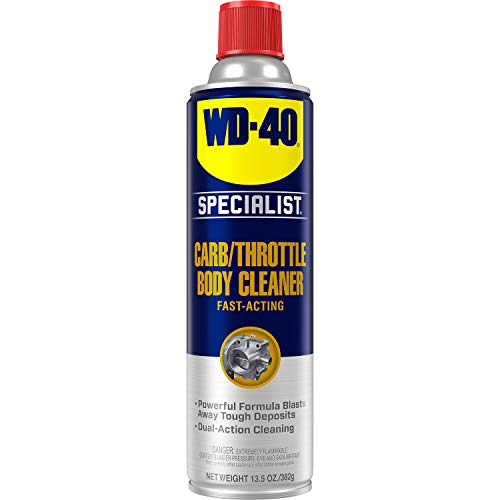
The only all-in-one carburetor cleaner spray you will need to clean your carburetor, throttle body, and unpainted metal parts
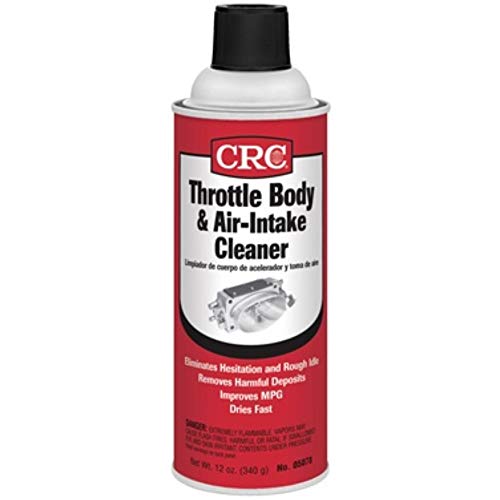
DEEP CLEANING: A top choice for cleaning throttle body build-up caused by harmful deposits of carbon; varnish; and gum.
Common Diagnostic Methods
- Scan every accessible module: Record engine, transmission, ABS, body, vehicle-control, and hybrid codes when applicable.
- Review freeze-frame and live data: Look at coolant temperature, engine load, throttle command, throttle position, accelerator position, MAF reading, fuel trims, battery voltage, and misfire counters if the scan tool supports them.
- Match model-specific information: Compare the model year, engine, symptoms, weather conditions, and codes with applicable Toyota service bulletins before assuming the fault is generic.
- Check oil and coolant safely: Inspect levels only on level ground and follow the owner’s manual. Do not open a hot cooling system.
- Inspect the air-intake path: Check the air filter, intake duct, clamps, breather hoses, and connectors from the filter box to the throttle body.
- Inspect wiring and grounds: Look for rubbed insulation, rodent damage, water intrusion, loose terminals, corrosion, and poor engine or body grounds.
- Test before replacing: Use voltage, continuity, pressure, smoke, or active scan-tool tests that match the DTC and Toyota service procedure.
What Do the Diagnostic Trouble Codes Tell You?
A DTC identifies a circuit, monitor, or operating condition that failed a test. It does not automatically identify the failed part. The table below is a diagnostic starting point only; exact definitions, subcodes, enabling conditions, fail-safe behavior, and tests can differ by model year and powertrain.
| DTC | General Meaning | Diagnostic Direction |
|---|---|---|
| P0101 | Mass air flow circuit range or performance | Inspect intake leaks, MAF contamination, wiring, and live airflow data |
| P0120 or P0121 | Throttle-position circuit fault or range/performance fault | Use the exact Toyota definition for the vehicle; compare related sensor signals and inspect reference voltage, ground, connector, and harness |
| P0171 | System too lean, bank 1 | Check vacuum leaks, intake ducting, fuel pressure, injector operation, and fuel trims |
| P0300 | Random or multiple-cylinder misfire detected | Avoid continued driving with a flashing MIL; diagnose ignition, fuel, air, and mechanical causes |
| P0420 | Catalyst efficiency below threshold, bank 1 | Check for upstream misfires, exhaust leaks, fuel-control faults, and sensor data before condemning the catalyst |
| P0700 | Transmission control system malfunction or MIL request | Scan the transmission module for the specific fault; P0700 alone is not the root cause |
| P2111 or P2112 | Throttle actuator control system stuck open or stuck closed | Inspect the throttle body, actuator circuit, connector, deposits, and commanded-versus-actual position using model-specific service information |
| P2118 | Throttle actuator control motor current range or performance | Check battery and actuator supply voltage, relevant fuse and wiring, connector condition, and Toyota’s specified circuit tests |
| P2135 | Throttle-position sensor voltage correlation fault | Compare redundant signals and inspect wiring before replacing the throttle body or another component |
Note: Code definitions and test procedures can differ by model year and powertrain. Use the exact Toyota repair information for the VIN, and do not treat an internet code list as a complete diagnosis.
How Should You Inspect the Throttle Body and Sensors?
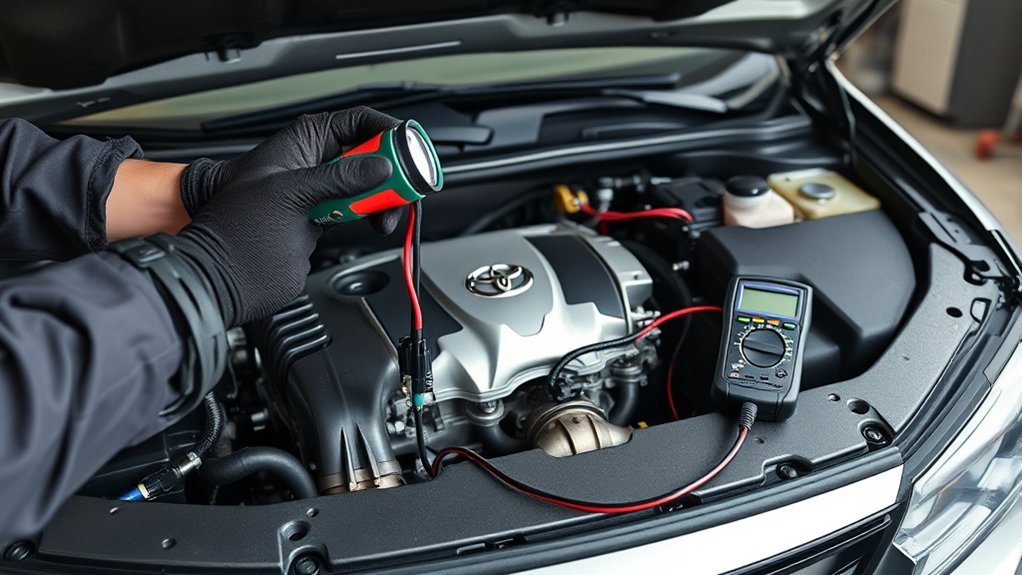
Work only with the engine off, the ignition off, and the engine cool. Wear eye protection and keep cleaner away from electrical connectors and painted surfaces.
- Locate the throttle body: Follow the intake duct from the air-filter box to the intake manifold.
- Inspect the duct first: Look for cracks, loose clamps, disconnected hoses, oil saturation, or debris. A leak after the MAF sensor can create incorrect airflow calculations.
- Check the connector: Inspect the throttle-body connector for a loose lock, bent terminals, corrosion, moisture, or damaged wires.
- Inspect for deposits: Look for heavy carbon or oil deposits around the throttle bore and plate.
- Clean only when appropriate: Use a product labeled for throttle bodies and follow the service procedure for your model. Do not soak the actuator housing or force an electronic throttle plate unless the procedure specifically permits it.
- Inspect the MAF sensor separately: If cleaning is justified, use only a cleaner labeled for MAF sensors. Do not touch the sensing element.
- Reassemble and verify: Reconnect every hose and clamp, clear codes only after saving the diagnostic data, and perform any required adaptation or relearn procedure. Do not assume a universal pedal-pumping sequence applies; see the Toyota Camry throttle-body relearn guide for the model-specific approach.
Caution: Disconnecting the battery can erase useful diagnostic data and may reset learned values. Save codes and freeze-frame information first. Hybrid vehicles also contain high-voltage components that are not appropriate for untrained DIY testing.
How Do Electrical Problems Cause Reduced Power?
Loose, corroded, water-damaged, or broken connections can interrupt communication or power between control modules, sensors, and actuators. Focus on connectors and harness sections identified by the DTC and wiring diagram rather than moving every wire indiscriminately.
With the ignition off, inspect the throttle body, accelerator pedal, MAF sensor, ignition coils, engine grounds, battery terminals, relevant fuses, and visible harness routing. Look for rubbed insulation near brackets, heat damage near the exhaust, rodent damage, and green or white corrosion inside connectors.
A multimeter can verify battery voltage, voltage drop, reference voltage, ground integrity, and circuit continuity. Do not pierce sealed wires or short terminals. When a code involves redundant throttle or pedal signals, compare the relevant data with a capable scan tool and follow the Toyota wiring diagram and test sequence.
How Does the ECU Limit Toyota Camry Power?
The engine control module manages fuel, ignition, electronic throttle operation, emissions monitoring, and communication with other vehicle modules. It can limit torque when a monitored value is unsafe, implausible, or inconsistent with another sensor or control request.
ECU Power-Management Function
- Sensor monitoring: The module watches accelerator position, throttle position, airflow, temperature, oxygen-sensor feedback, crankshaft speed, and other signals.
- Plausibility checks: Related or redundant signals are compared so the system can detect disagreement or circuit faults.
- Torque limitation: The module may reduce throttle response or request limited transmission or hybrid-system output.
- Fault storage: It stores a DTC and may save freeze-frame data showing conditions when a monitored test failed.
There is no universal rule that every Camry reduces output by a fixed percentage. The amount and type of limitation depend on the detected fault, model year, system design, and calibration.
Diagnosing ECU-Related Issues
Do not replace the ECU merely because several codes appear. Multiple codes can result from low voltage, a shared ground, a damaged reference-voltage circuit, water intrusion, or a communication problem. Verify powers, grounds, connectors, wiring, related DTCs, and applicable service information first.
Software or calibration updates should be performed only when Toyota service information identifies an applicable update or bulletin. Routine infotainment updates are not a general cure for reduced engine power. Toyota’s Technical Information System is the official service-information source for Toyota vehicles marketed in North America.
How Does Reduced Power Differ on Gasoline and Hybrid Camrys?
On a gasoline Camry, common diagnostic paths involve the electronic throttle, ignition, fuel delivery, airflow measurement, cooling system, transmission, and 12-volt electrical system. On a Camry Hybrid, similar engine faults can occur, but reduced propulsion may also involve the inverter, electric motor-generators, hybrid battery, isolation monitoring, inverter cooling, or hybrid-control communication.
A model-specific example is Toyota T-SB-0096-22 Rev1 for certain 2023 Camry Hybrids. It addresses the message “Hybrid System Overheated Reduced Output Power” and/or DTC X0528 and directs applicable vehicles through an inverter-with-converter ECU calibration procedure. That condition should not be diagnosed as a dirty throttle body simply because the driver reports reduced power.
Do not open orange high-voltage connectors or probe high-voltage circuits without the required training, insulated equipment, and service procedure. A weak 12-volt battery can also contribute to misleading or multiple warnings, so the low-voltage system is part of a proper diagnosis before assuming a major control-module failure.
[Amazon Products Picked for You]

Professional-Grade Cleaning System: Our comprehensive kit includes 20 precision (2 sets) stainless steel cleaning wires in various diameters, 8 specialized cleaning brushes, and 3 specialized double-ended polishing brushes (Stainless Steel, Brass, Nylon). The spiral-designed wires provide superior cleaning efficiency for deeply embedded debris and carbon deposits

Package: The cleaning kit includes 5 double-ended brushes (3 of which are made of stainless steel and brass), 5 single-ended nylon brushes, and 4 plastic nylon double-ended hooks. This tool set is rich and complete, and is your comprehensive cleaning assistant

Complete 33-Piece Carb Cleaning Kit – Includes 13 stainless steel cleaning wires, 5 nylon brushes, 10 cleaning needles, 1 throttle wrench, 1 pointed tweezers, 3 double-ended brushes, and 4 hooks. Everything you need as a carb cleaning tool set in one box
What Repairs Can Fix Toyota Camry Reduced Power Mode?
The correct repair is the one supported by the DTC, test results, vehicle applicability, and Toyota service information. Depending on the diagnosis, repairs may include:
- Cleaning a contaminated throttle body and completing any required relearn or adaptation procedure.
- Repairing an intake leak, loose duct, damaged vacuum hose, or disconnected breather hose.
- Repairing wiring, grounds, fuses, power supplies, or connectors for the throttle body, accelerator pedal, MAF sensor, ignition system, or control modules.
- Replacing a failed sensor or actuator only after circuit and component testing supports the replacement.
- Correcting a misfire caused by a plug, coil, injector, air leak, fuel problem, or mechanical issue.
- Repairing cooling, charging, transmission, or hybrid faults found by the diagnostic process.
- Completing an applicable Toyota bulletin repair or calibration update only when the vehicle and condition match the bulletin.
After the repair, clear codes, complete the specified confirmation or drive procedure, and rescan for pending or returning faults. Verify that the warning and power limitation do not return under the conditions that originally triggered the problem.
When Should You Seek Professional Help?
Arrange professional diagnosis when the warning returns after a restart, the car cannot maintain a safe road speed, the check engine light flashes, the engine overheats, the car stalls, several modules report communication codes, or basic inspection does not reveal the problem.
You should also use a qualified Toyota or hybrid technician when diagnosis requires fuel-pressure testing, oscilloscope testing, throttle active tests, transmission work, ECU programming, inverter calibration, or high-voltage hybrid-system service. A shop should be able to explain the codes, test results, applicable service information, and reason for the recommended repair rather than offering a parts list based on symptoms alone.
Check the VIN for open campaigns before paying for a related repair. Toyota provides an official recall and service-campaign lookup, and the NHTSA recall database provides federal recall information and access to related vehicle-safety records.
How Can You Reduce the Risk of Future Power-Loss Problems?
- Follow the maintenance schedule: Use the interval and fluid specifications in the manual for your exact year, powertrain, market, and driving conditions.
- Address warning lights early: An intake leak, intermittent misfire, low-voltage problem, or cooling fault can develop into a larger drivability problem.
- Keep the intake system sealed: Recheck clamps, ducts, connectors, and hoses after air-filter, battery, throttle-body, or engine-bay work.
- Protect electrical connections: Repair water leaks, battery corrosion, rodent damage, and rubbed wiring promptly.
- Use correct parts and procedures: Choose parts that meet Toyota specifications and complete required calibrations or relearns.
- Check applicable service information: If a repeat fault is limited to a specific temperature, model year, message, or DTC set, check Toyota bulletins rather than repeatedly replacing the same component.
- Check recalls by VIN: Recall and campaign eligibility is vehicle-specific.
Frequently Asked Questions
Why would my Toyota Camry go into reduced power mode?
The vehicle may limit power after detecting a throttle-control, airflow, fuel, ignition, cooling, electrical, transmission, or hybrid-system fault. The exact reason must be identified from the dashboard message, model year, powertrain, DTCs, freeze-frame data, live data, applicable Toyota service information, and diagnostic tests.
What does reduced engine power mean on a Toyota Camry?
It generally describes a condition in which a control system is limiting engine, transmission, or hybrid output after detecting a fault or protective condition. Toyota does not use one identical warning or fail-safe strategy on every Camry, so read the exact message and follow the owner’s manual for the model year.
Can I drive if my Camry says engine power is reduced?
Move only far enough to reach a safe place when the car remains controllable and there is no stop-now warning, overheating, flashing check engine light, severe shaking, smoke, or repeated stalling. Do not use highway driving or hard acceleration as a test. If safe operation is uncertain, arrange a tow.
Can freezing weather cause reduced power on a Toyota Camry?
Yes, on a specific group of vehicles. Toyota T-SB-0005-24 covers certain 2020–2022 Camrys equipped with the A25A-FKS engine that may show reduced engine power and/or a MIL in freezing temperatures with P01201C, P210015, P210019, and/or P211172. Do not apply that bulletin to a different engine, model year, temperature condition, or code set without confirming current Toyota applicability.
Is there a Toyota service bulletin for Camry Hybrid reduced output?
Toyota T-SB-0096-22 Rev1 applies to certain 2023 Camry Hybrid vehicles that display “Hybrid System Overheated Reduced Output Power” and/or DTC X0528. The bulletin identifies affected production ranges and a specific inverter-with-converter ECU calibration procedure. Other hybrid warnings require their own diagnostic path.
How much does it cost to fix reduced engine power?
There is no single price because reduced power is a symptom, not a specific part. A loose connector or intake hose can require a very different repair from a throttle-control, wiring, transmission, ECU, inverter, or hybrid-system fault. Approve parts after diagnosis identifies the failed system and confirms the repair.
Will disconnecting the battery reset reduced power mode?
It may clear learned values or temporarily change a warning, but it will not repair the underlying cause and can erase useful diagnostic information. Scan and save codes and freeze-frame data before disconnecting or resetting anything.
Can a dirty throttle body cause reduced power?
Heavy deposits can affect airflow and throttle operation, but contamination is only one possible cause. Throttle-control DTCs can also result from power-supply faults, wiring, connectors, actuator problems, low voltage, or model-specific conditions. Clean the throttle body only with the correct product and procedure and test the indicated circuit before replacing parts.
Conclusion
Toyota Camry reduced power mode is a protective symptom, not a diagnosis by itself. Get the car to a safe place, record the exact warning, and save codes and freeze-frame data before resetting anything. Then match the model year, powertrain, operating conditions, and DTCs with Toyota service information before testing the intake, throttle system, electrical supply, wiring, cooling system, transmission, or hybrid system. If a 2020–2022 A25A-FKS Camry loses power in freezing weather or a 2023 Camry Hybrid shows the documented inverter-temperature warning, check the applicable Toyota bulletin before authorizing generic parts replacement. Tow the vehicle when its warnings or behavior make continued driving unsafe.
Sources
- Toyota Manuals and Warranties: model-specific owner’s manuals, maintenance information, and warranty documents
- Toyota Warning Lights: official guidance on warning-light colors and using the correct owner’s manual
- Toyota Technical Information System: official repair information and service support for North American Toyota vehicles
- Toyota T-SB-0005-24 Rev1: reduced engine power/MIL with specified throttle-related DTCs in freezing temperatures on certain A25A-FKS vehicles, including 2020–2022 Camry models; check TIS for the current revision
- Toyota T-SB-0096-22 Rev1: 2023 Camry Hybrid “Hybrid System Overheated Reduced Output Power” and/or X0528 service information
- Toyota Recall and Service Campaign Lookup: VIN-based Toyota recall and campaign information
- National Highway Traffic Safety Administration Recall Database: federal recall and vehicle-safety information
