Last updated: September 11, 2026 — reviewed against Toyota maintenance guidance, Toyota parts information, Gates coolant-hose inspection guidance, and Toyota Customer Support Program 24TE04.
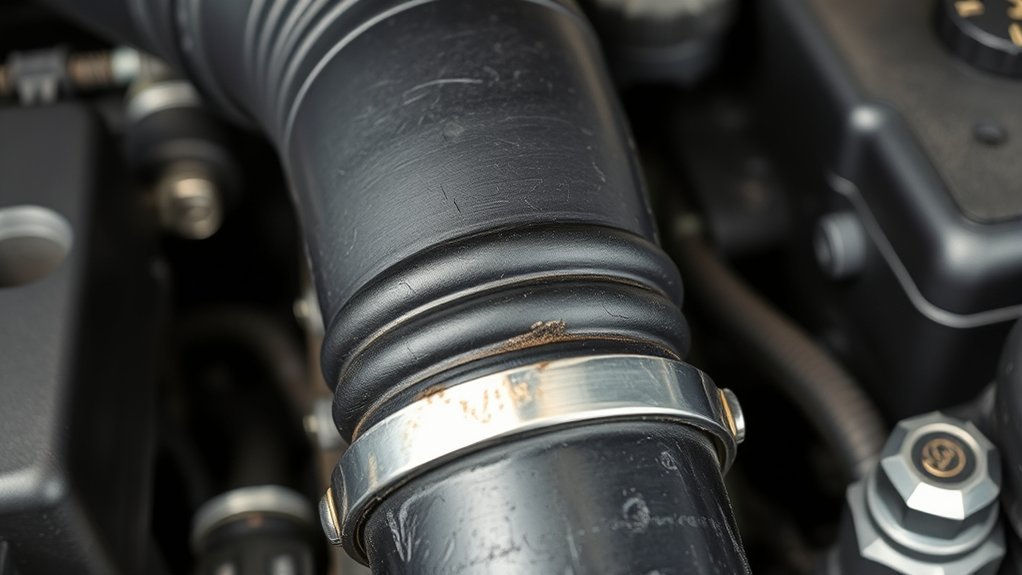
Toyota Camry radiator hose cracks and leaks usually show up as visible cracking, bulging, unusual softness or hardness, a flattened or collapsed section, damp hose ends, dried coolant residue, or repeated coolant loss. A damaged hose can release coolant quickly and cause overheating. Inspect the hoses only when the engine and cooling system are fully cold, and replace a hose that is cracked, swollen, cut, contaminated, or actively leaking rather than relying on tape or sealant.
Quick Answer
A failing Toyota Camry radiator hose may show cracks, swelling, brittle areas, unusual softness or hardness, a flattened or collapsed section, wet spots, or dried pink or white residue near a connection. Repeated coolant loss, steam, or overheating also requires inspection. Replace a damaged hose rather than relying on tape or sealant, and never open a hot cooling system.
Key Takeaways
- Inspect radiator hoses only when the engine and cooling system are fully cold.
- Cracks, bulges, seepage, abrasion, brittle rubber, unusually soft sections, and a hose that stays flattened or collapsed are warning signs that need diagnosis.
- Coolant loss or overheating can come from a hose, radiator, cap, reservoir, water pump, thermostat, or another cooling-system part.
- Toyota’s coolant-service interval is not an automatic radiator-hose replacement interval.
- Stop driving if the temperature warning appears, steam is escaping, or coolant is pouring from the vehicle.
At a Glance
| Time Required | Varies by model year and engine access; a basic visual check should be done only with the cooling system fully cold |
| Difficulty | Visual inspection requires no disassembly on accessible hoses; pressure testing or replacement needs the correct model-specific procedure and tools |
| Tools Needed | Flashlight, protective gloves, clean paper towel, and an inspection mirror if available |
| Cost | A visual inspection costs nothing. Replacement cost varies by Camry year, engine, hose location, coolant loss, and labor rates. |
Warning: Never remove a radiator cap, coolant pressure cap, or reservoir cap while the system is hot or pressurized. Escaping coolant and steam can cause severe burns. If the engine is overheating, stop safely, shut it off, and let it cool completely before approaching the cooling system.
What Are the Signs of Toyota Camry Radiator Hose Cracks and Leaks?
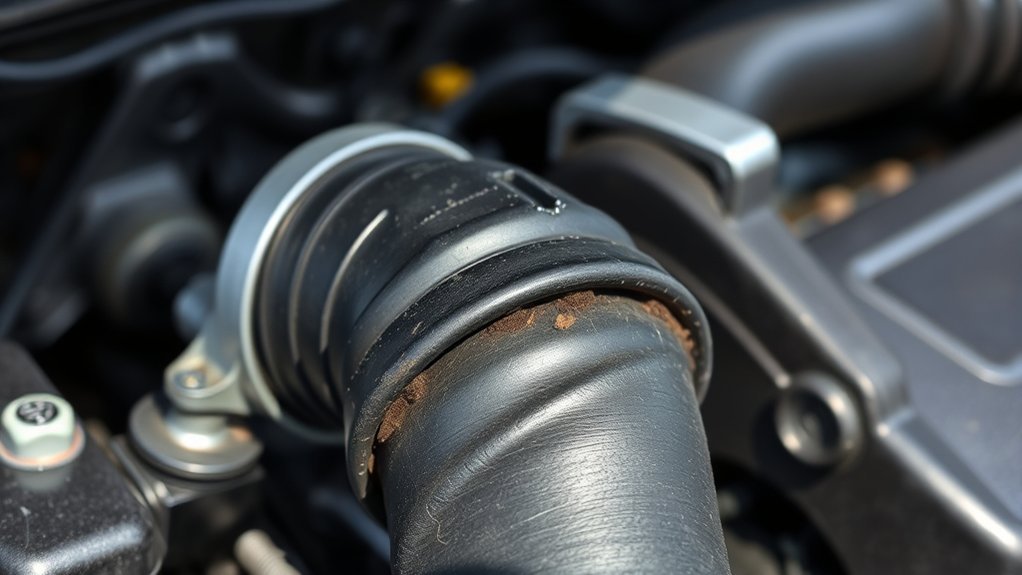
Radiator hoses are important parts of your Camry’s cooling system. They must remain flexible enough to handle engine movement while staying strong enough to contain hot, pressurized coolant. Repeated heat cycles and vibration can gradually weaken the rubber.
With the engine fully cold, inspect every visible section of the upper and lower radiator hoses. Look closely near clamps, fittings, bends, and areas where a hose passes near another component. Damage often begins on the underside or close to a connection, where it is easy to miss.
| What You Find | What It May Mean | Recommended Action |
| Surface cracks or dry rot | The outer rubber is deteriorating | Replace the hose before it begins leaking |
| Bulge or localized swelling | Internal reinforcement may be damaged | Do not continue normal driving; arrange replacement |
| Very hard, brittle, or unusually soft section | Heat, age, chemical contamination, or internal deterioration | Have the hose inspected and replace it if deterioration is confirmed |
| Flattened or collapsed section | The hose may be weakened, or the cooling system may have a vacuum or coolant-return problem | Inspect the hose, pressure cap or recovery path, and the rest of the cooling system; replace a damaged hose |
| Wetness or dried residue near a clamp | Seepage from the hose, clamp, fitting, or nearby component | Clean the area and inspect for fresh leakage or request a pressure test |
| Rubbed, flattened, or cut area | Incorrect routing, missing retainer, or contact with another part | Correct the routing and replace a hose with damaged rubber |
Pro Tip: Use a flashlight and inspection mirror to check the underside of each hose. Run a clean paper towel around cold hose connections. Fresh pink, white, or damp residue on the towel can reveal seepage that is difficult to see from above.
What Causes Cracks and Leaks in Radiator Hoses?
Radiator-hose damage usually develops through a combination of heat, pressure changes, vibration, and material aging. A hose may also fail early if it is installed incorrectly or exposed to oil and other chemicals that attack rubber.
- Heat cycling: Heating and cooling cause the rubber and internal reinforcement to expand and contract repeatedly.
- Age-related deterioration: Rubber may harden, crack, thin, or lose strength over time.
- Oil contamination: Engine oil or another petroleum fluid can soften and swell some hose materials.
- Abrasion: A hose that rubs against a bracket, engine cover, fan shroud, or other part can wear through.
- Incorrect clamps: A damaged, loose, overtightened, or poorly positioned clamp can allow seepage or cut into the hose.
- Installation damage: Twisting, stretching, prying, or forcing a hose over a damaged fitting can weaken it.
- Cooling-system pressure problems: A faulty cap, restricted passage, combustion-gas leak, or overheating condition can place extra stress on hoses and connections.
- Vacuum or coolant-return problems: After shutdown and cooldown, a weak hose can pull inward if the recovery path is restricted or the pressure-cap vacuum function is not working correctly.
- Damaged fittings: Corroded, cracked, distorted, or contaminated hose necks can prevent a proper seal.
Road debris can damage an exposed hose, but abrasion, connection leaks, heat damage, and contamination are more common inspection findings. If a new hose bulges or leaks soon after installation, have the cooling system and installation checked rather than assuming the replacement hose alone is defective.
Symptoms of a Failing Radiator Hose to Watch For
A damaged radiator hose can produce visible signs under the hood, but some symptoms only appear while the cooling system is hot and pressurized. Do not touch or squeeze a hot hose to investigate. Let the engine cool fully before inspecting it.
Visible Cracks and Bulges
Small surface cracks, splits near a clamp, or a swollen section indicate deterioration. A bulge is especially serious because it can mean the hose’s internal reinforcement has weakened. Replace a bulging hose promptly instead of waiting for it to leak.
Also check for:
- Crusty residue: Dried coolant can collect near a hose end, clamp, seam, radiator neck, or thermostat housing.
- Shiny wet areas: Fresh seepage may leave the hose or nearby component damp.
- Chafing: A worn flat spot or exposed reinforcement shows that the hose has been rubbing against another part.
- Oil-soaked rubber: A swollen or sticky surface may indicate contamination that must be corrected before fitting a new hose.
Collapsed or Flattened Radiator Hose
A radiator hose that stays flattened or pulls inward after the engine cools deserves more than a hose-only diagnosis. The hose itself may be too soft or internally damaged, but a restricted coolant-return path or a pressure-cap vacuum-valve problem can also create excessive vacuum during cooldown. Inspect the cold hose for a weak section, then check the cap, recovery hose, reservoir connection, and routing. If the hose is damaged, replace it. If the hose is new or repeatedly collapses, diagnose the cooling system instead of installing another hose without finding the cause.
Engine Overheating Symptoms
A hose that loses coolant or restricts circulation can contribute to overheating. Watch for a high-temperature warning, a gauge moving above its normal range, reduced engine power, a strong coolant odor, or steam from the engine compartment.
These symptoms do not prove that a radiator hose is the cause. A failed radiator cap, cooling fan, thermostat, water pump, radiator, reservoir, heater hose, sensor, or internal engine problem can create similar symptoms. A proper inspection should cover the complete cooling system.
Coolant Level Fluctuations
The coolant level naturally changes as the system heats and cools, so compare it only under the conditions stated in your owner’s manual. A level that repeatedly falls below the cold mark, however, indicates coolant loss or another problem that requires diagnosis.
Warning signs include:
- Repeated top-offs: Adding coolant regularly without finding the cause is not normal maintenance.
- Fresh residue: New deposits around a clamp or fitting suggest active seepage.
- Puddles after parking: The position of a puddle can provide a clue, but coolant may travel along shields and components before reaching the ground.
- Sudden coolant loss: A large drop, visible spray, or steady stream requires the engine to remain off until the vehicle is repaired.
Note: Do not identify coolant compatibility by color alone. Toyota recommends checking the exact coolant specification in your Camry’s owner’s manual. Many recent models use Toyota Super Long Life Coolant, but requirements can vary by model year and market.
How to Inspect Toyota Camry Radiator Hoses Safely
- Park on a level surface. Switch off the engine and allow it to cool completely. Waiting until the next morning is the safest approach when the vehicle was recently driven.
- Check the reservoir level. Use the markings and procedure in your model-year owner’s manual. Do not open a pressurized cap.
- Locate the visible coolant hoses. Follow the upper and lower radiator hoses between the engine and radiator. On some Camrys, covers or tight packaging may limit access.
- Inspect the entire surface. Look for cracks, swelling, wet spots, dried residue, abrasion, cuts, oil contamination, and contact with nearby parts.
- Check every connection. Examine the hose end, clamp position, fitting, radiator neck, and surrounding component. A wet connection does not always mean the hose itself is leaking.
- Feel the cold hose gently. It should not contain a sharply localized soft spot, brittle section, crack, or bulge. Do not twist or pull aggressively.
- Inspect underneath. Use a flashlight or mirror to see hidden areas and the lower hose.
- Recheck after repair or cleaning. If you clean old residue, monitor the area for fresh seepage during later cold-engine inspections.
Toyota’s maintenance guidance tells technicians to inspect cooling-system hoses and connections for corrosion and leaks, tighten connections when appropriate, and replace damaged parts when necessary.
[Amazon Products Picked for You]

Fit for Toyota Camry 2002 2003 2004 2005 2006; Fit for Solara 4cyl Radiator 2004 2005 2006 2007 2008; Replace 16571-28080, 16572-28080, 165710H020,165720H020

Compatible with Toyota Camry 2012-2017; Avalon 2013-2018
How Can You Tell Whether a Puddle Comes From a Radiator Hose?
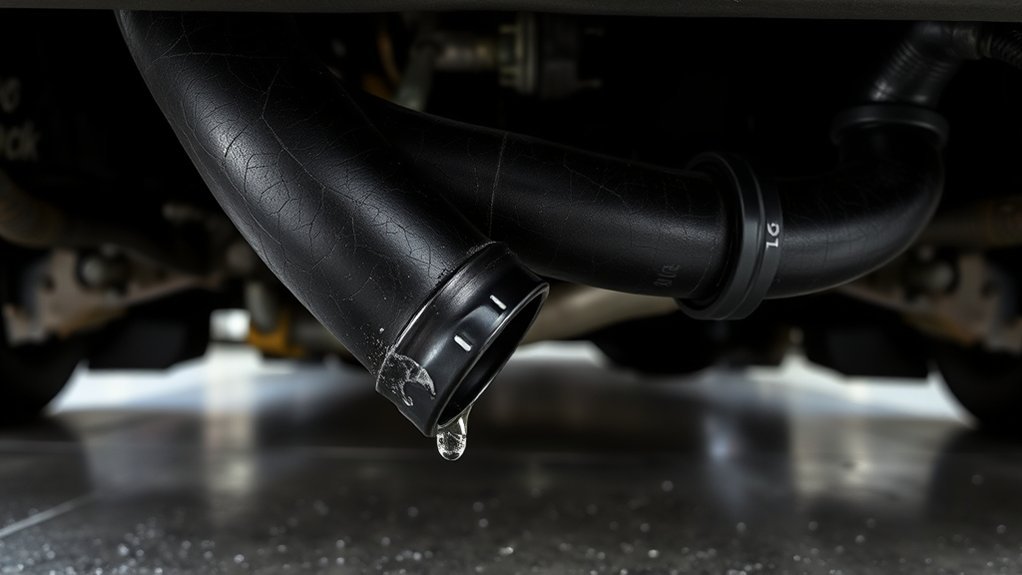
A coolant leak may leave a wet spot or dried deposit beneath the vehicle. Many recent Toyotas use pink coolant, but fluid appearance can change through age, contamination, lighting, or the use of another compatible product. Do not rely on color alone.
Use these clues:
- Odor: Coolant may have a sweet or chemical smell, although odor is not a safe identification test.
- Texture: Coolant often feels more slippery than plain water. Wear gloves and avoid skin or eye contact.
- Location: A puddle near the front of the vehicle may come from a hose, radiator, drain, water pump, reservoir, or another component.
- Residue: Dried coolant may leave pink, white, or crusty deposits around the leak path.
- Timing: A leak that appears after driving may only occur while the system is hot and pressurized.
Air-conditioning condensation is normally clear water and can form a harmless puddle after using the air conditioner. If you cannot identify the fluid, do not taste or smell it closely. Have the vehicle inspected.
A technician can use a cooling-system pressure tester to reproduce some leaks with the engine off. UV dye may help trace a small or hidden leak when the dye is compatible with the coolant and used correctly. Pressure must stay within the specification for that cooling system.
If the leak path is not clearly tied to a radiator hose or clamp, use our Toyota Camry coolant leak guide to compare other common leak points before replacing parts.
2018–2021 U.S. Camry note: Toyota Customer Support Program 24TE04 covers certain 2018–2021 Camry and Camry Hybrid vehicles for a small coolant leak from the flow shut-off valve. That leak can be mistaken for a hose problem. If your vehicle is in this model-year range and has coolant loss, an “Engine Maintenance Required” message, or abnormal A/C operation, ask a Toyota dealer to check VIN eligibility and diagnose the valve before assuming the radiator hose is the source. See the 24TE04 program document.
How Overheating Affects Your Toyota Camry’s Radiator Hoses
Overheating exposes hoses, seals, plastic fittings, and other cooling-system parts to excessive temperature and pressure. Rubber that has already weakened may crack, swell, seep, or rupture during an overheating event.
Overheating can affect the hoses in several ways:
- Rubber deterioration: Excess heat can reduce elasticity and accelerate hardening or softening.
- Internal damage: Reinforcement layers may weaken even when the exterior looks acceptable.
- Connection leakage: Heat can worsen seepage at a clamp, fitting, radiator neck, or housing.
- Sudden failure: A weak hose may split or release coolant once system pressure rises.
Do not replace a burst hose without checking why the engine overheated. The original cause may be a cooling fan, thermostat, radiator, cap, water pump, blockage, coolant loss, or internal engine problem. Fitting a new hose without correcting the cause can lead to another failure.
What to Do if Your Camry Overheats
- Move to a safe location. Reduce load and pull off the road as soon as it is safe.
- Turn off the engine. Continuing to drive can turn a minor cooling-system problem into major engine damage.
- Stay clear of steam. Do not open the hood immediately if steam is escaping heavily or coolant is spraying.
- Let the system cool completely. Do not remove a hot pressure cap or pour cold fluid into an overheated engine.
- Look for obvious leakage from a safe distance. A split hose, large puddle, empty reservoir, or active stream means the vehicle should not be driven.
- Arrange roadside assistance when needed. Tow the Camry if it overheats again, loses coolant rapidly, produces steam, or cannot maintain a safe coolant level.
If overheating happens mainly at higher road speeds or returns after a hose repair, see our Toyota Camry highway-speed overheating guide for a broader cooling-system diagnostic path.
Warning: Never use your hand to search for a pressurized coolant leak. A fine stream may be difficult to see and can cause a serious burn. Do not crawl beneath a vehicle that is supported only by a factory jack.
[Amazon Products Picked for You]

GM-recommended replacement part for your GM vehicle's original factory component

Some ACDelco Gold parts may have formerly appeared as ACDelco Professional

Application: Note that you can use our radiator hose for the transportation of water or gas in your vehicle's cooling system. But please don't use our radiator hose for oil to avoid causing safety problems, read the above information before purchasing
Why You Should Regularly Inspect Your Radiator Hoses
Routine inspection can reveal damage before a hose releases a large amount of coolant. A convenient time is when the engine is cold before a trip, during scheduled maintenance, or after noticing an odor, residue, unexplained coolant loss, or abnormal temperature reading.
Also check clamp placement and nearby hose routing. A clamp should sit correctly on the fitting without cutting into the hose. The hose should not rub against a sharp edge or moving component. Do not tighten a clamp blindly to stop a leak. Overtightening can damage a hose or plastic fitting, while the real leak may come from the fitting, radiator, or housing.
Toyota does not provide one universal age or mileage at which every Camry radiator hose must be replaced. Inspect the condition and follow the maintenance information for your specific model year. Toyota’s official manual and warranty portal allows you to select the appropriate vehicle.
As a general hose-manufacturer reference, Gates recommends inspecting cooling-system hoses at around 60,000 miles and checking for soft spots, cracked ends, and bulges. Treat that as an inspection benchmark, not a Toyota hose-replacement interval. See Gates coolant-hose inspection guidance.
Solutions for Repairing or Replacing Damaged Hoses
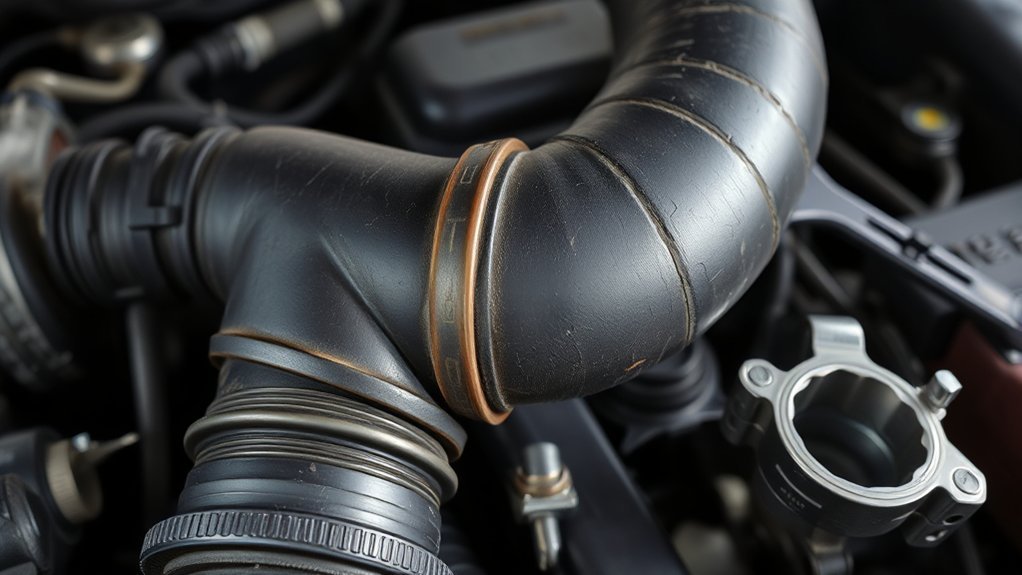
A cracked, bulging, cut, oil-soaked, or leaking radiator hose should normally be replaced. Tape, glue, stop-leak products, and improvised patches are not dependable permanent repairs for a pressurized cooling system.
A correct replacement includes more than installing a piece of hose:
- Confirm fitment. Match the hose to the exact Camry year, engine, trim, and cooling-system location.
- Inspect the fittings. A cracked plastic neck, corroded metal connection, or damaged sealing surface can leak even with a new hose.
- Use suitable clamps. Install the correct type and size in the proper position. Replace distorted or damaged clamps.
- Correct the original cause. Fix abrasion, oil leakage, overheating, routing, cap, or pressure problems before installing the new hose.
- Use the specified coolant. Toyota advises checking the owner’s manual for the correct product. Recent models may call for Toyota Super Long Life Coolant or a coolant meeting Toyota’s stated chemistry.
- Remove trapped air correctly. The refill and bleeding procedure varies by engine and model year. An incomplete bleed can cause poor heater performance, unstable temperature, or overheating.
- Verify the repair. Check for leaks, proper coolant level, normal temperature, and correct fan operation after the service procedure is complete.
Radiator-hose replacement requires coolant handling and may require access from below. Use a qualified technician if you do not have the correct service information, tools, lifting equipment, coolant, and bleeding procedure.
[Amazon Products Picked for You]

Item List:1 Pc Radiator Coolant Hose

Compatibility: The radiator coolant hose is compatible with Lexus ES350 2007-2013, compatible with Toyota Avalon 3.5L 2008-2012, compatible with Toyota Camry 2007-2011.

[Compatible]: This radiator bypass hose is specifically designed to be compatible with Toyota Camry 2018-2023, Toyota Rav4 2.5l 2019-2023, and Toyota Avalon 2021, ensuring a perfect fit for your vehicle.
Preventive Measures to Extend the Life of Your Radiator Hoses
- Use the correct coolant: Do not mix products based only on color. Follow the specification in your Camry’s manual.
- Repair oil leaks: Oil that reaches a coolant hose can damage the rubber.
- Maintain correct routing: Replace missing clips or retainers that keep hoses away from sharp or moving parts.
- Address overheating promptly: Repeated overheating can weaken hoses and other cooling-system components.
- Inspect after other repairs: Work near the radiator, thermostat housing, engine, or front body structure can disturb a hose or clamp.
- Follow model-year coolant intervals: Toyota’s 2024 U.S. Camry guide lists initial engine-coolant replacement at 100,000 miles or 120 months, followed by replacement every 50,000 miles or 60 months. Verify the schedule for your own Camry because other years, markets, and coolant circuits may differ.
Hybrid Camrys may have more than one coolant circuit. Do not assume the engine, inverter, and intercooler circuits use identical service procedures or intervals. In Toyota’s 2025 U.S. Camry maintenance guide, the initial engine/intercooler coolant replacement is listed at 100,000 miles or 120 months, while the initial inverter/intercooler coolant replacement is listed at 150,000 miles or 180 months; each is then listed every 50,000 miles or 60 months where applicable.
For a schedule-focused explanation, see our Toyota Camry coolant replacement interval guide.
Coolant Safety: Ethylene glycol can be harmful through ingestion and exposure. Wear gloves, prevent eye contact, clean spills promptly, keep children and animals away, and dispose of used coolant according to local requirements. Seek immediate medical help or contact Poison Control after suspected ingestion.
Related Guides
Frequently Asked Questions
What should you do if the radiator hoses have cracks or leaks?
Keep the engine off and allow it to cool completely. Replace a cracked, bulging, cut, contaminated, or leaking hose, and inspect its clamps and fittings. If coolant is escaping rapidly, the reservoir is empty, or the engine has overheated, arrange a tow instead of driving the Camry.
How long do Toyota radiator hoses last?
Toyota does not give one universal replacement age or mileage for every Camry radiator hose. Heat, climate, contamination, engine design, installation, and driving conditions affect service life. Inspect the hoses and replace them when they crack, swell, leak, harden, soften abnormally, or suffer other damage.
How can you tell if a radiator hose is leaking?
With the engine cold, look for wetness, dried coolant residue, cracks, or deposits around the hose ends and clamps. Monitor the cold coolant level for repeated loss. A technician may use a cooling-system pressure test or compatible UV dye when the leak is too small or hidden to locate visually.
What are signs of trapped air in a Camry cooling system?
Possible signs after coolant service include gurgling, inconsistent cabin heat, bubbling in the reservoir, or an unstable temperature reading. These symptoms can also result from low coolant, a leak, thermostat trouble, a water-pump problem, or combustion gases. Use the model-specific bleeding procedure and diagnose persistent symptoms.
Can you drive with a leaking radiator hose?
Driving is not advisable when a hose is actively leaking, bulging, split, or causing coolant loss. The leak can worsen without warning and overheat the engine. Stop immediately if the temperature warning appears, steam escapes, or coolant is pouring from the vehicle.
Should you replace both radiator hoses at the same time?
Not automatically. Inspect every coolant hose, clamp, and fitting. Replacing another hose may be sensible when it is the same age and shows similar deterioration, but an undamaged hose should not be condemned only because one nearby hose failed. Base the decision on condition and model-specific service information.
What does a collapsed radiator hose mean on a Toyota Camry?
A hose that stays flattened or pulls inward after cooldown may be weakened internally, but it can also point to a restricted coolant-return path or a pressure-cap vacuum-valve problem. Inspect the cold hose, cap, recovery hose, reservoir connection, and routing. Replace a damaged hose and diagnose the system if the collapse returns.
Conclusion
Check your Toyota Camry’s radiator hoses when the engine is fully cold. Cracks, bulges, a flattened or collapsed section, abrasion, contamination, damp connections, dried residue, and repeated coolant loss are reasons to investigate. Replace a damaged hose, correct the cause of the failure, refill with the specified coolant, and bleed the system correctly.
Do not confuse Toyota’s coolant-replacement schedule with a fixed radiator-hose lifespan. Use the maintenance guide for your exact model year, and arrange professional diagnosis when the Camry overheats, loses coolant rapidly, or has a leak that cannot be found safely.
Sources
- 2024 Toyota Camry Warranty & Maintenance Guide — coolant intervals, hose and connection inspection, coolant specifications, and technician guidance
- 2025 Toyota Camry Warranty & Maintenance Guide — current engine/intercooler and inverter/intercooler coolant schedules where applicable
- Toyota Manuals and Warranties — model-year owner’s manuals and maintenance documents
- Toyota Genuine Super Long Life Coolant — Toyota coolant selection and owner’s-manual guidance
- CDC NIOSH Pocket Guide: Ethylene Glycol — exposure routes, protective measures, symptoms, and first-aid guidance
- Gates Coolant Hose Guidance — hose-inspection signs including soft spots, cracked ends, bulges, and the 60,000-mile inspection benchmark
- Toyota Customer Support Program 24TE04 — certain 2018–2021 Camry and Camry Hybrid flow shut-off valve coolant leaks
