
If your Toyota Camry stalls as you slow down or come to a stop, start by saving diagnostic codes and noting how the engine dies before cleaning or replacing parts. A shaking, falling-RPM stall points more toward airflow, vacuum or PCV leaks, EVAP purge flow, ignition, or fuel-mixture problems. An abrupt shutdown can point toward a power, sensor-signal, or fuel-delivery interruption. If it dies only as an automatic-transmission Camry stops in Drive, include torque-converter clutch operation in the diagnosis. On a Camry Hybrid, first confirm whether the gasoline engine stopped normally while the READY indicator stayed on.
Last updated: September 19, 2026. This revision adds current U.S.-market Camry hybrid context, a specific fuel-pump recall check, and clearer symptom-based diagnosis.
Quick Answer
A gasoline Toyota Camry that stalls at stops can have an airflow or intake leak, throttle-control problem, EVAP purge fault, ignition misfire, fuel-delivery problem, sensor or wiring fault, low system voltage, or a torque-converter clutch that does not release correctly. Scan for codes, save freeze-frame data, check the VIN for recalls, and test the suspected system before replacing parts. On a Camry Hybrid, an engine stop can be normal when READY remains on and the vehicle still operates normally.
Key Takeaways
- Identify the Camry’s year, engine, transmission, and hybrid status because the idle-control hardware varies by generation. U.S.-market 2025 and 2026 Camrys are hybrid-only.
- Record stored, pending, and permanent trouble codes plus freeze-frame data before clearing anything.
- Do not assume an idle air control valve, EGR valve, or replaceable external fuel filter is fitted to every Camry.
- If the engine runs in Park or Neutral but dies while stopping in Drive, the torque-converter clutch should be investigated.
- Check the VIN for open recalls. NHTSA campaign 25V-028 / Toyota 25TA01 covers certain 2018 Camrys whose low-pressure fuel pump may fail and cause a stall.
- Repeated stalling in traffic is a safety concern and should be professionally diagnosed before the car is driven again.
At a Glance
| Time Required | A basic scan and visual inspection can be completed in one diagnostic session; smoke, fuel-pressure, electrical, hybrid, or transmission testing can take longer |
| Difficulty | Beginner for code scanning and visual checks; intermediate or professional for throttle, fuel, wiring, and transmission diagnosis |
| Tools Needed | OBD-II scan tool with live data, flashlight, basic hand tools, multimeter, clean cloths, and model-approved cleaner if throttle service is justified |
| Cost | No fixed amount applies: code reading and visual checks may require no parts, while testing and repair cost depends on the failed system |
Warning: If the vehicle stalls in traffic, switch on the hazard lights, maintain control, and move to a safe location if possible. Brake or steering feel can change if engine, hybrid, or electrical assistance is lost. Do not keep driving a Camry that repeatedly stalls, loses electrical power or READY status, smells of fuel, overheats, or cannot be restarted reliably.
Why Does a Toyota Camry Stall at Stops?
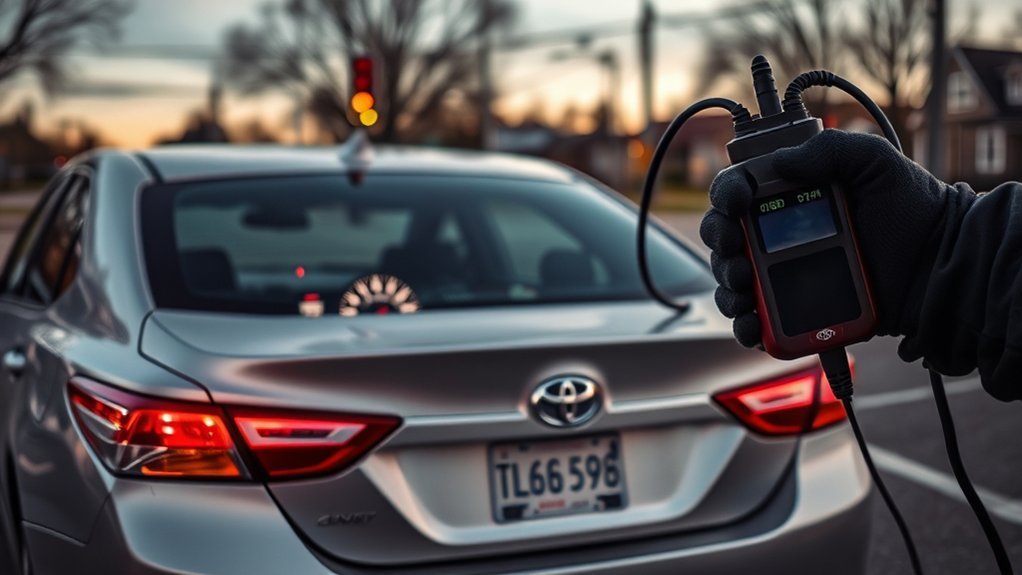
Several systems can make a Toyota Camry stall at stops. The pattern of the failure often provides a better starting point than a list of parts. Note whether the engine stalls cold or warm, after refueling, with the air conditioner running, while braking, or only when the transmission remains in Drive. If the engine never fully dies and the main symptom is shaking or unstable RPM, use the separate Toyota Camry rough-idle guide to avoid mixing two different diagnostic paths.
Note: Older Camrys may use a separate idle air control valve and an external EGR valve. Many later Camrys regulate idle through an electronic throttle body and may use different emissions hardware. Confirm component names and procedures in the manual for your exact year and engine.
[Amazon Products Picked for You]
DEEP CLEANING: A top choice for cleaning throttle body build-up caused by harmful deposits of carbon; varnish; and gum.

FITS THE FOLLOWING VEHICLES:Fit for Toyota Camry 2.2L 1992-1993 ;for Toyota Camry 2.2L 1994-1995 excluding California Emissions

【High Quality】A ABIGAIL Air Intake Hose Intake Duct Tube is made of high temperature rubber which is durable and resists the drying and cracking, provides a long service life.
Airflow and Idle-Control Problems
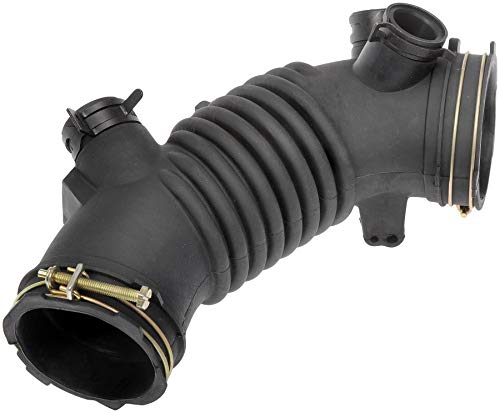
A dirty throttle bore or carbon around the throttle plate can reduce the small amount of airflow needed when your foot is off the accelerator. An intake duct that is loose or cracked can also let unmetered air enter the engine. Other possible air-related causes include:
- A disconnected or split vacuum hose
- A leaking intake-manifold or throttle-body gasket
- A stuck or damaged positive crankcase ventilation system component
- A contaminated mass airflow sensor, if fitted
- A separate idle air control valve fault on an applicable older engine
- An electronic throttle actuator, throttle-position circuit, or idle-adaptation problem on a later model
Do not assume the throttle body is dirty simply because the car stalls. Compare commanded and actual throttle data, airflow readings, fuel trims, and idle speed when scan data is available.
Fuel-Delivery and EVAP Problems
A weak fuel pump, restricted in-tank strainer, electrical supply problem, contaminated fuel, or incorrect fuel pressure can make the engine stall as speed drops. Fuel pressure should be tested before the pump is replaced.
Recall check for certain 2018 Camrys: NHTSA campaign 25V-028, identified by Toyota as 25TA01, covers certain 2018 Camry vehicles whose low-pressure fuel pump may fail. NHTSA states that a failure can cause an engine stall and increase crash risk. This recall does not apply to every 2018 Camry, so confirm eligibility by VIN through Toyota or NHTSA.
The original concern about a clogged fuel filter is possible on some configurations, but fuel-filter design varies. On many newer Camrys, filtration is incorporated into the fuel-pump module and is not treated as a routine external filter replacement. Use the exact maintenance guide and repair manual for your vehicle.
If the Camry becomes hard to start or stalls soon after the fuel tank is filled, a stuck-open EVAP purge valve may be allowing excessive fuel vapor into the intake. That symptom deserves an EVAP-system diagnosis rather than immediate throttle-body cleaning.
Ignition and Engine-Sensor Faults
Worn spark plugs, a failing ignition coil, damaged wiring, or oil and moisture in a plug well can cause misfires severe enough to stall the engine. Sensor and circuit faults may also interrupt fuel or ignition control. Relevant possibilities include:
- Crankshaft or camshaft position sensor signal loss
- Incorrect engine coolant temperature data
- Mass airflow, manifold pressure, or throttle-position faults on applicable engines
- Low battery voltage, a weak alternator, loose battery terminals, or poor grounds
- ECM power-supply, relay, connector, or wiring problems
A diagnostic trouble code does not prove that the named component has failed. For example, an airflow code may be caused by a leak, wiring problem, contaminated sensor, low voltage, or another fault that makes the reading implausible. For MAF-specific testing context, see the Toyota Camry mass-airflow sensor guide.
Transmission and Accessory-Load Causes
An automatic transmission can contribute to stalling if the torque-converter clutch remains applied as the car slows. The symptom can feel similar to stopping a manual-transmission car without pressing the clutch pedal. This possibility moves higher on the list when the engine:
- Runs normally in Park or Neutral
- Stalls only as the vehicle stops in Drive
- Restarts immediately after the stall
- Shows no major roughness when idling out of gear
Stalling that occurs when the air conditioner, headlights, rear defroster, or steering load is added can point toward low system voltage, poor idle compensation, excessive accessory load, or a mechanical accessory problem.
Is a Camry Hybrid Really Stalling?
On a Camry Hybrid, the gasoline engine may shut off while the vehicle is stopped even though the hybrid system remains ready to drive. Toyota describes this automatic engine stop as normal hybrid operation when the READY indicator remains on and the vehicle is still operational. For the U.S. market, Toyota made the 2025 Camry exclusively hybrid, and the 2026 Camry remains all-hybrid. On these models, the gasoline engine turning off at a red light is not by itself evidence of a stall.
A true hybrid-system shutdown is different. Warning messages, loss of the READY indicator, inability to move, abnormal noises, or repeated failure to enter READY mode require diagnosis using the hybrid-system procedures for that model.
Stalling Symptom Guide
| Symptom | Possible Direction | Useful First Check |
|---|---|---|
| Stalls only when stopping in Drive | Torque-converter clutch, idle airflow, or load compensation | Compare operation in Drive, Neutral, and Park |
| Shuts off abruptly with little or no roughness | Power or ground interruption, crank/cam signal loss, fuel-pump interruption, or control-circuit fault | Save codes and freeze-frame data; watch RPM, voltage, and sensor signals during the event |
| Stalls after warming up | Heat-sensitive sensor, ignition component, fuel pump, wiring, or excessive fuel correction | Review freeze-frame data and monitor signals as temperature rises |
| Stalls after refueling | EVAP purge valve or vapor-control problem | Check purge command, purge flow, and EVAP codes |
| Stalls with air conditioning or electrical loads | Charging voltage, grounds, idle compensation, or accessory drag | Measure voltage at idle with loads switched on |
| Rough idle plus misfire codes | Spark plug, coil, injector, compression, or intake leak | Inspect misfire counters and test the affected cylinder |
| Hybrid engine stops but READY stays on | Possibly normal hybrid operation | Check the READY indicator and owner’s manual |
How Do You Diagnose a Toyota Camry That Stalls at Stops?
Use a test-first process instead of replacing the most commonly mentioned part. The following sequence helps preserve evidence and narrows the fault efficiently.
- Identify the vehicle: Record the model year, engine size, transmission type, hybrid status, mileage, and recent repairs. Component layouts and diagnostic procedures vary substantially.
- Define the symptom: Note whether the stall occurs cold, warm, after refueling, while braking, with the air conditioner on, or only in Drive. Record whether the engine restarts immediately.
- Check recalls and campaigns: Enter the VIN at Toyota’s recall lookup and NHTSA’s recall lookup. Certain 2018 Camrys are covered by fuel-pump recall 25V-028 / Toyota 25TA01, but VIN confirmation is required.
- Scan before disconnecting the battery: Read engine, transmission, and hybrid-control modules when your scan tool supports them. Save stored, pending, and permanent codes plus freeze-frame data.
- Check voltage and connections: Inspect battery terminals, engine grounds, fuses, relays, and connectors. Measure battery and charging voltage instead of judging the battery by appearance.
- Inspect the intake system: Look for a loose air duct, disconnected MAF connector, split hose, damaged PCV plumbing, and other leaks between the airflow sensor and engine.
- Review live data: Useful readings may include coolant temperature, engine speed, system voltage, throttle angle, airflow, short- and long-term fuel trims, oxygen or air-fuel sensor data, purge command, and misfire counts.
- Test the suspected system: Use a smoke test for intake leaks, a fuel-pressure test for delivery concerns, circuit testing for sensor codes, and transmission data for a suspected torque-converter clutch problem.
- Verify the repair: After completing a justified repair, reproduce the original conditions, confirm stable idle, and recheck codes and live data.
Pro Tip: Photograph or export the code list and freeze-frame values before clearing them. Engine temperature, speed, load, voltage, fuel trims, and vehicle speed at the moment the fault was detected may reveal whether the problem is related to warm-up, deceleration, electrical load, or fuel control.
Which Components Can Make a Toyota Camry Stall?
The correct component list depends on the exact Camry. Use this table to decide what should be inspected or tested, not what should be replaced automatically. If testing points to injector operation rather than pressure supply, the Toyota Camry fuel-injection guide explains the separate injector diagnostic path.
| Component or System | How It Can Contribute | Important Caveat |
|---|---|---|
| Throttle body | Deposits, actuator faults, or position errors may disturb airflow at closed throttle. | Do not force or flood an electronic throttle body. |
| Idle air control valve | A sticking valve can disturb idle airflow on engines that use one. | Not every Camry has a separate serviceable IAC valve. |
| MAF or MAP system | Incorrect airflow or pressure data can cause poor fuel control. | Confirm which sensor arrangement the engine uses and test the circuit. |
| Engine coolant temperature sensor | Implausible temperature data can affect fueling and idle strategy. | Compare scan data with actual engine temperature before replacement. |
| EGR system | A valve stuck open can dilute the intake charge at idle on an applicable engine. | External EGR hardware is generation- and engine-dependent. |
| EVAP purge valve | Excess purge flow can make the mixture too rich, especially after refueling. | Test purge flow and command rather than replacing the valve by symptom alone. |
| Fuel pump and supply circuit | Low pressure, low volume, voltage loss, or an intermittent pump can stall the engine. | Test pressure, delivery, current, and voltage before replacing the module. |
| Spark plugs and ignition coils | Severe or multiple-cylinder misfires can cause rough idle and stalling. | Follow the correct plug specification and test the affected cylinder. |
| Crankshaft and camshaft sensors | An intermittent position signal can stop spark and injection. | Check wiring, signal behavior, and temperature-related failure patterns. |
| Torque-converter clutch | A clutch that remains applied may drag the engine to a stop. | Transmission scan data and hydraulic diagnosis may be required. |
[Amazon Products Picked for You]

Removes power-robbing deposits

Powerful Throttle Body Cleaning Action: Specially blended formula removes performance-robbing grease, grime, gum, and baked-on varnish from air intake and throttle body components.
Direct replacement - fits and functions like original equipment
Can a Dirty Throttle Body Make a Camry Stall?
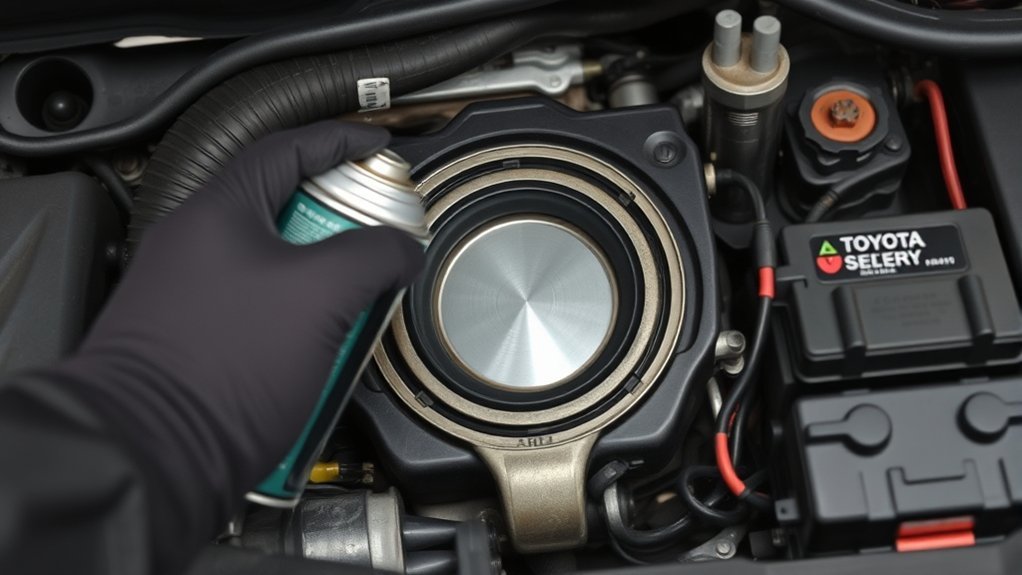
Throttle-body cleaning can help when deposits are confirmed around the bore or throttle plate, but it is not a cure for every stalling problem. Scan and inspect the engine first. If the car has an electronic throttle body, consult the correct service procedure before moving the plate or disconnecting electrical components. If the symptom began after battery disconnection or throttle service, also review the Camry throttle-body relearn and adaptation guide rather than assuming more cleaning is needed.
[Amazon Products Picked for You]
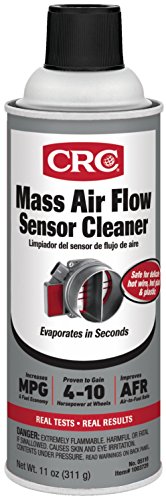
Increases Horsepower And Improves Air/Fuel Ratio And Mpg
CRC INDUSTRIES: A market leader that offers impeccably designed chemical solutions to maintain, protect and repair different marine, heavy-duty motor vehicles, industrial-grade engines, household tools, and electrical equipment

Extra strength cleaning power: Specially formulated with solvents that effectively break down carbon, gum, and varnish deposits to restore cleaner and smoother engine operation
Tools Needed for Cleaning
Gather the following supplies before starting:
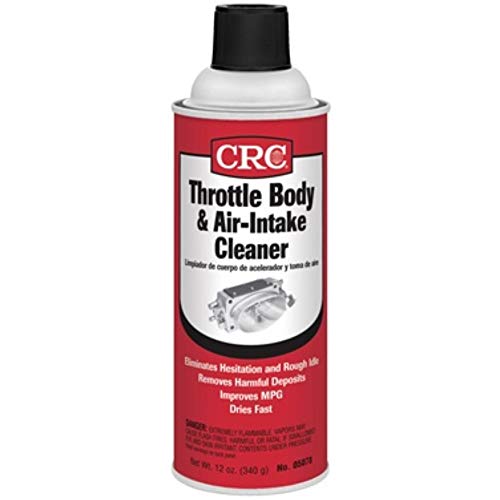
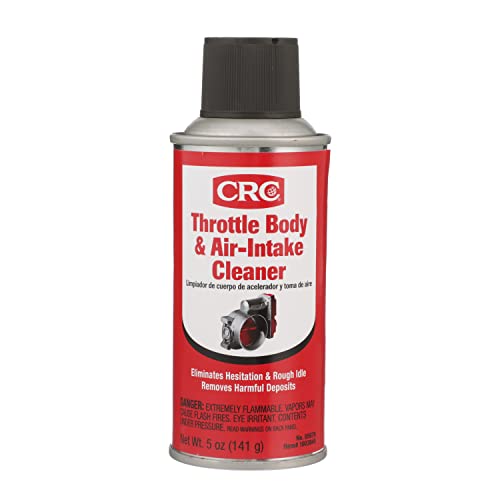
- Model-approved throttle-body cleaner: CRC 05078 Throttle Body & Air-Intake Cleaner is marketed by CRC for fuel-injected gasoline engines. Use it only when the product label and the year-specific Toyota procedure both permit throttle-body cleaning.
- Socket set or wrench: Needed for fasteners securing the intake duct or cover.
- Screwdriver or nut driver: Used for intake-hose clamps where applicable.
- Lint-free cloths: Apply cleaner to the cloth instead of flooding the throttle housing.
- Soft detailing brush: Use only where the service information permits it.
- Gloves and safety glasses: Protect your skin and eyes from solvent and loosened deposits.
- OBD-II scan tool: Save codes and data before service and verify the result afterward.
Warning: Work outdoors or in a well-ventilated area with the engine cool and ignition off. Keep cleaner away from sparks, hot surfaces, the MAF sensor, electrical connectors, and the electronic throttle actuator. Never use throttle-body cleaner on a MAF sensor, and do not force an electronic throttle plate against its motor or stop.
Step-by-Step Cleaning Process
| Step | Action | Notes |
|---|---|---|
| 1. Save diagnostic information | Record codes, freeze-frame data, fuel trims, throttle angle, and idle speed. | Do this before disconnecting the battery or clearing codes. |
| 2. Confirm the procedure | Check the manual for the exact model year and engine. | Electronic-throttle handling and relearn steps vary. |
| 3. Remove the air-intake tube | With the engine cool and ignition off, loosen the clamps and detach the duct carefully. | Inspect the duct for cracks and confirm all hoses and connectors are accounted for. |
| 4. Inspect the throttle body | Look for deposits around the bore and the edge of the plate. | Heavy oil accumulation may indicate another intake or PCV concern. |
| 5. Apply cleaner carefully | Spray a small amount onto a lint-free cloth and wipe accessible deposits. | Avoid flooding the intake, actuator, shaft, and electrical areas. |
| 6. Reassemble the intake | Refit the duct, clamps, hoses, and connectors securely. | A loose clamp or disconnected hose can create a new air leak. |
| 7. Start and verify | Start the engine, allow the idle to stabilize, and check for leaks, warning lights, and abnormal speed. | Follow the specified idle-learning procedure if the model requires one. |
After cleaning, test the Camry under the same conditions that caused the stall. Do not erase diagnostic codes merely to turn off the check-engine light. Confirm that the original fault has been corrected and that no intake hose, clamp, or connector was left loose.
Tips for Regular Maintenance
A fixed throttle-body cleaning interval of 30,000 to 50,000 miles is not universal for every Toyota Camry. Inspect and clean the throttle body when symptoms, visible deposits, or the model-specific service information justify it.
- Follow the correct maintenance guide: Use Toyota’s manual and warranty portal for your model year.
- Use the right chemical: Throttle cleaner and MAF cleaner are different products and are not interchangeable.
- Inspect before cleaning: Look for split hoses, loose clamps, damaged wiring, and oil contamination.
- Avoid unnecessary disassembly: Do not remove or open electronic components without the specified procedure.
- Verify idle adaptation: After battery disconnection or throttle service, some models may need time or a defined procedure to relearn idle control.
How Can You Reduce the Chance of Camry Stalling?
Routine maintenance cannot guarantee that a Camry will never stall, but it can reduce avoidable problems and reveal developing faults before they become severe.
- Replace the engine air filter when required: Use the interval and inspection criteria in the model-specific maintenance guide.
- Service spark plugs correctly: Install the specified plug type and follow the applicable replacement interval. Use the model-year schedule rather than a universal mileage rule; the Camry spark-plug interval guide explains how the interval varies.
- Keep battery connections secure: Clean corrosion, tighten terminals correctly, and inspect engine and body grounds.
- Address warning lights promptly: Scan the vehicle instead of continuing to drive until the problem becomes intermittent or severe.
- Do not overfill the fuel tank: Stop when the pump nozzle shuts off to avoid forcing liquid fuel into the EVAP system.
- Use suitable fuel: Follow the owner’s manual and avoid fuel from a source suspected of contamination.
- Check recalls periodically: Search the VIN through Toyota and NHTSA, especially when a fuel, electrical, software, or engine-control concern appears.
- Do not replace the fuel filter automatically: Verify whether the exact Camry has a separately serviceable filter and whether testing supports replacement.
When Should You Stop Driving and Get Professional Help?
Professional diagnosis is appropriate when basic scanning and visual inspection do not reveal a clear, safely repairable cause. Arrange an inspection or tow when any of the following occurs:
- The Camry stalls in moving traffic: Repeated loss of engine power creates an immediate crash risk.
- The check-engine light flashes: A severe misfire may damage the catalytic converter.
- The car smells of raw fuel: Shut it off and keep it away from flames or sparks.
- Electrical power cuts out: Intermittent battery, ground, fuse-box, ignition-switch, relay, or wiring faults require proper circuit testing.
- The stall is temperature-related: A technician may need to monitor sensor signals, fuel pressure, and ignition behavior as the engine warms.
- The engine dies only in Drive: Transmission and torque-converter clutch data should be checked.
- Fuel-pressure or smoke testing is needed: These tests require suitable equipment and safe procedures.
- Throttle cleaning did not help: Continued part replacement without testing is unlikely to solve the problem efficiently.
- A hybrid warning appears: Hybrid control and high-voltage faults require the correct training and equipment.
Provide the repair shop with the model year, engine, mileage, code report, freeze-frame data, stall conditions, recent repairs, and any video of the instrument panel during the event. These details can shorten the diagnostic process.
Frequently Asked Questions
Why does my Toyota Camry keep stalling?
Common possibilities include an intake leak, dirty or faulty throttle body, incorrect airflow data, low fuel pressure, ignition misfires, an intermittent crankshaft or camshaft signal, low system voltage, excessive EVAP purge flow, or a transmission torque-converter clutch problem. The exact cause should be identified through codes, freeze-frame data, live readings, and system tests.
What causes a Camry to stall when coming to a stop?
When engine speed drops during deceleration, the engine depends on accurate airflow, fuel control, ignition, voltage, and load compensation to maintain idle. A throttle or intake problem is possible, but a torque-converter clutch that remains applied should also be considered when the engine stalls only in Drive.
Why is my Toyota Camry idling rough at a stop?
A rough idle may result from a vacuum or intake leak, throttle deposits, a misfiring cylinder, incorrect airflow data, excessive purge flow, low fuel pressure, poor compression, or low charging voltage. Check codes and cylinder misfire data before replacing spark plugs, coils, sensors, or the throttle body.
Can a bad battery or alternator make a Camry stall at idle?
Yes. Low voltage, loose battery terminals, poor grounds, or a weak charging system can disturb electronic throttle operation, ignition, fuel delivery, and control-module communication. Measure voltage at rest and at idle with electrical loads operating instead of relying only on whether the engine starts.
Can a dirty throttle body cause stalling?
Deposits around the throttle bore and plate can reduce idle airflow on some engines, so careful cleaning may help when inspection supports it. However, the same symptom can come from leaks, fuel, ignition, electrical, sensor, or transmission faults. Do not force an electronic throttle plate or treat cleaning as a guaranteed repair.
Why does my Camry stall after I fill the fuel tank?
Hard starting or stalling immediately after refueling can indicate excessive fuel vapor entering the intake through a purge valve that does not seal correctly. Do not continue topping off the tank after the nozzle clicks, and have the EVAP purge system tested if the symptom repeats.
Is there a Toyota Camry recall that can cause stalling?
Yes, but recall coverage is VIN-specific. NHTSA campaign 25V-028 / Toyota 25TA01 covers certain 2018 Camrys with a low-pressure fuel pump that may fail and cause the engine to stall. Other Camry years have had different campaigns, so check the VIN through Toyota and NHTSA instead of assuming a recall applies.
Is it normal for a Toyota Camry Hybrid engine to stop at a red light?
Yes. Toyota’s hybrid system can stop the gasoline engine while the vehicle is stopped even though the hybrid system remains in READY mode. This is especially relevant to U.S.-market 2025 and 2026 Camrys because those model years are hybrid-only. Warning messages, loss of READY mode, or inability to move indicate a true fault rather than normal engine cycling.
Conclusion
A Toyota Camry that stalls at stops should be diagnosed from the symptom pattern, model configuration, trouble codes, freeze-frame information, live data, and direct system tests. Airflow and throttle problems are possible, but fuel delivery, ignition, voltage, EVAP purge, sensor signals, wiring, and the torque-converter clutch can produce similar behavior.
Start with safety, identify the exact year and powertrain, save the diagnostic evidence, check the VIN for recalls, and test before replacing parts. If you own a U.S.-market 2025 or 2026 Camry, first separate normal hybrid engine cycling from a true loss of READY status. If the Camry stalls in traffic, loses READY mode, smells of fuel, or requires fuel, electrical, hybrid, or transmission testing, stop driving it and arrange professional service.
Sources
- Toyota Manuals and Warranties — model-specific owner’s manuals, warranty information, and maintenance guides
- Toyota Technical Information System — factory repair manuals, service bulletins, wiring diagrams, diagnostics, and calibration information
- Toyota Safety Recall and Service Campaign Lookup — VIN-based Toyota recall and campaign information
- National Highway Traffic Safety Administration Recall Lookup — VIN and license-plate recall lookup
- NHTSA Campaign 25V-028 — certain 2018 Camry vehicles with a low-pressure fuel pump that may fail and cause stalling
- Toyota 2025 Camry Hybrid Announcement — confirms the U.S.-market 2025 Camry went exclusively hybrid
- Toyota 2026 Camry — current U.S.-market Camry powertrain information
- CRC 05078 Throttle Body & Air-Intake Cleaner — manufacturer application and safety information for the named cleaner
