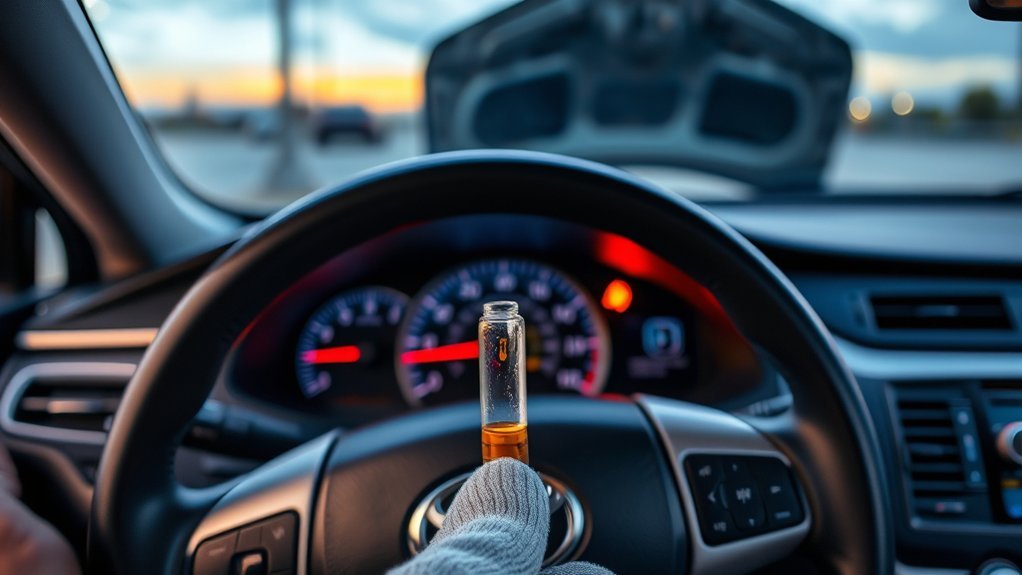
A red oil-can warning on your Toyota Camry is not a routine oil-change reminder. It means the engine may not have enough oil pressure to lubricate bearings, camshafts, timing components, and other moving parts. Pull over safely and shut off the engine. Check the oil level on level ground, but remember that a normal dipstick reading does not prove that oil pressure is safe. Because dashboard wording, oil specifications, and procedures vary by model year and powertrain, confirm the exact instructions in your Camry’s owner’s manual.
Last updated: September 19, 2026 — safety guidance, repair-cost data, internal links, and Camry-specific service information reviewed.
Quick Answer
If your Toyota Camry’s oil pressure light stays on while the engine is running, pull over safely and shut the engine off. Check the oil level on level ground and add only the specified oil if the level is low. Do not keep driving—or repeatedly restart the engine to test it—if the warning occurred with a normal oil level, a major leak, overheating, or ticking or knocking noise.
Key Takeaways
- A red oil-pressure warning is more urgent than an oil-change or maintenance reminder.
- Stop the engine promptly because continued operation without adequate pressure can damage internal parts.
- A low dipstick reading may explain the warning, but adding oil does not prove the pressure problem is solved.
- Common causes include a leak, oil consumption, incorrect oil, a restricted filter or pickup, engine wear, pump trouble, or a faulty sensor circuit.
- If the light remains on, the oil level is normal, or the engine ticks or knocks, have the Camry towed for testing.
At a Glance
| Time Required | About 5–10 minutes for a safe oil-level check; professional diagnosis may take longer |
| Difficulty | Easy for checking and adding oil; advanced for pressure testing and internal repairs |
| Tools Needed | Owner’s manual, clean lint-free cloth, gloves, funnel, and the specified engine oil |
| Cost | The level check costs nothing. Oil, diagnosis, towing, and repairs vary. RepairPal currently estimates a Camry oil-pressure-sensor replacement at about $149–$184 on average, with some newer model years listed around $213–$258 before taxes, fees, location adjustments, or related work. |
Warning: Do not keep driving to “see whether the light goes away.” Shut the engine off as soon as you can stop in a safe location. Do not work beside moving traffic or crawl underneath the vehicle at the roadside.
Immediate Risks of Ignoring the Oil Pressure Light

Engine oil forms a protective film between moving metal surfaces. The oil pump must circulate that oil through passages that feed bearings, camshafts, timing components, and other parts. When pressure falls too low, those components may lose lubrication and cooling.
Continued operation can lead to accelerated bearing wear, camshaft damage, overheating, internal scoring, seizure, or complete engine failure. The speed of the damage depends on how much pressure has been lost, the oil level, engine speed, temperature, load, and the engine’s existing condition. A knocking or loud ticking engine may already be experiencing inadequate lubrication.
A red oil-pressure warning is not simply telling you that an oil change is due. It may mean the engine cannot maintain the pressure needed to circulate oil safely.
Toyota lists low engine oil pressure among the red dashboard conditions that require immediate attention. Refer to Toyota’s warning-light guidance and the manual for your exact Camry year.
Oil Pressure Light vs. Oil-Change Reminder
These alerts can look or sound similar, but they do not mean the same thing. For broader symbol identification, see the Toyota Camry dashboard warning-lights guide. For scheduled-service alerts, see the Camry maintenance reminder guide.
- Red oil-can or low-oil-pressure warning: Treat this as urgent. Stop safely and shut off the engine.
- Maintenance required or oil-change reminder: This usually means scheduled service is due. It does not normally indicate an immediate loss of oil pressure.
- Low oil-level message: Some vehicles provide a separate level warning. Check the dipstick and follow the exact instructions in the owner’s manual.
Dashboard wording and indicators vary across Camry generations. Use Toyota’s official manuals and warranties lookup to select your model year and confirm the warning.
What to Do When the Oil Pressure Light Comes On
- Move to a safe location. Ease off the accelerator, turn on the hazard lights if needed, and pull away from traffic without making sudden maneuvers.
- Shut off the engine. Place the Camry in Park, apply the parking brake, and turn the engine or hybrid system off.
- Wait before checking the dipstick. Park on level ground and allow several minutes for the oil to drain back into the oil pan. Follow the waiting procedure in your model’s manual.
- Check the oil level and look for an obvious leak. Inspect the ground and the visible upper engine area. Do not reach near hot or moving components and do not crawl under the car.
- Add only the specified oil if the level is low. Add a small amount at a time, recheck the dipstick, and stop before the level exceeds the upper mark.
[Amazon Products Picked for You]

Replacement Part Number: 917-396; 153010H012

Compatible With: This engine oil dipstick is compatible with Toyota Camry 2002-2006 and Toyota Solara 2002-2006.

【Replace Part Number】This oil dipstick replaces: 15301-28031, 1530128031.
Do Not Restart the Engine If
- The dipstick shows little or no oil and you do not have enough correct oil to restore the level.
- A large puddle or active stream of oil is visible.
- The engine was knocking, clattering, or ticking loudly.
- Smoke, a burning-oil smell, or overheating occurred.
- The oil level was already normal when the warning appeared.
- The warning began immediately after a repair and a loose filter, drain plug, or major leak is possible.
If You Added Oil
Adding oil may correct a low level, but it does not prove the oil-pressure problem is solved. It also does not repair the leak or oil consumption that caused the level to drop, and it cannot fix a restricted pickup, worn pump, excessive bearing clearance, or electrical fault.
Do not use repeated restarts as an oil-pressure test. Toyota’s warning guidance treats low engine oil pressure as an immediate-attention condition. After restoring a clearly low oil level, follow the restart instructions for your exact model year or obtain roadside or service guidance. If the level was normal when the warning appeared, a major leak or abnormal noise occurred, or the cause remains uncertain, arrange towing and mechanical pressure testing.
Why Is My Toyota Camry Oil Pressure Light On?
| Possible Cause | Possible Clues | Next Step |
| Low oil level | Dipstick below the lower mark; oil spots; overdue level checks | Add the specified oil and investigate the loss |
| External leak or oil consumption | Oil puddles, wet engine surfaces, smoke, burnt-oil odor, or repeated low readings | Inspect for leaks and measure oil use between checks |
| Incorrect or diluted oil | Wrong viscosity, fuel smell, unusually thin oil, or warning after service | Confirm the oil specification and inspect for contamination |
| Filter or pickup restriction | Sludge, unsuitable filter, debris, or a problem appearing after an oil change | Shut off the engine and have the lubrication system inspected |
| Oil pump or relief-valve fault | Normal oil level but confirmed low pressure; possible engine noise | Tow the vehicle for mechanical pressure testing |
| Internal engine wear | Flickering at hot idle, knocking, high mileage, or metal in the oil | Measure pressure and inspect bearing clearances and internal parts |
| Faulty sensor, connector, or wiring | Warning with normal mechanically tested pressure; intermittent electrical behavior | Test the circuit and sensor before replacement |
[Amazon Products Picked for You]

Vehicle Fitment-1: Oil Pressure Switch Sensor Compatible with Ford Courier 2009-2012, Crown Victoria 2000-2011, E-150 2003-2006, E-150 Club Wagon 2003-2005, E-150 Econoline 1999-2002, E-150 Econoline Club Wagon 1999-2002, E-250 2003-2006, E-250 Econoline 1998-2002, E-350 Club Wagon 2003-2005, E-350 Econoline 1998-2000, E-350 Econoline Club Wagon 1998-2002, E-350 Super Duty 1999-2006, Econoline Van 2010-2014, Econoline Wagon 2014, Edge 2007-2017, Expedition 1998-2017, Explorer 1999-2017, Explorer Sport Trac 2007-2010, F-150 1998-2010, F-150 Heritage 2004, F-250 1998-1999, F-250 Super Duty 1999-2006, F-350 1999-2012, F-350 Super Duty 1999-2006, Fusion 2011-2012, Grand Marquis 2002-2003
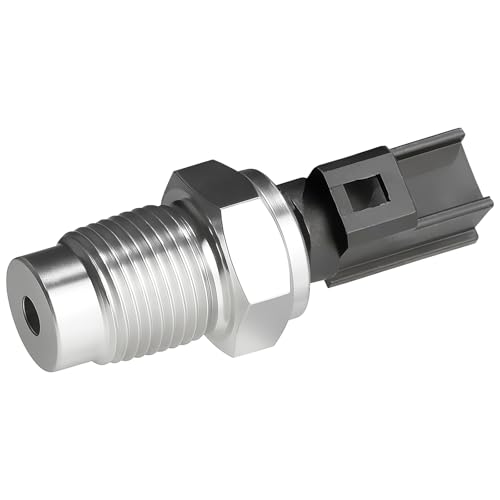
Engine oil pressure sensor sender/switch replacement for Ford: 2001 2002 2003 2004 2005 2006 2007 Ford Escape |1999-2007 Ford Taurus | 2005-2007 Ford Freestyle | 2005-2007 Ford Five Hundred 500 | 1998-2000 Ford Contour | 2002-2006 Ford Mondeo

Engine oil pressure sensor sender/switch replacement for: 1998 1999 2000 2001 2002 Dodge Ram 1500 Pickup | 98 99 00 01 02 03 Dodge Ram 2500 3500 Pickup | 1998 Jeep Grand Cherokee | 1998 Jeep Wrangler/TJ | 1998-2002 Dodge Durango/Dakota | 1999-2003 Dodge Ram 1500 2500 3500 Van | 1998 Dodge B1500 B2500 B3500
2018–2024 Camry Cold-Weather Oil-Pressure Pattern
Toyota documented a cold-weather condition on some 2018–2024 Camry and Camry Hybrid vehicles equipped with A25-series engines. During repeated short trips in extreme cold, moisture from blow-by gases could accumulate in the oil, producing milky or discolored oil and, if the moisture froze, an “Oil Pressure Low” warning with DTC P05202A and/or P052477. The condition was covered in Toyota T-SB-0104-21 Rev2, available through the NHTSA-hosted Toyota bulletin.
That bulletin is historical service information and was later listed as obsolete in 2026. Do not use it as a current repair procedure or assume every milky-oil condition is simple condensation. If these symptoms match your Camry, a technician should use the latest Toyota service information, verify actual oil pressure, and rule out coolant contamination or other causes before choosing a repair.
How to Check Your Oil
If you want the full model-specific procedure, see how to check Toyota Camry engine oil level. For an emergency oil-pressure warning, use the shorter roadside-safe process below.
- Park the Camry on a level, stable surface away from traffic.
- Turn off the engine or hybrid system and apply the parking brake.
- Wait the period specified in your owner’s manual so oil can return to the pan.
- Open the hood and locate the engine-oil dipstick.
- Remove the dipstick and wipe it with a clean, lint-free cloth.
- Insert it fully, remove it again, and hold it level.
- Check where the oil reaches between the lower and upper marks.
- If it is low, remove the oil-fill cap and add the specified oil in small amounts through a clean funnel.
- Wait briefly, recheck the dipstick, and stop once the level is within the correct range.
- Secure the dipstick and oil-fill cap before closing the hood.
Pro Tip: Add oil gradually. Overfilling can create its own lubrication, aeration, leakage, and emissions-system problems. Never assume the distance between dipstick marks equals one full quart unless your manual states that amount.
Oil often darkens during normal use, so color alone does not prove that it needs changing. Look for sludge, grit, foam, a strong fuel odor, a burnt smell, or a milky appearance. Follow the maintenance interval and oil specification for your exact model rather than judging only by color. See the Toyota Camry oil-change interval guide for the difference between routine maintenance and an oil-pressure emergency.
Note: Toyota Camry oil viscosity and capacity vary by year, engine, and powertrain. Check the owner’s manual before adding oil. You can also look for the applicable API quality mark described by the American Petroleum Institute’s engine-oil program.
How a Technician Diagnoses Low Oil Pressure
A warning light does not reveal whether the fault is hydraulic, mechanical, or electrical. A qualified technician may use the following process:
- Confirm the level and oil specification. The technician checks for underfilling, overfilling, incorrect viscosity, contamination, and service history.
- Inspect for leaks. Common leak points, the oil pan, filter area, drain plug, seals, and visible engine surfaces are examined.
- Check diagnostic data and fault codes. Sensor readings and oil-pressure-related circuit codes may identify an electrical problem, but codes alone do not prove that actual pressure is safe.
- Test the sensor and wiring. The connector, power or reference circuit, ground, signal wire, and switch or sensor are checked.
- Measure actual pressure. A mechanical oil-pressure gauge is connected and the reading is compared with the specification for the exact engine and test temperature.
- Inspect the lubrication system if pressure is low. Further work may involve the filter, pickup screen, oil pan, pump, pressure-relief valve, oil passages, or internal bearing clearances.
Replacing the oil-pressure sensor without confirming actual pressure risks overlooking a serious lubrication problem.
Common Fixes for Oil Pressure Light Problems
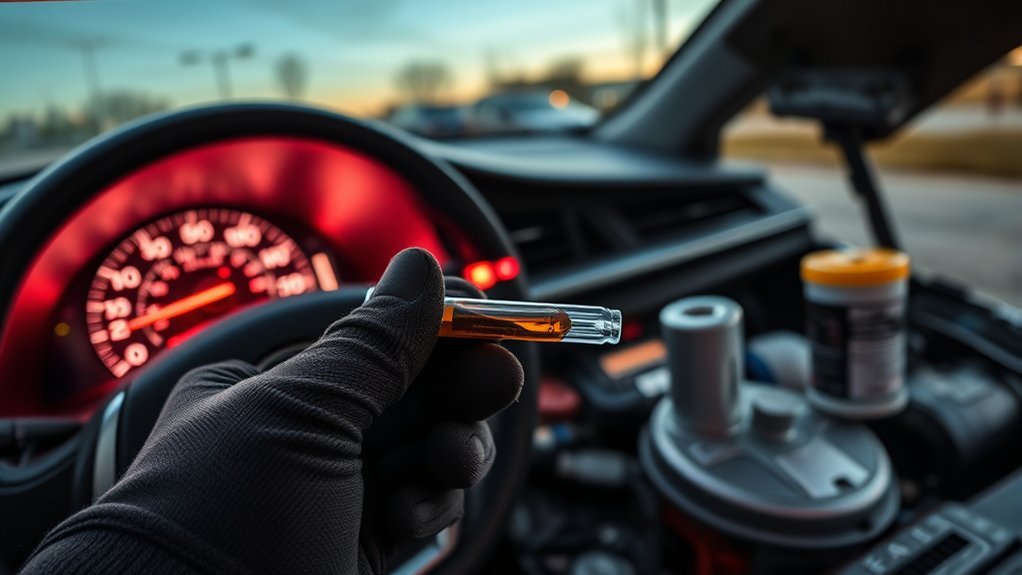
The correct repair depends on the verified cause:
- Restore a low oil level: Add the correct oil, then repair the leak or investigate excessive consumption.
- Correct a recent service error: Resolve an underfilled or overfilled crankcase, loose drain plug, leaking filter, unsuitable filter, or incorrect oil specification.
- Change contaminated or unsuitable oil and filter: Use products that meet the requirements listed for the exact Camry year and engine.
- Repair a leak: The source may be a gasket, seal, pan, drain plug, filter area, housing, line, or another engine component.
- Replace a confirmed faulty pressure sensor or repair its circuit: Do this only after actual oil pressure and wiring have been checked.
- Clean or replace restricted lubrication components: Severe sludge or debris may require oil-pan, pickup-screen, and passage inspection.
- Repair or replace a failed pump or relief valve: These jobs normally require professional disassembly and testing.
- Repair internal engine wear: Excessive bearing clearance or damaged internal parts may require major engine repair or replacement.
[Amazon Products Picked for You]

GENUINE OEM: Original Toyota/Lexus factory oil filter part number 90915-YZZN1, ensuring perfect fit and optimal performance for your vehicle
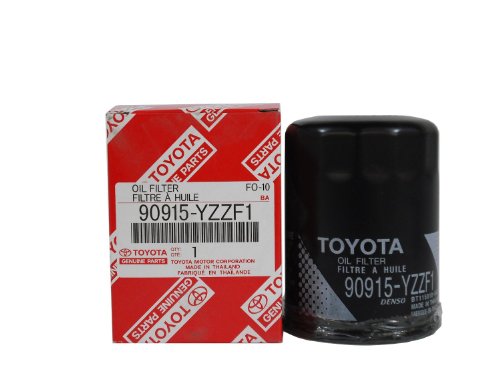
Item Package Dimension: 13.69L x 6.019W x 4.20H inches

[Vehicle Fitment-1]: Replacement for Toyota Tacoma 2016-2023, Sienna 2007-2020, Camry 2007-2023, Highlander 2008-2022, Avalon 2005-2022, fit for RAV4 2006-2018, Venza 2009-2016; Compatible with Lotus Evora 2010-2017; Replacement for Scion tC 2011-2016 --- Engine protection for up to 10,000 miles, with 99% filtration efficiency
What Different Warning Patterns May Mean
The Light Appears Before the Engine Starts
On many vehicles, the oil-pressure warning illuminates during the startup bulb check because the engine is not yet producing pressure. It should switch off promptly after the engine starts. Check the owner’s manual for the normal sequence on your Camry.
The Light Flickers at Hot Idle
A warning that flickers after the engine warms up may result from low oil level, oil that is too thin or diluted, a sensor fault, worn bearings, pump wear, or another pressure problem. Do not dismiss it because it disappears when engine speed increases. Shut the engine off and arrange testing.
The Light Appears After an Oil Change
Turn the engine off immediately. Possible causes include an incorrect oil level, the wrong viscosity, a loose drain plug, a leaking or unsuitable filter, a disconnected sensor, or a delay in building pressure. Check for a visible leak and verify the dipstick level, but have the car towed if the warning remains or a service error is suspected.
The Light Comes With Ticking or Knocking
Noise increases the chance that the engine is not receiving adequate lubrication. Do not restart it. Towing is normally far less expensive than the engine damage that may follow continued operation.
When to Get Help for Your Oil Pressure Light
Arrange professional diagnosis or towing when:
- The oil-pressure warning remains on while the engine is running.
- The dipstick level is normal but the warning appears.
- The warning returns after oil has been added.
- The engine ticks, knocks, rattles, overheats, smokes, or loses power.
- A large leak or rapidly falling oil level is present.
- The warning appeared immediately after an oil change or engine repair.
- You cannot identify the warning or safely perform the level check.
A Toyota dealership or a qualified independent repair shop can perform the diagnosis. The important requirement is access to the correct specifications, an appropriate mechanical pressure gauge, electrical test equipment, and technicians experienced with engine-lubrication systems.
What Repairs May Cost
Diagnosis, towing, and repair costs vary widely. A simple connector repair or sensor replacement costs far less than an oil-pump repair or internal engine work. As checked September 19, 2026, RepairPal’s Toyota Camry estimate lists an overall oil-pressure-sensor replacement average of about $149–$184 before taxes, fees, location adjustments, or related repairs. Its estimates for 2025–2026 Camry model years are approximately $213–$258.
Frequently Asked Questions
What causes a Toyota Camry oil pressure warning light to come on?
Possible causes include a low oil level, an external leak, excessive oil consumption, incorrect or diluted oil, a restricted filter or pickup screen, oil-pump or relief-valve trouble, excessive internal engine clearance, or a faulty pressure sensor, connector, or wire.
What are three common reasons for low oil pressure?
Three broad causes are an insufficient oil supply, restricted or failed oil circulation, and excessive clearance inside a worn engine. A warning can also result from a bad sensor circuit even when mechanically tested pressure is acceptable.
How much does it cost to replace a Camry oil pressure sensor?
RepairPal currently lists an overall Toyota Camry oil-pressure-sensor replacement average of about $149–$184, while its 2025–2026 model-year estimates are about $213–$258 before taxes, fees, location adjustments, diagnosis, or related repairs. Actual cost depends on the model year and what testing finds.
Can I drive my Camry with the oil pressure light on?
You should not continue driving with the warning illuminated while the engine is running. Pull over safely and shut off the engine. If the warning occurred with a normal oil level, a major leak, abnormal noise, or an uncertain cause, arrange towing and professional diagnosis rather than repeatedly restarting the engine.
Can old or dirty oil turn on the oil pressure light?
Severely degraded, diluted, contaminated, sludged, or incorrect-viscosity oil can contribute to a pressure problem. However, dark color by itself does not prove that the oil is bad or causing the warning.
Why does the oil pressure light flicker when the engine is idling?
Pressure is generally lowest at warm idle. Flickering may point to low oil, incorrect or diluted oil, a sensor or wiring fault, pump wear, a restriction, or excessive bearing clearance. The vehicle should be shut off and tested rather than driven until the cause becomes worse.
What should I do if the light appears right after an oil change?
Turn the engine off. Check the dipstick and look for an obvious leak without crawling under the vehicle. An incorrect level, loose filter or drain plug, wrong oil, unsuitable filter, or disconnected sensor may be responsible. Contact the service provider and arrange towing if the warning remains.
Conclusion
Your Toyota Camry’s oil pressure light deserves an immediate response. Pull over safely, shut off the engine, and check the oil level before doing anything else. A low level may be correctable, but a normal reading, persistent warning, visible leak, or unusual engine noise requires professional pressure testing and usually a tow. Prompt diagnosis can prevent a sensor or leak problem from becoming expensive internal engine damage.
Sources
- Toyota Owners: Warning Lights — explains the urgency of red dashboard warnings, including low engine oil pressure.
- Toyota Manuals and Warranties — provides model- and year-specific owner’s manuals and vehicle guidance.
- American Petroleum Institute Engine Oil Program — explains engine-oil certification, performance requirements, and API quality marks.
- RepairPal Toyota Camry Oil Pressure Sensor Estimate — supports current sensor-replacement cost ranges and diagnostic context.
- NHTSA-hosted Toyota T-SB-0104-21 Rev2 — documents the historical 2018–2024 Camry/Camry Hybrid cold-weather low-oil-pressure condition and affected DTCs.
