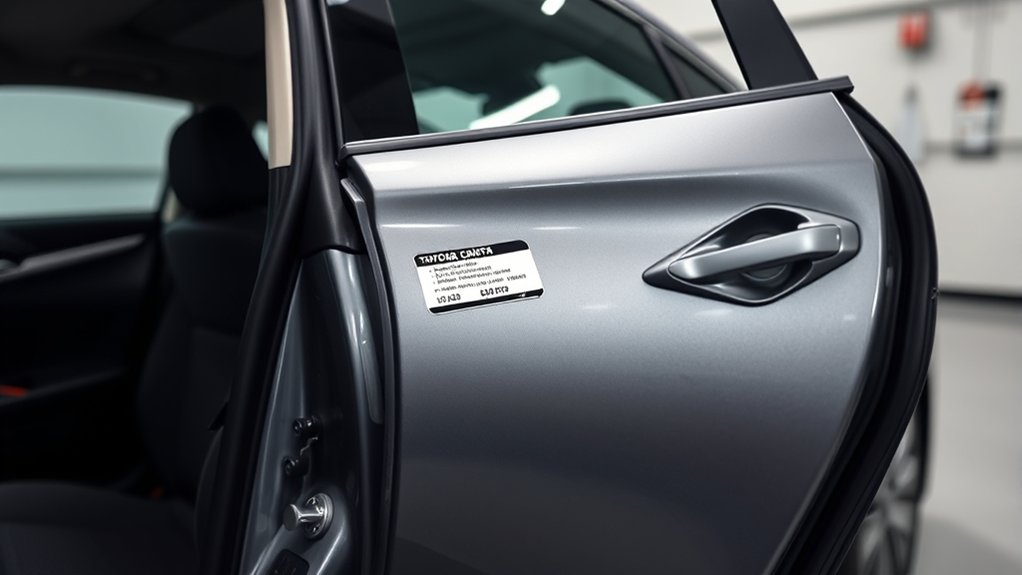
To find your Toyota Camry paint code, open the driver’s door and check the vehicle information label on the body-side door jamb. Look for “C/TR”; the three-character group before the slash is the exterior paint code. Use that code when ordering touch-up paint, a paint pen, or refinishing materials instead of guessing from the exterior color name.
Last updated: September 19, 2026. This guide focuses on U.S.-market Toyota Camrys; label design and exact placement can vary by model year and sales market.
Quick Answer
Open the driver’s door and find the vehicle information label on the door jamb. Look for “C/TR.” The three-character group immediately after “C/TR” and before the slash is the exterior paint code. For example, in “C/TR: 1G3/FB22,” the paint code is 1G3.
Key Takeaways
- The driver-side door-jamb label is the normal Toyota Camry paint-code location.
- Read the three-character code after “C/TR” and before the slash.
- The characters after the slash identify interior trim, not exterior paint.
- A Toyota dealer or reputable automotive-paint supplier can verify the code using your VIN when the label is missing or unreadable.
- Factory paint can fade or a panel may have been repainted, so test touch-up paint before applying it to a visible area.
At a Glance
| Primary Location | Driver-side body door jamb |
| Label Entry | C/TR |
| Helpful Items | Flashlight and phone camera; full VIN if dealer verification is needed |
| What to Copy | The three-character exterior code before the slash |
Where to Find Your Toyota Camry Paint Code
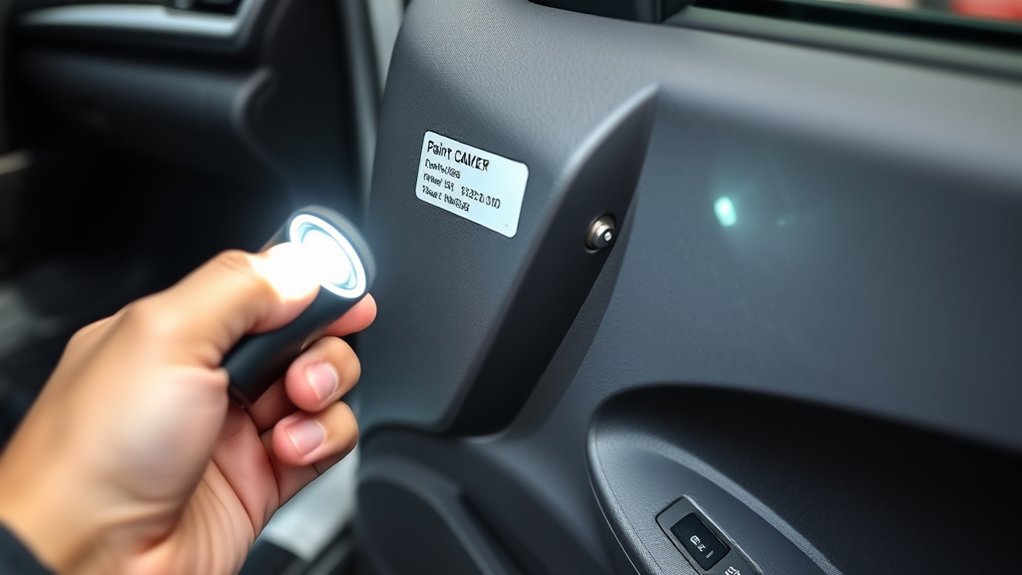
Open the driver’s door and inspect the label attached to the body-side door jamb. Depending on the model year and market, the label may be white, black, or silver and may include the VIN, production information, tire data, and other vehicle details.
- Find “C/TR”: This abbreviation identifies the color and trim entry.
- Read the first group: The three-character group immediately after “C/TR” is the exterior paint code.
- Stop at the slash: Characters after the slash describe the interior trim and are not part of the exterior paint code.
- Photograph the label: A clear photo helps prevent errors such as confusing the letter “B” with the number “8.”
For example, if the label reads C/TR: 1G3/FB22, the exterior paint code is 1G3. Toyota’s official parts catalog identifies 1G3 as Magnetic Gray touch-up paint.
Note: The label’s design and exact position can vary slightly by model year or sales market. The “C/TR” format is more useful than relying on the label’s color or layout.
Why You Should Care About Paint Codes
A color name such as silver, white, or blue is not precise enough for repair work. Carmakers may use several similar shades, and the same marketing name can appear with different formulas. The paint code identifies the factory formula more reliably than a visual guess.
Accurate Color Matching
Using the correct code gives a paint supplier the right starting formula for your Camry. It reduces the chance of ordering a visibly different shade, especially among similar metallic, pearl, and neutral colors.
However, the code cannot guarantee an invisible repair. Sun exposure, age, previous bodywork, application technique, and the orientation of metallic flakes can affect the final appearance. A professional body shop may blend paint into an adjacent area when a panel repair needs a less noticeable transition.
Value Preservation and Aesthetics
A properly matched repair usually looks cleaner than a repair selected by color name alone. Fixing exposed chips can also help protect damaged metal when the surface is prepared and coated correctly. The paint code itself does not prevent corrosion; proper cleaning, primer, basecoat, and clearcoat do the protective work.
| Benefit | Why It Matters | Realistic Outcome |
|---|---|---|
| Identifies the factory formula | Avoids choosing paint by a vague color name | A better starting match |
| Supports proper chip repair | Helps cover exposed primer or metal | Damage becomes less noticeable and better protected |
| Reduces ordering errors | Separates similar Toyota colors | Less wasted time and material |
Common Locations for Paint Codes on Camry Models
For a Toyota Camry, treat the driver-side door jamb as the primary physical location. Claims that the paint code is routinely placed under the hood or inside the glove box can lead you away from the correct label.
Driver’s Side Door Jamb
Look on the fixed body area exposed when you open the driver’s door. Do not confuse the door-jamb vehicle label with the tire-information label. Scan the label for “C/TR,” then copy the three characters before the slash.
If dirt or glare makes the text hard to read, wipe the label gently with a damp microfiber cloth and use angled light. Avoid strong solvents because they can damage printed labels.
Under the Hood
The engine bay is not the standard Toyota Camry paint-code location. You may find other identification, emissions, or service labels there, but they should not replace the “C/TR” entry on the driver-side door-jamb label.
If a previous owner or repair shop placed a paint reference under the hood, verify it against the door label or a dealer’s VIN-based record before ordering paint.
Inside the Glove Box
The glove box is also not the normal Camry paint-code location. It may contain service stickers, handwritten notes, or documentation from earlier repairs, but those records can be incomplete or refer to a repainted panel.
Use any glove-box information only as a clue. Confirm the code from the “C/TR” label or through a Toyota dealer.
Understanding How to Read Your Toyota Paint Code
Toyota commonly combines the exterior color and interior trim information on one line. Reading the divider correctly prevents you from ordering paint with the trim code by mistake.
- Locate the prefix: Find “C/TR” on the vehicle label.
- Copy the first three characters: Toyota paint codes commonly mix letters and numbers.
- Ignore the trim portion: The characters after the slash describe the interior trim.
- Confirm the model year: Use the code together with the Camry’s year because paint names and availability can vary.
Example: C/TR: 1G3/FB22. In this entry, 1G3 is the exterior paint code and FB22 is the trim code.
Pro Tip: Send a photo of the complete label, not only the code, when asking a dealer or paint supplier to verify it. The VIN and production details can help resolve an unclear character.
Tips for Locating Paint Codes in Older Camry Models
Older Camry labels may be faded, scratched, covered by grime, or partly hidden by prior bodywork. The basic search method remains the same: open the driver’s door, inspect the body-side jamb, and look for “C/TR.” Do not rely on a rule that only certain years use three-character codes.
- Use side lighting: A flashlight held at an angle can reveal faint printing.
- Take several photos: Zooming a sharp photo is often easier than reading the label in place.
- Check for repaint evidence: Overspray, a replacement door, or a new label can suggest previous repairs.
- Use the VIN for verification: A Toyota dealer’s parts department can help identify the factory-listed color when the label is unreadable.
If the entire vehicle has been repainted, the original factory code may no longer match the current finish. In that case, a body shop may need to scan or custom-match the existing paint.
What to Do If You Can’t Find Your Toyota Paint Code
A missing label does not mean you must guess. Work through these steps in order:
- Recheck the driver-side door jamb: Inspect the pillar, sill area, and nearby body surface with the door fully open.
- Confirm that you found the vehicle label: Look for the VIN and “C/TR,” not only the tire-pressure sticker.
- Review model-specific documentation: Use Toyota’s official manuals portal to select your Camry’s year when you need model-year-specific vehicle-identification information.
- Contact a Toyota dealer: Give the parts department your full 17-character VIN and ask it to verify the factory paint code.
- Check repair history: A replaced door, repainted jamb, or imported vehicle may explain why the label is absent or different.
A public VIN decoder may show basic vehicle details without displaying the paint formula. Dealer verification is safer than assuming every online VIN tool includes the color code.
Using Your Paint Code for Touch-Ups
After confirming the code, select a product that matches both the code and the repair size. A pen may suit a tiny chip, while a bottle or spray system may be more appropriate for wider damage. Pearl and tricoat finishes can require separate color layers rather than one simple coat.
Importance of Accurate Matching
Order by paint code and model year, then test the product on a sample card or inconspicuous area. Factory paint can change slightly with age, and metallic or pearl finishes depend heavily on coat thickness and application method.
Set realistic expectations. Touch-up paint can make a chip much less noticeable, but it may not reproduce a spray-booth finish at close range.
Choosing the Right Products
Follow the paint manufacturer’s directions for cleaning, primer, basecoat, midcoat, clearcoat, drying time, and curing. Apply light coats rather than one heavy coat, and allow each layer to dry as directed. Bare metal usually needs suitable preparation and primer before color is applied.
Warning: Automotive touch-up products may contain flammable solvents. Work in a well-ventilated area, keep paint away from flames and sparks, wear appropriate gloves and eye protection, and follow every warning on the product label.
Where to Find Reliable Resources for Identifying Toyota Paint Codes
Use sources that can connect the code to your exact vehicle instead of relying on a generic color chart.
- Toyota dealer: A dealer’s parts department can use the VIN to check factory vehicle information and help identify the appropriate touch-up product.
- Toyota owner resources: Toyota’s official manuals and warranties portal provides model-year-specific documents.
- Established automotive-paint suppliers: Toyota-specific guides from ERA Paints and PaintScratch explain the “C/TR” format and the driver-side door-jamb location.
- Professional body shop: A shop can assess fading, prior repainting, pearls, metallics, and panel-blending needs.
The paint code identifies the factory formula. It does not prove that every panel still wears that exact factory finish.
How to Verify a Toyota Camry Paint Code Before Ordering
Before buying paint, compare the code, model year, and vehicle details. This quick check prevents common mistakes:
- Confirm that you copied the three characters before the slash.
- Check each character carefully for letter-number confusion.
- Make sure the product listing includes your Camry’s model year.
- Ask whether the color is solid, metallic, pearl, or tricoat.
- Inspect the panel for signs of previous repainting.
- Test the paint before using it on the visible repair.
If the supplier’s color name differs slightly from another catalog but the verified code matches, the code is normally the more important identifier. Still, stop and ask for confirmation if the product description lists a different vehicle year range or paint system.
Troubleshooting Common Paint Code Issues
- The label is present, but “C/TR” is unreadable: Photograph it in bright, angled light and ask a Toyota dealer to verify the VIN.
- The code has four or more characters: You may have copied the trim code, a production code, or the full combined entry. Use only the three-character exterior code before the slash.
- The ordered paint looks too dark or light: Confirm the code and year, stir or shake the product as directed, and consider fading or previous repainting.
- A metallic repair looks different at an angle: Coat thickness and metallic-flake orientation can change the appearance. A body shop may provide a better result for larger repairs.
- The VIN result and door label disagree: Stop before ordering. Ask a dealer to investigate whether the label, door, or body panel was replaced.
Frequently Asked Questions
Where is the paint code located on a Toyota Camry?
Open the driver’s door and inspect the vehicle information label on the body-side door jamb. Find “C/TR.” The three-character group after it and before the slash is the exterior paint code.
How do you read a Toyota paint code?
Read the three characters immediately following “C/TR.” In “C/TR: 1G3/FB22,” 1G3 is the exterior paint code, while FB22 is the interior trim code.
Can a Toyota dealer find the paint code from the VIN?
A Toyota dealer’s parts department can usually use the full VIN to verify the factory-listed paint information. This is the best next step when the door-jamb label is missing, damaged, or unclear.
Is the Toyota Camry paint code part of the VIN?
No. The paint code is a separate identifier on the vehicle label. A Toyota dealer can use the full VIN to help verify the factory-listed paint code when the C/TR entry is missing or unreadable.
Is the trim code after the slash part of the paint code?
No. The characters after the slash identify the interior trim. Use only the first three-character group when ordering exterior touch-up paint.
Why does touch-up paint sometimes look different even when the code is correct?
Age, sunlight, prior repairs, coat thickness, clearcoat, and metallic or pearl application can affect the result. Test the paint first and consider professional blending for a large or highly visible repair.
Should you search under the hood or in the glove box?
Those are not the normal Toyota Camry paint-code locations. Start with the driver-side door-jamb label. Treat any other sticker or handwritten note as unverified until a dealer or reliable supplier confirms it.
Conclusion
To identify your Toyota Camry’s factory paint, open the driver’s door and read the three-character code after “C/TR” on the door-jamb label. Copy only the characters before the slash, verify unclear codes with a Toyota dealer and your VIN, and test any touch-up product before applying it to a visible panel. This process is more reliable than guessing from a color name or searching unrelated labels under the hood or in the glove box.
Sources
- Toyota Manuals and Warranties — official model-year owner-document portal.
- Toyota Dealer Locator — official resource for finding a Toyota dealer for VIN-based assistance.
- Toyota Genuine Touch-Up Paint: Magnetic Gray 1G3 — official Toyota parts listing confirming the 1G3 example used above.
- ERA Paints: How to Find Your Toyota Paint Code — supports the driver-side door-jamb location and “C/TR” format.
- PaintScratch Toyota Paint-Code Guide — supports the three-character exterior code before the slash.
- PaintScratch Product Directions — supports touch-up preparation, light-coat application, realistic results, and solvent safety.

