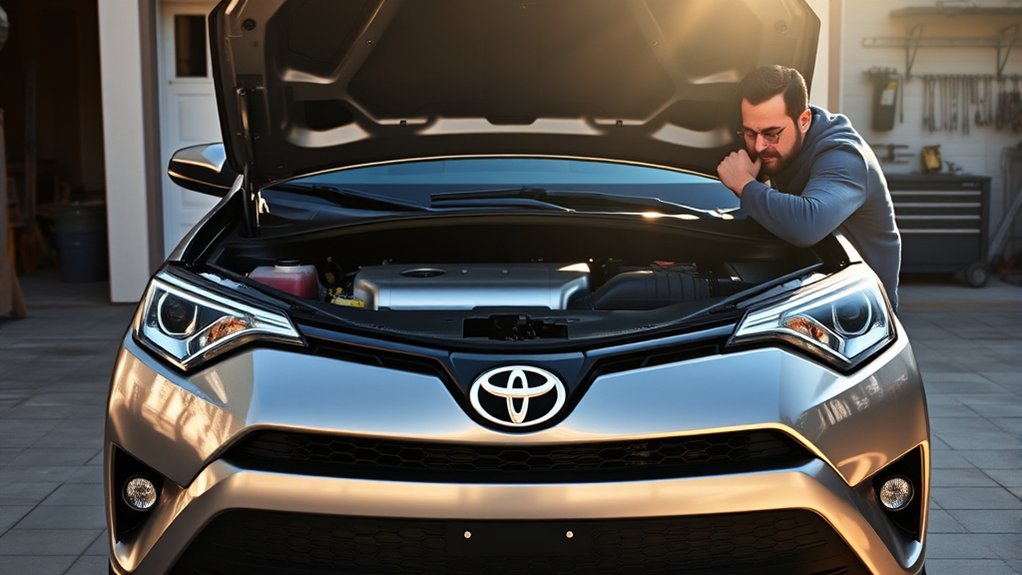
If you’re shopping for a used 2015 Toyota RAV4, knowing its transmission type can help you avoid confusion and plan for maintenance. The 2015 RAV4 CVT question has a clear answer for U.S. models, but transmission choices differ across international markets. Understanding the gearbox also helps you recognize warning signs during a test drive.
Quick Answer
No. The U.S.-specification 2015 Toyota RAV4 does not have a CVT. All LE, XLE, and Limited models use a conventional 6-speed automatic transmission paired with a 2.5-liter four-cylinder engine. Both front-wheel-drive and all-wheel-drive versions use this gearbox. Some vehicles can develop torque-converter shudder, so a careful test drive is worthwhile.
Key Takeaways
- The U.S. 2015 RAV4 uses Toyota’s 6-speed Electronically Controlled Automatic Transmission with intelligence (ECT-i).
- Toyota’s 2.5-liter engine produces 176 horsepower and 172 lb-ft of torque.
- Toyota documented torque-converter shudder on certain 2013–2015 RAV4 vehicles, particularly during light acceleration between 25 and 50 mph.
- The transmission requires Toyota Genuine ATF WS fluid and does not have a conventional transmission dipstick.
- The first U.S. RAV4 Hybrid arrived for 2016 with an electronically controlled CVT, while gasoline versions continued using traditional automatic transmissions.
Does the 2015 RAV4 Have a CVT?
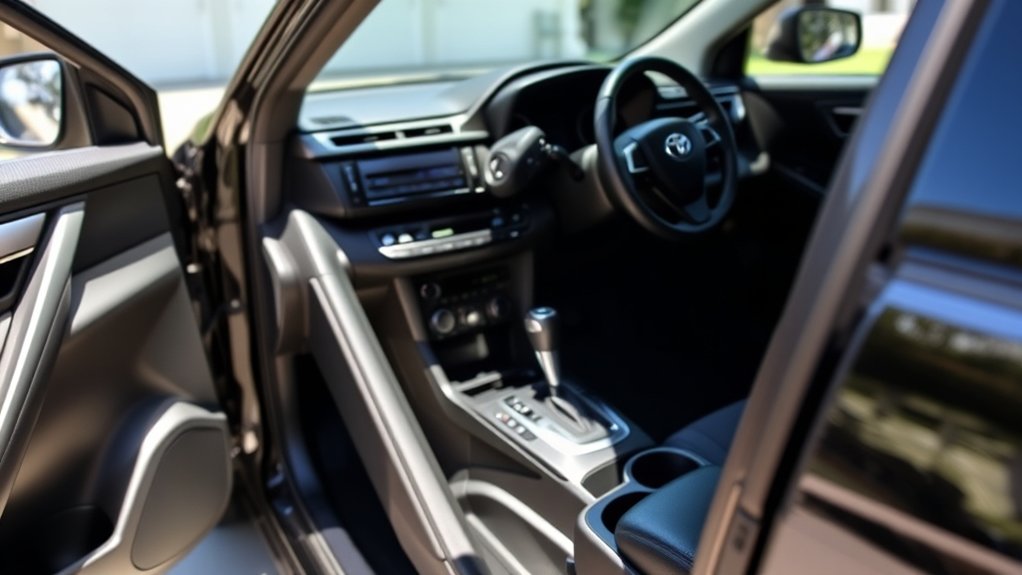
No. Every U.S.-market 2015 Toyota RAV4 came with a conventional 6-speed automatic, not a continuously variable transmission (CVT). This applies to the LE, XLE, and Limited trims, whether equipped with FWD or AWD.
A conventional automatic uses a set of fixed gear ratios. As you accelerate, the transmission moves between gears, producing noticeable changes in engine speed.
A typical belt-driven CVT works differently. It changes its effective gear ratio continuously rather than shifting through a fixed set of forward gears.
Toyota confirms the transmission type in its official 2015 RAV4 brochure. The manufacturer identifies a 6-speed electronically controlled automatic as standard across all three U.S. trim levels.
Important market distinction: This answer applies to U.S.-specification vehicles. Some RAV4 versions sold in other countries used different engines and transmissions.
For example, Toyota’s European RAV4 powertrain information documents Multidrive S, a belt-driven CVT, with certain 2.0-liter gasoline versions of this generation.
Therefore, buyers of imported RAV4 models should confirm the engine, market specification, and transmission before ordering parts or arranging service.
What Transmission Is in the 2015 RAV4?
The U.S. 2015 Toyota RAV4 uses Toyota’s 6-speed ECT-i automatic transmission. This traditional gearbox works with the 2.5-liter 2AR-FE four-cylinder engine and uses a torque converter to transfer engine power.
Unlike a belt-driven CVT, it changes between six fixed forward gear ratios. Electronic controls select gears based on speed, engine load, and driving conditions.
Standard Transmission Type
The standard transmission is a 6-speed automatic across the American lineup. Toyota used this configuration in the LE, XLE, and Limited, so there is no transmission upgrade required to avoid a CVT.
| Item | Specification | Diagnostic Note |
|---|---|---|
| Transmission | 6-speed ECT-i automatic | Not a CVT |
| FWD transmission code | U760E | Front-wheel-drive transaxle |
| AWD transmission code | U760F | All-wheel-drive transaxle |
| Transmission fluid | Toyota Genuine ATF WS | Requires correct fluid and level |
| Shift behavior | Six defined forward gears | Check for hesitation or shudder |
These transmission codes matter when shopping for replacement parts, diagnosing faults, or arranging a rebuild. The FWD and AWD assemblies are not interchangeable simply because both have six speeds.
Engine and Gearbox
The 2015 RAV4 pairs its automatic transmission with a naturally aspirated 2.5-liter DOHC 16-valve four-cylinder engine. Toyota rates this engine at 176 horsepower at 6,000 rpm and 172 lb-ft of torque at 4,100 rpm.
The engine provides enough power for daily commuting, normal highway merging, and family travel. The transmission balances acceleration with fuel efficiency rather than delivering especially sporty performance.
The RAV4 also has selectable ECO and Sport driving modes. ECO adjusts powertrain response to encourage efficient driving, while Sport sharpens throttle and shift behavior.
Neither mode changes the transmission into a CVT. Both use the same mechanical gearbox with different operating settings.
AWD vs. FWD
Both drivetrain layouts use a 6-speed automatic, but they distribute engine power differently. The choice affects traction, mechanical complexity, and fuel consumption rather than the number of gears.
- FWD: Sends power to the front wheels. It has fewer driveline components and generally uses less fuel.
- AWD: Can transfer engine power to the rear wheels when additional traction is needed. It helps on slippery roads and suitable loose surfaces.
- Transmission: Both versions use electronically controlled six-speed gearboxes, although the actual transaxle assemblies differ.
Toyota’s published 2015 fuel-economy estimates are 24 mpg city and 31 mpg highway for FWD, compared with 22 mpg city and 29 mpg highway for AWD. Actual fuel economy varies with driving conditions and maintenance.
AWD can help the RAV4 gain traction, but it does not increase ground clearance or turn the vehicle into a heavy-duty off-road SUV.
Why the 2015 RAV4 Used a 6-Speed Automatic
Toyota selected a 6-speed automatic to provide practical performance, reasonable fuel economy, and familiar driving behavior. The system combines a torque converter with electronically controlled gear changes.
Its first few gears help the vehicle accelerate from a stop. Higher gears reduce engine speed during highway travel, helping improve efficiency and cabin comfort.
The torque converter also allows the vehicle to remain in gear while stopped without stalling the engine. A lock-up clutch can reduce power loss during suitable driving conditions.
This design offers several everyday benefits:
- Predictable acceleration through fixed gear ratios.
- Smooth operation during steady driving.
- Electronic adjustment of shift timing based on driving conditions.
- Familiar service procedures for technicians experienced with Toyota automatic transmissions.
However, a conventional automatic is not automatically more reliable than every CVT. Actual durability depends on its design, operating conditions, fluid condition, and maintenance history.
How the 2015 RAV4 Automatic Drives
The 2015 RAV4 generally delivers smooth acceleration and clearly defined gear changes. Its transmission favors comfortable commuting over aggressive acceleration, although some drivers may notice hesitation or firmness during certain shifts.
Engine response, transmission behavior, and suspension tuning all shape the driving experience.
Shift Quality
Under gentle acceleration, the transmission should move through its gears without severe jolts, slipping, or extended delays. You may feel normal changes in engine speed as the gearbox shifts.
During harder acceleration, the transmission may downshift to provide more power. These changes can feel more noticeable than they do during relaxed driving.
The following behaviors deserve attention:
- A sharp jolt during repeated low-speed shifts.
- Noticeable hesitation before the vehicle accelerates.
- Engine speed rising without matching vehicle acceleration.
- A repeated vibration or shudder under light throttle.
A single slightly firm shift does not prove that the transmission is failing. Persistent symptoms, however, should be diagnosed rather than dismissed as normal behavior.
Ride and Handling
The 2015 RAV4 is designed primarily for stable, everyday driving. Its steering and suspension provide practical control, although some drivers may find the ride firm over sharp bumps and rough pavement.
During faster cornering, the vehicle can show understeer, meaning the front tires may begin to follow a wider path than the driver intended. This is a handling characteristic rather than evidence of a transmission fault.
The suspension uses MacPherson struts in front and a double-wishbone arrangement at the rear. This setup supports passenger comfort and predictable road manners.
The cabin seats five and provides useful space for families. Toyota lists 38.4 cubic feet of cargo capacity behind the rear seats and 73.4 cubic feet with the rear seatbacks folded.
Is the 2015 RAV4 Transmission Reliable?
The 2015 Toyota RAV4 automatic transmission is generally considered a dependable design, but its reliability is not flawless. Some vehicles have experienced torque-converter shudder and other shift-quality complaints.
A well-maintained example with smooth operation and documented service can still be a sensible used-vehicle purchase.
The most important factors are the vehicle’s actual condition and repair history, not simply whether it uses a CVT.
Transmission Fluid and Maintenance
The 2015 RAV4 automatic transmission requires Toyota Genuine ATF WS fluid. Using an incorrect fluid can harm shift quality and may damage internal transmission components.
Unlike older automatic transmissions, the U760E and U760F do not have a conventional dipstick for a simple driveway fluid-level check.
A technician checks and adjusts the fluid through the transmission’s fill and overflow system at the specified fluid temperature. This requires the correct service procedure and suitable equipment.
The owner’s manual lists approximately 6.9 US quarts as a reference transmission-fluid capacity. This is not the quantity to pour in during a routine drain-and-refill, because some fluid remains inside the transmission.
Toyota’s 2015 RAV4 Warranty and Maintenance Guide calls for automatic transmission fluid replacement at 60,000 miles or 72 months when the vehicle is primarily used for towing, carrying a rooftop load, or heavy vehicle loading.
Under normal driving conditions, that guide does not prescribe the same routine 60,000-mile replacement for every vehicle. The maintenance schedule and the vehicle’s actual history should guide servicing decisions.
Warning: Do not add transmission fluid based only on the owner’s manual reference capacity. Overfilling, underfilling, or using the wrong fluid can cause transmission damage. Have the level checked using Toyota’s specified temperature-based procedure.
What Problems Does the 2015 RAV4 Transmission Have?
The most important documented transmission concern is torque-converter flex lock-up shudder. Some 2013–2015 RAV4 vehicles can develop a brief vibration while accelerating lightly at moderate speeds.
Toyota describes this condition in Technical Service Bulletin T-SB-0023-15 Rev2, which identifies intermittent shudder under light loads between approximately 25 and 50 mph.
The bulletin covers certain vehicles manufactured before specified production changes. It does not mean that every 2015 RAV4 has the problem.
| Reported issue | Diagnostic relevance |
|---|---|
| Light-throttle shudder at 25–50 mph | Possible torque-converter lock-up concern covered by Toyota’s bulletin |
| Jerky shifting | Check fluid condition, shift controls, and transmission operation |
| Delayed engagement | Investigate fluid level, hydraulic pressure, and internal wear |
| Slipping or engine-speed flare | May indicate a serious transmission or control problem |
| Whining or clunking | Check transmission, mounts, and other drivetrain components |
| Overheating under severe loads | Inspect operating conditions, cooling, and fluid condition |
Symptoms can have more than one cause. For example, vibrations may come from tires, engine misfires, worn mounts, or other drivetrain components rather than the torque converter.
A qualified technician should confirm the cause before recommending expensive transmission repairs.
Did Toyota Offer a Fix for Torque-Converter Shudder?
Yes. Toyota developed a repair procedure involving an updated torque converter and engine-control software to address the documented shudder condition on affected vehicles.
Toyota also established Warranty Enhancement Program ZH1 for certain 2013–2015 RAV4 vehicles.
According to Toyota Warranty Policy Bulletin POL17-06, primary coverage ran through December 31, 2018. Secondary coverage lasted eight years from the vehicle’s first use or 150,000 miles, whichever came first.
Those historical coverage terms have expired for typical 2015-model vehicles. Buyers should not assume that Toyota will provide a free repair today.
The warranty enhancement was not a safety recall. A Toyota dealer can review the vehicle identification number (VIN), applicable service information, and previous repair records to determine whether the concern was already addressed.
How to Check a Used 2015 RAV4 Transmission
The best way to evaluate a used 2015 RAV4 transmission is to combine a thorough test drive with a professional inspection and service-record review. Drive the vehicle under several conditions, not just around a parking lot.
Use this checklist before buying:
- Confirm the vehicle specification. Check the VIN, engine, and original market. U.S. 2.5-liter gasoline models use a 6-speed automatic.
- Check cold engagement. With the brake applied, shift from Park into Drive and Reverse. Watch for unusual delays, hard engagement, or repeated clunks.
- Test low-speed operation. Accelerate gently through stop-and-go conditions and pay attention to rough upshifts or downshifts.
- Check for torque-converter shudder. After the vehicle reaches operating temperature, drive under light throttle between approximately 25 and 50 mph where safe and legal. Watch for repeated shaking or vibration.
- Test moderate acceleration. Confirm that engine speed and vehicle speed increase together without slipping or severe hesitation.
- Listen for abnormal noises. Whining, grinding, or persistent clunking deserves further inspection.
- Inspect for leaks. Check beneath the vehicle and around the transmission. Have a technician verify fluid level and condition using the correct procedure.
- Review service records. Look for documented fluid changes, transmission repairs, torque-converter replacement, or control-module updates.
- Arrange a diagnostic scan. A transmission-capable scan tool can help identify stored or pending drivetrain faults that may not illuminate a warning light.
- Check outstanding recalls. Enter the vehicle’s VIN into the NHTSA recall lookup. Remember that service bulletins and warranty enhancements are separate from safety recalls.
A vehicle with significant slipping, repeated shudder, or harsh engagement should receive a professional diagnosis before purchase.
Pro Tip: Ask whether the torque converter was replaced under Toyota’s shudder repair program. A dated repair invoice is more useful than a seller’s statement that the transmission was serviced.
How the 2015 RAV4 Compares With Newer RAV4s
The 2015 RAV4 uses a conventional 6-speed automatic, while newer RAV4 generations introduced different transmission systems depending on the powertrain. The biggest distinction is between conventional gasoline models and Toyota’s hybrid versions.
In the U.S., the RAV4 Hybrid first appeared for the 2016 model year. It uses an electronically controlled continuously variable transmission, commonly called an eCVT.
Toyota’s eCVT differs mechanically from a traditional belt-driven CVT. It uses the hybrid system’s power-split arrangement rather than a belt moving between variable-diameter pulleys.
Toyota confirmed the Hybrid’s introduction in its 2016 RAV4 Hybrid announcement.
The 2019 redesign then introduced an 8-speed Direct Shift automatic for gasoline RAV4 models, while hybrids continued using an eCVT. Toyota details both systems in its 2019 RAV4 powertrain announcement.
| U.S. RAV4 model | Transmission | Main difference |
|---|---|---|
| 2015 gasoline | 6-speed automatic | Traditional fixed gears |
| 2016–2018 gasoline | 6-speed automatic | Continued conventional design |
| 2016–2018 Hybrid | eCVT | Hybrid power-split system |
| 2019–2025 gasoline | 8-speed automatic | More fixed gear ratios |
| 2019–2025 Hybrid | eCVT | Hybrid power delivery and efficiency |
Newer RAV4 models also offer updated infotainment, more advanced driver-assistance equipment, and revised suspension and chassis designs.
These differences can make newer versions more refined, but they do not automatically make a well-maintained 2015 model a poor choice.
Should You Buy a 2015 RAV4 Automatic?
A used 2015 RAV4 can be a good choice if you want a practical compact SUV with a traditional automatic transmission. Its 2.5-liter engine, comfortable cabin, and usable cargo area suit commuting and family travel.
The absence of a CVT may appeal to buyers who prefer conventional gear changes. Still, avoiding a CVT should not be the only reason to buy this vehicle.
Consider buying one if:
- The transmission shifts smoothly during both cold and warm operation.
- Service records show reasonable maintenance and no repeated unresolved repairs.
- A professional inspection finds no significant drivetrain problems.
- You value passenger space, cargo practicality, and straightforward daily operation.
Be more cautious if:
- The vehicle repeatedly shudders during light acceleration.
- Drive or Reverse takes unusually long to engage.
- The seller cannot explain previous transmission repairs.
- There are transmission leaks, stored faults, or signs of slipping.
- You expect a particularly soft ride or sporty acceleration.
A clean inspection and documented maintenance history are worth more than a claim that the transmission is reliable simply because it is not a CVT.
Frequently Asked Questions
What Year Did the RAV4 Get a CVT?
The U.S. Toyota RAV4 first received an electronically controlled CVT with the 2016 RAV4 Hybrid. Gasoline-only RAV4 models continued using conventional automatic transmissions. Some international RAV4 versions had belt-driven CVTs earlier, so the answer depends on the vehicle’s original market and powertrain.
Is 2015 a Good Year for a RAV4?
Yes, the 2015 RAV4 can be a good used SUV, especially when it has been maintained properly. It offers practical cargo space, a 176-hp engine, and a conventional automatic transmission. However, inspect for torque-converter shudder, rough shifts, suspension wear, and other age-related problems before buying.
How Reliable Is the Toyota RAV4 CVT Transmission?
Toyota’s RAV4 Hybrid eCVT is generally regarded as a dependable design, but it is different from a conventional belt-driven CVT. The hybrid system uses a power-split arrangement instead of a traditional CVT belt. Reliability still depends on the specific model, maintenance, and vehicle condition. The U.S. 2015 RAV4 does not use this hybrid transmission.
What Are Some Common Transmission Issues With a 2015 Toyota RAV4?
The best-documented concern is torque-converter shudder during light acceleration between approximately 25 and 50 mph. Other possible symptoms include jerky shifting, delayed engagement, slipping, and abnormal noises. Toyota issued a technical service bulletin addressing the shudder condition on certain vehicles. A professional diagnosis is needed to identify the actual cause.
Conclusion
The U.S.-specification 2015 Toyota RAV4 has a 6-speed conventional automatic transmission, not a CVT. Its familiar driving feel and practical design make it a reasonable used-SUV option. However, the documented torque-converter shudder concern deserves attention. Before buying, check service records, arrange a thorough test drive, and have the transmission inspected if anything feels unusual.
Sources
- Toyota 2015 RAV4 Brochure: Confirms the engine, 6-speed transmission, trims, fuel-economy estimates, and cargo specifications.
- Toyota Europe RAV4 Powertrain Information: Documents international-market engine choices and Multidrive S CVT availability.
- Toyota 2015 RAV4 Warranty and Maintenance Guide: Supports the transmission maintenance requirements for specified operating conditions.
- Toyota T-SB-0023-15 Rev2: Details torque-converter shudder symptoms, affected vehicles, and repair procedures.
- Toyota Warranty Policy Bulletin POL17-06: Documents the historical ZH1 warranty enhancement and its coverage limits.
- Toyota 2016 RAV4 Hybrid Announcement: Confirms the introduction of the U.S. RAV4 Hybrid and its CVT designation.
- Toyota 2019 RAV4 Powertrain Announcement: Confirms the 8-speed automatic in gasoline models and eCVT in hybrid models.
- National Highway Traffic Safety Administration: Provides official VIN-based recall lookup information.

