
The best all-season tires for a Dodge Challenger R/T should preserve the car’s responsive feel while giving you dependable wet-road traction and reasonable daily comfort. Fitment matters just as much as performance because tire size, load index, speed rating, and wheel setup can vary by model year and package.
Our top pick is the Continental ExtremeContact DWS06 Plus because its 245/45ZR20 version combines a 103Y XL service description, 10/32-inch starting tread depth, and 50,000-mile limited tread coverage. For a lower-priced option among these three, consider the Firestone Firehawk AS V2.
We checked the exact linked variants against current manufacturer specifications, current listings, fitment information, warranty details, and safety records. Always confirm your Challenger’s doorjamb placard before ordering.
All-Season Tires for Dodge Challenger R/T Compared
| Product | Best for | Load / Speed | Tread depth | Mileage warranty |
|---|---|---|---|---|
|
Mid-range
|
Best overall | 103Y XL | 10/32 in | 50,000 miles |
|
Premium
|
Premium performance | 103Y XL | 10/32 in | Up to 45,000 miles |
|
Budget
|
Best value | 103W XL | 9/32 in | 50,000 miles |
Best All-Season Tires for Dodge Challenger R/T: Our Top Picks
Before you buy: 245/45ZR20 appears on several Challenger R/T configurations, including the 2023 R/T, but it is not universal across every year and package.
- Match the size on your driver-side tire placard or an approved replacement size.
- Match or exceed the required load index and speed rating.
- Check whether your car uses the same size front and rear.
- Confirm your wheel width is approved for the tire you choose.
- Have new tires professionally mounted and balanced.
Our Top Tire Reviews

Bottom line: The Continental ExtremeContact DWS06 Plus is the most balanced pick here for a street-driven Challenger R/T. Its exact 245/45ZR20 version combines a 103Y XL service description with wet-road technology and 50,000-mile limited tread coverage.
- Size: 245/45ZR20 XL, for compatible 20-inch Challenger wheels
- Load / speed: 103Y, high-load performance specification
- Tread depth: 10/32 in, full new-tire starting depth
- Mileage warranty: 50,000 miles, subject to manufacturer terms
Continental uses SportPlus Technology to support responsive handling, wet-road traction, and tread life. The manufacturer also uses Tuned Performance Indicators marked D, W, and S in the tread to show when the tire is no longer optimized for dry, wet, or snow conditions.
The 245/45ZR20 103Y XL version has an approved rim-width range of 7.5 to 9.0 inches. That gives you another fitment point to verify against your actual wheel rather than assuming the tire fits because the diameter is correct.
This remains an ultra-high-performance all-season tire, not a dedicated winter tire. Drivers who regularly face packed snow, deep snow, or ice should compare a proper winter setup instead.

- 103Y XL specification suits demanding performance fitments
- 10/32-inch starting tread depth
- 50,000-mile limited tread-life coverage
- SportPlus Technology targets wet-road grip and handling
- 7.5 to 9.0-inch approved rim-width range
- Costs more than the Firestone in our current price check
- Not a substitute for a dedicated winter tire
- Only suitable when this exact size and rating fit your car
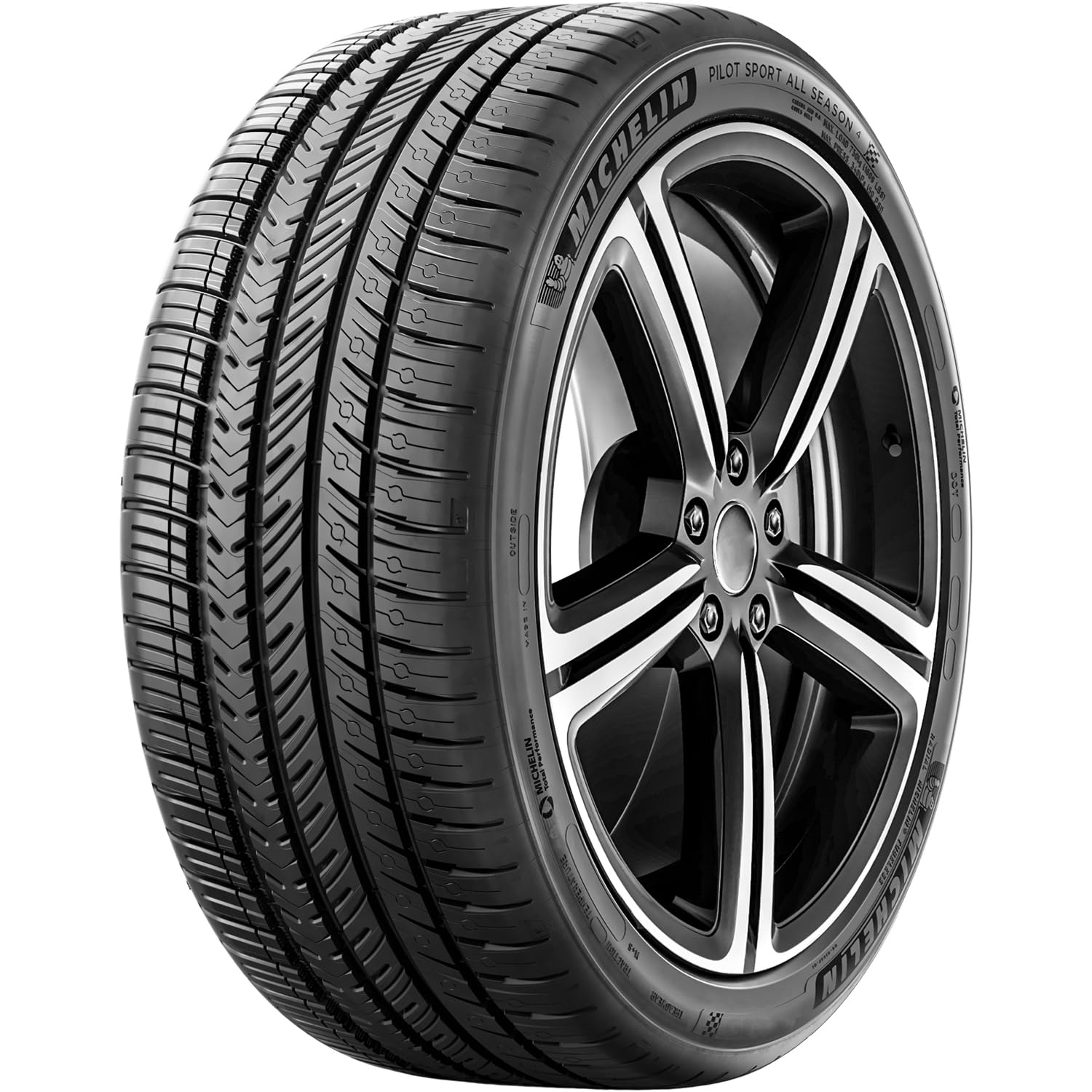
Bottom line: The Michelin Pilot Sport All-Season 4 is the premium performance choice in this group. It suits drivers who put steering response and wet-and-dry performance high on the priority list.
- Size: 245/45ZR20 XL, for compatible 20-inch Challenger wheels
- Load / speed: 103Y, high-load performance specification
- Tread depth: 10/32 in, full new-tire starting depth
- Mileage warranty: Up to 45,000 miles, subject to terms
Michelin’s Dynamic Response Technology is designed to distribute forces and temperatures across the contact patch. The manufacturer positions the Pilot Sport All-Season 4 as an ultra-high-performance tire for wet, dry, and light winter use.
The linked 245/45ZR20 version carries the same 103Y XL service description as the Continental. That makes it a better candidate than a lower-speed-rated tire when your placard specifically calls for a Y-rated replacement.
Its mileage coverage is shorter than the 50,000-mile limited coverage listed for the Continental and Firestone. It also sits in the premium price tier in our current comparison.
- 103Y XL service description
- 10/32-inch starting tread depth
- Dynamic Response Technology targets consistent performance
- Designed for wet, dry, and light-winter road use
- Premium price tier in this comparison
- Mileage coverage is lower than the two 50,000-mile alternatives
- Not intended to replace a dedicated winter tire
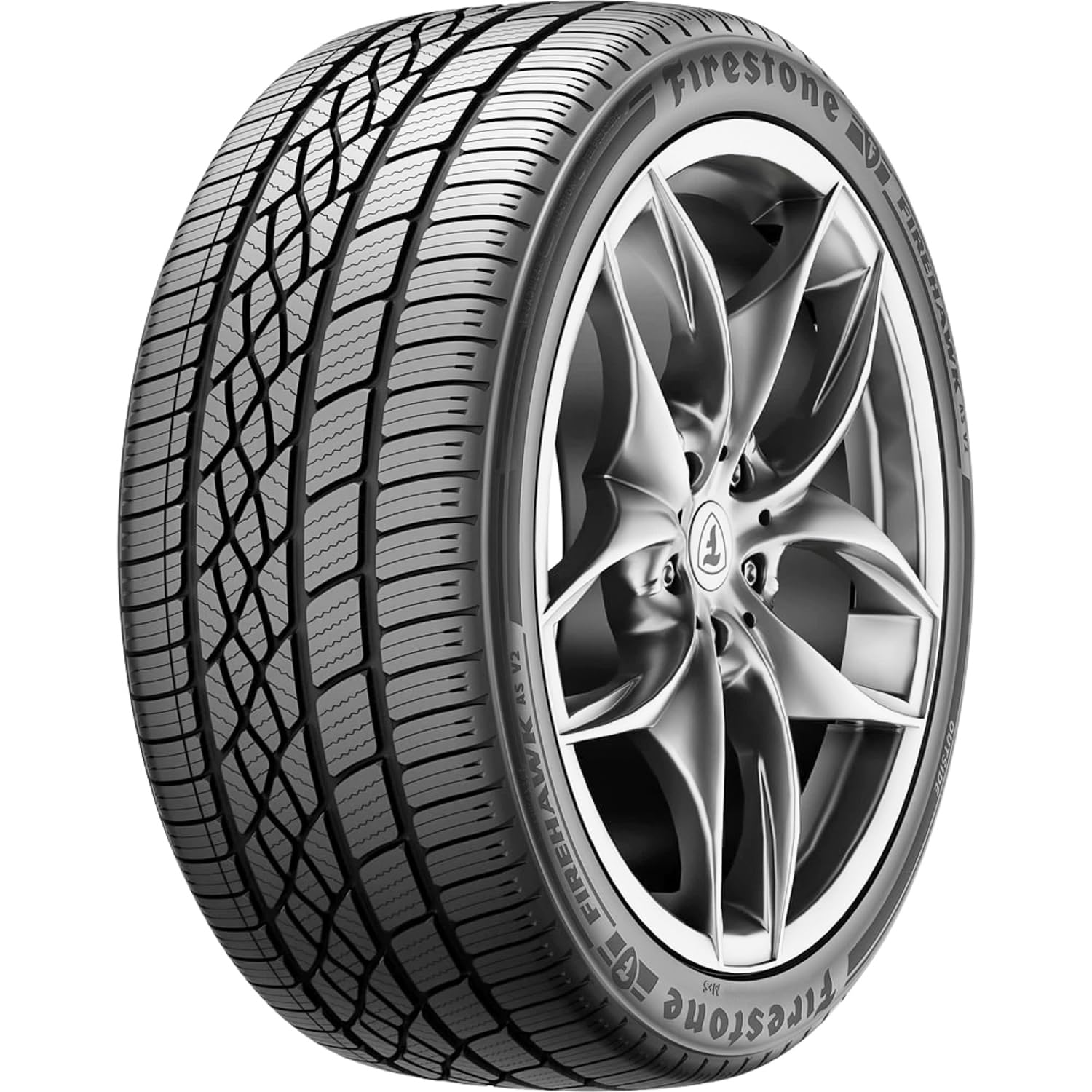
Bottom line: The Firestone Firehawk AS V2 is the value pick among these three for sporty daily driving. Its main trade-off is a W speed rating instead of the Y rating on the Continental and Michelin versions.
- Size: 245/45R20 XL, for compatible 20-inch Challenger wheels
- Load / speed: 103W, confirm against your placard
- Tread depth: 9/32 in, slightly less than the other picks
- Mileage warranty: 50,000 miles, subject to manufacturer terms
Firestone uses an INDYCAR-inspired tread pattern with interlocking lugs and large outboard blocks. Circumferential grooves and open shoulder slots are designed to help evacuate water and resist hydroplaning.
Full-depth 3D sipes add biting edges for mild winter conditions as the tread wears. Firestone specifically positions the AS V2 for year-round performance, including light snow rather than severe winter use.
The important fitment difference is its 103W service description. Do not substitute it for a Y-rated original-equipment requirement unless qualified fitment guidance confirms the lower speed rating is acceptable for your specific car and use.

- Lowest current price tier among these three picks
- 50,000-mile limited mileage warranty
- Wet-road features include circumferential grooves and open shoulders
- Full-depth 3D sipes support mild-winter traction
- W speed rating may not meet every R/T requirement
- 9/32-inch starting tread is less than the other two picks
- Light-snow capability does not equal dedicated winter traction
Continental ExtremeContact DWS06 Plus vs Firestone Firehawk AS V2: Is the Upgrade Worth It?
The Continental costs more in our current price check, but the exact 245/45ZR20 version gives you a Y speed rating and 10/32-inch starting tread depth. The Firestone is the lower-priced choice and retains a 50,000-mile limited mileage warranty.
- Speed rating: Continental is 103Y XL; Firestone is 103W XL.
- Starting tread: Continental lists 10/32 inch; Firestone lists 9/32 inch.
- Warranty: Both list 50,000-mile limited mileage coverage.
- Tread features: Continental adds D/W/S indicators; Firestone emphasizes full-depth 3D sipes.
Which Performance All-Season Tire Should You Buy?
- Balanced daily performance: get the Continental ExtremeContact DWS06 Plus.
- Premium performance focus: get the Michelin Pilot Sport All-Season 4.
- Lower-priced option: get the Firestone Firehawk AS V2 if 103W is appropriate.
- 50,000-mile tread coverage: the Continental ExtremeContact DWS06 Plus combines it with a 103Y XL rating.
- Y-rated replacement: choose the Michelin Pilot Sport All-Season 4 or Continental after confirming exact fitment.
How We Chose
- Exact variant verification: We checked the linked tire size, load index, speed rating, and XL designation.
- Manufacturer specifications: We prioritized Continental, Michelin, and Firestone technical information for tire claims.
- Challenger fitment: We checked Dodge documentation showing 245/45ZR20 on relevant R/T configurations while keeping the door-placard warning.
- Everyday usefulness: We compared tread design, wet-road features, light-winter positioning, warranty coverage, and fitment limits.
- Safety: We searched current recall and safety records before keeping products as recommendations.
How to Choose All-Season Tires for a Dodge Challenger R/T
Start With the Doorjamb Tire Placard
Do not buy from model name alone. Challenger R/T tire sizes changed across years and packages, and some cars use wider rear tires. The 2023 owner’s manual, for example, lists both 245/45ZR20 and 275/40ZR20 in R/T fitment information. Match the placard or use an approved alternative confirmed by a qualified installer.
Match Load Index and Speed Rating
Size is only part of the specification. The Continental and Michelin tires here are 103Y XL, while the Firestone is 103W XL. Use the same or an approved higher specification required for your vehicle, and do not treat the speed rating as permission to exceed posted limits.
Check Wheel Width
A correct tire diameter can still be wrong for your wheel. Continental lists a 7.5-to-9.0-inch approved rim-width range for its 245/45ZR20 version. Check wheel specifications for every tire instead of assuming all 245/45R20 tires share identical requirements.
Choose All-Season or Winter Tires for Your Climate
These tires are designed for year-round street use that can include rain and light winter conditions. If you regularly drive on packed snow, deep snow, or ice, a dedicated winter tire is the more appropriate category. All-season labeling does not mean maximum traction in every winter condition.
Compare Tread Depth and Warranty Terms
The Continental and Michelin variants start at 10/32 inch, while the Firestone starts at 9/32 inch. Mileage warranties are useful comparison points, but coverage depends on manufacturer terms, maintenance, alignment, inflation, rotation eligibility, and other conditions.
Think About Square vs Staggered Fitment
A square setup uses the same tire size front and rear and normally allows more rotation options. A staggered setup uses different sizes or wheel widths, which can restrict front-to-rear rotation. Check your actual wheel and tire configuration before planning maintenance or comparing mileage coverage.
Keep Tire Pressure and Alignment in Check
Use the cold inflation pressure on the vehicle placard rather than the maximum pressure molded into the tire sidewall. Check pressure regularly and investigate uneven wear early. Correct alignment and inflation matter for handling, tread life, and warranty eligibility.
Mistakes to Avoid When Buying Performance All-Season Tires
- Buying by size alone: Also check load index, speed rating, XL designation, and wheel width.
- Assuming every R/T is identical: Verify the model year, package, and front-to-rear setup.
- Using sidewall maximum pressure: Inflate to the vehicle placard specification instead.
- Expecting winter-tire traction: Use dedicated winter tires for frequent severe snow and ice.
- Ignoring alignment: Correct abnormal wear before installing an expensive new set.
FAQs
Are These Tires Right for Every Dodge Challenger R/T?
No. These picks apply only when 245/45R20 or 245/45ZR20 is an approved size for your specific Challenger R/T and the tire’s load and speed ratings meet the vehicle requirements. Check the driver-side tire placard, owner’s manual, wheel width, and front-to-rear setup before ordering.
Is 245/45ZR20 a Factory Tire Size for the Challenger R/T?
Yes, on some configurations. Dodge’s 2023 Challenger owner’s manual lists 245/45ZR20 for the R/T and also lists 275/40ZR20 in R/T fitment information. Other years and packages can differ, so the placard on your actual car remains the safest starting point.
Which Tire Is the Best Choice for Wet Roads?
The Continental ExtremeContact DWS06 Plus is our balanced wet-weather pick because Continental specifically designs its SportPlus Technology around wet-road grip and responsive handling. Michelin also emphasizes wet performance, while Firestone uses circumferential grooves and open shoulder slots to support water evacuation.
Can I Use These Tires in Snow?
They can support light winter driving, but none should be treated as a replacement for a dedicated winter tire in regular deep snow or ice. Michelin and Firestone describe winter or mild-snow capability, while Continental includes snow-related tread indicators. Choose your tire category around the worst conditions you regularly face.
Does a Y Speed Rating Make a Tire Better Than a W Rating?
No. A higher speed rating does not automatically make a tire better for everyday driving. What matters first is meeting your vehicle’s required specification. The Continental and Michelin picks are 103Y XL, while the Firestone is 103W XL, so confirm whether W is permitted before choosing it.
How Often Should I Rotate Challenger R/T Tires?
Follow the rotation interval and pattern in your owner’s manual and tire warranty documents. A square setup usually provides more rotation choices than a staggered setup. If front and rear sizes differ, normal front-to-rear rotation may not be possible, which can affect wear and warranty requirements.
Do These Amazon Listings Include Wheels?
No. These links are for individual tires rather than complete tire-and-wheel packages. Verify the listing quantity before ordering because tires are commonly sold one at a time. You will still need compatible wheels plus professional mounting and balancing unless those services are arranged separately.
Final Verdict
For most shoppers comparing these all-season tires for a Dodge Challenger R/T, the Continental offers the strongest combination of fitment-friendly performance specifications, wet-road technology, and warranty coverage. The Michelin makes sense when premium performance is the priority, while the Firestone gives you a lower-priced route if its W speed rating meets your vehicle requirements.
For a lower-priced alternative, see the Firestone Firehawk AS V2. For the premium performance pick, see the Michelin Pilot Sport All-Season 4.
Fitment, warranty terms, and Amazon listing details can change. Confirm all specifications before ordering and use a qualified tire installer.
