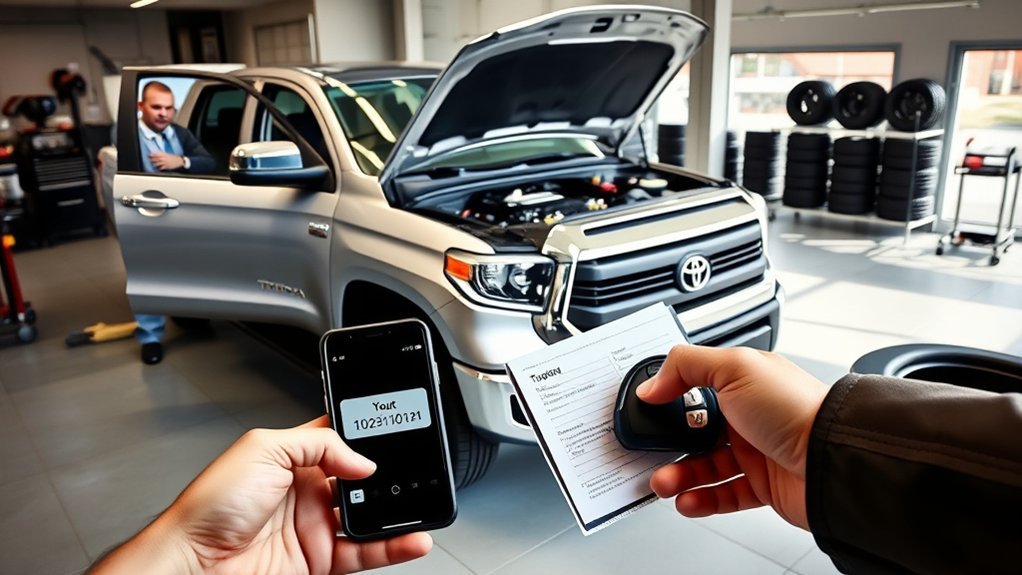
Preparing for a Toyota Tundra recall appointment starts with your 17-character VIN because Toyota’s current Tundra engine-recall remedies differ by campaign. NHTSA 24V381 / Toyota 24TA07 calls for engine-assembly replacement. NHTSA 25V767 and 26V320 use a number-one main-bearing inspection, with engine replacement when the inspection cannot confirm that the bearing should remain free from abnormal wear. Confirm the VIN-specific remedy and its availability with an authorized Toyota dealer before drop-off.
Last updated: September 22, 2026 — recall coverage and remedy details were rechecked against current Toyota and NHTSA records. Your VIN result and dealer campaign status remain controlling.
Quick Answer
Before your Toyota Tundra recall appointment, verify the open campaign by VIN, ask whether the remedy is available, and confirm whether the dealer must order an engine or schedule the bearing inspection first. Ask about transportation before drop-off. Bring your license, registration, insurance card, recall notice or VIN result, and records for related repairs. If the truck is knocking, running rough, stalling, losing power, or will not start, contact the dealer before driving it.
Key Takeaways
- Check your full 17-character VIN through Toyota and NHTSA because model year alone does not confirm eligibility.
- Ask the dealer whether your campaign requires an inspection, a complete engine replacement, and whether the VIN is currently eligible to have that remedy performed.
- Loaner eligibility, deposits, insurance requirements, vehicle class, fuel, and toll policies should be confirmed before drop-off.
- Keep your repair order, recall paperwork, photos, mileage record, and receipts for any earlier related repairs.
At a Glance
| Time Required | About 15 to 30 minutes to verify the recall and prepare. Dealer time varies by campaign, parts availability, inspection results, and shop workload. |
| Difficulty | Easy preparation; the recall remedy must be completed by an authorized Toyota dealer. |
| Tools Needed | VIN, phone or computer, driver’s license, registration, insurance card, recall notice, and related repair records. |
| Cost | The prescribed safety-recall remedy is free. Rental deposits, fuel, tolls, optional coverage, or other incidental expenses may depend on provider terms. |
Which Toyota Tundra Engine Recall Applies to Your VIN?

Toyota’s Tundra engine-recall process depends on the campaign attached to your VIN. Toyota’s public announcements for the November 2025 and May 2026 engine-debris recalls identify affected Tundras as conventional-gas or non-hybrid vehicles with specified V35A engines. A Tundra Hybrid can have other open recalls, so use the VIN rather than the model year or powertrain name alone.
The concern involves machining debris that may remain inside the engine. NHTSA reports that the debris can contribute to abnormal main-bearing wear and may lead to engine knocking, rough running, a no-start condition, stalling, or loss of motive power.
| Campaign | General Coverage | Published Remedy |
|---|---|---|
| NHTSA 24V381 Toyota 24TA07 |
Certain 2022 and 2023 Tundra non-hybrid vehicles. | The authorized dealer replaces the engine assembly free of charge. |
| NHTSA 25V767 Toyota 25TA14 / 25TB14 |
Certain 2022 through 2024 Tundra conventional-gas vehicles, including specified service engines. | The dealer uses inspection software and available drive data to evaluate the number-one main bearing. The engine is replaced if the assessment cannot confirm that the bearing should remain free from abnormal wear caused by the issue. |
| NHTSA 26V320 Toyota 25TA14 / 25TB14 |
Certain additional 2024 Tundra non-hybrid vehicles. | The amended remedy uses the same inspection-based approach, with engine replacement when the result cannot confirm the required bearing condition. |
Campaign-number note: NHTSA records list Toyota numbers 25TA14 / 25TB14 for both 25V767 and 26V320, while 26V320 expands the earlier engine-recall population. Use the VIN-specific Toyota or NHTSA result as the controlling reference when you schedule.
Current remedy status: Amended NHTSA Part 573 reports for 25V767 and 26V320 describe an inspection-based remedy using software and available drive data to evaluate the number-one main bearing, with engine replacement when the inspection cannot confirm the required bearing condition. VIN-specific scheduling, inspection-tool availability, and parts availability can still vary by dealer.
Recall populations and remedy phases can change. Check your truck through the official Toyota recall lookup and the NHTSA recall lookup before scheduling. The VIN-specific result is more reliable than a model-year list.
Warning: NHTSA’s 25V767 and 26V320 reports do not mark those campaigns as blanket “Do Not Drive” recalls. However, contact an authorized Toyota dealer promptly if your engine knocks, runs rough, stalls, will not start, or loses power. If the truck stalls while moving, steer to a safe location when possible, switch on the hazard lights, and request roadside assistance. Do not operate a truck that cannot be driven safely.
How Do You Check Toyota Tundra Recall Eligibility?
You do not need to wait for a mailed notice before checking your Tundra. Enter the complete VIN on Toyota’s recall page and confirm the result through NHTSA. The lookup should identify open campaigns and may show whether a remedy is available. For a deeper walkthrough of VIN locations, recall-status wording, and follow-up steps, see the Toyota Tundra recall-by-VIN guide.
Eligibility Check Process
- Locate the full 17-character VIN. Copy it carefully without spaces.
- Check Toyota’s database. Use the official Toyota recall lookup rather than relying on a dealership advertisement or social-media post.
- Check NHTSA. Compare the Toyota result with the federal recall database.
- Record the campaign number. Save a screenshot or print the result.
- Call an authorized dealer. Ask whether the remedy is ready and whether an engine or other parts must be ordered before the appointment.
- Ask for written confirmation. Confirm the drop-off date, whether the remedy is currently available for your VIN, the expected inspection or repair, transportation arrangement, and the person you should contact for updates.
An open entry does not always mean the dealer can complete the work immediately. Some campaigns are released in phases, and parts or inspection tools may need to be arranged first.
Why the VIN Matters
Your VIN identifies the truck’s production details and recall status. Not every truck within a listed model year or production range is included. You can usually find the 17-character VIN at the lower driver-side windshield, on the driver-side door certification label, or on registration and insurance documents. Use the VIN-specific result rather than a broad model-year list when discussing the appointment with the dealer.
Note: This guide focuses on U.S. recall procedures. Owners in Canada or another country should use Toyota’s official recall site for their market and confirm local transportation and reimbursement policies.
What Happens at a Toyota Tundra Recall Appointment?
At check-in, the service advisor should confirm your VIN, campaign number, current mileage, reported symptoms, and the remedy authorized for your truck. Review the repair order before signing it. The document should clearly identify the safety-recall campaign and show that the prescribed remedy has no charge.
Engine Replacement Process Overview
Under campaign 24TA07, Toyota directs the dealer to replace the engine assembly. Toyota’s dealer-planning material describes the replacement assembly as including the turbos, intercooler, and associated fuel-system components. The exact parts and procedures remain controlled by Toyota’s technical instructions for the VIN.
Under the amended 25V767 and 26V320 procedures, the appointment may begin with an inspection rather than an automatic engine replacement. The dealer uses Toyota’s inspection software and available vehicle drive data to assess the number-one main bearing. If the procedure cannot confirm an acceptable bearing condition, the dealer replaces the engine free of charge.
After completing the remedy, the technician performs the inspections, fluid checks, calibrations, leak checks, and quality-control steps required by the campaign. A road test may be included, but owners should not expect a universal mileage requirement.
Rental Vehicle Information
The 24TA07 owner notice states that a loaner vehicle will be provided while the engine-replacement repair is being performed after the engine arrives at the dealership. Transportation arrangements for other campaigns or longer delays may follow different authorization rules.
Before your appointment, ask the dealer:
- Whether a loaner or alternative transportation is authorized for your campaign
- When transportation coverage starts and ends
- Whether the loaner comes from the dealer or a separate rental company
- Whether a credit-card hold or deposit is required
- What insurance documents you must provide
- Whether fuel, tolls, mileage, damage waivers, extra drivers, or upgrades cost extra
- Whether a pickup truck or towing-capable vehicle is available
- Who authorizes additional rental days if the repair is delayed
A comparable Tundra or full-size truck may not be available. Do not plan to tow a trailer with the loaner unless the dealer and rental agreement expressly permit it.
Expected Repair Timeline
For 24TA07, Toyota’s owner notice says the dealer must order the engine before the repair. Delivery takes several days and varies by location. Once the engine arrives, Toyota estimates approximately two working days for the repair, although the dealership may need the truck longer because of workload or additional required service. Toyota’s dealer letter lists 13.6 flat-rate labor hours for the engine replacement; that labor allowance is not the same as the customer-facing promise of a two-working-day repair window.
An inspection-only appointment under a newer campaign may take less time than an engine replacement. However, an inconclusive inspection can lead to parts ordering and a longer stay. Ask the advisor to separate these three estimates:
- Time until the remedy or inspection is available
- Time required to obtain an engine or related parts
- Time your truck is expected to remain at the dealership
What Documents Should You Bring to the Recall Appointment?
Bring enough information to verify ownership, arrange transportation, document symptoms, and support any reimbursement request.
A written record of the VIN, campaign number, mileage, symptoms, transportation terms, and promised completion date is more useful than relying on a verbal estimate.
- Driver’s license: Needed for identification and usually required for a loaner.
- Vehicle registration: Helps verify ownership and contains the VIN.
- Insurance card: The dealer or rental provider may request current coverage information.
- Recall notice or saved VIN result: Bring the campaign number shown by Toyota or NHTSA.
- Appointment confirmation: Save the date, advisor’s name, and any transportation approval.
- Previous service records: Include records involving engine knocking, stalling, rough running, oil concerns, or previous engine work.
- Earlier repair invoices and proof of payment: These may support a reimbursement request if you previously paid to correct the recalled condition.
- Written symptom notes: Record when the problem occurs, dashboard messages, noises, weather, load, speed, and whether the engine restarted.
- California emissions-recall paperwork, if applicable: For 24TA07, Toyota instructs California dealers to provide a Vehicle Emissions Recall Proof of Correction after the repair; keep it because the DMV may request it for registration renewal.
Before handing over the keys, remove valuables and unnecessary cargo. Photograph the exterior, interior, odometer, fuel level, and any existing warning lights. Tell the advisor about aftermarket engine software, wiring, accessories, skid plates, suspension changes, or other modifications that could affect access to the repair area.
Will Toyota Provide a Loaner for a Tundra Recall?

Do not assume that every rental-related charge is included simply because the recall remedy is free. Ask the service advisor to explain the transportation authorization and review the rental agreement before accepting the vehicle.
Confirm the approved daily rate, covered dates, fuel-return policy, mileage limit, toll handling, extra-driver rules, deposit, insurance requirements, and return deadline. Inspect the rental for existing damage and photograph it before leaving.
Return the loaner promptly when the dealer confirms that your Tundra is ready. If the repair is delayed, request approval for additional days before the current authorization expires rather than assuming the extension is automatic.
Pro Tip: Ask the advisor to place the loaner approval, covered dates, daily limit, and any customer-paid items in writing. This prevents confusion if the repair takes longer than expected.
What Happens During the Bearing Inspection or Engine Replacement?
The exact workflow depends on the recall campaign, but most appointments follow these stages:
- VIN and campaign verification: The dealer confirms that the recall remains open and identifies the approved remedy.
- Parts or inspection preparation: The dealer orders the engine in advance for a replacement campaign or confirms that the required inspection system is available.
- Vehicle intake: The service advisor records mileage, warning lights, symptoms, existing damage, modifications, and other open recalls.
- Campaign procedure: The technician performs the required inspection or removes and replaces the specified engine assembly.
- Quality checks: The technician checks fluids, connections, leaks, diagnostic codes, calibrations, and operation according to Toyota’s instructions.
- Campaign reporting: The dealer records the completed remedy against the VIN and prepares the final repair order.
- Owner review: You inspect the truck, review the paperwork, and ask about break-in guidance, follow-up checks, and applicable repair coverage.
The remedy should be listed separately from unrelated maintenance. The dealer may recommend other work, but optional services should not be represented as a condition of receiving the free safety-recall remedy.
What to Check Before Leaving the Dealer
- Confirm that the repair order shows the correct recall campaign as completed.
- Verify the recorded mileage and review the parts and procedures listed.
- Check beneath the truck and engine compartment for visible leaks.
- Start the engine and listen for unusual knocking, rattling, or rough operation.
- Confirm that no unexpected warning lights remain on.
- Test the air conditioning, cameras, audio settings, and other functions that may have been reset.
- Inspect paint, body panels, wheels, interior trim, and the area around the repair.
- Ask whether fluids need rechecking and whether the replacement engine has break-in guidance.
- Keep the final repair order permanently with your service records.
- If you are a California owner completing 24TA07, keep the Vehicle Emissions Recall Proof of Correction provided by the dealer.
If you notice a new warning light, leak, smell, noise, vibration, or drivability problem after pickup, contact the servicing dealer promptly and document the concern.
How Should You Escalate a Tundra Recall Problem?
Keep your VIN, campaign number, dealer name, repair-order number, and timeline available whenever you contact Toyota. Explain the concern in a few direct sentences and ask for a case number.
Record the date, time, representative’s name, promises made, and next expected update. Follow important calls with an email or written message when possible.
Contact the Toyota Brand Engagement Center if the dealer cannot explain the remedy, parts remain unavailable, the truck develops recall-related symptoms, or transportation arrangements are unresolved. Toyota lists the U.S. support number as 800-331-4331.
A safety recall does not automatically create a right to a buyback. You may ask Toyota to review your case, but repurchase or replacement-vehicle eligibility depends on the facts, prior repair attempts, warranty terms, and applicable state law.
If Your Truck Fails Before the Appointment
If the engine will not start or the truck cannot be driven safely, call the authorized dealer and explain that the VIN has an open engine recall. Toyota’s 24TA07 owner material directs owners with an undriveable affected vehicle to contact the dealer so vehicle pickup can be arranged.
If you believe your truck has a safety defect that is not being addressed, you can also submit a complaint through NHTSA’s safety-problem reporting system. A complaint does not replace scheduling the recall remedy, but it creates a federal record of the concern.
Frequently Asked Questions
What is the repair process for the Toyota Tundra engine recall?
The process depends on the campaign attached to your VIN. Campaign 24TA07 specifies replacement of the engine assembly. Amended campaigns 25V767 and 26V320 use inspection software and available drive data to evaluate the number-one main bearing. The dealer replaces the engine when the assessment cannot confirm the required bearing condition.
How long does Toyota Tundra recall service take?
Timing varies by campaign, parts, inspection results, and dealer workload. Toyota’s 24TA07 owner notice estimates approximately two working days for the engine replacement after the engine arrives, but the dealer may need the truck longer. Newer inspection-based appointments can have different timelines.
Does every recalled Toyota Tundra receive a new engine?
No. The original 24V381 or 24TA07 campaign calls for engine-assembly replacement. Under the amended 25V767 and 26V320 remedies, the dealer evaluates the main bearing first and replaces the engine if the assessment cannot confirm that the bearing should remain free from abnormal wear caused by the recalled condition.
Does Toyota provide a loaner vehicle for a Tundra recall?
Toyota’s 24TA07 owner notice states that a loaner will be provided while the engine-replacement repair is performed after the engine reaches the dealer. Transportation eligibility for another campaign, an inspection-only appointment, or a long parts delay should be confirmed with the dealer in advance.
What documents should I bring to the appointment?
Bring your driver’s license, registration, insurance card, recall notice or saved VIN result, appointment confirmation, related service records, and receipts for earlier repairs connected to the recalled condition. Written symptom notes and photos of the truck are also useful.
Can I drive my Tundra while waiting for the recall appointment?
Follow the instructions attached to your VIN and contact the dealer if you are unsure. Do not continue driving if the engine knocks, runs rough, repeatedly stalls, loses power, or will not restart. Ask the dealer about towing or vehicle pickup when the truck cannot be driven safely.
Is the Toyota Tundra engine recall a “Do Not Drive” recall?
NHTSA’s 25V767 and 26V320 Part 573 reports do not mark those campaigns with a blanket “Do Not Drive” advisory. That does not mean symptoms should be ignored. If the engine knocks, runs rough, stalls, loses power, or will not restart, contact an authorized Toyota dealer and do not operate the truck if it cannot be driven safely.
Can I request reimbursement for a repair I previously paid for?
You may be eligible for reimbursement consideration if you previously paid to repair the specific recalled condition. Keep the repair order, proof of payment, ownership information, and related records. Review your owner notice or contact Toyota for the submission procedure.
Conclusion
A smooth Toyota Tundra recall appointment depends on confirming the VIN-specific campaign instead of assuming every truck receives the same remedy. Verify the recall through Toyota and NHTSA, ask whether the remedy is currently available for your VIN, confirm whether parts or an inspection must be arranged first, obtain written transportation terms, and bring records of any related symptoms or repairs.
After the service, inspect the truck and keep the completed repair order. Contact the dealer immediately if you notice a warning light, leak, unusual noise, rough operation, or another concern after pickup.
Sources
- Toyota Safety Recall and Service Campaign Lookup — VIN-specific Toyota recall and campaign status.
- National Highway Traffic Safety Administration Recall Lookup — federal recall records and VIN searches.
- Toyota’s November 6, 2025 Tundra / Lexus Engine Recall Announcement — affected conventional-gas vehicles, symptoms, and safety risk.
- Toyota’s May 20, 2026 Tundra Engine Recall Announcement — additional affected 2024 non-hybrid vehicles, symptoms, and safety risk.
- Toyota Recall 24TA07 Remedy Notice — complete engine replacement, appointment process, estimated repair time, loaner, pickup, and reimbursement guidance.
- Amended NHTSA Recall Report 25V767 — inspection-software remedy and conditional engine replacement.
- Amended NHTSA Recall Report 26V320 — additional 2024 Tundra population and inspection-based remedy.

Bought a 2023 Toyota Tundra on 6/20. By the morning of 6/22, it was back in the service department at the dealership because the engine failed. We weren’t told of the recall for the engine. We were told that we would have to wait for TMC to “release” the available engine that is in their service department. It’s been weeks. This “available” engine is still there and still unassigned to us or anyone else. We’ve asked and asked, we’re told we’re still waiting. All the paperwork has been submitted for the engine replacement, that was over 2 weeks ago. We literally put less than 75 miles on it in the small amount of time we had it. From all I’m reading, Toyota is supposedly putting customers like us at PRIORTY status, but it doesn’t feel that way. I’ve written to the heads of the Toyota facility where we bought the vehicle, but no reply. Nothing. It’s like it doesn’t matter to them that we’ve paid $50K for a vehicle that we don’t have possession AND the first payment is due in less than 3 weeks. OH they said they’ll make that payment, but how far will that go? How many months are they willing to do this? Even with all the BS of waiting and being ‘put off’ we still want the truck. We want it fixed, tested and assured that we’re good. Waiting for someone to do the right thing is the hardest EVER!
Hi Gina,
I’m really sorry you’re going through this. Buying a $50,000 truck and having the engine fail after fewer than 75 miles is incredibly frustrating, especially when you’ve been waiting weeks without a clear answer.
Since the dealership says the paperwork has already been submitted, I would ask them for your Toyota case number and a written update on the engine replacement. You may also want to contact Toyota’s customer support directly and ask for the case to be escalated.
Please keep copies of all repair paperwork, emails, payment promises, and conversations with the dealership. Also ask them to confirm in writing how long they will cover your payments and whether they can provide a loaner vehicle while you wait.
I really hope Toyota gets this resolved soon and makes sure the truck is fully repaired and tested before returning it to you. Please keep us updated.