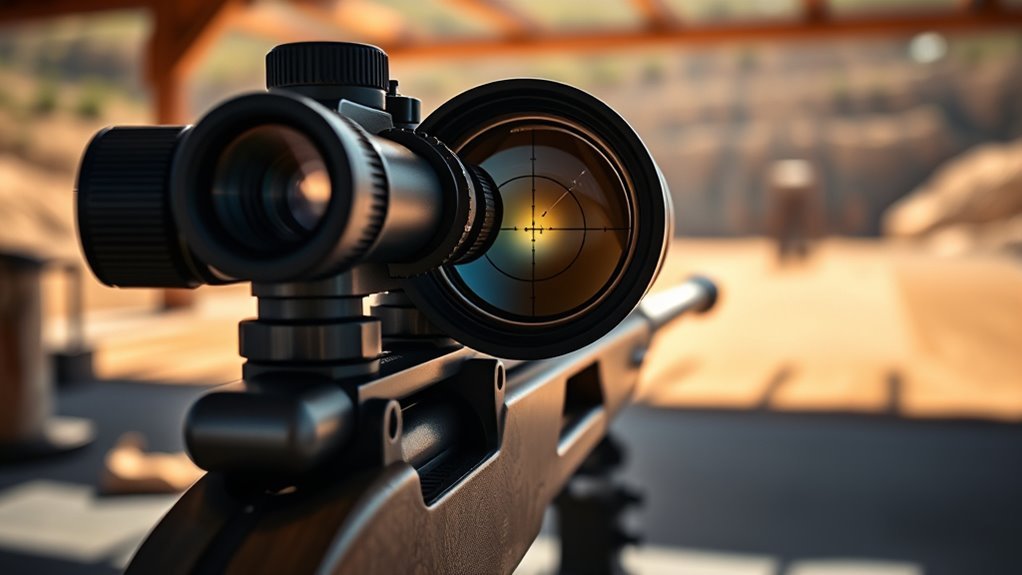
Scope parallax can create apparent left and right shifts at distance when the shooter’s eye is not perfectly centered behind the optic. The reticle may seem fixed, yet the point of aim moves relative to the target as head position changes. This effect becomes more noticeable at longer ranges and higher magnification. Proper adjustment can reduce the error, but confirming it in practice often reveals something less obvious than expected.
What Scope Parallax Does at Distance
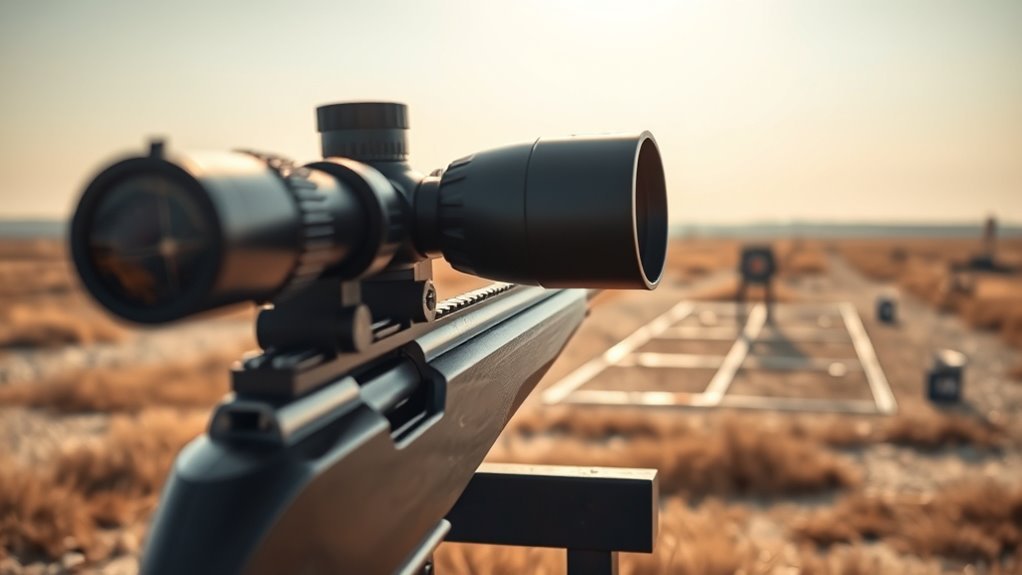
At longer distances, scope parallax can cause the reticle to shift relative to the target when viewed from an angle, creating left or right misalignment. This parallax error becomes more apparent as range increases, especially beyond 150 yards, where adjustable parallax settings are often necessary.
At longer distances, parallax can shift the reticle off target, making adjustable settings increasingly important.
At higher magnification, small viewing offsets produce larger apparent reticle movement, reducing shooting accuracy. The parallax adjustment knob exists to match the scope’s focal setting to target distance, allowing the reticle image and target image to align more closely.
When that setting is incorrect, the reticle may seem stationary through one eye position yet move across the target when the head shifts slightly. Regular testing at multiple distances helps confirm whether the reticle remains fixed on aim.
Proper adjustment supports consistent, independent shot execution and reduces reliance on compensating for shifting sight pictures.
Why Parallax Pushes Shots Left or Right
Parallax pushes shots left or right because eye shift makes the reticle appear to move laterally against the target when the viewing angle changes.
At distance, even slight head movement can create enough apparent reticle drift to produce horizontal error, and the effect is amplified at higher magnification.
If the parallax setting does not match the range, the mismatch can leave the point of aim offset from the point of impact.
Eye Shift Effects
When the shooter’s eye shifts behind the optic, parallax can make the reticle appear to move off the target, creating left or right errors in point of aim. This effect is driven by head movement, not by true target movement, so the image can mislead the observer.
At higher magnification, the apparent lateral drift becomes more visible, and the shooter may lose a stable sight picture. To reduce this error, adjust the parallax knob to match the shooting distance and keep the eye centered.
- A slight head shift can make the reticle seem to slide across the target.
- The higher the magnification, the more obvious the shift may appear.
- Repeated practice helps the shooter recognize parallax and restore a stable aim.
Left-Right Impact at Distance
As the eye shifts behind the optic, the reticle can appear to drift laterally across the target, and that visual offset becomes a source of left-right error in shot placement. This is the practical effect of parallax: the target image and reticle no longer share the same apparent plane.
At higher magnification level, the lateral movement is easier to detect and the error becomes more consequential. If the parallax setting does not match distance, especially beyond 200 yards, even slight eye misalignment can push impact left or right.
A correct parallax setting aligns the optical system to the range, reducing relative motion. Regular adjustment preserves precision, limits deviation, and gives the shooter a clearer, more independent connection to the point of impact.
How to Test for Parallax Error
To test for parallax error, the rifle should be stabilized on a rest while a distant target is brought into focus and the crosshairs are held still. The shooter then shifts the head slightly up, down, left, and right, observing whether the reticle moves across the target. Any shift confirms parallax and can disturb left-right point of impact.
A disciplined test allows the marksman to adjust the parallax knob until the reticle remains fixed during head movement, supporting clearer alignment and more autonomous shooting.
- Rest the rifle securely and center on a distant target.
- Move the head in small directions and note reticle drift.
- Adjust parallax, then repeat the test until the crosshairs stay stationary.
This check is especially important at higher magnification and longer distances, where small errors become more pronounced.
Repeating the procedure preserves accuracy and prevents unnecessary dependence on guesswork.
Focus the Reticle First
Reticle focus must be established first, because a sharp reticle is necessary for accurate parallax assessment.
A plain, bright background at least five yards away is used to adjust the ocular focus ring until the reticle appears clear and distinct.
Once the reticle is sharp and consistently maintained, parallax error can be detected and corrected with greater precision.
Reticle Focus First
A crisp reticle is the first requirement before any parallax adjustment is attempted. The shooter should begin with a plain, bright background at least five yards away, then rotate the ocular lens reticle focus ring until the image is sharp. This reticle focus process should be done at maximum magnification, where errors are easiest to see.
- View the reticle against blank light.
- Turn the focus ring until clarity is immediate.
- Then adjust for parallax with confidence.
A properly focused reticle supports consistent alignment and reduces parallax-induced error. Individual eyes differ, so the setting may vary, yet the standard remains the same: a clear reticle first, correction second.
Regular checks preserve this discipline across distances and conditions.
Clear Reticle, Accurate Parallax
With the reticle already brought into sharp focus, parallax correction can be evaluated without visual ambiguity. A clear reticle permits the shooter to judge whether the image and focal plane coincide, especially as distance to the target changes.
The ocular focus ring should be adjusted against a bright, plain background at least five yards away until the reticle appears crisp. This setting is individual, but once established it should remain constant.
When the reticle is sharp, it will not seem to drift or blur at viewing angles, and left and right parallax errors are reduced. Only then does parallax correction become meaningful, because the eye can separate true target movement from optical misalignment.
Accuracy is preserved, and unnecessary constraint is removed.
Adjust Parallax for Your Distance
Distance-specific parallax adjustment is essential for maintaining optical alignment and preventing lateral reticle movement that can degrade accuracy, especially at longer ranges.
The shooter should adjust parallax to the target distance so the reticle moves minimally relative to the image. Most scopes include yardage markers; these provide a practical reference for selecting the correct setting.
When engaging targets beyond 100 yards, the parallax dial should be used to align the reticle with the target’s focal plane, reducing left or right shift. Regular range checks support consistent performance and preserve the freedom to aim with confidence under varying magnification.
- Match the scope’s yardage marker to the target.
- Turn the parallax dial until the reticle stabilizes.
- Recheck the setting whenever distance changes.
At higher magnification, small errors become more visible, so precise adjustment is not optional. It is a control that protects shot placement and supports disciplined, independent marksmanship.
Test Again With Head Movement
After the parallax dial has been set for the target distance, the setup should be checked again through controlled head movement.
With the rifle held steady, the observer should shift the head slightly side to side and watch whether the reticle stays fixed on the target. If the reticle appears to drift left or right, parallax error remains and the sight picture is not fully corrected.
This test is especially important at higher magnifications and longer ranges, where small shifts can reduce accuracy. A stable reticle indicates that the optic is aligned properly for the chosen distance and that the shooter can work with greater confidence and freedom.
If movement is seen, the parallax setting should be refined and the test repeated until the reticle remains stationary. Regular verification helps preserve consistent shot placement and limits left-right deviation caused by head movement.
Mounting Mistakes That Increase Parallax Error
Mounting errors can intensify parallax problems before the optic is even used. An incorrect mounting height can misalign the scope’s optical axis with the barrel, worsening parallax issues at distance. Off-center installation may produce lateral reticle shift, so small changes in head position appear as left or right movement. Poor eye relief can also distort the sight picture, making correction less repeatable.
- A scope mounted too high or too low may change the apparent point of aim and enlarge error.
- A level check matters; a tilted reticle compounds drift and weakens precision.
- Low-quality or mismatched mounts can flex, shift, and preserve misalignment under recoil.
For a shooter seeking liberation from uncertainty, careful mounting is not cosmetic. It is a mechanical safeguard against avoidable distortion, preserving alignment, steadiness, and confidence before any parallax correction is attempted.
Frequently Asked Questions
Does Parallax Change With Distance?
Yes. Parallax changes with distance because the apparent reticle position shifts as the viewer’s eye moves relative to the target image.
This parallax definition shows a clear distance impact on optical alignment, especially at higher magnification.
Proper shooting techniques, including adjusting parallax to the range used, reduce error and improve consistency.
At longer ranges, even small misalignments can produce noticeable point-of-impact shifts if left uncompensated.
What Causes Parallax Errors in Rifle Scopes?
At the outset, parallax errors arise when eye position, reticle alignment, and distance calibration do not coincide.
In summary, the shooter views the target from an off-axis angle, so the reticle seems to shift against it. Reduced optical clarity, excessive magnification, and inconsistent scope adjustments intensify the effect.
Misalignment between the optic and barrel can also contribute. Regular calibration restores precision and preserves autonomous, reliable aim.
What Is the Main Cause of Parallax Error?
The main cause of parallax error is reticle misalignment caused by the eye not being centered on the scope’s optical axis. This produces optical distortion, making the reticle appear to shift against the target.
Proper scope calibration and correct eye relief reduce the effect. When reticle alignment is imperfect, small head movements create apparent movement, especially at distance, limiting precision and undermining the shooter’s freedom to place shots consistently.
How Much Does Parallax Affect Accuracy?
A little misalignment can cause a lot of error. Parallax affects accuracy modestly at close range, but at distance it can shift impact points enough to miss small targets.
The degree depends on scope adjustment, target alignment, optical clarity, reticle focus, and magnification; above 12x, the effect becomes clinically significant.
With careful correction, the shooter gains precision and freedom from avoidable error, preserving autonomy in demanding shooting tasks.
Conclusion
At distance, scope parallax can quietly create left or right error before the shooter notices it. When the eye shifts behind the optic, the reticle seems to move, and the shot can follow. The effect is often subtle at first, then more obvious as range increases. Careful parallax adjustment, reticle focus, and head-movement testing reveal the problem early. If mounting is also off, the hidden deviation becomes even harder to predict.
