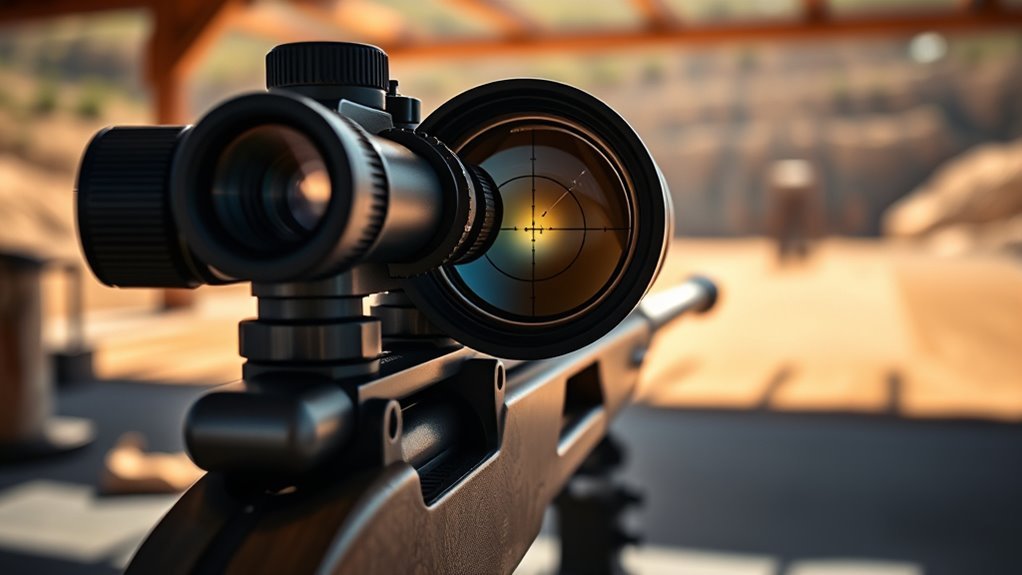
Scope parallax can make a rifle scope’s reticle appear to shift left or right even when the rifle stays still. The effect happens when your eye moves behind the optic and the target image is not aligned with the reticle’s focal plane. Understanding this difference helps explain why a stable-looking sight picture can still contain an aiming error.
Quick Answer
Scope parallax causes apparent left-right movement when the target image and reticle are not on the same optical plane. An off-center eye position reveals this mismatch. The effect can occur at different distances and becomes easier to notice at higher magnification. Reticle focus and parallax adjustment serve different purposes, so both must be understood.
What Scope Parallax Does at Distance
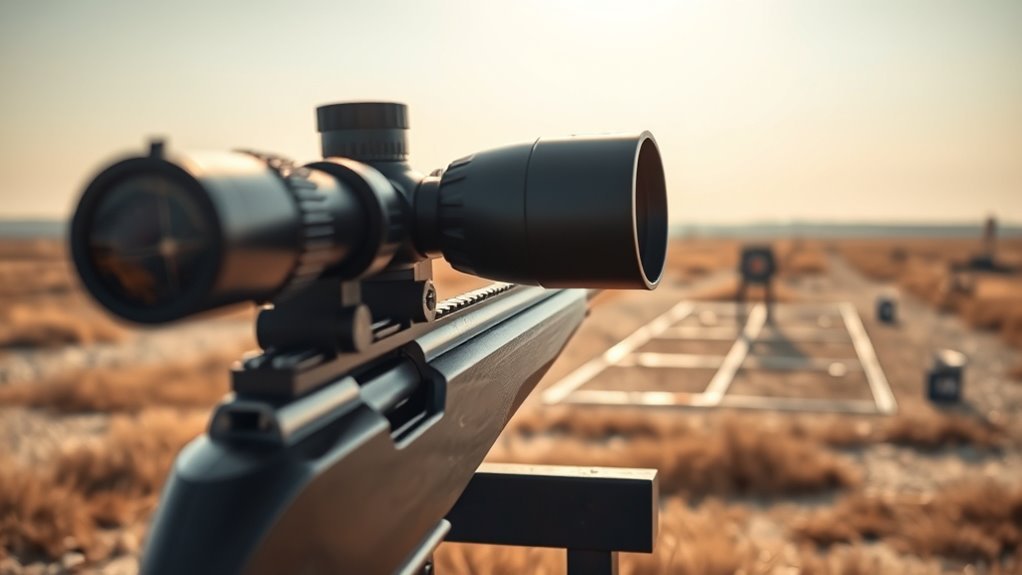
Scope parallax is the apparent movement of the reticle against the target when your viewing position changes. It occurs because the target image and reticle are not in the same optical plane.
Think of looking at a nearby object against a distant background. When you move your head, the two objects appear to change position relative to each other. A similar effect occurs inside a scope when the optical planes do not match.
The ZEISS explanation of parallax compensation describes how an off-center viewing angle reveals this separation between the reticle and target image.
If you look directly through the center of the scope, the mismatch may not be obvious. Moving your eye sideways can reveal it through apparent reticle drift.
Higher magnification makes small alignment differences easier to notice. However, parallax is not limited to long distances or a particular magnification setting.
The relevant factor is the difference between the target distance and the scope’s current parallax setting.
Why Parallax Pushes Shots Left or Right
Parallax can create horizontal aiming error because the reticle appears to move relative to the target as eye position changes. The direction of the apparent movement depends on the optical setup and viewing position.
It does not automatically push every shot left or right. The error becomes relevant when the shooter uses a sight picture affected by this apparent movement.
Eye Shift Effects
Your eye position determines how an existing parallax mismatch appears through the scope.
When your eye moves away from the optical axis, the reticle may appear to slide across the target even though neither the rifle nor the target has moved.
Several observations help explain the effect:
- A sideways eye shift can reveal horizontal reticle movement.
- Vertical eye movement can reveal movement in the other direction.
- Higher magnification makes small apparent shifts easier to detect.
- A centered eye position may conceal an existing optical mismatch.
This is why a seemingly steady reticle does not automatically prove that the scope is free of parallax.
Left-Right Impact at Distance
Horizontal parallax error results from using an apparently displaced aiming reference. If the apparent reticle position changes, the relationship between the intended aiming point and the sight picture changes too.
The potential effect depends on target distance, optical design, parallax setting, and eye position.
There is no universal distance beyond which parallax suddenly becomes significant. A close target can also reveal the problem when the scope is set for a different distance.
Likewise, magnification does not create parallax by itself. It makes an existing mismatch more noticeable.
For this reason, an unexplained horizontal point-of-impact shift should not automatically be blamed on parallax. Mounting, zero, and other parts of the shooting system can produce different errors.
Focus the Reticle First
Reticle focus and parallax adjustment are separate optical controls. The eyepiece makes the reticle clear to your eye, while the parallax control changes the target image’s focal position.
Confusing these adjustments can leave the sight picture looking unclear even when the scope is otherwise functioning normally.
Reticle Focus First
The ocular focus ring, also called the diopter adjustment, controls how clearly your eye sees the reticle.
According to Leupold’s riflescope support guidance, reticle focus should be established against a plain, light-colored background.
For a safe optical check, the firearm must be unloaded and pointed in a safe direction.
- Identify the eyepiece or diopter adjustment on the scope.
- View the reticle against a suitable plain background.
- Adjust the eyepiece until the reticle appears clear.
- Look away periodically to let your eye relax between observations.
Once the reticle is clear, its focus generally remains unchanged unless another person uses the optic or your visual needs change.
The reticle should appear crisp without requiring your eye to strain or continuously refocus.
Clear Reticle, Accurate Parallax
A clear reticle makes optical alignment easier to assess, but it does not eliminate parallax on its own.
The distinction is simple:
- Ocular focus: Adjusts the reticle’s appearance for your eyesight.
- Parallax adjustment: Brings the target image into the reticle’s optical plane.
- Magnification: Changes apparent image size without replacing either focus control.
Even when the reticle looks perfectly sharp, it may still appear to move against the target as your viewing position changes.
Similarly, a clear target image does not prove that parallax has been eliminated.
These observations explain why the eyepiece and parallax control should not be treated as interchangeable adjustments.
How to Test for Parallax Error
Parallax can be identified by observing whether the reticle appears to move relative to a stationary target while the viewing position changes. This distinguishes optical movement from actual target or rifle movement.
The basic observation is whether the reticle and target image remain aligned despite a change in viewpoint.
Warning: Before inspecting or adjusting a mounted optic, unload the firearm and verify its condition. Keep the muzzle pointed in a safe direction and your finger outside the trigger guard. Follow the NSSF firearm safety rules throughout the process.
A useful parallax observation separates three different conditions:
- The reticle appears to move while the target and optic remain stationary.
- The entire sight picture moves because the optic itself changes position.
- The reticle looks blurred but does not show relative movement against the target.
Only the first condition directly indicates the optical effect described here.
If the complete view moves together, the movement may come from the viewing setup rather than parallax.
If only the reticle looks blurry, ocular focus may be the more relevant issue.
Adjust Parallax for Your Distance
A parallax adjustment changes the optical relationship between the target image and reticle. Its purpose is to reduce their apparent movement relative to each other at a particular distance.
Scopes that offer this feature generally use either a side-focus control or an adjustable objective.
Not every rifle scope includes an adjustable parallax mechanism. Some have a fixed factory setting.
The following comparison explains the different controls:
| Control | Purpose | Key distinction |
|---|---|---|
| Side focus | Changes the target image’s focal position. | Usually located on the side of the scope. |
| Adjustable objective | Provides parallax adjustment through the objective assembly. | Uses a control near the front of the optic. |
| Fixed parallax | Uses a factory-selected reference distance. | Does not provide a separate user-adjustable parallax control. |
Distance markings on an adjustable control are references rather than guarantees of exact optical alignment.
The Burris explanation of parallax specifically identifies those markings as approximate.
Different models also have different adjustment ranges. A fixed-parallax scope may be optimized for one distance yet remain usable at other distances.
Before assuming a scope has an adjustment fault, identify the model and the controls it actually provides.
Test Again With Head Movement
A parallax observation should produce a clear result: the reticle either shows relative movement against the stationary target or it does not.
A stable relationship between the two images indicates that the parallax mismatch is minimized for the observed setup.
However, a stable reticle does not establish that every other part of the optical or mechanical system is correct.
For example, a scope can show little apparent parallax while still having a separate mounting or zero problem.
The distinction matters because repeatedly changing an optical setting cannot repair loose hardware, an improperly positioned scope, or a mechanical fault.
Bushnell’s parallax guidance also distinguishes reticle movement from the actual movement of the rifle.
If unexplained movement continues after the optical condition has been identified, the remaining issue should be assessed separately rather than automatically attributed to parallax.
Mounting Mistakes That Increase Parallax Error
Mounting problems can make optical errors harder to recognize, but mounting height and alignment do not directly create the focal-plane mismatch responsible for parallax.
A scope’s optical parallax and its mechanical mounting condition are different issues.
Several mounting problems may produce similar symptoms or interfere with a consistent sight picture:
- Incorrect eye relief: An unsuitable distance between the eye and eyepiece can produce a restricted or shadowed view.
- Off-center eye position: An uncomfortable mounting arrangement may make a consistent viewing position difficult.
- Reticle cant: A tilted reticle creates a separate alignment problem rather than changing the target’s optical focal plane.
- Loose or mismatched mounts: Hardware movement can change the position of the entire optic.
- Improper mounting height: An unsuitable height can affect the shooter’s viewing position, but height alone does not determine parallax correction.
These distinctions are useful when an apparent left-right problem remains after the optical condition has been identified.
A loose mounting system may cause unpredictable movement that looks like an aiming problem. Reticle cant can also affect alignment without being a parallax effect.
Note: If mounting hardware is loose, damaged, or incorrectly fitted, have a qualified gunsmith assess it. Follow the scope and mount manufacturers’ specifications rather than guessing at mechanical adjustments.
Frequently Asked Questions
Does Parallax Change With Distance?
Yes. Parallax changes with target distance because the target image’s focal position changes relative to the reticle. A fixed-parallax scope is optimized for a particular distance, while an adjustable model can change that relationship. The effect is not limited to long range; it depends on the optical mismatch and viewing position.
What Causes Parallax Errors in Rifle Scopes?
Parallax errors occur when the target image and reticle occupy different optical planes and the viewer’s eye moves away from the optical axis. This creates apparent movement between the two images. Target distance, the scope’s parallax setting, and eye position affect the result. A blurred reticle or loose mount is a separate issue.
What Is the Main Cause of Parallax Error?
The main cause is a mismatch between the target image plane and reticle plane. An off-center eye position reveals this mismatch as apparent reticle movement. Eye position alone is not the underlying optical defect. When both images share the same plane, changes in viewing position should produce little or no relative movement.
How Much Does Parallax Affect Accuracy?
Parallax can affect accuracy by changing the apparent aiming reference, but there is no universal error value. The effect depends on the scope, target distance, optical mismatch, and eye position. Higher magnification makes the movement easier to notice. A consistent point-of-impact problem may also have causes unrelated to parallax.
Conclusion
Scope parallax is an optical alignment issue that becomes visible when the reticle appears to move against the target as eye position changes. It can create left-right aiming error, but it should not be confused with reticle blur, incorrect eye relief, or mechanical mounting problems.
Understanding these differences makes it easier to identify the actual source of an unstable sight picture and avoid treating every horizontal shift as a parallax problem.
Sources
- ZEISS — Parallax Compensation: Explains the optical cause of parallax and the relationship between the target image and reticle.
- Burris — Understanding Parallax: Covers apparent reticle movement, distance effects, and approximate adjustment markings.
- Leupold — Riflescope Support: Covers ocular focus, parallax controls, eye relief, and mounting-related troubleshooting.
- Bushnell — Adjusting Parallax: Explains the optical relationship between reticle movement and viewing position.
- National Shooting Sports Foundation — Firearm Safety Rules: Supports safe firearm handling during optical inspection and adjustment.
