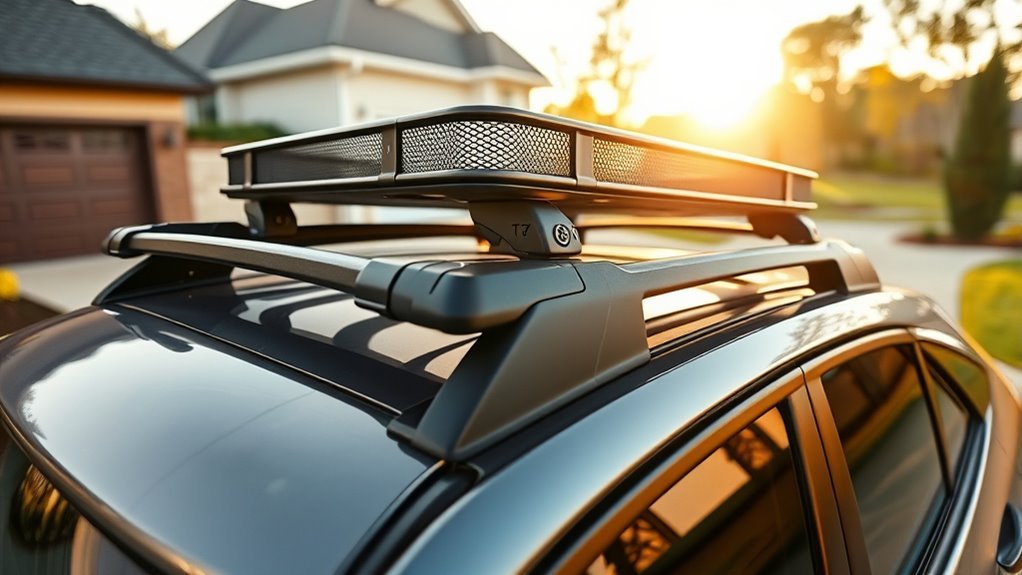
RAV4 fixed-point roof cross bars can support a cargo basket, but the mounting system must match your vehicle’s roof rails. Toyota’s standard cross bars, Adventure-style cross bars, and aftermarket Atlas bars use different hardware. Before installing a basket, confirm the correct fit, mounting dimensions, and weight limits for the complete system.
Quick Answer
Choose RAV4 cross bars designed for your factory roof rails, then attach the basket using its approved mounting hardware. Toyota OEM cross bars are commonly specified for 100 lb (45 kg) of evenly distributed cargo. Atlas bars advertise 167 lb, but the vehicle’s roof limit and any lower accessory rating still apply.
Key Takeaways
- Toyota part PT278-42191 is designed for Adventure-style roof rails, while PT278-42192 serves standard compatible roof rails.
- Atlas cross bars are a separate aftermarket system with their own mounting towers and hardware.
- Measure the basket’s required crossbar spacing before purchasing or installing it.
- Calculate the complete roof load, including the bars, mounting hardware, basket, accessories, and cargo.
- Use the supplied fasteners and the correct torque specification for your exact installation.
- Secure cargo independently of the basket’s mounting clamps and inspect the complete system before driving.
Confirm Your RAV4 Fit Before You Buy
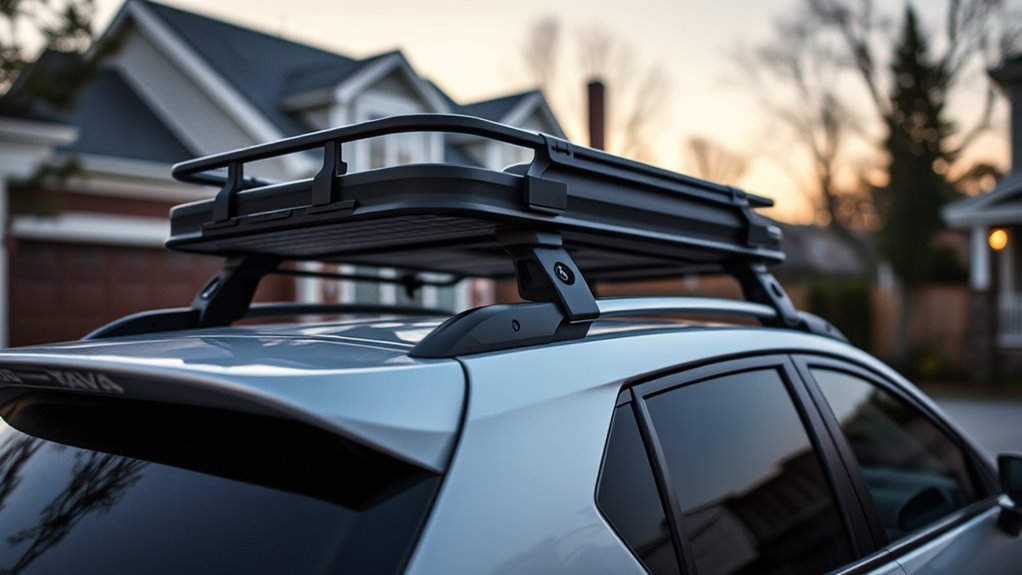
Before buying fixed-point roof cross bars for a 2020–2025 RAV4, identify the exact roof rail design. The model year alone does not establish compatibility.
The fifth-generation RAV4 also includes 2019 models, but roof equipment differs across trims and factory configurations. Some vehicles have raised bridge-style rails, others have lower-profile rails, and some require additional roof hardware.
Raised rails have visible space beneath them. Lower-profile rails sit closer to the roof. Both may have factory mounting locations, but they do not necessarily accept the same mounting feet.
Which Toyota Crossbar Part Number Fits?
Toyota offers separate genuine crossbar assemblies for different RAV4 roof configurations.
- PT278-42191: Toyota’s Adventure-model roof cross bars. These are designed for the Adventure-style roof rail system and are not listed for RAV4 Hybrid models.
- PT278-42192: Toyota’s standard cargo cross bars with keys. These mount to compatible factory roof rail points and use their own supplied mounting screws.
Trail and TRD Off-Road configurations may use the Adventure-style arrangement. LE, XLE, Limited, and other trims may use the standard system, depending on their original equipment.
Confirm the part number against the vehicle identification number (VIN) before ordering. This is especially useful when factory rails have been replaced or aftermarket equipment is already installed.
Are Atlas Cross Bars the Same as Toyota OEM Bars?
No. Atlas cross bars are a separate aftermarket rack system. Their mounting towers are not interchangeable with Toyota’s original crossbar mounting hardware.
The Atlas crossbar system for the 2019–2025 RAV4 is sold with a pair of bars, four mounting towers, two keys, and installation hardware.
Its integrated tie-down points and T-slots allow compatible accessories to be attached. However, T-slot accessories must match the bar’s dimensions and the attachment manufacturer’s requirements.
Availability can also vary by part number. If one assembly is unavailable, choose another complete system confirmed for your vehicle rather than combining unrelated mounting components.
Check Basket Compatibility Before Installation
A basket needs more than a suitable overall roof width. Its mounting clamps must fit the crossbar shape, and its required bar spacing must match the installed rack.
Before purchasing, confirm:
- The basket’s minimum and maximum crossbar spacing.
- The crossbar width and thickness accepted by its mounting clamps.
- Whether the basket uses wraparound clamps, U-bolts, or compatible T-slot fittings.
- Clearance above the roof, antenna, and any moonroof or panoramic roof.
- Whether the rear hatch can open without touching the loaded basket.
As one example, published cargo basket mounting specifications list a crossbar spread of 24–32 inches and a basket weight of 25 lb. Those figures apply to that particular basket, not every roof basket.
Measure your actual bar spacing and use the requirements supplied with your selected basket.
How To Install The Cross Bars On A RAV4
Install the cross bars using the instructions supplied with the exact Toyota or Atlas kit. The general process involves preparing the mounting points, fastening the bars, checking alignment, and securing the basket.
Do not assume the mounting bolts, torque settings, or bar positions are identical across different systems.
Warning: Do not drill new roof holes, substitute longer bolts, or combine Toyota and Atlas mounting components unless the manufacturer specifically approves the modification. Incorrect installation can damage the roof or allow the rack to detach while driving.
Step-by-Step Crossbar Installation
- Identify your mounting system. Confirm the vehicle’s roof type, crossbar part number, and supplied installation instructions.
- Prepare the roof. Clean the factory mounting areas and inspect the rails for damage, loose fittings, or missing covers.
- Check the hardware. Lay out the bars, mounting feet, fasteners, keys, and protective components. Replace missing or damaged parts with the correct approved components.
- Install the mounting feet. Fit Toyota’s supplied mounts to their designated roof rail points. For Atlas, use its four mounting towers and the hardware supplied with that system.
- Position the cross bars. Follow the specified front and rear locations. Check that both sides are aligned and that the installed spacing works with your basket.
- Tighten the fasteners. Use the installation instructions and the required torque tool or torque wrench. Tighten the hardware evenly without exceeding the specified setting.
- Secure the covers and locks. Confirm that all mounting feet are seated and that any locking covers close correctly.
- Check the finished assembly. Apply firm hand pressure to verify that neither bar nor mounting foot shifts.
Attach the Atlas mounting towers to the designated factory roof rail points using the supplied hardware and the manufacturer’s installation instructions.
Do not reposition fixed-point cross bars simply to create equal front-to-rear spacing. Their mounting locations are determined by the vehicle and rack design.
If the basket needs a different spread, choose compatible basket hardware or another approved rack configuration.
How to Attach the Basket to the Cross Bars
After the bars are secure, place the empty basket on them and align its mounting brackets. The basket should be centered across the vehicle unless its manufacturer specifies another position.
- Place the basket on both cross bars.
- Align the basket’s mounting brackets with the approved attachment locations.
- Fit the supplied clamps, U-bolts, or compatible T-slot hardware.
- Tighten each attachment according to the basket instructions.
- Check that the basket does not touch the roof, antenna, or other vehicle components.
- Open the rear hatch carefully to confirm clearance.
- Perform a final movement check before adding cargo.
Do not use the cargo tie-down straps as a substitute for the basket’s structural mounting hardware.
If the basket moves independently of the bars, correct the mounting problem before driving.
How To Load A Roof Basket Safely
Load a RAV4 roof basket with heavier items low and near the middle, while keeping the weight balanced between the front and rear mounting points.
The permitted cargo weight depends on the lowest capacity in the entire roof system, not the basket’s advertised rating alone.
Calculate the Available Cargo Weight
Start with the applicable roof system limit. Then subtract the weight of everything permanently or temporarily mounted on the roof.
Available cargo weight = permitted total roof load − cross bars − mounting hardware − basket − other accessories.
Use actual component weights rather than estimates whenever possible.
For Toyota OEM cross bars advertised with a 100 lb (45 kg) carrying capacity, the installed basket and its contents must remain within the applicable accessory limit. A separate basket rating does not increase that capacity.
Similarly, a rack advertised for 167 lb does not automatically permit 167 lb of basket cargo. Vehicle and mounting-system limits still apply.
Distribute and Secure the Load
Place dense items near the basket’s center and avoid stacking heavy objects high above its sides. This limits the rise in the vehicle’s center of gravity.
Use the basket’s approved tie-down points and suitable cargo straps. Restrain each item so it cannot slide forward, sideways, or upward during braking and cornering.
Follow this loading sequence:
- Place heavier items low and close to the middle.
- Spread the remaining weight evenly across the basket.
- Pack loose items inside suitable containers or bags.
- Secure the load using the approved tie-down points.
- Remove strap slack and secure loose strap ends.
- Confirm that nothing projects into the hatch opening or driver’s field of view.
Do not rely on a cargo net alone to restrain heavy or rigid objects.
Warning: Roof cargo raises the vehicle’s center of gravity. Avoid sudden steering, hard braking, and abrupt acceleration. Stop periodically during long trips, rough-road travel, or highway driving to confirm that the load remains secure.
What The 75Kg Load Limit Means
The original 75 kg figure is approximately the advertised carrying rating of the Atlas crossbar system. It must not be treated as a universal RAV4 roof limit or applied automatically to Toyota OEM cross bars.
Ironman advertises its Atlas bars for up to 167 lb, approximately 76 kg, while emphasizing that the combined roof load must remain within the vehicle’s permitted limit.
Understand the Different Weight Ratings
Three separate ratings can affect how much a roof basket may carry.
| Component | Published Rating | What It Means |
|---|---|---|
| Toyota OEM cross bars | 100 lb (45 kg) | Maximum evenly distributed load across the specified pair of bars. |
| Atlas cross bars | 167 lb (approximately 76 kg) | Advertised rack rating, subject to the vehicle and mounting-system limits. |
| 2025 RAV4 vehicle | 176.4 lb (80 kg) | Owner’s manual roof-carrier cargo limit; it does not override a lower accessory rating. |
| Roof basket | Model-specific | The basket’s own carrying limit may further restrict the permitted load. |
The 2025 vehicle figure comes from Toyota’s roof luggage carrier guidance in its RAV4 owner’s manual. The correct limit for another model year or configuration must come from that vehicle’s documentation.
The 100 lb accessory figure is also listed in the Toyota crossbar product specifications for the relevant OEM crossbar assemblies.
Always follow the lowest applicable rating. Never add the individual bar capacities together or assume that a stronger aftermarket rack increases the vehicle’s structural roof capacity.
What About the 400 Kg Static Rating?
A 400 kg static capacity has been stated for some roof rack configurations, but that figure has not been verified as an approved rating for this specific RAV4 vehicle-and-mounting-system combination.
Static capacity describes a load supported while stationary. Dynamic capacity describes the permitted load while the vehicle is moving.
The two ratings are not interchangeable.
A stationary rating also does not automatically approve a rooftop tent, occupants, or another concentrated load. The vehicle roof, rail attachments, cross bars, and tent mounting system must all be approved for that use.
For ordinary roof basket travel, calculate the load using the applicable moving-vehicle limit and the lowest accessory rating.
How To Reduce Wind Noise And Secure Gear
Wind noise from RAV4 cross bars usually comes from airflow around the bars, exposed channels, loose components, or the basket itself. Start by checking installation and cargo security rather than immediately adding accessories.
A properly installed rack can still create some wind noise, especially with a basket or bulky cargo attached.
Check These Common Noise Sources
Inspect the mounting feet, crossbar seals, basket clamps, and loose cargo straps.
Atlas bars include integrated tie-down points and T-slots. These provide flexible accessory mounting, but exposed channels can affect airflow.
Where the manufacturer supplies rubber channel strips or sealing inserts, install them in the correct locations. Do not cover mounting points needed for approved accessories.
If a fitting is loose, tighten it to its specified torque. Replace damaged or worn mounting hardware rather than compensating by overtightening it.
Pay particular attention to the M6 hardware where specified by the Atlas installation kit. The correct replacement must match the original hardware specification.
| Check | Purpose | Result |
|---|---|---|
| Bolts | Confirm specified torque | Prevents unwanted movement |
| Seals | Cover intended channels | May reduce whistling |
| Tie-downs | Restrain cargo | Limits shifting |
| T-slots | Position compatible accessories | Secure accessory mounting |
| Cross bars | Support the basket | Stable load distribution |
What If the Rack Still Makes Noise?
Remove the cargo and drive with the empty basket, provided the basket itself is secure. If the sound remains, remove the basket and check the bars separately.
This helps identify whether the noise comes from the basket, crossbar channels, or mounting hardware.
Do not continue driving if you notice movement, repeated clunking, damaged fasteners, or a basket that cannot be secured properly.
If the installation remains uncertain, have a qualified rack installer inspect the system.
Frequently Asked Questions
Do You Need Crossbars for a Roof Basket?
Yes, most conventional roof baskets need compatible cross bars to support their mounting brackets and distribute the load. A basket designed for a different mounting system may require its own approved adapter or platform. Factory side rails alone do not guarantee basket compatibility.
What Is the Best Roof Rack for a Toyota RAV4?
The appropriate rack depends on your RAV4’s roof configuration, the basket’s mounting dimensions, and the intended load. Toyota OEM bars provide a vehicle-specific option, while Atlas bars offer integrated tie-down points and T-slots. Compare the complete system’s compatibility and weight ratings before choosing.
How Much Weight Can the Cross Bars on a RAV4 Hold?
Toyota OEM cross bars discussed here are commonly rated for 100 lb (45 kg), evenly distributed across both bars. Atlas advertises a 167 lb rating, but the vehicle’s roof limit and other accessory limits still apply. Include the basket and mounting equipment when calculating available cargo capacity.
What Year of RAV4 Should You Avoid for Fixed-Point Cross Bars?
No specific 2019 or 2020 RAV4 model year needs to be avoided solely because of fixed-point crossbar compatibility. Both Toyota and aftermarket systems cover vehicles from those years. The deciding factors are the factory roof configuration, correct mounting hardware, and confirmed vehicle-specific fitment.
Can You Use Atlas Mounting Towers With Toyota OEM Cross Bars?
Do not combine Atlas mounting towers with Toyota OEM cross bars unless the manufacturers specifically approve that combination. Each system has its own attachment design and supplied hardware. Use the complete approved assembly to maintain proper fit and load support.
Does a 400 Kg Static Rating Mean You Can Install a Rooftop Tent?
No. A claimed static rating alone does not establish rooftop tent compatibility. The vehicle roof, mounting points, cross bars, tent attachments, and combined stationary load must all meet the relevant manufacturer requirements. Do not use an unverified static figure as permission to exceed the moving-vehicle roof load limit.
Conclusion
Adapting RAV4 fixed-point roof cross bars for a basket starts with the correct roof rail fitment and approved mounting hardware. Keep Toyota OEM and Atlas specifications separate, calculate the full installed load, and follow the lowest applicable capacity.
Before your first trip, confirm basket clearance, secure every mounting point, and check that the cargo cannot shift. A correctly matched and installed system provides useful extra storage without compromising the vehicle’s specified roof load limits.
Sources
- Toyota Genuine Parts — Adventure Roof Cross Bars: PT278-42191 compatibility and accessory information.
- Toyota Genuine Parts — Standard Cargo Cross Bars: PT278-42192 specifications and mounting information.
- Ironman 4×4 — Atlas RAV4 Cross Bars: Vehicle fitment, supplied mounting hardware, T-slots, and advertised carrying capacity.
- Toyota — 2025 RAV4 Owner’s Manual: Roof luggage carrier precautions and vehicle load restrictions.
- Toyota Crossbar Product Specifications: OEM crossbar configurations and the 100 lb evenly distributed load specification.
- Cargo Basket Mounting Specifications: Example crossbar spacing requirements and basket weight.
