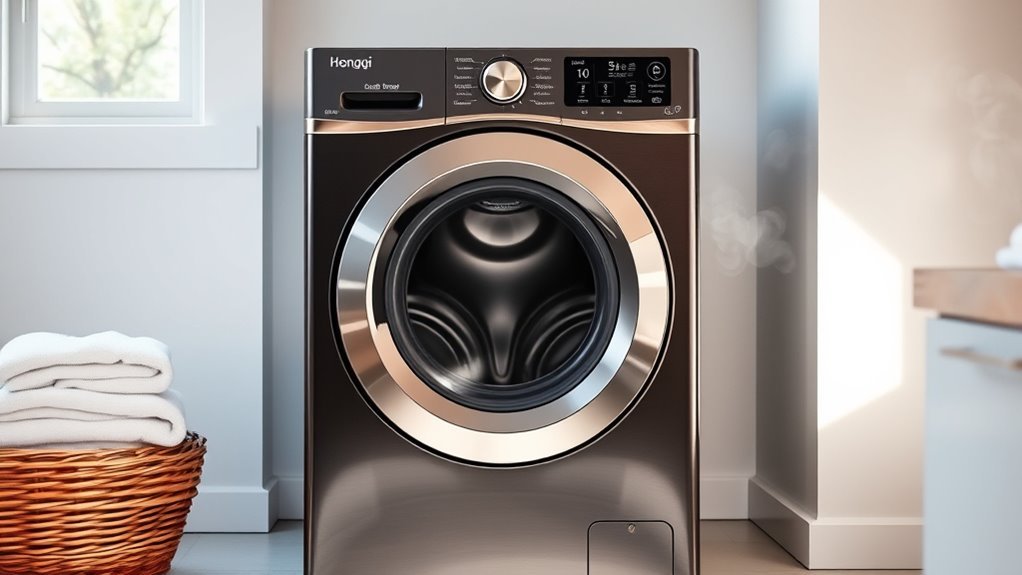
Hongqi steam function washing machines use heated vapor to boost detergent action, loosen stains, reduce wrinkles, and improve hygiene. Setup requires a level surface, secure water hoses, a grounded outlet, and detergent rated for steam cycles. Cotton and linen tolerate higher steam, while delicate fabrics need low heat or no steam. Regular descaling, proper fabric selection, and selective steam use help control water and energy use, while weak output can signal heater or generator issues.
Key Takeaways
- Hongqi steam washing uses heated vapor to improve detergent action, remove stains, and reduce germs and wrinkles.
- Use steam cycles for cotton and linen; keep delicate fabrics like silk and chiffon at low temperatures.
- Avoid steam on leather, faux leather, and other heat-sensitive materials to prevent damage.
- Steam cycles may add about 18 gallons of water and raise energy use significantly, so use them selectively.
- Set up the washer on a level surface, connect hoses securely, and keep the steam system descaled and maintained.
What the Hongqi Steam Function Does
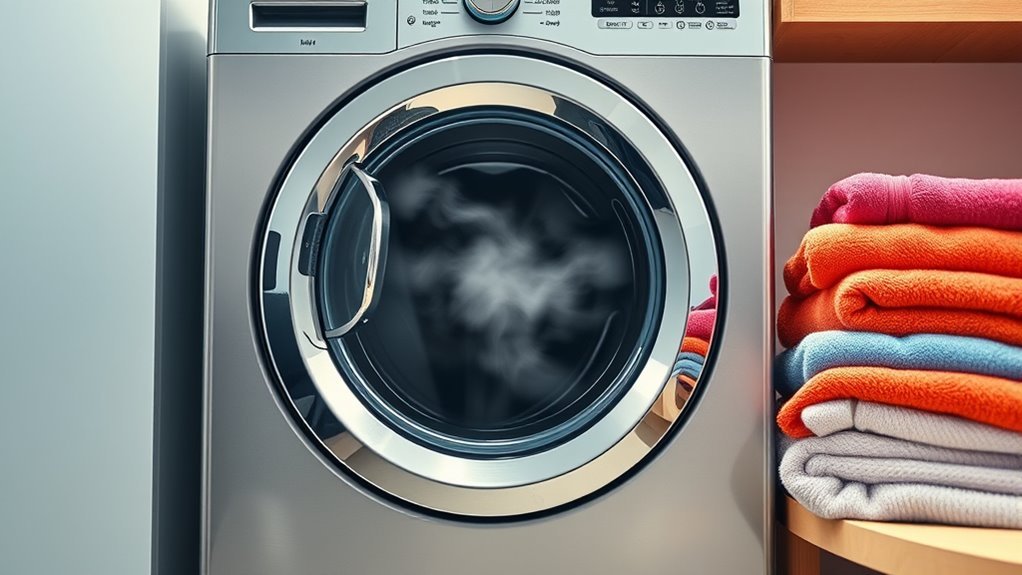
The Hongqi steam function heats water into steam and injects it during wash cycles to improve detergent action and cleaning performance. This steam function increases cleaning ability by driving heat and moisture into fabric fibers, where ordinary agitation can leave residue and stains behind.
It also supports hygienic washing by reducing germs and common allergens, which can matter in homes seeking relief from irritation and sensory burden. Garments may exit with fewer wrinkles, lowering dependence on ironing and simplifying post-wash handling.
The feature is intended for a wide fabric range, including cotton and many delicate textiles, with controlled treatment rather than harsh mechanical stress. Energy efficiency is less direct, since steam use can raise water and power demand, yet the tradeoff may be justified when cleanliness, comfort, and reduced labor are priorities.
How the Hongqi Steam Washer Works
The Hongqi Steam Washer operates through a steam cycle in which an internal heater generates high-temperature vapor and injects it into the drum during selected wash stages.
This steam penetrates fabric fibers to loosen soil and stains, while also improving detergent dispersion for more effective cleaning.
In wash and sanitize modes, the same process supports wrinkle reduction, residue control, and a more hygienic drum environment.
Steam Cycle Process
Inside the Hongqi steam washer, an internal heater generates steam that is injected into the wash tub during selected cycles.
In the steam cycle, the machine generates steam at controlled temperatures, releasing it as a fine mist to support detergent action and improve removal of heavy soil and allergens. This process promotes a hygienic wash environment by sanitizing garments and reducing germs and bacteria.
It also helps limit wrinkles, which lessens ironing time and frees users from extra labor. Because heat and moisture are regulated, the cycle remains suitable for delicate fabrics while still delivering deep cleaning.
The result is a practical, efficient routine that combines sanitation, fabric care, and time savings without unnecessary complexity.
Fabric Penetration Method
By injecting high-temperature steam directly into the wash cycle, the Hongqi steam washer drives moisture deep into fabric fibers to loosen embedded dirt and stains.
This fabric penetration method supports steam washing by distributing heat evenly through the load, not merely across the surface. Internally generated steam is released during the cycle, helping detergents activate more efficiently and forming a finer mist that reaches stubborn residues.
The result is a practical reduction in water consumption while maintaining strong cleaning performance. For users seeking greater autonomy from heavy-handed washing routines, the system offers a controlled, efficient path to deep cleaning.
Its steam-assisted action also improves wash consistency across mixed textiles, making the process more precise and less dependent on excess water or aggressive mechanical intervention.
Wash And Sanitize Modes
Wash and sanitize modes in the Hongqi Steam Washer use high-temperature steam to penetrate fabric fibers during the cycle, improving detergent activation and lifting embedded dirt more effectively than conventional washing alone.
These wash and sanitize modes inject steam while the drum rotates, helping loosen stubborn stains and reduce water demand. The steam function also supports a hygienic drum environment by limiting odor and residue buildup.
For households seeking clean clothes without chemical overload, the process can sanitize garments while remaining practical for sensitive skin, infants, and allergy-prone users.
Heavily soiled items benefit from deeper treatment, yet the machine preserves a disciplined wash profile. The result is cleaner fabric, fewer contaminants, and greater freedom from harsh additives.
Hongqi Steam Washer Specs to Check
The Hongqi steam washer should be evaluated for steam cycle details, including heater output, cycle duration, and any fabric-specific steam modes.
Its water and energy use ratings should be checked against expected operating cost, since steam functions can raise consumption.
Fabric compatibility limits and temperature settings also need review to confirm safe use on delicate textiles and specialized loads.
Steam Cycle Details
A dedicated steam cycle distinguishes the Hongqi steam washer by introducing steam during the wash phase to improve detergent activation and overall cleaning performance. This steam cycle works at controlled temperatures, so it can penetrate fibers without stressing delicate fabrics, supporting practical care with less constraint.
- It lifts soil efficiently while preserving material integrity.
- It helps sanitize laundry, a useful option for households managing allergies or infant clothing.
- It helps reduce wrinkles by relaxing fibers before the cycle ends.
The design also supports energy efficiency through lower water use paired with steam, giving a cleaner result without excess input. For users seeking autonomy in fabric care, the cycle offers a measured balance of hygiene, protection, and streamlined washing.
Water And Energy Use
Water and energy use in the Hongqi steam washer merits close review because the steam function can alter operating costs in measurable ways.
The machine is engineered to conserve water and energy in standard operation, yet the steam feature adds roughly 18 gallons per cycle when engaged. Energy use can also climb sharply, with some models approaching a 600% increase during steam cycles.
That increase is offset partly by low-temperature operation near 30°C, which reduces electrical demand relative to hotter wash methods while preserving cleaning performance.
For users seeking practical autonomy over utility bills, the tradeoff is clear: activate steam only when sanitation or stain removal justifies the higher water and energy burden. This balance supports informed, self-directed use.
Fabric And Cycle Limits
Fabric compatibility is a key constraint in the Hongqi steam washer’s operating envelope. The steam option is well suited to cotton and blends, which keep color stability under controlled heat.
For synthetic items and delicate fabrics, the cycle should stay near 40°C to sanitize without distortion. Wool and silk demand stricter limits: use the steam function only when the temperature does not exceed 30°C.
- Wash everyday textiles first.
- Reserve moderate cycles for synthetics.
- Exclude leather, faux leather, feathers, pearls, and sequins.
These limits reduce risk while preserving fabric integrity. Precise cycle selection supports practical care and protects garments that benefit from gentle steaming, without compromising material structure or finish.
How to Set Up Your Hongqi Steam Washer
Proper setup begins with placing the Hongqi steam washer on a level, stable surface, positioned away from direct sunlight and heat sources to support reliable operation. This washing machine setup should preserve airflow and reduce vibration during steam use. Next, connect the water supply hoses securely to the inlet valves, then inspect all joints for leaks before power is applied. Plug the unit into a grounded electrical outlet that matches the manufacturer’s rating, because safe steam operation depends on proper electrical grounding. Add the recommended detergent type and dose to the compartment, ensuring compatibility with steam cycles for efficient cleaning. The user manual should be consulted for steam settings and feature details.
| Step | Action | Check |
|---|---|---|
| 1 | Level placement | Stable |
| 2 | Hose connection | No leaks |
| 3 | Power connection | Grounded |
| 4 | Detergent load | Correct amount |
| 5 | Manual review | Settings confirmed |
Best Steam Cycles for Each Fabric
Cotton and linen garments benefit from steam cycles near 60°C, which support sanitation, allergen reduction, and wrinkle removal without significant color loss.
Delicate fabrics such as silk or chiffon require steam settings at or below 30°C to refresh the material gently and preserve fiber integrity.
Matching steam temperature to fabric type is essential for effective cleaning and to prevent heat-related damage.
Cotton And Linen Cycles
Among the most useful steam settings on a Hongqi steam washing machine are the cotton and linen cycles, each calibrated for distinct fabric demands.
The cotton cycle uses high heat, near 90°C, to strip stubborn soil, activate detergent, and sanitize everyday garments with force.
Linen responds better to moderate steam settings, about 60°C, preserving structure while reducing wrinkles and improving wash efficiency.
These dedicated programs support fabric care by relaxing fibers without needless stress, giving users cleaner results and more autonomy over routine laundry.
- Cotton: maximum stain removal.
- Linen: balanced heat and wrinkle control.
- Both: steam improves detergent penetration, allergen removal, and overall cleaning depth.
For best performance, select the matching cycle rather than improvising settings.
Delicate Fabric Steam Settings
For delicate fabrics such as silk and chiffon, the steam cycle should be limited to a maximum of 30°C to refresh fibers without distortion or surface damage.
On this steam setting, the machine releases controlled moisture and heat, preserving drape and sheen while reducing wrinkles. Careful temperature control is essential for delicate fabrics, because excess heat can weaken yarns and alter texture.
For synthetic garments, a 40°C cycle offers effective sanitization with minimal thermal stress.
Cotton and blended items may use about 60°C for deeper cleaning.
Leather, faux leather, sequins, and beads should never enter steam modes.
Regular descaling with a professional limescale remover supports stable output, keeping the washer ready for precise, liberated care.
Which Fabrics Should Skip Steam?
Not all textiles are suitable for steam treatment, and delicate or heat-sensitive materials should be excluded to prevent damage. In the Hongqi steam cycle, certain fabrics require strict avoidance because steam can alter structure, finish, or decoration.
The most vulnerable items include:
Leather, faux leather, chamois, feathers, pearls, sequins, and PVC are especially vulnerable to steam damage.
- Leather and faux leather, which may warp, dry out, or deteriorate under heat.
- Chamois, whose soft surface can lose texture and integrity after steam exposure.
- Feathers, pearls, sequins, and PVC, all of which can deform, detach, clump, or suffer heat damage.
For users seeking practical independence, the rule is simple: if the material depends on coating, padding, or embellishment, steam is a risk, not a benefit.
Inspection of labels and construction remains essential before loading garments. When in doubt, skip steam and preserve the garment’s original form, function, and finish.
Hongqi Steam Washer Tips for Better Results
To achieve the best performance from a Hongqi steam washer, the steam function should be engaged only on cycles designed to use it effectively, since this improves stain removal and allergen reduction without wasting resources.
Before washing, heavily soiled garments should receive a targeted pre-treatment with detergent or stain remover; this prepares fibers for deeper action.
The steam setting on washing works best on cotton and many synthetics, where heat and moisture can lift residue and help remove wrinkles.
Delicate fabrics, trims, and decorative elements should remain excluded to avoid distortion.
For liberated, efficient care, select steam only for loads that genuinely benefit from enhanced cleaning, because unnecessary use raises energy and water consumption.
After repeated operation, the drum and steam pathways should be cleaned according to the maintenance schedule, preventing residue buildup and preserving hygiene.
Used correctly, the system delivers cleaner textiles, less crease retention, and consistent performance.
Do You Need a Steam Washer?
Whether a steam washer is necessary depends on the household’s priorities and laundry demands. For many users, steam washers offer comfort, not necessity. They can help sanitize fabrics and reduce allergens, which benefits households with allergies or sensitive skin.
Yet Consumer Reports found no meaningful cleaning advantage over non-steam models, so the feature is not essential for every load. The added price often exceeds $200, a cost that may not suit budget-conscious buyers seeking practical freedom. Steam cycles can also increase water and energy use, reducing their appeal when efficiency matters.
Consumer Reports found no meaningful cleaning edge, while steam cycles can add cost, water, and energy use.
- Allergies: steam may improve fabric sanitation.
- Stains: pre-treat with laundry detergent first.
- Value: compare cost against actual use.
For tough stains, laundry detergent pre-treatment remains the more reliable method, because steam alone may not lift soil fully.
In short, steam washers are useful in specific cases, but many households can choose simpler machines without losing cleaning performance or daily independence.
How to Cut Water and Energy Use
Cutting water and energy use in a steam washer starts with selective operation, since steam cycles can raise water consumption by up to 18 gallons and energy use by nearly 600% versus standard settings.
To keep steam and water demand controlled, the user should reserve the function for heavily soiled loads and rely on pre-treatment for stains before washing. This reduces the need for extended steam exposure and lowers total energy consumption.
A low-temperature water setting can still deliver effective cleaning while limiting electricity draw. When available, cycles that pair steam with eco features offer a better balance of sanitation and efficiency, reducing waste without sacrificing results.
Regular maintenance also matters; limescale remover helps preserve heater performance and keeps the steam system efficient over time.
Used this way, the machine remains practical, resource-conscious, and suited to households seeking cleaner laundry with less dependence on excess utilities.
Common Hongqi Steam Washer Problems
Even when water and energy use are controlled, Hongqi steam washers can still present operational problems that affect cleaning performance.
A weak steam cycle often traces to an internal heater fault, which reduces steam output, extends wash time, and leaves stains in place. In other cases, the steam temperature may stay too low to lift soil effectively, making results little better than a standard washer.
Misjudged fabric selection is another risk; delicate textiles can be exposed to heat and moisture they cannot tolerate. Regular servicing remains essential.
- Inspect the steam generator and clean it to prevent clogs.
- Match fabric type to the machine’s steam setting before each load.
- Monitor water and energy consumption during steam cycles for abnormal spikes.
A disciplined maintenance routine preserves performance and supports practical, liberated use.
Frequently Asked Questions
When Should I Use the Steam Setting on My Washing Machine?
Steam should be used on heavily soiled loads, bedding, baby clothes, pet items, and delicate synthetics needing gentle fabric care. It improves stain removal, sanitizes, reduces wrinkles, and supports energy efficiency by lowering ironing needs.
How Do I Use the Steam Wash Feature on My Washing Machine?
Select the steam cycle, load only steam-safe fabrics, add detergent, and start. Steam washing benefits include improved soil removal and lower heat use; compare steam cycles versus standard wash. Follow the Steam settings guide exactly.
Do I Use Detergent When Steam Washing?
Detergent should be used; steam cleaning benefits improve surfactant action and fabric care. Strongly stir stains first. Detergent alternatives exist, but machine specifications should guide dosage and compatibility for precise, practical results.
Is the Steam Function on a Washing Machine Worth It?
Usually, no. Steam benefits are modest; Energy efficiency often worsens, and Fabric care gains are mainly wrinkle reduction and sanitization. For liberation-minded users, a standard high-performing washer with detergent pre-treatment typically offers better value.
Conclusion
In conclusion, a Hongqi steam function washing machine can improve cleaning, reduce wrinkles, and support fabric care when used correctly. Its value depends on matching steam cycles, drum capacity, temperature settings, and installation requirements to household needs. Regular maintenance and proper loading help preserve performance and efficiency. For users who want cleaner laundry with less effort, it can be a useful appliance, working like a well-calibrated instrument in a busy home.
