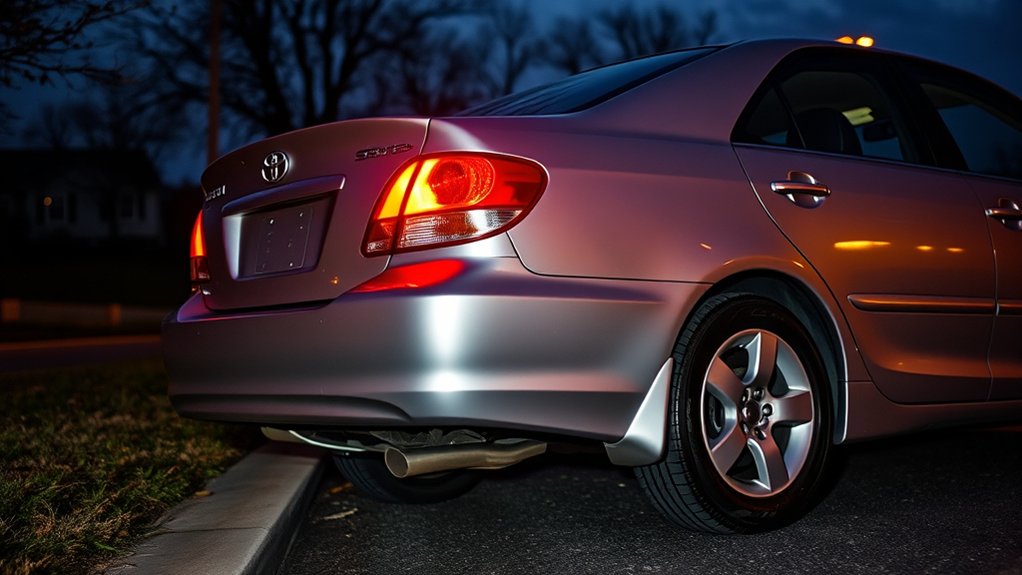
The sudden activation of the brake and tire warning lights in a 2003 Toyota Camry can indicate low brake fluid levels, worn brake pads, or tire pressure issues. It’s crucial to check the brake fluid reservoir and make sure the hand brake isn’t stuck. Additionally, tire pressure should be verified against the recommended levels. If these issues are unresolved, it may signal underlying electrical faults. Discovering effective diagnostic steps can help restore your vehicle’s safety and performance.
Common Causes of Brake Light Activation and How to Fix Them

What factors contribute to the activation of a brake light in a 2003 Toyota Camry? One significant indicator is the brake fluid level, which, when low, can signal potential leaks or worn brake pads. This necessitates immediate inspection and possible refill to guarantee safety. Additionally, engaging the parking brake fully can help rule out any miscommunication between the brake system and the dashboard indicator, providing clarity on whether the light is truly warranted. Worn brake pads may also trigger the warning light, underscoring the importance of regular inspections to make certain they remain within safe limits. Furthermore, faulty ABS sensors can contribute to brake light activation, and employing diagnostic tools can pinpoint these issues for timely resolution. Monitoring other dashboard indicators, such as the alternator warning light, can also reveal electrical problems interconnected with the brake light, further aiding in thorough vehicle maintenance.
How to Check Your Brake Fluid Level
To guarantee ideal braking performance in a 2003 Toyota Camry, it is essential to regularly check the brake fluid level.
The fluid reservoir, typically located near the back of the engine bay, allows for easy visual inspection against the marked “MIN” and “MAX” lines.
Maintaining the fluid level above the “MIN” line not only indicates a healthy braking system but also helps prevent potential issues such as leaks or worn components.
Visual Inspection Techniques
Checking the brake fluid level is an important aspect of vehicle maintenance that can greatly impact safety and performance. To perform this visual inspection, locate the brake fluid reservoir typically found near the back of the engine bay. Verify the engine is warm for an accurate reading against the marked indicator lines. If the fluid level is below the “low” line, topping it up with the recommended type is vital. Additionally, inspect for contamination, such as dark fluid or debris, which may necessitate a fluid change. Regularly check for leaks or damage, as significant drops in fluid level could indicate braking system issues or worn brake pads.
| Step | Action | Notes |
|---|---|---|
| Locate Reservoir | Find near engine bay | Usually marked clearly |
| Check Fluid Level | Inspect against indicator | Verify engine is warm |
| Look for Contamination | Identify dark color/debris | Indicates potential issues |
| Top Up Fluid | Add recommended fluid type | Refer to vehicle manual |
| Inspect for Leaks | Look for signs of damage | Vital for safety |
Fluid Level Importance
The brake fluid level plays a significant role in the overall functionality and safety of a vehicle’s braking system. Regular checks of the brake fluid in the reservoir are essential, making certain it reaches the marked indicator lines when warm.
Low brake fluid levels can indicate underlying issues, such as leaks or worn brake pads, necessitating frequent monitoring. The reservoir typically has clear markings for quick assessments. If the fluid is exceptionally low, it may signal a serious problem, such as a brake fluid leak, requiring immediate inspection.
While topping it slightly above the low line can be a temporary fix, it should not replace the need for regular maintenance and thorough checks to guarantee peak braking performance.
How the Hand Brake Affects Brake Light Activation
When the hand brake is not fully released, it can inadvertently activate the brake light on the dashboard, signaling to the driver that the parking brake remains engaged. This can lead to confusion, as the vehicle may appear ready for operation. Understanding how the hand brake influences brake light activation is vital for safe driving.
When the hand brake isn’t fully released, it can confuse drivers by illuminating the brake light, signaling that the parking brake is engaged.
- Adjustment Issues: A poorly adjusted hand brake may cause the brake warning light to activate due to insufficient engagement or slack in the system.
- Regular Maintenance: Routine checks of the hand brake are important to guarantee it functions properly and does not trigger false alarms.
- Inspection: Verifying the hand brake lever for complete release can identify if it’s the source of unexpected brake light activation.
If the hand brake is functioning correctly yet the light remains illuminated, further investigation into the brake fluid level or ABS system may be necessary.
Why Do Other Dashboard Lights Matter?
Other dashboard lights serve as essential indicators of potential issues that may compound existing problems, particularly those related to braking.
A correlation between multiple warning lights can signal systemic failures that require immediate attention to guarantee driver safety.
Ignoring these signals not only risks escalating mechanical failures but can also lead to considerably higher repair costs.
Importance of Dashboard Indicators
How vital are dashboard indicators in a vehicle’s overall safety and functionality? These lights are essential for alerting drivers to potential issues, particularly concerning the brake system. Ignoring them can lead to serious safety risks.
- Immediate Alerts: Warning lights signal urgent matters like low brake fluid or system malfunctions.
- Preventative Maintenance: Regular monitoring can help identify issues early, preventing costly repairs.
- Informed Decisions: Understanding these indicators empowers drivers to seek professional help when necessary.
Correlation Between Lights
While many drivers may focus solely on individual dashboard indicators, the illumination of multiple warning lights serves as a critical signal that demands attention.
The simultaneous activation of the brake light and tire pressure alerts often points to underlying electrical issues that could compromise vehicle safety and performance. For instance, when the brake light appears alongside the ABS warning, it may indicate malfunctions within the anti-lock braking system, necessitating thorough diagnostics.
Additionally, low brake fluid can trigger both the brake light and related alerts, highlighting interconnected systems.
Promptly addressing all illuminated indicators is vital, as it guarantees the vehicle operates effectively, reducing the risk of breakdowns or accidents while maintaining driver confidence and peace of mind.
Immediate Action Required
Immediate action is essential when multiple dashboard lights illuminate, as they serve as important indicators of potential vehicle issues. The simultaneous activation of the brake and tire warning lights may suggest severe problems that compromise safety.
Ignoring these signals can exacerbate underlying malfunctions. Other dashboard lights, such as the ABS warning or alternator light, provide critical context that should not be overlooked.
Key actions include:
- Inspect Brake Fluid Levels: Verify the brake pedal operates effectively.
- Check Tire Pressure: Confirm that tires are adequately inflated to prevent further complications.
- Utilize Diagnostic Tools: Identify the root cause of illuminated lights for prompt repairs.
Addressing these warnings can restore vehicle safety and performance, empowering drivers to take control.
How to Inspect the Brake Fluid Reservoir Float
Inspecting the brake fluid reservoir float is a significant step in maintaining the integrity of a vehicle’s braking system. To begin, make sure the engine is warm, then open the hood to locate the reservoir.
A thorough inspection involves checking if the float moves freely; a sticking float can lead to inaccurate fluid level readings. Cleaning the reservoir is essential if dirt or debris obstructs the float’s movement, guaranteeing it operates correctly.
The visual indicators on the reservoir display fluid levels, which should align with the marked low and high lines. If the float functions properly, yet fluid levels remain low, this may signal worn brake pads or a potential leak in the braking system.
Addressing these issues promptly is critical for safety, emphasizing the importance of regular maintenance in preserving vehicle performance and reliability.
Steps to Diagnose ABS System Issues
Understanding the brake fluid reservoir’s health is an important precursor to addressing potential ABS system issues. A thorough diagnosis begins with identifying any specific faults that may illuminate the brake light. The following steps are vital:
- Use a Diagnostic Tool: Read any fault codes to pinpoint sensor or component failures within the ABS system.
- Inspect Wheel Speed Sensors: Check for dirt, damage, or disconnection, as these factors can trigger warning lights and affect braking performance.
- Examine Wiring and Connectors: Look for signs of wear or corrosion which could lead to intermittent faults.
Additionally, assess the ABS hydraulic control unit for leaks or unusual noises, and verify the brake fluid level is adequate and uncontaminated.
How to Fix a Brake Light That Won’t Turn Off
Addressing a brake light that won’t turn off requires a systematic approach to identify the underlying issue. First, one should inspect the brake fluid reservoir to guarantee fluid levels are adequate, as low fluid can trigger the brake light to remain illuminated.
Next, checking the hand brake is essential; a misadjusted or stuck hand brake can also keep the brake light active.
Additionally, examining the brake pads for wear is vital, as worn pads may affect the brake fluid level. Testing the brake fluid reservoir float for proper movement is another step; a sticking float could lead to false readings.
Finally, utilizing diagnostic tools to check for faults in the ABS system can reveal malfunctioning sensors that may cause the brake light to persist. By following these steps, one can effectively troubleshoot the issue and restore normal function to the brake light.
Common Causes of Tire Pressure Warnings
Tire pressure warnings often surface as vital alerts for drivers, signaling potential issues that could affect vehicle safety and performance. These warnings can arise from several common causes, necessitating prompt attention to guarantee ideal driving conditions.
- Low Air Pressure: Often caused by temperature fluctuations or slow leaks, which can lead to under-inflated tires.
- Recommended Pressure Range: Each tire has a specified pressure range, typically found on the driver’s door pillar; maintaining this is essential for safety and efficiency.
- Sudden Loss of Air: A sudden activation of the warning light can indicate a flat tire or significant air loss, requiring immediate inspection.
Understanding these factors is vital for drivers seeking liberation from safety concerns.
Regular tire pressure checks can mitigate issues related to tire wear, fuel efficiency, and handling, guaranteeing a smoother driving experience.
When to Seek Professional Help for Warning Lights?
How can drivers determine when to seek professional help for warning lights? When the brake light illuminates suddenly alongside the tire pressure warning light, it signals potential issues that require immediate expert assessment. Ignoring these dashboard alerts can lead to vital system malfunctions, jeopardizing safety.
Drivers should seek professional help immediately when multiple warning lights, like the brake and tire pressure alerts, illuminate, as this signals potential safety issues.
If multiple warning lights activate simultaneously, this may indicate underlying electrical problems that necessitate specialized diagnostic tools for accurate identification.
Drivers should also consider professional consultation if the brake light remains illuminated after checking fluid levels and mechanical components. This could suggest ABS system malfunctions or faulty sensors that need expert attention.
Regular maintenance and prompt inspections by qualified technicians play an essential role in preventing minor issues from escalating into significant safety hazards.
Ultimately, understanding the implications of warning lights empowers drivers to make informed decisions, fostering a safer driving experience.
Frequently Asked Questions
Why Did My Brake Light Suddenly Come On?
A sudden brake light activation often signifies low brake fluid levels, possibly due to leaks or worn pads. Regular inspections of fluid and components are essential for maintaining vehicle safety and preventing unexpected warnings.
What Does It Mean When the Brake and ABS Lights Are on My Toyota Camry?
When the brake and ABS lights illuminate, it signals potential brake system issues, such as low fluid, worn pads, or ABS malfunctions. Immediate inspection is essential to guarantee vehicle safety and prevent further complications.
How to Reset Toyota Brake Light?
To reset the brake light, guarantee the parking brake is released, check brake fluid levels, and disconnect the battery’s negative terminal for 15 minutes. Reconnect, then verify if the Brake System warning light is off.
What Can Cause ABS and Brake Light to Come On?
A flickering candle warns of impending darkness, much like the ABS and brake lights signaling issues. Low brake fluid, worn pads, or electrical faults can trigger these alerts, urging immediate attention to guarantee safety and performance.
Conclusion
In summary, the sudden activation of brake and tire warning lights in a 2003 Toyota Camry serves as a crucial reminder of the vehicle’s communication with its driver. Like a lighthouse guiding ships through fog, these alerts signal underlying issues that demand attention. By understanding the common causes and appropriate responses, owners can navigate potential dangers and guarantee their safety on the road. Ignoring these lights can lead to turbulence; addressing them fosters a smoother journey ahead.

