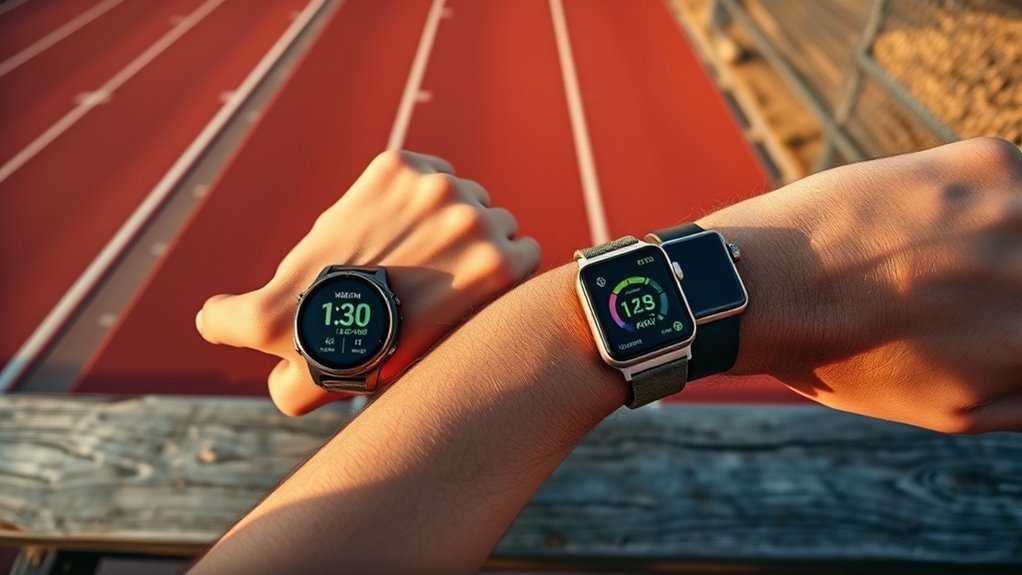
In side-by-side testing, the Garmin Forerunner 265 tracked steps and distance more accurately than the Apple Watch 10. Garmin missed 86 steps and matched a 2-mile measure exactly, while Apple Watch missed 465 steps and logged 2.02 miles. The test used manual step counting, simultaneous wear, and varied environments. Calibration helped both, but did not erase the gap. Sleep and health metrics also favored Garmin, and the details make the comparison even clearer.
Key Takeaways
- Garmin Forerunner 265 tracked steps more accurately, missing 86 steps versus Apple Watch 10 missing 465.
- Garmin matched the 2-mile distance measurement exactly, while Apple Watch recorded 2.02 miles.
- Manual clicker testing across urban and wooded routes showed Garmin stayed closer to human step counts.
- User height and weight calibration improved both watches, but it did not eliminate Garmin’s accuracy advantage.
- Garmin also produced more trusted health metrics, including clearer sleep tracking and organized data in Garmin Connect.
Which Watch Tracks Steps More Accurately?
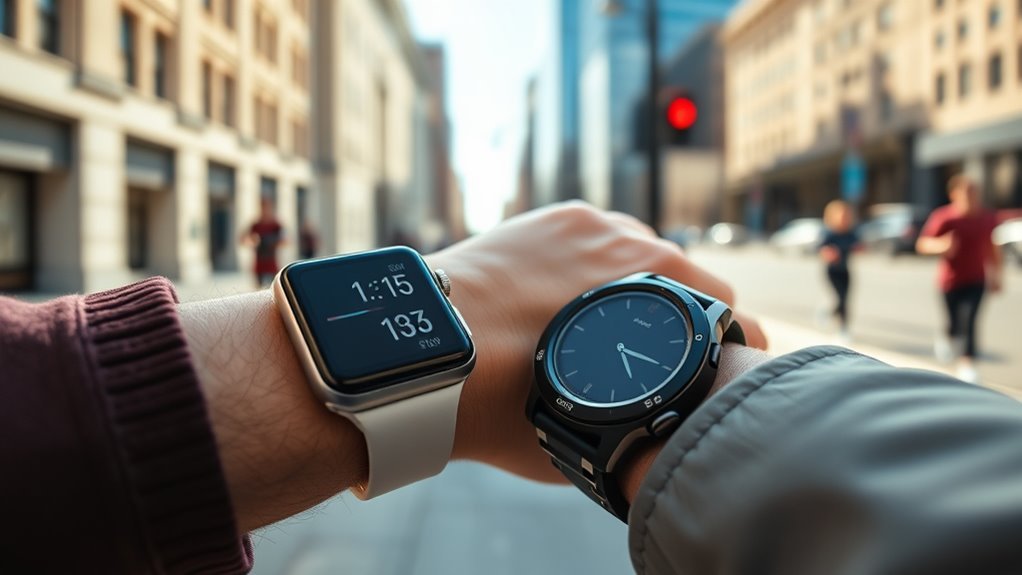
In step-counting tests, the Garmin Forerunner 265 appears more accurate than the Apple Watch 10. Garmin missed only 86 steps, while the Apple Watch missed 465, a gap large enough to matter for fitness tracking and health metrics.
The Garmin also matched a 2-mile distance measurement, whereas the Apple Watch recorded 2.02 miles, suggesting weaker calibration. Both devices depend on user input for height and weight, and both infer motion from arm swing, so setup quality affects accuracy.
Even so, the data indicate that Garmin offers tighter step counting and more reliable outputs for users who want liberation from guesswork. Community feedback and user preferences increasingly favor Garmin, especially when trust in metrics matters.
Garmin Connect further supports this confidence by organizing results clearly, alongside tools such as VO2 Max, which reinforce its analytical appeal. In this comparison, Garmin seems better aligned with precise, independent self-tracking.
How We Tested Apple Watch vs Garmin
To compare the Apple Watch 10 and Garmin Forerunner 265 fairly, the test used a manual clicker counter to track steps during city walks and a hike while both watches recorded data at the same time.
This accuracy test paired direct human step counting with device logs to examine tracking performance under real movement conditions. Each watch was worn on opposite wrists to support consistent measurement and reduce placement bias.
Environmental variations were included deliberately, since pavement, elevation, and pace shifts can influence health tracking and distance recording.
Environmental changes were intentional, since pavement, elevation, and pace shifts can affect tracking accuracy.
The Apple Watch and Garmin Forerunner were then reviewed against the manual total and against each other. Distance outputs stayed close, yet the step counting results exposed a larger gap in precision.
That design allowed a clear comparison without relying on assumptions. In this framework, Garmin showed higher precision, suggesting stronger reliability for users who value measurable freedom in daily movement tracking and transparent fitness data.
Garmin vs Apple Watch Step Count Results
Step count results from the real-world walk testing showed a clear difference in accuracy between the two devices.
The Garmin Forerunner 265 missed only 86 steps, while the Apple Watch 10 missed 465, indicating stronger step-count precision from Garmin.
In the two-mile walk and hike, Garmin also matched the measured distance exactly, while the Apple Watch registered 2.02 miles.
Step Count Accuracy
When step counts were compared against a manual tally, the Garmin Forerunner 265 showed substantially better accuracy than the Apple Watch 10, missing only 86 steps versus 465 missed by Apple’s device.
This gap in step count accuracy suggests stronger reliability from Garmin fitness trackers in capturing health data under user input-dependent calibration. In urban environments and wooded settings alike, Garmin’s performance remained more precise, while the Apple Watch’s larger error raised questions about consistency.
Both devices required height and weight entry, yet calibration alone did not close the divide. The Apple Watch also reported 2.02 miles where Garmin logged exactly 2 miles, reinforcing the pattern.
For users seeking liberated, evidence-based control over personal metrics, Garmin appeared the more trustworthy option for daily step tracking.
Real-World Walk Testing
During real-world walk testing, the Garmin Forerunner 265 again outperformed the Apple Watch 10 in step-count accuracy, missing only 86 steps versus the Apple Watch’s 465-step shortfall against a manual tally. | Device | Step count error | Distance tracking |
| — | —: | —: |
|---|---|---|
| Garmin Forerunner 265 | 86 | 2.00 miles |
| Apple Watch 10 | 465 | 2.02 miles |
| Notes | Opposite wrists, urban and wooded routes | Calibration used height and weight |
These results show that wearable tech can still diverge under identical real-world testing. Step counting depends heavily on arm swing detection, so wrist motion, terrain, and calibration shape outcomes. The Garmin Forerunner 265 delivered tighter accuracy, suggesting stronger fitness tracking for users who want dependable, self-directed measurement. The Apple Watch 10 remained close in distance tracking, yet its step total lagged further from reality, limiting its precision.
Why Garmin Was More Accurate
Garmin appeared more accurate because its measurements aligned more closely with manual verification and practical expectations. In step counting, the Garmin Forerunner 265 missed only 86 steps, while the Apple Watch 10 missed 465, a gap large enough to weaken confidence in Apple Watch accuracy.
Distance metrics showed the same pattern: Garmin logged 2 miles exactly, whereas Apple Watch recorded 2.02 miles. Both devices use arm swing detection, yet Garmin’s health data and fitness tracking outputs matched user movement more closely. That alignment suggests the brand’s design is optimized for disciplined activity measurement rather than broader, generalized use.
User feedback also tends to favor Garmin as more trustworthy, especially when people want reliable metrics without distortion. For audiences seeking liberation through clearer self-knowledge, the evidence points to Garmin as the steadier tool. Its narrower focus appears to reduce noise and improve the consistency of core activity readings.
Sleep Tracking and Other Health Metrics
Sleep tracking further reinforces Garmin’s advantage in health metrics. In comparative readings, the Apple Watch often reports poor sleep quality and frequent awakenings, while Garmin identifies substantial deep sleep. That difference matters because accuracy in sleep tracking shapes broader health data and supports more reliable recovery analysis.
- Garmin’s deep sleep estimates often match how users feel on waking.
- Apple Watch readings can appear more fragmented, reducing perceived reliability.
- Variability across devices has made many users cautious about sleep quality scores.
- For people seeking dependable health metrics, Garmin is often the preferred choice.
The pattern suggests that Garmin’s sleep tracking offers stronger alignment between objective metrics and lived experience.
For users who want liberation from noisy, inconsistent measurements, this consistency carries practical value. In health monitoring, trust depends on whether the data reflects reality, and Garmin appears to deliver that with greater accuracy.
Which Watch Should You Buy?
When the choice comes down to purchase value, the decision depends on priorities: the Garmin Forerunner lineup is stronger for fitness accuracy, broader activity support, and battery endurance, while the Apple Watch remains the better option for users who need seamless integration with the Apple ecosystem.
| Watch | Strength | Tradeoff |
|---|---|---|
| Garmin | Better step counting and health data | Less Apple integration |
| Apple Watch | Strong smartwatch features | Shorter battery life |
| Garmin Forerunner 965 | Nearly 80 activities | Higher price |
For liberation through data, Garmin offers more autonomy for training: the Forerunner 265 missed 86 steps versus 465 on Apple Watch 10, and battery life reaches 23 days in smartwatch mode. The Apple Watch Series 10 suits users tied to Apple devices, but its 18-hour limit and 25 activities make it less compelling for demanding fitness metrics. For those prioritizing accuracy, Garmin is the clearer buy; for integration, Apple Watch remains the practical choice.
Frequently Asked Questions
Which Is Better for Me, an Apple Watch or a Garmin?
Garmin suits serious Fitness tracking, Battery life, Health metrics, and GPS accuracy; Apple Watch fits stronger App ecosystem, User interface, and compatibility issues. Design preferences, Price comparison, and customization options should guide the final choice.
What Can a Garmin Do That an Apple Watch Can’t?
Garmin features often exceed Apple Watch limitations: multi-band GPS accuracy, longer battery life, broader sports profiles, richer navigation tools, and advanced training plans. For theory testing, heart rate monitoring, outdoor activities, data syncing, and metrics look more exhaustive.
Why Do Runners Prefer Garmin Over Apple Watch?
Runners prefer Garmin for Garmin accuracy, GPS reliability, longer battery life, and richer training plans. Apple Watch features and smartwatch integration appeal, but heart rate monitoring, user interface, and price comparison often favor Garmin.
Which Smartwatches Are Most Accurate?
Garmin smartwatches appear most accurate for fitness tracking, GPS accuracy, heart rate, and activity monitoring, supported by durable battery life and durability testing. Apple offers a stronger app ecosystem, user interface, smartwatch features, and data syncing.
Conclusion
The comparison leaves one clear impression: Garmin appears to deliver more consistent step counts, but the verdict is not absolute. Apple Watch remains strong in daily health tracking, while Garmin’s stronger sensor logic and fewer false positives give it an edge in movement accuracy. Yet the real question lingers beyond steps—sleep, recovery, and long-term usability may shift the balance. For buyers, the best choice may depend less on brand and more on which metric matters most.
