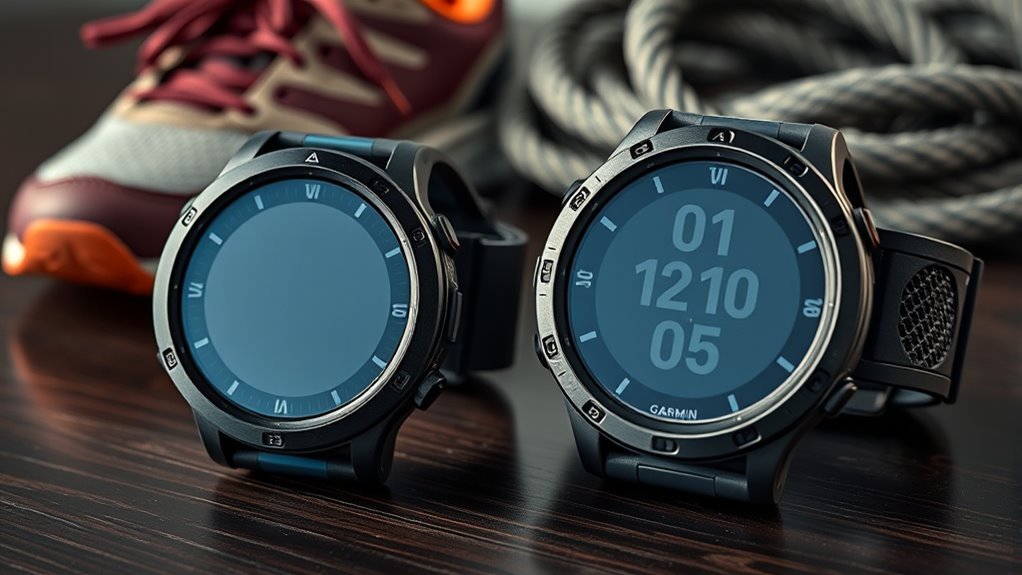
Garmin’s Forerunner and fēnix families overlap more than they once did, but they still serve different priorities. Forerunner watches are designed first around running, triathlon, training and low weight, while fēnix watches emphasize rugged construction, longer-endurance options, outdoor navigation and adventure features. The right choice depends more on the specific model and how you train than on the family name alone.
Quick Answer
Choose a Garmin Forerunner if running or triathlon is your main focus and you want a lighter watch for daily training. Choose a Garmin fēnix if you also need tougher construction, longer battery options, diving capability, extensive outdoor navigation or, on selected fēnix 9 Pro models, satellite and LTE connectivity.
Key Takeaways
- Forerunner remains Garmin’s running-first family, ranging from beginner-friendly models to the premium Forerunner 970.
- The current fēnix 9 family is built around premium multisport use, rugged construction, maps, outdoor navigation and longer-endurance options.
- Display type is no longer a simple Forerunner-versus-fēnix difference: current Forerunners use AMOLED, while fēnix 9 Pro also offers solar-display versions.
- The Forerunner 970 now includes features once associated mainly with fēnix, including built-in maps, an LED flashlight, sapphire lens, titanium bezel, speaker and microphone.
- Battery life varies dramatically by case size, display type, GNSS mode and solar exposure, so compare exact configurations rather than family-wide headline numbers.
What the Garmin Forerunner and Fenix Are for
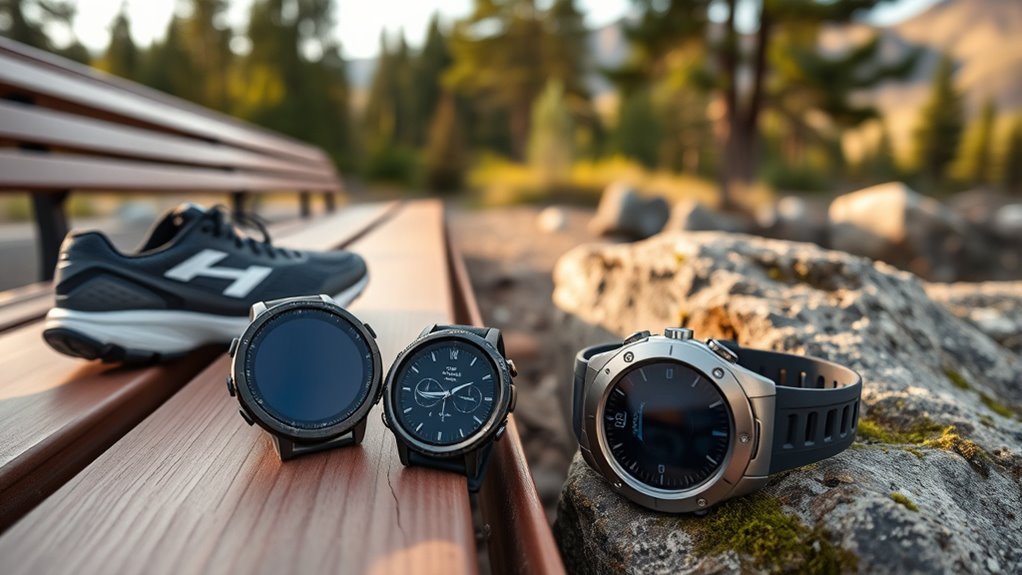
At a glance, the two families still have different centers of gravity. Forerunner is Garmin’s running-focused line. As of 2026, that range includes beginner-oriented watches such as the Forerunner 70 and 170, the more advanced Forerunner 570, and the premium Forerunner 970.
If running is the reason you are buying at all, the Forerunner side is usually the shorter list. We narrowed it down by distance and training style in our guide to which Forerunner suits which runner.
Garmin positions these watches around running metrics, adaptive training, race preparation, multisport training and relatively lightweight designs. The Forerunner 970 pushes well beyond basic running features with built-in mapping, multi-band GPS, premium materials, an LED flashlight, advanced running metrics and triathlon support.
The practical split is no longer “training watch versus feature-packed watch.” It is closer to “running-first hardware versus rugged outdoor-first hardware.”
The fēnix family is Garmin’s premium outdoor and multisport line. Garmin introduced the fēnix 9 and fēnix 9 Pro in August 2026 with enhanced mapping, upgraded stamina tools, premium materials and multiple case sizes. Selected fēnix 9 Pro versions also add inReach satellite and LTE connectivity.
That makes fēnix especially attractive for hiking, backpacking, skiing, diving, long outdoor events and users who want one rugged watch for training plus navigation-intensive activities.
Note: Older Forerunner 265/965 and fēnix 8 watches can still be excellent devices. This comparison uses Garmin’s current 2026 families so that differences are not based on superseded hardware.
Current Garmin Forerunner vs Fenix Models
| Model | Best fit | Display | Smartwatch battery* | Key distinction |
|---|---|---|---|---|
| Forerunner 70 | New and recreational runners | AMOLED | Up to 13 days | Running essentials plus training readiness/status |
| Forerunner 170 / 170 Music | Runners wanting payments or optional music | AMOLED | Up to 10 days | Garmin Pay; Music version stores audio |
| Forerunner 570 | Advanced runners and triathletes | AMOLED | Up to 11 days | Multi-band GPS, speaker/mic and advanced training |
| Forerunner 970 | Serious runners and multisport athletes | AMOLED | Up to 15 days | Maps, sapphire, titanium bezel and LED flashlight |
| fēnix 9 | Premium multisport and outdoor users | AMOLED | Up to 29 days on 51 mm | Rugged build, maps, 10 ATM and 40 m dive support |
| fēnix 9 Pro | Expeditions and maximum outdoor capability | AMOLED or solar on selected models | Up to 31 days AMOLED; up to 57 days with solar assumptions on 51 mm Solar | Optional inReach satellite/LTE connectivity |
*Manufacturer maximums vary with settings, case size, sensors, display behavior, GNSS use and, where applicable, solar exposure.
Garmin Forerunner vs Fenix: Display and Battery Life
The old rule that Forerunner means MIP and fēnix means a different display technology no longer works. Garmin’s current Forerunner 70, 170, 570 and 970 models use AMOLED displays. The standard fēnix 9 is also AMOLED, while selected fēnix 9 Pro models offer either AMOLED or a solar-charging display.
Display Type Differences
AMOLED gives current Forerunners a bright, high-contrast interface that works well for maps, workout screens and daily smartwatch use. The premium Forerunner 970 uses a 1.4-inch AMOLED display with an optional always-on mode.
The fēnix 9 family also uses bright AMOLED panels, and Garmin says the fēnix 9 display is twice as bright as its predecessor. The fēnix 9 Pro AMOLED can reach up to 3,000 nits, while Pro models also provide solar-display options for users who value maximum endurance more than AMOLED presentation.
So display choice is now less about Forerunner versus fēnix and more about which exact model and battery strategy you want.
Battery Life Tradeoffs
The fēnix family generally provides more battery headroom, particularly in larger cases and solar configurations, but comparisons need to use equivalent modes.
| Watch | Smartwatch mode | Higher-accuracy activity/GNSS example |
|---|---|---|
| Forerunner 970 | Up to 15 days | Up to 21 hr all-systems + multi-band |
| fēnix 9 47 mm | Up to 16 days | Up to 25 hr Max Accuracy mode |
| fēnix 9 51 mm | Up to 29 days | Up to 45 hr Max Accuracy mode |
| fēnix 9 Pro Solar 51 mm | Up to 30 days; up to 57 days with qualifying solar exposure | Up to 54 hr Max Accuracy; up to 75 hr with qualifying solar exposure |
Garmin specifies that solar maximums assume substantial outdoor light exposure. Real-world runtime also changes with always-on display settings, music, Pulse Ox, navigation, notifications and connected sensors.
Always-On Versus Efficiency
AMOLED watches save energy by allowing the display to turn off when it is not needed. Enabling always-on display increases power consumption, so advertised maximum smartwatch life normally assumes Garmin’s standard gesture-based display behavior unless the specification states otherwise.
If charging frequency matters most, compare the exact battery table for the case size you intend to buy. A 51 mm fēnix can behave very differently from a smaller fēnix, and a solar Pro model is not directly comparable with an AMOLED model.
Pro Tip: Compare battery figures for the GNSS mode you actually use. “GPS only,” multi-band/high-accuracy modes, music playback and navigation can produce very different runtimes.
Garmin Forerunner vs Fenix: Ruggedness and Build Quality
Build is still one of the clearest differences between the families. Most Forerunners prioritize low weight and comfort during long training sessions, while fēnix is engineered around a tougher outdoor chassis.
The distinction has narrowed at the high end. The Forerunner 970 uses a sapphire crystal lens and titanium bezel, so it is much more premium than older plastic-heavy running watches. It remains rated at 5 ATM, which Garmin describes as withstanding pressure equivalent to 50 meters.
The current fēnix 9 and fēnix 9 Pro are rated at 10 ATM and also carry a separate 4 ATM dive rating under EN 13319, with a depth sensor designed for use to 40 meters. Garmin also gives the fēnix 9 leakproof buttons and a sapphire lens. The Pro moves further toward premium outdoor hardware with a titanium case.
For ordinary road running, gym training and triathlon, a Forerunner is usually easier to wear because weight and bulk are lower priorities. For climbing, backpacking, diving, rough field use or a watch likely to take repeated impacts, the fēnix construction has clearer advantages.
Garmin Forerunner vs Fenix: GPS Accuracy Compared
There is no sound basis for saying one entire Garmin family is always more GPS-accurate than the other. GNSS capability varies by model, settings and environment.
Premium current models such as the Forerunner 570 and 970 include multi-band GPS and Garmin SatIQ technology. The idea is to use higher-accuracy satellite modes when conditions demand them while managing battery use when they do not.
The fēnix family combines advanced satellite positioning with stronger navigation hardware and extensive mapping. The current fēnix 9 also introduces a faster mapping engine and more memory than the previous generation.
Buildings, tree cover, steep terrain, antenna orientation and satellite geometry can all affect a track. Because of those variables, specifications alone cannot establish that a Forerunner or fēnix will produce the cleaner track in every situation.
The earlier claim that every model uses the same Airoha AG3335M chipset has been removed because Garmin’s official specifications do not support using that statement as a series-wide comparison.
Garmin Heart Rate and VO₂ Max Accuracy
Both families provide wrist-based heart-rate tracking, but optical heart-rate data should be treated as an estimate rather than a medical measurement. Garmin notes that fit, wrist movement, cold conditions and some activities can interfere with optical readings.
| Measurement | What to know |
|---|---|
| Wrist heart rate | Useful for everyday tracking and many workouts, but motion, fit and blood-flow changes can affect readings. |
| Hard intervals | A compatible chest heart-rate monitor is preferable when precise heart-rate response is important. |
| VO₂ max | A calculated performance estimate based on recorded physiological and workout data, not a laboratory gas-exchange test. |
| Training status/readiness | Trend-oriented training estimates that become more useful after the watch has collected enough personal data. |
Garmin states that VO₂ max and related performance measurements are estimates and that the watch needs multiple activities to learn about the wearer’s performance. For running VO₂ max, accurate profile information and a suitable heart-rate source also matter.
Warning: Garmin health and fitness metrics are not a substitute for medical evaluation. Use a compatible chest strap when workout heart-rate accuracy is especially important.
Garmin Forerunner vs Fenix: Maps, Training, and Smart Features
Maps used to create a much cleaner separation between the two lines. That is no longer true at the premium end.
The Forerunner 970 includes full-color built-in mapping. Users can sync courses, receive turn-by-turn directions and use dynamic round-trip routing. That makes it a legitimate navigation watch for runners, cyclists and multisport athletes rather than a simple breadcrumb device.
Lower-tier Forerunners do not necessarily provide that same map package, so “Forerunner navigation” should never be treated as one universal feature set.
The fēnix 9 remains more outdoor-focused. Garmin gives it built-in routable maps, a revised map engine, perspective view and 64 GB of memory for additional maps and media. The line is built for users who expect maps to be a frequent part of hiking, backcountry travel and multisport use.
Training Features
Forerunner remains the most obvious starting point for a running-first buyer. Depending on model, features include training readiness, training status, Garmin Coach, daily suggested workouts, running dynamics, race predictions and multisport tools.
The Forerunner 970 adds more specialized performance features including running tolerance. When used with compatible equipment such as Garmin’s HRM 600, it can also provide running economy and step speed loss data.
fēnix is not a stripped-down training platform. Modern fēnix models provide extensive running, cycling, strength, multisport and endurance tools alongside their outdoor capabilities. The current fēnix 9 adds enhanced stamina features including stamina zones and stamina curve.
The real difference is therefore emphasis rather than a simple “more metrics versus fewer metrics” comparison.
Smart and Connected Features
Notifications, Garmin Pay and connected-phone functions appear across many models. Forerunner 570 and 970 also have a built-in speaker and microphone, allowing compatible phone-connected voice and calling functions.
That means speaker, microphone and flashlight hardware no longer automatically separate premium fēnix watches from premium Forerunners.
The larger current difference is fēnix 9 Pro inReach connectivity. Selected Pro configurations can provide LTE and satellite-based messaging, calling, LiveTrack functions and SOS capabilities without relying on a nearby phone in the same way as standard Bluetooth-connected features.
Note: fēnix 9 Pro inReach functions require an active service plan, and LTE/satellite availability varies by country, coverage and device configuration. Check Garmin’s current service requirements before buying specifically for off-grid communication.
Which Garmin Watch Should You Buy?
The most useful way to choose is to match the hardware to your main activity rather than assuming the more expensive model is automatically better.
If the Fenix side is winning you over, the next question is which one, since the range spans three sizes and several generations at once. Our Fenix model comparison narrows that down.
| Your priority | Start with | Why |
|---|---|---|
| Learning to run or training for a first race | Forerunner 70 / 170 | Core running tools without paying for advanced outdoor hardware. |
| Advanced running or triathlon | Forerunner 570 | Multi-band GPS, training readiness and strong multisport support. |
| Premium running plus maps | Forerunner 970 | Maps, sapphire, titanium bezel, flashlight and high-end running metrics without moving to the larger outdoor-first fēnix platform. |
| Running plus hiking, skiing, diving and outdoor navigation | fēnix 9 | More rugged hardware, 10 ATM rating, dive capability, larger battery options and extensive mapping. |
| Long expeditions or phone-free emergency communication | Selected fēnix 9 Pro | Solar options plus available inReach LTE/satellite communication. |
Durability And Battery
Durability remains one of the strongest arguments for fēnix. The current fēnix 9 combines a sapphire lens, premium metal construction, leakproof buttons, a 10 ATM water rating and a 40-meter depth-sensor/dive specification.
- Better suited to repeated outdoor exposure and rough environments
- More case-size and long-battery options
- Stronger diving credentials
- Extensive built-in navigation
- Solar and inReach options on selected Pro configurations
The Forerunner 970 closes much of the quality gap with sapphire and a titanium bezel while keeping a running-first form factor. It remains a compelling choice when low weight and training comfort matter more than a 10 ATM rating, diving or the longest available battery configuration.
A smaller fēnix can also have less battery life than a larger Forerunner in some modes, so do not buy based only on the family name. Compare the exact size and operating mode.
Frequently Asked Questions
Is the Garmin Fenix Better Than the Forerunner?
Not universally. fēnix is better suited to buyers who need rugged hardware, diving capability, extensive navigation, larger battery options or selected Pro connectivity features. Forerunner is often the better fit for runners and triathletes who want strong training tools in a lighter package.
Which Garmin Do Navy SEALs Use?
There is no reliable public evidence showing that Navy SEALs universally or officially use one Garmin model. Garmin’s tactix family is the company’s purpose-built tactical line and includes features such as stealth mode, night-vision compatibility, jumpmaster functions and dual-position GPS formats.
Is Fenix Overkill?
It can be if you mainly run on roads and do not need its rugged construction, diving support, larger battery configurations or outdoor navigation features. A Forerunner can provide most of the training tools a runner needs while usually being lighter and less expensive.
Is Garmin Discontinuing the Forerunner Series?
No. Garmin expanded the Forerunner family in 2026 with the Forerunner 70 and 170 after introducing the 570 and 970 in 2025. The line remains Garmin’s primary running-watch family.
Does the Forerunner 970 Have Maps Like the Fenix?
Yes. The Forerunner 970 has full-color built-in mapping, course navigation, turn-by-turn directions and dynamic round-trip routing. The fēnix 9 still goes further toward outdoor navigation with its updated mapping engine, greater map storage and broader adventure-focused design.
Does Fenix Have Better GPS Than Forerunner?
Not automatically. Premium models in both families support advanced GNSS features, and real-world accuracy depends on the model, selected satellite mode and environment. Choose fēnix mainly for its broader outdoor navigation package rather than assuming its GPS track will always be more accurate.
Sources
- Garmin — fēnix 9 and fēnix 9 Pro announcement — current lineup, navigation, displays, inReach features and pricing.
- Garmin fēnix 9 Owner’s Manual — Battery Information — size-specific AMOLED and solar battery ratings.
- Garmin fēnix 9 Owner’s Manual — Specifications — 10 ATM and EN 13319 dive specifications.
- Garmin — Forerunner 70 and 170 announcement — current entry-level Forerunner lineup and battery specifications.
- Garmin — Forerunner 570 and 970 announcement — maps, training features, flashlight, speaker/microphone and premium hardware.
- Garmin Support — Optical Heart Rate Accuracy Tips — wrist-heart-rate limitations and chest-strap guidance.
Conclusion
Forerunner is still the natural starting point for runners and triathletes, but the premium models now overlap heavily with fēnix. The Forerunner 970 already provides maps, multi-band GPS, premium materials, an LED flashlight and advanced training tools, so moving to fēnix is no longer necessary just to get a feature-rich Garmin.
The current fēnix 9 family makes the most sense when rugged construction, diving, more extensive outdoor navigation, larger battery configurations, solar charging or selected Pro satellite/LTE features matter to you. Pick the specific model whose hardware matches your activities rather than assuming one Garmin family is automatically better.
