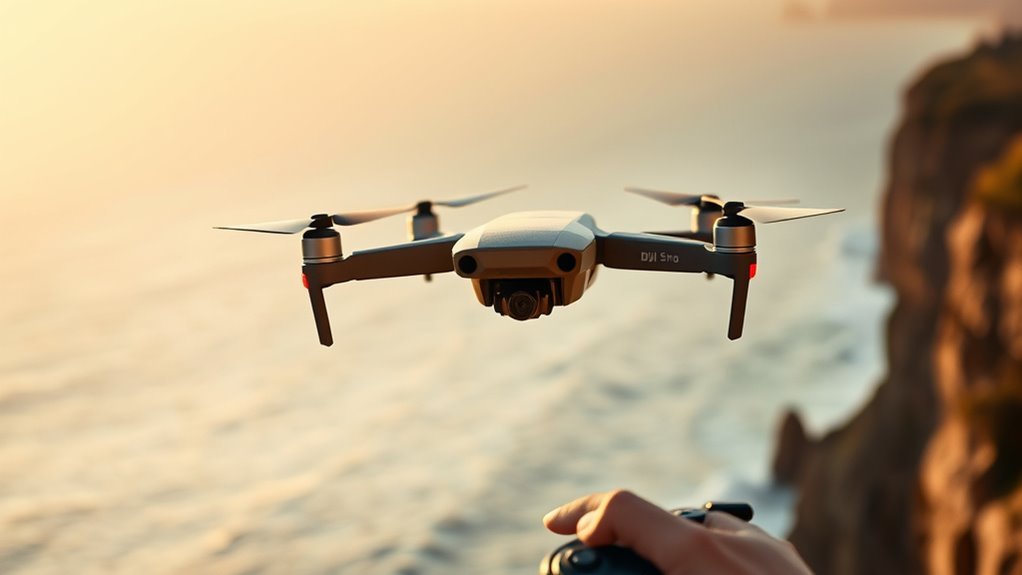
The DJI Mini 5 Pro looks compelling on paper, but its practical limits matter more than the headline specs. Real flight time appears closer to 20–25 minutes than 35, and its 12.4-mile link rating depends on ideal conditions. Wind tolerance tops out around 10 m/s, which shapes its usable range. U.S. availability remains unclear, and that uncertainty may matter more than the drone’s lightweight appeal.
Is the Mini 5 Pro Worth Buying?
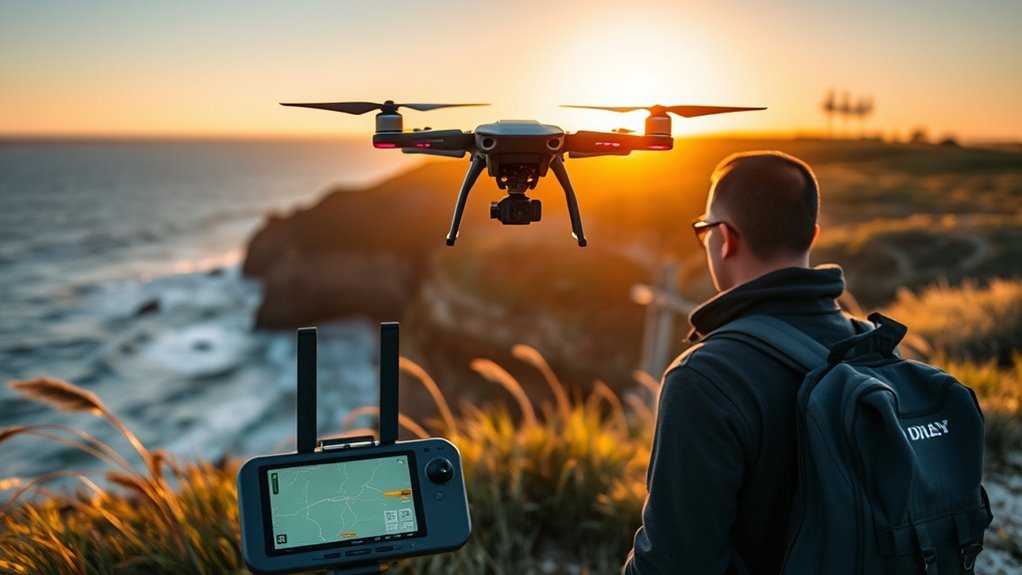
Whether the DJI Mini 5 Pro is worth buying depends largely on the user’s priorities. For those seeking portability, the 249.9g mass keeps it below the 250g threshold, supporting U.S. registration exemption and easier travel.
The 1-inch CMOS sensor delivers strong image quality and dynamic range, which makes the DJI Mini 5 Pro technically compelling for compact 4K production. However, its flight time is only moderate, and the price range of €695–€999 places it close to larger, more capable options.
Its wind limits also remain a constraint, reducing confidence in exposed environments. As a result, it is not the most rational choice for users demanding maximum endurance or harsh-condition performance.
It is worth buying primarily for casual pilots, travel creators, and operators who value low regulatory burden and efficient image capture. For liberation-oriented users, it offers practical mobility, but only within clear operational limits.
Mini 5 Pro Real Flight Time
The DJI Mini 5 Pro’s real-world flight duration typically measures about 20–25 minutes in normal use, well below the claimed 35 minutes.
Its auto return-to-home sequence begins near 15% battery, so a practical reserve of 25–30% is advisable to preserve recovery margin.
Airtime is further reduced by obstacle avoidance, frequent maneuvering, short 4K recording sessions, wind, and other environmental load factors.
Real-World Flight Duration
In practical use, the DJI Mini 5 Pro typically delivers about 20 to 25 minutes of flight time in calm conditions, falling considerably short of the advertised 35-minute ideal. This real-world flight time reflects battery life constrained by wind resistance, obstacle avoidance, and camera activity.
Even brief 4K clips can cut endurance sharply, making mission planning essential for the Mini 5 Pro. For operators seeking autonomy, the platform remains capable, but it rewards disciplined routing and minimal feature use.
Auto-return behavior also shapes usable time, since safe return requires leaving margin before the reserve threshold is reached. Flights performed in lighter wind and with fewer active systems generally preserve more duration.
Careful preparation consequently extends operational freedom while keeping performance predictable and controlled.
Battery Reserve Behavior
Battery reserve behavior becomes the practical limit on Mini 5 Pro endurance, since the advertised 35-minute figure depends on ideal conditions with the 4680mAh pack and rarely appears in routine use.
In real-world usage, the battery reserve must be treated as operational freedom, not a theoretical promise. The system triggers Auto Return-to-Home near 15% low battery, but prudent operators keep a 25-30% margin to preserve exit capability.
That reserve protects the aircraft when ascent slows in wind and helps maintain control when the flight time estimate drops toward 20-25 minutes.
The result is a disciplined energy budget: enough for mission completion, enough for a safe return, and little tolerance for complacency.
This behavior defines how long the Mini 5 Pro can remain autonomous.
Factors Reducing Airtime
Actual airtime on the DJI Mini 5 Pro usually falls into the 20- to 25-minute range, well below the 35-minute figure quoted for ideal conditions. Real-world flight time is reduced by several load factors that constrain battery life and autonomy.
- Wind resistance forces higher thrust, draining power faster.
- Active control inputs increase motor demand and reduce efficiency.
- Environmental conditions, including temperature and turbulence, compress usable battery capacity.
- Recording in 4K and obstacle avoidance both consume extra energy during flight.
These variables shorten flight time and narrow the margin for safe return. A 25–30% battery reserve remains prudent, especially when weather deteriorates.
The result is a machine that can still support liberated aerial operation, but only when energy budgeting stays disciplined and mission profiles remain technically conservative.
How Far the Mini 5 Pro Can Fly
How far can the DJI Mini 5 Pro really go? In practice, the drone is rated for a maximum transmission range of up to 12.4 miles (20 km) under OcuSync 4+, giving it strong control link headroom for extended missions.
That figure reflects signal capability, not unlimited flight time, so range planning must account for battery depletion and mission profile. Stable tracking is supported at 3–8 m/s when keeping subjects within 15 meters, helping maintain disciplined movement during pursuit or survey work.
Dual-band GNSS (L1 + L5) improves positional precision, which strengthens return to home reliability at distance. For real-world autonomy, a 25–30% battery reserve is the practical floor, especially when wind conditions introduce extra drag and shorten usable distance.
The result is a compact aircraft that can travel far, but only when command, power, and navigation are managed with precision.
Mini 5 Pro Wind Limits
Wind ceiling is one of the Mini 5 Pro’s key operational constraints: DJI rates the drone for stable flight in winds up to 10 m/s, or about 22 mph.
For drones built for liberated aerial work, this is a practical ceiling, not a challenge to exceed. The DJI Mini 5 Pro remains usable in mild gusts, but flight stability declines as turbulence rises, especially during ActiveTrack.
- 10 m/s is the stated wind limit.
- Mild winds are manageable; extremes are not.
- Stronger gusts can outpace maximum ascent speed.
- Manual control is preferred when precision matters.
Community reports suggest caution, particularly when a battery reserve falls below 25–30% and conditions deteriorate.
That margin supports safer recovery. Beyond that, wind limits become a hard boundary for dependable operation, and disciplined judgment preserves both the aircraft and the mission.
What Auto-RTH Means for Range
Auto-Return-to-Home (Auto-RTH) on the Mini 5 Pro activates at roughly 15% battery, which effectively sets the lower boundary of usable range rather than the nominal flight limit. For practical planning, a 25–30% battery margin preserves freedom to fly outward without trapping the aircraft beyond recovery.
| Factor | Effect |
|---|---|
| Battery level | Defines RTH trigger |
| Flight time | About 20–25 minutes |
| Wind | Reduces return margin |
| Environmental factors | Shift usable range |
| Maximum ascent speed | Can limit recovery |
That margin matters because environmental factors, especially wind and load on the pack, can compress the outbound distance long before the timer ends. In stronger gusts, Auto-Return-to-Home may struggle if the aircraft cannot climb or head home faster than the air mass moves it. Range should consequently be treated as a reserve-based envelope, not a fixed radius. The result is less surprise, more control, and a clearer path to operational autonomy.
How to Extend Mini 5 Pro Flight Time
Extending the Mini 5 Pro’s flight time depends largely on reducing power-hungry functions such as obstacle avoidance and continuous video recording.
Calm air and low headwind conditions improve efficiency, while battery management should maintain a 25–30% reserve to preserve safe return margins.
For maximum endurance, the optional Intelligent Flight Battery Plus offers a substantial increase over the standard pack.
Reduce Power-Hungry Features
Reducing the Mini 5 Pro’s onboard power load is one of the most effective ways to stretch usable flight time. The drone’s power-hungry features, especially LIDAR-based obstacle avoidance, can be disabled when the mission allows it, freeing battery capacity for lift and control.
- Turn off obstacle sensing to cut draw.
- Limit video capture, especially 4K.
- Use the Intelligent Flight Battery Plus for more headroom.
- Preserve 25-30% reserve for return.
A standard pack yields about 36 minutes under ideal conditions; the Plus battery can reach 52 minutes. Calm air further improves efficiency, while wind erodes endurance quickly.
The result is a more liberated, longer mission profile with fewer interruptions and safer recovery margins.
Fly Smarter, Not Harder
Once the Mini 5 Pro’s power-hungry features are pared back, flight time depends largely on how efficiently the drone is flown. Calm air, low headwind, and steady throttle inputs preserve the Intelligent Flight Battery for longer sorties.
Vertical climbs, aggressive accelerations, and repeated braking drain energy quickly, so smooth lines in standard flight modes are preferable. Limiting short 4K clips also helps, since active recording adds load.
Advanced obstacle sensing should be used selectively, not continuously, when extended flight matters more than automation. Real-world endurance typically lands near 20–25 minutes, so a 25–30% reserve should be held for safe RTH, especially in wind.
For maximum liberation from short missions, the optional Intelligent Flight Battery Plus can extend endurance to 52 minutes and widen operational margin.
Mini 5 Pro Vs. Mini 4 Pro
Against the Mini 4 Pro, the DJI Mini 5 Pro makes its case through clear hardware gains rather than a wholesale redesign. The larger 1-inch sensor improves detail, low light capture, and 50MP stills, while preserving sub-250g weight for easier mobility and fewer barriers to use.
- Sensor: 1-inch CMOS versus the Mini 4 Pro’s smaller unit.
- Flight time: about 35 minutes, with slightly better real-world efficiency.
- Obstacle avoidance: upgraded sensing, including nightscape support.
- Video: 4K/120fps enables cleaner slow motion than the Mini 4 Pro.
This comparison favors users who want capability without surrendering portability.
The Mini 5 Pro is not revolutionary in form, but it advances the practical freedoms that matter: longer sessions, stronger image output, and more confident navigation.
The Mini 5 Pro doesn’t reinvent the form, but it sharpens the freedoms that count: endurance, image quality, and safer flight.
Against the Mini 4 Pro, the gap is measured, yet decisive.
Night Flight Safety
Night flight is where the Mini 5 Pro’s safety hardware becomes most relevant, as its Nightscape omnidirectional obstacle sensing combines LiDAR and vision sensors to detect hazards in very low light.
This Nightscape Omnidirectional Obstacle Sensing is paired with dual-band GNSS (L1 + L5), giving steadier positioning when visual cues fade.
In low-light conditions, the aircraft can operate down to 1 lux, which supports controlled night photography without sacrificing situational awareness.
Nighttime Return-to-Home (RTH) remains enabled with obstacle detection, so the aircraft can retrace a safer path even after sunset.
That said, autonomy is not immunity: a battery margin of 25–30% is still prudent because wind, temperature, and terrain can reduce return performance.
For pilots seeking freedom to work after dark, the system offers genuine capability, but disciplined flight planning remains the difference between confident exploration and avoidable risk.
U.S. Price and Availability
Pricing for the DJI Mini 5 Pro is clear in Europe—roughly €695 to €999 depending on the package—but the U.S. picture remains unsettled. The Mini 5 Pro’s U.S. pricing is still undefined, and availability remains constrained by policy friction and security scrutiny.
Post-Mavic 4 Pro conditions may further elevate costs and weaken support, leaving buyers dependent on resellers.
- Direct U.S. launch: not confirmed.
- Retail pricing: uncertain, likely elevated.
- Supply path: secondary channels dominate.
- Rule load: commercial drone registration applies, but the sub-250g drone class exempts casual users.
For autonomous users seeking practical aerial tools, the device’s weight class preserves regulatory freedom while reducing administrative burden.
Yet the market structure in the United States still favors delay, scarcity, and reduced manufacturer backing. Until policy clarity improves, the Mini 5 Pro remains a technically attractive platform with an unstable acquisition path.
Best Uses for the Mini 5 Pro
The Mini 5 Pro is well suited to travel and portability, as its sub-250g frame reduces transport burden and avoids registration in many markets.
Its 1-inch sensor, 4K/60fps HDR capture, and true vertical gimbal rotation make it effective for travel video work and social-first content production.
Extended flight time and automated modes further support efficient shooting on location with minimal interruption.
Travel And Portability
Weighing just under 250g, the DJI Mini 5 Pro fits easily into travel workflows while remaining compliant with EU regulations that reduce registration burdens for many users. Its sub-250g weight, compact 255×181×91 mm folded profile, and low weight limit improve portability for consumer drones across borders.
- Packs into carry-on space.
- Passes airport checks with less friction.
- Supports 36 minutes of flight time on the standard battery.
- Extends to 52 minutes with the Intelligent Flight Battery Plus.
These constraints favor travelers seeking mobility without operational drag. The 1-inch CMOS sensor adds image quality, but the core advantage is freedom: a capable aerial system that stays small, legal in many regions, and ready for extended travel use.
Travel Video Work
For travel video work, the DJI Mini 5 Pro shifts the focus from portability to production utility, combining a 1-inch CMOS sensor with 50MP still capture and 4K video at up to 120fps. Its real-world flight time of 20–25 minutes supports efficient coverage of scenes, while the advanced gimbal system enables 225° roll rotation and vertical shooting for social platforms.
| Capability | Value |
|---|---|
| Sensor | 1-inch CMOS |
| Stills | 50MP |
| Video | 4K video at 120fps |
| Flight time | 20–25 min |
| Orientation | Vertical shooting |
ActiveTrack and MasterShots reduce manual control demands, freeing the creator to move through markets, coastlines, and streets with less friction. For travel videos, the result is compact, liberated, and technically capable.
Frequently Asked Questions
How Strong Winds Can the DJI Mini 5 Pro Handle?
It can handle winds up to about 10 m/s, or 22.4 mph, with acceptable wind resistance and flight stability.
Beyond that, battery performance drops quickly, especially on return-to-home flights, and weather conditions can overwhelm control margins.
Safety precautions include keeping a 25–30% reserve and avoiding high gusts.
In strong wind, obstacle avoidance and tracking may become unreliable, so careful preflight assessment remains essential for autonomous flight freedom.
Can You Legally Fly the DJI Mini 5 Pro in the US?
Yes, it can be flown legally in the U.S. if drone regulations are followed.
Example: a pilot launches a sub-250g Mini 5 Pro over a suburban park, checks airspace restrictions, and avoids controlled flight zones.
Because pilot certification rules may apply for commercial use, the operator should verify FAA requirements, stay below 400 feet, maintain visual line of sight, and respect safety guidelines and local ordinances before flight.
How Far Away Can I Fly My DJI Mini 5 Pro?
It can fly up to about 12.4 miles, but only in ideal flying conditions.
Actual flight distance factors include obstacles, weather, battery performance tips, and signal interference issues, which often cut that figure sharply.
Dual-band GNSS improves positioning, yet safety precautions and visual line of sight still govern practical use.
Realistically, most operators should expect far less range, prioritizing control, reliability, and lawful freedom over maximum distance.
Can FAA Know You Flew a DJI Drone?
Yes—like footprints in wet concrete, a DJI flight can leave traceable evidence.
The FAA can identify operation through drone regulations, remote identification, registration data, and recovered flight logs. If an incident occurs, those records can be matched to time, place, and operator.
Pilot responsibilities consequently include compliance, because FAA enforcement can follow a drone’s digital trail even when the aircraft itself seems untouchable, preserving accountability in the sky.
Conclusion
The DJI Mini 5 Pro leaves a clear impression: a compact drone that stretches capability while keeping its footprint small. Its 20–25 minute real-world flight time, 12.4-mile theoretical range, and 10 m/s wind tolerance suggest strong mobility, yet the uncertain U.S. pricing and availability cast a long shadow. For travelers and casual pilots, its lightweight frame feels like a passport; for buyers, the next step remains just beyond the runway.
