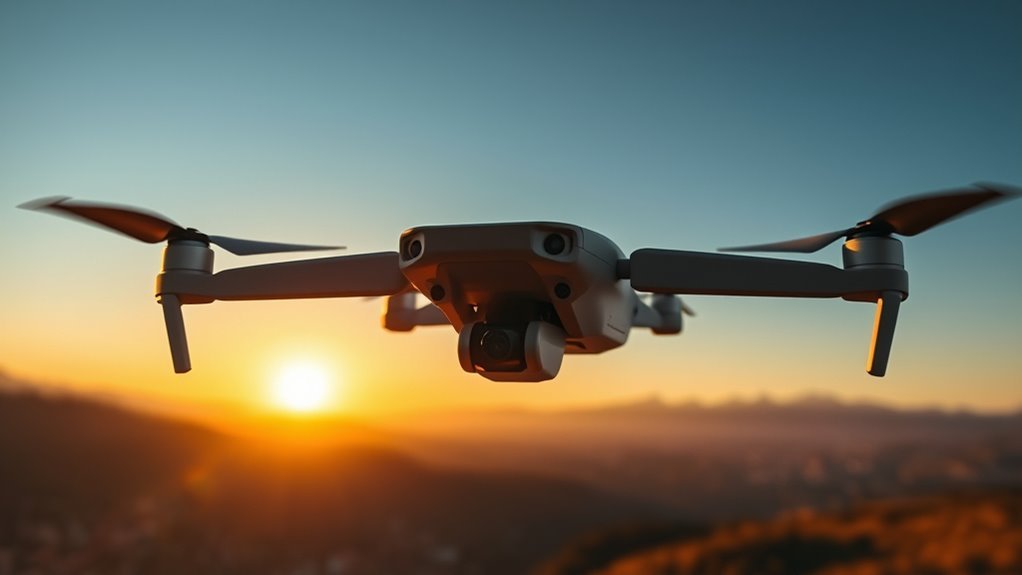
The DJI Mini 4 Pro in 2026 remains a capable choice for travel photography, aerial video, and everyday drone flying. Its 1/1.3-inch CMOS camera, 48 MP photo mode, 4K/60fps HDR video, and omnidirectional obstacle sensing offer a useful mix of portability and advanced features. However, newer drones offer larger sensors and improved low-light capabilities. Understanding the Mini 4 Pro’s actual performance, battery limitations, and current value will help you decide whether it still makes sense to buy.
Quick Answer
Yes, the DJI Mini 4 Pro is still worth buying in 2026 if you want a lightweight drone with reliable 4K video, strong tracking features, and obstacle sensing. Its standard battery offers up to 34 minutes of rated flight time. However, newer options are better for demanding low-light photography, and the price difference matters.
Last checked: October 11, 2026. Dates and figures were verified against official sources.
Key Takeaways
- The camera supports 12 MP and 48 MP stills, 4K/60fps HDR, and 4K/100fps slow-motion recording.
- DJI rates the standard battery at 34 minutes and the optional Battery Plus at 45 minutes under controlled conditions.
- The 20 km transmission claim applies to FCC-standard testing without interference, not unrestricted real-world flying.
- The sub-250 g registration exemption in the US applies only to eligible recreational flights, not Part 107 operations.
- A used or discounted Mini 4 Pro offers better value when the battery, controller, and included accessories are in good condition.
DJI Mini 4 Pro Specs and Price in 2026
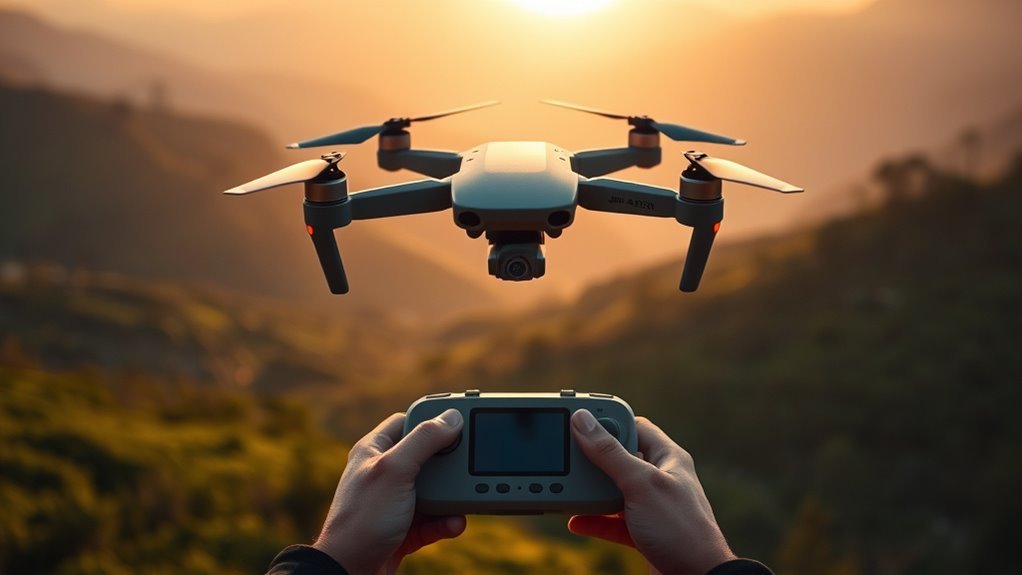
The DJI Mini 4 Pro is a foldable camera drone designed for pilots who want advanced imaging features without carrying a larger aircraft. DJI lists its standard takeoff weight at less than 249 grams, including the standard battery, propellers, and a microSD card.
With its standard battery, the Mini 4 Pro is a travel-friendly sub-250 g drone. However, registration and flight requirements still depend on where and why you fly.
Its camera uses a 1/1.3-inch CMOS sensor and a fixed f/1.7 aperture. You can capture 48 MP photos, record 4K/60fps HDR video, or switch to 4K/100fps for slow-motion footage.
The aircraft also includes a three-axis mechanical gimbal, DJI O4 video transmission, ActiveTrack 360°, and omnidirectional obstacle sensing.
These figures come from the official DJI Mini 4 Pro specifications.
| Specification | DJI Mini 4 Pro |
|---|---|
| Standard takeoff weight | Less than 249 g |
| Camera sensor | 1/1.3-inch CMOS |
| Photo resolution | 12 MP or 48 MP |
| Video recording | 4K/60fps HDR; 4K/100fps slow motion |
| Lens aperture | Fixed f/1.7 |
| Standard battery | 2,590 mAh; up to 34 minutes |
| Battery Plus | 3,850 mAh; up to 45 minutes |
| Maximum wind resistance | 10.7 m/s |
| Maximum rated video transmission | 20 km FCC; 10 km CE |
| Internal storage | 2 GB |
How Much Does the DJI Mini 4 Pro Cost in 2026?
Pricing depends on your country, controller, bundle, retailer, and whether you buy new or used. The original article cited used listings near €599 and Fly More Combos near €799, but those figures are not reliable market averages.
For a documented comparison, the DJI Germany store listing showed the following configurations when checked:
| Configuration | Listed Price |
|---|---|
| Mini 4 Pro with RC-N2 | €679 |
| Mini 4 Pro with RC 2 | €849 |
| Fly More Combo with RC 2 | €959 |
All three configurations were marked out of stock on that regional listing. These are listed prices, not confirmed transaction prices or proof of current availability elsewhere.
A Fly More Combo includes extra batteries and charging accessories, making it practical for longer shooting days. However, a clean used package may provide better value than paying a high price for older new stock.
DJI Mini 4 Pro Image Quality: Daylight vs. Low Light
The DJI Mini 4 Pro delivers its strongest image quality in daylight and good outdoor lighting. Its sensor captures detailed photos and sharp 4K footage, while the mechanical gimbal keeps the camera steady.
Low-light quality is less convincing. The sensor is relatively small compared with the larger sensors used in newer drones, so noise and lost shadow detail become more noticeable as light levels fall.
Daylight Sharpness
In bright conditions, the Mini 4 Pro produces detailed photographs with pleasing color and contrast. The 48 MP mode gives you more resolution for cropping, while the 12 MP mode is a useful everyday option.
However, a higher megapixel count does not automatically mean better image quality than a drone with a larger sensor. Sensor size, lens performance, exposure, and image processing all matter.
The Mini 4 Pro records standard video up to 4K/60fps with HDR support. It also records 4K/100fps for slow-motion playback, but that setting is not the same as a 100fps HDR video mode.
Its three-axis mechanical gimbal helps produce stable footage during smooth turns and moderate movement.
- 48 MP photos: Useful for detailed landscapes and additional cropping flexibility.
- 12 MP photos: A practical option for everyday shooting and smaller files.
- 4K/60fps HDR: Suitable for detailed video with smooth motion.
- 4K/100fps: Useful for slowing down movement in editing.
- True vertical shooting: Handy for portrait-format social media videos without relying only on cropping.
For the best results, expose carefully to protect bright skies. Keeping highlights under control is particularly useful when filming water, beaches, or reflective buildings.
Low Light Noise
The DJI Mini 4 Pro can capture usable low-light footage, but its smaller sensor limits how much clean detail it can record in dark scenes. Noise often becomes easier to see as ISO rises, especially in shadows.
The original article identified visible noise around ISO 800 and stronger degradation near ISO 1600. These are useful caution points, not fixed thresholds that apply to every lighting condition or camera setting.
The camera includes a Night video mode with noise reduction, which can improve the appearance of darker footage. However, noise reduction may also soften fine textures.
Its 10-bit D-Log M and HLG recording options give editors more flexibility with color and tonal adjustments. They cannot recover detail that the sensor failed to capture.
For clearer night footage, use a stable camera movement, avoid unnecessary digital zoom, and keep ISO as low as the scene allows. Shooting before full darkness can also help preserve detail.
Overall, this remains a daylight-first camera drone. It is capable in softer evening light but less suitable for demanding nighttime production.
DJI Mini 4 Pro Flight Time and Battery Life
DJI rates the Mini 4 Pro for up to 34 minutes with its standard Intelligent Flight Battery. The optional Battery Plus raises the maximum rated flight time to 45 minutes.
These figures come from controlled test conditions. Your actual flight time will depend on wind, temperature, speed, battery condition, and how much reserve you keep before landing.
Real-World Flight Time
The source article estimates typical flight times of approximately 28–31 minutes under favorable conditions. That is a useful planning estimate, but it is not a universal result or a documented independent test.
In everyday flying, time spent climbing, maneuvering, following subjects, or fighting headwinds reduces the energy available for the rest of the flight.
- Battery capacity: 2,590 mAh.
- Manufacturer-rated maximum: 34 minutes.
- Original practical estimate: Approximately 28–31 minutes in favorable conditions.
- Maximum rated hovering time: 30 minutes.
- Charging in the aircraft: Approximately 70 minutes with the DJI 30W charger.
- Charging in the hub: Approximately 58 minutes for one standard battery with the specified charger.
The Mini 4 Pro is better suited to several planned short flights than one continuous flight pushed close to battery depletion.
For example, you can use one battery for establishing shots, another for subject tracking, and a third for alternate angles. This gives you room to change locations and avoid rushing.
Battery Plus Tradeoffs
The Intelligent Flight Battery Plus increases capacity to 3,850 mAh and extends rated flight time to 45 minutes. This makes it attractive for longer shooting sessions, but the battery also increases aircraft weight.
With Battery Plus installed, the Mini 4 Pro exceeds its usual sub-250 g configuration. That can change registration obligations and other regulatory requirements.
The Battery Plus is also not sold in Europe through DJI’s official regional offering.
Charging takes approximately 101 minutes with the battery mounted in the aircraft, or 78 minutes in DJI’s compatible two-way charging hub, using the specified charger.
The charging hub processes multiple batteries sequentially rather than charging them all simultaneously.
Cold weather creates another tradeoff. The original article suggested that temperatures below 5°C can reduce endurance by 20–30%. Actual losses vary with battery temperature, wind, battery age, and flight demands, so that range should not be treated as a guaranteed manufacturer figure.
DJI specifies an aircraft operating temperature of -10°C to 40°C, but operation within that range does not guarantee full battery performance.
In cold conditions, start with a properly charged battery, follow DJI’s temperature warnings, and allow additional return-to-home reserve.
Note: The standard battery is often the simplest choice for recreational US pilots who want to remain under 250 g. If you use Battery Plus, accessories, or the aircraft for Part 107 operations, verify the applicable registration and Remote ID requirements before flying.
DJI Mini 4 Pro Range, Signal, and Wind Test
The DJI Mini 4 Pro uses DJI’s O4 transmission system, rated for up to 20 km under FCC standards and 10 km under CE standards in an unobstructed, interference-free environment. These numbers describe ideal communication performance, not a recommended flying distance.
Buildings, trees, signal interference, antenna positioning, and terrain can shorten the usable connection range substantially.
How Reliable Is the O4 Transmission System?
O4 supports a high-quality live camera feed and responsive control. It can maintain a useful connection in open areas, but signal quality naturally changes as the environment becomes more complex.
DJI publishes reference ranges for several interference conditions under FCC testing:
- Strong interference: Approximately 1.5–4 km in an unobstructed urban environment.
- Medium interference: Approximately 4–10 km in open suburban conditions.
- Low interference: Approximately 10–20 km in suitable open environments.
- Obstructed by buildings: Approximately 0–0.5 km in DJI’s reference conditions.
These figures are manufacturer test references, not promises of reliable operation at those distances.
The original article also mentioned brief picture interruptions in busy cities such as Barcelona and Tokyo. Those examples lack documented test conditions, but they illustrate why pilots should not expect identical signal performance everywhere.
Warning: A 20 km transmission rating does not give you permission to fly 20 km away. US recreational rules generally require keeping the drone within visual line of sight. Controlled airspace may also require authorization. Never use the advertised signal range as a substitute for safe flight planning.
How Well Does It Handle Wind?
DJI specifies a maximum wind resistance of 10.7 m/s, roughly corresponding to the upper end of Beaufort force 5. That rating does not mean every flight at that wind speed will be comfortable or safe.
Under moderate wind, the Mini 4 Pro can maintain stable camera footage with help from its flight controller and mechanical gimbal.
In stronger gusts, you may notice more corrections, reduced ground speed into the wind, and faster battery drain.
The original article described force 4 conditions as a practical comfort zone and force 5 as a point where precise flying becomes harder. Actual handling depends on gusts, direction, altitude, and the aircraft’s condition.
Because wind often increases with altitude, calm conditions at the launch point do not always mean equally calm conditions higher up.
One useful approach is to plan the outward portion of your flight into the wind. This reduces the risk of having to return against a stronger headwind with a depleted battery.
Does Obstacle Avoidance Make Flying Safer?
The Mini 4 Pro includes an omnidirectional vision sensing system and a downward infrared sensor. Its Advanced Pilot Assistance Systems can help the aircraft brake or bypass obstacles in supported conditions.
However, obstacle sensing depends on lighting, surface texture, flight mode, and other environmental factors.
Thin branches, wires, reflective surfaces, and poorly lit obstacles can be difficult to detect. Sensing assistance should never replace careful piloting.
Features such as ActiveTrack 360°, waypoint flights, Cruise Control, and Advanced Return to Home are useful, but their safe operation still depends on the surrounding environment.
DJI Mini 4 Pro Weaknesses You Should Know
The DJI Mini 4 Pro still offers strong overall performance, but it has several weaknesses worth understanding before you buy.
Some are common limits of lightweight drones. Others matter more now that newer models offer larger sensors, stronger low-light features, and expanded camera options.
- Limited low-light quality: Image noise and shadow softness can become noticeable at higher ISO settings, especially around the ISO 800–1600 range described in the original article.
- Fixed aperture: The f/1.7 lens has no variable aperture. ND filters can help you use slower shutter speeds in bright sunlight.
- Slow-motion recording restrictions: 4K/100fps is a slow-motion recording mode, not 4K/100fps HDR. File format and codec requirements also matter.
- Wind sensitivity: Its light body can require more frequent corrections in gusty conditions.
- Signal limitations: Buildings, terrain, and radio interference can interrupt or weaken transmission.
- Small internal storage: The built-in 2 GB is limited, so a suitable microSD card is important for regular recording.
- Limited hardware upgrade options: You cannot replace its built-in camera with a larger-sensor module or add a second optical camera.
Is the DJI Mini 4 Pro Easy to Upgrade?
The Mini 4 Pro supports accessories such as ND filters, compatible controllers, charging equipment, and replacement batteries. Firmware updates may also improve or change supported functions.
However, the camera, obstacle sensors, propulsion system, and body design are integrated components rather than interchangeable upgrades.
If you expect to need a larger sensor or a separate telephoto camera, choosing a different drone is more practical than trying to upgrade the Mini 4 Pro.
What Should You Check Before Buying a Used Mini 4 Pro?
A used Mini 4 Pro can be a sensible purchase, but condition matters more than a small price discount. A neglected battery or damaged gimbal can make an inexpensive aircraft costly to repair.
- Flight history: Ask about crashes, water exposure, repairs, and unusual flight warnings.
- Battery health: Inspect for swelling, damage, unusual heat, or charging problems. Review cycle information when available.
- Gimbal: Confirm that it starts normally, moves smoothly, and produces stable footage.
- Propellers and body: Look for cracks, loose components, replaced arms, or damaged screws.
- Camera: Examine full-resolution photos and video for focus, exposure, or image defects.
- Controller: Confirm that the included controller works with the aircraft and that account binding or ownership transfer issues are resolved.
- Accessories: Check the batteries, charger, cables, filters, and other items included in the advertised package.
If possible, arrange a safe demonstration flight before completing the purchase. This can reveal problems that are not obvious from photographs of the aircraft.
DJI Mini 4 Pro Registration and Remote ID Rules
The Mini 4 Pro’s low weight can simplify certain flying requirements, but it does not make the drone exempt from every aviation rule. The requirements depend on where you fly, whether the flight is recreational or conducted under commercial rules, and the aircraft’s actual takeoff weight.
Do You Need FAA Registration for the Mini 4 Pro?
In the United States, a drone weighing less than 250 grams does not normally require FAA registration when flown exclusively under the recreational exception. This can apply to the Mini 4 Pro with its standard battery and no accessories that raise the weight to the registration threshold.
However, all drones used under Part 107 must be registered regardless of weight.
If you add Battery Plus or other equipment that increases the aircraft’s weight to 250 grams or more, the recreational registration exemption no longer applies.
The FAA drone registration requirements explain the distinction between recreational and Part 107 operations.
Does the Mini 4 Pro Require Remote ID?
Remote ID is required for drones that must be registered or are registered, unless a permitted exception applies. For some Mini 4 Pro configurations, this creates an important battery-related issue.
According to DJI’s FAA Remote ID guidance, the Mini 4 Pro supports Remote ID, but firmware behavior can mean that its built-in Remote ID broadcasts only when the Intelligent Flight Battery Plus is installed.
Therefore, pilots who need Remote ID compliance should confirm their firmware, battery configuration, and broadcast status before flight. Do not assume that the standard battery configuration automatically meets Part 107 Remote ID requirements.
Recreational pilots using a qualifying unregistered sub-250 g drone are generally exempt from Remote ID requirements.
What Rules Apply to Recreational Flying?
US recreational pilots must still follow applicable airspace rules, keep the aircraft within visual line of sight, and give way to crewed aircraft.
The FAA also requires recreational flyers to complete the free TRUST safety test and carry proof of completion while flying.
These requirements are described in the FAA recreational flyer guidance.
Can You Fly the Mini 4 Pro in Europe?
The Mini 4 Pro is listed as a C0-class drone in the EU with its standard configuration. This allows operation under the applicable Open Category A1 rules.
However, because it has a camera and is not classified as a toy, the operator generally needs to register, even though the aircraft weighs less than 250 grams.
EASA also restricts flying over assemblies of people and requires compliance with local geographic zones and other operating limits.
See the EASA Open Category rules for the applicable framework.
Is the DJI Mini 4 Pro Still Worth Buying?
Yes, the DJI Mini 4 Pro remains worth buying in 2026 when portability, camera performance, and price align with your needs. It is particularly attractive for travelers, casual aerial photographers, and creators who mainly shoot in daylight.
However, its value depends on the price gap between it and newer models. A discounted Mini 4 Pro is easier to recommend than an older bundle priced close to a newer aircraft with stronger imaging hardware.
DJI Mini 4 Pro vs. Mini 5 Pro vs. Air 3S
The Mini 4 Pro competes most directly with newer lightweight models, while the Air 3S offers a larger dual-camera platform.
DJI’s official model comparison highlights the main differences.
| Feature | Mini 4 Pro | Mini 5 Pro | Air 3S |
|---|---|---|---|
| Main camera sensor | 1/1.3-inch | 1-inch | 1-inch wide camera |
| Maximum main-camera photo resolution | 48 MP | 50 MP | 50 MP |
| Maximum rated standard-battery flight time | 34 min | 36 min | 45 min |
| Camera arrangement | Single wide camera | Single wide camera | Wide and medium tele cameras |
| Primary advantage | Portable value | Larger sensor in a compact body | Two focal lengths and longer endurance |
Choose the Mini 4 Pro if you mainly film travel scenes, landscapes, outdoor activities, or social media content and can get it for noticeably less than newer alternatives.
Choose the Mini 5 Pro if you prefer a similarly compact design but want a larger sensor and improved low-light imaging features.
Choose the Air 3S if you need separate wide and medium tele cameras, longer rated flight time, and a larger aircraft designed for more demanding aerial photography.
Who Should Buy the Mini 4 Pro?
- Travelers who want a compact drone that fits easily into a small bag.
- Hobbyists seeking high-quality 4K footage without moving to a larger platform.
- Content creators who use vertical video, ActiveTrack, and automated flight modes.
- Outdoor photographers who mainly work in daylight.
- Budget-conscious buyers who find a well-maintained used unit or a genuinely discounted bundle.
Who Should Skip the Mini 4 Pro?
- Creators who regularly film after sunset or in very dark scenes.
- Professionals who need a separate optical telephoto camera.
- Pilots who frequently work in stronger winds or need longer endurance.
- Buyers who can get a newer, better-equipped drone for a small additional cost.
- Operators who need a particular Remote ID configuration and have not confirmed that the intended battery setup meets their requirements.
For existing owners, upgrading only makes sense when the new drone solves a problem you experience regularly. If the Mini 4 Pro already delivers the footage you need, keeping it can be more economical than replacing it.
Frequently Asked Questions
Which DJI Drone Should You Buy in 2026?
The right DJI drone depends on your budget and shooting needs. The Mini 4 Pro is a practical choice for portable daylight photography, while the Mini 5 Pro offers a larger camera sensor. The Air 3S is more suitable if you need two cameras, longer endurance, and greater framing flexibility.
Is the DJI Mini 4 Pro Worth Buying?
Yes, the DJI Mini 4 Pro is worth buying if you want a compact drone with strong daylight imaging, useful automated flight features, and obstacle sensing. Its value is greatest when it costs substantially less than newer alternatives. Check the condition of used batteries and compare complete bundles rather than aircraft prices alone.
Can the FAA Know You Flew a DJI Drone?
Yes, FAA investigators may be able to identify drone operations through Remote ID broadcasts, available records, flight logs, or other evidence. However, this does not mean the FAA automatically receives every DJI flight log. Remote ID behavior varies by configuration, and pilots remain responsible for following applicable airspace and operating rules.
Will DJI Drones Work in 2026?
Yes, previously authorized DJI drones can generally continue operating in the United States when their flights comply with applicable rules. FCC restrictions introduced in late 2025 affect equipment authorization and certain new products, rather than automatically grounding previously purchased aircraft. Future app compatibility, repair support, and local flight rules remain separate considerations.
How Long Does a DJI Mini 4 Pro Battery Last?
DJI rates the standard Intelligent Flight Battery for up to 34 minutes and the Battery Plus for up to 45 minutes under controlled conditions. Actual endurance is usually lower because of wind, movement, temperature, and landing reserves. The original article estimates approximately 28–31 minutes in favorable real-world conditions.
Does the DJI Mini 4 Pro Record 4K at 100fps?
Yes, the DJI Mini 4 Pro supports 4K/100fps slow-motion recording. This is different from its 4K/60fps HDR recording capability. The higher frame rate is useful for slowing down action, while 4K/60fps HDR is often more suitable for regular footage where highlight and shadow detail matter.
Conclusion
The DJI Mini 4 Pro remains a capable lightweight camera drone in 2026. Its 48 MP photo mode, 4K/60fps HDR recording, three-axis gimbal, obstacle sensing, and compact design continue to make it useful for travel and everyday aerial photography.
Its main limitations are low-light image quality, wind sensitivity, and the lack of hardware camera upgrades. The advertised 20 km transmission rating should also be understood as a controlled-test result rather than a practical flying allowance.
The Mini 4 Pro makes the most sense when you can buy it at a meaningful discount. If you mainly shoot in daylight and want a portable, capable drone, it remains a strong option. If nighttime video, larger sensors, or multiple focal lengths matter more, compare newer models before deciding.
Sources
- DJI, Mini 4 Pro Official Specifications: Camera, recording modes, weight, batteries, charging, transmission, wind resistance, and obstacle sensing.
- DJI Germany Store, Mini 4 Pro Fly More Combo: Regional configuration prices and stock information.
- DJI Support, FAA Remote ID Compliance: Mini-series Remote ID behavior and battery-specific considerations.
- Federal Aviation Administration, How to Register Your Drone: Registration and Remote ID requirements.
- Federal Aviation Administration, Recreational Flyers: TRUST, visual line of sight, and recreational flight obligations.
- European Union Aviation Safety Agency, Open Category Drone Rules: C0 operations and operator registration requirements.
- DJI Store, Mini 5 Pro Model Comparison: Mini 4 Pro, Mini 5 Pro, and Air 3S camera and flight specifications.
- University of New Hampshire, FCC Drone Restriction Guidelines: Explanation of restrictions affecting new equipment and continued use of previously authorized models.

