Freestyle FPV flying gets easier when you stop chasing random tricks and start building repeatable control. The core skills are simple: fly clean lines, manage throttle smoothly, practice gaps in stages, and learn flips and rolls with enough altitude to recover. Once those habits feel natural, advanced moves like power loops, Split S turns, yaw spins, knife edge flying, and orbits become safer and more controlled.
Quick Answer
To master freestyle FPV flying, start with straight precision lines, larger gaps, and smooth throttle control. Practice flips, rolls, and recovery drills at a safe altitude before moving to smaller gaps or advanced tricks. Your goal is not speed first. It is repeatable control, clean movement, and safe recovery.
Key Takeaways
- Start with larger gaps so you can build confidence without forcing risky corrections.
- Keep your quad lined up before each gap instead of trying to save a bad approach at the last second.
- Use throttle changes during flips, rolls, orbits, and knife edge moves to control altitude and flow.
- Practice one skill at a time before combining tricks into freestyle lines.
- Use simulators, spotters, safe locations, and community feedback to progress faster and avoid preventable crashes.
At a Glance
| Time Required | Several weeks for basic control; months of regular practice for clean freestyle lines |
| Difficulty | Beginner to advanced, depending on gap size, speed, and trick complexity |
| Tools Needed | FPV drone, controller, goggles, charged batteries, safe flying area, simulator, spare props, and a spotter when required |
| Cost | Varies by setup; simulator practice is usually the lowest-cost way to build muscle memory before risking gear |
Understanding Lines and Precision Flying

Mastering precision flying is essential for any FPV pilot who wants to maneuver complex environments with confidence. Instead of flying toward an obstacle and hoping to react in time, you should plan your path before you commit to it.
Start by targeting larger gaps to build your skills. Wide openings give you more space to correct small mistakes, control your speed, and learn how your quad responds. Once your entry, center line, and exit feel consistent, you can gradually progress to smaller openings.
Focus on maintaining a straight line toward each gap. This reduces unnecessary corrections and lowers the chance of overshooting or undershooting your target.
Clean freestyle flying starts before the gap. A stable approach gives you more time, better control, and a safer exit.
When you find yourself off-line, align your quadcopter with the gap only if you still have enough room to do it safely. If the approach looks wrong, fly around and reset instead of making a rushed correction. A skipped gap is better than a broken frame, damaged prop, or unsafe crash.
Controlled throttle adjustments while passing through gaps help you maintain altitude and direction. Avoid stabbing the throttle unless you need to recover. Small, smooth changes usually create a cleaner line than sudden power bursts.
Consistent practice of hitting gaps not only boosts your confidence but also sharpens your piloting skills. As you improve, maneuvering around obstacles becomes more intuitive, and you can tackle more challenging environments with less panic and more style.
Warning: Do not practice gap flying near people, roads, animals, playgrounds, vehicles, or private property without permission. Use a safe open area, follow local rules, and keep enough space to recover if you miss the line.
The Role of Throttle Management
As you refine your precision flying skills, throttle management becomes a key part of your overall piloting technique. Mastering throttle control helps you maintain altitude, manage momentum, and execute complex maneuvers without making the drone float, drop, or rocket upward unexpectedly.
For example, lowering your throttle during flips and rolls can prevent the quad from climbing too much during the move. Bringing throttle back in at the right time helps you catch the drone smoothly and return to level flight.
Good throttle control also changes how your freestyle looks. Choppy throttle creates jerky lines. Smooth throttle creates flow. When your throttle, pitch, roll, and yaw inputs work together, even basic moves look more intentional.
| Maneuver Type | Throttle Technique | Effect on Flight |
|---|---|---|
| Flips | Decrease throttle mid-move, then bring it back smoothly | Smooth shift to upright position |
| Rolls | Gradual throttle reduction with a controlled recovery | Prevents sharp altitude changes |
| Knife Edge Flying | Fine-tuned throttle adjustments | Precise altitude control |
| Orbiting | Vary throttle for altitude while balancing yaw and roll | Maintains consistent circular path |
Practicing varying throttle levels during these tricks can create a more dynamic flying style. It also improves your precision and confidence when flying through challenging gaps.
Pro Tip: In a simulator, practice the same flip or roll at three speeds: slow, medium, and fast. This helps you learn how throttle timing changes the shape and height of the maneuver.
Building Confidence With Gaps
To build your confidence with gaps, start by practicing on larger obstacles that allow you to gain essential skills. Your first goal is not to squeeze through the smallest space possible. Your first goal is to fly through the center of a gap with a calm approach and a clean exit.
Align your quadcopter straight and maintain a steady course, avoiding last-minute adjustments whenever possible. If you need constant correction, the line is probably too fast, too narrow, or too advanced for your current comfort level.
As you master these initial challenges, gradually increase the gap difficulty to enhance your precision and control.
Start With Larger Gaps
Starting your FPV flying journey can feel intimidating, but targeting larger gaps allows you to build confidence without the stress of crashing. By focusing on spacious openings, you can hone your skills in a more forgiving environment.
Here are some key tips to keep in mind:
- Align your quadcopter straight toward the gap to maintain a steady trajectory.
- Consistently practice hitting these gaps to enhance your piloting accuracy.
- If you feel off-line, choose to fly around rather than make abrupt corrections.
- Enter the gap slower than you think you need to, then increase speed once the line feels repeatable.
- Practice the exit as much as the entry because a poor exit can ruin the next move.
As you gain confidence, gradually challenge yourself with smaller gaps. This will not only improve your precision flying skills but also prepare you for executing advanced maneuvers later on.
Happy flying!
Gradual Skill Progression
Building on your experience with larger gaps, it’s important to embrace a gradual skill progression to enhance your FPV flying capabilities. Start by targeting larger gaps to build your confidence, then steadily shift to smaller ones as your precision improves.
Align your quadcopter directly toward the gap and maintain a straight flight path, minimizing adjustments to boost accuracy. If you find yourself veering off course, fly around the gap rather than making hasty corrections that could lead to crashes.
Consistently hitting gaps will refine your piloting precision, which is essential for executing advanced maneuvers later on. Tracking your progress through various gap sizes helps identify your skill level and reveals areas for improvement, ensuring continuous growth in your flying technique.
Gap Practice Drills
Use simple drills to make your practice more structured. Random flying can be fun, but structured drills help you understand what is improving and what still needs work.
- Center-line drill: Fly through the middle of the same large gap five times in a row without touching the edges.
- Speed-control drill: Fly the same gap slowly, then at medium speed, then slightly faster while keeping the same line.
- Exit-control drill: After each gap, hold a stable exit for two seconds before turning or adding another trick.
- Abort drill: Practice safely flying around the gap when your approach is off-line. This builds good judgment.
These drills help you develop patience, control, and consistency. They also reduce the habit of forcing bad approaches, which is one of the most common causes of crashes during freestyle practice.
Note: Smaller gaps are not always better practice. A clean, repeatable line through a larger gap teaches more than repeated crashes through a gap that is too advanced.
Mastering Flips and Rolls
As you gain altitude, you set the stage for mastering flips and rolls, which are essential maneuvers in FPV freestyle flying. Altitude matters because it gives you recovery space if the move takes longer than expected or if your throttle timing is off.
Start by lowering the throttle and pushing the stick in your desired direction to execute a flip. Focus on stopping the horizon at a specific level to maintain control throughout the maneuver. Once the drone finishes the rotation, bring throttle back in smoothly instead of punching it suddenly.
To enhance your skills, consider these practice strategies:
- Segmented flips and rolls: Work on 90s, 180s, and 270s to improve precision.
- Vary your speeds: Experiment with different throttle levels during flips and rolls for a dynamic style.
- Control the horizon: Consistently practice stopping the horizon at various positions to refine your overall control.
- Recover level: After each move, return to a stable line before starting the next trick.
- Use enough altitude: Practice high before trying flips or rolls near trees, structures, or the ground.
With dedicated practice, you’ll develop a better understanding of your drone’s responses, making flips and rolls feel seamless and intuitive.
Dedicated practice helps you understand your drone’s reactions, turning flips and rolls into smoother, more controlled maneuvers.
Keep pushing your limits with patience. Soon, you’ll be able to execute these maneuvers as part of a connected freestyle line instead of treating each trick as a separate move.
Common Flip and Roll Mistakes
Many new freestyle pilots struggle with flips and rolls because they focus only on stick movement. The real control comes from timing, throttle, and recovery.
- Too much throttle: The drone climbs during the trick and breaks the line.
- Too little throttle: The drone drops too fast and leaves little recovery room.
- Over-rotation: The horizon passes the target point, forcing a messy correction.
- Panic recovery: Sudden throttle after the trick can make the quad bounce upward.
- Low-altitude practice: Practicing too close to the ground leaves no room for mistakes.
Correct these mistakes by slowing down, practicing in a simulator, and giving yourself more space. A smooth half roll at a safe height teaches more than a rushed full roll near the ground.
Advanced Techniques for Experienced Pilots
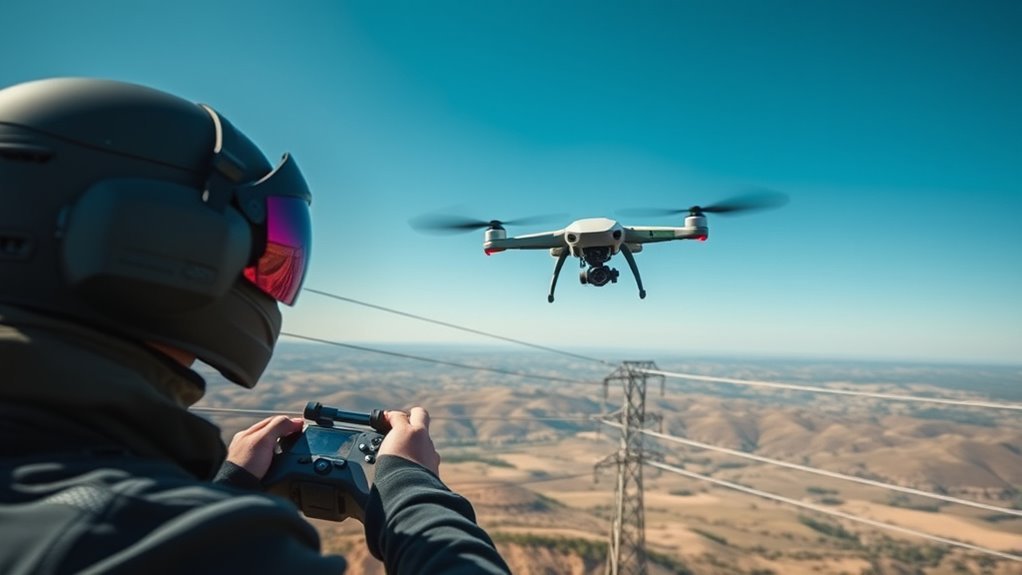
While you may have mastered basic maneuvers, diving into advanced techniques can elevate your FPV freestyle flying to a whole new level. These moves demand better timing, stronger spatial awareness, and smoother control inputs.
Knife edge flying, for instance, requires precise throttle control alongside pitch and roll adjustments. The goal is to keep a stable horizon while moving through a tilted line, often near or through tight gaps.
The Split S and Power Loop are essential moves that involve inverting your quadcopter while managing altitude effectively to maneuver through obstacles. In a Split S, you roll or invert before diving through a descending turn. In a Power Loop, you use momentum and throttle to loop backward over or around an object.
Don’t overlook yaw spins, which demand coordinated pitch, roll, and yaw controls. Maintaining a level horizon enhances visual appeal and makes the move look intentional instead of chaotic.
Orbiting maneuvers showcase your advanced skills. They require a delicate balance of all controls to sustain a consistent circular path around a focal point. Good orbits are smooth, centered, and controlled, not just fast circles around an object.
Finally, mastering segmented flips and rolls, like 90s and 270s, adds variety and precision to your routines. These partial rotations improve fluidity and style because they help you connect one line to the next.
Embrace these advanced techniques to stand out in the FPV freestyle community, but add them in stages. Learn the shape of each move first, then add speed, proximity, and tighter gaps later.
Advanced Move Progression
A smart progression keeps advanced freestyle exciting without turning every session into a repair day. Use this order to build control step by step:
- Basic flips and rolls: Learn clean rotation and level recovery.
- Segmented rotations: Practice 90, 180, and 270-degree stops.
- Split S turns: Add controlled inverted dives with safe altitude.
- Power loops: Practice wide loops first, then tighten the shape.
- Yaw spins: Blend yaw, roll, and throttle without losing orientation.
- Knife edge lines: Fly tilted lines only after basic gap control feels reliable.
- Orbits: Circle a fixed object while maintaining smooth distance and altitude.
This progression helps you stack skills instead of guessing. Each step teaches control that supports the next one.
Continuous Learning and Community Engagement
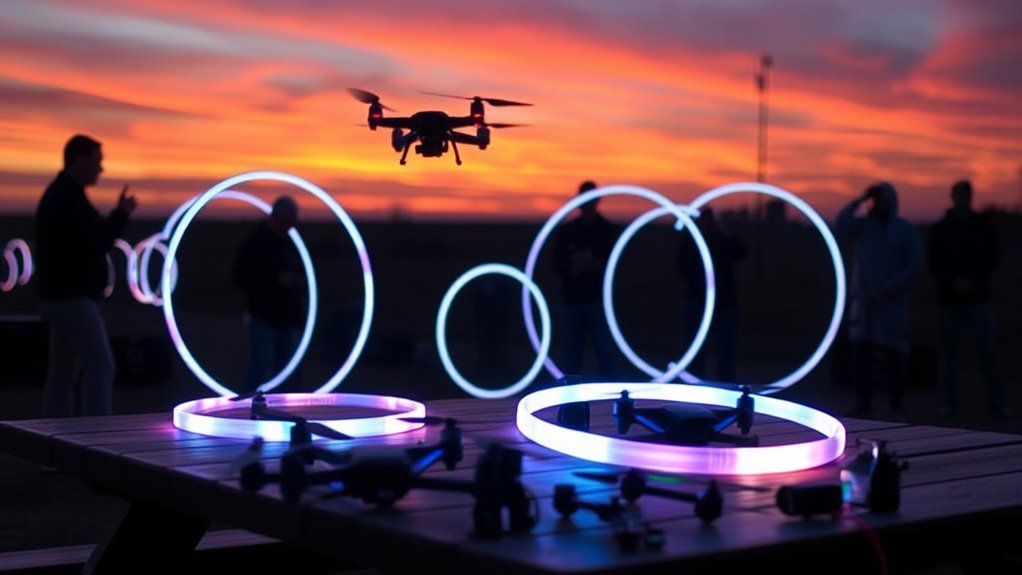
To truly excel in FPV freestyle flying, embracing continuous learning and engaging with the community can greatly enhance your skills. By participating in both online and local settings, you can gain insights that accelerate your learning process.
- Join online FPV forums to receive valuable feedback from seasoned pilots.
- Attend local meetups for real-time practice and collaboration with fellow flyers.
- Explore video tutorials to understand complex techniques and freestyle maneuvers.
- Share short flight clips so other pilots can identify line, throttle, or camera-angle issues.
- Ask experienced pilots how they would approach a specific gap or trick sequence.
Sharing your flight videos invites constructive criticism, helping you pinpoint areas for improvement. Keep your clips short and focused. A 20-second clip of one repeated mistake is easier to review than a long full-pack recording.
Continuous practice within community settings also allows you to experiment with different flying styles. That can lead to significant improvements in your overall piloting abilities.
Remember, the FPV community thrives on collaboration. Using these resources will not only refine your skills but also deepen your passion for the sport.
Stay curious, keep experimenting, and most importantly, have fun!
Safety and Legal Basics Before You Practice
Freestyle FPV can involve fast moves, limited visibility outside the goggles, and quick changes in direction. Before you practice, make safety part of your routine.
- Choose a wide, open location away from people, roads, homes, vehicles, and animals.
- Check local rules before flying, especially in controlled airspace, parks, campuses, and public areas.
- Use a visual observer or spotter when required or when it improves safety.
- Inspect props, motors, frame screws, antennas, and battery straps before each flight.
- Stop flying if your video link breaks up, your battery sags, or people enter the area.
- Keep your first freestyle packs simple so you can confirm your drone is flying correctly.
Safety does not make freestyle less exciting. It gives you more confidence because you know where your limits are and what recovery space you have.
Setup Tips for Better Freestyle Control
Your flying skills matter most, but your setup can make freestyle practice smoother. A quad that feels predictable is easier to control through gaps and tricks.
- Camera angle: Lower camera angles can help beginners fly slower and control lines. Higher angles support faster flying but demand quicker reactions.
- Rates: Use rates that allow full flips and rolls without feeling twitchy. Very high rates can make small corrections harder.
- Prop condition: Bent or damaged props create vibration, poor handling, and noisy footage.
- Battery placement: A secure battery keeps the quad balanced and reduces mid-air movement during hard turns.
- Simulator time: Sim practice builds muscle memory without risking your gear.
A comfortable setup should feel responsive but not nervous. If you constantly overcorrect, lower your rates slightly, slow down, or practice in a bigger space.
Related Guides
Frequently Asked Questions
What beginner drones are best for FPV freestyle flying?
For FPV freestyle flying, you’ll want a lightweight, durable drone that is easy to repair. Tiny Whoop-style drones are useful for indoor practice, while small freestyle quads such as the BetaFPV 85X-style class can help beginners learn outdoor control. Choose a model with available spare parts, prop guards if you are practicing near obstacles, and enough power to recover from basic tricks.
How do I choose the right FPV goggles?
To choose the right FPV goggles, consider resolution, field of view, comfort, receiver quality, and whether your drone uses analog or digital video. Try them on if possible because fit matters during longer sessions. A comfortable strap, clear screen, and reliable signal are more important than buying the most expensive option first.
What safety precautions should I take while flying?
Always check your surroundings for obstacles and people, maintain a safe distance, and follow local flying rules. Use a spotter when needed, inspect your drone before takeoff, secure the battery, and stop flying if anyone enters your practice area. Avoid flying over people, roads, animals, or property that could be damaged.
How can I find local FPV flying communities?
Finding local FPV flying communities is like searching for buried treasure. Check online forums, social media groups, local hobby shops, and regional drone clubs. Attend races, freestyle meetups, and practice days to connect with pilots who share your passion for flying.
What are common mistakes to avoid as a beginner?
As a beginner, avoid overcomplicating your setup, neglecting battery management, skipping simulator practice, and rushing into advanced maneuvers. Focus on mastering basic controls first. Many crashes happen because pilots fly too low, too fast, or too close to obstacles before their recovery skills are ready.
Should I learn freestyle FPV in a simulator first?
Yes. A simulator is one of the best ways to learn stick control, throttle timing, flips, rolls, and recovery habits before risking real equipment. It will not replace real flying, but it can save batteries, props, frames, and frustration while you build muscle memory.
How often should I practice freestyle FPV?
Practice often enough to stay consistent, but keep sessions focused. Short, regular practice sessions usually work better than rare marathon sessions. Spend each session on one clear goal, such as throttle control, gap alignment, rolls, or smooth exits.
Conclusion
As you immerse yourself in freestyle FPV flying, remember that practice is key. Clean lines, smooth throttle, safe gap progression, and controlled recovery habits will improve your flying more than rushing into advanced tricks too soon.
Start with larger gaps, master your approach, and build confidence one skill at a time. Then add flips, rolls, Split S turns, power loops, yaw spins, knife edge lines, and orbits as your control improves.
Engage with the community, share your experiences, and keep pushing your limits safely. The sky’s the limit, so get out there and fly with control, patience, and style.
Sources
- Federal Aviation Administration UAS — general drone safety and recreational flying guidance.
- FAA Recreational Flyers — recreational drone rules, safety expectations, and operating basics.
- Academy of Model Aeronautics Safety Program — model aircraft safety guidance and community flying practices.