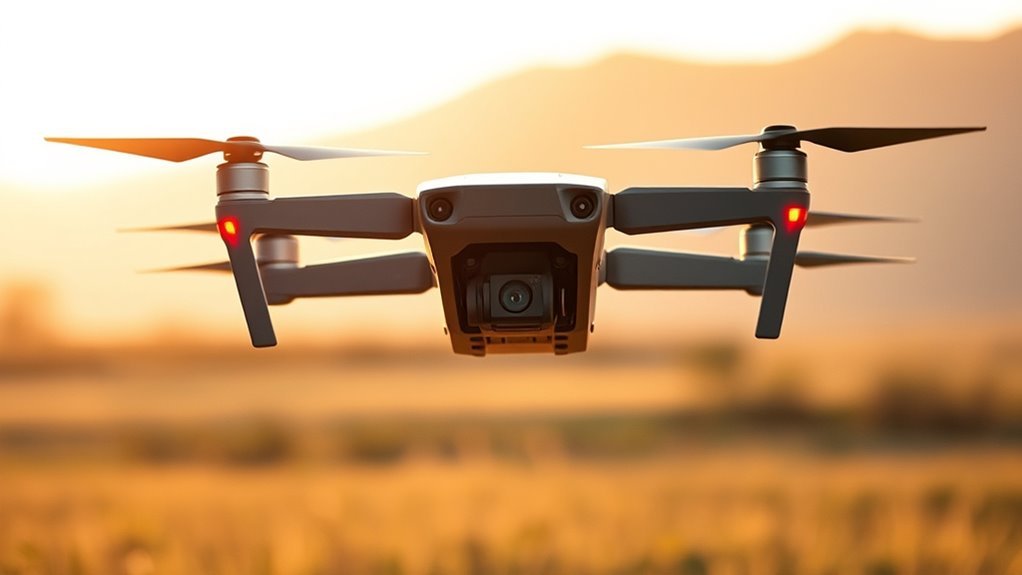
The DJI Neo 2 is a 151-gram compact drone built around improved stability, stronger wind resistance, and more autonomous flight behavior. It adds front LiDAR, a multi-directional camera system, 19 minutes of flight time, 6 km transmission, and 49 GB of built-in storage. Compared with the original Neo, the changes are more than incremental, and the details behind those gains are where the real differences begin.
What the DJI Neo 2 Is
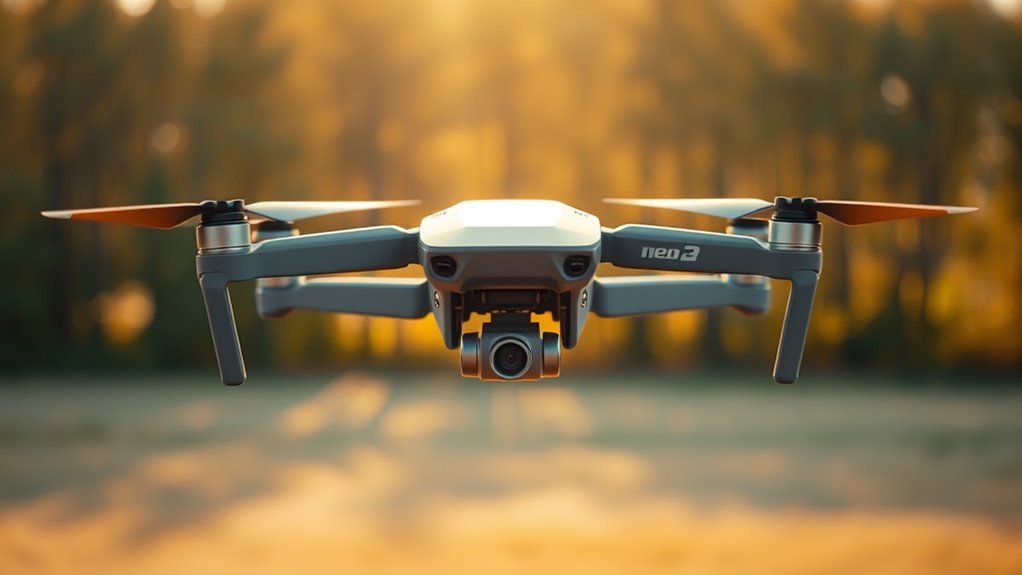
The DJI Neo 2 is a compact drone that weighs 151 grams and measures 167×171×54 mm, making it slightly larger than its predecessor.
The DJI Neo 2 weighs 151 grams and measures 167×171×54 mm, slightly larger than its predecessor.
As a DJI Neo evolution, it is positioned as a lightweight aerial platform for users seeking portable control without complexity. Its design emphasizes stability, with improved wind resistance up to 10.7 m/s, allowing more reliable operation in exposed conditions.
A multi-directional camera system and front-facing LiDAR sensor support obstacle detection from several angles, which strengthens flight confidence.
The drone also carries 49 GB of built-in storage, reducing dependence on removable media. Flight endurance is rated at approximately 19 minutes, and transmission range reaches up to 6 km with improved stability.
These characteristics define the DJI Neo 2 as a compact, self-contained drone focused on accessible operation, safer navigation, and practical autonomy.
DJI Neo 2 Specs at a Glance
The DJI Neo 2 presents a compact technical profile, with an approximate takeoff weight of 151 grams and dimensions of 167×171×54 mm.
Its stated performance includes up to 19 minutes of flight time, a 6 km range, 49 GB of internal storage, and wind resistance rated at 10.7 m/s.
The platform also adds a multi-directional camera system with front-facing LiDAR for improved obstacle detection and transmission stability.
Key Specs Overview
At a glance, the DJI Neo 2 is a compact sub-250 g drone with a takeoff weight of about 151 grams and dimensions of 167×171×54 mm, making it slightly larger than its predecessor.
Its maximum flight time is around 19 minutes, enabled by a higher-capacity battery, giving users more freedom between landings.
The airframe is rated for wind resistance up to 10.7 m/s and a maximum horizontal speed of 43.2 km/h, supporting controlled operation in variable conditions.
A 2-axis mechanical gimbal, paired with RockSteady stabilization, is intended to keep footage steady.
Internal storage totals 49 GB, more than double the prior model, while external memory cards are not supported.
These specifications position the drone as a compact, self-contained platform for mobile capture.
Neo 2 Highlights
Compact and self-contained, the DJI Neo 2 combines a 151-gram airframe with dimensions of 167×171×54 mm, improved wind resistance up to 10.7 m/s, and a top speed of 43.2 km/h.
Its larger frame supports a multi-directional camera array, including a front-facing LiDAR sensor for stronger obstacle detection during flight.
Endurance is rated at about 19 minutes, while the 6 km range reflects more stable transmission and better interference resistance.
Internal storage rises to 49 GB, reducing reliance on external media and preserving a streamlined design.
The result is a compact system that prioritizes controlled flight, safer navigation, and practical autonomy.
For users seeking lighter, less constrained aerial operation, the Neo 2 presents a balanced specification set without unnecessary complexity or expansion ports.
How the DJI Neo 2 Handles in Flight
In flight, the DJI Neo 2 is designed for stable control and responsive handling, with wind resistance rated up to 10.7 m/s to help maintain steadiness in breezy conditions. It can fly with disciplined precision, giving the pilot room to move freely while keeping the frame composed. In manual mode, a maximum horizontal speed of 16 m/s adds agile forward motion for experienced operators. The DJI Fly app allows flight patterns to change mid-flight, reducing interruption and supporting quick tactical adjustments without landing.
| Attribute | Value | Effect |
|---|---|---|
| Wind resistance | 10.7 m/s | More stable flight |
| Horizontal speed | 16 m/s | Greater maneuverability |
| Gimbal | 2-axis mechanical | Smoother footage |
| Camera system | Multi-directional | Better motion tracking |
| Mode switching | Mid-flight via app | Seamless shifts |
The multi-directional camera system and 2-axis mechanical gimbal help preserve smooth capture during dynamic maneuvers, aligning control, balance, and visual consistency in one compact airframe.
DJI Neo 2 Flight Time and Range
The DJI Neo 2 extends flight time to approximately 19 minutes, reflecting a clear gain over its predecessor.
Its range reaches up to 6 kilometers, with stable transmission and improved resistance to interference in dense environments, while wind tolerance up to 10.7 m/s supports consistent operation.
A higher-capacity battery and 65W bidirectional charging hub, capable of charging three batteries at once, further reinforce endurance and turnaround efficiency.
Flight Time Gains
With a high-capacity battery and a new bidirectional hub supporting charging up to 65 W, the DJI Neo 2 extends flight endurance to about 19 minutes while preserving practical mobility.
This flight time gain is the clearest upgrade over the earlier model, giving operators more usable air time for quick, self-directed capture. The longer session window reduces interruptions and supports freer movement between takeoff, framing, and landing.
Controlled-condition data indicate improved efficiency rather than a dramatic redesign, so real-world results may vary with wind, temperature, and workload. The battery system is paired with stronger power management, helping the drone remain responsive through the full cycle.
For users seeking lightweight autonomy, the added minutes provide a more liberated operating margin without sacrificing compactness.
Range and Stability
Beyond its roughly 19-minute flight time, the DJI Neo 2 also improves operational range and link stability.
It retains a 6 km range, giving operators more room to maneuver without losing dependable control. The updated transmission system is designed for stronger stability and better resistance to interference, which is especially relevant in dense urban spaces where signals are often obstructed.
Connection reliability is improved, reducing disruptions when flying near buildings, trees, or other obstacles. Wind resistance increases from 8 m/s to 10.7 m/s, helping the aircraft remain composed in harsher conditions.
For users seeking mobility and operational freedom, these changes make the Neo 2 a more consistent tool, with range and stability that support confident flight in demanding environments.
Battery And Charging
Power management on the DJI Neo 2 centers on a 1435 mAh battery, delivering an estimated 19 minutes of flight time under typical conditions. That capacity supports longer sorties without constant interruption, while the aircraft keeps a stable 6 km range for dependable control.
Transmission remains resistant to interference, which helps preserve command in dense urban environments. Charging options are practical: the Two-Way Charging Hub requires about 60 minutes, and direct charging takes around 50 minutes.
With the recommended DJI 65W Portable Charger, turnaround between flights is efficient. The battery level can be monitored for precise planning, enabling operators to decide when to land, recharge, and return to flight with minimal delay.
Enhanced wind resistance further protects usable endurance.
DJI Neo 2 Camera and Video Quality
The DJI Neo 2 pairs an f/2.2 lens with a 1/2-inch sensor to produce bright, detailed footage across a range of lighting conditions. This configuration supports strong Video Quality for a compact drone, even though the sensor is smaller than the 1/1.3-inch unit in the DJI O4 Unit Pro.
A 2-axis mechanical gimbal with RockSteady stabilization helps keep motion controlled, reducing shake during quick maneuvers and preserving image clarity. The camera’s 119.8° field of view captures wider scenes, which is useful when framing action or environmental context.
It also records vertical video in 2.7K and maintains a native 9:16 aspect ratio, so footage intended for Stories or Shorts keeps full resolution without cropping loss. The result is a camera system designed for clean, share-ready output, with enough optical and stabilization support to serve users seeking sharper, more autonomous visual expression.
DJI Neo 2 Modes and Controls
The DJI Neo 2 offers multiple control methods, including remote input, gesture commands, and voice control, allowing flexible user operation.
The DJI Fly app adds virtual joysticks and dynamic flight mode switching in flight, while the DJI RC-N3 controller supports more precise navigation.
It also includes automated flight features such as active track and maneuver modes like rocket and follow for subject tracking and creative motion.
Flight Modes
Flight modes on the DJI Neo 2 are designed to balance responsiveness, stability, and ease of control across different flying conditions. These flight modes support freer aerial movement while preserving predictable handling, with Cine, Normal, and Sport profiles available. Normal reaches 6 m/s, while Manual can reach 16 m/s for higher-speed runs. Mode changes can be made mid-flight in the DJI Fly app, reducing interruption and extending mission flexibility. Front LiDAR adds obstacle detection support, improving safety in confined routes.
| Mode | Primary Use | Speed |
|---|---|---|
| Cine | Smooth shots | Low |
| Normal | General flight | 6 m/s |
| Sport | Faster travel | High |
| Manual | Aggressive control | 16 m/s |
| App switching | Mid-flight changes | Seamless |
With about 19 minutes of flight time, the aircraft can use these flight modes efficiently.
Control Options
Control options on the DJI Neo 2 are designed for flexible operation, with support for remote control, gesture input, and voice commands. These control options let the operator choose a level of directness that suits the task, from hands-free initiation to precise piloting.
The DJI Fly app adds virtual joysticks for straightforward on-screen control, reducing dependence on dedicated hardware. In use, the system can pair with Cine, Normal, or Sport flight modes to balance smooth motion, standard handling, or faster response.
A multi-directional camera system and front-facing LiDAR improve obstacle awareness during active control. With 49 GB of built-in storage, the drone can capture extended footage without external cards, supporting a more independent workflow.
What Changed From the Original Neo?
Several hardware refinements distinguish the Neo 2 from the original Neo. It gains a 151 g airframe, improving stability, plus stronger wind resistance at 10.7 m/s. The camera suite now supports multi-direction sensing and front LiDAR for obstacle avoidance, giving pilots more confidence in confined or uncertain space. Flight autonomy also improves, with about 19 minutes of airtime from the higher-capacity battery. Built-in storage rises to 49 GB, reducing dependence on external cards and simplifying a liberated, self-contained workflow.
| Change | Neo | Neo 2 |
|---|---|---|
| Weight | Lower | 151 g |
| Obstacle sensing | None | Front LiDAR |
| Internal storage | Smaller | 49 GB |
These updates make the newer model more robust, more aware, and less constrained. It is not a radical redesign, but a practical progression focused on stability, endurance, and autonomous flight support.
DJI Neo 2 Storage, Battery, and Charging
The Neo 2’s practical upgrades extend to storage and power management. It carries 49 GB of built-in storage, more than double the original model, so recording can proceed without external memory cards.
The Neo 2 packs 49 GB of built-in storage, eliminating the need for external memory cards.
For operators seeking a lighter, less dependent workflow, this integrated capacity simplifies file handling and reduces accessories.
Battery power comes from a 1435 mAh pack, rated for about 19 minutes of flight under ideal conditions. Real-world duration will vary with wind, maneuvering, and payload, but the specification defines a compact airborne window for mission planning.
Charging is streamlined through a new bidirectional hub that can replenish three batteries at once at up to 65 W. A full charge takes about 60 minutes with the Two-Way Charging Hub, or roughly 50 minutes using direct charging.
The battery is designed to operate between 5° and 40° C, and status monitoring is available through the DJI Fly app.
DJI Neo 2 Pros and Cons
Balancing compact design against expanded capability, the DJI Neo 2 presents a strong set of trade-offs for creators prioritizing portability and image quality. Its 19-minute flight time, 151-gram frame, and 10.7 m/s wind resistance improve field reliability. The 2-axis gimbal and multi-directional camera system raise image stability, while 2.7K vertical recording supports liberated, platform-ready capture. Built-in storage grows to 49 GB, reducing immediate write limitations.
| Pro | Con | Impact |
|---|---|---|
| 19-minute battery life | No memory card slot | Longer sessions, fixed storage |
| 2-axis gimbal | Slightly larger body | Better video, less pocketable |
| 10.7 m/s wind resistance | 151 g weight increase | More stable flight |
| 16 m/s Manual speed | DJI Care may be needed | More capable, higher exposure |
Limitations remain clear: storage cannot expand, and the larger chassis may matter in ultra-minimal setups. Overall, the Neo 2 favors control, image quality, and freer movement over maximum modularity.
Who the DJI Neo 2 Is Best For
Ideal for beginners and experienced drone users alike, the DJI Neo 2 suits creators who want a compact platform for aerial photography and videography without a steep learning curve.
Ideal for beginners and experienced drone users alike, the DJI Neo 2 offers compact, easy aerial creativity.
Its simplified controls support first-time pilots, while advanced flight modes and multi-directional sensing appeal to users seeking more expressive aerial work.
The 19-minute flight time and 6 km range make it practical for extended scouting, travel, and location coverage without constant battery changes.
Improved wind resistance up to 10.7 m/s helps maintain control outdoors, even when conditions are less predictable.
Built-in 49 GB storage reduces reliance on external media, streamlining field use.
The drone also fits users who value safer experimentation; obstacle detection and propeller guards help reduce risk during close-quarters flying.
For creators pursuing freedom of movement, quick deployment, and technical flexibility, the Neo 2 is best suited to portable content capture and agile visual exploration.
Frequently Asked Questions
Can You Explain the Different Flight Modes of the DJI Neo 2?
The DJI Neo 2 offers three Flight Performance modes: Cine, Normal, and Sport.
Cine limits ascent and descent to 0.5 m/s for smooth, controlled motion.
Normal balances handling and speed, reaching up to 6 m/s horizontally for general use.
Sport prioritizes agility, with speeds up to 16 m/s for fast subjects.
Mid-flight pattern changes are supported through the DJI Fly app, expanding operational freedom and creative control.
What Is the Difference in Flight Time Between the DJI Neo and the Neo 2?
The Neo 2 flies about 1 minute longer than the Neo, reaching roughly 19 minutes versus 18 minutes on a standard battery.
That small gain is a clear Battery Performance improvement, yet it is not dramatic.
With propeller guards, the Neo 2 drops to about 17 minutes, matching the Neo without guards.
The extra hover margin supports freer aerial work, though both models still share similar endurance limits.
What Are the Key Differences Between the DJI Neo and Neo 2?
The key differences are Camera Upgrades, longer flight endurance, greater storage, stronger wind resistance, and improved obstacle sensing.
The Neo 2 increases flight time to about 19 minutes, adds 49 GB built-in memory, and raises wind tolerance to 10.7 m/s.
Its camera gains a 119.8° field of view and 2.7K vertical recording.
A front-facing LiDAR and multi-directional sensing further expand autonomy, reinforcing a more capable, less constrained aerial platform.
Does the DJI Neo 2 Have Turtle Mode?
No, the DJI Neo 2 does not include Turtle Mode or Turtle Recovery.
The design emphasizes stability, wind resistance, and obstacle sensing to reduce tip-overs rather than relying on inverted self-righting.
Control through remote, gestures, voice, and the DJI Fly app provides precise maneuvering.
For users seeking operational freedom, the Neo 2 prioritizes prevention and recovery through flight control, not a dedicated flip-over rescue function.
Conclusion
In conclusion, the DJI Neo 2 appears as a compact, capable drone that trades a modest increase in size for noticeably steadier handling and broader autonomy. Its 151 g frame, 19-minute flight time, 6 km range, and front LiDAR suggest a well-balanced platform for casual and mobile use. Compared with the original Neo, it presents a more refined package, with its strengths most visible in stability, obstacle awareness, and user-friendly operation.
