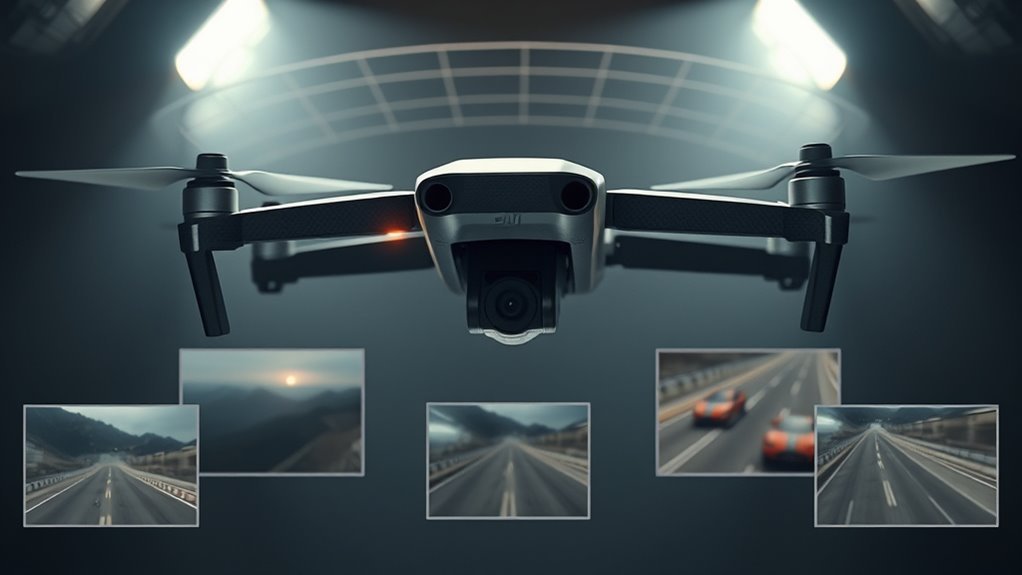
DJI Avata 360 pushes FPV into a new category with 8K 360-degree capture, dual 1-inch-class sensors, and built-in safety features suited to indoor and outdoor flight. Its appeal is not only image quality, but also how much control it gives in post, where reframing can reshape a shot long after takeoff. The real question is whether that flexibility outweighs the tradeoffs, and that depends on how it flies.
DJI Avata 360 Overview
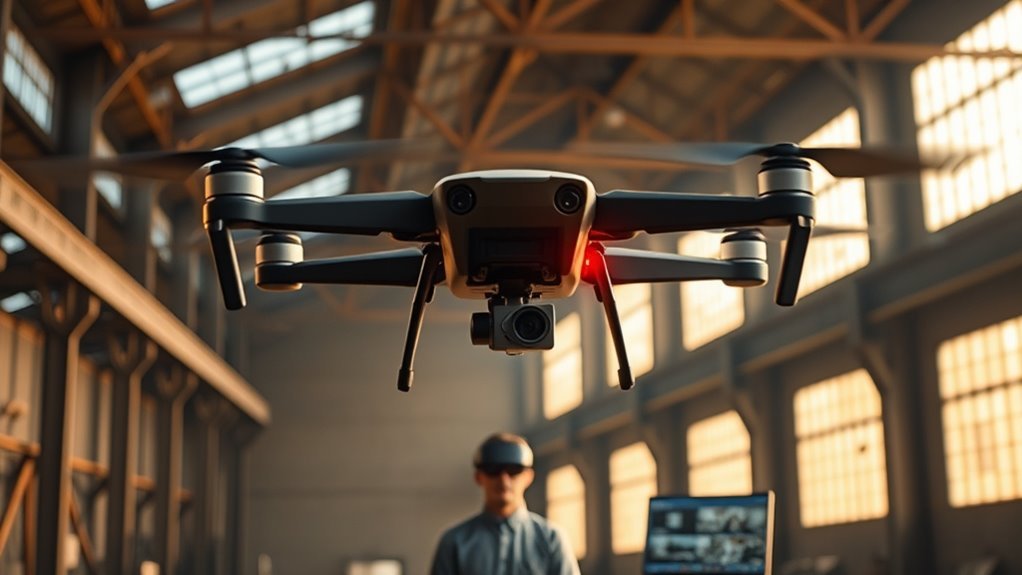
The DJI Avata 360 stands out as DJI’s first 8K 360-degree camera drone, built for filmmakers and content creators who need high-resolution immersive capture. Its dual 1-inch-class sensors support high-quality imaging, while the 8K 360-degree workflow enables full 360-degree views in a single flight.
The platform is aimed at FPV flying with a capture model that gives editors freedom to reframe after takeoff, reducing dependence on fixed angles and conventional shot planning. Omnidirectional obstacle sensing adds LiDAR and infrared awareness for safer movement in complex spaces, helping preserve creative autonomy without sacrificing control.
The airframe is positioned as a release for users seeking expansive visual coverage and precise motion capture. Pre-orders are already open, with shipping expected in April 2026.
Positioned between cinematic immersion and practical flight safety, the DJI Avata 360 offers a technical path toward unrestricted aerial storytelling for those who want more room to create.
DJI Avata 360 Specs
The DJI Avata 360’s imaging system centers on dual 1-inch-class sensors, 8K video at 60fps, and up to 180 Mbps, with 200-degree lenses enabling full 360-degree capture and post-production reframing.
Single-lens mode adds 4K HDR recording at 60fps, while stills can reach 120 megapixels for high-resolution capture.
On the flight side, a 23-minute maximum flight time, omnidirectional obstacle sensing, and a compact 1 lb frame define its safety and portability profile.
Imaging And Video Specs
Equipped with dual 1-inch sensors, the DJI Avata 360 is built to deliver serious imaging performance, capturing 8K/60fps HDR video and 120-megapixel stills for high-detail output.
The Avata’s 360° imaging system uses 200-degree lenses to record complete scenes in one pass, then lets creators reframe footage in post for multiple outputs from a single flight.
For a more conventional workflow, Single Lens mode records at 4K/60fps. The video bitrate peaks at 180 Mbps, preserving texture, motion, and color integrity in demanding light.
That specification set positions the platform for professional filmmaking and high-resolution footage, while keeping composition flexible for users seeking visual autonomy.
It is a camera-first aerial tool designed to expand creative control without sacrificing detail.
Flight And Safety Specs
Flight performance on the DJI Avata 360 is engineered for controlled, responsive operation, with a maximum flight time of 23 minutes supporting longer capture sessions and a top speed of 39.6 kph enabling dynamic subject movement.
The DJI Avata 360 pairs intelligent flight batteries with omnidirectional obstacle sensing, using LiDAR and infrared sensors to improve safety during flight in complex environments. An integrated propeller guard adds protection in indoor corridors, near subjects, and other close-quarters scenarios where precision matters.
ActiveTrack 360 maintains subject lock without constant manual correction, freeing the operator to focus on framing and motion. Together, these flight time and safety systems support liberated, immersive FPV work while preserving stability, control, and confidence.
How 360° Capture Changes Editing
360° capture changes editing by turning a single flight into a source of multiple framing choices, with the DJI Avata 360 allowing extensive reframing from one 8K/60fps recording.
That workflow supports multiple cuts, since one take can yield several distinct sequences without additional camera setups.
It also permits precise control over angle and speed in post-production, making the edit process more flexible and technically efficient.
Infinite Reframing Options
With 8K 60fps 360-degree capture, the DJI Avata 360 shifts editing from fixed framing to post-production control, letting users reframe a single flight into multiple deliverables.
DJI Avata 360 uses infinite rotation and reframe in post-production to turn an immersive flight experience into deliberate composition. At 8K resolution, HDR video benefits from dual sensors that preserve detail, color, and tonal range across the sphere.
The result is creative freedom without prior camera locking. Operators can select angles, motion paths, and playback speed after recording, shaping the final scene with precision.
DJI Fly and DJI Studio extend this workflow, while single-lens mode adds conventional framing when needed.
For creators seeking liberation from rigid setups, the system makes each single flight a flexible source of controlled perspectives.
Single Flight, Multiple Cuts
A single DJI Avata 360 flight can yield multiple finished cuts because the drone records a full 360-degree field at 8K 60fps, allowing editors to choose new framing, camera paths, and motion emphasis after capture.
In practice, this Drone turns one take into several deliverables, freeing crews from repeated setups and locked perspectives.
The DJI Avata 360 supports reframing in post, so a single flight can become wide reveals, tighter subject follows, or alternate compositions without reshooting.
Its dual 1-inch sensors help preserve image quality across those choices, while 8K resolution keeps the source flexible for export.
The DJI Fly app streamlines video recording review and selection, making multiple cuts from one session straightforward.
This workflow favors creators seeking autonomy, efficiency, and cleaner production.
Angle And Speed Control
The DJI Avata 360 changes edit control by capturing a complete 360-degree scene in a single flight, then letting editors redefine angle, motion, and pacing in post-production.
In the DJI Avata 360 workflow, 8K/60fps footage preserves detail for precise reframing, so angle and speed control can be adjusted without collapsing image quality. This expands the editing process beyond fixed viewpoints, enabling immersive flying to become a modular source of unique perspectives and dynamic camera movements.
- One flight yields multiple video clips from different angles.
- Real-time head tracking broadens viewing directions for freer reframing.
- DJI Fly and DJI Studio permit speed shifts that shape tempo.
Single-Lens Mode or Full 360° Mode?
Choosing between Single-Lens Mode and Full 360° Mode depends on the shot objective and post-production workflow. The DJI Avata 360 offers a practical split: Single-Lens Mode delivers focused 4K footage for subjects that need direct framing, while the full 360° view records with dual 180° fisheye cameras at 8K resolution for broader spatial capture. This supports filming flexibility for creators seeking less constraint and more control.
| Mode | Primary Use |
|---|---|
| Single-Lens Mode | Subject-focused 4K capture |
| Full 360° Mode | Dynamic camera movements and creative reframing |
Full 360° recording enables multiple perspectives from one flight, reducing setup friction and expanding versatile filming options. Single-Lens Mode suits cleaner, immediate composition; 360° mode suits editors who want to reclaim framing later. Neither mode requires a separate system, and both benefit from the platform’s obstacle avoidance design, though that discussion belongs elsewhere.
DJI Avata 360 Flight Modes
DJI Avata 360 flight modes center on usability and controlled cinematography rather than manual acrobatics. The DJI Avata 360 offers three core flight modes: Normal mode, Sport mode, and head-tracking mode.
Normal mode stabilizes the FPV Drone automatically, giving new pilots user-friendly controls and a calm entry point. Sport mode increases speed and responsiveness, adding agility for pilots who want a more liberated, dynamic line through the air. Head-tracking mode shifts the camera with head movements, supporting immersive filming and precise framing without rotating the drone.
- Normal mode: steady, stabilized flight for confident learning
- Sport mode: faster response for sharper movement and stronger flow
- Head-tracking mode: camera direction follows the pilot for cinematic video capture
There is no manual flight mode, so advanced acrobatics remain outside its scope. That limitation is also a design choice, keeping the DJI Avata 360 focused on controlled motion, accessible control, and efficient cinematic output.
DJI Avata 360 vs. Antigravity A1
At a technical level, these two FPV systems differ most in capture hardware, safety design, and post-production flexibility.
The DJI Avata 360 uses dual 180° fisheye cameras for full 360° capture and records in 8K/60fps, while the Antigravity A1 relies on a single lens and lower-resolution output. That gives the DJI Avata 360 a clear edge in image quality, especially in low-light performance, where footage appears cleaner and more polished.
Safety also diverges: omnidirectional obstacle sensing and a propeller guard reduce collision risk and support freer indoor flying. By contrast, the A1 lacks prop guards.
In endurance, the A1 exceeds 30 minutes of flight duration, whereas the Avata 360 reaches about 23 minutes.
Post-production favors the Avata 360 through advanced editing features, including one-tap reframing, enabling more control after takeoff and less dependence on precise in-air composition.
Who Is the DJI Avata 360 For?
Built for creators who prioritize image quality and post-production control, the DJI Avata 360 suits filmmakers, content producers, and advanced hobbyists who want immersive 360° capture without sacrificing editing flexibility. Its 8K resolution and dual 1-inch-class sensors support high-quality footage in daylight, dusk, or night, freeing users from restrictive lighting windows.
Filmmakers can extract multiple shots from one flight using reframing options.
Content creators benefit from automatic subject tracking for dynamic, low-effort framing.
Novice and experienced pilots gain confidence from omnidirectional obstacle sensing and a propeller guard.
The DJI Avata 360 is also relevant for solo operators who need agile production tools without a large crew. Automatic subject tracking simplifies motion-heavy scenes, while full 360-degree capture keeps composition open until editing.
For users seeking expressive control, the platform offers a clear path from capture to final cut.
Frequently Asked Questions
Is the DJI Avata 360 a Good Drone?
Yes, the DJI Avata 360 appears to be a good drone, especially for creators seeking strong image quality and versatile camera capabilities.
Its battery life and flight time are respectable, while safety features and portability options support practical use.
The user experience should improve with software updates and the included controller.
A price comparison suggests premium positioning, but the performance may justify it for those pursuing control and visual liberation.
Can the DJI Avata 360 Follow You?
Yes, it can follow a subject through Follow Mode and Tracking Features.
Advanced Sensors support safe subject tracking, while Battery Life limits longer pursuits and Flight Range constrains distance.
User Experience is improved by real-time head tracking and DJI Fly controls.
Software Updates may refine behavior over time.
Real World Applications include autonomous filming and active sports capture.
Safety Measures help prevent collisions while preserving freedom of movement.
Which Goggles Are Compatible With the DJI Avata 360?
DJI Goggles N3 are the main compatible option, like a cockpit window opening onto the sky.
Goggle types also include DJI Goggles tied to the Avata 360 ecosystem, with RC 2, RC-N2, or RC-N3 controllers during the setup process.
User experience, image quality, flight range, battery life, and price comparison depend on firmware and software updates; compatibility issues may arise if versions mismatch.
Does the DJI Avata 360 Have Lidar?
Yes, the DJI Avata 360 appears to use Lidar technology for omnidirectional sensing, though official specifications should confirm it.
That system would support Flight stability, Safety features, and low-light tracking, while aiding FPV experience and automatic subject following.
Camera resolution is unaffected directly, but better avoidance protects footage.
Battery life, User interface, Drone accessories, and Software updates still shape the overall platform, especially for users seeking freer, more precise flight.
Conclusion
To sum up, the DJI Avata 360 combines 8K 360° capture, dual 1-inch-class sensors, and FPV-style flight into a highly flexible aerial imaging platform. Its reframing workflow gives editors substantial creative control, while single-lens and full 360° modes broaden its use cases. With omnidirectional sensing and propeller protection, it suits both indoor and outdoor shooting. For perspective, 60 fps at 8K means every second contains enough detail to recompose smooth, cinematic motion from nearly any angle.
