
FPV drone racing is rapidly gaining traction, attracting new pilots with its blend of speed, skill, and real-time control. As a beginner in 2025, you can start with a manageable setup, but the learning curve is real. Understanding the essential equipment, building your flying skills through simulators, following safety rules, and connecting with the FPV community will give you a stronger foundation before your first race.
Quick Answer
To get into FPV drone racing as a beginner, start with a radio controller and simulator, practice manual flying for at least 10 hours, then buy a durable beginner FPV kit. Learn local drone rules, fly with a spotter when required, carry spare parts, and join local racing groups before entering your first event.
Key Takeaways
- A complete beginner FPV racing setup usually includes a drone, radio controller, goggles, batteries, charger, tools, and spare parts.
- Simulator practice is the safest first step because it builds muscle memory before you risk crashing real gear.
- A 5-inch FPV drone is a common starting point for outdoor racing, while smaller whoops or cinewhoops work better indoors.
- Racing, freestyle, indoor flying, and outdoor flying use different setups, so pick your flying style before buying major gear.
- Always check local drone rules, use safe flying areas, and avoid flying near people, roads, airports, or restricted airspace.
At a Glance
| Time Required | 10 to 20 simulator hours before your first confident outdoor flights |
| Difficulty | Moderate to hard for true racing, easier if you start with a simulator and beginner modes |
| Tools Needed | FPV simulator, radio controller, FPV drone, goggles, LiPo batteries, charger, prop tool, spare props, and basic repair tools |
| Cost | About $400 to $1,800, depending on goggles, controller, drone size, batteries, and spare parts |
What Is An FPV Drone?
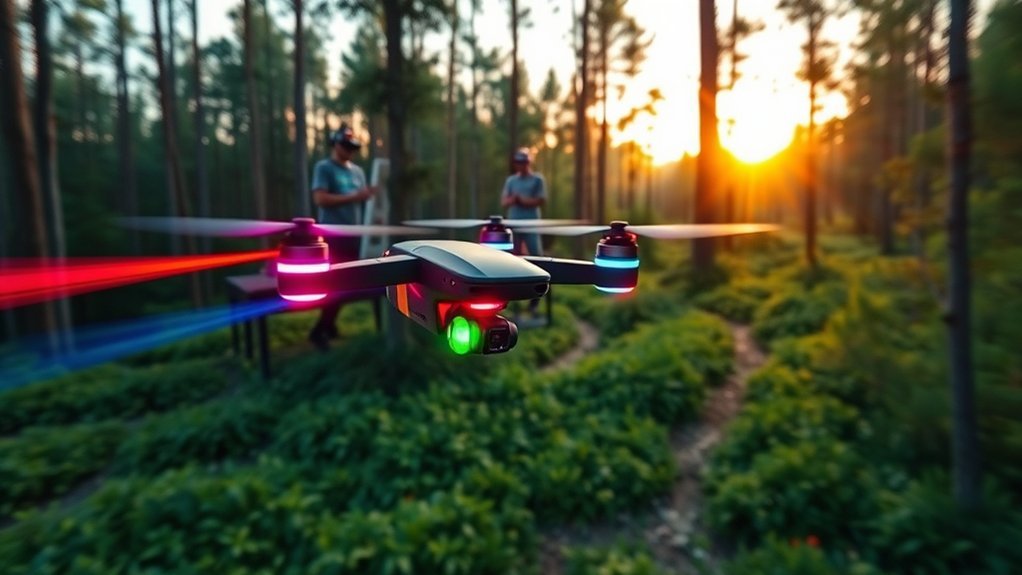
FPV drones, or First Person View drones, transform the way you experience flight by allowing you to see through the eyes of the drone itself. With goggles or a screen that shows a live video feed, you feel immersed in the flight instead of watching the drone from the ground.
Unlike many camera drones, FPV drones focus on immersive flying experiences, fast reactions, and hands-on control. They are popular for racing, freestyle tricks, exploration, and cinematic aerial footage. In racing, pilots fly through gates, around flags, and along a marked course while trying to complete clean laps as quickly as possible.
However, be prepared for a steeper learning curve if you’re new to this world. Manual FPV control feels very different from flying a GPS camera drone. It’s recommended that you spend over 10 hours practicing with a simulator before attempting to fly your first FPV drone. This training emphasizes manual control and skill development, allowing you to master flying techniques without risking damage to your equipment.
Investing in an FPV drone usually costs between $400 and $1,800, depending on the components and accessories you choose. You can start lower with a small indoor kit, but outdoor racing setups often cost more once you add goggles, batteries, chargers, spare props, tools, and repairs.
Warning: FPV flying can reduce your direct awareness of the airspace around the drone. Check your local rules, fly in safe open areas, and use a visual observer when required by your local aviation authority or race organizer.
How Much Does an FPV Drone Cost?
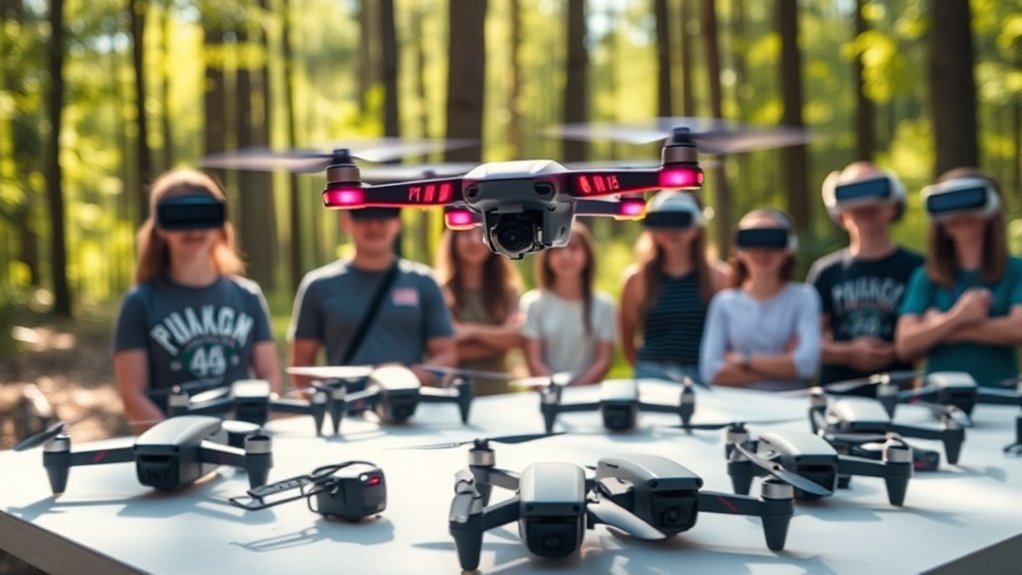
When you’re considering getting into FPV drone racing, it’s essential to understand the costs involved. Your initial investment can vary widely, depending on the features you choose, while ongoing maintenance and additional gear can add to your budget. Luckily, there are budget-friendly options available that can help you get started without breaking the bank.
Initial Investment Breakdown
Diving into the world of drone racing requires a solid financial commitment, typically ranging from $400 to $1,800. Your initial investment will include essential equipment such as radio controllers, FPV goggles, and drones. To simplify things, consider purchasing a ready-to-fly drone, which can help you avoid assembly headaches.
Here’s a breakdown of potential costs:
| Item | Cost Range |
|---|---|
| Radio Controllers | $100 – $300 |
| FPV Goggles | $100 – $500 |
| Drone | $100 – $500 |
| Accessories | $100 – $500 |
Additionally, budgeting $100-$300 for simulator training is wise to polish your flying skills before diving into physical equipment. Some simulators cost less than that, but the broader budget can include the controller you will use for both simulator practice and real flights.
Ongoing Maintenance Expenses
Maintaining an FPV drone can add up, so it’s important to understand the ongoing expenses involved in this exhilarating hobby. Crashes are normal when you learn, and racing pushes parts harder than casual flying.
- Radio Controllers and FPV Simulators: Expect to spend between $100 and $300 each, depending on features and build quality.
- FPV Goggles: These can range from $100 to $500, a significant investment for your experience.
- Batteries and Chargers: Additional costs may run from $100 to $500, depending on your setup.
- Regular Maintenance and Repairs: Crashes happen, and budgeting for potential repairs is vital.
You should also plan for spare propellers, motor screws, antennas, battery straps, frame arms, solder, heat-shrink tubing, and small tools. Beginners often underestimate repair costs, but a small parts box can save a flying day when something breaks.
Budget-Friendly Options Available
If you’re looking to enter the world of FPV drone racing without breaking the bank, you’ll be pleased to know that budget-friendly options are available. You can find smaller drones for as low as $100, making it easy to start flying without a significant financial commitment.
While higher-end setups can cost between $400 and $1,800, a complete beginner’s setup, including a drone, controller, goggles, and accessories, can be achieved for around $600 to $1,200. Essential accessories like radio controllers typically range from $100 to $300, and FPV goggles can cost between $100 and $500. Don’t forget to factor in additional expenses for batteries and chargers, which may add another $100 to $500 to your total costs.
If your budget is tight, start with the radio and simulator first. That lets you build skill before buying a racing drone. You can then choose a small indoor whoop, a durable 3-inch trainer, or a 5-inch outdoor racing build based on where you will fly most often.
Pick a Radio
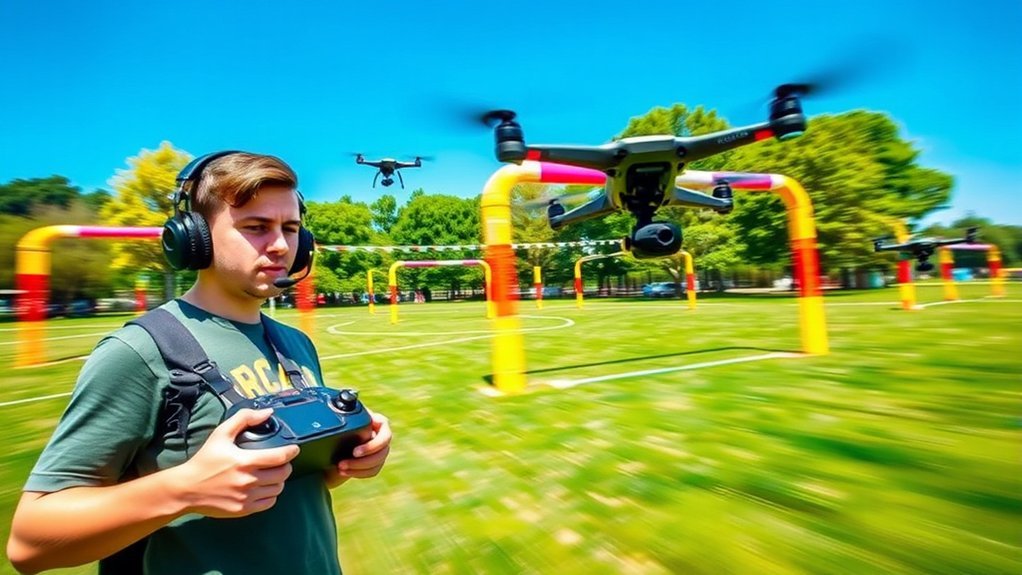
Choosing the right radio controller is essential for your success in FPV drone racing. A powerful radio not only enhances your flying experience but also gives you the control needed for competitive edge. It also becomes the device you use for simulator training, so it should feel comfortable in your hands.
- Compatibility: Verify it works with your drone and receiver. Different models may require specific setups.
- Channels: Opt for a radio with at least 8 channels for advanced control and maneuverability.
- Budget Options: The TBS Tango 2 offers long-range capabilities at around $200, while the Iflight Commando 8 is a budget-friendly choice at approximately $130.
- DJI Systems: If you’re using DJI drones, the DJI FPV controller is necessary, typically priced around $200 for seamless integration.
Also pay attention to protocol support, gimbal feel, battery life, switch layout, and USB simulator support. Many beginner pilots prefer a controller that works well with a computer simulator before it ever connects to a real drone.
Pro Tip: Buy your radio before your drone if you are serious about FPV. You can practice in a simulator right away, and the same stick movements will transfer to real flights.
Practice in Simulators
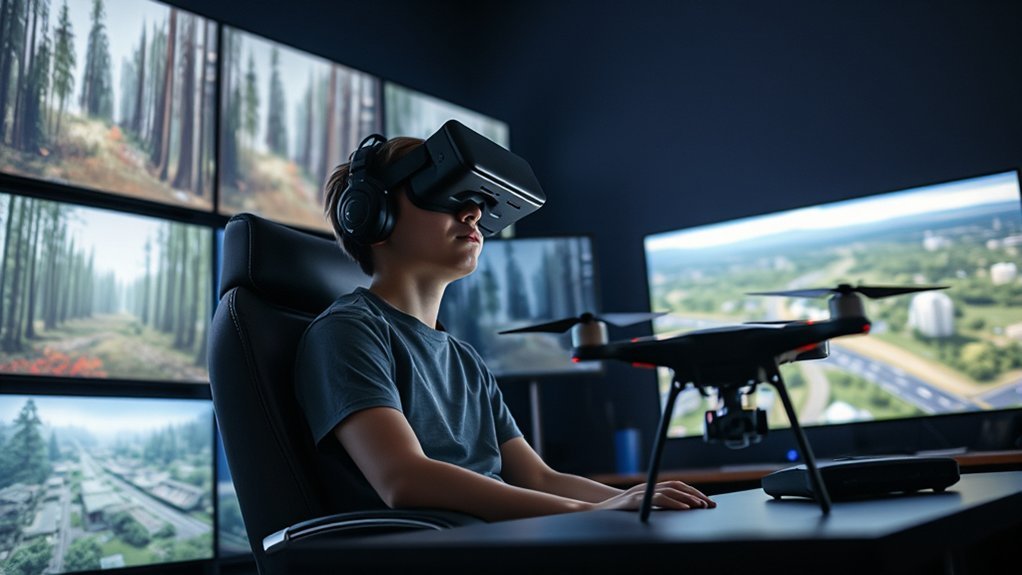
Once you’ve picked the right radio controller, the next step is to sharpen your flying skills in a simulator. FPV simulators provide a risk-free environment, letting you practice without the worry of damaging real equipment or injuring yourself.
It’s recommended to dedicate at least 10 hours to simulator training, focusing on Acro mode to develop essential manual flying skills. This practice builds muscle memory and teaches basic techniques, vital for maneuvering around obstacles and executing maneuvers in actual flights.
Engaging with simulator features, like flying through gaps and performing advanced tricks, helps you progress from basic control to proficient flying. Regular practice sessions will enhance your overall flying ability and prepare you for the unique challenges of FPV racing. You’ll gain valuable insights into your drone’s responsiveness, setting you up for success when you eventually shift to real-world racing.
Start with simple hover control, gentle turns, and figure-eight patterns. Then move to gates, split-S turns, sharp cornering, throttle control, and recovery after mistakes. A simulator is also the best place to crash often, learn quickly, and build confidence without destroying parts.
Identify Your Flying Style
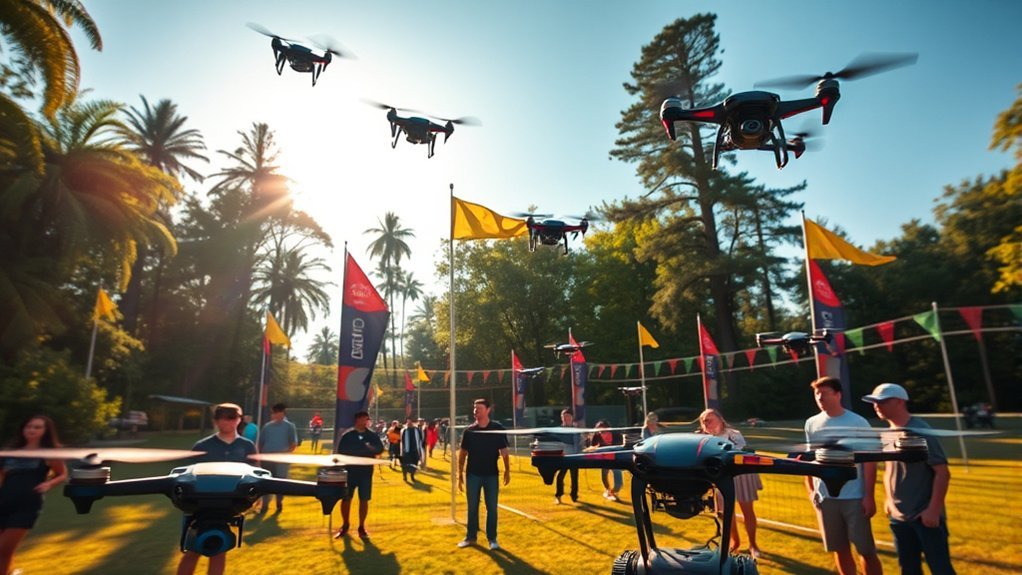
Identifying your flying style is key to maximizing your FPV racing experience. Whether you’re drawn to the high-speed thrills of racing, the artistic flair of freestyle, or the balance between speed and stability, knowing your preferences will guide your drone choices and setup. Experiment with different environments, like indoor vs. outdoor, to refine your skills and find what resonates with you.
Racing vs. Freestyle
Whether you’re drawn to the thrill of speed or the artistry of aerial maneuvers, understanding the distinction between racing and freestyle flying is essential to defining your FPV drone experience.
- Racing Drones: Built for speed and precision, these machines can reach up to 200 km/h, weaving through obstacles and gates.
- Freestyle Flying: Focuses on creativity and maneuverability, allowing you to showcase tricks and flips in various environments.
- Competition vs. Personal Style: Racing demands strict adherence to layouts, while freestyle encourages exploration of your unique flying style.
- Gear Differences: Racing drones prioritize speed, while freestyle drones offer stability for executing complex maneuvers.
Starting with freestyle flying can build your foundational skills before diving into the competitive racing scene. However, if your main goal is racing, add gate practice early so you learn smooth lines, fast corrections, and controlled throttle timing.
Indoor vs. Outdoor
Choosing between indoor and outdoor flying can greatly influence your FPV experience, especially as you develop your skills. Indoor FPV typically requires smaller, more maneuverable drones like the Cinebot 30, perfect for maneuvering through tight spaces and capturing footage without damaging surroundings. You’ll focus on precision and agile maneuvers here.
On the other hand, outdoor FPV is best suited for 5-inch drones that excel in speed and stability, allowing you to soar over expansive landscapes and reach speeds up to 200 km/h with models like the Gapper C Mark V. Understanding these differences helps you identify your flying style, enhancing your practice sessions and skill development. Choose wisely to maximize your enjoyment and growth in FPV racing.
Speed vs. Stability
As you dive deeper into FPV drone racing, understanding the balance between speed and stability becomes essential for honing your flying style.
- Flying Style: Determine if you prefer aggressive maneuvers or smooth, controlled flying.
- Drone Selection: Choose a speed-focused drone for quick agility, or a stability model for easier handling.
- Weight and Design: Lighter drones offer speed but may struggle in windy conditions, affecting stability.
- Adjustable Modes: Start with drones that allow you to switch between speed and stability as you develop your skills.
Experimenting in various environments will help you identify your preference, revealing whether you lean towards speed or stability in your racing journey. Beginners usually improve faster when they start with predictable handling, then increase rates and speed as their control improves.
FPV Drone Kits for Beginners
When you’re starting out in FPV drone racing, selecting the right kit can greatly enhance your experience and learning curve. A solid FPV system is vital; a recommended beginner kit includes essential components like a reliable drone frame, powerful motors, and electronic speed controllers.
For those interested in speed, the Gapper C Mark V is a great choice, capable of reaching up to 200 km/h. If you’re looking for indoor flying, consider the Cinebot 30, which lifts a GoPro Mini, ensuring safety while capturing stunning footage.
Don’t overlook the importance of FPV goggles with a 1080p resolution for immersive visuals, enhancing your control during races. Finally, investing in a quality remote controller, like the TBS Tango 2 or the budget-friendly Iflight Commando 8, is necessary for effective communication with your drone. With the right kit, you’re well on your way to mastering FPV racing.
What a Beginner FPV Kit Should Include
A beginner FPV racing kit should include more than just the drone. Before you buy, make sure your setup covers the full flying system, not only the airframe.
- FPV Drone: Choose a durable frame, protected electronics, and easy-to-find replacement parts.
- Radio Controller: Pick a controller that works with your receiver and simulator.
- FPV Goggles: Choose analog or digital goggles based on your budget and video quality needs.
- Batteries: Buy several flight packs because FPV racing flights are short.
- Charger: Use a charger that supports your battery type and has safe charging features.
- Spare Props: Keep multiple sets because propellers are usually the first parts to break.
- Tools: Carry hex drivers, a prop tool, battery straps, zip ties, electrical tape, and a small soldering kit when you are ready to repair.
Note: “Ready-to-fly” can mean different things depending on the brand. Check whether the package includes goggles, a controller, batteries, charger, and receiver compatibility before you compare prices.
Learning How to Fly FPV Drones
With the right FPV drone kit in hand, you’re ready to take your first steps into the exciting world of flying. Learning how to fly FPV drones requires dedication and practice, so follow these steps to get started:
With the right FPV drone kit, you’re poised to embark on an exhilarating flying journey, embracing dedication and practice.
- Use a Simulator: Spend at least 10 hours in a simulator, focusing on Acro mode to develop your manual flying skills without risking damage.
- Crash Often: Aim for over 100 crashes in the simulator to build muscle memory and confidence before flying real drones.
- Practice in Varied Conditions: Fly in different environments to enhance adaptability and control, avoiding auto-level mode to strengthen your manual skills.
- Engage with the Community: Connect with the FPV community for shared tips and support, which will help you fly safely and improve your proficiency.
Regularly practice advanced maneuvers after mastering basics to prepare for racing scenarios. Happy flying.
Beginner Safety and Legal Rules
FPV drone racing is exciting, but safety comes first. Before you fly outside, check the rules that apply in your country, state, province, city, flying field, or race venue. Drone rules can vary by location, drone weight, airspace, and flight purpose.
- Check airspace before every flight: Avoid airports, restricted zones, emergency areas, stadiums, and controlled airspace unless you have proper authorization.
- Use a safe flying area: Choose open fields, approved race tracks, or club fields away from people, vehicles, roads, power lines, and buildings.
- Keep people protected: Do not race over crowds, bystanders, or public walkways.
- Follow visual observer rules: FPV pilots may need a visual observer who can watch the drone and surrounding airspace directly.
- Respect privacy: Do not fly over private property or record people where privacy is expected.
- Know your battery limits: Land before voltage drops too low, and never push a damaged battery.
Battery and LiPo Care for FPV Racing
Most FPV racing drones use LiPo batteries because they deliver high power in short bursts. That performance comes with responsibility. A careless battery routine can damage your gear or create a safety risk.
- Use the correct charger settings: Match the cell count and charge rate to the battery label.
- Inspect batteries before charging: Do not charge packs that are swollen, punctured, crushed, or unusually hot.
- Use a fire-resistant charging area: Charge away from carpet, paper, curtains, and flammable materials.
- Store batteries safely: Use storage voltage when packs will sit unused for more than a short period.
- Label older packs: Retire weak packs from racing before they fail under load.
Good battery care improves safety, flight time, and race consistency. It also saves money because healthy packs last longer and perform better under throttle.
First Flight Checklist
Before your first real FPV flight, run through a simple checklist. This helps you catch setup mistakes before they become crashes.
- Confirm the propellers are installed in the correct direction.
- Check that all screws are tight, especially motor screws and frame bolts.
- Make sure the battery is secure with a strong strap.
- Test radio connection and failsafe behavior in a safe setup area.
- Check video signal before takeoff.
- Verify the flight mode switch and arm switch work correctly.
- Stand behind the drone before arming.
- Keep the first flight low, slow, and short.
- Land immediately if the drone vibrates, drifts badly, loses video, or sounds unusual.
Common Beginner Mistakes to Avoid
Many new FPV pilots struggle with the same problems. Avoiding these mistakes will help you progress faster and spend less on repairs.
- Skipping simulator practice: This leads to avoidable crashes during the first few real flights.
- Buying the fastest drone first: Extreme speed can make learning harder and more expensive.
- Ignoring spare parts: A broken prop or frame arm can end your flying session early.
- Flying in poor locations: Tight public areas, roads, and crowded parks are risky for beginners.
- Over-discharging batteries: Flying too long can damage LiPo packs and reduce performance.
- Changing too many settings at once: Adjust rates, filters, or tune settings slowly so you know what changed.
How to Join Your First FPV Race
After you can fly gates in a simulator and control your drone outdoors, look for beginner-friendly races or local practice sessions. Racing communities are usually welcoming because every fast pilot started as a beginner.
- Find a local group: Search for FPV clubs, race leagues, hobby shop events, or online community groups in your area.
- Ask about beginner classes: Some events separate new pilots from advanced racers.
- Learn the race format: Ask how heats, timing systems, course walks, and practice rounds work.
- Bring extra gear: Pack spare props, batteries, antennas, straps, tools, and a charger.
- Arrive early: Give yourself time to set video channels, check rules, and meet other pilots.
- Focus on clean laps: Finishing smoothly teaches more than crashing while trying to win your first heat.
Troubleshooting First FPV Flights
Small issues are normal when you start. Use these quick fixes to diagnose common beginner problems before you blame your flying skills.
| Problem | Likely Cause | Beginner Fix |
|---|---|---|
| Drone flips on takeoff | Wrong prop direction, motor order, or flight controller orientation | Remove props, check setup, then retest safely |
| Video breaks up quickly | Loose antenna, wrong channel, low video power, or obstruction | Check antenna, match channel, and fly closer in open space |
| Short flight time | Small battery, aggressive throttle, old pack, or heavy build | Use healthy packs and land before voltage drops too low |
| Drone feels too sensitive | High rates or too much stick movement | Lower rates slightly and practice smoother stick control |
| Poor control in wind | Lightweight drone or limited throttle control | Practice in calmer weather and use a suitable outdoor drone |
Related Guides
Frequently Asked Questions
What Is the Best Beginner FPV Drone for 2025?
For 2025, the Gapper C Mark V is a strong beginner FPV drone choice if your goal is outdoor speed and racing practice. It offers high-speed capability and good maneuverability. If you plan to fly indoors or in tighter spaces, a smaller drone such as the Cinebot 30 may be easier to manage.
How Do You Get Into FPV Drone Racing?
To get into FPV drone racing, start by practicing in a simulator with a real radio controller. Then choose a durable beginner drone, learn your local drone rules, practice gates and turns, join FPV communities, and attend local races or practice days before entering competitive events.
What Is the Best Size FPV Drone for Beginners?
The best size FPV drone for many beginners is a 5-inch model because it balances speed, stability, and maneuverability for outdoor racing. Smaller drones are better for indoor practice and tight spaces, while larger drones are usually not ideal for first-time racing pilots.
How Much Do FPV Drone Racers Make?
FPV drone racers can make anywhere from a few hundred dollars to thousands of dollars at events, depending on the race, skill level, sponsors, and media opportunities. Top competitors may earn more through prize money, sponsorships, content, coaching, and merchandise, but most beginners should treat FPV racing as a hobby first.
Should I Start With Analog or Digital FPV?
Analog FPV is usually cheaper and common at beginner racing events, while digital FPV can offer a clearer image and more immersive flying. Your best choice depends on your budget, local race rules, repair costs, and whether your priority is racing performance or video quality.
How Long Should I Practice in a Simulator Before Flying a Real FPV Drone?
Practice for at least 10 hours in a simulator before your first real FPV flight. Many beginners benefit from 20 hours or more, especially if they want to fly Acro mode, race through gates, or avoid expensive crashes during their first outdoor sessions.
Conclusion
In your journey into FPV drone racing, remember that every flight is a chance to learn and refine your skills. It is surprising how much the community’s support can transform your experience, turning challenges into progress. With the right equipment, steady simulator practice, smart battery habits, and a safety-first mindset, you’ll discover your unique flying style and build real confidence.
Start simple, practice often, and focus on clean control before chasing maximum speed. Each race becomes more than a competition; it becomes a thrilling adventure where skill, preparation, and camaraderie all matter. Embrace the process, and watch your confidence soar alongside your drone.
Sources
- Federal Aviation Administration UAS — general U.S. drone safety and airspace guidance
- FAA Recreational Flyers — recreational drone flying rules and safety basics
- FAA Remote ID — Remote ID overview for registered drones in the United States
- MultiGP — FPV racing community, chapters, and event discovery
