
To keep a baby cool in a stroller during summer, focus on four things: shade without blocking airflow, lightweight clothing, age-appropriate hydration, and cooler outing times. Check the heat index before leaving, keep looking at your baby during the walk, and move indoors or to an air-conditioned place if your baby becomes unusually hot, flushed, fussy, sleepy, or unwell. A stroller fan or cooling liner may improve comfort, but no accessory makes extreme heat safe.
Last updated: September 11, 2026
Quick Answer
To keep a baby cool in a stroller, keep the stroller shaded but open to airflow, use loose lightweight clothing, choose the coolest part of the day, and check your baby often. For babies younger than about 6 months, offer breast milk or properly prepared formula more often rather than routinely giving plain water. Around 6 months and older, small amounts of water can be offered alongside normal milk feeds. Never drape a blanket or towel over the stroller opening because it can reduce airflow and trap heat.
Key Takeaways
- Use the stroller canopy, a compatible sunshade, and open ventilation instead of covering the stroller opening with a blanket.
- Dress your baby in a loose, lightweight layer and keep babies under 6 months out of direct sunlight.
- Check temperature, humidity, and heat index rather than relying on air temperature alone.
- Use stroller fans and cooling accessories only as comfort aids, and keep them securely mounted and out of reach.
- Move to a cool place immediately if your baby looks overheated, and seek urgent help for severe symptoms such as difficulty waking, loss of responsiveness, or seizures.
At a Glance
| Best Time to Go Out | The coolest part of the day, usually early morning or later evening. Check the heat index and direct sun before leaving. |
| Heat Check | Heat index matters more than temperature alone. A heat index of 90°F (32°C) or higher can be dangerous, especially for babies and young children. |
| Helpful Items | Large canopy or compatible sunshade, breathable stroller ventilation, secure child-safe stroller fan, sun hat, light clothes, and safely stored feeds or drinks. |
| Main Safety Rule | Never block the stroller opening or ventilation panels with a blanket, towel, or other improvised cover. |
How to Keep Baby Cool in a Stroller: Start With the Right Setup
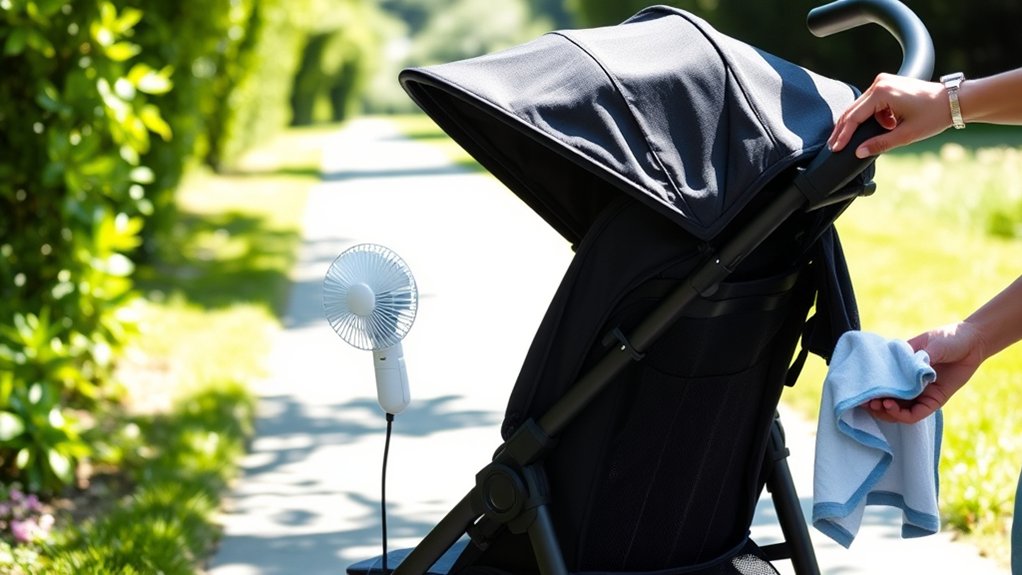
You do not need a special summer stroller, but the stroller should let heat escape. Look for a canopy that can block direct sun without sealing the seat area, plus mesh windows, rear vents, or other openings that allow air to circulate around your baby.
An adjustable large canopy is useful because the angle of the sun changes as you walk. If the built-in canopy does not provide enough coverage, use a compatible stroller sunshade or parasol that preserves ventilation rather than hanging a blanket over the opening.
Before leaving, use a simple three-part check: look at the weather, including humidity and heat index; look at the stroller to make sure vents are open and direct sun is blocked; then keep checking your baby for unusual warmth, behavior changes, breathing changes, and feeding or hydration problems.
Note: A heavily padded seat or liner can reduce airflow around your baby’s back. If you use an aftermarket liner, follow the stroller and accessory instructions and make sure it does not interfere with the harness or ventilation.
Prioritize Shade Without Blocking Ventilation
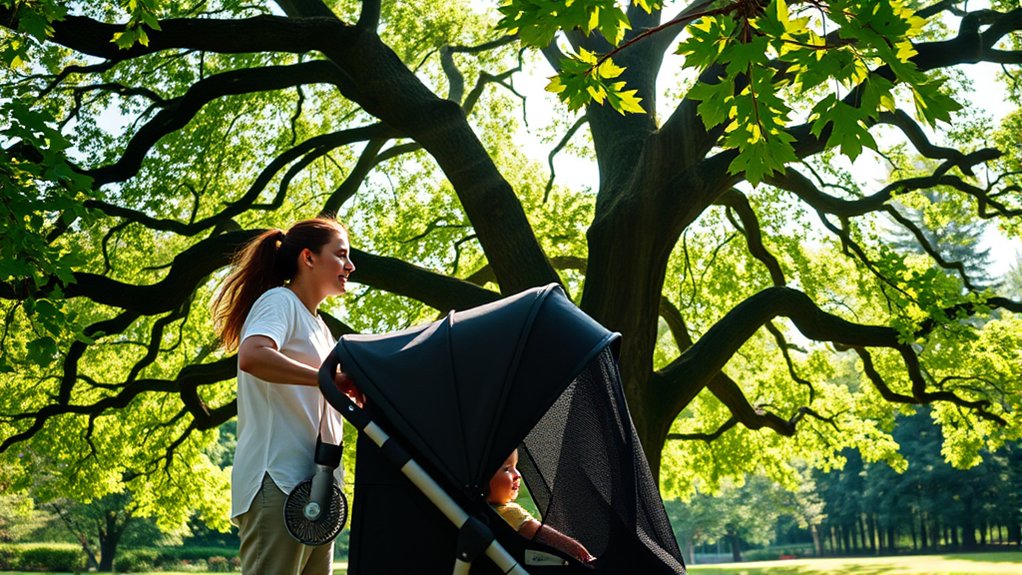
Shade and ventilation need to work together. Direct sun adds heat, while blocked airflow makes it harder for heat to escape. Use the stroller canopy, open mesh panels, or a compatible sunshade while keeping the front and ventilation openings clear.
Check the canopy position during the walk because the sun angle changes as you move. Your baby may begin fully shaded and become exposed a few minutes later. Changing direction, extending the canopy, or moving onto a shaded route can reduce direct solar heat.
NHS hot-weather guidance specifically advises parents not to cover a pushchair or pram with a blanket because the cover can contribute to overheating. A controlled stroller study also found that dry muslin coverings increased in-stroller temperature, reinforcing the importance of preserving airflow.
Warning: Do not fully cover the stroller with a blanket, towel, or dry muslin cloth in hot weather. Use a fitted canopy, parasol, or stroller-specific shade that allows ventilation and lets you see your baby.
Dress Your Baby for Comfort and Sun Protection
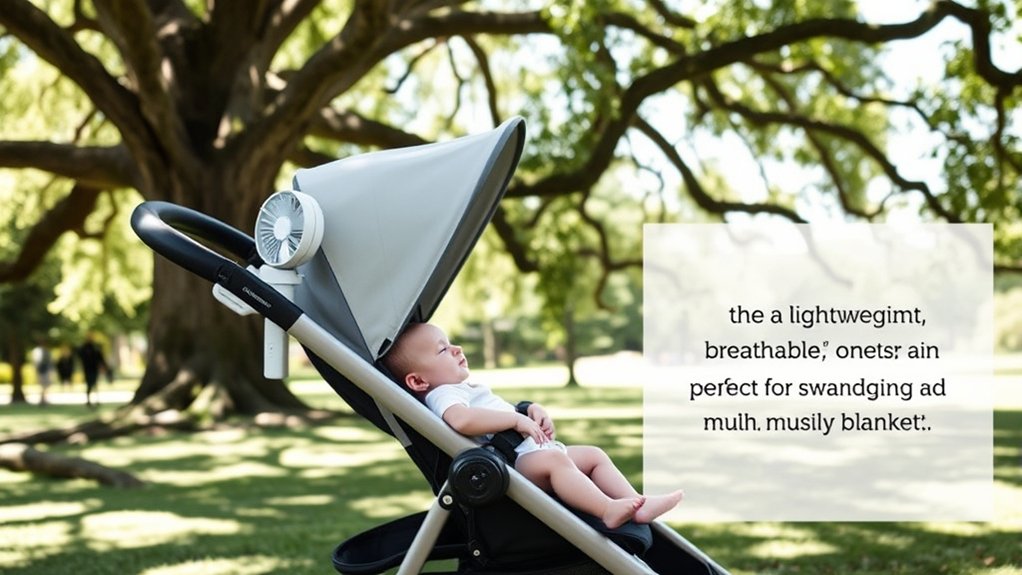
For a hot stroller ride, choose a loose, lightweight layer rather than heavy or tight clothing. Lightweight cotton is a simple option because it allows airflow and is widely recommended for warm-weather baby clothing.
A wide-brimmed sun hat can help shade your baby’s face and neck when it stays on comfortably. Check your baby’s chest or the back of the neck for unusual heat or clamminess rather than judging body temperature from hands and feet alone.
Babies younger than 6 months should be kept out of direct sunlight as much as possible. For babies 6 months and older, the NHS recommends sun protection including shade, suitable clothing, a hat, and sunscreen with an SPF of at least 30 on exposed skin. Shade remains important even when sunscreen is used.
How Should You Hydrate a Baby on Hot Stroller Walks?
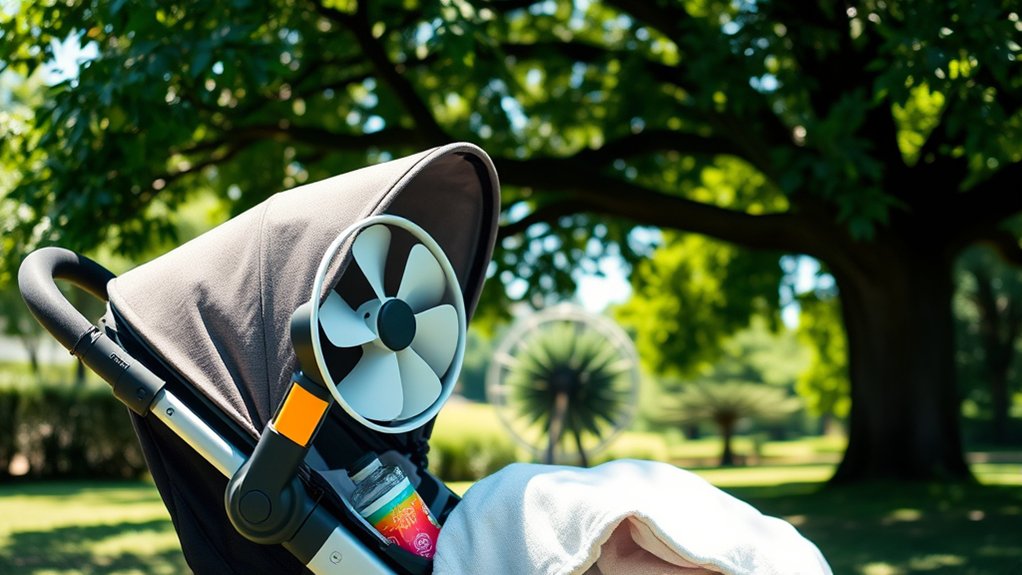
Hydration advice depends on your baby’s age. For babies younger than about 6 months, breast milk or properly prepared infant formula should provide hydration. In hot weather, offer feeds more often rather than routinely giving plain water unless your pediatrician has given different medical advice.
Around 6 months, when water is normally introduced with solid foods, you can offer small amounts of water in addition to normal breast milk or formula feeds. Milk feeds should still provide most nutrition and hydration during the first year. See the American Academy of Pediatrics guidance on drinks for babies and young children.
Possible dehydration signs include fewer wet diapers than usual, dry mouth, unusual tiredness, reduced feeding, or a baby who looks unwell. Contact your pediatrician if you are worried about dehydration or your baby is refusing fluids.
If you bring prepared formula, follow food-safety timing rather than leaving a bottle in a warm stroller basket. The CDC says prepared formula should generally be used within 2 hours of preparation and within 1 hour after feeding begins. Formula not being used promptly should be stored according to the manufacturer and CDC refrigeration guidance.
Pro Tip: Pack your own water as well as your baby’s age-appropriate feeds. If either of you needs a cooling break, move into shade or an air-conditioned place instead of trying to push through the heat.
Use Cooling Gadgets as Comfort Aids, Not Heat Protection
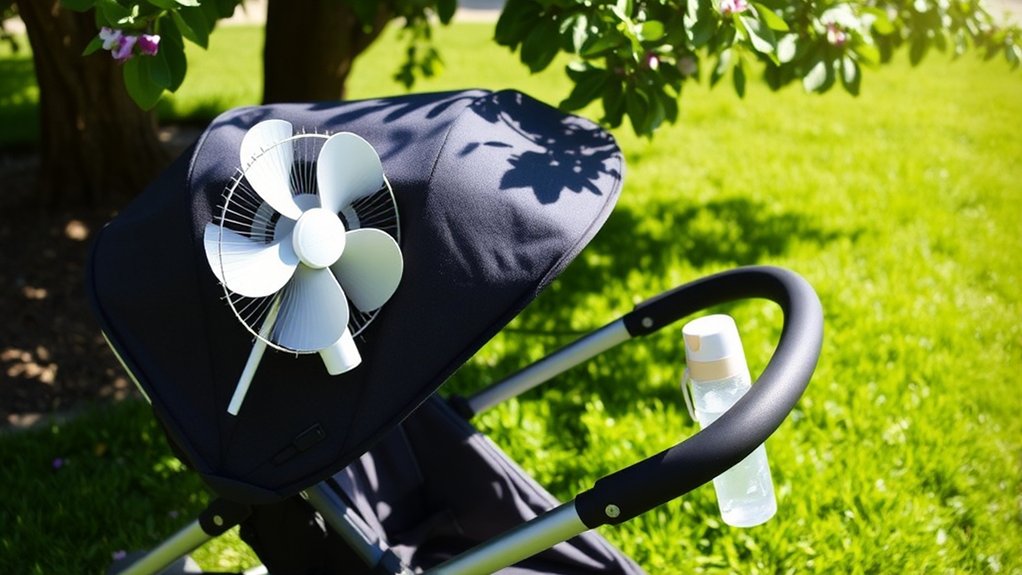
A clip-on stroller fan, breathable liner, or carefully used misting fan can improve airflow and make a warm stroller feel more comfortable. These accessories do not make extreme heat safe, so they should never replace shade, cooler timing, hydration, and regular checks.
Choose a fan with blades that your baby cannot reach, mount it securely, and keep cords, battery compartments, clips, and moving parts away from little fingers. Check the product for damage and recall notices before use. In 2025, the U.S. Consumer Product Safety Commission recalled certain Nuby stroller fans because children could reach the blade through the housing and suffer lacerations. See the CPSC stroller fan recall notice.
For a deeper product-safety discussion, see the stroller fan safety guide. If you need more shade rather than more airflow, compare the options in the stroller sun shade guide.
Misting Fans for Relief
A fine mist combined with moving air can improve evaporative cooling in suitable conditions, especially when the air is relatively dry. Keep the mist light, preserve airflow, and stop using it if clothing or stroller padding becomes soaked.
Humidity matters. When the air is already very humid, evaporation is less effective, so misting may add dampness without providing the same cooling effect. Move to a cooler environment if conditions are becoming uncomfortable instead of depending on more mist or fan speed.
Stroller Cooling Pad Benefits and Safety
A breathable stroller liner may reduce the hot, sweaty feeling where your baby’s back meets the stroller seat. The pad should fit without blocking harness slots, adding unstable bulk, causing your baby to slump, or covering ventilation openings.
Be especially careful with gel or temperature-sensitive cooling inserts. A cooling product can become hot after sitting in direct sun or a hot vehicle. In 2025, CPSC recalled Hoovy cooling gel inserts for car seats and strollers because heated pads could create a burn hazard. Check the pad with your hand before placing your baby against it and review current recall information. See the CPSC cooling-pad recall notice.
A cooling pad works best as an optional comfort layer. Shade, airflow, appropriate clothing, hydration, and leaving the heat when conditions become unsafe remain more important.
Plan Your Outings Around Heat, Humidity, and Shade
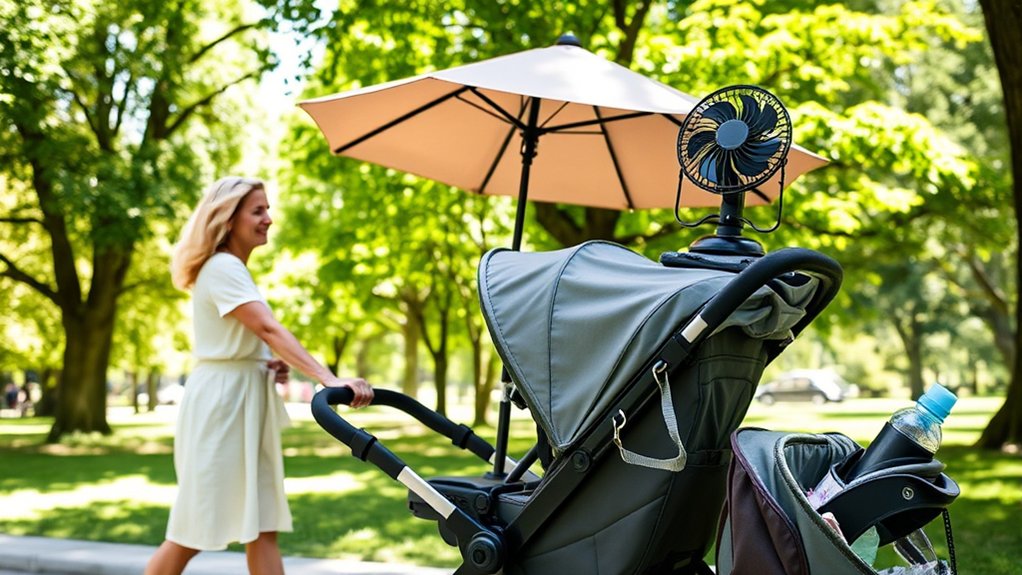
The same stroller route can feel very different at different times of day. Before leaving, check the temperature, humidity, heat index, direct sun, and whether you will have easy access to shade or an air-conditioned place.
Do not rely on one universal outdoor-temperature cutoff. The American Academy of Pediatrics warns that a heat index of 90°F (32°C) or higher can be dangerous, especially for babies, young children, and other heat-sensitive groups. When the heat index is high, moving the outing indoors is safer than assuming a fan or short walk will solve the problem.
Early Morning Outings
Early morning is often one of the easiest times for a summer stroller walk because the ground, stroller fabric, and surrounding air have had less time to heat up. Still, check the actual conditions instead of relying only on the clock.
- Check the heat index before leaving.
- Pack breast milk, formula, water, or other drinks as appropriate for your baby’s age.
- Touch sun-exposed stroller buckles and fabric before placing your baby inside.
- Choose a shaded route and keep ventilation openings clear.
Evening Adventures
Evening stroller walks can be comfortable after the strongest heat has passed, but pavement, stroller frames, seats, and nearby buildings may continue releasing stored heat after sunset. Check your route and stroller surfaces before setting out.
Use the heat index and your baby’s condition rather than an arbitrary air-temperature cutoff. If your baby becomes unusually hot, flushed, fussy, sleepy, or uncomfortable, move to a cooler place instead of finishing the planned route.
Here’s a quick guide to make the most of your twilight walks:
| Tip | Action |
|---|---|
| Check Conditions | Review temperature, humidity, and heat index |
| Check Surfaces | Feel the seat, straps, and buckles before use |
| Keep Air Moving | Use the canopy without blocking stroller vents |
| Watch Your Baby | End the outing if overheating signs appear |
How Hot Is Too Hot for a Baby in a Stroller?
There is no single temperature or universal number of minutes that makes every stroller outing safe. Heat risk depends on temperature, humidity, direct sunlight, age, clothing, ventilation, medical factors, and how long your baby stays exposed.
The heat index combines temperature and humidity to estimate how hot conditions feel. The American Academy of Pediatrics warns that a heat index of 90°F (32°C) or higher can be dangerous, especially for babies and young children. The NHS also recommends keeping babies under 6 months out of direct sunlight and avoiding the strongest midday sun with older babies whenever possible.
During hot conditions, regular cooling breaks are more useful than relying on a rigid stroller timer. Children’s Health recommends taking a break from the heat at least every 15 to 20 minutes depending on the child’s response. Move to a cool indoor area sooner whenever your baby seems too warm or unwell.
- Check heat index and humidity before the outing.
- Shorten or cancel the outing when heat risk is high.
- Use shade without blocking stroller ventilation.
- Take regular breaks in a cooler place.
- Stop immediately if your baby develops overheating symptoms.
Monitor for Signs of Overheating
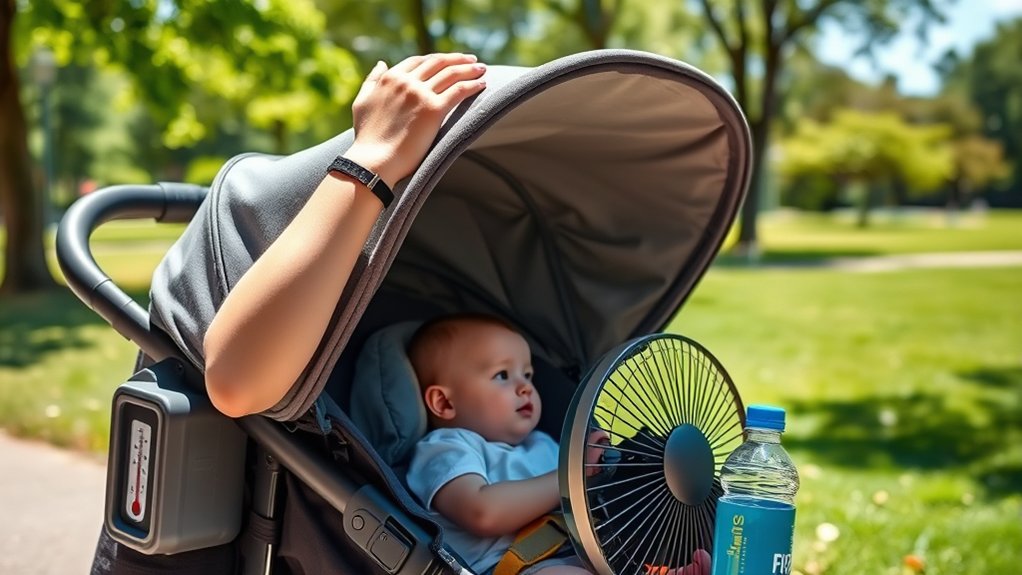
Watch both your baby’s skin and behavior. Possible overheating or heat-illness signs include unusually hot or flushed skin, heavy sweating or clamminess, unusual fussiness, weakness, vomiting, faster breathing, reduced urination, or unusual sleepiness.
If your baby seems too hot but remains alert and responsive, stop the outing immediately. Move into shade or an air-conditioned place, remove unnecessary layers, and begin gentle cooling with cool wet cloths or other appropriate cooling measures. Offer normal age-appropriate fluids if your baby is awake and able to drink safely.
Severe heat illness needs urgent medical help. If your baby is very difficult to wake, becomes unresponsive, has a seizure, appears confused or severely ill, or you suspect heat stroke, call emergency services immediately and begin cooling while help is coming. The CDC identifies infants and young children as especially dependent on caregivers for protection from heat, and the American Academy of Pediatrics advises prompt medical attention for concerning heat-illness symptoms.
A stroller fan can improve comfort, but the safest cooling plan starts with the weather: choose shade, preserve airflow, use age-appropriate hydration, and leave the heat when your baby shows warning signs.
Related Guides
Frequently Asked Questions
How hot is too hot for a baby in a stroller?
There is no single air-temperature cutoff that applies to every baby. Check humidity and heat index as well as temperature, shade, direct sun, age, clothing, and your baby’s condition. The American Academy of Pediatrics warns that a heat index of 90°F (32°C) or higher can be dangerous, especially for babies and young children.
Can babies under 6 months drink water in hot weather?
Babies younger than about 6 months generally should not be given plain water routinely. Offer breast milk or properly prepared formula more often in hot weather unless your pediatrician gives different medical advice. Around 6 months, small amounts of water can normally be introduced alongside regular milk feeds.
Are stroller fans safe for babies?
A stroller fan can be used as a comfort aid when it is securely mounted and your baby cannot reach the blades, housing, cords, clips, or battery compartment. Check for damage and product recalls before use. A fan does not make extreme heat safe, so continue using shade, cooler outing times, hydration, and regular checks.
Is it safe to cover a stroller with a blanket for shade?
Do not drape a blanket, towel, or dry muslin over the stroller opening in hot weather. It can reduce airflow and trap heat. Use the stroller canopy, a compatible parasol, or a purpose-made shade that preserves ventilation and lets you see your baby.
What should a baby wear in a stroller during summer?
Use loose, lightweight clothing appropriate for the weather rather than heavy layers. Lightweight cotton is a simple breathable choice. Use shade and a sun hat, keep babies under 6 months out of direct sunlight, and check the chest or back of the neck for unusual heat or clamminess.
What are signs that a baby is overheating?
Warning signs can include unusually hot or flushed skin, sweating or clamminess, fussiness, weakness, vomiting, faster breathing, reduced urination, or unusual sleepiness. Move your baby to a cool place immediately. Difficulty waking, unresponsiveness, seizures, or suspected heat stroke require emergency medical help.
Conclusion
The safest way to keep a baby cool in a stroller is to control the environment before relying on gadgets. Check the heat index, choose the coolest part of the day, block direct sun without covering ventilation, use lightweight clothing, and follow age-appropriate hydration guidance.
During the walk, keep checking your baby rather than relying on a timer or thermometer alone. If your baby starts looking too hot or unwell, end the outing and move somewhere cool. Fans, breathable liners, and other accessories can improve comfort, but shade, airflow, hydration, cooler timing, and quick action when symptoms appear provide the foundation for safer summer stroller walks.

