
If wrist-based readings lag during intervals or jump around during hard efforts, a heart rate monitor chest strap can give you faster, steadier training data. The key is choosing the right connection protocols, water rating, strap fit, and battery setup for the devices you already use.
Polar H10 is the best overall pick because it combines Bluetooth LE, ANT+, 5 kHz, onboard recording, and a 30 m water rating. The Polar H9 is the best value when you want the same three wireless options without onboard memory.
We checked exact linked models, manufacturer specifications, current listing status, battery details, water-use limits, and recall records before rebuilding these picks.
Heart Rate Monitor Chest Straps Compared
| Product | Best for | Connectivity | Water rating | Battery | Score |
|---|---|---|---|---|---|
|
Premium
|
Best overall | Bluetooth LE, ANT+, 5 kHz | WR30 / 30 m | CR2025, up to 400 h | 92/100 |
|
Mid-range
|
Best value | Bluetooth LE, ANT+, 5 kHz | WR30 / 30 m | CR2025, up to 400 h | 83/100 |
| Garmin metrics for current owners; linked listing unavailable | ANT+ and Bluetooth LE | 5 ATM | CR2032, up to 1 year at 1 h/day | 95/100 | |
|
Mid-range
|
Best for battery life | ANT+ and Bluetooth LE | 1 ATM; no swim transmission | CR2032, up to 3.5 years at 1 h/day | 86/100 |
|
Budget
|
Best budget | Bluetooth and ANT+ | IP67; not for swimming | CR2032, manufacturer lists 300 h | 76/100 |
Heart Rate Monitor Chest Straps: Our Top Picks
1. Polar H10
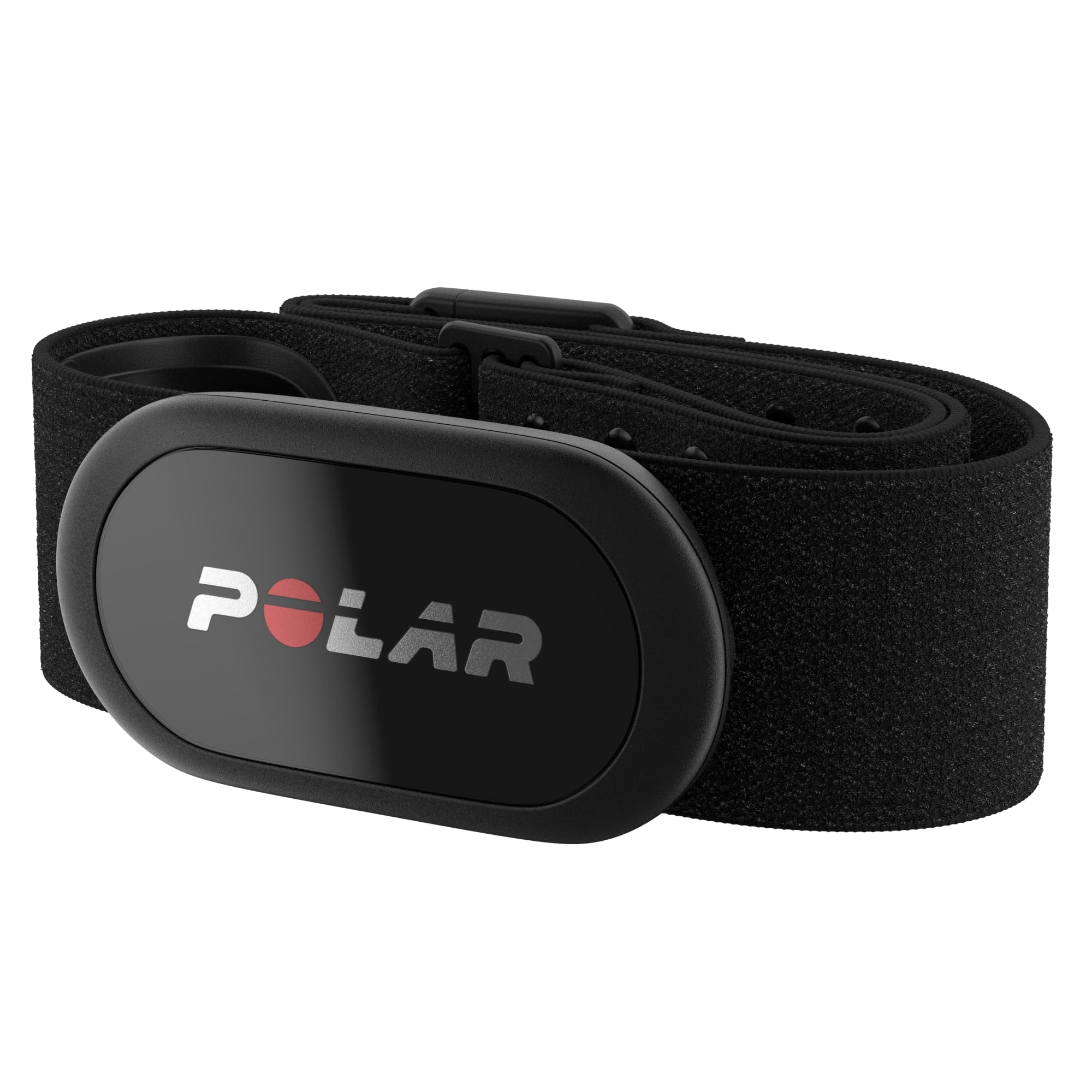
Bottom line: The Polar H10 is the strongest all-around choice here for interval training, mixed-device setups, and athletes who want onboard session recording. Its broad protocol support makes it easier to keep using as your training setup changes.
- Connectivity: Bluetooth LE, ANT+ and 5 kHz, broad device support
- Water rating: WR30 / 30 m, designed for water exposure
- Battery: CR2025, up to 400 hours, user replaceable
The H10 measures heart rate electrically from the chest and sends it to compatible watches, phones, bike computers, apps, and gym equipment. Polar also supports two simultaneous Bluetooth connections, so it fits setups where more than one receiver needs the signal.
Its built-in memory can record one training session without keeping your phone beside you. Polar pairs the sensor with the Pro Strap, which uses silicone grip points and a secure buckle to help it stay in place during hard efforts.
For swimming, the sensor is water-resistant to 30 m, but Bluetooth and ANT+ do not transmit through water. Real-time underwater heart-rate transmission depends on compatible 5 kHz GymLink equipment.
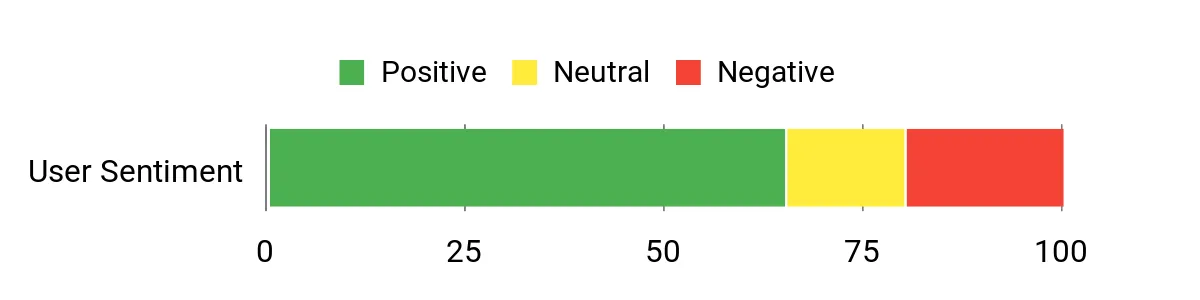
- Bluetooth LE, ANT+ and 5 kHz in one sensor
- Two simultaneous Bluetooth connections
- Built-in memory for one training session
- Up to 400 hours from a replaceable CR2025
- WR30 / 30 m water resistance
- Costs more than the simpler Polar H9
- BLE and ANT+ do not transmit through water
- Battery still requires periodic replacement
2. Polar H9

Bottom line: The Polar H9 keeps the most useful connectivity of the H10 while dropping onboard memory and dual Bluetooth. It is a practical choice for everyday running, cycling, classes, and gym equipment.
- Connectivity: Bluetooth LE, ANT+ and 5 kHz, broad device support
- Water rating: WR30 / 30 m, designed for water exposure
- Battery: CR2025, up to 400 hours, user replaceable
The H9 uses Polar’s Soft Strap and sends electrical heart-rate data over Bluetooth LE, ANT+, or 5 kHz. That makes it flexible for a phone app, sports watch, bike computer, or compatible gym console without paying for features you may not use.
The trade-off is simpler connectivity. Polar lists no built-in training memory and no dual Bluetooth on the H9. You can still use ANT+ and Bluetooth together, which is enough for many watch-plus-app or bike-computer setups.
Like the H10, it is rated to 30 m. For live heart-rate transmission in water, use compatible 5 kHz GymLink equipment because Bluetooth and ANT+ signals do not travel through water reliably.
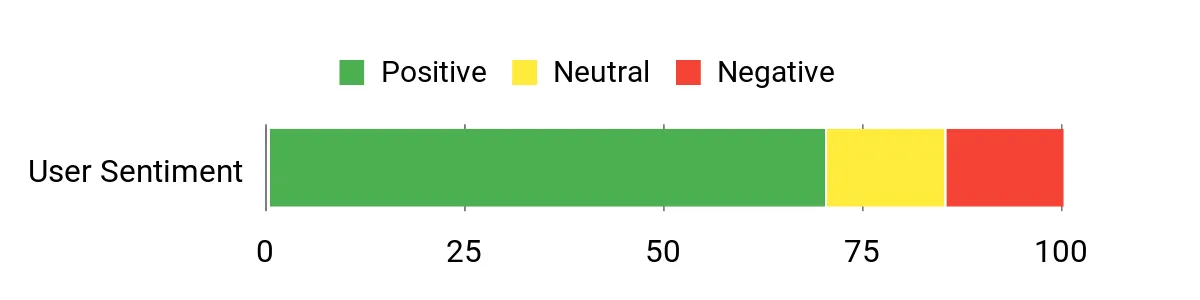
- Bluetooth LE, ANT+ and 5 kHz connectivity
- Up to 400 hours from a replaceable CR2025
- WR30 / 30 m water resistance
- Machine-washable Polar Soft Strap
- No onboard training memory
- No dual simultaneous Bluetooth connections
- BLE and ANT+ do not transmit through water
3. Garmin HRM-Pro Plus

Bottom line: The linked Garmin HRM-Pro Plus Amazon listing is currently unavailable, so it is not one of our current recommendations. If you already own it, it remains a feature-rich Garmin-focused sensor for heart rate, running dynamics, and stored workout data.
- Connectivity: ANT+ and Bluetooth LE, Garmin and third-party support
- Water rating: 5 ATM, rated for 50 m-equivalent pressure
- Battery: CR2032, up to 1 year at 1 h/day
With a compatible Garmin device, HRM-Pro Plus can provide running dynamics such as ground contact time, stride length, vertical oscillation, and related metrics. It can also calculate pace and distance for treadmill or indoor-track workouts.
The strap stores heart-rate data when your watch is out of range, including during swimming, then transfers that data to a compatible Garmin watch afterward. Those advanced functions matter most inside the Garmin ecosystem.
The linked listing matches Garmin part 010-13118-05, but it is not currently purchasable from that Amazon page. Garmin now has a newer HRM 600 line, so buyers shopping today should compare current Garmin models rather than relying on this unavailable link.
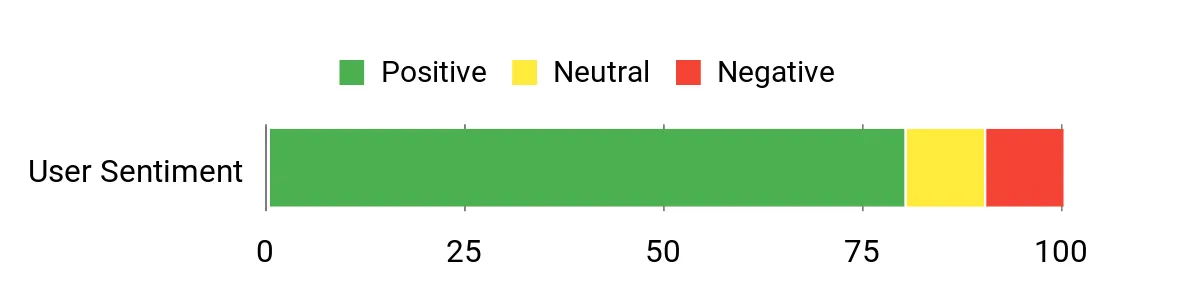
- ANT+ and Bluetooth LE transmission
- 5 ATM water rating
- Stores heart-rate data when the watch is out of range
- Running dynamics with compatible Garmin devices
- User-replaceable CR2032 battery
- Linked Amazon listing is currently unavailable
- Advanced metrics require compatible Garmin hardware
- A newer Garmin HRM 600 generation is available
4. Garmin HRM-Dual

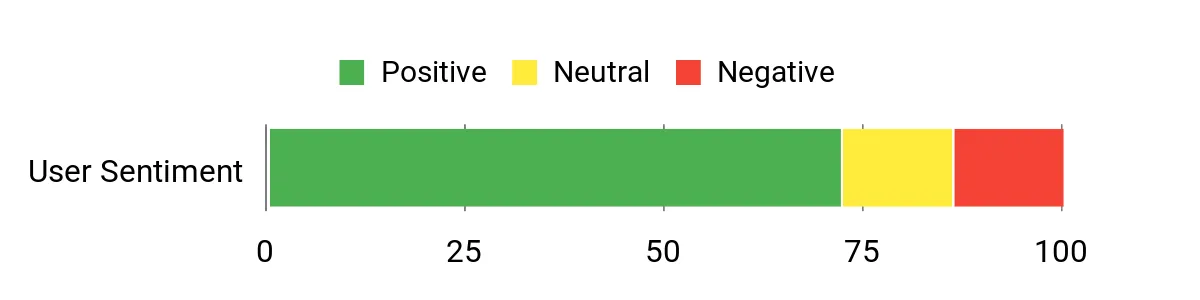
Bottom line: The Garmin HRM-Dual is the simple choice for runners, cyclists, and gym users who want Bluetooth LE and ANT+ without advanced running metrics. Its standout feature is very long battery life.
- Connectivity: ANT+ and Bluetooth LE, two Bluetooth links supported
- Water rating: 1 ATM, does not transmit during swimming
- Battery: CR2032, up to 3.5 years at 1 h/day
Garmin designed HRM-Dual to send real-time heart rate and HRV data to compatible devices and apps. ANT+ has broad sports-device support, while Bluetooth LE makes it easy to use with phones, tablets, and many fitness platforms.
The removable module lets you wash the soft strap, and Garmin lists two concurrent Bluetooth Low Energy connections. That is useful if you want to send heart rate to two Bluetooth receivers without moving the sensor between workouts.
Its 1 ATM rating is more limited than the Polar straps, and Garmin specifically says it does not transmit heart-rate data while swimming. Treat it as a land-training strap rather than a swim-focused sensor.
- ANT+ and Bluetooth LE connectivity
- Two concurrent Bluetooth connections
- Up to 3.5 years of battery life at 1 h/day
- Removable module and washable soft strap
- No onboard workout storage
- No advanced running-dynamics package
- Does not transmit heart rate while swimming
5. CooSpo H6
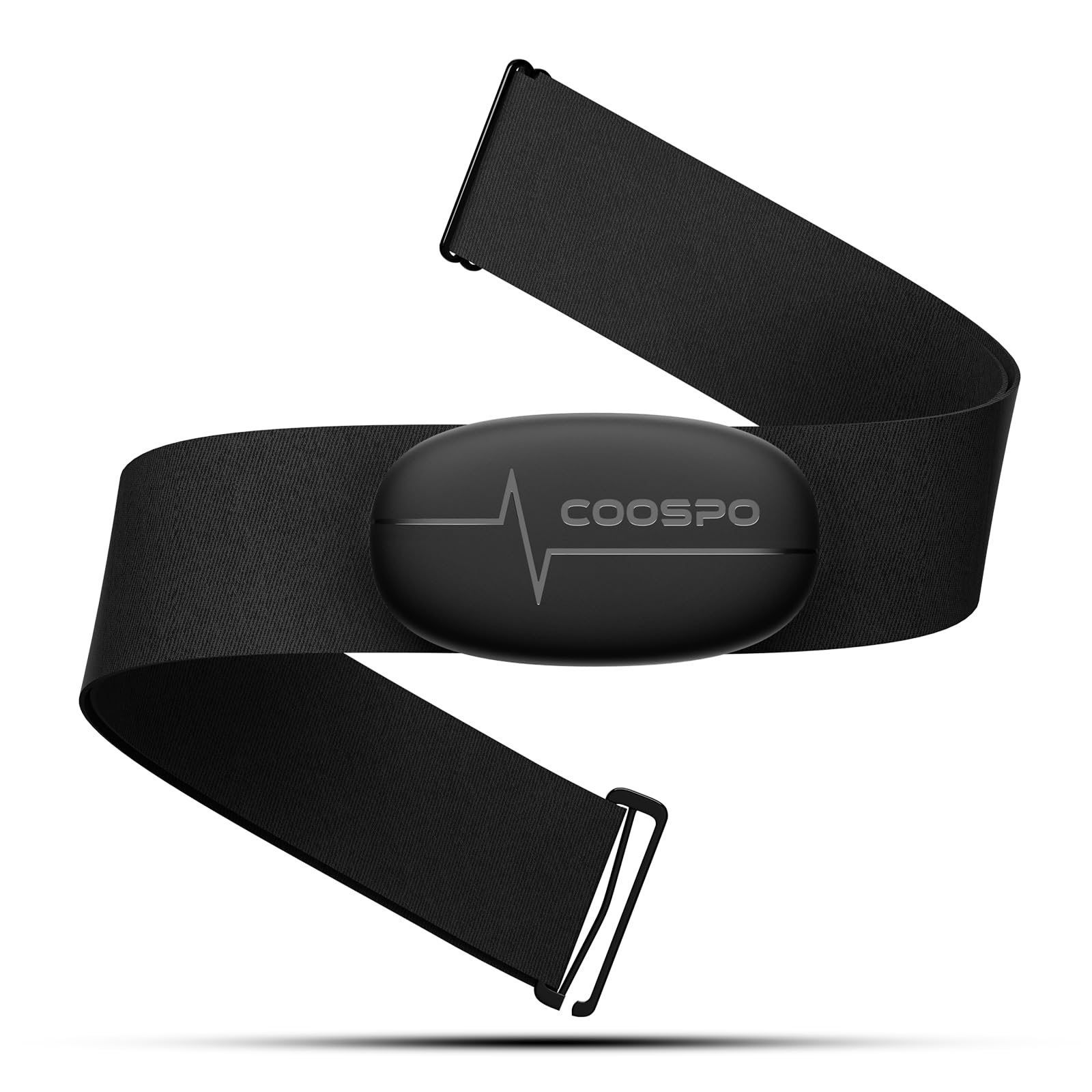
Bottom line: The CooSpo H6 is the budget pick for basic Bluetooth and ANT+ heart-rate transmission. It covers common running, cycling, trainer, and fitness-app setups without adding advanced onboard metrics.
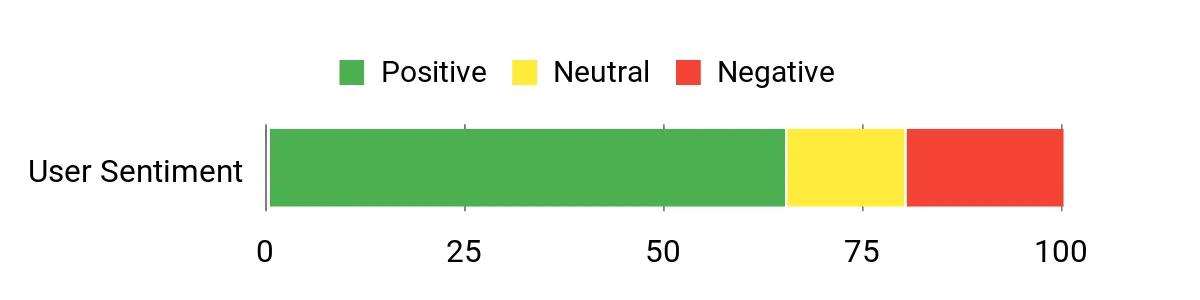
- Connectivity: Bluetooth and ANT+, works with many training devices
- Water rating: IP67, sweat and rain resistant, not for swimming
- Battery: CR2032, manufacturer lists 300 hours
The H6 is built around the two wireless standards most buyers need. CooSpo lists compatibility with iPhone, Android, third-party apps, and standard Bluetooth/ANT+ fitness equipment.
It uses a replaceable CR2032 coin cell rather than a rechargeable battery. CooSpo’s current product page lists 300 hours of battery life, while the Amazon page contains conflicting 300- and 400-hour references. We use the manufacturer’s exact product-page figure here.
IP67 helps with sweat and rainy sessions, but CooSpo explicitly says not to use the H6 for swimming. If pool training matters, the Polar H10 or H9 is a better fit.
- Bluetooth and ANT+ connectivity
- IP67 protection for sweat and rain
- Replaceable CR2032 battery
- Broad app and fitness-equipment compatibility
- Not designed for swimming
- No onboard memory
- Manufacturer-listed battery life is shorter than H9/H10 and HRM-Dual
Polar H10 vs Polar H9: Is the Upgrade Worth It?
Both Polar straps use electrical chest measurement, support Bluetooth LE, ANT+, and 5 kHz, carry a 30 m water rating, and use a replaceable CR2025 rated for up to 400 hours. The H10 costs more because it adds features the H9 leaves out.
- Bluetooth: H10 supports two simultaneous Bluetooth connections; H9 does not.
- Recording: H10 can store one training session; H9 has no onboard memory.
- Strap: H10 includes the Polar Pro Strap; H9 uses the Polar Soft Strap.
Which Heart Rate Monitor Chest Strap Should You Buy?
- Best all-around feature set: get the Polar H10.
- Best value: get the Polar H9.
- Longest battery interval: get the Garmin HRM-Dual.
- Lowest-cost dual-protocol option: get the CooSpo H6.
How We Chose
- Exact listing status: We checked the linked model or ASIN and did not recommend a confirmed unavailable listing.
- Signal compatibility: We compared Bluetooth LE, ANT+, and 5 kHz support because those standards determine what you can pair.
- Water use: We separated water resistance from live underwater transmission, which are not the same thing.
- Power and upkeep: We checked battery type, manufacturer-rated life, strap care, and whether the cell is user replaceable.
- Sources: We used manufacturer pages and manuals first, Amazon for exact linked-listing status, and official recall searches. We left out owner-trend claims that were not supported by at least two independent non-Amazon sources.
What Buyers Prefer
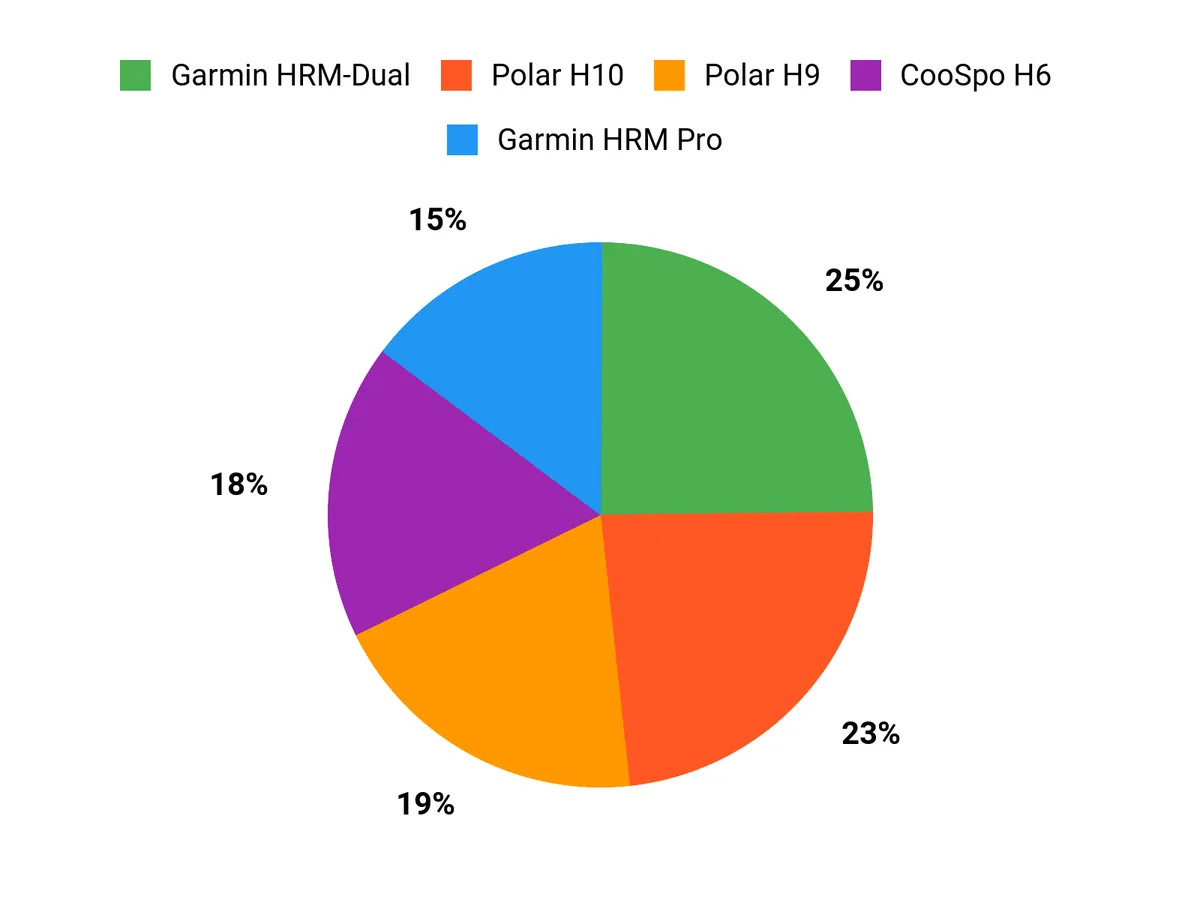
Most buyers should start with protocol compatibility, fit, water needs, and battery maintenance. The Polar H10 covers the broadest feature set here, the H9 keeps the key protocols with fewer extras, the HRM-Dual favors long battery life, and the CooSpo H6 covers the core Bluetooth/ANT+ basics on a tighter budget.
Heart Rate Monitor Chest Strap Buying Guide
Electrical Chest Measurement vs Wrist Optical Sensors
Chest straps read the heart’s electrical activity at the torso, while wrist wearables usually use optical sensors. Chest straps generally respond more quickly when effort changes fast, which is useful for intervals and zone-based workouts. Wrist sensors are more convenient because you do not need a separate strap.
Bluetooth, ANT+, and 5 kHz
Bluetooth LE is common on phones and tablets. ANT+ is common on sports watches, bike computers, and fitness equipment. Older gym or pool receivers may use 5 kHz. If you switch among several device types, the Polar H10 or Polar H9 gives you all three.
Swimming and Water Resistance
A water rating does not guarantee live heart-rate transmission underwater. The Polar H10 and Polar H9 are rated to 30 m and support 5 kHz GymLink, which can work in water with compatible receivers. Garmin says HRM-Dual does not transmit while swimming, and CooSpo says not to swim with the H6.
Battery Life and Maintenance
Coin-cell sensors are convenient because you can replace the battery yourself. Polar rates both H10 and H9 for up to 400 hours on CR2025 cells. Garmin rates HRM-Dual for up to 3.5 years at one hour per day. CooSpo lists 300 hours for the H6 with a CR2032.
Fit, Electrode Contact, and Strap Care
The electrodes need firm skin contact. Adjust the strap so it stays secure without restricting breathing, wet the electrode areas before training when needed, and follow the maker’s washing instructions. Detaching removable transmitters after workouts can also help reduce unnecessary battery drain and lets the textile strap dry properly.
Advanced Metrics vs Basic Heart Rate
Do not pay for advanced metrics unless your receiving device can use them. The Polar H10 adds onboard recording and dual Bluetooth, while the H9, HRM-Dual, and H6 focus more on real-time heart-rate transmission. Match the sensor to the watch, app, or bike computer you already own.
Mistakes to Avoid When Buying Heart Rate Monitor Chest Straps
- Assuming waterproof means live underwater data: check both the water rating and supported underwater transmission method.
- Ignoring wireless protocols: confirm whether your receiving device needs Bluetooth, ANT+, or 5 kHz.
- Skipping strap sizing: a poor fit can cause movement, weak contact, and erratic readings.
- Forgetting battery maintenance: keep a spare coin cell if your training depends on the strap.
- Buying ecosystem features you cannot use: verify that your watch or app supports the extra metrics first.
FAQs
Will a heart rate monitor chest strap work with my watch, phone, bike computer, or gym machine?
Often, yes, but the connection protocol must match. Bluetooth LE is common on phones and apps, ANT+ is common on sports watches and bike computers, and some older gym equipment uses 5 kHz. Check your receiving device documentation before buying, especially if you want simultaneous connections or pool use.
Are chest straps more accurate than wrist heart rate sensors?
Chest straps usually respond faster and stay steadier during rapid changes in effort because they measure electrical heart activity at the chest. Wrist optical sensors are more convenient but can lag or lose consistency with motion, fit, or difficult contact. For intervals and precise zone work, a well-fitted chest strap is usually the stronger tool.
Can I swim with a heart rate monitor chest strap?
It depends on the model and the transmission method. Polar H10 and H9 are water-resistant to 30 m and support 5 kHz GymLink for compatible underwater receivers, while Bluetooth and ANT+ do not transmit through water well. Garmin HRM-Dual does not transmit during swimming, and CooSpo says the H6 is not for swimming.
How tight should a chest heart rate strap be?
Wear it directly against your skin and tighten it enough that the electrodes stay flat and the strap does not slide during movement. It should not restrict breathing or feel painful. Wetting the electrode areas before a workout can improve initial contact, especially in dry conditions before you start sweating.
Is Bluetooth or ANT+ better for a heart rate monitor?
Neither is always better. Bluetooth LE works well with phones, tablets, and many apps, while ANT+ is widely used by sports watches, bike computers, and fitness equipment and can broadcast to multiple receivers. A strap that supports both gives you more flexibility if you train across several device types.
How do I maintain and troubleshoot a chest strap?
Rinse sweat from the textile strap, wash it only as the manufacturer directs, and let it air-dry. If readings are erratic, wet the electrodes, check fit, replace the coin cell when needed, re-pair the sensor, and install supported firmware updates. Also confirm that another nearby device has not taken the connection you expected to use.
Final Verdict
Among the verified heart rate monitor chest straps in this roundup, the Polar H10 is the best overall because it combines broad connectivity, onboard recording, dual Bluetooth, and a 30 m water rating. The Polar H9 is the better value if you do not need memory or dual Bluetooth.
For simple land-based training with the longest rated battery interval, Garmin HRM-Dual is the strongest alternative in this group.
For a lower-cost Polar option, see the Polar H9. For a simple long-battery setup, see the Garmin HRM-Dual.
| Product Name | Image | Rating | Battery Life | Compatible Devices | Material |
|---|---|---|---|---|---|
| Polar H10 Heart Rate Monitor Chest Strap |
|
4.1/5 (27,086 reviews) | 400 hours | Desktops, Laptops, Smartphones, Tablets | Polyester |
| Polar H9 Heart Rate Sensor |
|
4.0/5 (10,111 reviews) | 400 hours | Desktops, Laptops, Smartphones, Tablets | Polyester |
| Garmin HRM Pro Plus |
|
4.6/5 (783 reviews) | 12 months | Smartphones | Plastic |
| Garmin 010-12883-00 HRM-Dual Heart Rate Monitor |
|
4.3/5 (23,985 reviews) | 3.5 years | Smartphones | Plastic |
| COOSPO Heart Rate Monitor Chest Strap |
|
4.0/5 (5,371 reviews) | 300 hours | Peloton, Zwift, Fitness Apps | Acrylonitrile Butadiene Styrene (ABS) |