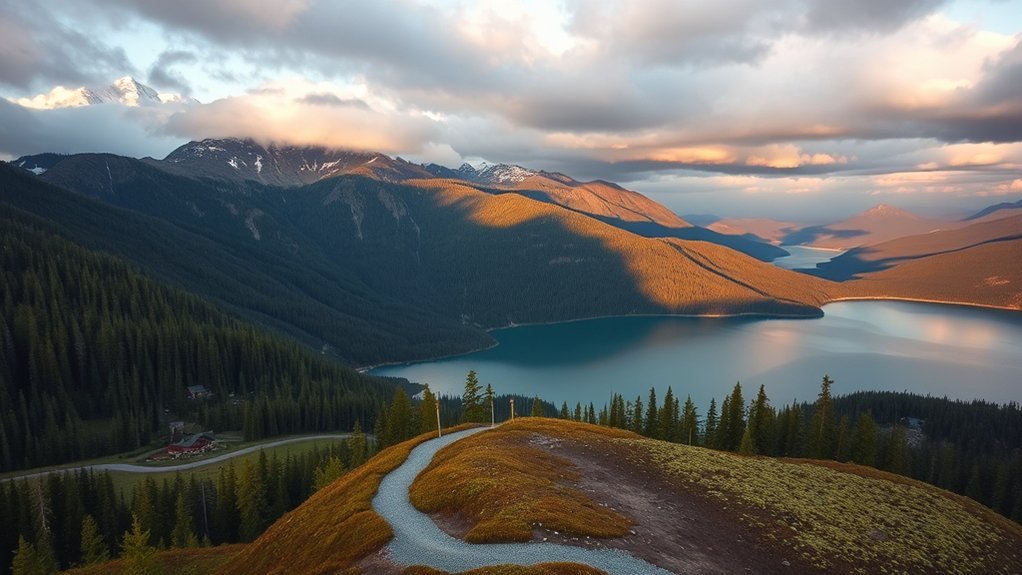
Buying land in British Columbia requires more due diligence than simply checking the asking price and visiting the property. Before removing subjects from an offer, buyers should verify zoning and permitted uses, Agricultural Land Reserve (ALR) status, title and legal access, water and septic systems, soil conditions, environmental hazards, taxes, existing structures, utilities, and future development plans. The right checks depend on the exact parcel and how you intend to use it.
Quick Answer
Before buying land in British Columbia, confirm the parcel’s zoning, ALR status, legal title, road access, water rights, well and septic condition, soil capability, flood or environmental risks, taxes, utilities, building restrictions, and development potential. Never assume that owning a parcel automatically gives you permission to build, subdivide, farm, or use nearby water.
Key Takeaways
- Check both local zoning rules and any provincial restrictions that apply to the parcel.
- If the property is in the ALR, Agricultural Land Commission rules can restrict residences, subdivision, non-farm uses, fill, and soil removal.
- Review the land title for easements, covenants, rights of way, liens, leases, and other registered interests.
- Verify legal road access, well records, water rights, septic condition, utilities, boundaries, and soil suitability before relying on the property for a home or farm.
- Do not estimate annual property tax using one province-wide percentage; rates and levies depend on the parcel’s location and classification.
- Use appropriate conditions in the purchase contract so legal, financing, inspection, water, septic, environmental, and land-use issues can be investigated before closing.
Check Zoning and Permitted Land Uses Before You Buy
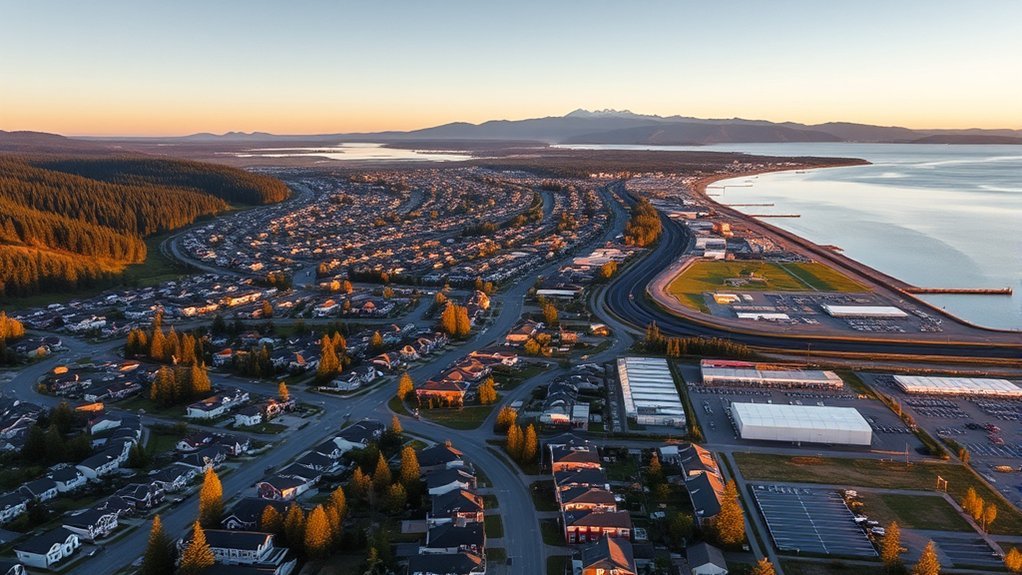
Zoning regulations determine what uses and development may be permitted on a parcel. British Columbia municipalities and regional districts can regulate the use, density, siting, size, and dimensions of land, buildings, and other structures through zoning bylaws.
Start by identifying the local government that has jurisdiction over the property and reviewing its current zoning map and zoning bylaw. The Province explains how local zoning works in its zoning bylaw guidance.
Do not stop after finding a zone name such as agricultural, rural residential, residential, commercial, or resource. Read the actual regulations for that zone and confirm your proposed use with the planning department.
Depending on the parcel, important questions include:
- Can a permanent dwelling be built?
- Are manufactured or modular homes permitted?
- How many residences or accessory buildings are allowed?
- What are the minimum setbacks, height limits, lot coverage, and building-area rules?
- Are farming, livestock, home businesses, short-term rentals, workshops, or commercial activities permitted?
- Can the property be subdivided?
- Is the parcel in a development permit area, floodplain, environmentally sensitive area, or other special planning area?
- Does an Official Community Plan indicate a different long-term land-use designation?
Pro Tip: Describe your intended project to the local planning department before buying. Asking only, “What is the zoning?” is less useful than asking whether your specific house, farm, subdivision, workshop, rental, or business proposal appears to comply with current rules.
[Amazon Products Picked for You]

Used Book in Good Condition

Non-Book/Non-Music Item
Check Whether the Property Is in the Agricultural Land Reserve
The Agricultural Land Reserve (ALR) is a provincial land-use zone in which agriculture is the priority use. A property inside the ALR remains private property, but its use and development are subject to the Agricultural Land Commission Act, regulations, ALC decisions, and applicable local bylaws.
Local zoning does not override ALR requirements. A project may need to satisfy both local-government rules and Agricultural Land Commission rules before it can proceed.
Current ALC guidance for people buying and owning land in the ALR highlights several common restrictions:
- Residential use: The number, size, and circumstances of residences can be limited.
- Subdivision: Subdivision is tightly controlled and may require ALC approval.
- Non-farm uses: A non-agricultural activity must either be permitted by regulation or receive the required approval.
- Fill and soil removal: Moving, placing, or removing soil can be regulated.
- Local rules still apply: Even when an activity is permitted by the ALC, a municipality or regional district may impose additional restrictions.
Do not assume that a large parcel can automatically be divided into smaller lots or that a house, secondary dwelling, storage operation, event venue, or commercial business can be added simply because enough physical space exists.
Check the current ALR map for the parcel and confirm any uncertainty with the ALC and local government before relying on a proposed use.
Assess Soil, Water, Wells, and Septic Capacity
Soil and water matter even when the property will not become a commercial farm. Drainage, high water tables, shallow bedrock, poor soil, unreliable wells, or inadequate septic capacity can limit where a house or agricultural operation can be placed and can significantly increase development costs.
[Amazon Products Picked for You]
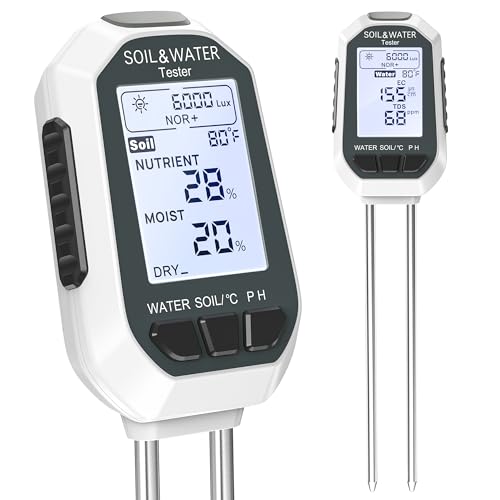
【7-in-1 Features】This is a 7-in-1 multi-function soil tester. Our soil tester quickly measures soil moisture, pH, temperature and light intensity, and its fertility function helps you take better care of your plants. With this device you can measure the soil moisture, pH, temperature and light intensity for your plants and with the EC and TDS functions you will know when it is time to water the soil.

✅ 1Dial & 1 LCD Screen - Replace/install all 3 batteries each time. Put button to %RH/°F to - Turn On, and put to LIGHT to - Turn Off. Read the LCD results in 3-5 mins. (Not Water Moisture Meter, so, please don't test liquid)

【4 in 1 function】This is a 4-in-1 multifunctional soil tester.Our soil tester fastly to measure soil moisture, pH, temperature and sunlight to help you take better care of flowers and plants.You can know when you need to water your soil by measuring moisture and pH & Temperature value of the soil and sunlight level of plants with it.
Review Soil Quality and Agricultural Capability
For agricultural property, start with available soil and agricultural-capability mapping, then use site-specific testing where the proposed use justifies it. The BC government explains that agricultural capability reflects a combination of soil, climate, topography, and other limitations.
For nutrient testing, representative sampling matters. BC’s soil-sampling guidance recommends creating representative composite samples from multiple locations rather than relying on one convenient spot.
Depending on the planned use, investigate:
- Soil texture and drainage.
- Depth to bedrock or restrictive layers.
- High seasonal water table.
- pH and nutrient levels for agricultural use.
- Compaction or previous fill.
- Evidence of erosion.
- Agricultural capability and crop limitations.
- Whether a professional geotechnical assessment is needed for construction.
Verify the Water Source and Legal Right to Use It
A creek, lake, spring, or well on or beside a property does not automatically mean that unlimited water can legally or reliably be used.
Under British Columbia’s water licensing system, non-domestic groundwater use such as irrigation, commercial, or industrial use generally requires a licence. Groundwater used exclusively for domestic purposes does not require a provincial water licence, although domestic well registration is encouraged.
Before buying property supplied by a well, obtain and review available well records and ask for information about:
- Well depth and construction.
- Static water level.
- Historical yield or pumping-test results.
- Seasonal shortages.
- Maintenance and repairs.
- Water-quality testing.
- Nearby wells or potential contamination sources.
- Any water licence associated with non-domestic use.
If farming depends on irrigation, confirm the licensed source, authorized quantity, purpose of use, point of diversion, place of use, and any seasonal conditions rather than relying on the seller’s verbal description.
Inspect Irrigation Infrastructure
Where irrigation equipment is included, inspect pumps, intakes, pipes, valves, storage ponds, electrical service, filters, pressure, and distribution systems. Determine whether the system actually reaches the usable agricultural area and whether major components are near the end of their service life.
Past land use, flooding, drainage problems, and contamination can also affect the feasibility of irrigation and crop production.
Review the Septic System or Septic Feasibility
Many rural properties do not have municipal sewer service. If an existing onsite sewage system is present, ask for installation, filing, maintenance, pumping, inspection, and repair records and have its condition evaluated when appropriate.
For vacant land, do not assume that a septic system can be installed exactly where you want a house. Soil, slope, groundwater, setbacks, lot configuration, water sources, and the proposed building can affect septic design and cost.
Warning: A beautiful rural parcel can become unsuitable for the intended project if it lacks legal access, adequate potable water, or a feasible sewage-disposal solution. Verify these issues before removing purchase subjects.
Review the Title, Property History, Boundaries, and Existing Structures
A seller’s description and a real-estate listing are not substitutes for reviewing the property’s legal records. Buyers should confirm what is actually registered against the land and whether the physical conditions match the legal documentation.
[Amazon Products Picked for You]

Installs flush with ground so you can easily mow, walk, play or drive right over them

Marine Hot-Dipped Galvanized Steel to last forever. Not just painted or powder coated that will rust away over the years.

【Precision Ground Control】 Low profile survey stakes surveying strike plate has 2 high-performance viewing colors, orange and red, capable of color-graded survey marks, easy to pursue and record, and provides a stable and permanent elevation reference point for projects, and prevents accidental damage.
Check the Land Title and Registered Charges
British Columbia’s Land Title and Survey Authority explains that a land title can show the registered owner and legal interests or charges against the title. These may include mortgages, statutory rights of way, easements, covenants, judgments, leases, and builders’ liens.
Use the parcel identifier (PID) and obtain the appropriate title information through the Land Title and Survey Authority of British Columbia.
Have a BC real-estate lawyer or notary review important registered charges. A covenant or right of way can affect where you can build, whether a driveway can be moved, what vegetation can be cleared, or how part of the property can be used.
Also determine whether access to the property is:
- Directly from a public road.
- Through a registered easement.
- Across a private road.
- Seasonal or physically difficult despite appearing legal on paper.
Confirm Boundaries and Survey Information
Fences, old driveways, trails, tree lines, and verbal descriptions are not reliable proof of a legal boundary. If boundary location matters to your building site, access, fencing, acreage, or intended subdivision, review available plans and consider obtaining advice or field work from a BC land surveyor.
Pay particular attention to buildings, wells, septic components, roads, retaining structures, and fences that appear close to a property line or easement.
Evaluate Existing Structures and Permits
Inspect the age and condition of houses, barns, shops, sheds, retaining walls, fencing, electrical systems, wells, septic components, and other improvements.
A physical structure on the property does not necessarily prove that it was built with every required permit or that its present use is lawful. When relevant, confirm permit and inspection history with the authority having jurisdiction.
Potential expenses can include roofing, foundations, drainage, electrical upgrades, water systems, structural repairs, septic replacement, demolition, hazardous-material remediation, and bringing unauthorized work into compliance.
Investigate Environmental and Natural Hazards
Review the property’s former uses and surrounding activities for possible contamination. British Columbia’s Site Registry contains information about sites that may have been identified, investigated, remediated, or otherwise recorded under the contaminated-sites system.
Depending on location and history, also investigate:
- Flooding and erosion.
- Wildfire exposure.
- Landslides, unstable slopes, or rockfall.
- Poor drainage and high groundwater.
- Former fuel tanks, workshops, dumping, industrial activity, or chemical storage.
- Previous agricultural chemical use where it could affect the intended project.
BC warns that flooding can occur outside mapped floodplain boundaries, and local governments may have newer or more detailed flood information than older provincial mapping. Review local floodplain bylaws and maps and obtain professional advice for higher-risk sites.
Calculate Property Taxes, Transfer Tax, and Other Purchase Costs
Do not budget for a BC land purchase using only the sale price. Taxes, legal costs, surveys, inspections, environmental work, servicing, financing, and repairs can materially change the total cost.
Annual Property Tax
There is no dependable province-wide percentage that tells every buyer what annual property tax will be. The amount varies with the property’s taxable value, classification, location, and applicable taxing authorities.
For rural property, charges can include provincial rural tax, school tax, regional hospital taxes, regional district levies, police tax, improvement-district charges, and local-service-area levies.
Review the current tax notice and confirm the property’s classification and applicable rates rather than relying on a generic percentage.
BC Property Transfer Tax
British Columbia’s general Property Transfer Tax is normally calculated on the fair market value of the taxable transaction at:
- 1% on the first $200,000.
- 2% on the portion over $200,000 up to and including $2 million.
- 3% on the portion over $2 million.
A further 2% can apply to the residential portion of property value above $3 million. Exemptions and additional rules may change the amount payable, so confirm the treatment of the specific transaction rather than assuming the standard calculation always applies unchanged.
GST and Other Closing Costs
GST treatment of vacant land and farmland depends on factors such as who is selling it, how the land was used, whether it was used in a business, and subdivision history. The Canada Revenue Agency explains that some sales of personal-use vacant land are exempt while other land transactions can be taxable.
Check the tax treatment with a qualified professional when buying farmland, development land, business property, newly subdivided property, or other land where GST may be relevant.
Other costs may include:
- Legal or notary fees.
- Title and registration costs.
- Surveying.
- Building, septic, well, or environmental inspections.
- Water-quality and well-yield testing.
- Appraisal and lender fees.
- Insurance.
- Road or driveway work.
- Electrical service extensions.
- Well drilling or septic installation.
- Land clearing, drainage, fencing, and site preparation.
Note: Land-use law and tax treatment depend on the parcel, transaction, buyer, and intended use. Confirm important legal and tax issues with the relevant government authority and a qualified BC legal or tax professional before closing.
Evaluate Access, Utilities, Services, and Nearby Development
Accessibility can be a major issue for rural British Columbia land. A road that is easy to drive in summer may be difficult or expensive to maintain during winter, spring thaw, wildfire season, or heavy rain.
Check:
- Whether access is public or private.
- Who maintains and plows the road.
- Whether a registered easement is required to reach the property.
- Road width, grade, drainage, bridges, and culverts.
- Emergency-vehicle access.
- Winter conditions and snow-removal costs.
Verify utilities rather than assuming that nearby infrastructure can economically serve the parcel. Determine the availability and cost of electricity, water, sewer or septic, natural gas or propane, telephone service, cellular coverage, internet, garbage collection, and emergency services.
A power line visible from the property does not necessarily mean a low-cost electrical connection is available. Long service extensions, poles, transformers, trenching, or off-grid systems can add substantial cost.
Also investigate nearby land uses and future development. Visit the area more than once and, where possible, at different times of day. Consider noise, agricultural operations, industrial activity, traffic, odours, shooting ranges, resource roads, rail lines, nearby commercial development, and planned subdivisions.
Review local planning documents to identify proposed road corridors, rezoning applications, major developments, infrastructure projects, or changes that could affect privacy, traffic, views, drainage, or property use.
Match the Property to Your Long-Term Plans
Before buying, define what the land must realistically support. A parcel suitable for recreation may not work for a year-round residence, commercial farm, subdivision, rental business, or large workshop.
Write down your intended uses and test each one against the property’s legal and physical constraints:
- Primary residence.
- Secondary residence or family accommodation.
- Commercial farming.
- Hobby farming or livestock.
- Workshop or home business.
- Short-term or long-term rental use.
- Subdivision.
- Future resale or development.
- Recreational use.
Financing should also be investigated early. Vacant land, unusual rural property, remote property, agricultural operations, unpermitted buildings, poor access, or properties without conventional utilities may not qualify for the same financing terms as a standard urban home.
Insurance can create similar issues. Before committing to an unusual or hazard-exposed parcel, ask an insurer whether coverage is available and whether wildfire, flood, older structures, wood heating, remote access, agricultural activity, or other property characteristics affect eligibility or premiums.
British Columbia Land-Buying Due-Diligence Checklist
Before removing subjects or completing a purchase, work through the following checklist as applicable to the parcel:
- Identify the parcel: Confirm legal description, PID, acreage, boundaries, and title.
- Check registered interests: Review easements, covenants, rights of way, liens, leases, mortgages, and other charges.
- Confirm legal access: Determine how the property legally connects to a public road.
- Check zoning: Confirm permitted uses, setbacks, density, building rules, and subdivision requirements.
- Review planning designations: Check the Official Community Plan, development permit areas, and proposed nearby projects.
- Check ALR status: If applicable, verify ALC restrictions and approval requirements.
- Verify water: Review well records, yield, quality, water licences, and seasonal reliability.
- Check sewage disposal: Inspect the existing septic system or verify that a suitable system can be designed.
- Assess soil and drainage: Check soil capability, water table, slope, drainage, and geotechnical constraints.
- Inspect improvements: Evaluate buildings, utilities, roads, fencing, wells, irrigation equipment, and other structures.
- Confirm permits: Investigate whether existing structures and uses have required approvals.
- Review environmental history: Investigate contamination, dumping, fuel storage, flooding, erosion, landslide, and wildfire exposure.
- Price the utilities: Obtain realistic estimates for electricity, water, septic, roads, internet, heating, and other required services.
- Calculate taxes and closing costs: Include annual property tax, Property Transfer Tax, possible GST, professional fees, and inspections.
- Confirm financing and insurance: Make sure the property can be financed and insured on acceptable terms.
- Use appropriate purchase subjects: Give yourself enough contractual protection and time to complete important investigations.
For a significant land purchase, the cost of proper due diligence is generally small compared with discovering after closing that the intended use is prohibited, the property lacks legal access, water is unreliable, or major site work is required.
Frequently Asked Questions
Can I build a house on any land I buy in British Columbia?
No. Building rights depend on local zoning, setbacks, development permit areas, access, servicing, building-code requirements, environmental or hazard restrictions, and other rules. ALR property may also be subject to provincial restrictions on residential use. Confirm a proposed dwelling with the local government and any other authority that has jurisdiction before purchasing.
Can I subdivide ALR land in British Columbia?
Not automatically. Subdivision within the Agricultural Land Reserve is tightly controlled and may require Agricultural Land Commission approval in addition to the normal subdivision process. A local zoning bylaw showing a minimum parcel size does not by itself guarantee that an ALR subdivision will be approved.
Do I need a water licence for a well in British Columbia?
Groundwater used exclusively for domestic purposes does not require a provincial water licence, although registration of a domestic well is encouraged. Non-domestic groundwater use, including many irrigation, commercial, and industrial uses, generally requires a water licence.
What should I check on the land title before buying?
Confirm the registered owner, legal description, PID, and charges affecting the parcel. Relevant charges can include easements, statutory rights of way, restrictive covenants, mortgages, leases, judgments, and liens. Have important charges reviewed by a BC lawyer or notary so you understand how they affect the intended use.
What Products Is BC Known For?
British Columbia produces a wide range of agricultural and food products, including fruit, berries, vegetables, livestock products, seafood, wine grapes, and other specialty crops. For a prospective land buyer, however, regional agricultural success does not prove that a specific parcel is suitable for the same products. Soil, climate, water, topography, infrastructure, and market access should be assessed for the individual property.
What Are the Top 10 Things to Do in British Columbia?
Popular BC experiences include exploring Vancouver, visiting Victoria, skiing or hiking around Whistler, driving the Sea-to-Sky Highway, visiting national and provincial parks, exploring the Okanagan, touring Vancouver Island, enjoying the coast, hiking in the Rockies, and visiting smaller mountain and lakeside communities. These tourism attractions are separate from the legal and physical due diligence required when purchasing land.
Is British Columbia Expensive?
Costs vary greatly across British Columbia. Urban residential property, productive farmland, recreational land, and remote rural acreage can have very different prices and carrying costs. Buyers should compare recent local sales and calculate taxes, financing, servicing, maintenance, transportation, insurance, and development expenses for the specific parcel.
What Is the Rarest Animal in BC?
There is no single official ranking that identifies one species as British Columbia’s definitive “rarest animal.” The Northern Spotted Owl is, however, among Canada’s most endangered animal species and is the focus of an active BC recovery and conservation-breeding program. Conservation status depends on the species, population, geographic area, and assessment method being used.
Conclusion
Buying land in British Columbia can be a strong long-term decision when the parcel’s legal rights, physical limitations, and true costs match the buyer’s plans. Confirm zoning, ALR status, title, access, boundaries, water, septic capacity, soil, hazards, structures, taxes, utilities, financing, and insurance before committing. The most important question is not simply whether the property looks suitable, but whether the intended use is legally permitted, physically feasible, and financially practical.
Sources
- Provincial Agricultural Land Commission — Buying and Owning ALR Land — ALR residential, subdivision, non-farm-use, fill, soil, and zoning requirements.
- Province of British Columbia — Zoning Bylaws — local land-use and zoning authority.
- Province of British Columbia — Water Licensing and Rights — groundwater, surface-water, and licensing requirements.
- Province of British Columbia — Property Transfer Tax — current general PTT rates and related rules.
- Land Title and Survey Authority of British Columbia — Find Information on a Title — title ownership, charges, easements, covenants, liens, and other registered interests.
- Province of British Columbia — Site Information and Site Registry — contaminated-site information relevant to property purchasers and developers.
