
The Toyota RAV4 has grown from a small, car-like SUV into a roomier compact crossover. Toyota stretched the wheelbase, widened the body, and tweaked the interior for more comfort and more useful cargo space—while keeping it easy to drive day to day.
Key takeaways
- The five-door first-generation RAV4 (1996–2000 in the U.S.) was about 162 inches long; the second generation grew to 168 inches, and the third jumped to about 181 inches.
- The biggest size leap happened for the third generation (2006–2012), which also offered an optional third-row seat.
- Fourth-gen RAV4s (2013–2018) are known for a very usable cargo area: 38.4 cu ft behind the rear seat and 73.4 cu ft with the rear seat folded (2013 model specs).
- Fifth-gen models (2019–2025) keep similar exterior size but shift packaging and powertrains; cargo is commonly listed at 37.6 cu ft behind the rear seat and 69.8 cu ft max (varies by trim/powertrain).
- The all-new sixth-generation RAV4 arrives for 2026 and is offered as a hybrid (HEV) or plug-in hybrid (PHEV); certain AWD grades are rated to tow up to 3,500 lb.
How the Toyota RAV4 Evolved in Size Across Generations

As you look at the RAV4 across generations, you’ll see Toyota reacting to the same trend that shaped much of the SUV market: buyers wanted more space, more flexibility, and more comfort—without jumping to a much larger vehicle.
The original U.S. RAV4 (1996–2000) came in both three-door and five-door body styles. In five-door form it measured about 162 inches long on a 94.5-inch wheelbase, which made it notably easy to park and maneuver.
The second generation (2001–2005 in the U.S.) moved to a five-door-only lineup and grew modestly. Toyota notes it was still “super-agile,” at 168 inches long, with a 3-inch longer wheelbase that helped rear-seat room.
The third generation (2006–2012) was the big leap: the wheelbase grew to 105 inches and length increased to about 181 inches. This is also the era when the RAV4 offered optional third-row seating (a small, occasional-use row), reflecting demand for more passenger flexibility.
For the fourth generation (2013–2018), Toyota redesigned the body and structure while keeping the RAV4 in the compact class. It also dropped the prior V6 option and focused on a four-cylinder powertrain lineup for efficiency and simplicity.
The fifth generation (2019–2025) kept the RAV4 around the same overall footprint but refined packaging, safety tech, and available powertrains (including hybrid and plug-in hybrid variants). Cargo volume varies by trim and powertrain, but the common “seats down” maximum is under 70 cubic feet.
As of 2026, Toyota has debuted an all-new sixth-generation RAV4 with hybrid (HEV) and plug-in hybrid (PHEV) powertrains. It continues the “right-sized” compact approach, but with updated styling, stronger electrification, and higher towing ratings on specific AWD grades.
Key Dimensions of Each RAV4 Generation
Below is a quick look at how the RAV4 grew. (Numbers can vary by trim and market, so treat these as typical U.S.-market figures.)
| Generation (U.S. model years) | Overall length | Wheelbase | Notes |
|---|---|---|---|
| 1st (1996–2000) | ~162 in (five-door) | 94.5 in | Three-door and five-door; small footprint |
| 2nd (2001–2005) | 168 in | +3 in vs. 1st gen | Five-door only |
| 3rd (2006–2012) | ~181 in | 105 in | Optional third-row seat |
| 4th (2013–2018) | 179.9 in (2013) | 104.7 in (2013) | More cargo-focused packaging |
| 5th (2019–2025) | 180.9 in (2019 debut) | 105.9 in (2019 debut) | TNGA platform; hybrid and PHEV available |
| 6th (2026–) | 181.0 in (as tested) | 105.9 in (as tested) | HEV and PHEV powertrains |
Cargo Space by RAV4 Generation
Cargo space is a big RAV4 selling point, but older numbers are hard to compare because standards and body styles changed. Here’s what’s reliable for newer models, plus context for earlier ones:
- 1st–3rd generations (1996–2012): Cargo volume varied by body style (early three-door vs. five-door) and, in the third generation, whether the optional third-row seat was fitted. In general, each generation improved day-to-day cargo usability as the vehicle grew.
- 4th generation (2013–2018): Toyota listed 38.4 cu ft behind the second row and 73.4 cu ft behind the front seats (rear seat folded) for the 2013 redesign.
- 5th generation (2019–2025): A commonly published maximum is 69.8 cu ft behind the front seats and 37.6 cu ft behind the rear seat for 2019 RAV4/RAV4 Hybrid specs. Plug-in hybrid versions can trade some rear cargo volume for battery packaging (for example, Toyota listed 33.5 cu ft behind the rear seat for the 2025 RAV4 Plug-in Hybrid).
- 6th generation (2026–): Cargo figures vary by trim and powertrain, but one published spec set lists 38 cu ft behind the rear seat and 70 cu ft max.
Interior Layout Changes and Their Impact on Usability
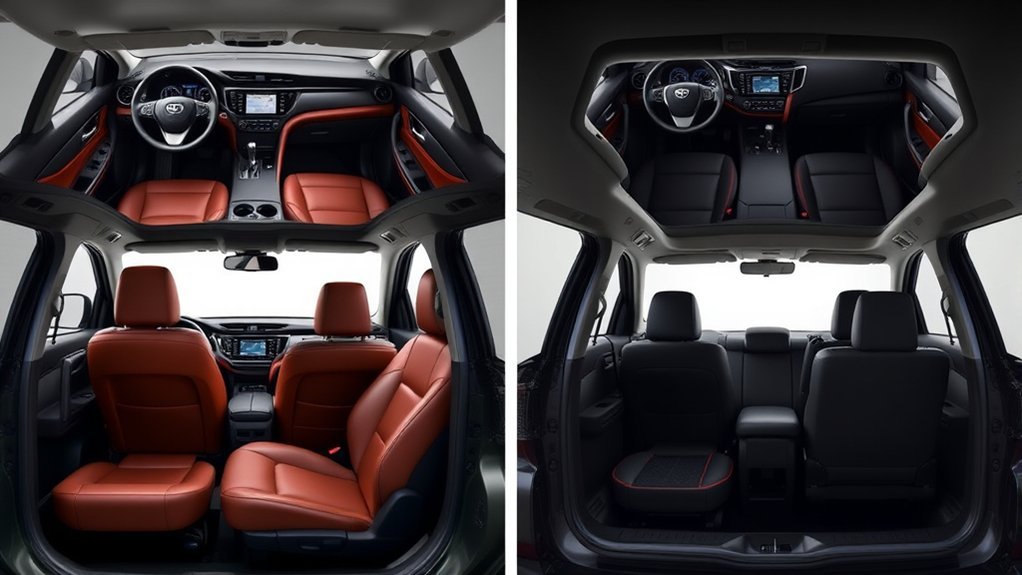
Interior packaging has been one of the RAV4’s quiet success stories. As the vehicle grew, Toyota used the extra footprint to improve rear-seat room, make the cargo floor more useful, and add practical storage.
The third generation’s optional third-row seat is a good example of Toyota experimenting with flexibility. Over time, buyer preferences generally favored more cargo room and a simpler two-row layout, and the RAV4 returned to a two-row focus for later generations.
By the fourth and fifth generations, cabin layout emphasized easier entry, more usable center storage, and cargo areas designed for strollers, suitcases, and daily gear. Plug-in hybrid versions may sacrifice some underfloor space for the battery, but keep a familiar overall layout.
How Size Changes Affected RAV4 Performance
As the RAV4 got longer and wider, it usually felt steadier at highway speeds. The trade-off is that extra size can feel less nimble in tight city spots than the earliest models.
Enhanced Stability And Handling
The most important change for stability is wheelbase. Toyota’s own history notes the jump from a 94.5-inch wheelbase in the original five-door RAV4 to 105 inches in the third generation, which helps the vehicle feel steadier on highways and in crosswinds.
Increased Cargo Capacity Benefits
More exterior size and smarter packaging typically translate to easier cargo loading—especially once you move into the 2013 redesign and newer. For many drivers, the practical benefit is less about the last few cubic feet and more about having a square, easy-to-pack opening and a flat load floor when the rear seats are down.
Evolution of Safety Features With Size Changes
Safety improvements over the RAV4’s life aren’t only about size; they reflect changes in vehicle design and standard equipment. Toyota notes that Vehicle Stability Control became standard for 2004 in the second-generation run, and later generations added more airbags and active-safety features as they became common across the market.
By the fifth generation, Toyota Safety Sense driver-assist features were widely offered, and official 2019 RAV4 specifications list Toyota Safety Sense 2.0 features (such as pre-collision and dynamic radar cruise control) across trims.
Design Changes Influencing Exterior Dimensions and Usability
Design choices can change how big a vehicle feels even when the tape-measure numbers don’t move much. A more upright cabin, squarer cargo area, and lower liftover height can make loading easier. Conversely, aggressive bumpers and wide fender flares can make parking feel tighter even if the wheelbase is unchanged.
The 2026 redesign continues this theme by focusing on updated styling and hybrid tech while keeping the RAV4 in the compact SUV footprint that made it popular in the first place.
Conclusion: Did Bigger Mean Better for the RAV4?

For most shoppers, the RAV4’s growth has meant a more comfortable back seat, a more useful cargo area, and features that make long drives easier. The trade-off is that the earliest RAV4s feel lighter and easier to place in tight spaces. “Better” depends on what you value: maximum space and tech, or the nimble feel of a smaller footprint.
Related Guides
Frequently Asked Questions
What Is the Towing Capacity of the Toyota RAV4?
Towing capacity depends heavily on year, drivetrain, and trim. As of the 2026 redesign, Toyota states that certain AWD hybrid and plug-in hybrid grades can tow up to 3,500 pounds, while all FWD models and the LE AWD model are rated at 1,750 pounds. Fifth-generation models also varied by trim (for example, 2019 specs list up to 3,500 pounds for the Trail grade, with many other trims rated at 1,500 pounds).
How Does the RAV4 Compare in Size to Competitors?
In the compact SUV class, the RAV4 sits near the middle of the pack for exterior footprint. Competitors like the Honda CR-V, Mazda CX-5, Subaru Forester, and Nissan Rogue are in a similar size range, so practical differences often come down to interior packaging, cargo shape, and seating comfort rather than a few inches of length.
What Are the Seating Capacities for Different RAV4 Trims?
Most RAV4 models seat five with two rows. A small optional third-row seat was offered in the third generation (2006–2012), but later generations have focused on a two-row layout.
Are There Any Size-Related Recalls for the RAV4?
Recalls are usually tied to specific parts or safety systems rather than “size.” For the most accurate and current information, check an official VIN-based lookup (for example, the NHTSA recalls tool).
How Does the Rav4’s Size Impact Fuel Efficiency?
All else equal, more size and weight can hurt fuel economy. In practice, the powertrain matters more: hybrids and plug-in hybrids can help offset the efficiency hit of a larger vehicle.
