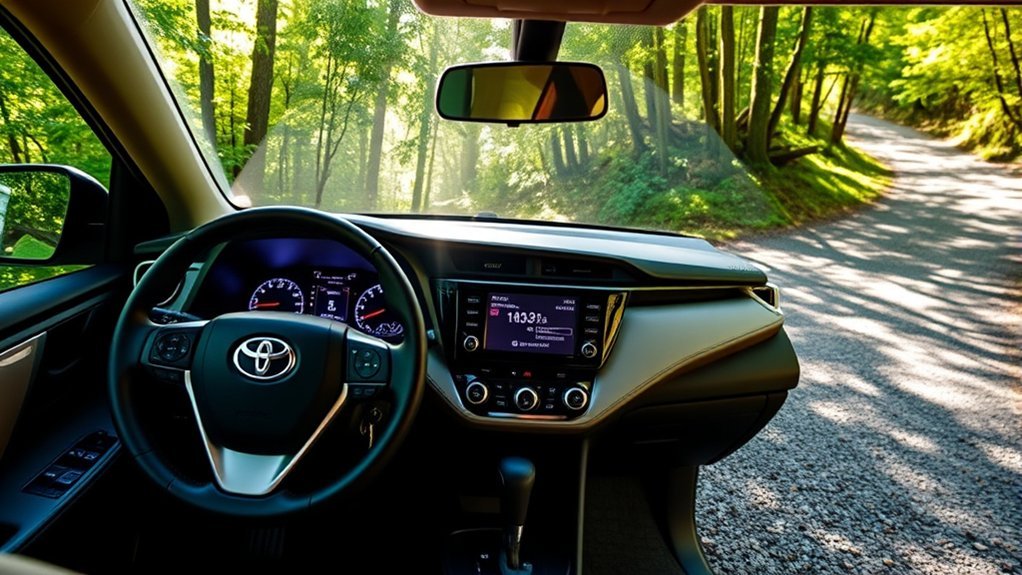
The 2026 Toyota RAV4 is rated from 38 to 43 MPG combined, depending on trim and drivetrain. The most efficient front-wheel-drive LE, SE, and XLE Premium configurations reach an EPA-estimated 47 MPG city, 40 MPG highway, and 43 MPG combined. AWD versions range from 38 to 42 MPG combined.
Quick Answer
The 2026 Toyota RAV4 gets up to an EPA-estimated 47 MPG city, 40 MPG highway, and 43 MPG combined. AWD versions range from 38 to 42 MPG combined, with the Woodland at the low end. Compare the exact trim and drivetrain because one MPG number does not apply to every 2026 RAV4.
Key Takeaways
- The best-rated 2026 RAV4 configurations achieve 47 city, 40 highway, and 43 combined MPG.
- Depending on the trim and drivetrain, combined fuel economy ranges from approximately 38 to 43 MPG.
- Front-wheel-drive LE, SE, and XLE Premium models provide the highest official ratings.
- Cold weather, short trips, high speeds, tire pressure, climate control, roof accessories, and driving style can change your actual MPG.
- EPA estimates are comparison figures, not guaranteed results for every driver or trip.
Last updated: September 19, 2026. U.S.-market ratings and specifications were rechecked against current Toyota, EPA-aligned, and manufacturer sources.
2026 RAV4 Hybrid MPG by Trim

Toyota markets the standard non-plug-in hybrid simply as the 2026 RAV4. Unlike earlier model years, the U.S. lineup no longer includes a conventional gas-only RAV4. Buyers can choose between the standard hybrid and the separately marketed RAV4 Plug-in Hybrid.
According to Toyota’s current 2026 RAV4 information and its current comparison data, the lineup reaches an EPA-estimated maximum of 47 MPG city, 40 MPG highway, and 43 MPG combined. The exact rating changes with the trim and drivetrain.
| Trim and Drivetrain | City MPG | Highway MPG | Combined MPG |
|---|---|---|---|
| LE, SE, or XLE Premium FWD | 47 | 40 | 43 |
| LE or SE AWD | 46 | 39 | 42 |
| XLE Premium AWD | 45 | 38 | 41 |
| XSE or Limited AWD | 43 | 37 | 41 |
| Woodland AWD | 41 | 35 | 38 |
These ratings show why a single MPG number cannot describe the entire lineup. A FWD commuter-focused model can be several MPG more efficient than an AWD Woodland equipped for additional traction and outdoor use. You can confirm current equipment and ratings on Toyota’s official RAV4 specifications page.
The most efficient 2026 RAV4 is rated at 43 MPG combined, while other configurations range down to 38 MPG combined.
Why Do Some Sources Show 44 MPG Combined?
Some pre-launch Toyota material listed a manufacturer-estimated figure of up to 44 MPG combined before final production ratings were available. Toyota’s current consumer data and EPA-aligned listings show 43 MPG combined for the highest-rated FWD configurations. If you see 44 MPG in an older article or launch document, check whether it is quoting a pre-production manufacturer estimate rather than the final EPA rating.
You can compare the older estimate in Toyota’s 2026 RAV4 launch material with the current Toyota RAV4 comparison data.
What Do the MPG Differences Mean Over a Year?
Using the combined ratings as a simple comparison, 12,000 miles of driving would require about 279 gallons at 43 MPG, 286 gallons at 42 MPG, 293 gallons at 41 MPG, or 316 gallons at 38 MPG. That means a 38-MPG configuration would use about 37 more gallons over 12,000 miles than a 43-MPG configuration under the same conditions. Multiply those gallons by your local fuel price to estimate the cost difference. This is a comparison calculation, not a prediction of your actual fuel use.
Why Is RAV4 City MPG Higher Than Highway MPG?
Many conventional gasoline vehicles earn their best ratings on the highway. A full hybrid can behave differently because its electric motor and regenerative braking system provide more benefits during lower-speed and stop-and-go driving.
When you slow down gently, regenerative braking converts some of the vehicle’s motion into electrical energy and stores it in the hybrid battery. The vehicle can then reuse that energy to assist acceleration or operate briefly with reduced gasoline-engine use.
At steady highway speeds, regenerative braking provides fewer opportunities to recover energy. Aerodynamic resistance also increases as speed rises, so the gasoline engine must contribute more power. This helps explain why the most efficient RAV4 configuration is rated at 47 MPG in the city but 40 MPG on the highway.
Note: Regenerative braking does not replace the RAV4’s hydraulic friction brakes. The vehicle blends regenerative and conventional braking as needed for safe, predictable stopping.
EPA Ratings Versus Real-World MPG
EPA estimates provide a standardized way to compare vehicles. They do not guarantee that every owner will receive the exact label number. The EPA explains that actual mileage varies with weather, traffic, speed, trip length, driving habits, vehicle condition, accessories, and other factors.
Your dashboard MPG display can also differ from a calculation made at the fuel pump. The display estimates fuel use electronically, while a pump calculation compares miles traveled with the amount of fuel added. If you need the display and reset steps, see how to check MPG on a Toyota RAV4.
How to Calculate Your RAV4’s MPG
- Fill the fuel tank and reset a trip meter.
- Drive normally until your next fill-up.
- Record the trip-meter mileage.
- Record how many gallons the pump adds.
- Divide the miles driven by the gallons added.
For example, if you travel 420 miles and add 10 gallons, your calculated fuel economy is 42 MPG. For a more reliable average, repeat the calculation over several tanks instead of judging the vehicle from one short trip.
Pro Tip: Compare several full-tank calculations made at the same pump when possible. Small differences in pump shutoff, parking angle, and fill level can distort a single-tank result.
Factors That Affect RAV4 Hybrid Fuel Economy
Driving Speed
Fuel economy usually declines as highway speed increases because aerodynamic drag rises quickly. U.S. DOE and EPA guidance says gas mileage usually decreases rapidly above 50 mph, but its underlying speed study included mostly conventional gasoline vehicles and only a small number of hybrids. Treat the 50-mph point as general guidance rather than a RAV4-specific threshold. Always follow posted limits and choose a speed that is safe for traffic and road conditions.
Acceleration and Braking
Rapid acceleration asks the engine and battery for more power. Hard braking can also reduce the amount of energy the regenerative system recovers because the vehicle may need to rely more heavily on its friction brakes. Smooth acceleration and early, moderate braking usually provide better results.
Short Trips
A cold engine needs time to reach an efficient operating temperature. Repeated short trips can therefore produce lower MPG than one longer trip covering the same total distance.
Cold Weather
Cold temperatures increase fluid friction, reduce battery performance, lower tire pressure, and increase heater use. According to the DOE and EPA cold-weather guidance, hybrid fuel economy can fall roughly 20%–40% during cold city driving and even more during short winter trips.
Heating and Air Conditioning
Heating, defrosting, and air conditioning require energy. The effect depends on the outside temperature, trip length, cabin setting, and vehicle operation. Use climate control as needed for comfort, visibility, and safety rather than switching it off solely to chase a dashboard MPG number.
Tire Pressure and Tire Type
Underinflated tires increase rolling resistance. Check pressure when the tires are cold and use the value printed on the driver-side door-jamb label. Do not use the maximum pressure molded into the tire sidewall as the normal inflation target.
Low-rolling-resistance tires may support efficiency, but any replacement tire must also meet Toyota’s size, load, speed, traction, and performance requirements. More aggressive all-terrain tread can reduce MPG compared with a road-focused tire.
Roof Racks and Cargo
Roof boxes, baskets, and exposed cargo increase aerodynamic drag, especially at highway speeds. Remove unused accessories when practical. Extra weight from cargo and passengers can also reduce efficiency, although the effect is usually smaller than the effect of a large roof-mounted carrier.
Vehicle Condition
A warning light, dragging brake, poor wheel alignment, incorrect oil, damaged aerodynamic panel, or other mechanical problem can hurt fuel economy. Follow Toyota’s maintenance schedule and have persistent changes inspected.
Driving Tips for RAV4 Hybrid Owners
- Accelerate smoothly: Apply the accelerator progressively instead of demanding maximum power from every stop.
- Anticipate traffic: Leave enough following distance to coast and brake gradually when traffic slows.
- Use regenerative braking effectively: Begin slowing early instead of waiting and braking hard.
- Maintain a steady legal speed: Avoid unnecessary speed changes on open roads.
- Use cruise control selectively: It can help on flat, open highways but may be unsuitable in heavy traffic, on winding roads, or in slippery conditions.
- Combine short errands: One longer route can reduce the number of cold starts.
- Check tire pressure regularly: Seasonal temperature changes can alter pressure even when no tire is damaged.
- Remove unused exterior accessories: Roof-mounted equipment can create avoidable drag.
- Avoid excessive idling: Idling uses fuel while returning zero miles per gallon.
- Use the correct oil and maintenance parts: Follow the specifications in the owner’s manual rather than relying on aftermarket fuel-economy claims.
The DOE and EPA hybrid-driving guidance specifically recommends gentle braking, appropriate use of economy modes, and careful use of energy-consuming accessories.
RAV4 Hybrid Versus RAV4 Plug-in Hybrid Efficiency
The standard RAV4 hybrid does not plug into an external charger. It refuels with gasoline, and its battery is charged through the engine and regenerative braking. Its efficiency is therefore expressed mainly in miles per gallon.
The RAV4 Plug-in Hybrid has a larger battery that can be charged from an external power source. Toyota currently lists up to 52 miles of EPA-estimated all-electric range and up to 102 MPGe combined for selected 2026 Plug-in Hybrid configurations. Its window label also includes gasoline-only or hybrid-mode MPG. MPGe compares the energy content of electricity with gasoline, so it should not be directly compared with the standard hybrid’s MPG without considering charging habits.
A plug-in model can use very little gasoline when it is charged regularly and most trips fit within its electric range. A driver who rarely charges it may see a very different result. Readers researching the non-plug-in RAV4 should use the standard hybrid MPG table above.
RAV4 Hybrid MPG vs. Key Competing Hybrid SUVs

The most efficient 2026 RAV4 is competitive with the strongest non-plug-in hybrid compact SUVs. The figures below compare selected configurations with their highest published ratings. A different trim or drivetrain may produce a lower number.
| Hybrid SUV | City | Highway | Combined | Configuration Note |
|---|---|---|---|---|
| Toyota RAV4 | 47 | 40 | 43 | Selected FWD trims |
| Kia Sportage Hybrid | 41 | 44 | 42 | LX FWD |
| Honda CR-V Hybrid | 43 | 36 | 40 | Selected FWD hybrid trim |
| Ford Escape Hybrid | 42 | 36 | 39 | AWD hybrid |
| Mazda CX-50 Hybrid | 39 | 37 | 38 | Standard AWD |
| Hyundai Tucson Hybrid | 40 | 35 | 38 | SE FWD |
The RAV4 leads this group in maximum city and combined MPG, while the Sportage Hybrid LX has the higher published highway figure. However, MPG should not be the only deciding factor. Compare drivetrain, passenger comfort, cargo room, towing needs, tire type, equipment, and purchase cost before choosing a vehicle.
Features That Support RAV4 Fuel Economy
The 2026 RAV4 uses Toyota’s fifth-generation hybrid system with a 2.5-liter gasoline engine and electric motor assistance. FWD models produce 226 net combined horsepower, while AWD models use an additional rear electric motor and produce 236 net combined horsepower.
- Electric motor assistance: Reduces the amount of gasoline-engine power needed in suitable conditions.
- Regenerative braking: Recovers part of the vehicle’s kinetic energy during moderate deceleration.
- Automatic engine management: Allows the system to switch or blend gasoline and electric power without requiring the driver to manage the process.
- Driver information display: Helps you observe acceleration, energy flow, and average fuel economy.
- Available FWD: Provides the lineup’s highest official MPG ratings.
These systems work automatically. You do not need to force the RAV4 to remain in electric operation or watch the power display continuously. Smooth, safe driving is more important than trying to hold the gauge at a specific position.
Why Is My RAV4 Hybrid Getting Low MPG?
A short-term drop does not always indicate a mechanical problem. Review your recent conditions before arranging a repair.
- Have temperatures recently fallen?
- Are most trips shorter than five miles?
- Are you using the heater, defroster, or air conditioner more often?
- Has your average highway speed increased?
- Are the tires inflated to the door-jamb specification?
- Did you install winter, all-terrain, or non-original-size tires?
- Are you carrying a roof box, basket, bicycle, or heavy cargo?
- Has traffic become slower or more congested?
- Was the dashboard MPG reset recently?
If MPG falls suddenly and remains low through several tanks, check for warning lights, abnormal tire wear, brake drag, fluid leaks, unusual noises, or changes in handling. A Toyota dealer or qualified hybrid technician can inspect the vehicle when basic checks do not reveal the cause.
Frequently Asked Questions
What is the 2026 Toyota RAV4 Hybrid’s combined MPG?
The most efficient FWD configurations are EPA-rated at 43 MPG combined. Other versions are rated from approximately 38 to 42 MPG combined, depending on the trim and drivetrain.
Which 2026 RAV4 gets the best gas mileage?
The LE, SE, and XLE Premium with front-wheel drive provide the highest published rating of 47 city, 40 highway, and 43 combined MPG.
What factors influence the RAV4 Hybrid’s fuel economy?
Important factors include trim, drivetrain, speed, acceleration, braking, trip length, temperature, climate-control use, tire pressure, tire type, roof accessories, cargo weight, traffic, and vehicle condition.
How does driving style affect MPG in the RAV4?
Rapid acceleration, hard braking, and high highway speeds usually reduce MPG. Smooth acceleration, early moderate braking, steady legal speeds, and adequate following distance generally support better efficiency.
Can aftermarket modifications improve RAV4 Hybrid MPG?
Most advertised MPG modifications do not provide reliable savings. Performance filters, exhaust changes, additives, oversized wheels, and aggressive tires may produce no improvement and can reduce efficiency. Factory-specified maintenance and correct tire pressure are safer priorities.
Are low-rolling-resistance tires worth considering?
They may help reduce rolling resistance, but efficiency is only one requirement. Choose a tire that matches Toyota’s size, load, speed, traction, handling, and climate recommendations. Maintain the door-jamb pressure regardless of tire type.
How does cold weather affect RAV4 Hybrid MPG?
Cold weather can noticeably reduce hybrid MPG because the engine takes longer to warm, the battery operates less efficiently, tire pressure falls, and cabin heating uses energy. The effect is usually greatest on repeated short trips.
Is the 2026 RAV4 available without a hybrid system?
Not in the U.S. market. The 2026 lineup consists of the standard hybrid RAV4 and the RAV4 Plug-in Hybrid. Toyota no longer offers a conventional gas-only 2026 RAV4 in the United States.
Why do some sources list the 2026 RAV4 at 44 MPG combined?
Some pre-launch Toyota material used a manufacturer estimate of up to 44 MPG combined. Current Toyota consumer data and EPA-aligned listings show 43 MPG combined for the highest-rated FWD configurations.
Conclusion
The 2026 Toyota RAV4 gets up to an EPA-estimated 47 MPG city, 40 MPG highway, and 43 MPG combined. The exact figure depends on the trim and drivetrain, with AWD and Woodland configurations receiving lower ratings than the most efficient FWD models.
Your actual MPG may rise or fall with temperature, trip length, traffic, speed, tire condition, accessories, and driving habits. Use the EPA rating for comparison, calculate several tanks for a practical ownership average, and focus on smooth driving and factory-recommended maintenance rather than unproven modifications.
Sources
- Toyota: 2026 RAV4 — current trim lineup, city/highway MPG figures, and model information.
- Toyota: RAV4 Comparison Data — current combined MPG, tank capacity, powertrain, and comparison specifications.
- Toyota: 2026 RAV4 Specifications — trim, drivetrain, equipment, and fuel-economy specifications.
- Toyota: Fuel-Efficient SUVs — current 2026 RAV4 and RAV4 Plug-in Hybrid efficiency figures.
- Toyota USA Newsroom: 2026 RAV4 Launch Information — pre-launch manufacturer estimates and hybrid-system specifications.
- U.S. EPA: Your Mileage May Vary — factors that cause actual MPG to differ from label estimates.
- U.S. DOE and EPA: Driving More Efficiently — evidence-based guidance on speed, acceleration, cargo, idling, and cruise control.
- U.S. DOE and EPA: Tips for Hybrids, Plug-in Hybrids, and EVs — regenerative braking, economy modes, and accessory-use guidance.
- U.S. DOE and EPA: Fuel Economy in Cold Weather — documented effects of low temperatures on hybrid MPG.
