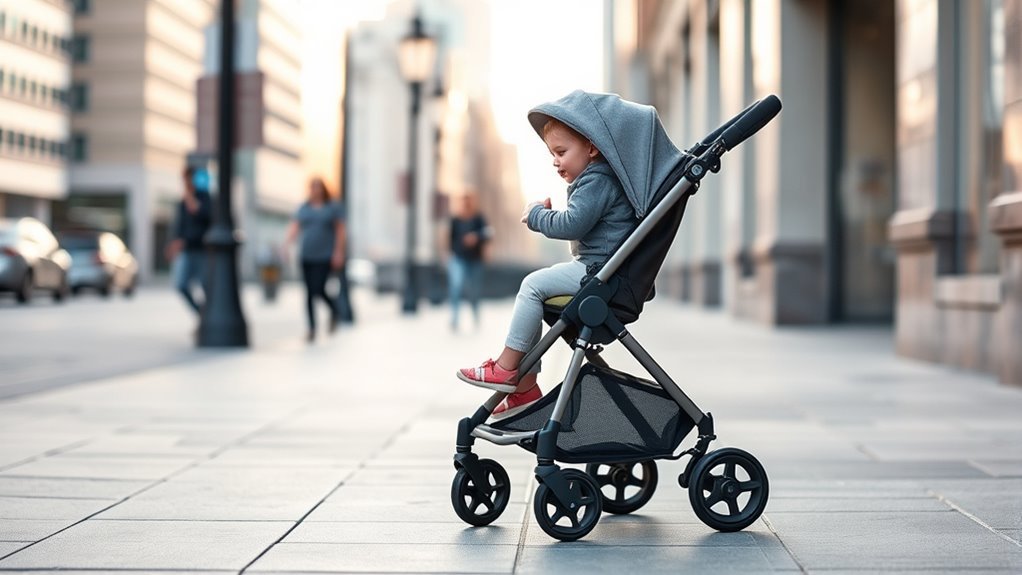
The YOYO stroller weight limit depends on the model, seat configuration, and market. For the current Stokke YOYO³ 6+ stroller in the United States, the child limit is 48.5 pounds (22 kg), with a maximum child height of 40 inches (102 cm). Older YOYO² models and newborn configurations have different limits, so the label and manual supplied with the stroller should always take priority.
Quick Answer
The current U.S. Stokke YOYO³ 6+ stroller supports a child up to 48.5 lb (22 kg) or 40 in (102 cm) tall. The 0+ newborn configuration has a lower 9 kg limit. Regional rules and older YOYO² specifications can differ, so check the stroller’s own label and manual.
Key Takeaways
- The current U.S. YOYO³ 6+ child limit is 48.5 lb (22 kg), with a 40 in (102 cm) height limit.
- The YOYO³ 0+ newborn configuration is intended from birth to a maximum child weight of 9 kg.
- Current YOYO³ models can carry up to 22 lb (10 kg) in the shopping basket; older YOYO² manuals specify 5 kg.
- Child weight, basket load, pockets, and accessories have separate limits. Do not treat one rating as extra capacity for another.
- Certain early YOYO³ strollers were recalled for a parking-brake issue, so owners should check the serial number before use.
- Stop using the stroller for a child once any applicable weight, height, age, or fit limit has been exceeded.
Yo Yo Stroller Weight Limit Explained
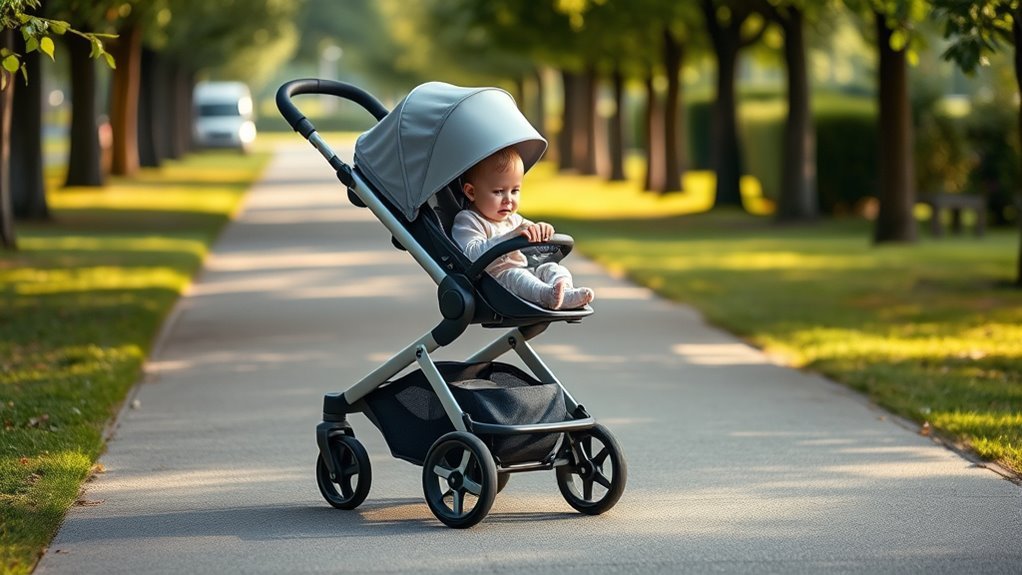
For the current Stokke YOYO³ 6+ stroller sold in the United States, the manufacturer specifies use from about 6 months with a child weighing no more than 48.5 lb (22 kg) and measuring no more than 40 in (102 cm). These limits appear in the official Stokke YOYO³ 6+ U.S. user guide.
The 6+ seat is not the same as the newborn setup. The YOYO³ 0+ newborn pack is intended from birth and has a maximum child weight of 9 kg, according to Stokke’s 0+ instructions. A child therefore does not have a single YOYO limit from birth through toddlerhood; the applicable limit changes with the configuration being used.
Older BABYZEN YOYO² strollers are still common in homes and on the secondhand market. Their specifications should not automatically be replaced with YOYO³ numbers. Owners should identify the exact model and read the label or manual that came with that stroller.
Warning: Do not carry a child who exceeds the weight, height, age, or configuration limit stated for that stroller. Do not assume an older YOYO², a YOYO³, and a newborn setup share the same limits.
What the Weight Limit Means
A stroller’s child weight limit is the maximum child weight for which that particular seat configuration is rated. It is a safety specification rather than a target that should be exceeded temporarily.
For the U.S. YOYO³ 6+ seat, both weight and height matter. A child who reaches 40 in (102 cm) has reached the published U.S. height boundary even if the child still weighs less than 48.5 lb.
For the current U.S. YOYO³ 6+ seat, 48.5 lb is not the only number to watch: the manufacturer also specifies a 40 in (102 cm) child-height limit.
Clothing and shoes form part of the child’s actual weight when the child is riding. The shopping basket, canopy pocket, mesh pocket, and approved accessories have their own load restrictions. They should not be combined into a made-up total payload or used to justify exceeding the child limit.
The U.S. YOYO³ manual also warns that loads hung from the handlebar, backrest, or sides can affect stroller stability. Use only manufacturer-approved accessories and keep each storage area within its stated capacity.
How Long the Yo Yo Lasts for Kids
The YOYO can cover several stages of early childhood when the correct configuration is used. The 0+ newborn pack is intended from birth to 9 kg, while the 6+ seat is designed for older babies and toddlers.
Stokke’s worldwide YOYO³ 6+ instructions commonly describe the seat as suitable from about 6 months to 4 years or 22 kg, whichever comes first. The U.S. manual instead gives the 48.5 lb/22 kg limit together with a 40 in/102 cm height specification.
This means age alone is not enough to decide whether the stroller still fits. Children grow at different rates. A taller child may outgrow the seat or applicable height limit before reaching the maximum weight, while another child may reach the weight ceiling first.
The current YOYO³ weighs about 6.2 kg in Stokke’s published travel information, which helps explain its popularity as a compact travel stroller. Low stroller weight, however, does not change the child-capacity limits.
Pro Tip: As your child approaches the limit, check weight, height, harness fit, head and leg room, and how comfortably the child sits. Do not wait until steering or seating becomes obviously difficult before planning the next stroller.
Yo Yo Stroller Weight Limit by Region
YOYO specifications can vary by country because local stroller standards and product approvals are not identical. The safest rule is to use the manual and compliance label for the stroller sold in your market, not a number copied from another country’s product page.
For example, the current worldwide YOYO³ guide commonly specifies a 22 kg limit for the 6+ configuration, while some country-specific sections apply lower limits under local standards. The Brazilian section of Stokke’s worldwide manual, for example, states a 15 kg/3-year limit under Brazilian requirements while separately noting the product’s European-standard rating.
The current U.S. YOYO³ 6+ guide specifies:
- Child weight: up to 48.5 lb (22 kg)
- Child height: up to 40 in (102 cm)
- Starting age: approximately 6 months for the 6+ seat
- Shopping basket: up to 22 lb (10 kg)
- 6+ canopy pocket and mesh pocket: up to 1 lb (0.5 kg) each
Note: If numbers found online conflict with the label on your stroller, follow the manufacturer documentation supplied for your exact model and market or confirm the specification directly with Stokke.
Current YOYO³ vs Older YOYO² Capacity
| Configuration | Child limit | Other important limit |
| YOYO³ 6+ — U.S. | 48.5 lb / 22 kg | 40 in / 102 cm child height; 10 kg basket |
| YOYO³ 6+ — many global markets | Up to 22 kg | Generally up to about 4 years; local rules can differ |
| YOYO³ 0+ newborn pack | 9 kg | From birth; change configuration when the newborn-pack limit is reached |
| Older YOYO² 6+ | Up to 22 kg in Stokke’s worldwide guide | Older worldwide guide lists a 5 kg shopping-basket limit |
[Amazon Products Picked for You]
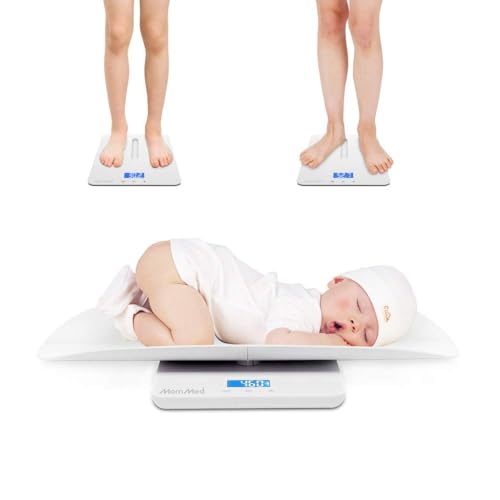
HIGH ACCURACY MEASURE: We are always looking for a way to care baby's growth, this toddler scale helps to ensure them getting the right amount of food.We use high precision sensors to provide accurate and stable readings; the baby scale’s Measure range from 0.1lb-220lb (50g-100kg)
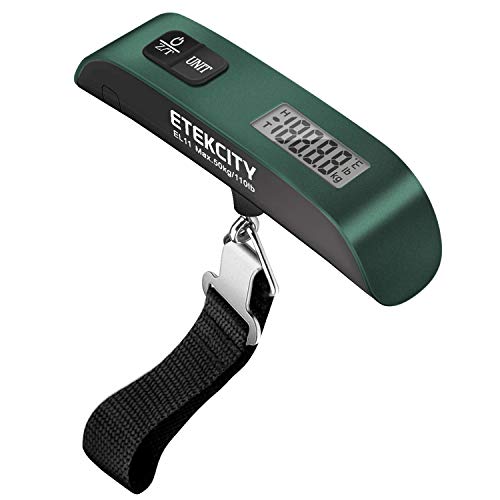
𝑺𝒂𝒚 𝑮𝒐𝒐𝒅𝒃𝒚𝒆 𝒕𝒐 𝑶𝒗𝒆𝒓𝒘𝒆𝒊𝒈𝒉𝒕 𝑪𝒉𝒂𝒓𝒈𝒆𝒔: Avoid surprises at the check-in counter with high-precision measurements that keep your luggage within airline limits—save money and travel stress-free!

𝐋𝐀𝐑𝐆𝐄 𝐂𝐀𝐏𝐀𝐂𝐈𝐓𝐘 & 𝐌𝐔𝐋𝐓𝐈𝐅𝐔𝐍𝐂𝐓𝐈𝐎𝐍𝐀𝐋 𝐒𝐂𝐀𝐋𝐄: This digital scale provides reliable weight measurements with a wide range of load capacities from 0.1lb/50g to 330lb/150kg (Max); it is suitable not only for babies but also for toddlers, pets (puppies, cats...), and even adults up to 330 lb; With a wide range of 5 measurements, it's easy to choose the unit between lb: oz, oz, lb, g, and kg. Great choice for various families with infants, toddlers, or pets.
Check Your YOYO³ for the Parking-Brake Recall
A weight-limit article should also address a significant safety issue affecting some early YOYO³ strollers. On November 14, 2024, the U.S. Consumer Product Safety Commission announced a recall because the parking brake on affected strollers could disengage.
In the United States, the CPSC identified affected YOYO³ serial numbers as those beginning with 142AA followed by a number below 0062239. About 2,890 units were included in the U.S. recall. The serial number is located on the tracking label under the stroller seat.
Warning: If you own an early YOYO³, check its serial number at the official Stokke YOYO³ recall portal before use. Follow the remedy shown for your exact stroller. Do not continue using a unit that the recall checker identifies as affected and not yet remedied.
The U.S. CPSC recall notice provides the original U.S. recall details, while Stokke’s current portal can identify whether a stroller is affected or has been upgraded.
What to Do When Your Child Outgrows It
Once a child reaches the applicable YOYO weight or height limit, the stroller should no longer be used to carry that child. The same applies if a configuration-specific age restriction has been reached or the manufacturer instructs you to change setups.
Fit can also matter before the numerical maximum. A child may become uncomfortable because of height, harness position, seat depth, or leg room. These signs can justify moving to a roomier stroller even while the child technically remains below the maximum weight.
[Amazon Products Picked for You]

Compact & Lightweight Design: Say goodbye to bulky strollers that make travel a hassle. Our baby stroller boasts compact design that effortlessly folds down into a compact size. Weighing in at just 11.6 pounds, thanks to its advanced carbon fiber frame, ensuring a hassle-free experience wherever you go. This innovative material not only provides exceptional durability but also allows for an incredibly lightweight construction, making it a breeze to store in trunks or overhead bins on airplanes.

LIGHTWEIGHT - A lightweight stroller makes any outing a little easier; The Ingenuity 3D Mini Convenience Stroller has a durable steel frame that weighs 11 pounds and has a full-sized seat, plus auto-lock, anti-shock front wheels and lockable rear wheels

TRAVEL STROLLER FOR AIRPLANE OR CAR: Weighing only 10.4 lbs, the Pockit Air All-Terrain baby stroller is the perfect travel companion, whether it's the vacation of a lifetime or a quick city break
Transition To Bigger Stroller
As a child approaches the YOYO³ 6+ limit, compare larger strollers by single-seat child capacity, seat dimensions, harness fit, wheelbase, storage, and folded size.
A higher number alone does not guarantee a better stroller. A larger model may offer more room and rough-surface stability but also be heavier and less convenient on public transport or flights.
- Check both maximum child weight and maximum child height.
- Choose a seat with adequate head, shoulder, hip, and leg room.
- Verify that the harness adjusts correctly to the child’s current size.
- Compare basket capacity separately from the child rating.
- Consider folded dimensions if travel remains a priority.
Keep For Travel Use
The YOYO can remain useful as a compact travel stroller only while the child still meets every applicable manufacturer limit. It should not be kept for occasional rides after the child has exceeded the rated weight or height simply because the outing is short.
If a younger sibling can use the stroller within the applicable limits, keeping it as a secondary travel stroller can make sense. Otherwise, resale, donation, or responsible reuse may be reasonable after confirming that the stroller is in safe condition and is not subject to an unresolved recall.
Yo Yo Stroller Specs and Capacity
The current YOYO³ combines a relatively high child rating for its size with an ultra-compact fold. Stokke lists the stroller at about 6.2 kg and approximately 52 × 44 × 18 cm when folded.
These dimensions make it suitable for many travel situations, but they do not guarantee cabin acceptance on every airline. Carry-on dimensions and stroller policies vary by carrier, aircraft, ticket type, and route.
[Amazon Products Picked for You]

Compact & Lightweight Design: Say goodbye to bulky strollers that make travel a hassle. Our baby stroller boasts compact design that effortlessly folds down into a compact size. Weighing in at just 11.6 pounds, thanks to its advanced carbon fiber frame, ensuring a hassle-free experience wherever you go. This innovative material not only provides exceptional durability but also allows for an incredibly lightweight construction, making it a breeze to store in trunks or overhead bins on airplanes.

LIGHTWEIGHT - A lightweight stroller makes any outing a little easier; The Ingenuity 3D Mini Convenience Stroller has a durable steel frame that weighs 11 pounds and has a full-sized seat, plus auto-lock, anti-shock front wheels and lockable rear wheels

Lightweight & Travel-Friendly Design - Weighing just 7.2 pounds, the Dream On Me Aero Travel Light Stroller makes traveling with your little one easier. Ideal for families on the go — great for vacations, city strolls, and quick errands.
Weight Limit Details
For the current U.S. YOYO³ 6+ configuration, the main numbers are 48.5 lb/22 kg for the child, 40 in/102 cm for child height, and 22 lb/10 kg for the shopping basket.
The manufacturer’s instructions also limit the 6+ canopy pocket and mesh pocket to 1 lb/0.5 kg each. Overloading the basket or attaching heavy bags to the handle can affect stability even when the child remains below the seat’s weight limit.
For newborn use, the YOYO³ 0+ pack has its own 9 kg child limit. Families moving from newborn mode to the 6+ seat should therefore treat the change as a new configuration with its own requirements, not simply a continuation of the same capacity rating.
Folded Size And Storage
At approximately 52 × 44 × 18 cm folded, the YOYO³ remains notably compact. Stokke markets it for travel and publishes examples showing that its folded size fits within some airlines’ baggage dimensions.
However, there is no single airline carry-on measurement that guarantees acceptance everywhere. Some carriers publish limits narrower than the YOYO³’s 44 cm folded width. Always check the airline’s current stroller and cabin-baggage policy before departure.
The current YOYO³ shopping basket is rated to 10 kg in the U.S. manual. That figure should not be confused with the older YOYO² worldwide manual, which specifies a 5 kg basket limit.
Frequently Asked Questions
How Much Weight Can a YOYO Stroller Hold?
The current U.S. Stokke YOYO³ 6+ stroller is rated for a child up to 48.5 lb (22 kg) and 40 in (102 cm) tall. The 0+ newborn configuration has a 9 kg limit. Older models and other markets may use different specifications, so check the label and manual for your exact stroller.
What Are the Downsides of Using a Babyzen YOYO Stroller?
The YOYO’s compact design involves tradeoffs. Its seat and wheels are smaller than those on many full-size strollers, so a larger child may have less room and rough surfaces may feel less comfortable. Some accessories are sold separately, and airline cabin acceptance is never guaranteed. Current YOYO³ storage is improved, with a 10 kg basket rating in the U.S. manual.
When Can a Baby Sit in a YOYO Stroller?
The YOYO³ 6+ seat is intended from about 6 months. Younger babies need an approved newborn configuration such as the YOYO 0+ newborn pack or another compatible setup specified by Stokke. The 0+ newborn pack is rated from birth to a maximum child weight of 9 kg.
What Stroller Has the Highest Weight Limit?
There is no useful single winner across all stroller types because manufacturers quote capacity differently. A double or triple stroller may advertise a high combined load while each individual seat has a much lower limit. When replacing a YOYO, compare the maximum weight and height for the specific seat your child will occupy rather than comparing total multi-seat capacity.
Does Basket Weight Count Toward the YOYO Child Weight Limit?
No. The child-seat rating and shopping-basket rating are separate manufacturer limits. On the current U.S. YOYO³, the child limit is 48.5 lb/22 kg while the shopping basket has its own 22 lb/10 kg limit. Both limits must be respected at the same time, and heavy items should not be hung from the handlebar.
Conclusion
The current U.S. YOYO³ 6+ weight limit is 48.5 lb (22 kg), but weight is only part of the answer. The same U.S. manual also specifies a 40 in (102 cm) child-height limit, while newborn configurations and older YOYO² models have different capacities.
Use the specification for your exact model and market, keep storage within its separate limits, and stop carrying the child when any applicable boundary is reached. Owners of early YOYO³ strollers should also check the official recall portal for the parking-brake recall before continued use.
Sources
- Stokke YOYO³ 6+ U.S. User Guide — U.S. child weight, height, basket, pocket, harness, and stability limits.
- Stokke YOYO³ 6+ Worldwide User Guide — global and country-specific age, weight, basket, and safety specifications.
- Stokke YOYO³ 0+ Newborn Pack User Guide — newborn configuration and 9 kg maximum child weight.
- U.S. Consumer Product Safety Commission YOYO³ Recall — affected serial numbers, brake hazard, recall date, and U.S. recall details.
- Stokke YOYO³ Recall Checker — current serial-number verification and remedy status.
