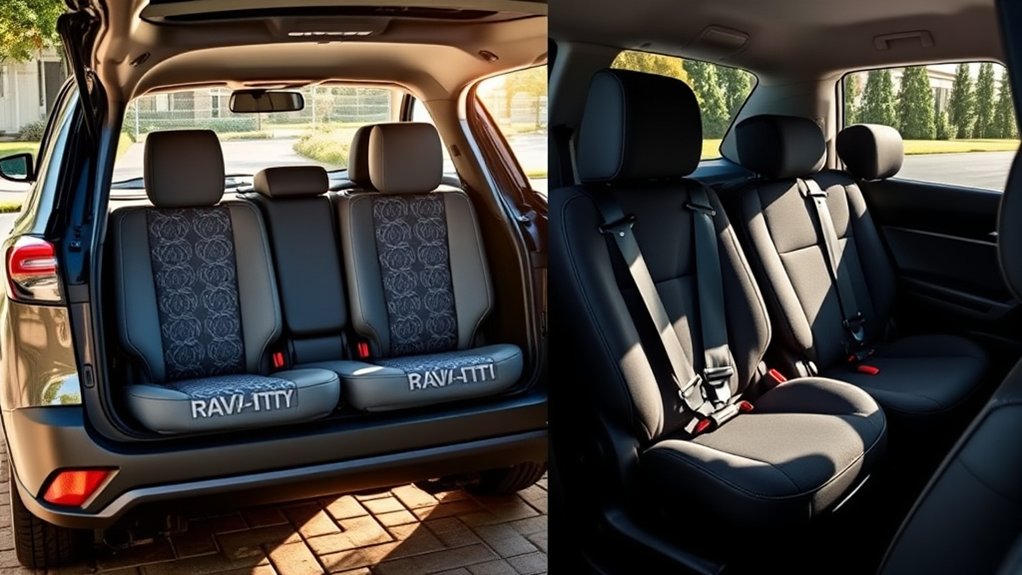
The Toyota RAV4 works well for two child restraints in most model years, but three-across fit is not guaranteed. Rear-seat width is only one part of the equation. Buckle placement, lower-anchor spacing, seat contours, front-seat clearance, and the exact child-restraint models all affect whether every seat can be installed and used correctly.
Quick Answer
Plan on fitting two car seats in a Toyota RAV4. Some 2019–2024 models may accept a carefully selected three-across combination, but fit is not guaranteed. Standardized evaluations found that the 2025 and redesigned 2026 RAV4 did not fit three tested car seats across the second row.
Key Takeaways
- Two child restraints are the dependable planning capacity for most Toyota RAV4 model years.
- The 2013–2018 generation has substantial seat-belt overlap that makes many three-across arrangements unsuitable.
- A narrow car seat can improve your chances, but width alone never proves that three seats fit safely.
- Recent RAV4s have two dedicated outboard lower-anchor pairs. The center normally requires a seat-belt installation unless both manuals permit another arrangement.
- Test every restraint independently and consider having the final setup checked by a certified Child Passenger Safety Technician.
How Many Car Seats Fit in a Toyota RAV4 by Model Year?
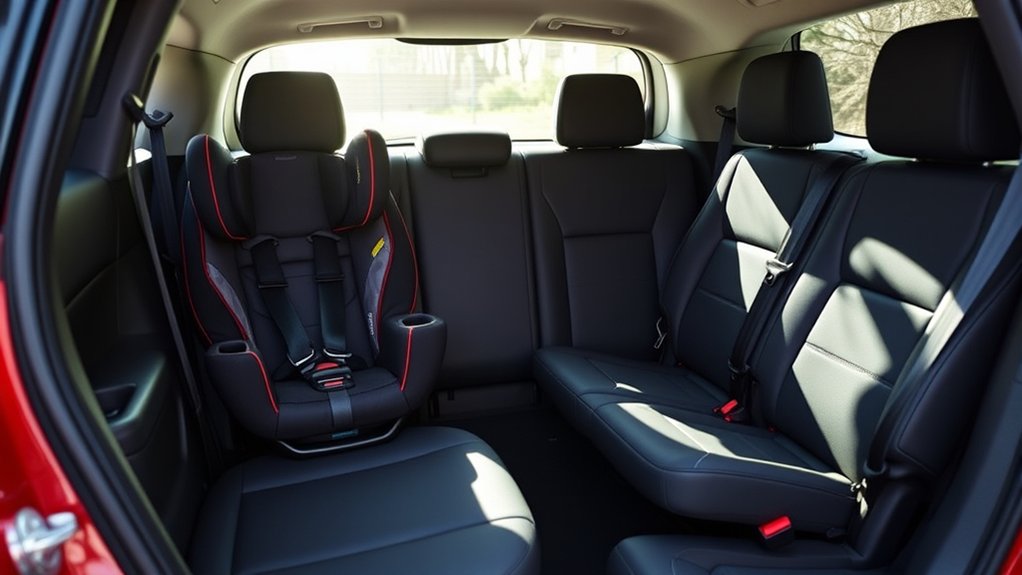
The safest general answer is two car seats. A three-across arrangement may work in a limited number of RAV4 and child-restraint combinations, but you cannot confirm compatibility from the vehicle’s seating width or model year alone.
| RAV4 Model Year | Practical Planning Capacity | What to Know |
|---|---|---|
| Before 2013 | Varies by generation | Anchor availability and belt geometry changed considerably. Check the exact owner’s manual rather than applying guidance from a newer RAV4. |
| 2013–2018 | Plan for two | Significant overlap between the center and driver-side seat belts limits safe simultaneous use of those seating positions. |
| 2019–2024 | Two routinely; three only after exact test-fitting | The 2019 redesign improved rear-seat geometry, but no universal three-across combination works for every child, seat, or installation method. |
| 2025 | Two in the standardized test | A Cars.com evaluation reported that three tested restraints did not fit across the second row. Low buckles and seat bolsters also complicated booster use. |
| 2026 | Two in initial and follow-up tests | The redesigned model provides useful room for two restraints, but two published evaluations found that it did not fit three across. |
Your exact result may differ because child-restraint shells, bases, belt paths, connectors, recline settings, and buckle positions vary. A combination that works with three forward-facing harnessed seats may fail when one seat is replaced by a rear-facing model or a booster.
Warning: Never force three restraints into the rear seat or count an installation as secure because adjacent seats hold it in place. Every restraint must remain correctly positioned and tight when checked on its own.
Challenges of Fitting Three Car Seats
Three-across installation is difficult because the usable seating area is not a flat rectangle. The following issues can prevent an otherwise narrow combination from working:
- Seat-belt overlap: One seating position’s belt or buckle may intrude into the neighboring position. This is a documented concern in the 2013–2018 RAV4 generation.
- Base and shell shape: Two seats with narrow listed widths may still collide at their bases, armrests, cup holders, or shoulder areas.
- Buckle access: A booster rider must be able to reach and use the correct buckle without pushing another restraint sideways or unbuckling it accidentally.
- Rear-facing depth: A rear-facing restraint needs the manufacturer-approved recline angle and enough clearance from the front seat.
- Head-restraint interference: A vehicle head restraint can push a forward-facing car seat or high-back booster away from the seatback. Remove or adjust it only when both manuals allow that action.
- Anchor and weight limits: Lower-anchor use ends when the limit printed on the restraint label or stated in the manuals is reached. A locked seat belt may then be required.
- Different installation methods: A three-across arrangement may need a seat-belt installation in one or more positions because lower anchors can pull an outboard seat toward the center of its designated anchor pair.
A car seat measuring less than 18 inches wide may improve your chances, but it does not guarantee a successful installation. Likewise, an 18-to-20-inch seat may work perfectly as one of two restraints. Width above 20 inches is not automatically unsafe when enough space and correct belt geometry are available.
Understanding LATCH and Top-Tether Access
LATCH includes lower anchors and top-tether anchors, but they serve different purposes. Recent RAV4 models generally provide two dedicated lower-anchor pairs for the outboard seats. They do not provide a separate standard lower-anchor pair for the center position.
| Component | Purpose | RAV4 Guidance |
|---|---|---|
| Lower anchors | Provide an alternative to installing the restraint with the vehicle seat belt. | Use the dedicated outboard pairs or another arrangement expressly permitted by both manuals. |
| Top tether | Reduces forward movement of a forward-facing restraint’s upper section in a crash. | Use the tether for a forward-facing harnessed seat whenever the restraint and vehicle instructions direct you to do so. |
| Vehicle seat belt | Provides an approved installation method when routed, locked, and tightened correctly. | Often necessary for the center position and after a child exceeds the lower-anchor installation limit. |
A standard lower-anchor pair is spaced 11 inches center to center. Do not assume that the two inner outboard anchors can form a center pair. Center-anchor borrowing is acceptable only when the RAV4 owner’s manual and the child-restraint instructions both authorize the spacing and connector type.
Neither LATCH nor a seat belt is automatically safer. Use the approved method that lets you achieve a correct installation. Do not use lower anchors and the vehicle belt together unless both manufacturers expressly permit that combination.
Note: Top-tether anchors may be marked but partly covered by carpet or located lower on the seatback than expected. Confirm the correct anchor in your exact RAV4 manual rather than attaching the tether to a cargo hook.
How to Install Multiple Car Seats Successfully
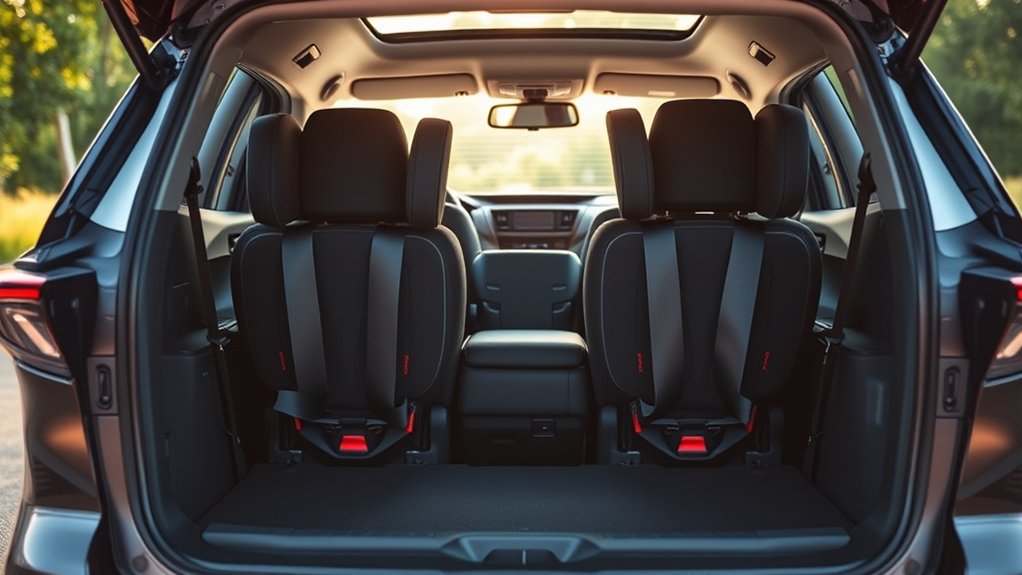
At a Glance
| Time Required | About 30–60 minutes to test-fit, install, and independently check multiple restraints |
| Difficulty | Moderate; three-across arrangements can require several combinations and installation methods |
| Tools Needed | RAV4 owner’s manual, each restraint manual, tape measure, and firm hand pressure; avoid unapproved mats, extenders, or positioning accessories |
| Cost | No cost to test existing restraints; replacement-seat costs vary, and many inspection stations provide free checks |
Choosing Narrow Car Seats
Narrow restraints can create more room around buckles and adjacent shells. For example, the official specifications list the Graco SlimFit3 LX at 16.7 inches wide. The Clek Fllo and Clek Foonf are listed at approximately 16.9 inches wide.
Diono Radian models are also commonly considered for tight arrangements, but dimensions and installation requirements vary by exact version. Verify the current product specifications rather than relying on the name of an older model.
A RideSafer Travel Vest may reduce the width needed for an older child who meets its age, weight, maturity, and usage requirements. It is not a substitute for a rear-facing or forward-facing harnessed restraint when the child still needs one. Follow the product instructions and applicable state requirements.
Before buying three new restraints, place the display models or returnable seats in your exact RAV4. Check the combination with the children’s required modes, not merely with three empty shells sitting on the bench.
Installation Techniques Overview
- Read every manual first. Review the RAV4’s child-restraint section and the instructions for each seat.
- Confirm each child’s correct restraint stage. Keep a child rear-facing or harnessed until the restraint’s stated limit is reached rather than changing modes solely to gain space.
- Choose the seating positions. Account for front-seat clearance, door access, school drop-off needs, and which child can buckle independently.
- Install the most difficult position first. This is often the center seat or the restraint with the widest base.
- Use one approved installation method. Select the lower anchors or the locked seat belt unless both manuals explicitly permit using both.
- Route and tighten correctly. Use the belt path designated for rear-facing or forward-facing use and remove slack while applying pressure where the instructions specify.
- Check movement at the belt path. Hold the seat near the routed belt or lower-anchor strap and move it side to side and front to back.
- Attach the top tether. Use it for a forward-facing harnessed restraint when instructed, even if the lower portion is installed with a seat belt.
- Install the adjacent restraints. Confirm that their belts, connectors, and shells do not interfere with the first installation.
- Test every seat independently. Remove the neighboring restraints and confirm that the remaining seat is still tight and correctly positioned.
- Check daily usability. Make sure booster riders can reach the correct buckle and that an adult can tighten every harness properly.
A correctly installed child restraint should move less than one inch from side to side or front to back when tested at its belt path.
Pro Tip: Photograph the final belt routes, tether connections, and recline indicators after a successful installation. The photos can help you reproduce the setup after cleaning or moving a seat, but always repeat the movement and buckle checks.
You can locate a certified technician through the Safe Kids Worldwide technician directory. A technician can check your installation and teach you how to reinstall each restraint yourself.
Is the RAV4 a Good Fit for Your Family’s Car Seats?
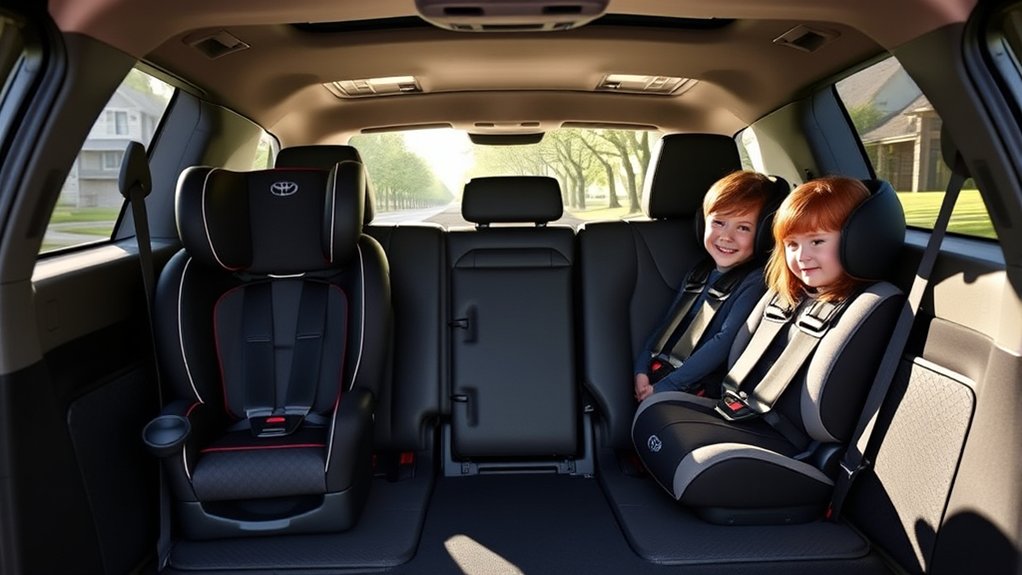
The RAV4 can be a practical family vehicle when you need two child restraints and useful cargo room. Families who need three children in restraints across one bench should test the exact model year and trim before purchasing the vehicle or replacing their current seats.
Car Seat Compatibility Considerations
- Child size and stage: Infant seats, rear-facing convertible seats, forward-facing harnesses, and boosters use space differently.
- Front occupants: A rear-facing seat must preserve the approved recline angle without forcing a front occupant dangerously close to the dashboard or steering wheel.
- Buckle geometry: A buckle buried under a booster or neighboring seat is not usable merely because the seats fit across the bench.
- Independent security: Adjacent seats may touch when both manufacturers permit it, but they cannot be the reason another restraint remains tight.
- Passenger-side airbags: Never place a rear-facing child restraint in front of an active frontal airbag.
- Manual instructions: The vehicle and restraint manuals take priority over general online advice.
Space Utilization Strategies
Instead of judging compatibility by one width measurement, evaluate the complete shape and installation of each restraint.
| Factor | Why It Matters | What to Check |
|---|---|---|
| Overall width | A narrower shell can leave more room for neighboring seats. | Measure the widest point, not only the base. |
| Base shape | Bases may overlap differently even when the shells have similar dimensions. | Look for contact with buckles, anchor webbing, and the neighboring base. |
| Belt path and connectors | Rigid or bulky connectors may consume more side space than a seat-belt installation. | Try every manufacturer-approved installation method. |
| Buckle access | Booster riders must buckle without moving another restraint. | Confirm that the correct buckle remains visible, reachable, and stable. |
| Seat contour and head restraint | Bolsters or a forward-leaning head restraint can change how the child seat contacts the vehicle seat. | Follow both manuals for required contact and head-restraint adjustment. |
| Rear-facing depth | A compact width does not prevent the seat from consuming substantial front-to-back room. | Check recline, front-seat clearance, and dashboard distance for the front occupant. |
Note: Cargo capacity can determine whether your stroller, luggage, or folded mobility device fits, but it does not change the second row’s seat belts, lower anchors, or usable seating geometry.
What Are Alternatives to the RAV4 for Car-Seat Space?
If your family needs three restraints at the same time, compare vehicles using the exact seats and seating configuration you plan to use. A model with captain’s chairs cannot support three across its second row, while the bench-seat version of the same vehicle may produce a different result.
- Honda CR-V: Another compact SUV worth test-fitting if you want similar exterior dimensions with different rear-seat contours and buckle placement.
- Subaru Forester: Offers generous door openings, but you should still test the exact three-seat combination rather than relying on cabin-width figures.
- Honda Odyssey: A minivan provides more flexible seating positions and easier access than most compact SUVs, especially when children use different restraint stages.
- Kia Telluride or Hyundai Palisade: These three-row SUVs may provide more seating options, but second-row bench and captain’s-chair trims serve different family needs.
- Chevrolet Traverse: Its three-row layout may improve flexibility, although trim-specific second-row seating must be checked before purchase.
- Nissan Pathfinder: Another three-row candidate that requires an in-person fit test with your exact bench or captain’s-chair configuration.
Published testing has shown successful three-across arrangements in the second-row bench of vehicles such as the 2026 Volkswagen Atlas and 2026 Jeep Grand Wagoneer. Those results apply to the tested model year, trim, and restraints, not every version of those vehicles.
Related Guides
Frequently Asked Questions
What types of car seats can fit in a RAV4?
A RAV4 can accommodate infant seats, convertible seats, forward-facing harnessed seats, and boosters. The exact number and arrangement depend on the model year, restraint dimensions, installation mode, child size, buckle placement, and front-seat clearance.
Can I use a rear-facing car seat with both front seats occupied?
Usually, but the rear-facing restraint must maintain its approved recline angle and any required clearance from the front seat. Both front occupants must also retain safe seating positions. Never place a rear-facing restraint in front of an active frontal airbag.
How does the RAV4’s trunk space affect car-seat installation?
Cargo space does not directly determine whether a restraint installs correctly in the second row. It affects whether you can carry a stroller, luggage, or folded mobility equipment after the child restraints are installed.
Are particular car-seat brands best for a RAV4?
No brand is universally best for every RAV4 or child. Graco, Clek, Diono, Britax, Chicco, and other manufacturers offer models with different dimensions and installation features. Choose a restraint that fits your child, fits the exact vehicle position, and can be used correctly on every trip.
Can I carry a wheelchair alongside car seats in the RAV4?
A folded wheelchair may fit in the cargo area depending on its dimensions and the other items you carry. Secure it so it cannot move during a sudden stop. Transporting a passenger while seated in a wheelchair requires an appropriately modified vehicle and professional wheelchair and occupant securement equipment.
Does a Toyota RAV4 have center LATCH anchors?
Recent RAV4s have two dedicated lower-anchor pairs for the outboard seats, not a separate standard pair for the center. Use the center seat belt unless the exact vehicle and restraint manuals both permit using the inner outboard anchors.
Is LATCH safer than installing a car seat with the seat belt?
No. A correctly used locked seat belt and a correctly used lower-anchor installation are both approved methods. Use the method allowed by both manuals that produces a secure installation, and observe the stated lower-anchor weight limit.
How do I know whether a three-across arrangement is safe?
Each restraint must use an approved seating position and installation method, move less than one inch at its belt path, preserve required recline and contact, and remain secure when neighboring seats are removed. Boosters must also remain aligned with the correct buckle and allow independent buckling.
Conclusion
For planning purposes, treat the Toyota RAV4 as a vehicle that reliably accommodates two child restraints. A three-across setup may be possible in a limited number of 2019–2024 combinations, but seat width alone cannot confirm it. Published tests found that the 2025 and redesigned 2026 models did not fit three tested restraints across the second row.
Before relying on any arrangement, follow the exact RAV4 and child-restraint manuals, test every seat independently, confirm booster buckle access, and check rear-facing clearance. A certified Child Passenger Safety Technician can help you verify the final installation without relying on guesswork.
Sources
- Toyota 2026 RAV4 Digital Owner’s Manual — model-specific child-restraint, seat-belt, lower-anchor, and tether instructions
- NHTSA: Vehicle and Car-Seat Parts Explained — lower anchors, top tethers, seat belts, and installation limits
- NHTSA: How to Install a Rear-Facing Car Seat — belt routing, recline, tightening, and the one-inch movement check
- Cars.com 2025 Toyota RAV4 Hybrid Car-Seat Check — tested restraint fit, buckle access, and three-across result
- Cars.com 2026 Toyota RAV4 Car-Seat Check — redesigned rear-seat evaluation, anchors, tethers, and three-across result
- The Car Seat Lady: Toyota RAV4 — model-year history and documented 2013–2018 seat-belt overlap concerns
