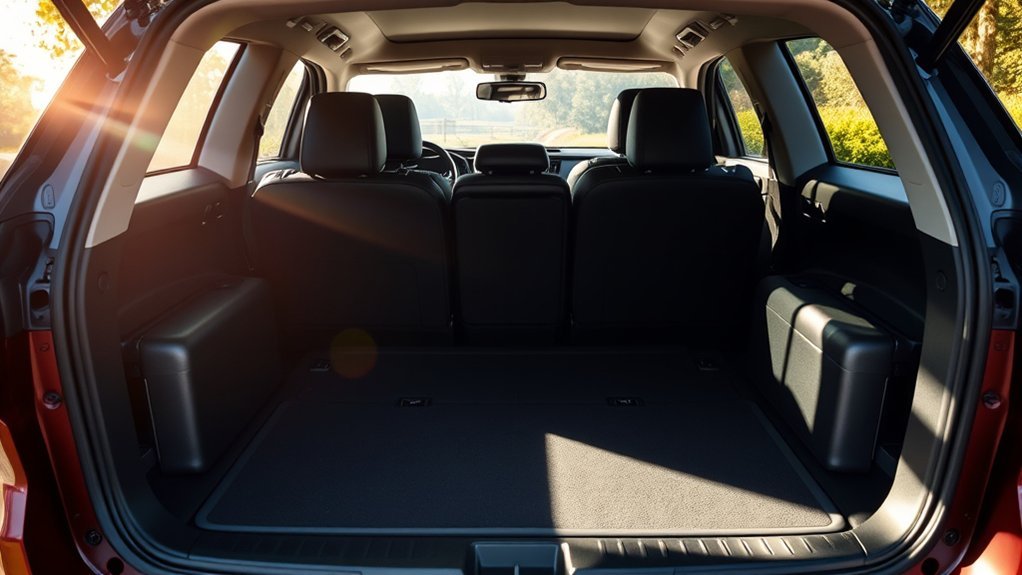
Whether your Toyota RAV4 rear seats fold completely flat depends on the model year. Most 2019–2025 models create a useful, nearly flat cargo surface with a slight rise or slope at the seatbacks. Toyota redesigned the rear seatback for 2026, and the company now describes it as folding flat.
Quick Answer
The 2026 Toyota RAV4 has a newly designed rear seatback that folds flat. Most 2019–2025 RAV4 seatbacks fold forward in a 60/40 split but leave a slight incline or height change. The exact result, release-lever location, and cargo capacity can differ by model year, trim, and powertrain.
Key Takeaways
- The 2026 RAV4 has a redesigned fold-flat second-row seatback and up to 70.4 cubic feet of cargo space.
- The 2025 RAV4 LE provides 37.6 cubic feet behind the rear seats and 69.8 cubic feet with them folded.
- Release controls vary by generation, so use the instructions for your exact model year.
- Cubic feet measure space, not payload. Check the driver-door-jamb label before loading heavy cargo.
At a Glance
| Time Required | About 2–5 minutes |
| Difficulty | Easy |
| Tools Needed | No tools for normal seat folding |
| Cost | Free |
Do RAV4 Rear Seats Fold Flat? Model-Year Differences
The short answer changes with the RAV4 generation. Toyota has used several rear-seat designs, release locations, and cargo-floor layouts over the years.
| Model years | Typical folding design | Folded-floor result |
| 2006–2012 | Split-folding seats; some two-row versions have releases accessible from the cargo area | Varies by seating configuration and deck design |
| 2013–2018 | 60/40 split seatbacks operated with manual release levers | Useful extended load floor, but the angle can vary |
| 2019–2025 | 60/40 split seatbacks with adjustment and folding levers on the seatbacks | Nearly flat, usually with a slight incline or height change |
| 2026 | Redesigned easy-fold 60/40 rear seats | Toyota describes the redesigned seatback as folding flat |
Note: Controls and cargo measurements can differ by market, trim, powertrain, and seating configuration. Check the Toyota manual for your exact vehicle before following model-specific instructions.
How Does the RAV4’s Rear Seat Folding Work?
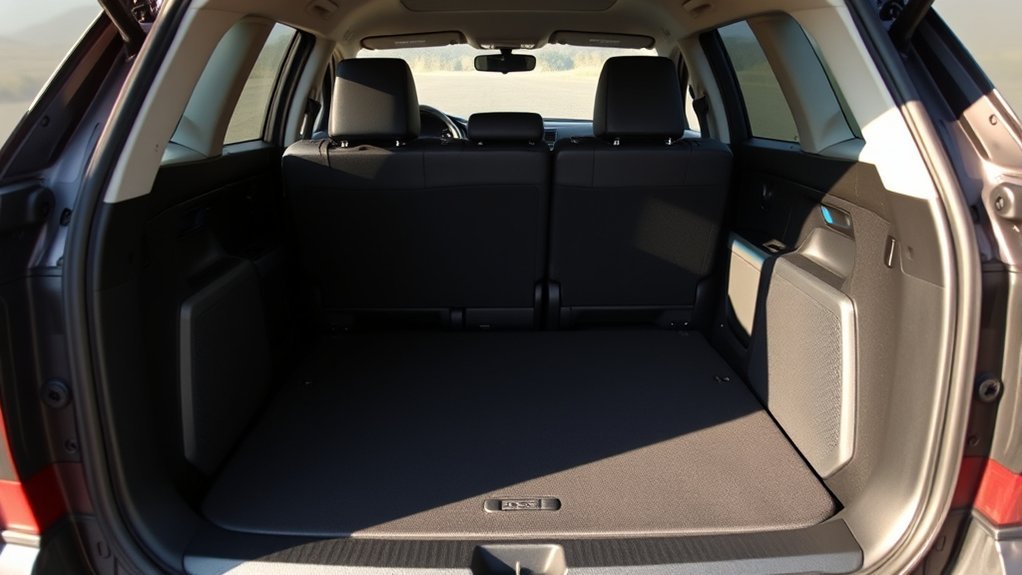
Most RAV4 models use a 60/40 split rear seatback. You can fold the smaller or larger section separately, which lets you carry a long item while keeping one or two rear seating positions available.
The release location depends on the year. On many 2019–2025 models, you pull the seatback-angle adjustment lever near the upper outside edge of each rear seatback. Toyota’s 2024 RAV4 Quick Reference Guide shows the same lever controlling adjustment and folding.
Some older two-row RAV4 models also have release levers that you can reach from the cargo area. Avoid assuming that every RAV4 has trunk-mounted handles because the design changed across generations.
The 2026 model keeps a 60/40 arrangement but uses a newly designed seatback. Toyota says this design folds flat and expands maximum cargo capacity to 70.4 cubic feet.
How to Fold Down Toyota RAV4 Rear Seats
1. Prepare the Vehicle
- Park on level ground.
- Shift into Park and apply the parking brake.
- Ask all rear passengers to exit.
- Remove child restraints from the seat section you plan to fold.
- Remove loose objects from the rear seats and footwells.
- Stow the center seat belt and buckles as directed in your owner’s manual.
- Lower adjustable head restraints if they touch the front seats or roof.
- Raise the center armrest and move the front seats forward when more clearance is needed.
Warning: Never fold a seatback while the vehicle is moving, while someone is sitting on it, or while a child restraint remains attached to that section. Keep hands, feet, seat belts, buckles, and cargo clear of the hinges and latches.
2. Release and Lower the Seatback
For most 2019–2025 RAV4 models, stand beside the rear door or open the liftgate, locate the adjustment lever on the outside of the seatback, and pull it upward. Guide the seatback forward instead of letting it drop.
Repeat the process for the other section when you need the full cargo area. The 60/40 design lets you lower either side independently.
On 2026 models, stow the center belt, buckles, and armrest first. Pull the seatback-angle adjustment lever, then guide the redesigned seatback forward. Some equipment and return functions vary by trim, so follow the instructions in the 2026 owner’s manual.
3. Return the Rear Seatbacks Upright
- Clear cargo away from the hinge and latch areas.
- Check that no seat belt or buckle is trapped behind the seatback.
- Lift the seatback until the latch clicks.
- Push and pull the top of the seatback gently to confirm that it has locked.
- Return the head restraints, center seat belt, and armrest to their normal positions.
Pro Tip: Fold the smaller seat section when carrying skis, lumber, or another narrow object. You can preserve more passenger space while keeping the item away from the driver.
Common Troubleshooting Tips
If a RAV4 seatback will not fold, do not force the lever. Check these common causes first:
- The head restraint hits the front seat: Lower the restraint or move the front seat forward.
- A seat belt is under tension: Unbuckle it, let it retract, and place it in the correct stowed position.
- A buckle blocks the seatback: Move or stow the buckle before folding.
- A child seat remains installed: Remove it before lowering that seat section.
- Cargo blocks the hinge: Clear the rear footwell and the space behind the seatback.
- The lever moves but the latch does not release: Press the seatback rearward slightly to remove pressure from the latch, then pull the lever again.
- The seatback will not lock upright: Inspect the latch area for a trapped belt, buckle, pet hair, or debris.
A release lever that feels loose, jammed, or disconnected may indicate a damaged cable or latch. A Toyota dealer or qualified repair shop should inspect it.
Key RAV4 Cargo Space Figures
Cargo capacity changed with the 2026 redesign. The following manufacturer figures provide a clearer comparison than one universal RAV4 number:
| Vehicle | Behind rear seats | Rear seats folded |
| 2025 RAV4 LE | 37.6 cubic feet | 69.8 cubic feet |
| 2026 RAV4 | Up to 37.8 cubic feet | Up to 70.4 cubic feet |
The 2026 RAV4 offers up to 70.4 cubic feet with its easy-fold 60/40 rear seats lowered.
These figures measure volume, not the length, width, or weight of a particular item. A box can have less total volume than the cargo area and still fail to fit through the liftgate or between the wheel-well trim panels.
How to Measure for Large Cargo
Use a tape measure before transporting furniture, appliances, bicycles, mattresses, or building materials. Measure:
- The narrowest width between the wheel-well trim panels
- The liftgate opening at its narrowest and lowest points
- The usable length with the front seats in your normal driving positions
- The height from the cargo deck to the headliner
- The height change where the folded seatbacks meet the cargo deck
Keep the driver’s seat in a safe position. Do not move it so far forward that you lose proper control of the pedals, steering wheel, or airbags.
Cargo Volume Behind the Front Seats: What to Expect
Cargo Space Specifications
Folding both rear seatback sections creates the RAV4’s maximum published cargo volume. On the 2025 RAV4 LE, that figure is 69.8 cubic feet. The redesigned 2026 RAV4 increases the maximum to 70.4 cubic feet.
The number does not guarantee that a rigid object will fit. The liftgate opening, roofline, interior trim, front-seat position, and folded-seat angle all affect usable space.
Practical Usage Scenarios
With one seatback section lowered, you can carry narrow items such as skis, fishing rods, a folded table, or flat-packed shelving while retaining rear passenger space.
With both sections lowered, the RAV4 can handle luggage, camping equipment, moving boxes, pet crates, and many compact bicycles. Removing a bicycle’s front wheel or lowering its seat often makes loading easier.
Use bins, dividers, cargo nets, or tie-down points to keep smaller objects from sliding. Place heavier items low and as far forward as practical without pressing against the front seats.
Cargo Volume Is Not the Payload Limit
Cubic feet measure available space. They do not tell you how much weight the RAV4 can safely carry.
Check the Tire and Loading Information label on the driver’s door jamb for the maximum combined weight of occupants and cargo for your specific vehicle. Subtract the weight of every passenger, accessory, and item you load.
Secure the load so it cannot slide, tip, or strike passengers during braking or a collision. The National Highway Traffic Safety Administration also advises drivers to tie down cargo so it cannot shift or escape the vehicle.
Why the RAV4’s Load-Floor Shape Matters
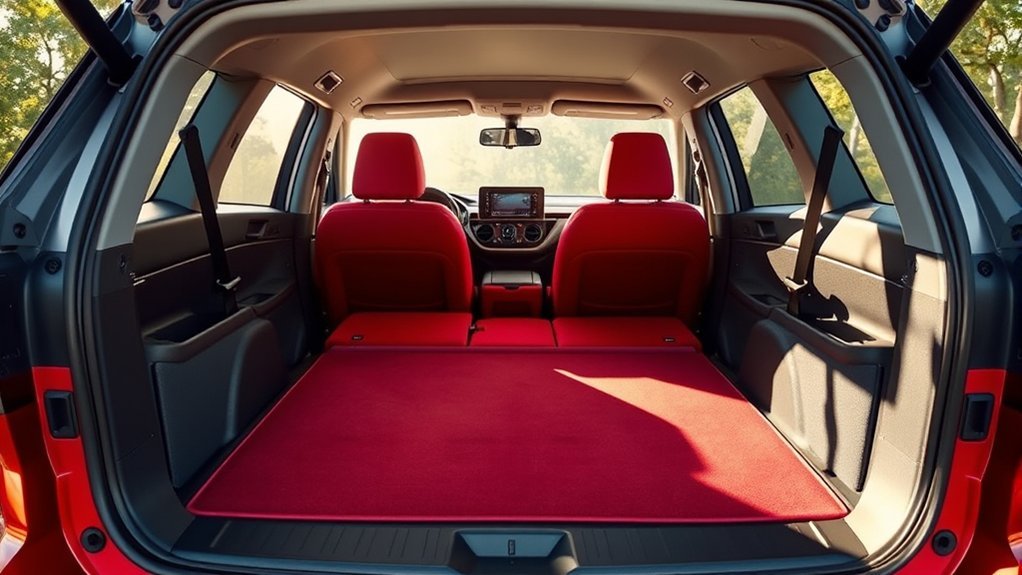
A smooth transition between the cargo deck and folded seatbacks makes it easier to slide boxes, pet crates, and long equipment into place. It also reduces pressure points when you use the parked vehicle for camping.
Most 2019–2025 RAV4 models provide a practical extended load area, but the folded seatbacks may sit at a slight angle. The height-adjustable cargo deck available on fifth-generation models can reduce the step when placed in its upper position.
Some fifth-generation configurations also include a reversible cargo-floor insert. Toyota described this feature on the 2024 RAV4, but equipment can vary by trim and market.
The redesigned 2026 seatback provides a flatter transition. You may still notice seams, hinges, or small changes between surfaces, so measure and inspect the area before loading a rigid object.
How to Make the Cargo Floor More Level
- Place an adjustable cargo deck in its upper position when your model provides one.
- Use a fitted cargo mat to cover seams and protect the upholstery.
- Use a removable leveling mat or purpose-built sleeping platform while parked.
- Distribute weight across the platform instead of concentrating it on one seatback.
- Remove temporary platforms before carrying passengers unless the system is designed and secured for vehicle travel.
Comparing the RAV4’s Cargo Capacity With Other Compact SUVs
The 2026 RAV4 remains competitive, although some compact SUVs publish larger maximum cargo-volume figures.
| 2026 compact SUV | Published maximum cargo volume | Rear-seat description |
| Toyota RAV4 | Up to 70.4 cubic feet | Easy-fold 60/40 rear seats with redesigned fold-flat seatbacks |
| Honda CR-V | Up to 76.5 cubic feet | Reclining 60/40 split fold-down seatback |
| Subaru Forester | Up to 74.4 cubic feet | 60/40 split flat-folding rear seatbacks |
Manufacturers may use different trims and measurement methods, so cubic feet should not be your only comparison. Check the liftgate shape, floor height, wheel-well width, seatback angle, payload label, and whether your own equipment fits.
Tips for Pet Owners Using the Cargo Floor
A reversible or height-adjustable cargo deck can help protect the RAV4’s carpet from mud, hair, water, and scratches. Equipment differs by model year and trim, so check whether your vehicle has a reversible insert before flipping it.
A fitted cargo liner offers better spill protection and makes cleanup easier. Choose one that also covers the rear seatbacks when you regularly travel with dogs or wet outdoor gear.
Use a properly sized crate or a vehicle-rated pet harness instead of allowing a pet to move freely around the cargo area. Secure crates to suitable tie-down points and leave enough ventilation around every side.
Never place an animal in a closed parked vehicle when interior temperatures could become unsafe. Keep food, water, leashes, and cleaning supplies in a separate bin so they do not roll around.
Common Real-World RAV4 Cargo Challenges and Solutions
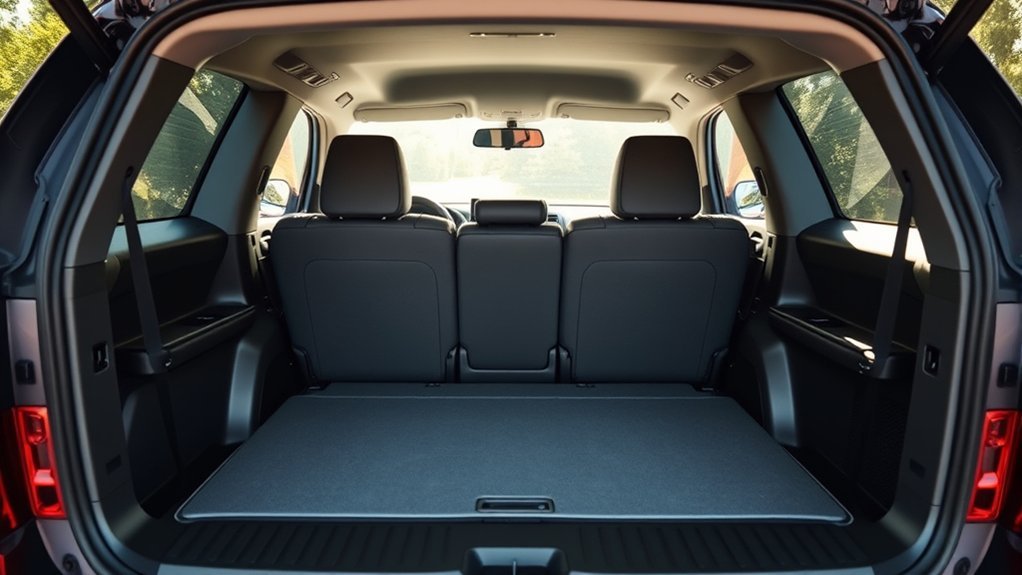
- The floor is not perfectly level: On many 2019–2025 models, raise the adjustable cargo deck or use a removable leveling mat while parked.
- The seatback stops before reaching its lowest position: Lower the head restraint, move the front seat forward, and clear the footwell.
- A long object does not fit: Measure with the front seats in safe driving positions and try lowering only the wider seatback section.
- The load slides during turns: Use bins, nets, straps, or suitable cargo anchors.
- The seatback will not lock upright: Check for a trapped belt or buckle, clear the latch, and raise the seatback firmly.
- The cargo area is too short or narrow: Consider a properly rated roof box, hitch carrier, or trailer instead of leaving the liftgate partly open.
Avoid removing the rear-seat assembly simply to create more room. Seats, anchorages, belts, trim, and nearby components form part of the vehicle’s safety system. Ask a qualified technician about any permanent modification.
Related Guides
Frequently Asked Questions
Do Toyota RAV4 rear seats fold completely flat?
The answer depends on the year. Toyota says the redesigned 2026 rear seatback folds flat. Most 2019–2025 models create a nearly flat extended cargo area with a slight incline or height change.
Can I fold the RAV4’s rear seats with child seats installed?
Remove any child restraint attached to the seat section before folding it. Folding the seat with a restraint installed can damage the restraint, seat, belt, or anchorage and may prevent correct reinstallation.
Do the RAV4 rear seats recline when folded down?
No. Reclining refers to adjusting the upright seatback angle for passenger comfort. When you release the seatback for cargo, it folds forward rather than reclining in its normal seating range.
How much cargo space does a RAV4 have with the rear seats folded?
The 2025 RAV4 LE has 69.8 cubic feet with the rear seats folded. The redesigned 2026 RAV4 provides up to 70.4 cubic feet. Figures can vary by year, trim, powertrain, and market.
Is there a weight limit for the RAV4 cargo area?
Yes, but cubic cargo volume does not provide that limit. Read the Tire and Loading Information label on the driver’s door jamb. The combined weight of passengers, accessories, and cargo must remain within the stated capacity.
Can I sleep in a RAV4 with the rear seats folded?
Many people can create a sleeping area while the vehicle is safely parked. A leveling mat or removable platform can improve comfort in 2019–2025 models. Never let anyone ride on a folded seatback or in the cargo area while driving.
Why will my RAV4 rear seat not fold down?
A raised head restraint, front-seat interference, trapped seat belt, unstowed buckle, child restraint, or object in the footwell may block it. If the release lever feels loose or jammed after you clear these items, have the latch inspected.
Conclusion
The Toyota RAV4’s folded cargo floor depends on its model year. Most 2019–2025 models provide a spacious, nearly flat surface rather than a perfectly level one. The redesigned 2026 RAV4 improves the layout with a seatback that Toyota describes as folding flat and a maximum cargo volume of 70.4 cubic feet.
Before loading, use the folding instructions for your exact model, clear the belts and buckles, confirm that raised seatbacks latch securely, and check the door-jamb label for the safe combined occupant-and-cargo weight. Measure rigid items instead of relying on cubic feet alone.
Sources
- 2026 Toyota RAV4 Specifications — current cargo capacity and vehicle specifications.
- Toyota: The Next Adventure Begins, 2026 RAV4 — redesigned fold-flat rear seatback.
- 2024 Toyota RAV4 Quick Reference Guide — rear-seat adjustment and folding controls.
- Toyota Manuals and Warranties — model-year-specific operating and safety instructions.
- 2026 Honda CR-V Specifications and 2026 Subaru Forester Features — compact-SUV cargo comparisons.
- NHTSA: Secure Your Load — safe cargo restraint guidance.