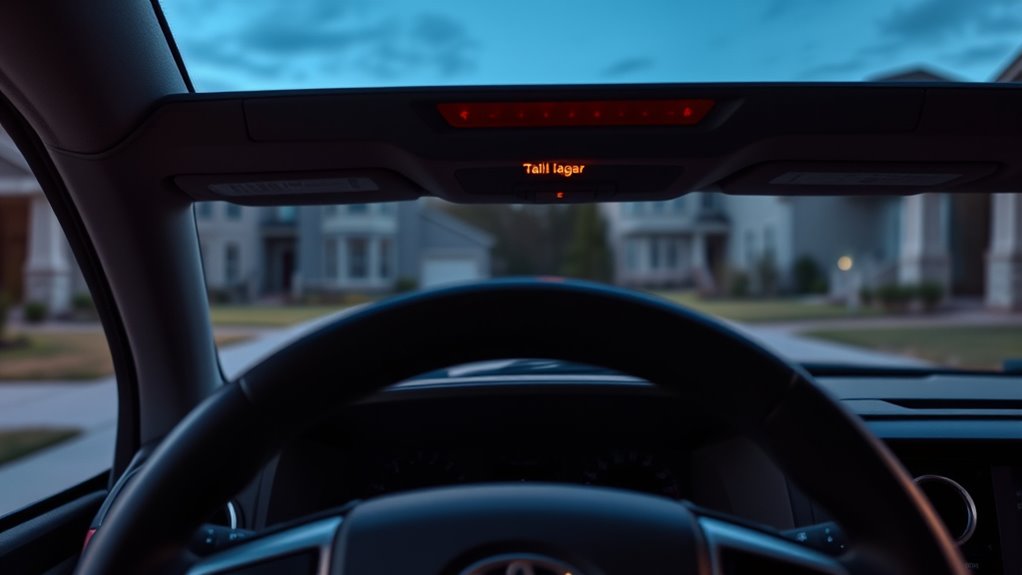
A tailgate ajar light on a 2021 Toyota Tundra usually means the latch is not fully registering closed. Debris, ice, wear, misalignment, or a dry latch can prevent proper engagement. Wiring faults, corroded terminals, or a failed position switch can also keep the warning on. The latch, striker, and alignment should be inspected first, then the circuit tested if the fault persists. More precise fixes and fault patterns follow below.
Key Takeaways
- A tailgate ajar light usually means the 2021 Toyota Tundra tailgate is not fully latched or the latch switch is not registering closure.
- Check the latch, striker, and catch for debris, ice, corrosion, bending, or misalignment that could prevent full engagement.
- Lubricate a sticky or dry latch with silicone spray or WD-40 to restore smooth movement and proper sensor activation.
- Inspect tailgate wiring, connectors, and the position sensor for fraying, pinched wires, loose connections, or faulty continuity.
- If the warning persists after cleaning and alignment checks, a dealer should diagnose the latch switch, sensor, or wiring fault.
Why the Tailgate Ajar Light Stays On
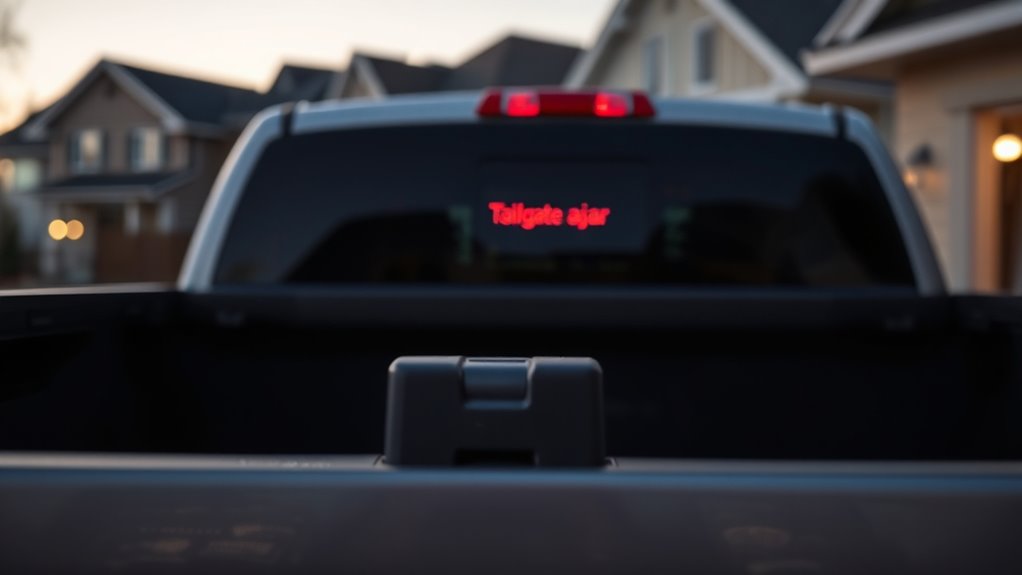
The tailgate ajar light on a 2021 Toyota Tundra typically stays on when the tailgate does not fully latch, preventing the switch from registering a closed position.
The tailgate ajar light stays on when the latch fails to register a fully closed position.
In many cases, the tailgate latch is obstructed by debris, ice, or wear, so the warning light remains active. A damaged latch or faulty position sensor can also report an open condition even when the panel appears shut.
Intermittent electrical issues, including wiring faults or poor connector contact, may mislead the body control system and keep the indicator illuminated.
Diagnostic attention should consequently focus on closure integrity, latch condition, and signal continuity rather than assumptions.
Regular cleaning and lubrication of the latch mechanism reduce friction and help restore reliable engagement.
For owners seeking liberation from false alerts, a disciplined inspection can isolate mechanical or electrical causes quickly and prevent unnecessary replacement.
Check the Tailgate Latch First
Begin with the tailgate latch, since a dry, misaligned, or obstructed latch on a 2021 Toyota Tundra can trigger the ajar light even when the gate is fully shut.
Toyota Tundra Owners should inspect the latch face, striker, and catch for debris, corrosion, or packing material that prevents full engagement.
A new account of the issue often starts with a simple closed-gate test: the latch should click firmly and hold without rebound.
If motion feels rough, apply WD-40 or silicone lube sparingly to restore free movement and reduce sticking.
If the latch is visibly bent, loose, or off-center, adjustment or replacement may be required.
This check is practical and freeing, because it can eliminate needless parts hunting.
On vehicles used to haul Car Seats, a secure latch matters for cargo safety and for confirming the warning system is not being falsely activated by a weak mechanical closure.
Check Wiring and Sensors
Faulty wiring or a failing sensor can keep the tailgate ajar light illuminated on a 2021 Toyota Tundra even when the gate is fully closed. A methodical inspection of the harness and connectors helps isolate the fault.
Use wiring inspection techniques to look for fraying, abrasion, pinched sections, or loosened plugs near the tailgate and latch area. Corrosion on terminals should be treated as a likely source of intermittent signals.
- A cracked loom exposed to road grit
- A damp connector darkened by oxidation
- A bent pin interrupting the circuit
Next, apply sensor testing methods with a multimeter to verify continuity and switch response from the integrated latch sensor. If readings drift outside specification, replacement is justified.
Use a multimeter to confirm latch sensor continuity and switch response; out-of-spec readings call for replacement.
Electrical system troubleshooting should remain focused on signal integrity, not guesswork. Clean, secure connections restore dependable status reporting and free the driver from false warnings.
Test the Tailgate Switches
With the tailgate fully closed, the switch should produce a distinct audible click, confirming that it has engaged and is signaling a secure latch condition. That sound is the first verification point in tailgate switch testing, because the 2021 Toyota Tundra relies on that input to extinguish the Tailgate Ajar warning.
If the click is absent, the switch may not be actuating correctly, and the circuit should be evaluated with a multimeter for continuity. A reading that shows no continuity indicates a faulty switch rather than an acceptable closed-state signal. In that case, switch replacement steps should be followed methodically to restore proper latch detection.
Regular inspection supports reliable operation and reduces recurring alerts. These troubleshooting techniques help isolate the fault without unnecessary parts replacement, preserving time and mechanical autonomy.
When the switch responds correctly, the system can confidently recognize a secure tailgate and keep the dashboard indication off.
Look for Obstructions or Misalignment
If the tailgate switch tests correctly, the next diagnostic step is to inspect the tailgate area for obstructions or misalignment that may prevent full closure.
Perform obstruction detection by examining the bed rail, cargo zone, and latch pocket for debris, straps, ice, or loose items. Even minor interference can hold the panel slightly open and keep the ajar lamp active.
- A twig lodged beside the striker
- A tool shifting against the latch
- A bowed tailgate edge against the bed
Next, verify tailgate alignment with the truck bed. An offset panel can mimic a secure closure while leaving one latch under load.
Conduct latch inspection for wear, bent hardware, or uneven contact marks. Damaged latches may not seat fully and can trigger the warning despite apparent closure. If stiffness is present, lubrication may restore smooth motion.
Persistent misalignment usually requires professional adjustment, restoring reliable closure and freeing the owner from unnecessary warning light anxiety.
Try a Manual Tailgate Reset
A manual reset can clear a lingering tailgate ajar signal on a 2021 Toyota Tundra when the tailgate is fully closed before the procedure begins.
The preferred battery disconnect procedure is to isolate the negative terminal for 10 to 15 minutes, allowing the body control logic and tailgate sensor circuit to power down. After reconnection, the tailgate should be opened and closed several times to promote sensor calibration tips and confirm latch recognition.
Disconnect the negative battery terminal for 10 to 15 minutes, then cycle the tailgate to restore sensor recognition.
These tailgate reset techniques are straightforward and can restore normal status reporting without dealership intervention. If the warning remains active, the tailgate should be inspected again for residual debris or interference at the latch edge.
The owner’s manual should be consulted for any model-specific manual release mechanism instructions before additional action is taken.
This approach supports a practical path to diagnostic independence, giving the operator a clear method to verify closure, reset the system, and regain confidence in the vehicle’s rear access function.
Common Causes of a Stuck Tailgate Light
A stuck tailgate ajar light on the 2021 Toyota Tundra commonly indicates a fault in the latch sensor or an issue with latch engagement.
Debris buildup, misalignment, or insufficient lubrication can prevent the mechanism from fully actuating and can leave the sensor reporting an open condition.
Damaged wiring or connectors may also disrupt the signal and sustain the warning light.
Latch And Sensor Issues
Latch and sensor faults are common causes of a persistent tailgate ajar light on the 2021 Toyota Tundra. A weakened latch may not fully secure the gate, so the control module interprets an open condition.
Dirt, corrosion, or poor contact at the sensor can also generate false alerts. Effective diagnosis emphasizes latch maintenance tips, sensor cleaning techniques, and tailgate alignment adjustments to restore normal signaling and prevent needless warnings.
- Clean latch surfaces and apply light lubricant.
- Inspect the sensor for grime, wear, or misplacement.
- Verify the tailgate closes squarely and engages fully.
When these components operate smoothly, the driver regains accurate status feedback and freedom from repeated dashboard alarms.
Obstruction And Alignment Problems
Obstructions around the tailgate latch, including dirt, debris, or ice, can prevent the gate from closing fully and keep the ajar light illuminated. Common obstruction sources should be checked first, because trapped material can mimic an electrical fault.
A technician should inspect the latch pocket, striker, and surrounding seals for residue or frozen buildup. If the tailgate remains slightly open due to wear or improper installation, the sensors may never confirm closure.
Alignment adjustment techniques can restore correct fit by correcting hinge position and striker engagement.
Tailgate maintenance tips include cleaning the latch area, lubricating the mechanism, and verifying free movement after service.
Periodic inspection of tailgate fit helps detect minor shifts before they trigger the warning, preserving reliable function and user autonomy.
Lubricate Dry Latches and Hinges
Dry latches on the 2021 Toyota Tundra tailgate may present as sticking, incomplete closure, or a persistent tailgate-ajar indicator.
Lubrication should be applied directly to the latch points with an automotive-grade silicone spray or WD-40, then cycled to confirm smooth engagement and release.
Hinge condition should also be checked for stiffness or binding, since dry pivots can prevent secure tailgate closure and maintain the fault signal.
Dry Latch Symptoms
When the tailgate latches and hinge points on a 2021 Toyota Tundra are inadequately lubricated, the mechanism may resist full engagement and keep the “Tailgate Ajar” light illuminated.
Dry factory-installed hardware often presents as stiffness, incomplete closure, or a latch that sounds seated yet remains unverified by the sensor. These are common latch problems, not trivial quirks, and they restrict the owner’s freedom from false warnings.
Effective latch lubrication techniques and disciplined tailgate maintenance tips reduce friction and restore decisive engagement.
- A stubborn latch with a dry, chalky feel
- Hinges moving with audible drag or hesitation
- The tailgate closing, then signaling open
When these symptoms appear, lubrication or replacement should be considered before deeper fault diagnosis.
Lubrication Application Steps
Open the tailgate fully to expose the latches and hinge points, then clean all contact surfaces with a cloth to remove dirt or debris before applying lubricant.
A silicone lubricant or WD-40 spray, two common lubricant types, should be directed into each latch and hinge interface with controlled bursts. This procedure supports tailgate maintenance tips by reducing friction and restoring free movement.
After application, the tailgate should be raised and lowered several times so the lubricant penetrates internal mechanisms and frees any stiffness.
Lubrication frequency recommendations depend on exposure and use, but reapplication should occur whenever dryness or resistance returns. Routine treatment helps preserve smooth operation, limits false tailgate-ajar readings, and gives the owner practical control over a mechanism that should move without hesitation.
Hinge Maintenance Checks
Hinge maintenance checks should focus on the tailgate latches and hinge points, since even a small amount of dryness can create enough resistance to affect operation and trigger the tailgate ajar light.
For 2021-2026 Toyota Tundra models, a disciplined hinge inspection checklist helps detect binding, corrosion, and weak return action before failure. Tailgate maintenance tips should include cleaning contact surfaces, then applying WD-40 or silicone spray at the latch lubrication frequency of every few months.
- Dry latch pawl, shimmering with friction
- Hinge pin, moving against faint grit
- Tailgate edge, settling square and free
Consistent lubrication preserves smooth closure, reduces sensor errors, and extends tailgate system life. This routine supports reliable function and vehicle freedom.
When the Dealer Needs To Step In
A persistent tailgate ajar light on a 2021 Toyota Tundra, despite the tailgate being fully secured, often points to a sensor or wiring fault that warrants dealer diagnosis. At that stage, tailgate maintenance tips alone are no longer sufficient; dealer service recommendations become the rational path.
Technicians can run targeted diagnostic tests to verify switch continuity, connector integrity, and module input, then determine whether recalibration or sensor replacement options are required. If the tailgate opens or closes unexpectedly, the condition may reflect an electrical fault beyond owner-level correction.
Dealer inspection is also prudent when the truck remains under warranty, since eligible repairs may reduce out-of-pocket cost. Regular dealer inspection helps detect developing failures before they escalate, preserving dependable operation and reducing uncertainty.
For operators who value mechanical autonomy, a verified diagnosis restores control by replacing guesswork with actionable data.
Keep the Tailgate Light Off
Keeping the tailgate ajar light off on a 2021 Toyota Tundra starts with verifying that the tailgate is fully closed and latched, allowing the internal switches to confirm proper engagement. This is the primary control point.
Attention then shifts to the latch zone, where grit, ice, or cargo fragments can block a complete seal. The following tailgate maintenance tips support reliable operation:
- Clean the striker and latch pocket.
- Apply light lubricant to the latch.
- Inspect for wear, misalignment, or broken parts.
If the indicator remains active, secure closure techniques should be rechecked from bed floor to handle pull, then latch adjustment guidance considered if the mechanism sits off-center.
A persistent warning usually signals a worn switch or damaged latch that cannot register freedom from obstruction. In that case, the owner’s manual provides stepwise diagnostics, and dealership service offers precise repair when field checks do not restore normal closure.
Frequently Asked Questions
My 2026 Toyota Tundra’s Automatic Tailgate Won’t Open. What Could Be the Problem?
They may have tailgate release issues from a failed switch, dry latch, obstruction, or weak battery. Sensor malfunction troubleshooting should include a battery power check, actuator inspection, and lubrication before dealer diagnosis.
What Are the Most Common Problems With the 2021 Toyota Tundra?
What fails most? Common 2021 Toyota Tundra complaints include Tundra engine issues, Electrical system failures, and Interior wear problems, plus tailgate latch faults and transmission roughness. A disciplined diagnosis can restore control, reliability, and autonomy.
What Year to Stay Away From Toyota Tundra?
The 2021 Toyota Tundra is the year to stay away from. Toyota Tundra Reliability is weaker there, Common Tundra Issues intensify, and the Best Tundra Model is usually earlier, better-documented years with fewer tailgate faults.
My Toyota Tundra Automatic Tailgate Won’t Open. What Could Be the Problem?
It may be tailgate latch issues, electrical connection problems, or sensor malfunction causes. The mechanism resists, the circuit interrupts, the sensor misreads; lubrication, inspection, and manual release restore autonomy, exposing the fault’s precise origin.
Conclusion
In most 2021 Toyota Tundra cases, a persistent tailgate ajar light traces to a faulty latch, misaligned striker, damaged wiring, or a failed switch rather than a true open tailgate. After inspecting the latch, testing sensors, clearing obstructions, and lubricating moving parts, the warning often resolves. When should the dealer intervene? If electrical faults, broken hardware, or alignment issues remain, professional diagnosis is warranted. Proper maintenance helps keep the tailgate light off.