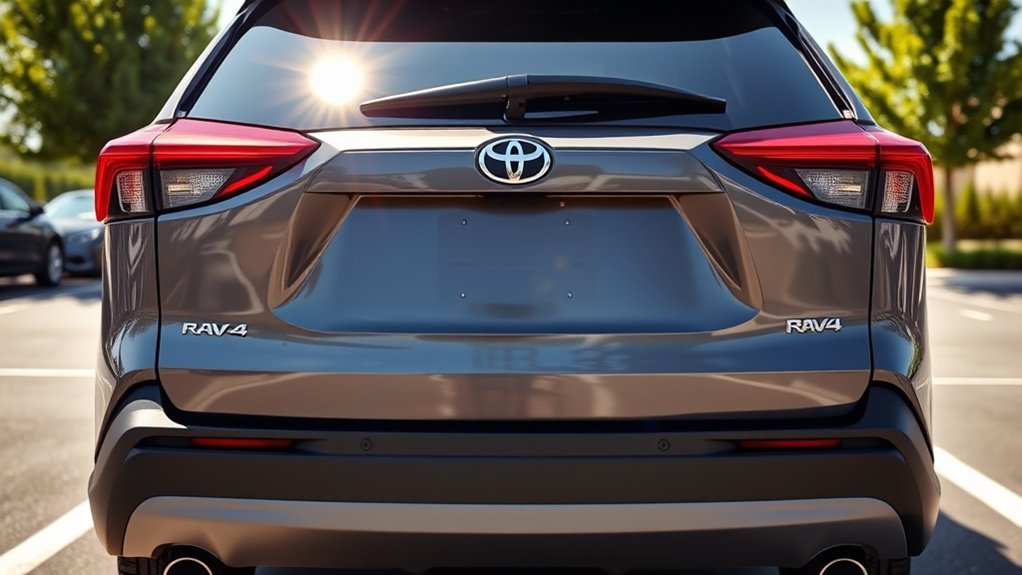
Some Toyota RAV4 models have front and rear parking sensors, but the feature is not universal. Availability depends on the model year, country, trim, powertrain, and option package. Toyota has also changed the feature’s name and packaging over time, so the most reliable answer comes from the exact vehicle’s window sticker, build sheet, and owner’s manual.
Quick Answer
Yes, many Toyota RAV4 trims have parking sensors, but not every RAV4 includes them. In the United States, Toyota lists Front and Rear Parking Assist with Automatic Braking on several 2026 trims, while older models may require an option package or may not offer the system at all.
Key Takeaways
- Parking-sensor availability changes by model year, trim, market, and package.
- Toyota commonly calls the current U.S. system Front and Rear Parking Assist with Automatic Braking, or PA w/AB.
- Rear Cross-Traffic Alert, backup cameras, Panoramic View Monitor, and Advanced Park are separate features.
- Parking assistance can miss objects and never replaces checking the area around the vehicle yourself.
- Use the window sticker, build sheet, dashboard settings, or year-specific owner’s manual to verify your exact RAV4.
Note: This guide focuses on U.S.-market RAV4 equipment and uses Toyota information available in July 2026. Features and names may differ in Canada and other markets.
Understanding the Basics: What Are Toyota RAV4 Parking Sensors?
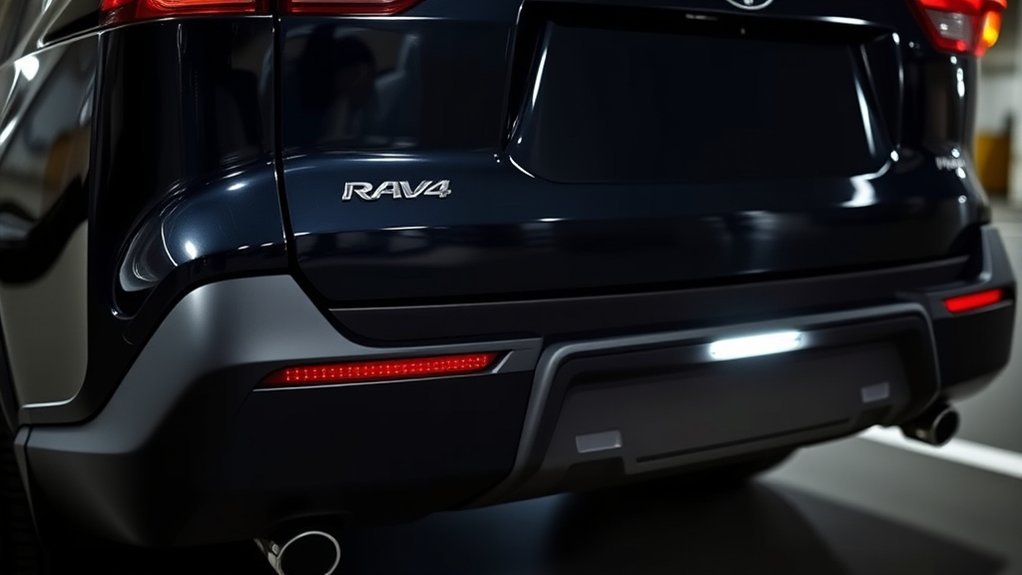
Parking sensors are small proximity sensors installed in the front or rear bumper. They commonly use ultrasonic pulses to estimate how close the vehicle is to a nearby object during low-speed maneuvering.
As the RAV4 approaches an object, the system may display a visual indicator and produce warning tones that become more urgent as the distance decreases. When the vehicle has Toyota’s Front and Rear Parking Assist with Automatic Braking, the system may also apply the brakes in certain low-speed situations.
The feature may be called Front and Rear Parking Assist with Automatic Braking, Intuitive Parking Assist, Clearance Sonar, or Parking Support Brake, depending on the RAV4’s year and market. These names should not automatically be treated as identical because the sensors, software, and braking functions can differ.
Warning: Parking sensors are assistance features, not collision-proofing. They may miss low, narrow, angled, soft, moving, or sound-absorbing objects. Always check mirrors, camera views, blind areas, and the space around the vehicle before moving.
Parking sensors can add useful low-speed awareness, but the driver remains responsible for confirming that the path is clear.
Which Toyota RAV4 Models Feature Parking Sensors?
There is no permanent trim-level answer because Toyota changes standard equipment and option packages from one model year to another. The following U.S.-market examples show why the year matters.
| Model and trim | Toyota-listed availability | What to know |
|---|---|---|
| 2024 XLE Premium | Available through the Advanced Technology Package | It should not be described as standard on every 2024 XLE Premium. |
| 2024 Limited | Front and Rear Parking Assist with Automatic Braking listed as standard | Confirm equipment if the vehicle was built for another country. |
| 2024 Adventure | Not listed in Toyota’s U.S. brochure feature summary | Do not assume that every Adventure has parking sensors. |
| 2026 XLE Premium | Front and Rear Parking Assist with Automatic Braking listed | Toyota’s current U.S. model page includes the feature among the trim’s highlights. |
| 2026 Woodland and SE | Front and Rear Parking Assist with Automatic Braking listed | These are examples from Toyota’s U.S. launch equipment descriptions. |
| 2026 Limited | Builds on XLE Premium equipment and adds Advanced Park | Advanced Park is a more comprehensive parking-assistance feature, not merely another name for proximity sensors. |
These examples come from Toyota’s 2024 RAV4 brochure, current RAV4 model page, and 2026 RAV4 launch announcement.
Other years and configurations may differ. A lower trim may omit the feature, while another vehicle with the same trim badge may have it through a factory package. Used-car listings are not always accurate, so verify the equipment rather than relying only on the seller’s description.
Front vs. Rear Parking Sensors: Key Differences
Front and rear parking sensors perform similar proximity-detection tasks, but they assist during different maneuvers.
| System | Primary use | Common limitations |
|---|---|---|
| Front parking sensors | Help estimate clearance near walls, posts, parked vehicles, and other objects ahead during low-speed maneuvering. | May not detect very low curbs, thin poles, angled surfaces, soft materials, or objects outside the sensing zones. |
| Rear parking sensors | Help estimate distance from objects behind the vehicle while reversing. | Do not replace the backup camera or a direct check for children, animals, pedestrians, bicycles, and low objects. |
A RAV4 may have only rear sensors, both front and rear sensors, or no factory proximity sensors. Do not assume that a backup camera means parking sensors are also installed; the camera and proximity-sensor system are separate.
Understanding How Parking Sensors Work in Your RAV4
On an equipped RAV4, the system generally becomes available when the vehicle is running and moving at low speed. Rear detection is commonly associated with selecting reverse, while front detection may operate during slow forward maneuvering. Exact activation speeds and conditions depend on the model year.
- Object detection: Sensors monitor defined areas near the front or rear bumper.
- Distance warning: Audible tones and dashboard or multimedia-display indicators may show the approximate location and closeness of an object.
- Automatic-braking assistance: When equipped with PA w/AB or a related Toyota system, the vehicle may apply braking if its operating conditions are met.
- Driver override: The driver remains responsible for braking, steering, and checking the full surroundings.
The sensors do not create a complete protective field around the RAV4. Detection can vary with the object’s height, shape, material, angle, movement, and position relative to each sensor.
Essential RAV4 Parking-Assistance Features for Safe Maneuvering
Several RAV4 features can help during parking, but they do not all use the same sensors or perform the same task.
| Feature | What it does | What it does not guarantee |
|---|---|---|
| Front and Rear Parking Assist with Automatic Braking | Provides proximity warnings and may brake in certain low-speed situations. | It cannot detect every obstacle or prevent every contact. |
| Rear Cross-Traffic Alert | Warns of certain vehicles approaching from the side while the RAV4 is reversing. | It is not a substitute for looking both ways and does not perform the same job as bumper proximity sensors. |
| Backup camera | Displays an image of the area behind the vehicle. | The camera has blind areas and does not prove that the entire path is clear. |
| Panoramic View Monitor | Combines camera views to help the driver see around the vehicle. | The stitched image can distort distance and may not show every nearby object. |
| Advanced Park | Assists with selected parking maneuvers on equipped models using multiple vehicle systems. | It does not make the vehicle autonomous or remove the driver’s duty to supervise the maneuver. |
A vehicle can have one of these features without having all the others. For example, Blind Spot Monitor with Rear Cross-Traffic Alert may be standard on a trim that does not list front and rear parking assist.
How to Confirm Whether Your RAV4 Has Parking Sensors
Use more than one of the following checks when evaluating a new or used RAV4:
- Inspect the bumpers: Many factory systems use small, round sensor faces spaced across the front or rear bumper. Their appearance can vary, and bumper plugs or other trim pieces can look similar.
- Check the original window sticker: Look for wording such as Front and Rear Parking Assist with Automatic Braking, Intuitive Parking Assist, Clearance Sonar, or Parking Support Brake.
- Review the build sheet: A Toyota dealer may be able to confirm factory-installed equipment using the VIN.
- Check the instrument-panel settings: An equipped model may have a parking-assist or sonar control in the vehicle settings. The icon and menu location vary.
- Read the correct owner’s manual: Use Toyota’s Owners Manuals and Warranties portal and select the exact model year.
- Look for warning indicators: If a parking-assist icon appears with an unavailable or malfunction message, the vehicle likely has the feature but needs cleaning, a setting change, or service.
Pro Tip: When buying a used RAV4, ask for a photo of the original window sticker or obtain a VIN-specific equipment report. Trim badges alone do not confirm every option.
Customizing Your Parking-Sensor Settings
Depending on the model year, the RAV4 may allow you to turn parking assistance on or off and adjust certain buzzer or display preferences. The controls may be located in the instrument cluster, multimedia system, steering-wheel menu, or a physical parking-assist switch.
Because Toyota has changed its interfaces over time, avoid relying on a universal sequence of taps. Use the parking-assist section in the owner’s manual for your exact year.
Adjusting Sensor Volume Levels
If the vehicle provides an alert-volume setting, choose a level that can be heard over music, passengers, and normal road noise without becoming distracting. Some RAV4s may offer only a system-wide buzzer setting or an on/off control rather than a separate parking-sensor volume adjustment.
After changing a setting, confirm that the system remains enabled and that its warning indicator does not show a malfunction.
Temporarily Disabling Alerts in Garages
Narrow garages, close walls, trailer hitches, bicycle racks, snowbanks, or stored objects may cause continuous warnings. You may temporarily silence or disable the system if your RAV4 provides that option, but do not make disabled operation the default.
Re-enable the feature before returning to normal driving. Also follow the exact manual instructions for automatic car washes, towing, hitch-mounted accessories, and situations where the vehicle is on a transport platform.
Note: A system that repeatedly turns itself off, displays an error, or remains unavailable after the sensors are cleaned may need professional diagnosis.
How to Troubleshoot Toyota RAV4 Parking-Sensor Issues
Start with simple checks that do not require removing the bumper or probing electrical circuits.
Check Sensor Cleanliness
- Park safely, turn the vehicle off, and allow hot or icy surfaces to return to a safe temperature.
- Locate the sensor faces in the front and rear bumpers.
- Remove mud, road salt, snow, ice, heavy wax, or other buildup with water and a soft cloth.
- Do not scrape the sensors with a sharp object or direct a high-pressure nozzle closely at them.
- Restart the vehicle and check whether the warning clears.
Rain, snow, ice, fog, spray, and dirt can reduce performance or cause false alerts. Cleaning the sensors is the most useful first step after bad weather or an off-road trip.
Verify the Settings Configuration
Open the vehicle settings and confirm that the applicable parking-assist function is enabled. If the manual permits it, switching the feature off and back on may clear a temporary software state.
Also check whether another condition is preventing operation. Depending on the model, the system may be unavailable at higher speeds, when a door or hatch is open, when a trailer-related setting is active, or while another warning is present.
Inspect Accessories, Bumper Damage, and Wiring
Look for visible causes that can alter the sensor’s view:
- A trailer hitch, ball mount, cargo carrier, bicycle rack, license-plate frame, bumper guard, or tow hook
- Adhesive decorations, vinyl wrap, thick paint, wax, or protective film covering a sensor
- A sensor pushed inward, tilted, cracked, or missing after a parking impact
- A loose bumper cover or recent body repair near a sensor
- Water intrusion or an obviously damaged external connector visible without disassembly
Do not remove bumper panels or probe sensor wiring with a multimeter unless you have the correct Toyota wiring information and automotive electrical training. A technician can read diagnostic trouble codes, inspect harness voltage and communication, test individual sensors, and determine whether calibration or replacement is required.
When to Schedule Professional Service
Arrange service when:
- A parking-assist malfunction message remains after cleaning and restarting the vehicle.
- The system gives constant warnings in open space.
- One corner never detects nearby objects while the other sensors operate.
- The bumper was removed, repaired, repainted, or replaced.
- The vehicle has visible impact damage near a sensor.
- An automatic-braking intervention occurs without an apparent obstacle.
The Benefits of Parking Sensors in Your RAV4
Parking sensors can make low-speed maneuvering easier by providing information that mirrors and camera images may not communicate clearly. They are especially useful when judging bumper clearance near a wall, another vehicle, a garage door, or a parking post.
Front sensors can help when entering a short parking space or pulling toward an obstruction. Rear sensors can supplement the backup camera by warning that an object is within a sensing zone, even when the driver has difficulty estimating distance from the camera image.
The greatest benefit comes from combining all available information: direct observation, mirrors, camera views, sensor alerts, and slow vehicle movement. No single feature should be used alone.
Parking Sensors vs. Other RAV4 Safety Features
Parking sensors focus on nearby objects during low-speed maneuvering. Other RAV4 safety systems address different driving situations:
- Blind Spot Monitor: Helps identify certain vehicles in adjacent blind-spot areas during road driving.
- Rear Cross-Traffic Alert: Warns of certain crossing vehicles while reversing from a parking space.
- Pre-Collision System: Monitors the road ahead and may recognize certain vehicles, pedestrians, bicyclists, or motorcyclists under defined conditions.
- Dynamic Radar Cruise Control: Helps manage following distance during road travel.
- Lane Departure Alert and Lane Tracing Assist: Provide lane-related warnings or steering assistance under applicable conditions.
These systems may share dashboard indicators or warning sounds, but their sensors, operating speeds, detection targets, and limitations differ.
Consider Aftermarket Options to Add Parking Assistance
An older or lower-trim RAV4 without factory parking sensors can often be fitted with an aftermarket system. Common choices include:
- Audible proximity kits: Use bumper-mounted sensors and an interior buzzer.
- Display kits: Add a small screen showing the approximate direction and distance of an obstacle.
- Camera-and-sensor packages: Combine a replacement or supplemental camera with proximity warnings.
- Electromagnetic strip systems: Mount behind certain bumper covers and avoid visible sensor discs, although their performance and compatibility vary.
A basic aftermarket kit normally provides warnings only. It does not automatically add Toyota’s integrated PA w/AB, factory display graphics, or automatic braking.
Installation may require removing the bumper, drilling accurately positioned holes, routing wiring through weather-sealed openings, connecting a reverse-light or ignition circuit, and protecting the control module from water. Improper installation can cause false alerts, water leaks, electrical faults, or cosmetic damage.
Before purchasing a kit, confirm that it is compatible with the RAV4’s bumper material, hitch equipment, spare-wheel arrangement, camera system, and electrical architecture. Professional installation is the safer choice when the work involves factory wiring, bumper removal, paint matching, or integration with existing driver-assistance equipment.
Related Guides
Frequently Asked Questions
Can parking sensors be installed in an older Toyota RAV4?
Yes. Aftermarket audible, display, and camera-and-sensor kits can be installed on many older RAV4 models. A basic kit is not equivalent to Toyota’s factory automatic-braking system, and professional installation is recommended when bumper drilling or factory-wiring access is required.
Are parking sensors standard on every RAV4 trim?
No. Availability depends on the model year, country, trim, powertrain, and option package. Some higher trims include front and rear parking assist, while lower or older trims may require a package or omit the feature.
How can I tell whether my RAV4 has parking sensors?
Check for round sensor faces in the bumpers, review the original window sticker or VIN-specific build sheet, look for a parking-assist control or menu, and consult the owner’s manual for the exact model year. A Toyota dealer can also verify factory equipment from the VIN.
Is Rear Cross-Traffic Alert the same as parking sensors?
No. Parking sensors monitor nearby objects around the bumpers. Rear Cross-Traffic Alert is a separate system that warns of certain vehicles approaching from the side while you reverse. A RAV4 may have one feature without the other.
How do weather conditions affect parking-sensor performance?
Heavy rain, road spray, snow, ice, mud, and debris can block a sensor or cause false warnings. Clean the sensor faces gently and allow ice to melt rather than scraping it away with a hard or sharp tool.
Can RAV4 parking sensors detect pedestrians or cyclists?
They may react to some people, bicycles, or similar objects, but they are not designed or guaranteed to identify them reliably. Never use a parking-sensor alert as proof that the area behind or in front of the RAV4 is clear.
What maintenance do RAV4 parking sensors require?
Keep the sensor faces clean and uncovered. Inspect them after a bumper impact, repainting, body repair, or installation of a hitch-mounted accessory. Persistent warnings, damaged sensors, or malfunction messages should be diagnosed by a qualified technician.
Conclusion
Toyota RAV4 parking sensors can make tight, low-speed maneuvers easier, but availability is determined by the exact model year, trim, market, and package. Current and older RAV4s should not be grouped under one universal trim list.
Before buying or troubleshooting a RAV4, verify the equipment through its window sticker, VIN-specific build information, and owner’s manual. When the system is present, keep the sensors clean, understand the separate roles of RCTA and camera systems, and continue checking the vehicle’s surroundings directly during every parking maneuver.
Sources
- Toyota RAV4 official model page — current U.S. trims and highlighted parking-assistance equipment.
- Toyota USA Newsroom: 2026 RAV4 announcement — 2026 trim structure, standard and available convenience features, and Advanced Park information.
- Toyota 2024 RAV4 eBrochure — trim and package availability plus Toyota’s parking-assistance safety disclosures.
- Toyota Owners Manuals and Warranties — year-specific controls, operating conditions, warnings, and troubleshooting guidance.
