
The 2026 Toyota RAV4 does not have third-row seating; Toyota lists the current RAV4 with seating for five. In the United States, the factory seven-seat exception is certain third-generation RAV4 models from 2006 through 2012. If you are shopping for one, verify that the two rear seats are original factory equipment and make sure their limited passenger and cargo space fits your real needs.
Last updated: September 11, 2026. Current RAV4 seating and Toyota three-row alternatives were rechecked against Toyota U.S. sources, and child-seat and recall guidance was rechecked against NHTSA.
Quick Answer
No current RAV4 has a third row. Toyota lists the 2026 RAV4 with five seats. In the United States, an optional factory third row was available on certain 2006–2012 RAV4 configurations, creating up to seven seating positions. Those two rear seats are best treated as occasional-use seats because access and passenger space are limited and cargo room shrinks when they are raised.
Key Takeaways
- Toyota lists the 2026 RAV4 with seating for five and no factory third-row option.
- For U.S. shoppers, the relevant seven-seat RAV4 model years are generally 2006–2012, although availability varied by configuration.
- The small rear seats are more practical for occasional use by smaller passengers than for regular adult travel.
- Do not install a universal aftermarket third row; seats, belts, anchors, head restraints, and vehicle structure must work as one safety system.
- Families that regularly use all three rows should compare the Highlander, Grand Highlander, Sienna, Sequoia, or an appropriately equipped 4Runner.
Does the Current Toyota RAV4 Have Third-Row Seating?
No. Toyota lists the 2026 RAV4 lineup as a five-seat, two-row compact SUV. Toyota does not list a factory third-row seat as standard equipment, an option, or an accessory for the current RAV4.
This distinction matters when shopping online because advertisements for “seven-seat RAV4s” usually refer to older third-generation vehicles, imported versions, or modified vehicles. Always confirm the model year, VIN, equipment, and physical seating arrangement rather than relying on a listing title.
A third-row RAV4 is a used-vehicle exception—not a feature of the current Toyota RAV4 lineup.
What Years Did the RAV4 Offer Third-Row Seating?
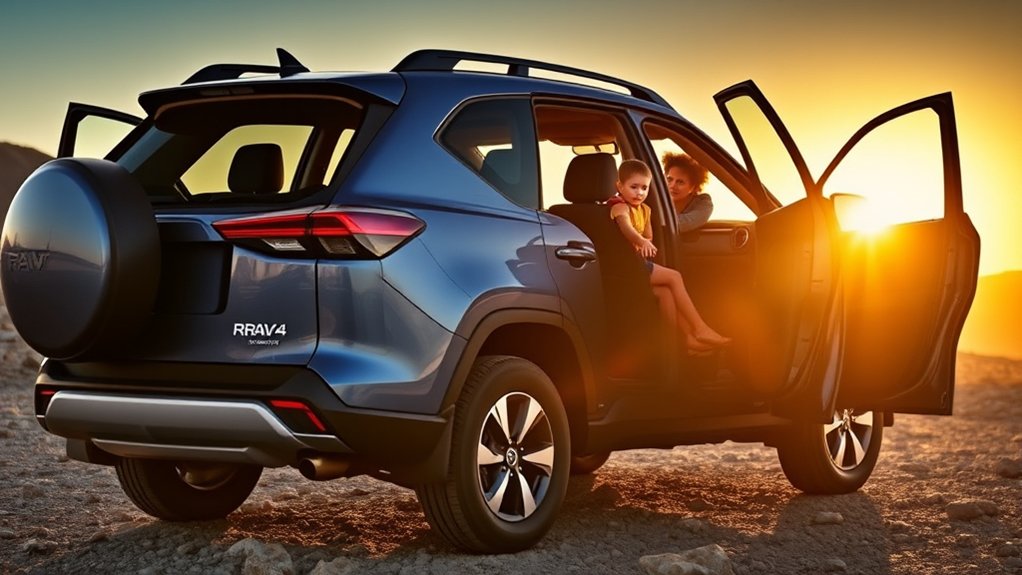
Toyota USA identifies 2006–2012 as the RAV4’s third generation in North America and notes that the enlarged model offered optional third-row seating. For U.S.-focused used-car shopping, 2006 through 2012 is the model-year range to check.
| Model Years | Factory Third Row? | What to Know |
|---|---|---|
| 2006–2012 | Available on certain configurations | Could provide up to seven seating positions. Verify the exact vehicle because many examples were built with only two rows. |
| 2013–2025 | No | The redesigned fourth-generation RAV4 returned to a two-row layout, and later generations continued without a factory third row. |
| 2026 | No | Toyota lists the current RAV4 with seating for five. |
The third row was not standard on every 2006–2012 RAV4. Availability depended on model year, market, grade, and original equipment. Toyota’s 2012 RAV4 product information, for example, lists the 50/50 Split-and-Stow® third-row seat on RAV4 and Limited grades, where it accommodated two passengers and folded beneath the rear deck. That 2012 detail should not be used to assume identical availability for every earlier year.
A 2006–2012 model should never be assumed to have seven seats from the model year alone. Inspect the vehicle or verify its original factory specification.
U.S. shopping note: Some global histories cite 2005 because the third generation debuted in certain markets then. For North American used-vehicle shopping, Toyota USA identifies the third generation as 2006–2012.
How Practical Is the RAV4’s Third Row?
The original RAV4 third row adds two seating positions, but the vehicle remains much smaller than a purpose-built three-row SUV or minivan. Its suitability depends on passenger size, trip length, cargo needs, and how often you intend to use all seven seats.
| Factor | What to Expect |
|---|---|
| Legroom | Limited space for knees and feet, especially behind taller second-row passengers. |
| Access | Passengers must enter behind or around the second row, which may be awkward in tight parking spaces. |
| Adult comfort | Generally better for short, occasional trips than regular adult transportation. |
| Cargo room | Space behind the raised third row is limited. Folding the seats restores more of the cargo floor. |
| Child restraints | Compatibility depends on the exact seating position, belt geometry, available anchors, the child seat, and both manufacturers’ instructions. |
The third row can still be useful for an occasional extra passenger. It becomes less practical when you need space for seven people plus strollers, sports equipment, luggage, or groceries.
How to Identify a Factory Third-Row RAV4
A seller’s description is not enough to establish that a rear seat is original or properly installed. Check the vehicle itself and its records for the following:
- VIN and original equipment: Ask a Toyota dealer to check the VIN or review original build information when available.
- Integrated seat hardware: Factory seats should fold and latch into purpose-built mounting points rather than a homemade cargo-floor bracket.
- Dedicated seat belts: Each seating position must have its original, undamaged restraint system.
- Head restraints: Confirm that all required head restraints are present and lock into position.
- Matching interior trim: Factory-equipped cargo panels, belt openings, hinges, and covers should look integrated rather than cut or improvised.
- Owner’s manual information: The manual should explain operation, folding, passenger limits, and any restrictions for those seating positions.
- Secure operation: Raise, lower, and latch both seat sections. They should not move, rattle excessively, or release without using the proper control.
Warning: Do not install a universal or improvised third-row seat in a RAV4. Passenger seats, floor mounts, seat belts, anchors, head restraints, and crash structure are engineered together. Use only the vehicle’s original factory seating unless Toyota and a qualified vehicle-safety professional confirm that a specific modification is approved for that vehicle.
Third-Row Safety and Child-Seat Considerations
A tight seat is not automatically unsafe, and a spacious seat is not automatically safe. What matters is whether the seating position, restraint system, and passenger fit are appropriate and used correctly.
The National Highway Traffic Safety Administration advises caregivers to choose a child restraint based on the child’s age and size, use a seat that fits the vehicle, and follow both the child-seat instructions and vehicle owner’s manual. NHTSA says children should remain in the back seat at least through age 12 and that tether and lower-anchor use depends on the specific seating position and manufacturer instructions.
Before placing a child restraint in an older RAV4’s third row:
- Confirm that the owner’s manual permits the restraint type in that exact position.
- Check whether the position has an approved tether anchor or lower anchors; do not assume every rear position has them.
- Inspect the belt for fraying, twisting, slow retraction, damaged buckles, or missing hardware.
- Make sure the child seat sits firmly and does not interfere with the liftgate, surrounding trim, or seat-folding mechanism.
- Do not use a seating position with a damaged latch, missing head restraint, or uncertain mounting history.
- Have the installation checked by a certified child-passenger-safety technician when you are unsure.
Best Toyota Alternatives for Families Needing More Seating
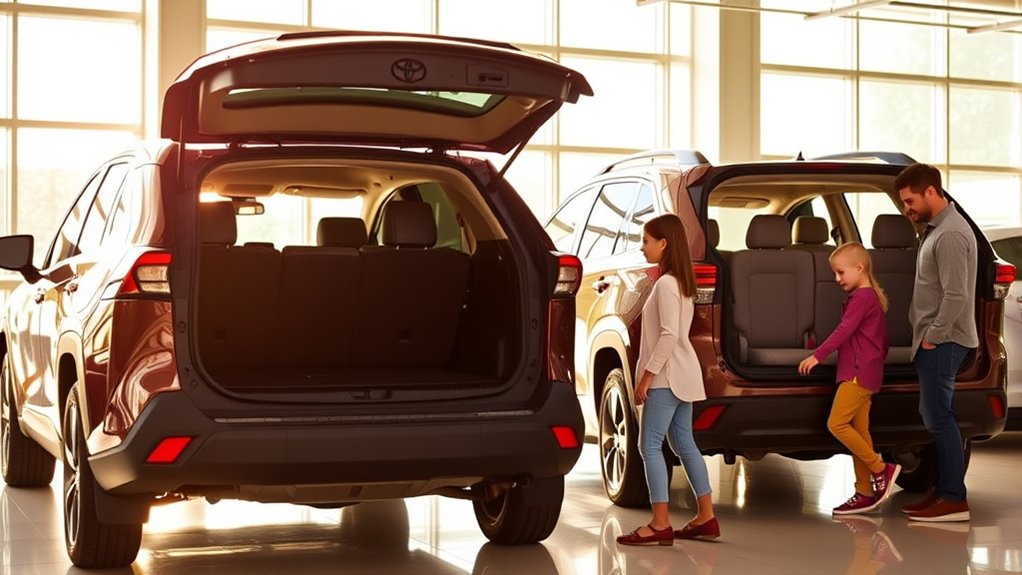
If you expect to use all three rows regularly, a larger Toyota will usually provide easier access, more passenger room, and better cargo flexibility. Current capacity varies by trim and second-row configuration, so verify the exact vehicle before buying.
| Model | Maximum Seating | Best Fit | Main Tradeoff |
|---|---|---|---|
| Highlander | Up to 8 | Families wanting a manageable three-row SUV for daily driving. | Third-row and cargo space are more limited than in the Grand Highlander or Sienna. |
| Grand Highlander | Up to 8 | Families needing more usable third-row and cargo room than the regular Highlander. | Larger exterior dimensions and a higher purchase price. |
| Sienna | 7 or 8, depending on configuration | Frequent three-row use, child-seat access, and flexible passenger-and-cargo duties. | Minivan styling and less off-road-oriented packaging. |
| Sequoia | 7 or 8 | Families that also prioritize towing capability and full-size SUV construction. | Large footprint, higher cost, and greater fuel and parking demands. |
| 4Runner | Up to 7 with the available third row | Drivers who prioritize rugged capability and need occasional extra seating. | The third row is not available on every configuration and is not as family-focused as a minivan’s. |
| Used 2006–2012 RAV4 | Up to 7 where factory equipped | Occasional extra-passenger needs in a compact used SUV. | Limited third-row room, minimal cargo space when raised, and age-related inspection needs. |
How to Choose the Right Toyota for Your Family’s Needs
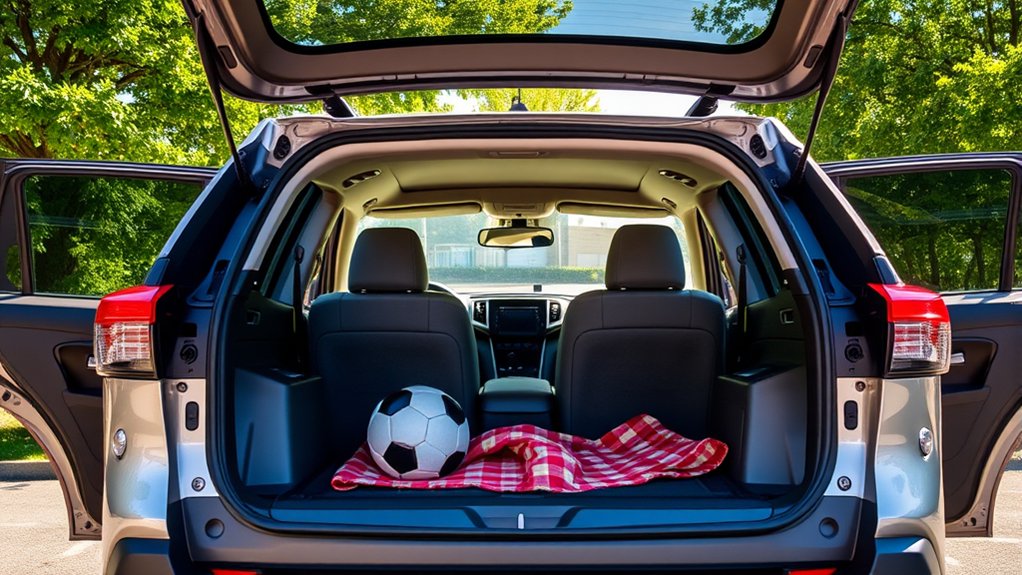
Start with how you will use the third row rather than the vehicle’s maximum passenger number. A seat used twice a year has different requirements from one carrying children to school every day.
- Count regular passengers: Include relatives, friends, carpool passengers, and anyone you transport routinely.
- Consider passenger size: Sit the people who will actually use the third row in the vehicle.
- Bring child restraints: Test the real car seats or boosters you intend to use, following the manufacturer’s instructions.
- Test access: Check whether children and adults can enter and exit without climbing over unsecured objects or requiring difficult seat movements.
- Load your normal cargo: Test strollers, sports bags, mobility equipment, groceries, or luggage with every required seat raised.
- Check visibility: Make sure raised head restraints and passengers do not create unacceptable rearward blind spots.
- Compare parking needs: A larger SUV offers more interior space but may be harder to park or store at home.
- Verify the exact trim: Bench seats, captain’s chairs, and third-row availability can change the seating total.
Pro Tip: Conduct the test drive with the same passengers, child seats, and cargo you carry on a busy day. A stated capacity of seven or eight tells you how many seating positions exist—not whether the arrangement works for your household.
Used Seven-Seat RAV4 Buying Checklist
An older seven-seat RAV4 deserves a careful inspection because the seat hardware and restraints may now be more than a decade old.
- Confirm through the VIN or Toyota records that the third row is original equipment.
- Inspect every seat belt, buckle, anchor point, latch, hinge, and head restraint.
- Raise and lower the third row several times and verify that each section locks securely.
- Look beneath the cargo floor for corrosion, water damage, collision repairs, drilled holes, or improvised brackets.
- Check that cargo-floor panels and covers fit correctly with the seats raised and folded.
- Review maintenance and collision history, while recognizing that history reports may be incomplete.
- Use the NHTSA recall lookup with the vehicle’s 17-character VIN and ask for proof that open recalls have been completed.
- Have an independent mechanic inspect the entire vehicle before purchase, not only the rear seats.
- Test any intended child restraint in the exact seating position before finalizing the purchase.
Related Guides
Frequently Asked Questions
Can I install aftermarket third-row seating in a RAV4?
You should not install a universal or improvised third-row seat. A passenger seat requires properly engineered floor mounts, belts, anchors, head restraints, and compatible crash structure. Use the original factory arrangement unless Toyota and a qualified vehicle-safety professional confirm that a specific modification is approved for your exact vehicle.
What years did the Toyota RAV4 offer third-row seating?
For U.S. used-vehicle shopping, certain 2006–2012 RAV4 configurations were available with a factory third row. Toyota introduced the third-generation model globally in 2005, so some international histories use 2005 as the starting date. Availability varied by market and configuration.
Does the 2026 Toyota RAV4 have a third row?
No. Toyota does not offer or list third-row seating for the 2026 RAV4. Current RAV4 models use a two-row layout.
Can a Toyota RAV4 seat seven people?
Only certain factory-equipped third-generation RAV4s can seat up to seven people: two in front, three in the second row, and two in the third row. The current 2026 RAV4 seats five.
Which 2012 RAV4 grades offered the factory third row?
Toyota’s U.S. product information for the 2012 RAV4 lists the optional 50/50 Split-and-Stow® third-row seat on the RAV4 and Limited grades. The Sport grade was not listed with that option. Earlier model years can differ, so verify the exact vehicle rather than applying the 2012 grade list to every 2006–2012 RAV4.
How does cargo space change when the third row is raised?
Raising the third row leaves limited storage space behind the seats. Folding the seats restores more of the cargo floor, but exact space and floor shape vary by model year and configuration. Test your usual luggage, stroller, or equipment before buying.
Is the RAV4’s third row suitable for adults?
It may work for some adults on short trips, but access, knee room, and foot space are limited. Anyone who will use the seat regularly should sit in it during the test drive and confirm that the seat belt and head restraint fit correctly.
Are there safety concerns with an older RAV4 third row?
The main concerns are the condition and originality of the seats, latches, belts, head restraints, and mounting points. Child-restraint compatibility must be checked against both manuals. Also inspect the vehicle for modifications or collision damage and use its VIN to check for open recalls.
Conclusion
The 2026 Toyota RAV4 is a five-seat, two-row SUV, but certain U.S.-market 2006–2012 RAV4 configurations offered a factory third row. Those older vehicles can provide two occasional extra seats, although access, passenger space, and cargo capacity are limited compared with a purpose-built three-row model.
Before buying a seven-seat RAV4, verify the original equipment, inspect every restraint and seat mechanism, check the VIN for recalls, and test the vehicle with your real passengers, child restraints, and cargo. For frequent three-row use, the Highlander, Grand Highlander, Sienna, Sequoia, or a suitably equipped 4Runner will usually be the more practical choice.
Sources
- Toyota: 25 Years of the RAV4 in North America — identifies the 2006–2012 third generation and notes the enlarged RAV4’s optional third-row seating.
- Toyota: 2012 RAV4 Product Information — documents the optional 50/50 Split-and-Stow® third row on RAV4 and Limited grades.
- 2026 Toyota RAV4 — Toyota — current RAV4 lineup and specifications, including five-passenger seating.
- 2026 Toyota Highlander and 2026 Toyota Grand Highlander — current three-row seating and capacity information.
- 2026 Toyota Sienna — Toyota — current seating configurations and family-oriented three-row packaging.
- 2026 Toyota Sequoia and 2026 Toyota 4Runner — current seating capacities and third-row availability.
- NHTSA Car Seat and Booster Seat Guidance and NHTSA Recall Lookup — child-restraint fit, installation guidance, and VIN-based recall checks.

