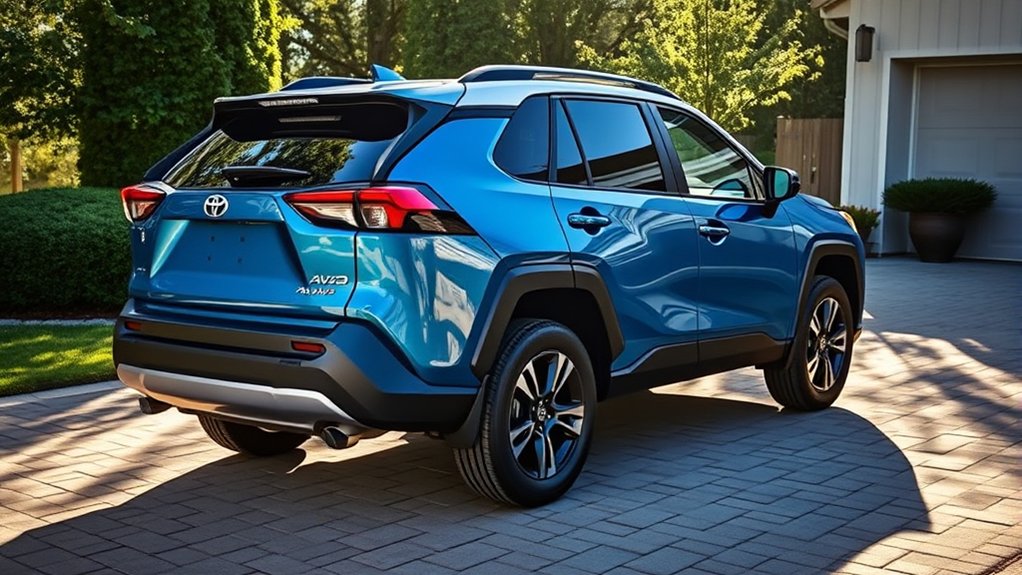
Yes, the Toyota RAV4 is available with all-wheel drive, but not every RAV4 has AWD. Availability depends on the model year, trim, powertrain, and market. That distinction is especially important because the redesigned 2026 U.S. RAV4 uses hybrid and plug-in hybrid powertrains only, while many used 2019–2025 models include gas-only trims and mechanical AWD systems that are no longer part of the current lineup.
Last updated: September 19, 2026. Scope: U.S.-market 2026 Toyota RAV4 models plus used 2019–2025 fifth-generation models.
Quick Answer
Yes. Toyota RAV4 AWD availability depends on model year, trim, and powertrain. For 2026, LE, XLE Premium, and SE hybrids offer front- or all-wheel drive, while Limited and XSE hybrids, Woodland models, and every plug-in hybrid use AWD as standard. Older RAV4s follow different rules.
Key Takeaways
- Not every RAV4 has AWD; some trims are front-wheel drive, some offer AWD, and others include it as standard.
- The 2026 RAV4 Hybrid uses Electronic On-Demand AWD with a dedicated rear electric motor.
- Used 2019–2025 gas RAV4s may use mechanical AWD or Dynamic Torque Vectoring AWD, depending on model year and trim.
- AWD improves traction when accelerating, but tires, speed, and following distance remain critical on snow and ice.
- Use the VIN, original window sticker, Toyota owner resources, and the model-year manual to confirm a specific vehicle’s drivetrain and maintenance needs.
How this guide was checked: Current 2026 drivetrain and towing information was cross-checked against Toyota’s U.S. specifications and newsroom material. Used-model AWD details were checked against Toyota’s fifth-generation launch and 2025 model information. This guide does not claim instrumented snow, trail, or off-road testing.
What Toyota RAV4 Models Come With AWD?
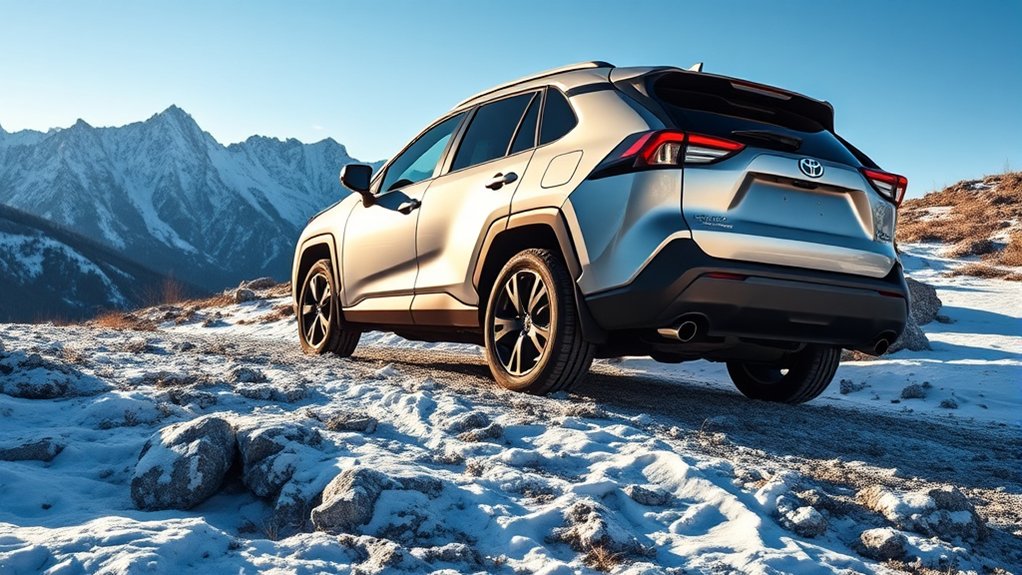
Most recent RAV4 model years offer AWD somewhere in the lineup, but the details change significantly by year. The clearest answer is to separate the current 2026 U.S. lineup from used fifth-generation models.
2026 RAV4 AWD Availability in the United States
For 2026, Toyota moved the U.S. RAV4 lineup to hybrid and plug-in hybrid powertrains. According to Toyota’s official 2026 RAV4 information, hybrid models may have front-wheel drive or Electronic On-Demand AWD depending on grade, while every plug-in hybrid has AWD as standard.
| 2026 U.S. Grade | Powertrain | Drivetrain |
|---|---|---|
| LE | Hybrid | FWD or AWD |
| XLE Premium | Hybrid | FWD or AWD |
| Limited | Hybrid | AWD standard |
| Woodland | Hybrid or plug-in hybrid | AWD standard |
| SE | Hybrid | FWD or AWD |
| SE | Plug-in hybrid | AWD standard |
| XSE | Hybrid or plug-in hybrid | AWD standard |
| GR SPORT | Plug-in hybrid | AWD standard |
Note: This table covers the U.S. 2026 lineup. Canadian and other regional trims may use different names, equipment packages, or drivetrain combinations. Always check the specifications for the vehicle’s country and model year.
AWD on 2019–2025 RAV4 Models
Used fifth-generation RAV4s require a different comparison. At the 2019 launch, gas models offered mechanical AWD systems, including Dynamic Torque Vectoring AWD on selected grades, while RAV4 Hybrid models used a separate rear electric motor for AWD. Toyota introduced the RAV4 Prime plug-in hybrid for the 2021 model year with standard Electronic On-Demand AWD.
For 2025 specifically, Toyota offered LE, XLE, XLE Premium, and Limited gas grades with a choice of FWD or AWD, while the Adventure and TRD Off-Road grades were discontinued for that model year. The 2025 RAV4 Hybrid lineup continued with standard Electronic On-Demand AWD. See Toyota’s 2025 RAV4 information for that model-year configuration.
The 2026 redesign changes the rule again: Toyota no longer offers a gas-only RAV4 in the U.S., and selected regular hybrid grades now offer FWD for the first time in this generation. That is why a statement such as “all RAV4 Hybrids have AWD” can be correct for a 2025 U.S. RAV4 but wrong for a 2026 model.
For a deeper hardware comparison, see how Toyota RAV4 AWD systems work.
Advantages of Driving a RAV4 With All-Wheel Drive
RAV4 AWD can improve traction when pulling away on rain, snow, gravel, or loose surfaces. The system can send driving force to the rear wheels when conditions call for it, reducing front-wheel slip and helping the vehicle respond more effectively during acceleration and cornering.
The benefit is not identical on every RAV4. Current hybrid and plug-in hybrid models use a rear electric motor. Some older gas models use a mechanical driveshaft-based system, while selected fifth-generation models add Dynamic Torque Vectoring AWD that can vary torque between the left and right rear wheels.
AWD is most useful for gaining traction as the vehicle accelerates; safe stopping still depends heavily on tire grip, speed, road conditions, and following distance.
Warning: AWD does not make a RAV4 immune to skidding, hydroplaning, or long stopping distances. Use suitable tires, slow down on slick roads, and leave extra room to stop. NHTSA’s winter-driving guidance also recommends checking tire pressure, tread, and tire condition before driving in winter weather.
Does AWD Affect Fuel Economy?
It can. AWD adds rear-drive capability and may use additional energy, so an AWD version can have a different fuel-economy rating from an otherwise similar FWD version. The size of the difference depends on the grade, wheels, tires, and powertrain. Compare the official rating for the exact FWD and AWD configurations rather than applying one mileage penalty to every RAV4.
Does AWD Increase Towing Capacity?
Not by itself. Towing capacity is determined by the complete vehicle configuration, including cooling, suspension, tires, brakes, hitch provisions, and Toyota’s certified rating. For example, Toyota lists a 1,750-pound towing capacity for the 2026 LE AWD, while multiple other 2026 AWD grades are rated up to 3,500 pounds. Confirm the exact limit in the owner’s manual and vehicle specifications before towing.
Identifying Your RAV4’s AWD Features
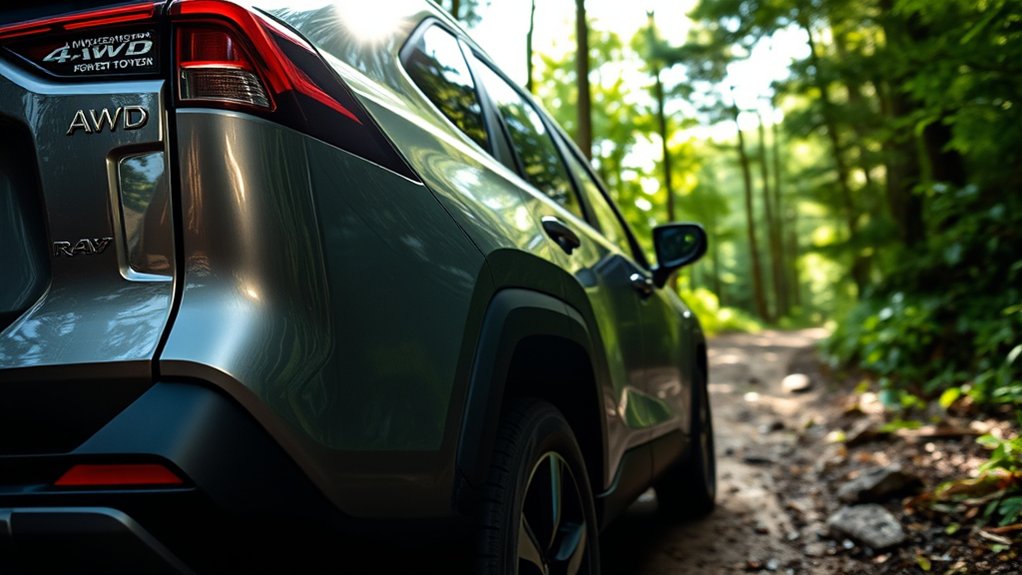
A rear AWD badge is a useful clue, but it is not definitive because badges can be removed, replaced, or added. Use documentation and vehicle-specific records when you need certainty.
Check the Window Sticker or Build Sheet
The original Monroney label or dealer build sheet should state the drivetrain. Look for wording such as “all-wheel drive,” “AWD,” or “Electronic On-Demand All-Wheel Drive.” A purchase listing alone is not enough because used-vehicle ads can contain automated or incorrect specifications.
Use the VIN and Toyota Owner Resources
Enter the 17-character VIN in the NHTSA VIN Decoder to review manufacturer-reported vehicle information. Then compare the result with Toyota records, the window sticker, or a dealer parts/service lookup. NHTSA notes that a manufacturer or vehicle label may provide additional details when the decoder does not answer a specific equipment question.
For more identification methods, see how to tell if your Toyota RAV4 is AWD.
Check the Owner’s Manual and Dashboard
Select the exact year and model through Toyota Manuals and Warranties. The manual explains the AWD system, available drive modes, warning lights, towing restrictions, tire requirements, and maintenance items for that vehicle. Dashboard displays that show front-to-rear power distribution can also indicate AWD, but display design varies by year and trim.
Pro Tip: When shopping for a used RAV4, ask the seller for a photo of the VIN, original window sticker, and instrument cluster. Cross-checking those records is more reliable than trusting a badge or listing headline alone.
RAV4 AWD System Types
Toyota has used more than one AWD design in the RAV4. Calling all of them “basic AWD” hides meaningful differences in hardware and operation.
| System | Where It Appears | How It Works |
|---|---|---|
| Electronic On-Demand AWD | 2026 AWD hybrids and plug-in hybrids; earlier RAV4 Hybrid and Prime/PHEV models use related electric-rear-motor layouts | A dedicated electric motor powers the rear wheels when additional rear driving force is needed; a conventional engine-driven propeller shaft does not connect the front and rear axles. |
| Mechanical AWD / Dynamic Torque Control AWD | Many fifth-generation gas RAV4 AWD configurations | A mechanical driveline and driveshaft can route engine torque to the rear axle when rear-wheel assistance is needed. |
| Dynamic Torque Vectoring AWD with Rear Driveline Disconnect | Selected fifth-generation gas models, including AWD Limited and Adventure at the 2019 launch and TRD Off-Road in applicable years | Can send torque rearward and vary distribution between the left and right rear wheels. Rear Driveline Disconnect reduces unnecessary driveline rotation when AWD is not required. |
Multi-Terrain Select and Drive Modes
Multi-Terrain Select is a traction-management feature, not a separate AWD system or trim level. On the 2019 gas AWD RAV4, Toyota described Mud & Sand, Rock & Dirt, and Snow settings. Later years and trims use different controls and combinations of drive modes.
Choose the mode described for the surface in the model-year owner’s manual. A terrain or drive-mode setting can change throttle, braking, and AWD-control behavior, but it cannot create tire grip that is not available.
Choosing the Right Toyota RAV4 Trim With AWD Options
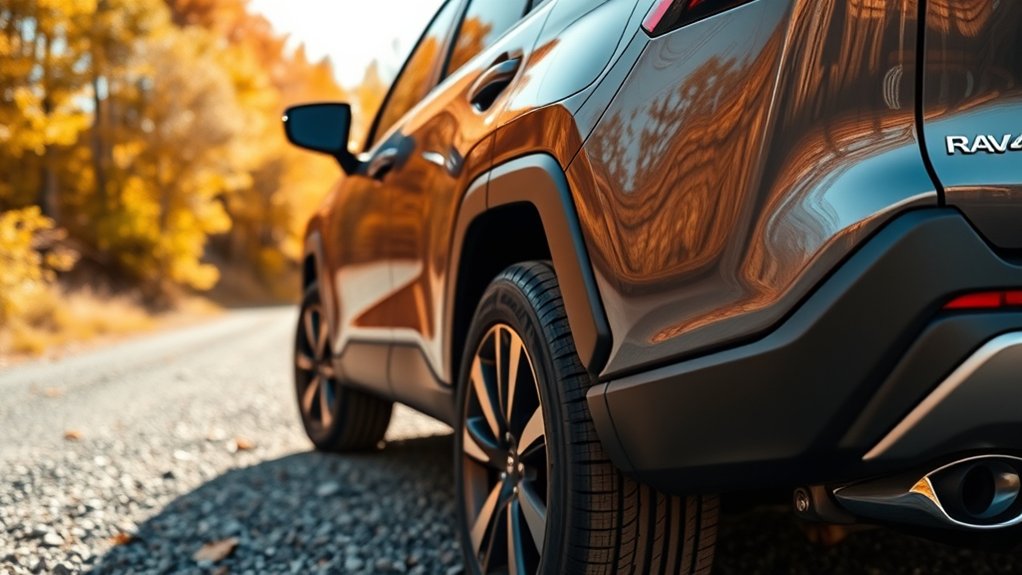
The right AWD RAV4 depends on your roads, efficiency priorities, towing needs, and preferred equipment. Start with the model year, then compare the exact drivetrain and equipment rather than choosing from a trim name alone.
- Everyday commuting with occasional snow: A 2026 LE, XLE Premium, or SE Hybrid with optional AWD adds rear-wheel assistance without requiring one of the standard-AWD upper grades.
- More comfort and standard AWD: The 2026 Limited Hybrid includes AWD as standard and adds higher-level comfort and technology equipment.
- Rugged-road priorities: The 2026 Woodland includes standard AWD, all-terrain tires, added ground clearance, and a factory tow-hitch receiver.
- Sport-oriented configuration: The 2026 XSE has standard AWD with hybrid or plug-in hybrid power, while GR SPORT combines the plug-in hybrid system, AWD, and performance-focused chassis tuning.
- Used gas-model capability: Earlier Adventure or TRD Off-Road models may suit shoppers looking specifically for a gas RAV4 with off-pavement-oriented equipment, but condition, tires, maintenance history, and model year matter as much as the badge.
Also compare ground clearance, tire type, spare-tire provisions, towing rating, and charging access if you are considering a plug-in hybrid. For a more direct drivetrain decision, see the RAV4 AWD vs FWD comparison.
Next Steps If Your RAV4 Lacks AWD
A front-wheel-drive RAV4 can still work well for city driving, dry climates, and maintained roads. Before replacing the vehicle solely for AWD, address the factors that have the largest effect on real-world grip and control.
- Install appropriate tires. Quality all-season tires may be sufficient in mild climates; dedicated winter tires are designed for colder, snowier conditions.
- Maintain correct tire pressure and tread. Check pressure when the tires are cold and use the specification on the driver-door label, not the maximum pressure printed on the tire sidewall.
- Use tire chains or traction devices only as directed. Follow the owner’s manual, tire-clearance limits, and local law.
- Adjust driving technique. Accelerate, steer, and brake smoothly, reduce speed, and increase following distance on slippery roads.
- Change vehicles if your use genuinely requires AWD. If you regularly travel on steep, unplowed, or loose surfaces, a factory-built AWD RAV4 is far more practical than attempting to convert a FWD vehicle.
Note: Converting a FWD RAV4 to AWD is not a practical bolt-on upgrade. It would require major drivetrain, suspension, wiring, control-module, exhaust, and potentially structural changes, followed by proper calibration and safety validation.
Tips for Maximizing the Performance of Your RAV4’s AWD System
Keep All Four Tires Closely Matched
Use the specified tire size, maintain correct pressure, rotate the tires at the recommended interval, and replace damaged or badly mismatched tires. Large differences in circumference or grip can affect handling and can make an AWD system work differently than intended. When replacing fewer than four tires, follow Toyota’s guidance and ask a qualified tire professional whether the remaining tread-depth difference is acceptable.
Follow the Exact Maintenance Schedule
Do not apply one universal “AWD fluid change” interval to every RAV4. Mechanical gas-model AWD systems and electric-rear-motor hybrid systems do not use identical hardware or service procedures. Toyota maintenance guides can add inspections or fluid service under specified special operating conditions, so use the maintenance guide for the exact VIN, model year, powertrain, and operating conditions.
Respond to Warning Lights Promptly
If an AWD, hybrid-system, traction-control, ABS, or check-engine warning appears, note the driving conditions and arrange diagnosis. Some faults can temporarily limit AWD operation even when the vehicle still moves normally. Do not assume that cycling the ignition has corrected the underlying fault.
Use Drive Modes as Intended
Select the mode described for the road or surface, then drive smoothly. Modes can refine vehicle response, but high speed, abrupt steering, and unsuitable tires can overwhelm any traction system. Return to the normal road setting when the special condition ends unless the owner’s manual directs otherwise.
Frequently Asked Questions
Are all Toyota RAV4s AWD?
No. Selected 2026 RAV4 Hybrid grades are available with front-wheel drive or AWD, while other hybrid grades and every current U.S. RAV4 Plug-in Hybrid use AWD. Used RAV4 drivetrain availability also varies by model year and trim.
How does RAV4 AWD differ from four-wheel drive?
RAV4 AWD manages traction automatically during normal road driving and light off-pavement use. Traditional truck-based 4WD systems may offer driver-selected high and low ranges for more demanding terrain. The current RAV4 does not use a low-range transfer case.
How can I tell if my Toyota RAV4 is AWD?
Check the original window sticker or build sheet first, then confirm the vehicle using its 17-character VIN and Toyota or NHTSA records. An AWD badge or dashboard torque display can be a useful clue, but neither is as reliable as vehicle-specific documentation.
Can I convert a front-wheel-drive RAV4 to AWD?
A conversion would require extensive drivetrain parts, fabrication, wiring, software, and calibration work. It is not a simple or economical upgrade and may create reliability, inspection, insurance, or warranty issues. A factory-built AWD RAV4 is the practical solution.
What maintenance does a RAV4 AWD system require?
Requirements depend on model year and powertrain. Maintain matched tires, correct pressure, alignment, and scheduled inspections. Mechanical AWD models and electric-rear-motor hybrid models have different components, so follow Toyota’s maintenance guide for the exact vehicle rather than a generic AWD service interval.
Does AWD reduce RAV4 fuel economy?
It can. AWD configurations can differ in weight, tires, drivetrain hardware, and energy use. The difference varies by trim and powertrain, so compare the official fuel-economy ratings for the exact FWD and AWD configurations.
Is AWD standard on any 2026 RAV4 models?
Yes. In the U.S., AWD is standard on the 2026 Limited Hybrid, XSE Hybrid, Woodland Hybrid, and all 2026 RAV4 plug-in hybrid grades: SE, XSE, Woodland, and GR SPORT. LE, XLE Premium, and SE hybrids offer a choice of FWD or AWD.
Does the RAV4 Hybrid have a mechanical driveshaft to the rear wheels?
Current RAV4 Hybrid AWD uses a dedicated rear electric motor rather than a conventional engine-driven propeller shaft to power the rear wheels. This allows rear-wheel driving force to be controlled electronically as conditions change.
Is a RAV4 with AWD good in snow?
AWD can help a RAV4 accelerate and climb on snowy or slippery roads, but tire type and condition, ground clearance, speed, and driver input remain critical. AWD does not eliminate the need to slow down or leave additional stopping distance.
Conclusion
The Toyota RAV4 does offer AWD, but there is no single drivetrain rule that applies to every year and trim. For 2026, LE, XLE Premium, and SE hybrids let buyers choose FWD or AWD, several other hybrid grades include AWD as standard, and every U.S. plug-in hybrid has AWD.
Used 2019–2025 RAV4s require more model-year-specific checking because Toyota offered mechanical gas-model AWD, Dynamic Torque Vectoring AWD, and electric-motor-based hybrid AWD during that generation. Confirm a specific vehicle with its VIN and original records, then use the correct model-year owner’s manual for towing, tire, drive-mode, and maintenance guidance.
Sources
- Toyota USA Newsroom: 2026 RAV4 — current U.S. grade/drivetrain combinations, Electronic On-Demand AWD hardware, towing ratings, and model details.
- Toyota: 2026 RAV4 — current U.S. model information and specifications.
- Toyota USA Newsroom: 2019 RAV4 Launch — fifth-generation gas AWD, Dynamic Torque Vectoring AWD, hybrid AWD, and Multi-Terrain Select.
- Toyota USA Newsroom: 2025 RAV4 — 2025 gas and hybrid drivetrain availability and discontinued Adventure/TRD Off-Road grades.
- Toyota USA Newsroom: 2021 RAV4 Prime — first plug-in-hybrid RAV4 and standard Electronic On-Demand AWD.
- Toyota Manuals and Warranties — vehicle-specific operating instructions and maintenance information.
- NHTSA VIN Decoder — manufacturer-reported vehicle identification information.
- NHTSA Winter Driving Tips — tire, following-distance, and winter-driving guidance.
