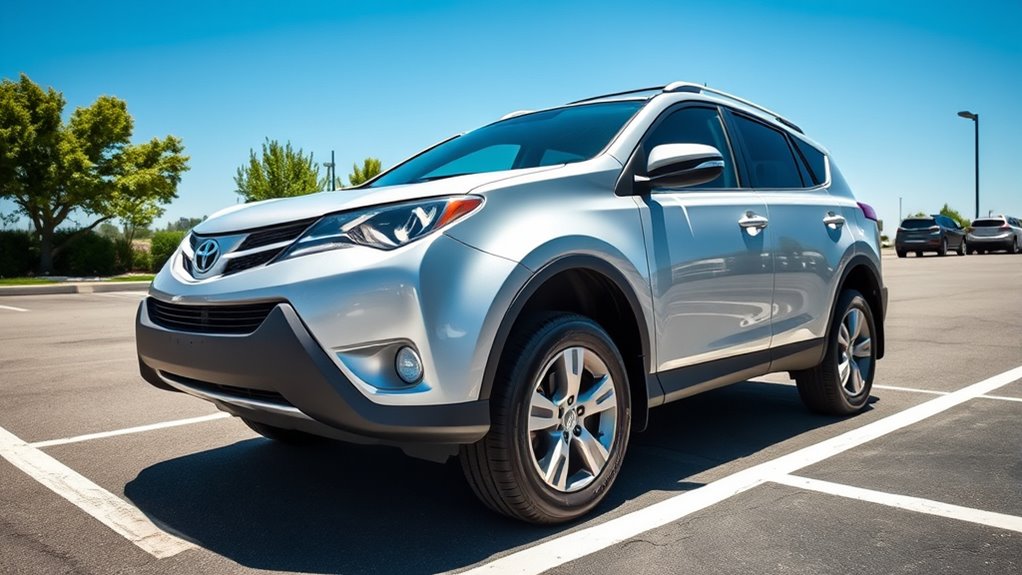
No. The rear tires on a Toyota RAV4, including the 2013 RAV4, do not steer. Only the front wheels turn when you move the steering wheel, so if you see your RAV4 rear tire turning when parking (angling, wobbling or shifting sideways), something is loose or worn and it should be inspected before you drive far.
Below is what normal rear-wheel behaviour looks like, the most likely causes when it isn’t normal, and when to stop driving and call a mechanic.
Do RAV4 Rear Wheels Steer?

No RAV4 sold in North America has rear-wheel steering. On the 2013–2018 generation, Toyota lists electric power steering acting on the front wheels, MacPherson struts at the front and a double-wishbone suspension at the rear. The rear wheels are held straight by fixed suspension links.
The rear wheels should only ever roll. They should not change angle when you turn the steering wheel, whether the RAV4 is moving or stopped.
What Is Normal When Parking
- The rear of the car swings. When you reverse with the wheel turned, the body pivots around the rear axle. From the driver’s seat or a mirror this can look like the rear tire is turning. It isn’t.
- Tires scrub or squeak on tight turns. At full lock on smooth concrete (parking garages especially), tires can squeal or scuff a little because each wheel follows a different arc.
- The rear tire flexes. The sidewall may look like it shifts slightly as the car turns. Small sidewall movement is normal.
What Is Not Normal
- The rear wheel visibly changes angle, leans or wobbles when the car moves or when someone rocks it.
- A clunk, knock or grinding noise from the rear when turning or going over bumps.
- The car pulls or “steers from the back” at speed, or the rear feels loose in corners.
- Uneven or feathered wear on the inside or outside edge of a rear tire.
- The wheel rotates while the car is parked in P (the vehicle is creeping).
Possible Causes of RAV4 Rear Tire Turning When Parking
| Symptom | Possible cause | Urgency |
|---|---|---|
| Wheel wobbles, clicking from the wheel | Loose lug nuts | Stop now. Tighten to spec or have it towed |
| Wheel shifts angle, clunks over bumps | Worn or broken rear control arm, toe link or bushing | High. Inspect before further driving |
| Wheel has play when rocked, humming that changes with speed | Worn rear wheel bearing or hub | High. Inspect soon |
| Rear tire edge wear, car pulls | Rear alignment out of spec, possibly after hitting a curb | Medium. Book an alignment check |
| Hopping or binding in tight, slow turns (AWD models) | AWD Lock left on, mismatched tire sizes or wear, or an AWD coupling fault | Medium. Turn AWD Lock off and check tires |
| Car creeps in Park | Parking brake not set or worn; parking pawl problem | High. Set the parking brake and have it checked |
A RAV4 that has hit a curb, a pothole or another car on the rear corner is a prime candidate for a bent rear link, even if the damage isn’t visible.
A Note on AWD RAV4s
AWD versions of the 2013–2018 RAV4 use Dynamic Torque Control AWD. An AWD Lock button fixes the torque split at 50:50 up to about 25 mph, then the system returns to Auto. Using lock mode in tight turns on dry pavement can make the drivetrain feel like it is binding. Only use it to get moving in snow, mud or sand.
All four tires on an AWD RAV4 should be the same brand, size and similar wear. Mismatched tires can make the system work harder in turns.
Quick Checks You Can Do Safely
- Park on level ground, put it in P and set the parking brake.
- Look at the rear wheel’s lug nuts. If any are loose or missing, don’t drive. Tighten or call for a tow.
- Look along the rear tire for uneven wear, bulges or damage.
- With the car parked, ask a helper to turn the steering wheel lock to lock while you watch the rear wheel. It should not move at all.
- Drive slowly in an empty lot with the window down and listen for clunks or grinding from the rear.
Don’t jack the car up and work under it unless you have proper jack stands and know how to use them.
When to See a Mechanic
Book an inspection right away if the rear wheel visibly changes angle, has play, or makes noise. Ask for a check of the rear suspension arms and bushings, wheel bearing, lug nut torque and a four-wheel alignment.
Stop driving and arrange a tow if the wheel wobbles, the lug nuts are loose, or the car feels unstable. A rear wheel that detaches or a broken suspension link can cause a crash.
Related RAV4 Guides
- Winter driving? See our best self-tightening tire chains for RAV4 guide (chains go on the tires your manual specifies).
- Thinking about roof racks? Read our RAV4 low-profile cross bars guide.
- Keep it safe overnight with our RAV4 theft deterrent guide.
FAQ
Should the rear tire turn when parking a RAV4?
No. The RAV4 has front-wheel steering only. The rear tires should roll but never change angle. If a rear tire appears to turn or wobble, have the suspension, wheel bearing and lug nuts checked.
Does the 2013 RAV4 have four-wheel steering?
No. The 2013 RAV4 uses electric power steering on the front wheels and a double-wishbone rear suspension that keeps the rear wheels fixed.
Why does my rear tire look like it’s turning when I reverse?
When you reverse with the steering turned, the whole body pivots around the rear axle, which can look like the rear wheel is steering. That is normal as long as the wheel itself doesn’t change angle or wobble.
Is it safe to drive if my RAV4 rear wheel wobbles?
No. A wobbling wheel can mean loose lug nuts, a failed bearing or a broken suspension link. Stop, check the lug nuts and get the car inspected or towed.
Can the AWD Lock button cause binding when parking?
It can make tight, slow turns on dry pavement feel stiff because it fixes the front-rear torque split. Turn AWD Lock off on dry roads and use it only to get moving on slippery surfaces.