Drone camera sensor size matters more than megapixel counts suggest. In short, a 1/1.3-inch sensor is fine in good daylight, while a 1-inch sensor gathers roughly 1.7 to 2 times as much light. That means cleaner dusk shots and better shadow recovery. A 4/3 sensor gathers about three times as much light as 1/1.3-inch, but it costs more and adds weight.
The real differences show up in low light, in dynamic range, and in how far you can push the files when editing. This guide explains each format, what the numbers really mean, and when an upgrade is worth it.
Drone Sensor Sizes Compared at a Glance
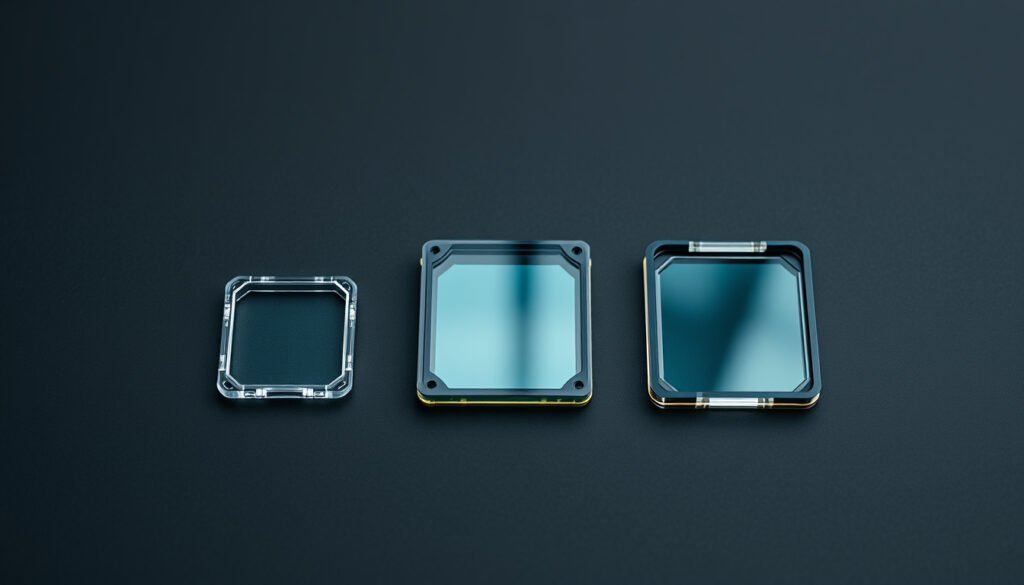
Sensor names like “1-inch” are legacy labels, not real measurements. This table shows the approximate physical size of each format and how much more light it gathers than a 1/1.3-inch sensor at the same aperture.
| Format | Approx. Size | Approx. Area | Light vs 1/1.3-inch | Example Drones |
|---|---|---|---|---|
| 1/1.3-inch | 9.6 × 7.2 mm | ~69 mm² | Baseline | DJI Mini 3, Mini 4 Pro, Air 3 |
| 1-inch | 13.2 × 8.8 mm | ~116 mm² | ~1.7× (about ¾ stop) | DJI Mini 5 Pro, Air 3S (main camera) |
| 4/3 (Four Thirds) | 17.3 × 13.0 mm | ~225 mm² | ~3.3× (about 1.7 stops) | DJI Mavic 3 Pro, Mavic 4 Pro (main camera) |
Exact dimensions vary slightly from one sensor to another. DJI says the 1-inch sensor in the Mini 5 Pro has more than twice the area of the 1/1.3-inch sensor in the Mini 4 Pro.
Which Drone Sensor Size Gives the Best Image Quality?
When image quality is the priority, the larger sensor wins. A 1-inch sensor has a clear edge over the 1/1.3-inch class, and a 4/3 sensor goes further still. Larger sensors collect more light in total, which improves low-light performance, dynamic range, and noise levels.
In practice, you get cleaner shadows, better highlight retention, and less visible noise in high-contrast scenes. By area, a typical 1-inch sensor is about 1.7 times the size of a 1/1.3-inch sensor. That works out to roughly three-quarters of a stop to one stop of extra light.
Resolution is a separate question. Many current 1-inch drone cameras shoot 50MP photos, while 1/1.3-inch drone cameras top out at 48MP. The quality gain comes from the bigger sensor, not the two extra megapixels. A 4/3 sensor extends the same principle, allowing larger pixels or higher resolution with low noise.
For image-focused work, sensor size remains one of the most important factors, alongside lens quality and image processing.
Why 1/1.3-Inch Sensors Still Fall Short
A 1/1.3-inch sensor gathers less light than a 1-inch sensor. As a result, low-light image quality drops off sooner, with more noise and less fine detail.
Its smaller photosites also limit dynamic range. That reduces its ability to hold highlight and shadow detail in high-contrast scenes.
In aerial work, this trade-off shows most when light changes quickly and you need room to fix exposure later.
Low-Light Performance Limits
Modern 1/1.3-inch sensors are efficient, but they still capture less light than 1-inch sensors because of their smaller surface area. This limits low-light performance, especially at dusk, when you need clean detail from a moving aircraft. A larger sensor gathers more photons, so it keeps texture with lower noise at high ISO.
| Sensor | Light Capture | Result |
|---|---|---|
| 1/1.3-inch | Lower | Grain and softness |
| 1-inch | Higher | Cleaner detail |
| 4/3 | Highest | Strongest dim-scene output |
In practical terms, a 1/1.3-inch sensor has to work harder to avoid visible noise, while a 1-inch sensor has more margin. After dark, that difference becomes easy to see.
Dynamic Range Trade-Offs
Dynamic range is the next clear dividing line between 1/1.3-inch and 1-inch drone sensors. The larger sensor can preserve detail in bright clouds and dark terrain in the same frame.
A 1/1.3-inch sensor has less headroom, so highlights clip sooner and shadows turn muddy more quickly. This matters most in sunrise, sunset, and backlit scenes.
At high ISO, the 1-inch sensor also holds cleaner tones, with less noise in recovered shadows. The result is more consistent files and easier editing.
Why 1-Inch Drone Cameras Hit the Sweet Spot
One-inch drone cameras sit between compact portability and high-end imaging performance. A 1-inch sensor captures more light than smaller formats, which supports cleaner high-resolution photos and video.
The larger sensor improves low-light performance, reducing noise at dusk, indoors, or under mixed lighting. Compared with 1/1.3-inch systems, it usually extends dynamic range too, so shadows and highlights keep texture without heavy correction.
The format has also become far more portable. The DJI Mini 5 Pro fits a 50MP 1-inch sensor into a drone weighing about 250 g. The DJI Air 3S pairs a 50MP 1-inch main camera with a 1/1.3-inch telephoto camera.
Most 1-inch drones also shoot RAW files (DNG), which give you more control over exposure, color, and contrast when editing. The result is a balanced tool: a clear step up in image quality without the size, weight, or price of a 4/3 flagship.
What 4/3 Sensors Really Buy You
A 4/3 sensor puts the drone camera in a larger imaging class. At about 17.3 × 13.0 mm, it has roughly twice the area of a 1-inch sensor and more than three times the area of a 1/1.3-inch sensor.
In practice, 4/3 sensors deliver cleaner detail, broader dynamic range, and better tonal separation, especially in scenes with bright sky and dark ground. They also hold up better at higher ISO settings when light runs short. DJI’s Mavic 4 Pro, for example, uses a 100MP 4/3 Hasselblad camera.
Flagship 4/3 drones often add better optics. The Mavic 4 Pro’s main camera has a variable aperture from f/2.0 to f/11, which helps in bright light and can create starburst effects.
Two common claims need context. Most drones have a fixed lens, so the interchangeable-lens advantage of Micro Four Thirds cameras usually doesn’t apply. Larger sensors also give shallower depth of field at the same framing, but at typical drone distances most of the scene is in focus anyway. This matters mainly for close subjects.
For serious photographers, the upgrade is about dependable image quality across difficult lighting, not spec-sheet numbers.
How Sensor Size Affects Low-Light Photos
Larger drone sensors generally deliver cleaner low-light photos. They gather more light per frame, which helps suppress noise and preserve detail in dim scenes.
The gain is real but often smaller than marketing suggests. A 1-inch sensor gathers roughly three-quarters of a stop to one stop more light than a 1/1.3-inch sensor. A 4/3 sensor adds about another stop on top of that.
That extra light reduces grain, so image quality stays more stable as light falls. In practice, you can rely less on heavy noise reduction, which tends to smear fine texture.
When you move to a larger sensor, the most visible improvements are usually cleaner shadows and steadier color in night and twilight shots.
How Drone Sensors Handle Dynamic Range
Dynamic range describes how well a drone camera keeps detail in the brightest and darkest parts of the same scene. Larger sensors generally deliver more dynamic range, so they can record a wider spread of tones before highlights clip or shadows fill with noise.
A 1-inch or 4/3 sensor typically records more usable detail than a 1/1.3-inch sensor in high-contrast scenes such as sunsets, backlit buildings, or reflective water.
Manufacturers now quote high figures. DJI claims up to 14 stops of video dynamic range for the 1-inch Air 3S and Mini 5 Pro. For the 4/3 Mavic 4 Pro, it claims up to about 16 stops, while Hasselblad quotes 15.5. These are manufacturer figures for specific video modes, not independent lab measurements.
Larger sensors also reduce shadow noise, so dark areas stay cleaner when you lift them in editing. Modern image processing and HDR modes add to this.
48MP vs 50MP: What Changes in Real Use?
On paper, 48MP and 50MP are almost the same. In current DJI drones, though, 48MP usually means a 1/1.3-inch sensor and 50MP usually means a 1-inch sensor. The real difference is sensor size, not the two extra megapixels.
The 50MP sensor can preserve slightly more raw detail and allows a little more cropping. That advantage is most visible in strong light with good optics.
In lower light, pixel binning and image processing matter more than the megapixel gap.
Pixel Binning Benefits
Pixel binning combines groups of neighboring pixels into one larger effective pixel. This increases light sensitivity and lowers noise in low light.
Most 48MP and 50MP drone sensors shoot 12MP photos by default and offer a full-resolution mode. The Mini 5 Pro, for example, lets you choose between 12MP and 50MP. Binned images give up resolution in exchange for cleaner shadows and fewer artifacts.
For practical image quality, the benefit is a better signal-to-noise ratio when light is weak. Judge resolution by real-world clarity, not megapixel marketing.
Raw Detail Tradeoffs
A jump from 48MP to 50MP changes little on paper. Real-world image quality depends more on sensor area than on pixel count, because a larger sensor collects more light, lowers noise, and widens dynamic range.
| Factor | Real effect |
|---|---|
| Sensor size | More light, better clarity |
| RAW image files | Greater editing latitude |
| Megapixels | More print detail, larger files |
High-resolution RAW files give you more room in editing, but they need more storage and processing power. Extra resolution doesn’t remove lens distortion or vignetting. It simply records them in more detail.
Why RAW Files, Distortion, and Vignetting Matter
RAW files hold much more image data than JPEGs. That gives you more room to adjust exposure, white balance, and tonal detail without degrading quality.
This matters for drones because light is often uneven. Larger sensors keep more shadow and highlight information, so their RAW files hold up better in post-processing.
RAW files also show optical flaws more honestly. Lens distortion, especially in wide-angle shots, can bend straight building lines and horizons. Vignetting darkens the corners.
Both issues are more visible with weaker optics or at wide apertures. Fortunately, they are fixable. Raw editors such as DxO PhotoLab can correct distortion and vignetting precisely, especially when a lens profile for your drone is available.
In short, sensor size, file format, and lens quality together decide how much usable detail you have to work with.
Other Factors That Affect Drone Image Quality
Sensor size is a major factor, but it isn’t the only one. These also shape your results:
- Lens aperture: A brighter lens lets in more light. The Mini 3 and the Air 3’s wide camera both use f/1.7 lenses, which partly offsets their smaller sensors.
- Image processing: Newer processing platforms improve noise reduction, HDR, and color, so a newer drone can beat an older one with a similar sensor.
- Video color profiles: 10-bit modes such as D-Log M and HLG keep more tonal information for grading than standard 8-bit footage.
- Lens quality: Sharpness at the edges, distortion, and flare control vary between models regardless of sensor size.
- Pixel size and resolution: More megapixels on the same sensor means smaller pixels, which can add noise in low light. Binning modes help balance this.
Mini 3 vs Air 3 vs Mini 5 Pro: Which Takes Better Photos?
Among these three DJI drones, the Mini 5 Pro takes the best photos, followed by the Air 3, then the Mini 3. Sensor size explains most of the gap, but not all of it.
| Drone | Main Sensor | Photo Resolution | Notes |
|---|---|---|---|
| DJI Mini 3 | 1/1.3-inch | 12MP | Under 249 g; entry-level; f/1.7 lens |
| DJI Air 3 | Dual 1/1.3-inch | 48MP (both cameras) | 24mm f/1.7 wide + 70mm f/2.8 tele; about 720 g; succeeded by Air 3S |
| DJI Mini 5 Pro | 1-inch | 50MP (12MP binned mode) | About 250 g; DJI claims up to 14 stops for HDR video |
The DJI Mini 3 uses a 12MP 1/1.3-inch sensor. It produces good daylight files, but it has less room for shadow recovery and shows more noise in dim scenes.
The DJI Air 3 uses the same 1/1.3-inch sensor size, so its low-light advantage over the Mini 3 is small. Its strengths are 48MP resolution for cropping and a second 3x telephoto camera for compressed, detailed shots. If you want a 1-inch sensor in the Air line, its successor, the Air 3S, has one in its main camera.
Of these three drones, only the Mini 5 Pro has a 1-inch sensor, and that’s the biggest reason it leads on dynamic range and low-light performance.
The Mini 5 Pro launched in 2025 as DJI’s first Mini drone with a 1-inch sensor. Shooting in RAW helps all three models, but it can’t add information the sensor didn’t capture. Availability varies by country, so check what’s sold in your region.
When Is a Bigger Drone Sensor Worth It?
A larger drone sensor is worth it when low-light performance and dynamic range really affect your results. A 1-inch or 4/3 sensor captures more light and typically preserves more detail with less noise.
These gains improve RAW flexibility and overall image quality, especially for professional photo and video work where exposure latitude matters.
Weigh those gains against the higher price, added weight, and reduced portability of larger drones.
Low-Light Image Gains
If you often fly at sunrise, sunset, or in shade, sensor size matters quickly. A 1-inch or 4/3 sensor gathers more light than a 1/1.3-inch sensor, producing cleaner files with less noise and better detail.
The extra sensor area gives more usable signal at higher ISO settings. Here is how each format typically performs:
- 1/1.3-inch: good in bright scenes, limited after dusk.
- 1-inch: cleaner night footage, steadier color, less grain.
- 4/3: the most light-gathering margin for twilight and night work.
- Upgrade value: if you shoot often in low light, the cleaner results usually justify the larger sensor.
Dynamic Range Benefits
Dynamic range is one of the clearest reasons sensor size matters in drone imaging. Larger formats such as 1-inch and 4/3 preserve more detail in both bright highlights and dark shadows than 1/1.3-inch sensors. This matters when sky, terrain, and water share the frame.
| Sensor | Range | Result |
|---|---|---|
| 1/1.3-inch | Lower | Faster clipping |
| 1-inch sensor | Higher | Cleaner tonal separation |
| 4/3 | Highest | Strongest recovery |
A larger sensor gathers more light, so exposure latitude grows and noise falls. In high-contrast scenes, that margin keeps cloud texture and ground detail intact for editing. For serious landscape work, dynamic range alone can justify the upgrade.
Price Versus Quality
Larger drone sensors raise the purchase price, but they deliver image quality that smaller formats can’t match in low light and high-contrast scenes. When you compare sensor sizes, weigh cost against usable detail, cleaner files, and editing latitude.
- A 1/1.3-inch sensor suits casual daytime use and keeps the price low.
- A 1-inch sensor improves clarity, noise control, and print potential.
- A 4/3 sensor offers the strongest quality for demanding light.
- Serious creators can justify the higher price when output quality matters.
In practice, the upgrade makes sense when how often you shoot, where you shoot, and what you deliver demand better files.
Frequently Asked Questions
Is 1/1.28 a Bigger Sensor Than a 1-Inch Sensor?
No. A 1/1.28-inch sensor is smaller than a 1-inch sensor.
The 1-inch format has a larger physical area, so it captures more light. That advantage matters most in low light, where the larger sensor usually delivers cleaner detail, lower noise, and wider dynamic range.
A 1/1.28-inch sensor is still capable, especially in daylight, but it can’t match the 1-inch sensor’s overall performance.
Which Camera Sensor Size Is Better?
For pure image quality, a 4/3 sensor is generally the best of the three common drone formats.
Its larger area gathers more light, which improves low-light performance, dynamic range, and overall image quality. A 1-inch sensor is a strong middle ground for most buyers, while a 1/1.3-inch sensor makes sense when small size and low price matter most.
Is a 1/1.3-Inch Drone Sensor Good Enough?
For daytime flying, yes. A modern 1/1.3-inch sensor produces sharp, colorful photos and video in good light, and it keeps the drone small and affordable. Its limits show at dusk, at night, and in high-contrast scenes, where a 1-inch sensor gives cleaner, more editable files.
Do More Megapixels Mean Better Drone Photos?
Not on their own. More megapixels add detail for cropping and large prints in good light. In low light, sensor size, lens aperture, and processing matter more. A 50MP 1-inch sensor beats a 48MP 1/1.3-inch sensor mainly because it’s bigger, not because it has more pixels.
Is a 1-Inch Sensor Actually 1 Inch?
No. A 1-inch sensor is not 1 inch across in any direction. The name is a legacy format label from old video camera tubes, not a literal measurement. A typical 1-inch sensor measures about 13.2 × 8.8 mm.
Even so, it is much larger than the sensors in most phones and small drones, which is why it improves image quality, especially in low light.
Is Micro Four Thirds Bigger Than a 1-Inch Sensor?
Yes. Micro Four Thirds (4/3) is bigger than a 1-inch sensor. It measures about 17.3 × 13.0 mm, versus roughly 13.2 × 8.8 mm for 1-inch, so it has nearly twice the area.
That larger area improves image quality, especially in low light, and leaves more room for cropping and large prints.
Conclusion
In drone photography, sensor size remains one of the clearest predictors of image quality. A 1-inch sensor has roughly 1.7 to 2 times the area of a 1/1.3-inch sensor, which explains its visible gains in shadow detail, noise control, and dynamic range. A 4/3 sensor pushes those benefits further, but with added cost and weight.
For most buyers, 1-inch strikes the best balance, especially now that it fits in drones around 250 g. Choose 4/3 when maximum image quality matters more than portability, and stick with 1/1.3-inch if you mostly fly in good daylight on a budget.