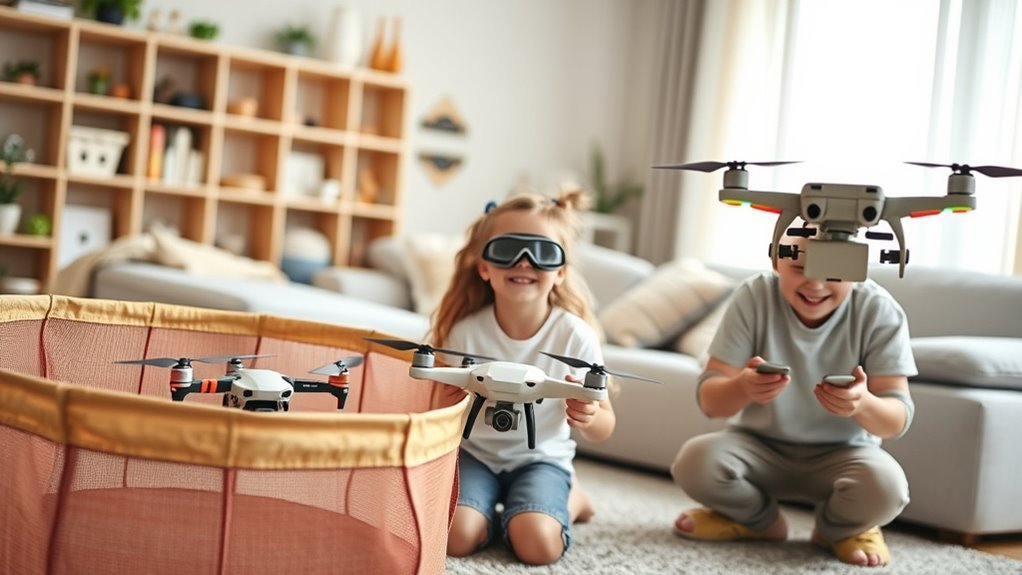
Choosing a first drone for a child takes more than picking a small model from a shelf. Indoors, safety depends on lightweight builds, propeller guards, and simple controls that match the child’s age. Younger children often need close adult supervision, while older beginners may handle basic stabilization features with guidance. The real question is which features protect learning without creating new risks.
What Makes a Drone Safe for Kids to Fly?
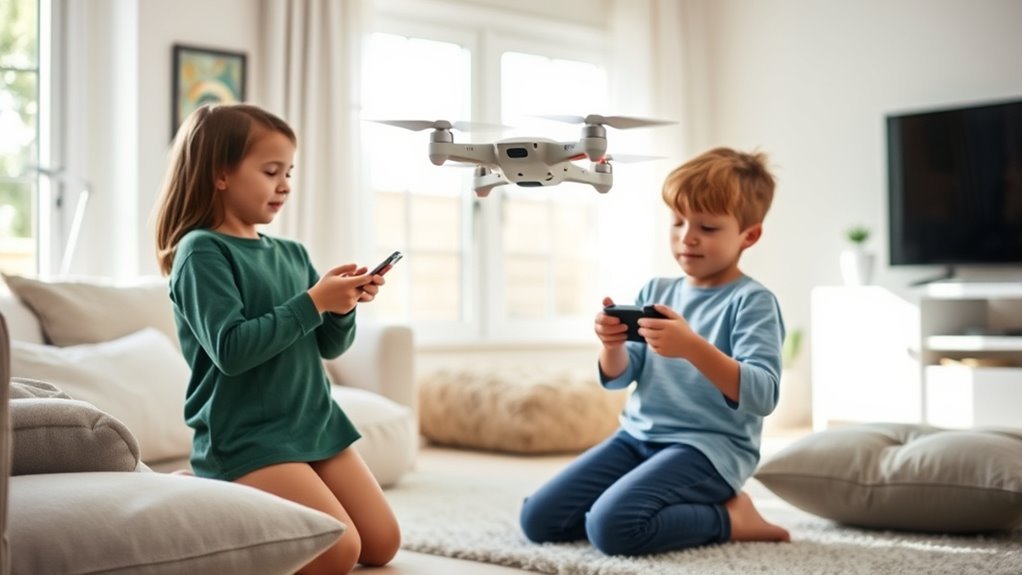
A safe kid-friendly drone usually starts with full propeller guards, which help reduce injury risk in crashes and protect both the child and nearby bystanders. For drone safety, prop guards should be sturdy, securely fitted, and designed to shield moving blades without blocking control.
Lightweight models are also important, because they lower the chance of damage if the drone drops or bumps into furniture, walls, or people. Beginner features such as altitude hold and one-button takeoff and landing make flight steadier and less frustrating, especially in indoor spaces.
Lightweight drones help reduce damage, while beginner features make indoor flying steadier and less frustrating.
Adult supervision remains essential, since a second pair of eyes can help guide safe use and enforce basic rules. Age-appropriate drones support better choices: smaller indoor models suit younger children, while more stable options fit older beginners.
The safest setup is simple, low-risk, and easy to manage, allowing practice without unnecessary danger or restriction.
What Age Is Best for a Kid’s First Drone?
The best age for a child’s first drone depends on skill level, supervision, and the type of drone involved.
For ages 5-7, a lightweight drone for indoor use with full propeller guards is usually age appropriate, because it limits risk and supports early control.
At 8-10, a beginner drone with stabilization can help a child learn steady movement and safe handling.
From 11 and older, a GPS-assisted drone may be suitable for more complex flying, provided adult supervision stays active and rules are understood.
A recreational drone under 250g is often a practical first choice, since it usually avoids FAA registration and keeps entry simple.
If the model or location triggers FAA rules, a Flyer ID or other compliance steps may be needed.
The safest approach is to match the drone to the child’s maturity, keep flying legal, and preserve freedom through careful, supervised practice.
Why Do Prop Guards Matter More Than Cameras?
Why do prop guards matter more than cameras? Prop guards are a direct safety feature, while a camera mainly adds extra viewing. For kids, that difference matters.
Exposed blades can cut skin, snag clothing, or damage furniture; guards reduce that risk and make indoor flying far safer. They also soften crashes, which is useful because lightweight drones often meet beginner mistakes while learning to fly.
Exposed blades can cut, snag, or scuff; prop guards reduce risk and make indoor flying much safer.
With less damage and less fear, children can practice basic control with more confidence and more freedom to experiment. That support helps build skill without turning each flight into a hazard.
In some FAA-relevant situations, guards may also support safer operation around people. Camera quality can wait; safety cannot.
For young pilots, prop guards are not decoration. They are a practical shield that keeps the experience open, manageable, and less stressful for kids and their families.
How Do You Choose a Drone for a Child?
Choosing a drone for a child starts with matching the model to the child’s age and skill level. For ages 5–7, lightweight indoor drones with full propeller guards fit best; ages 8–10 may be ready for beginner drones with stabilization.
Durable builds matter because crashes are part of learning. Safety features such as altitude hold and one-button takeoff and landing reduce confusion and support steadier control.
- Pick drones sized for the child’s age and hand strength.
- Favor propeller guards and soft materials to limit harm.
- Choose safety features that simplify flight and lower risk.
- Select models designed for adult supervision and frequent impacts.
A drone under 250g adds convenience for recreational use, but weight should never replace caution. The safest choice gives a child room to explore without putting people, property, or confidence at unnecessary risk.
Do Kids Need FAA Registration for Drones?
When it comes to FAA registration, many kids flying recreational drones do not need it if the drone weighs less than 250 grams. For many families, that answer keeps flying a drone simple and open for younger children. Under this limit, the drone is generally Category 1, yet it still must follow safety rules and local limits. If the drone weighs 250 grams or more, parents must register it with the FAA, no matter the pilot’s age.
| Drone weight | FAA registration | Note |
|---|---|---|
| Under 250 g | Usually no | Category 1 |
| 250 g or more | Yes | Parent handles minors |
| Local rules | Sometimes yes | Check city and state |
The question do kids need faa registration for drones depends mainly on weight, not age. Teaching children the rule helps them fly responsibly, with fewer barriers and more freedom.
How Do You Set Up Safe Drone Flights at Home?
A safe drone flight at home begins with a small indoor drone that has full propeller guards and a clear, designated flying area free of furniture, breakables, pets, and other hazards. This setup supports indoor flying while protecting young pilots and the home.
A calm, open safe environment gives children room to learn without pressure, and adults can keep supervision steady throughout each practice session.
A calm, open space lets children learn without pressure, while adults provide steady supervision throughout each practice session.
- Check battery levels before takeoff so the flight ends predictably.
- Confirm propeller guards are secure and the drone is lightweight.
- Clear the space of people, pets, and loose objects.
- Start with simple lifts, turns, and landings, then add harder moves as skill grows.
Used this way, home flights feel more free and controlled. Careful preparation turns play into confident learning, especially for children under 12.
What Drone Mistakes Do Parents Need to Avoid?
Parents sometimes buy drones that are too advanced for children, which can make control difficult and raise the risk of accidents.
They may also skip full propeller guards, even though exposed blades can cause injuries during a crash.
Flying without close adult supervision is another common mistake, especially for younger children who still need direct guidance.
Buying Advanced Drones
One common mistake is choosing an advanced drone with features that are too complex for a beginner child, since this can overwhelm learning and make early flights frustrating rather than fun.
When buying advanced drones, caregivers should match the model to the child’s age, skill, and patience. A simple drone for your child supports confidence, while supervision keeps practice safe and focused.
For a kids experiment, basic controls teach steadier habits than flashy modes.
- Favor simple controls over automation.
- Check for full propeller guards.
- Expect short battery life and plan extras.
- Choose calm weather for outdoor flights.
A lighter drone gives more freedom when children learn without unnecessary risk.
It also helps them build skill through small successes, not technical confusion, which supports safer independence.
Skipping Prop Guard Use
Skipping prop guards is a mistake that can turn a simple child’s drone flight into a safety risk. For indoor flying, full propeller guards help reduce injury risks by covering exposed blades during bumps and crashes.
This is especially important with lightweight drones, which are often used by beginners and are easier to control when protected. Guards also protect furniture, walls, and the drone itself from damage, preserving both safety and confidence.
Without them, a small mistake can become a cut, a broken rotor, or a discouraging setback. Parents who choose drones with built-in propeller guards give children more freedom to explore flight with less worry.
In practical terms, guards are not extra gear; they are basic protection for safer, calmer learning.
Flying Without Supervision
Prop guards reduce injury risk, but safe use still depends on adult oversight. Parents should not let children under 10 handle flying alone; supervision supports judgment that is still developing. Drone safety improves when rules are firm and simple.
- Require supervision for every flight, especially with younger children.
- Use propeller guards on lightweight drones to limit injury.
- Check battery levels and perform pre-flight checks before takeoff.
- Keep indoor flying away from drafts, and choose calm weather outdoors.
Unsupervised flying can invite accidents, lost control, and risky choices. Clear boundaries on where, when, and how a drone may fly preserve freedom by preventing avoidable harm.
With steady supervision, children can learn skill, confidence, and responsibility without needless danger.
How Durable Are Kid-Friendly Toy Drones?
Kid-friendly toy drones are usually built to handle repeated bumps and crashes better than many larger models, thanks to flexible plastic frames that absorb impact.
These kid-friendly drones often include full propeller guards, which help shield fingers and furniture while also reducing damage in minor collisions.
Full propeller guards help protect fingers and furniture while reducing damage from small bumps.
A lightweight design matters as well, because less mass means less force during a fall and easier control for small pilots.
Even so, durability has limits. Battery connectors can be fragile, so rough plugging or pulling may cause failure. Parents and caregivers should treat these toys as resilient, not indestructible.
For micro indoor models, the average flight time is usually 5 to 10 minutes, which supports short, managed play sessions and limits wear from extended use.
Careful handling, regular checks, and calm indoor use help these drones last longer while keeping children’s play freer and safer.
What Features Help Kids Learn to Fly Faster?
Kids learn faster when a drone removes unnecessary complexity from the first flights.
User-Friendly Controls, such as one-button takeoff and landing, let beginners focus on basic direction instead of confusing commands.
Stabilization Features, including altitude hold, reduce constant corrections and help young pilots feel the machine respond predictably.
A Lightweight Design, often under 250g, is easier to manage and less likely to cause harm if a mistake happens indoors.
Full propeller guards add a practical layer of protection, making practice less risky around people, walls, and furniture.
- Simple controls shorten the learning curve.
- Stabilization keeps attention on steering.
- Lightweight frames support safer handling.
- Gradual Skill Development, through slower speed modes, allows progress without rushing.
These features work together to give children a clear path toward independent flight, while still keeping the experience controlled, safe, and freeing.
How Do You Build Confidence With First Flights?
First flights should begin with simple hover practice so the child can learn how the drone holds steady in the air.
Short success flights help build confidence by keeping each session manageable and ending on a positive note.
Careful supervision and calm guidance can make these early attempts feel safe and encouraging.
Start With Hover Practice
A safe, open indoor space is the best place to begin hover practice, where a child can focus on keeping the drone steady without the challenge of complex maneuvers. This approach supports indoor flying while reducing distractions and giving room to learn control.
Lightweight drones with full propeller guards add a useful layer of protection during first attempts. Close supervision helps the adult guide throttle input, explain flight dynamics, and correct errors calmly. The aim is to build confidence through simple, repeatable control.
- Choose a clear room with minimal obstacles.
- Keep sessions short and focused on hovering.
- Increase duration only as stability improves.
- Encourage steady progress, not speed or tricks.
Use Short Success Flights
Once hovering feels steady, short success flights help young pilots turn that control into confidence.
Begin with 1-3 minute short success flights in calm indoor flying spaces, where distractions and hazards stay low. Drones with altitude hold and one-button takeoff and landing reduce strain, letting the child focus on guiding direction rather than wrestling the controls. Prop guards add an extra margin of safety during early mistakes.
Supervision by age should remain firm and close, especially with younger children. After each smooth flight or safe landing, use positive reinforcement to mark progress.
As skills improve, extend flight time and introduce simple turns or stops. This gradual path keeps frustration low, supports freedom through competence, and helps children feel capable rather than rushed.
Frequently Asked Questions
Can I Stop Drones From Flying Over My House?
Stopping drones over a house is only partly possible, because airspace rules usually limit control. A resident can raise drone privacy concerns, check local regulations, and request voluntary avoidance.
Homeowners may use safety measures such as privacy apps, signage, and reporting noise complaints. In some places, flight restrictions from ordinances or HOAs may help.
If a drone seems unsafe or intrusive, authorities or local clubs can be contacted for guidance.
What Kind of Drone Is Appropriate for a 12-Year-Old?
A GPS-assisted drone under 250g suits a 12-year-old, like a feather that steadies in wind.
Suitable drone features include altitude hold, one-button takeoff and landing, and built-in prop guards.
Beginner models with 15–25 minute flight times are practical choices. Age recommendations favor supervised use, with safety guidelines observed.
Clear flying tips: start in open spaces, learn controls slowly, and choose models that help young pilots fly with confidence and freedom.
Conclusion
In the end, the safest indoor drone for a child is not the flashiest one, but the one that behaves like a polite little machine: light, guarded, stable, and easy to control. For ages 5–7, propeller guards are practically a shield against chaos; for ages 8–10, beginner stabilization can turn wobbling into confidence. With steady adult supervision, first flights can become a small, thrilling triumph instead of a tiny disaster.