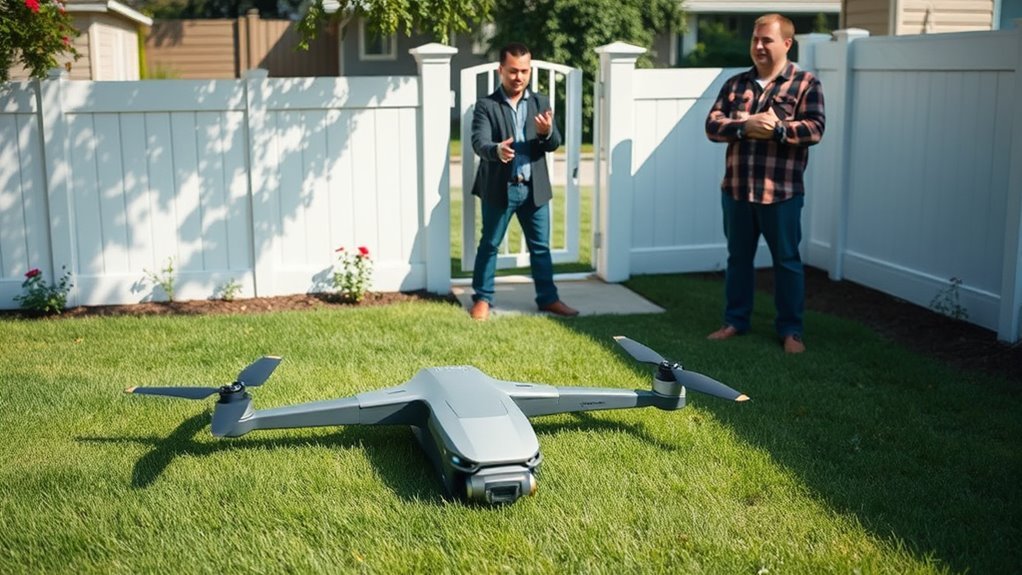
When a drone lands on someone else’s property, the next move can affect access, liability, and future claims. The owner’s response, the pilot’s conduct, and the evidence gathered all matter. A calm request may be enough in some cases, but not always. Damage, denied entry, and insurance questions can quickly complicate matters, raising the need for careful steps before the situation escalates.
What to Do After a Drone Crash on Private Property
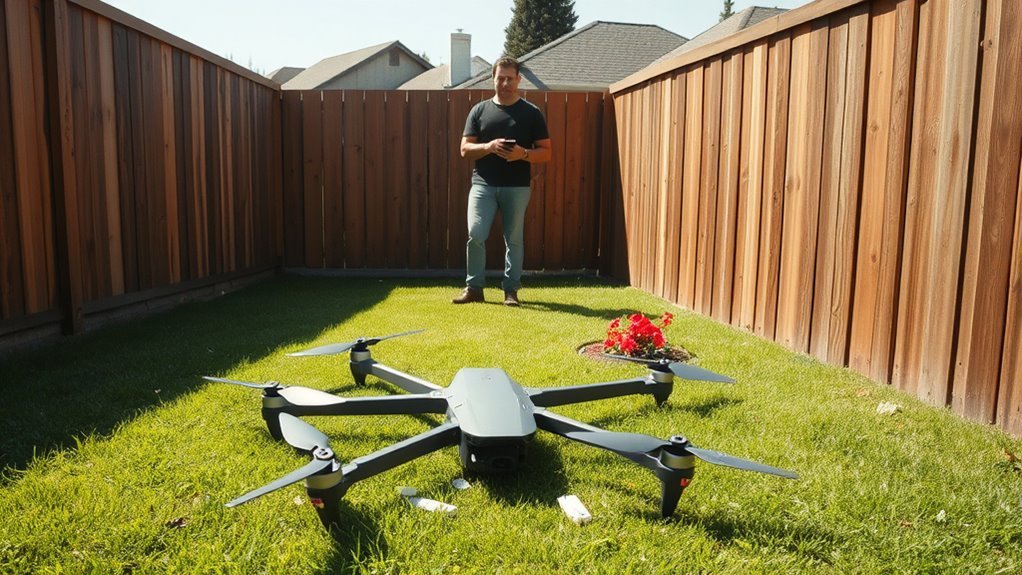
After a drone crash on private property, the first priority is to assess the scene for any injuries or visible damage before attempting recovery.
Drone operators should remain calm, avoid sudden entry, and determine whether the crash created immediate hazards. Once the area is deemed safe, the location should be documented with clear photographs and concise notes, including visible property damage and the drone’s position.
Remain calm, assess hazards, and document the crash site with clear photos and concise notes.
This record may later support liability insurance claims or legal review. If the drone appears to have caused harm, responsibility for repair costs may arise, especially when reckless operation is involved.
Respect for property rights remains essential, because freedom is strengthened by accountability rather than intrusion. Recovery should proceed only through lawful access and measured conduct.
If access is disputed or compensation is demanded, consultation with an attorney familiar with drone matters may clarify rights, obligations, and available options.
How to Ask the Owner for Permission
The owner should first be approached politely, with a clear explanation that the drone has landed on the property by accident.
A concise statement of the situation, together with an immediate request to retrieve the drone, helps establish responsibility and seriousness.
If needed, the operator may offer identification, contact information, and a prompt recovery plan to secure permission.
Ask Politely First
When a drone lands on private property, the owner should be approached calmly and informed of the situation without dispute. A concise request for permission to retrieve the drone is the proper first step.
The person should identify the drone by make and model, and state that its recovery will not cause harm, disturbance, or encroachment on the owner’s rights. If the timing is inconvenient, a request to wait for a suitable moment shows respect for the owner’s control over the property.
This restrained method preserves dignity on both sides and supports lawful, cooperative action. If permission is refused, the refusal must be accepted without argument. Other lawful channels, including local authorities, may then be considered as needed for retrieval.
Explain The Situation
Once permission to approach has been obtained, the operator should explain the situation plainly and respectfully.
The operator should identify the incident as a drone crash, describe when and where it occurred, and note any visible concerns relevant to safety or property damage. This disclosure reduces suspicion and clarifies liability without admitting fault unnecessarily.
The operator should state the purpose is to retrieve the drone, and that the retrieval can be completed in a controlled manner that avoids disruption.
If helpful, the operator may present identification or proof of ownership to confirm legitimacy. The tone should remain calm, concise, and deferential to the owner’s autonomy.
The operator should thank the owner for understanding, acknowledge the owner’s rights, and express readiness to follow any reasonable procedure required.
Offer To Retrieve
Approach should be polite and direct, with the operator asking for permission to retrieve the drone and explaining that prompt recovery may help avoid further complications or potential liability.
The operator should state clearly that the drone is needed and may contain sensitive data, which justifies swift return of the property.
To respect the owner’s autonomy, a convenient time can be proposed, minimizing disruption and preserving calm.
Contact information and identification should be offered without hesitation, reinforcing accountability and trust.
If the situation calls for added assurance, a witness may accompany the operator to confirm transparency.
Such a measured request advances liberty through consent, reduces friction, and helps both parties resolve the matter with order, dignity, and minimal liability.
When You Can Enter to Retrieve Your Drone
Entry onto another person’s land to recover a downed drone generally requires the property owner’s permission, because unauthorized access may expose the operator to trespass liability.
Entry onto another’s land to recover a downed drone generally requires the owner’s permission.
In any drone retrieval, the operator should contact the property owner promptly, explain the location, and request access in measured terms. If permission is granted, entry should be limited to what is necessary to recover the aircraft and any attached equipment.
The FAA’s visual line-of-sight requirement may matter when liability claims are later examined, especially if the flight path or crash sequence is disputed. Photographs of the drone’s position and the surrounding property should be taken as soon as practicable, preserving evidence without intrusion.
If access is denied and the drone contains valuable equipment, legal counsel should be consulted to evaluate lawful retrieval options. A calm, documented approach protects liberty, reduces conflict, and preserves rights while avoiding needless escalation.
Who’s Liable for the Crash?
Liability for a drone crash commonly begins with the pilot, whose negligence or loss of control may make them responsible for resulting harm.
Where the crash stems from a mechanical defect or software failure, responsibility may instead shift to the manufacturer.
Determining fault requires close examination of the drone’s condition, the operator’s conduct, and the circumstances of the incident.
Pilot Negligence
Pilot negligence is often the central issue in determining who bears responsibility for a drone crash. In many drone crashes, the operator’s conduct sets the legal frame for liability.
FAA rules require steady control, lawful altitude, and visual line of sight; departures from these duties can make the pilot answerable for damage or injury. When a crash follows careless maneuvering, poor training, or disregard of safety protocols, insurance coverage may be limited or contested.
Each incident is judged individually, with attention to the flight path, the pilot’s decisions, and the conditions immediately before impact. The inquiry is practical: whether the operator exercised the discipline expected of a competent pilot.
Where negligence is established, responsibility generally remains with the person at the controls, not with bystanders or property owners.
Manufacturer Defects
When a drone crash is traced to a manufacturer defect, responsibility may shift from the operator to the company that designed or assembled the aircraft. In such cases, liability can attach under product liability law if faulty batteries, poor software calibration, or structural weakness caused the failure.
Victims may seek repair costs, and if personal injury occurred, broader damages may follow. Operators should preserve logs, photos, and witness accounts showing malfunction before impact.
Drone insurance may assist, but coverage disputes often turn on proof of defect. A personal injury lawyer can evaluate claims and pursue accountability with precision.
- Relief when blame is proven
- Frustration over hidden defects
- Hope for fair compensation
- Resolve to claim freedom
What Damage You Could Be Liable For
A drone crash can expose the operator to a range of damages, beginning with physical harm to the property where the incident occurs. Such drone damages may include broken landscaping, damaged structures, ruined equipment, or impact to vehicles and fixtures. Liability can also extend to personal injury if the drone, or its fragments, strike a person. When the event interrupts utilities or local services, responsibility may include lost revenue and related losses. If privacy is invaded by the crash or by the drone’s recording functions, further claims may follow.
| Damage type | Example | Possible exposure |
|---|---|---|
| Property | Roofs, gardens, fences | Repair costs |
| Personal injury | Cuts, eye injury | Medical claims |
| Service disruption | Power outage | Lost revenue |
The amount can reach thousands of dollars. An insurance policy may later address payment issues, but the legal question is whether the operator caused compensable harm.
How Drone Insurance Can Cover the Damage
Drone insurance can help cover the financial fallout of an accident by providing liability protection for third-party claims arising from property damage caused during a crash on someone else’s property.
In a drone accident, such liability coverage may pay for repairs to structures, equipment, or other assets damaged by the aircraft, reducing the operator’s exposure to direct payment demands.
Many insurance companies also include protection for retrieval costs when a downed drone must be recovered from private land, which limits disruption and expense.
Policies may vary, however, and some claims require proof that coverage was in force at the time of loss. Operators who want freedom to fly with confidence should review limits, exclusions, and reporting rules before operating.
- Relief from sudden bills
- Protection from hostile claims
- Greater confidence in public spaces
- Less pressure to seek compensation
What Evidence to Collect Right Away
After insurance coverage is identified, the immediate priority is preserving evidence from the crash scene. Photographs should capture the drone, damaged property, surrounding area, and any marks or debris, because visual records strengthen liability analysis and support insurance claims. Witness names and contact information should be gathered promptly, since independent accounts can clarify events and reduce disputes over drone injuries or fault.
| Item | Purpose |
|---|---|
| Photos | Document damage and scene conditions |
| Witness contacts | Corroborate events and liability |
| Registration details | Identify the drone and owner |
| Weather notes | Record conditions affecting flight |
The drone’s registration number, serial data, and any identifying marks should be secured without alteration. Time, weather, and visibility at the moment of impact should also be noted with precision. If legal action is possible, the scene and all evidence should remain intact; tampering can weaken claims and limit recovery.
When to Call a Drone Accident Lawyer
When should legal help be brought in? It should be considered immediately if a drone injury occurs, if property damage is significant, or if the owner disputes retrieval or compensation. In such matters, a drone accident lawyer can assess liability, preserve rights, and reduce the risk of being held accountable beyond the facts.
- The weight of an injury claim can tighten every word spoken.
- A dispute over access can turn a simple recovery into a legal boundary.
- Missing contact information from witnesses can weaken a future defense.
- Silence, guided by counsel, can protect freedom from avoidable admissions.
Legal assistance is also advisable when the property owner threatens claims, demands payment, or alleges negligence. A prompt consultation helps determine what may be owed, what may be resisted, and how to communicate without surrendering position.
The goal is not conflict for its own sake, but lawful clarity and self-protection.
How to Avoid Crashing on Private Property Again
Preventing a repeat crash on private property begins with disciplined preparation before each flight. A careful pre-flight check should confirm battery health, propeller integrity, sensor function, and signal strength, because mechanical failure is a common cause of loss.
Operators should know local regulations and map property boundaries before takeoff, so they avoid flying over land where permission is absent. Flight-planning apps with live no-fly-zone data can reveal restricted airspace and help preserve lawful, independent operation.
Operators should know local regulations and map property boundaries before takeoff, avoiding unauthorized airspace and preserving lawful flight.
Practice in open, unobstructed areas sharpens control and exposes handling limits before a drone is near homes, yards, or fenced land. Weather, trees, wires, and changing terrain should be reviewed each time, then the plan updated accordingly.
Such habits reduce risk, protect the public, and allow the pilot to fly with confidence, discipline, and freedom.
Frequently Asked Questions
Can I Sue Someone for Flying a Drone Over My Property?
Yes. A property owner may sue when a drone overflies land and infringes property rights, especially where airspace laws, drone privacy, or nuisance claims are implicated.
Liability depends on altitude, interference, surveillance, and local statutes; some jurisdictions permit recovery for trespass, harassment, or damage.
The owner should document the flight, preserve evidence, and consult counsel familiar with drone regulation.
Remedies may include injunctions, damages, or statutory relief.
Is Flying a Drone Over Someone’s Property Considered Trespassing?
Yes, flying a drone over someone’s property can constitute trespassing. A coincidental overflight and a boundary line often expose the same truth: control of space matters.
Drone airspace regulations generally permit navigation in lawful altitudes, yet property rights implications and local trespass rules may still apply. This trespassing laws overview favors caution.
Neighbor consent agreements remain the clearest path toward lawful, respectful, and liberating flight.
What Is the 1:1 Rule for Drones?
The 1:1 rule for drones is a safety guideline stating that a drone should keep at least one foot of horizontal distance from objects for every foot of altitude.
It supports drone safety, helps comply with flight regulations, and reduces risk near structures and property rights.
In aerial photography, it encourages controlled, lawful operation, preserving freedom of movement while limiting collisions and liability in crowded environments.
What Is the Liability Coverage Required for Drone Insurance?
Liability coverage for drone insurance is typically recommended at a minimum of $1 million, with higher coverage limits often required for commercial operations.
Specific needs depend on drone regulations, operational risk, and industry exposure. Policies should be reviewed for policy exclusions, and the claims process should be understood before flight.
Standard homeowners or renters insurance usually does not apply, so dedicated liability protection is essential for financial autonomy and responsible operation.
Conclusion
In the end, the theory that a drone crash on private property is merely a retrieval issue proves false. It is usually a legal and financial issue as well. Prompt, respectful contact with the owner, careful evidence collection, and prompt insurance review can limit escalation. If access is refused or damage is significant, legal advice becomes prudent. The safest conclusion is simple: recovery should never proceed at the expense of permission, documentation, or liability awareness.