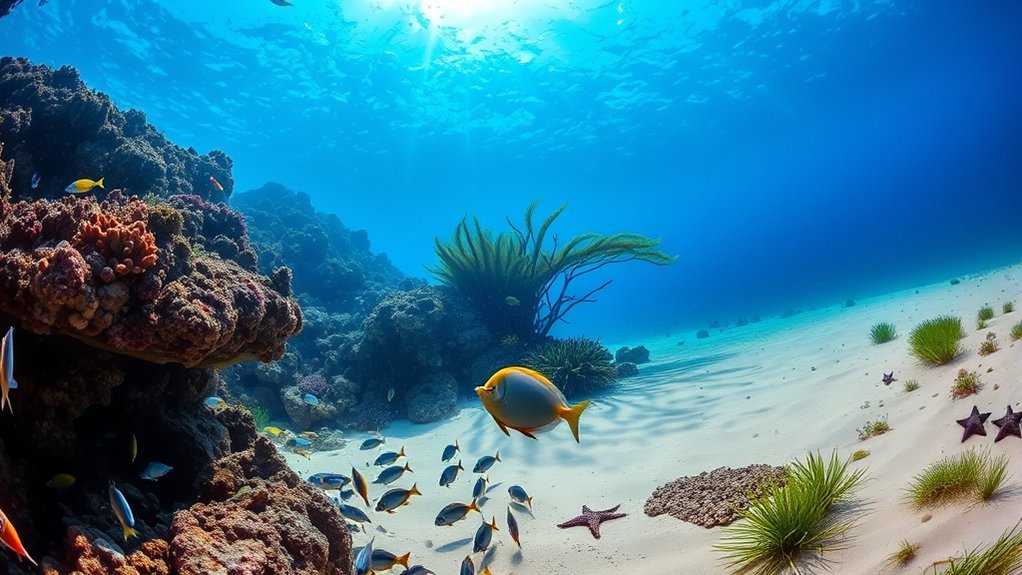
Understanding fish habitat types helps you see why fish thrive in some waters and struggle in others. Lakes, rivers, wetlands, nearshore areas, and riparian zones all provide different combinations of food, cover, oxygen, temperature, spawning space, and migration routes. When you can read those habitat features, you can better understand fish behavior, habitat quality, and the conservation work needed to protect healthy aquatic ecosystems.
Quick Answer
The main fish habitat types include lakes, creeks, streams, rivers, wetlands, nearshore zones, and riparian areas. Each habitat supports fish in a different way by providing food, oxygen, shelter, spawning areas, migration pathways, nursery cover, and water-quality protection.
Key Takeaways
- Fish habitats work together, so damage in one area can affect fish that move between lakes, rivers, wetlands, and spawning streams.
- High-quality habitats usually include clean water, suitable temperatures, oxygen, cover, natural flow, connected waterways, and stable banks.
- Wetlands, nearshore vegetation, and riparian buffers protect young fish by providing nursery areas, food, shade, and shelter from predators.
- Habitat typing helps managers classify pools, riffles, runs, glides, and other stream features, but the data has limits and should be used with field judgment.
Lakes
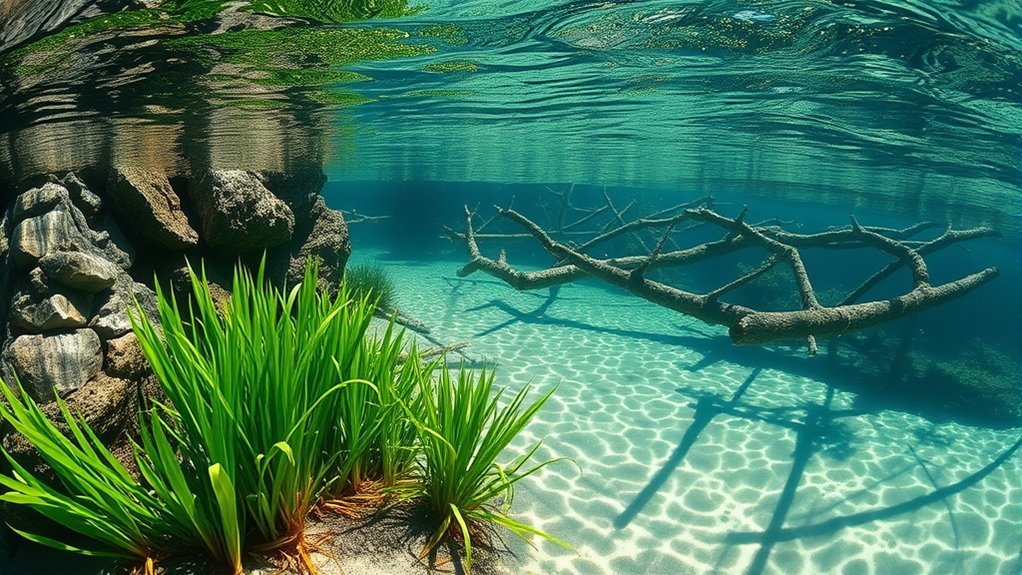
Lakes play an essential role in supporting diverse fish populations, as their size, depth, temperature, shoreline structure, vegetation, and water chemistry shape the habitat available for different species. A deep, cold lake can support coldwater fish such as lake trout and lake whitefish, while a shallower, warmer lake may favor species such as yellow perch, largemouth bass, bluegill, and northern pike.
The depth of a lake matters because it affects temperature layers, oxygen levels, and seasonal fish movement. In summer, many deeper lakes form a warm upper layer, a transition zone, and a colder bottom layer. Fish often move between these zones to find the right balance of temperature, oxygen, food, and safety. In winter, oxygen can become limited under ice, especially in shallow lakes with heavy plant decay.
Shoreline areas also influence lake habitat quality. Natural shorelines with native plants, woody cover, rocks, and gradual depth changes usually support more insects, baitfish, and juvenile sport fish than hardened shorelines with seawalls, bare lawns, or heavy development. Fish like white sucker and lake sturgeon may also depend on connected streams and rivers for spawning, which shows why lake habitats cannot be managed in isolation.
Note: A healthy lake is not just open water. The shoreline, shallow vegetation, connected streams, bottom substrate, and water quality all help determine which fish can survive and reproduce there.
Creeks, Streams, and Rivers
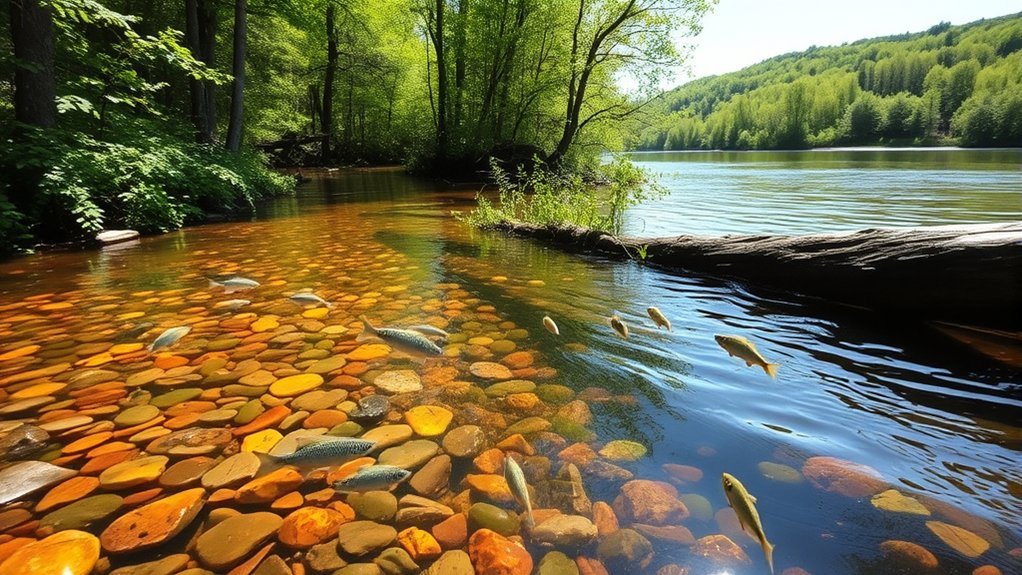
Moving from lakes to flowing water systems, creeks, streams, and rivers offer dynamic fish habitats shaped by current, slope, channel shape, sediment, woody debris, floodplains, and seasonal flow. These waters are constantly changing, which is why fish often use different parts of a stream or river for feeding, resting, spawning, and migration.
Common stream features include pools and riffles. Riffles are shallow, faster sections where water tumbles over gravel, cobble, or rock. They often hold more dissolved oxygen and aquatic insects, making them important feeding areas. Pools are deeper, slower areas that offer resting cover, temperature refuge, and protection from strong currents. Runs and glides sit between these extremes, creating smoother flow that many fish use while moving or feeding.
For instance, the North Fork Big River example shows how habitat availability can vary across a watershed, with pool percentages ranging from 19% in the East Branch to 41% in the North Fork. That kind of difference can affect which species dominate, how many juvenile fish survive, and whether adult fish have enough cover during low-flow or high-temperature periods.
However, stream-bank alteration, channel straightening, excessive sediment, culverts, dams, and removal of woody material can disrupt natural flow patterns. These changes may reduce habitat complexity, bury spawning gravel, disconnect floodplains, warm the water, and lower fish survival. Using habitat typing methods, including the system described by Bisson et al. (1981), helps biologists compare stream features and identify areas that need protection or restoration.
Wetlands
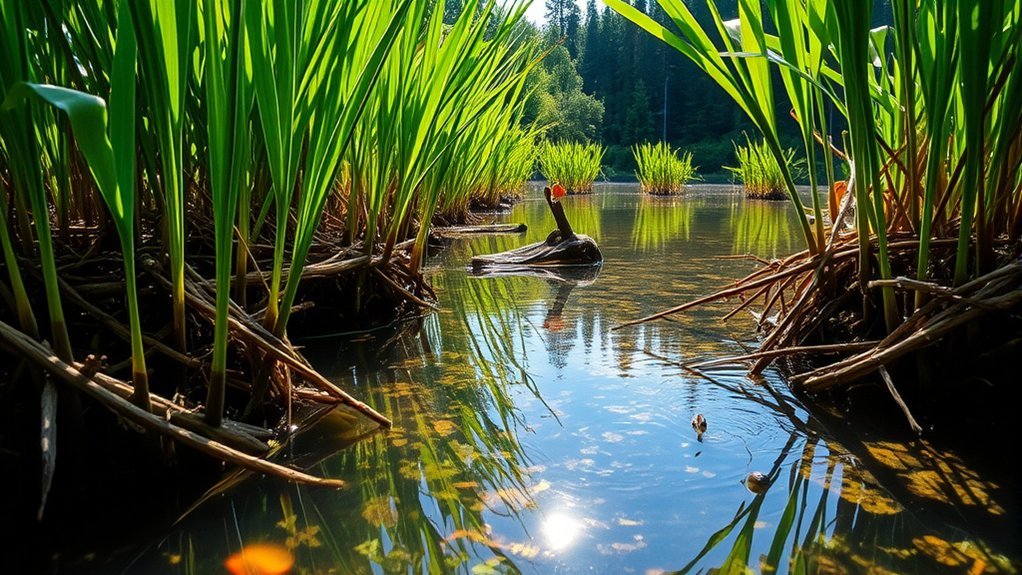
Wetlands are essential ecosystems that greatly enhance fish habitats by providing shelter, food, slow water, and nursery areas for young fish. Species such as bass, walleye, northern pike, sunfish, and yellow perch can benefit from wetland edges and connected marshes during early life stages.
These biologically productive areas support a wide range of organisms, including invertebrates, insects, amphibians, reptiles, birds, and aquatic plants. That food web supports fish directly and indirectly. Young fish often feed on small invertebrates in shallow wetland water, while adult fish may use wetland margins during spawning or seasonal high-water events.
Wetlands also help protect water quality. By slowing runoff, trapping sediment, filtering nutrients, and storing water, wetlands can reduce the amount of pollution and excess sediment that reaches lakes, streams, and rivers. This filtration is crucial because too much sediment can bury spawning gravel, while too many nutrients can fuel algae blooms and lower oxygen.
However, wetlands are vulnerable to human activities such as drainage, filling, shoreline development, road building, and altered water levels. When wetlands are disconnected from rivers or lakes, fish may lose access to important spawning and nursery habitat. Protecting wetlands is fundamental for sustaining fish populations and preserving aquatic biodiversity.
Warning: Filling, draining, or cutting off wetlands can damage fish habitat far beyond the wetland itself because connected lakes, streams, and rivers depend on wetland filtration, water storage, and nursery cover.
Nearshore Habitat
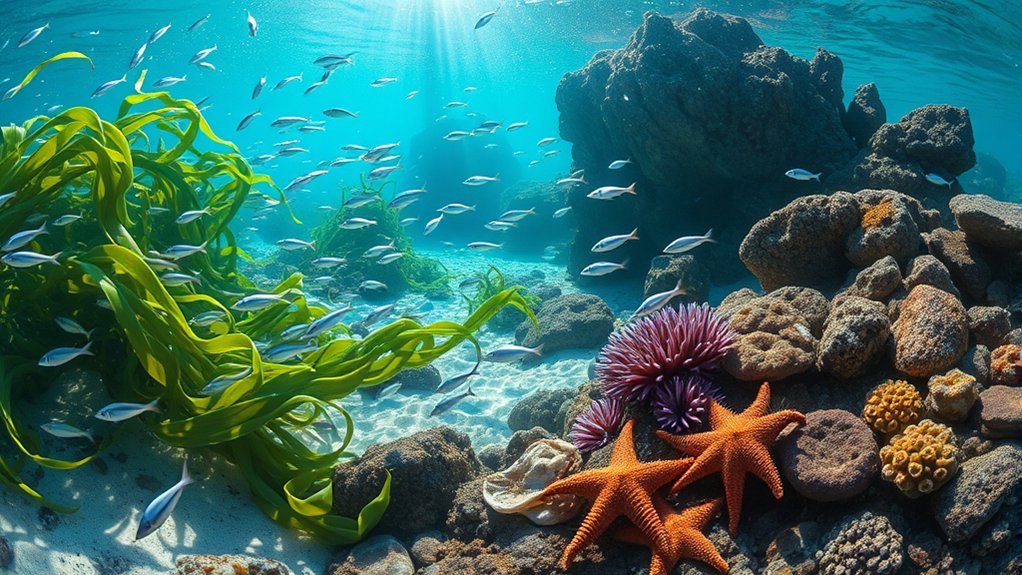
Nearshore habitats are the shallow areas along lake and river edges. These zones play an important role in supporting fish populations, mainly through aquatic vegetation, submerged wood, rocks, gravel, natural shoreline plants, and gradual depth changes. You’ll often find more feeding and spawning activity near these edges than in open water because nearshore areas provide food and cover in one place.
These habitats are especially important for young fish. Dense vegetation, branches, roots, and rocks help small fish avoid predators while they grow. However, habitat modifications, such as dock construction, shoreline clearing, dredging, seawalls, and heavy boat traffic, can disrupt these critical ecosystems and reduce fish survival.
Importance of Aquatic Vegetation
Aquatic vegetation plays an indispensable role in nearshore habitats, serving as a foundation for the ecological health of lakes and rivers. Native aquatic plants create essential spawning and feeding grounds for many fish species. They also support insects and other small organisms that fish eat.
Vegetation gives juvenile fish important hiding spots from predators, which can improve survival during the most vulnerable life stages. Plants also help stabilize sediment, reduce wave energy, absorb nutrients, and increase habitat diversity. When nearshore vegetation is removed for docks, beaches, or swimming areas, habitat quality can decline quickly.
Not all aquatic plants are equally beneficial, though. Native plant communities usually support balanced habitat, while invasive aquatic plants can form dense mats, crowd out native species, reduce access, and change oxygen conditions. The goal is not to remove all plants. The goal is to protect healthy native vegetation while managing invasive growth responsibly.
Predator Avoidance Strategies
In the dynamic interplay of aquatic ecosystems, predator avoidance strategies are essential for fish survival, particularly in nearshore habitats enriched by aquatic vegetation. These environments provide vital hiding spots for various fish species, enabling them to evade predators more effectively.
Key strategies include:
- Utilizing dense vegetation: Fish often hide among plants, gaining camouflage against larger predators.
- Selecting shallow waters: The edges of lakes and rivers can serve as safe spawning and feeding grounds, offering both refuge and abundant food.
- Exploiting structural complexity: Features like rocks, roots, stumps, and submerged logs improve safety, allowing young fish such as bass, perch, and walleye to grow with reduced predation risk.
- Moving at low-light periods: Some fish feed or shift locations at dawn, dusk, or night, when predators may have less visual advantage.
Understanding these strategies highlights the importance of preserving nearshore habitats for long-term fish sustainability.
Habitat Modification Impacts
While human activities often aim to enhance recreation, they can inadvertently disrupt the delicate balance of nearshore habitats. Modifications like docks, swimming areas, dredged channels, seawalls, and cleared shorelines can harm these ecosystems by disturbing aquatic vegetation, changing wave energy, and altering water flow.
This disruption affects essential hiding spots for various fish species, such as young bass and perch, jeopardizing their survival during critical life stages. Nearshore habitats often serve as nurseries, providing the conditions fish need for spawning and feeding. Maintaining the integrity of these areas is crucial for sustaining healthy fish populations.
Pro Tip: The best nearshore habitat usually looks a little messy. Native plants, fallen branches, rocks, and uneven edges create the cover and food sources that young fish need.
Riparian Habitat
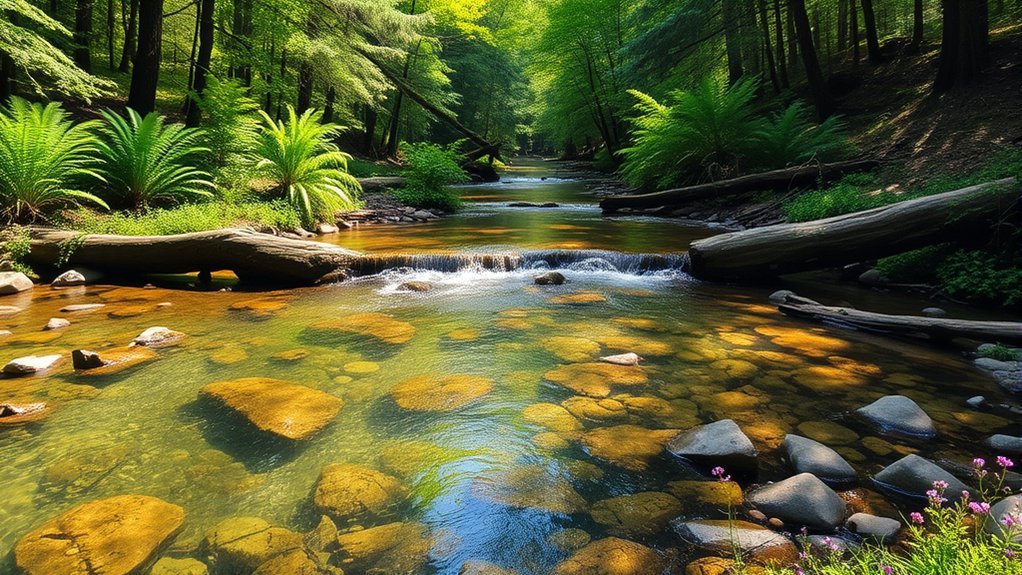
Riparian zones are the land areas beside streams, rivers, wetlands, and lakes. These areas are critical for maintaining the health of aquatic ecosystems because they stabilize banks, shade the water, filter pollutants from runoff, and provide organic matter that supports aquatic food webs.
You’ll find that riparian areas not only absorb excess rainwater and reduce flooding risk, but also improve habitat quality for fish, amphibians, birds, insects, and mammals. A stream with healthy riparian vegetation often has cooler water, more stable banks, more woody cover, and better food resources than a stream with bare, eroding banks.
Importance of Riparian Zones
Healthy riparian zones are essential for maintaining the ecological integrity of aquatic ecosystems. These areas, rich in trees, shrubs, grasses, and native groundcover, provide several important benefits:
- Erosion control: The root networks of riparian habitats stabilize banks, reduce erosion, and help maintain shoreline integrity.
- Water quality improvement: Riparian vegetation filters surface water runoff, trapping sediment, nutrients, and other pollutants before they enter aquatic environments.
- Flood mitigation: Riparian zones absorb rainwater, slow runoff, and help maintain more natural water levels in adjacent streams and rivers.
- Temperature regulation: Shade from trees and shrubs can help keep water cooler, which is especially important for temperature-sensitive fish.
- Food-web support: Leaves, insects, and woody material from riparian areas feed aquatic organisms and create cover for fish.
Benefits to Aquatic Ecosystems
The presence of riparian habitats greatly enhances aquatic ecosystems by providing essential resources and stabilizing environmental conditions. These areas, rich in trees, shrubs, and grasses, stabilize banks with their root systems and filter surface water runoff, improving water quality for fish and other aquatic life.
By absorbing rainwater, riparian zones reduce surface flooding and mitigate bank erosion, maintaining ecological balance. They also serve as significant habitats, offering food and shelter to diverse species, including fish, amphibians, birds, insects, and mammals. The shade from riparian vegetation regulates water temperatures, creating better conditions for fish spawning, growth, and survival.
Overall, healthy riparian habitats contribute critical nutrients and organic matter, supporting the productivity and sustainability of aquatic ecosystems.
Habitat Typing Overview and Classification Systems
Understanding fish habitat typing is crucial for effective ecological assessments and management strategies. Habitat typing gives biologists a consistent way to describe stream features, compare sites, and identify limiting factors that may reduce fish production.
The hierarchical habitat classification system established by Bisson et al. (1981) categorizes habitats into three levels:
- Level 1: Pools and riffles
- Level 2: Pools, riffles, and runs
- Level 3: More than twenty specific habitat types
This structured approach allows you to stratify biological and physical attributes of streams, enhancing your understanding of fish habitats considerably. As demonstrated by Hankin and Reeves (1984), employing habitat typing information can improve the precision of fish population surveys, making it an essential tool in habitat assessment.
The standardized naming system introduced by Bisson et al. also improves habitat classification consistency across studies. Chen (1992) reinforced the importance of habitat typing in ecological assessments, showing its usefulness in habitat modeling and cumulative watershed effects analysis.
Still, habitat typing should not be treated as a complete picture by itself. It works best when combined with water-quality data, fish surveys, temperature monitoring, flow information, watershed history, and field observations.
Habitat Types and Characteristics
Fish habitats can be categorized into various types, each with unique characteristics that directly influence the species that thrive within them. Riffles, characterized by swift water flow, provide essential food and cover for young steelhead, often boosting growth and survival where water quality and substrate remain suitable.
In contrast, glides are smoother, slower-moving water sections. A high percentage of glides can sometimes signal watershed impacts that have reduced available pool habitats for fish. Backwater pools, formed by natural structures like logs, boulders, side channels, or floodplain features, are important for coho salmon rearing because they provide sheltered conditions with lower current.
Plunge pools, created by cascading water below drops, rocks, or woody debris, serve as critical hiding spots for both juvenile and adult fish. They can provide depth, cooler water, and protection from predators. Runs, side channels, undercut banks, root wads, gravel bars, and floodplain sloughs also add habitat variety.
The variability of habitat availability is illustrated in the North Fork Big River, where pool percentages differ remarkably, with the East Branch exhibiting 19% pools compared to the North Fork Big’s 41%. Understanding these habitat types is essential for effective conservation, restoration, and monitoring efforts.
The strongest fish habitats usually combine clean water, natural cover, connected movement routes, suitable temperatures, and enough habitat variety for fish to feed, spawn, hide, and grow.
Indicators of Stream Habitat Quality
While evaluating stream habitat quality, several indicators provide essential insights into ecosystem health and its capacity to support fish populations. These indicators can greatly impact fish survival and reproduction, especially for species like salmonids.
Here are three critical factors to examine:
- Pool characteristics: High-quality streams often include a strong pool component. In some salmonid assessments, streams with more than 30% pools and deeper pool habitat may provide better cover and summer refuge.
- Embeddedness: Ideal spawning habitats need clean, accessible gravel. Heavy embeddedness can fill spaces between gravel with fine sediment, reducing oxygen flow to eggs.
- Canopy cover: Adequate canopy cover helps regulate temperature, supports insect input, and protects streambanks. Excessive open canopy can increase warming in small streams.
Other important indicators include dissolved oxygen, water temperature, turbidity, flow stability, channel complexity, bank condition, large wood, substrate diversity, fish passage, and floodplain connection. No single indicator tells the full story. A stream with good pools but poor water quality may still fail to support healthy fish populations.
Limitations of Habitat Typing and Data Analysis
Although habitat typing has evolved considerably since early assessments, its limitations must be recognized when considering its application in ecological research. One major issue is variability in survey crew interpretations, which can affect the reliability of data over time.
Habitat typing can identify limiting factors for species like salmon and steelhead, but it may be less effective for tracking subtle changes in habitat conditions, especially across different stream sizes or survey periods. The generated data offers useful coarse indicators, but it may not capture every nuance of habitat diversity, fish behavior, water chemistry, or seasonal habitat use.
Additionally, mapping techniques provide spatial registration for GIS analysis, yet some agencies may prioritize restoration work over thorough public data sharing. The omission of memo fields in databases, sometimes intended to protect landowner trust, can further constrain complete data analysis. Recognizing these limitations is essential for effective habitat management and research application.
Note: Habitat typing is a decision-support tool, not a final verdict. Strong assessments combine habitat classification with fish counts, water-quality testing, flow records, temperature data, and local field knowledge.
How Fish Use Different Habitats Through Their Life Cycle
Fish rarely use one habitat type for their entire life. Many species shift locations as they grow, spawn, feed, avoid predators, or respond to seasonal temperature changes. A young fish may start life in shallow wetland vegetation, move to nearshore cover, and later use deeper lake water or river pools as an adult.
Spawning habitat is especially important. Some fish need clean gravel, while others attach eggs to vegetation, build nests, or scatter eggs over rocky or sandy bottoms. Nursery habitat must protect young fish from strong current, predators, poor oxygen, and sudden temperature swings. Adult habitat often needs more space, deeper cover, and reliable food sources.
Connectivity ties all of these stages together. Culverts, dams, road crossings, low-water barriers, and disconnected wetlands can prevent fish from reaching the habitats they need. Protecting fish habitat therefore means protecting both the habitat types and the movement routes between them.
Common Threats to Fish Habitats
Fish habitats face pressure from many land and water uses. Some damage happens quickly, such as wetland filling or stream channelization. Other damage builds slowly through sedimentation, nutrient runoff, shoreline hardening, invasive species, and warming water temperatures.
Common threats include:
- Sediment runoff: Fine sediment can bury spawning gravel, cloud the water, and reduce feeding success.
- Nutrient pollution: Excess nitrogen and phosphorus can fuel algae growth and reduce oxygen.
- Shoreline hardening: Seawalls, riprap, and cleared banks can reduce natural cover and nursery habitat.
- Barriers to movement: Dams, perched culverts, and poorly designed crossings can block spawning migrations.
- Loss of wetlands: Drainage and filling reduce nursery habitat, flood storage, and water filtration.
- Invasive species: Invasive plants, fish, and invertebrates can alter food webs and habitat structure.
- Climate stress: Warmer water, altered streamflow, and stronger storms can change habitat availability.
How to Protect and Improve Fish Habitat
You can protect fish habitat by focusing on natural structure, clean water, and connected waterways. In lakes, that may mean preserving native shoreline vegetation, leaving some fallen trees in place where safe and legal, and reducing fertilizer runoff. In streams, it may mean restoring riparian buffers, replacing fish-blocking culverts, reducing erosion, and reconnecting floodplains.
Effective habitat improvement often includes:
- Protecting native vegetation along shorelines, wetlands, and streambanks.
- Reducing runoff from lawns, farms, roads, and construction areas.
- Maintaining natural flow so streams can form pools, riffles, bends, and floodplain connections.
- Keeping waterways connected so fish can reach spawning, nursery, feeding, and refuge habitats.
- Using habitat structures carefully and only where they match local ecology and regulations.
- Monitoring results with fish surveys, temperature records, and habitat assessments.
Habitat restoration works best when it treats the cause of the problem, not just the symptom. Adding logs to a stream may help in some cases, but it will not solve a watershed-wide sediment problem if eroding banks, road runoff, or poor land management continue upstream.
Frequently Asked Questions
What are the different types of fish habitats?
The main fish habitat types include lakes, ponds, creeks, streams, rivers, wetlands, nearshore areas, riparian zones, floodplains, estuaries, and offshore waters. Each habitat provides different combinations of food, oxygen, shelter, spawning space, temperature refuge, and migration routes.
What is the meaning of EFH?
Essential Fish Habitat, or EFH, means the waters and substrate fish need for spawning, breeding, feeding, and growth to maturity. In simple terms, EFH identifies the habitat features that support fish populations through important life stages.
How do you create a fish habitat?
To create or improve fish habitat, protect native vegetation, maintain clean water, add natural complexity where appropriate, preserve spawning areas, keep waterways connected, and reduce erosion and runoff. In many areas, permits may be required before adding structures, changing shorelines, or working in streams or wetlands.
What is the best environment for fish?
The best environment for fish depends on the species, but healthy fish habitat usually includes clean water, suitable oxygen, the right temperature range, natural cover, food, spawning areas, and access to different habitats throughout the year.
Why are wetlands important for fish?
Wetlands are important because they provide nursery habitat, shelter, food, nutrient cycling, water storage, and natural filtration. Many young fish use shallow wetland edges to avoid predators and feed before moving into deeper or faster water.
What makes stream habitat high quality?
High-quality stream habitat often includes clean gravel, stable banks, natural bends, pools, riffles, woody cover, cool water, adequate dissolved oxygen, connected floodplains, and healthy riparian vegetation. Good habitat also allows fish to move between feeding, spawning, and refuge areas.
Conclusion
In understanding fish habitats, envision a vibrant tapestry woven from the tranquil depths of lakes to the rushing currents of streams, the sheltered edges of wetlands, and the shaded banks of riparian zones. Each habitat plays an essential role in sustaining aquatic life and maintaining ecosystem balance.
By recognizing the indicators of habitat quality, the value of connected waterways, and the limitations of habitat data, you can better understand what fish need to survive. Protecting these environments means protecting clean water, natural cover, spawning areas, migration routes, and the food webs that support healthy fish populations for future generations.
Sources
- NOAA Fisheries: Essential Fish Habitat — supports the definition and importance of EFH.
- U.S. Environmental Protection Agency: Why Are Wetlands Important? — supports wetland water-quality, flood-storage, and habitat benefits.
- U.S. Environmental Protection Agency: Urban Runoff and Low Impact Development — supports runoff, sediment, nutrient, and water-quality concerns.
- USDA National Agroforestry Center: Riparian Forest Buffers — supports riparian buffer benefits for water quality, shade, and bank stability.
- U.S. Geological Survey: Effects of Urbanization on Stream Ecosystems — supports the impacts of land use, altered channels, and watershed change on stream habitat.