Cloudy days can be some of the best times to catch bass because low light often makes fish feel safer, move shallower, and feed more actively. Instead of waiting for a bright, calm afternoon, you can use overcast conditions to fish faster, cover more water, and target bass that are roaming away from heavy cover. The key is choosing visible lures, working productive shallow areas, and adjusting your retrieve until bass show you what they want.
Quick Answer
For cloudy day bass fishing, use fast-moving lures such as spinnerbaits, chatterbaits, crankbaits, buzzbaits, and topwater plugs. Focus on shallow flats, points, grass edges, docks, laydowns, and rocky banks. Choose bright colors for visibility, or darker colors when the water is stained and you need stronger contrast.
Key Takeaways
- Cloud cover usually reduces light penetration, so bass often roam shallower and feed with more confidence.
- Spinnerbaits, chatterbaits, crankbaits, buzzbaits, walking baits, and poppers are strong choices when bass are active.
- Bright colors help in low light, while black, blue, dark red, and purple can create better contrast in stained water.
- Target shallow cover, points, humps, grass lines, docks, rocky banks, and spawning areas when conditions fit.
- Use safe weather judgment. Cloudy is good, but lightning, high wind, or fast-moving storms are reasons to leave the water.
At a Glance
| Best Conditions | Overcast skies, light wind, stable weather, stained water, or low-light periods before a front |
| Best Lures | Spinnerbaits, chatterbaits, crankbaits, jerkbaits, buzzbaits, poppers, walking baits, and frogs |
| Top Areas | Shallow flats, grass edges, points, humps, riprap, docks, laydowns, and creek mouths |
| Main Strategy | Cover water quickly, then slow down once you find a productive depth, bank type, or baitfish pattern |
Benefits of Overcast Conditions for Bass Fishing
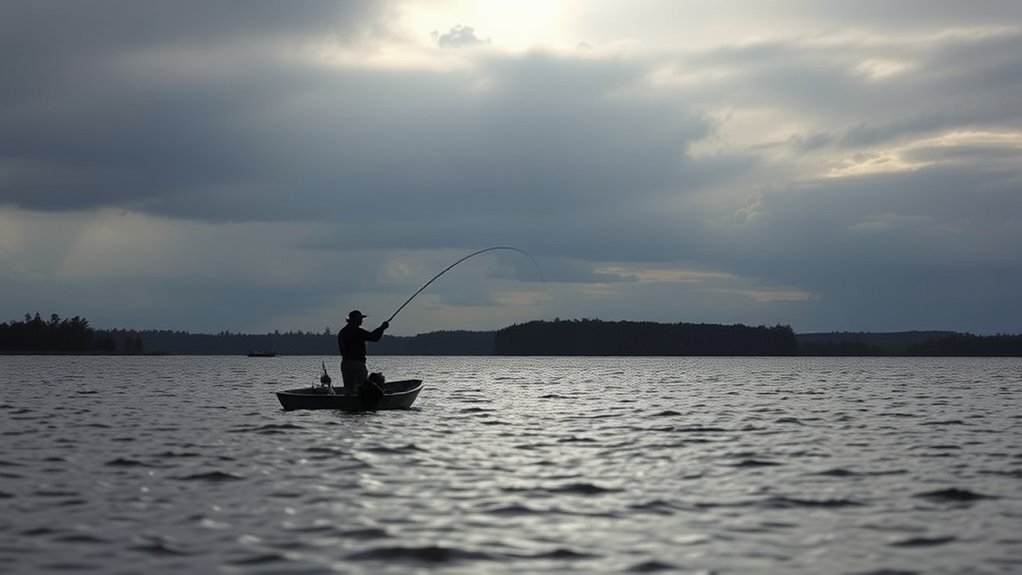
When you head out bass fishing on cloudy days, you’ll often find that overcast conditions offer clear advantages. Cloud cover reduces harsh sunlight, which can give bass a stronger sense of security. Because of that, they may roam farther from cover and forage actively in shallower water.
Cooler light conditions can also stretch the bite window. On sunny days, bass often tuck tighter to shade, grass, brush, docks, or deeper cover. On cloudy days, they may stay active longer and chase bait across flats, points, and bank transitions. That gives you more chances to intercept moving fish.
You’ll often find bass targeting feeding opportunities in shallow areas, which can make them easier to reach compared with bright days when they may retreat to deeper cover. The reduced visibility also encourages the use of bright and noticeable lure colors like yellow, chartreuse, white, and dark red. In stained water, black, blue, purple, and dark red can create a strong silhouette that bass can track.
Cloudy conditions also support faster retrieves and power fishing techniques. When bass are roaming and hunting, you can cover more water with moving baits until you find the most active stretch. Overall, overcast conditions create a strong setup for successful bass fishing, especially when you match your lure speed, color, and target area to the water clarity.
Note: Cloudy weather does not guarantee an automatic bite. Water temperature, season, fishing pressure, recent fronts, water clarity, and available forage still matter. Use cloud cover as an advantage, then let bass activity guide your next move.
Ideal Bait Selection for Cloudy Days
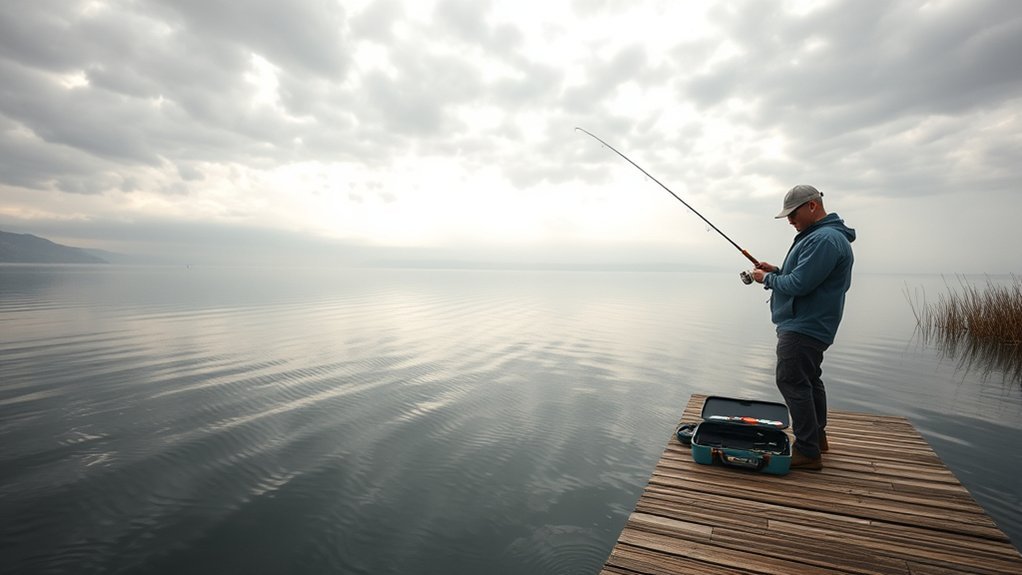
When fishing on cloudy days, you’ll want to focus on fast-moving lures like spinnerbaits and crankbaits to take advantage of the bass’s increased aggression. Bright colors, such as chartreuse or white, can boost visibility and draw more strikes in low light. You should also consider topwater options for exciting surface action, especially around shallow cover and baitfish activity.
Fast-Moving Lure Options
On cloudy days, using fast-moving lures can greatly boost your chances of landing bass. These lures trigger aggressive strikes as bass actively forage in shallower waters. They also help you find fish faster because you can cover points, banks, grass edges, and flats without spending too much time in dead water.
Consider incorporating the following options into your tackle box:
- Spinnerbaits: Perfect for creating vibration, flash, and profile around grass, wood, docks, and stained water.
- Chatterbaits: Effective in murky water, offering a thumping action that bass can track even when visibility drops.
- Squarebill crankbaits: Great for covering large areas quickly and deflecting off wood, rock, and shallow cover.
- Topwater lures: Such as frogs, poppers, buzzbaits, and walking baits, capitalize on low light to entice fish near the surface.
- Bright color patterns: Use chartreuse, white, yellow, or bold shad patterns to enhance visibility in overcast conditions.
Spinnerbaits for Cloudy Conditions
Fast-moving lures like spinnerbaits shine particularly bright on cloudy days, offering a dynamic approach to targeting bass. Their vibrations and flash attract fish even in low light. When fishing in overcast conditions, consider using darker colors like black or blue in stained water for enhanced contrast. In clearer water, white, shad, chartreuse-white, and translucent baitfish patterns can work well.
A steady retrieve with pauses can trigger reaction strikes from bass lurking in shallow water. You can also slow-roll a spinnerbait near the bottom, wake it just under the surface, or bump it into cover to create sudden direction changes. Spinnerbaits are versatile, easily covering various depths and speeds to locate active fish.
| Technique | Description |
|---|---|
| Retrieve Speed | Use a steady pace with occasional pauses or quick bursts |
| Color Selection | Opt for white, chartreuse, black, blue, or shad tones based on water clarity |
| Cover Types | Fish around submerged vegetation, docks, laydowns, rocks, and riprap |
| Depth Adjustment | Raise or lower your rod tip to quickly find the active depth zone |
Bright Colors to Attract
Bright colors are your secret weapon for attracting bass on cloudy days. When fishing in cloudy conditions, visibility becomes essential. Opt for lures that stand out, as they enhance your chances of enticing bass in low light.
Here are some effective options:
- Yellow and white for high visibility
- Chartreuse for its bright appeal
- Dark red to mimic distressed prey and create contrast
- Purple for a unique profile in stained water
- Non-flash finishes when glare is low and you need a solid silhouette
Use spinnerbaits and topwater lures to target aggressive bass in shallower waters. Reaction baits like crankbaits and rattletraps in vibrant hues work well for covering more ground. Experimenting with various bright-colored lures will help you pinpoint the most effective options for those ever-changing light conditions.
Techniques for Effective Presentations

When fishing on cloudy days, you should focus on fast retrieve strategies to cover more water and provoke aggressive bites. Using brightly colored lures can enhance visibility in the low light, making them more noticeable to bass. Still, you should test different speeds, depths, and pauses because bass may change their mood throughout the day.
Fast Retrieve Strategies
On cloudy days, employing faster retrieves can greatly enhance your chances of catching bass. When fishing in overcast weather, consider these fast retrieve strategies to effectively target those aggressive fish:
- Use horizontal baits like crankbaits and spinnerbaits for quick coverage of water.
- Increase your trolling motor speed when bass are roaming and chasing bait.
- Opt for search baits such as rattletraps and chatterbaits to mimic fast-moving prey.
- Maintain a steady retrieve but incorporate occasional pauses to simulate injured baitfish.
- Experiment with varying speeds during retrieval, as bass may respond differently to changes in lure action.
These techniques can help you maximize your opportunities and land more bass on cloudy days. If bass swipe at the lure without committing, slow your retrieve slightly, add a trailer hook where appropriate, or switch to a bait with a tighter action.
Lure Color Choices
Choosing the right lure color is essential for successful bass fishing on cloudy days. In overcast conditions, brighter colors like yellow, white, and chartreuse stand out, making them effective choices. Non-flash finishes can further enhance visibility, while darker hues such as dark red and purple create a strong contrast in murky waters. Bright patterns can provoke aggressive strikes, especially in shallower areas.
Experimenting with various lure color choices will help you discover what entices bass in your specific fishing environment. Start with one bright bait and one dark bait. Let the fish tell you whether they want flash, contrast, vibration, or a more natural baitfish profile.
| Color Type | Effectiveness |
|---|---|
| Bright Colors | High visibility in low light and stained water |
| Dark Colors | Strong contrast in murky water and heavy cloud cover |
| Patterns | Stimulates aggression and helps imitate baitfish or distressed prey |
Targeting Shallow Waters During Overcast Weather

Fishing in shallow waters during overcast weather can be incredibly rewarding, as bass feel more secure and actively hunt for food near the surface. Cloud cover can reduce the sharp shadows that often push fish tighter to cover. That gives you a better chance to catch bass moving across open pockets, shallow flats, and bank transitions.
To maximize your success in these cloudy conditions, focus on specific areas and techniques:
- Target major and secondary points, humps, and underwater structures.
- Use faster retrieves with horizontal baits to cover more water.
- Opt for spinnerbaits and search baits like crankbaits and rattletraps.
- Fish with confidence; bass are more likely to roam in low light.
- Stay focused on a few effective baits rather than switching constantly.
Start shallow, but do not ignore the first drop near shallow feeding areas. Bass often move up to feed and slide back to nearby depth when pressure, boat traffic, or changing weather slows the bite. If you get one strike, repeat that depth and cover type before running to a new area.
Utilizing Topwater Lures for Increased Action

When the clouds roll in, utilizing topwater lures can greatly enhance your chances of catching bass. The reduced light conditions on cloudy days encourage bass to roam closer to the surface, increasing their aggressiveness toward surface presentations. Bright colors like yellow, white, and chartreuse stand out in overcast conditions, making your topwater lures more visible and attractive to bass.
The cooler temperatures often lead to a consistent topwater bite throughout the day, so don’t hesitate to fish aggressively. Using lures like poppers or walking baits can create enticing sounds and surface disturbances that mimic distressed baitfish, triggering reaction strikes. Frogs also work well around mats, pads, grass, and shallow cover when bass are positioned high in the water column.
Experiment with different retrieval speeds and patterns. Bass may prefer faster retrieves during cloudy days when they’re actively hunting. If they miss the bait, pause for a second, then continue. That small pause can make the lure look injured and give the fish another chance to strike. By adapting your approach with topwater lures, you can greatly boost your success on these overcast fishing outings.
Pro Tip: If bass are blowing up behind a topwater bait without getting hooked, switch to a smaller profile, slow the retrieve, or follow up with a soft plastic stick bait near the missed strike.
Adjusting Fishing Strategies for Spawning Bass
Although spawning season typically keeps bass close to bedding areas, cloudy days can enhance your chances of catching them as they feel more secure and are likely to venture closer to their spawning sites. During the spawn, bass can be protective, cautious, or aggressive depending on water temperature, fishing pressure, and the stage of the spawn.
To maximize your success while bass fishing, consider these fishing tips:
- Use faster-moving lures like spinnerbaits and crankbaits to trigger aggressive responses near shallow flats.
- Focus on known spawning areas, such as gravel beds, protected pockets, and shallow flats.
- Target submerged vegetation where bass may seek cover before or after spawning.
- Opt for bright-colored lures to enhance visibility in lower light conditions.
- Monitor water temperature, as warmer areas can attract spawning bass.
If moving baits do not work around spawning areas, slow down with a soft plastic creature bait, tube, stick bait, or jig. Cast past the target, bring the bait into the strike zone, and avoid splashing directly on top of shallow fish. Cloudy weather can make bass roam, but spawning fish may still need a precise presentation.
Engaging With the Fishing Community for Insights
Engaging with the fishing community can greatly enhance your knowledge and skills, especially on cloudy days when conditions change. By connecting with fellow anglers, you can share personal experiences and discover new fishing techniques tailored for overcast conditions. Online forums and social media platforms are excellent resources where seasoned anglers discuss effective bait selection and prime fishing locations during cloudy weather.
Participating in local fishing clubs or community events opens up networking opportunities, allowing you to exchange valuable tips for fishing regarding seasonal patterns and ideal times to hit the water. Many communities also provide resource links and guides that outline best practices for targeting species like bass in varying weather.
Don’t hesitate to contribute to discussions and seek advice from experienced anglers; this interaction can boost your confidence and knowledge, ultimately improving your success rates on cloudy days. Local reports can also help you learn whether bass are chasing shad, feeding around bluegill beds, holding near grass, or relating to offshore structure. Happy fishing!
Essential Gear for Cloudy Day Fishing
To maximize your fishing success on cloudy days, having the right gear is essential. The unique weather conditions can alter fish behavior, so you’ll want to be prepared. A simple, focused setup helps you fish confidently without wasting time changing baits every few casts.
Here are some must-have items for your tackle box:
- Bright-colored lures such as yellow, chartreuse, white, and dark red for visibility in low-light scenarios.
- Dark-colored lures such as black, blue, purple, and dark red for stained water and stronger silhouettes.
- Fast-moving baits like spinnerbaits, crankbaits, and rattletraps to cover more water and provoke aggressive strikes.
- Topwater lures to take advantage of the overcast skies, especially around shallow flats and structures.
- Reaction baits such as jerkbaits, chatterbaits, and buzzbaits to adapt quickly to changing conditions.
- A reliable trolling motor to enhance your mobility and allow for faster retrieves, improving your chances of locating fish.
- Polarized sunglasses to reduce glare and help you see grass edges, shallow cover, and baitfish movement.
- Rain gear and a dry storage bag if the overcast weather turns into steady rain.
With this gear, you’ll be ready to tackle the challenges of cloudy day fishing and increase your success on the water.
Warning: Never treat stormy weather the same as safe cloud cover. If you hear thunder, see lightning, face dangerous wind, or notice fast-moving storms, leave the water and seek shelter.
Common Mistakes to Avoid on Cloudy Days
Cloud cover can help bass fishing, but a few common mistakes can cost you bites. The first mistake is fishing too slowly right away. If bass are active and roaming, you need to cover water until you find them. Start with moving baits, then slow down once you identify the most productive area.
The second mistake is ignoring water clarity. A bright chartreuse lure may work well in stained water, but it can look too bold in clear water. In clearer conditions, try natural shad, bluegill, or translucent patterns. In muddy water, use vibration, sound, and stronger contrast.
The third mistake is leaving shallow water too soon. Bass may use shallow banks longer on cloudy days, especially near grass, rock, docks, and baitfish. Before moving deep, fish the first break, nearby cover, and any visible current seams or wind-blown banks.
Frequently Asked Questions
What is the best bait to use on a cloudy day?
On a cloudy day, use spinnerbaits, chatterbaits, crankbaits, buzzbaits, walking baits, and poppers when bass are active. Bright colors like chartreuse and white improve visibility, while dark colors like black, blue, purple, and dark red create contrast in stained water.
Are cloudy days good days to fish?
Yes, cloudy days can be very good for bass fishing. The lower light often makes bass feel safer and more willing to feed in shallow water. Focus on points, flats, grass edges, docks, laydowns, and other cover where baitfish are active.
Do fish bite better on a cloudy day?
Fish often bite better on cloudy days because reduced light can encourage more aggressive feeding. Bass may move shallower, roam farther from cover, and chase bait more confidently. Still, the bite depends on season, water temperature, water clarity, pressure, and recent weather changes.
What is the 80/20 rule in fishing?
The 80/20 rule in fishing means you’ll usually find most fish in a small percentage of the water. Instead of fishing random banks, focus on high-percentage spots like points, drop-offs, grass edges, docks, laydowns, current breaks, rock transitions, and baitfish areas.
Should I use topwater lures all day when it is cloudy?
You can use topwater lures longer on cloudy days than you might on bright days, but you should still watch the fish. If bass miss the bait, follow but do not strike, or stop showing surface activity, switch to a spinnerbait, chatterbait, crankbait, jerkbait, or soft plastic.
What color lure works best for bass in cloudy weather?
Chartreuse, white, yellow, and bright shad patterns work well when you need visibility. Black, blue, purple, and dark red work well when the water is stained and you need contrast. Match the color to the water clarity first, then adjust based on bites.
Conclusion
Cloudy days can transform your fishing experience, turning changing weather into a real opportunity. Bass often feel safer in low light, which means they may roam shallow, chase bait, and strike moving lures with more confidence.
As you cast your line into those deeper shadows, remember that every sudden tug could be the bass of a lifetime, just waiting to strike. Start with spinnerbaits, chatterbaits, crankbaits, and topwater lures. Focus on shallow cover, points, grass, docks, and baitfish activity. Then adjust your color and retrieve until the fish respond.
Embrace the unique conditions and try out the techniques and lures discussed. With a little patience, smart weather awareness, and persistence, you might just find yourself sharing an unforgettable story with fellow anglers about that one epic catch on a perfect overcast day.