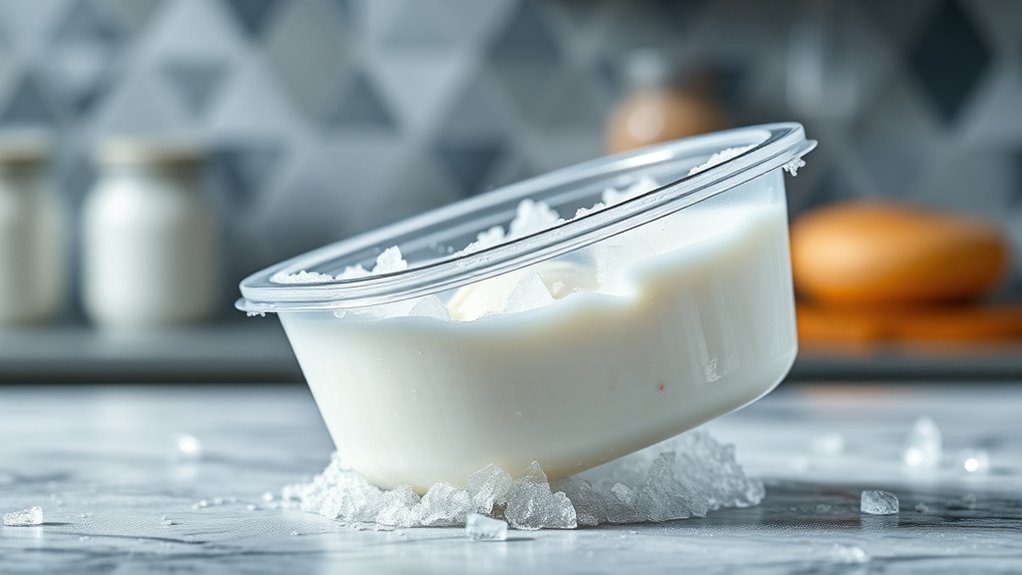
A frozen sloping lid is best understood as a sloped outdoor lid, hatch, cover, or access panel that has developed snow or ice buildup. The phrase is not a standard ice-safety or engineering classification, so the safest approach is to treat it as a surface-icing problem. The main concerns are traction, refreezing, blocked hinges or latches, drainage, surface damage, and whether the lid is actually designed to support a person’s weight.
Quick Answer
For a frozen sloping lid, remove loose snow early, avoid standing on the lid unless it is load-rated, control runoff and refreezing, and use only deicers or heating products approved for the surface. Heated mats require product-specific installation, secure placement, outdoor-rated electrical connections, and GFCI protection.
Key Takeaways
- Ice color does not tell you whether a plastic, metal, or composite lid can safely support weight.
- Clear snow before it compacts and refreezes, paying special attention to hinges, seams, edges, and drainage paths.
- Use deicers only when the product label and lid manufacturer allow them for that material.
- Do not assume a walkway heating mat is approved for installation on a movable or sloped lid.
- For electric snow-melting equipment, follow voltage, amperage, securing, connector, and GFCI requirements exactly.
What Is a Frozen Sloping Lid?
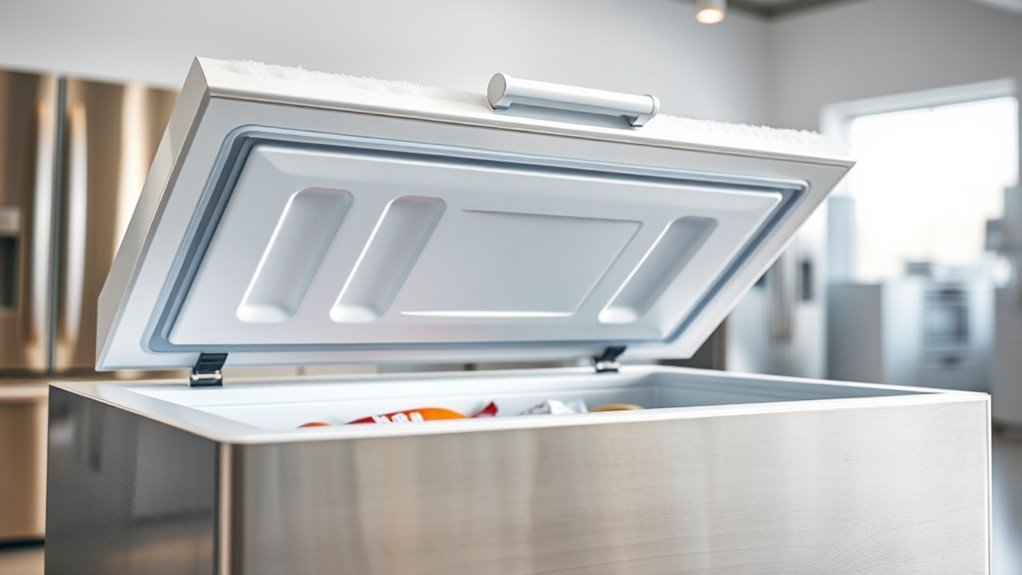
A frozen sloping lid can describe an outdoor storage-box lid, hatch, enclosure cover, access panel, ramp cover, or similar inclined surface that becomes coated with frozen moisture. Water can collect after rain, melting snow, condensation, or runoff and then refreeze as temperatures fall.
The main hazard is not the strength of the ice itself. It is the combination of low traction, hidden ice, frozen hardware, extra snow load, and unexpected movement when the lid is opened. A lid that looks solid may still be slippery, and the structure underneath may not be designed to carry a person.
Warning: Never stand, walk, or drive on a lid, hatch, cover, or enclosure unless its manufacturer specifically rates it for that load. Ice on top does not make the underlying structure stronger.
The Occupational Safety and Health Administration recommends clearing snow and ice from walking surfaces promptly and using footwear with good traction when icy conditions cannot be avoided. Those same principles are useful around an iced-over access lid.
Why Ice Type and Surface Conditions Matter for Slopes
Different types of surface ice create different traction and removal problems. On a solid lid, the most useful distinction is between clear glaze ice, refrozen snow or slush, frost, and compacted snow. These conditions affect how visible the hazard is and how easily it can be removed.
This should not be confused with clear-versus-white ice thickness rules for frozen lakes. The Minnesota Department of Natural Resources notes that white lake ice can be much weaker than new clear lake ice, but those guidelines apply to ice sheets over water rather than ice coating a manufactured lid.
Refrozen Snow and Opaque Ice Hide Uneven Surfaces
Snow that partly melts and then refreezes can form a rough, opaque crust. On a sloped lid, this layer may hide seams, fasteners, drainage channels, or another smoother layer of ice underneath.
Compacted snow can also bond tightly to the surface, especially when daytime melting is followed by overnight freezing. Removing loose snow early usually reduces the amount that has time to become a hard frozen layer.
Use a tool that will not damage the lid’s finish. A plastic snow shovel, broom, or manufacturer-approved scraper is generally safer for finished surfaces than aggressive metal tools, but the lid manufacturer’s instructions should take priority.
Clear Glaze Ice Can Be Harder to See
Clear glaze can be particularly hazardous because the surface beneath it remains visible. A lid or walkway may appear merely wet even when a thin frozen layer has sharply reduced traction.
The National Weather Service warns that icy surfaces can cause serious falls and recommends using treated or non-icy routes with better traction whenever possible.
Do not judge safety from appearance alone. Test access from stable ground and clear the surrounding walking area before trying to open or service the lid.
Edges, Drains, and Runoff Paths Refreeze First
On a sloped lid, the important weak points are not shorelines or streams. They are edges, low spots, seams, drains, hinges, handles, and runoff paths.
- Melting snow can run toward a lower edge and refreeze there.
- Blocked drainage can keep water against seals and hardware.
- Ice around hinges or gas struts can prevent normal movement.
- Frozen water around a latch can tempt users to apply damaging force.
- Dripping water from a roof or gutter can repeatedly rebuild ice after it has been cleared.
When possible, correct the water source instead of repeatedly treating the same frozen patch.
Clear Ice vs White Ice on a Sloped Lid
For a solid sloped lid, clear versus white appearance is not a structural load-rating system. Either type can be slippery, and neither tells you how much weight the lid itself can support.
Clear glaze often creates a smooth, difficult-to-see traction hazard. Opaque or white refrozen snow may be rougher but can conceal another ice layer underneath. Both should be treated as potentially slippery.
Note: Clear-ice and white-ice thickness guidelines are relevant when assessing frozen lakes and ponds. They should not be used to decide whether an outdoor lid, hatch, roof panel, or storage cover can support a person.
If the surface is part of a walkway or access route, focus instead on traction, structural rating, ice removal, drainage, and the condition of the underlying material.
What Hidden Ice Risks Make Slopes Unsafe?
A sloped surface can look mostly clear while still containing isolated patches of glaze or refrozen runoff. Hidden ice is especially common in shaded areas and around joints where water remains longer.
- Refrozen runoff: Meltwater travels downhill and freezes at an edge or low point.
- Snow-covered glaze: Fresh snow hides smooth ice underneath.
- Frozen hardware: Hinges, locks, handles, and latches may stop moving normally.
- Blocked drainage: Ice dams keep additional water on the surface.
- Structural overload: Heavy snow or ice adds load to a lid that may already have a limited rating.
- Unstable heated products: An unsecured mat on a slope can shift or create a trip point.
According to the CDC’s winter-weather safety guidance, falls on ice-covered sidewalks, steps, driveways, and porches are a significant cold-weather hazard. Clear the access route as well as the lid itself.
What Makes a Frozen Sloping Lid Durable?
No single material automatically makes a frozen sloping lid durable. Some outdoor lids are made from HDPE, while others use metal, fiberglass, composite panels, or other plastics. The correct choice depends on the product’s intended load, cold-weather rating, UV exposure, hinge design, sealing system, and expected snow load.
| Feature | Why It Matters | What to Check |
|---|---|---|
| Cold-weather-rated material | Reduces the risk of brittleness or cracking | Manufacturer temperature limits |
| Adequate structural rating | Handles expected snow and service loads | Published load specification |
| Weather-resistant seals | Limits water entry and refreezing around openings | Gasket and drainage condition |
| Durable hinges and latches | Improves operation after freeze-thaw cycles | Corrosion, alignment, and ice buildup |
| Textured access area | Can improve traction | Slip-resistant finish where appropriate |
If the lid is already installed, inspect for cracks, bowed panels, damaged fasteners, loose hinges, torn gaskets, blocked drains, or unusual movement before winter use. Do not assume that an HDPE shell or reinforced ribs automatically make a product safe to stand on.
How Much Coverage Does Your Slope Need?
Coverage depends on what you are trying to protect. For a walking route, the important area is the path a person actually uses. For a lid, the goal may instead be to keep the handle, latch, drainage path, and immediate access area free of ice.
There is no universal requirement for a 12-inch overhang. Heated products come in fixed sizes and have their own rules for placement, connection, securing, overlapping, and allowable surfaces.
Slope Size Assessment
Measure the area before buying a mat or planning an ice-control system:
- Measure the usable length and width.
- Record the slope or pitch.
- Identify hinges, seams, handles, drains, and moving parts.
- Mark where runoff normally collects or refreezes.
- Check whether the surface is designed to accept adhesives, fasteners, mats, or deicers.
- Confirm the lid’s load and temperature ratings.
For a movable lid, any heating product must also avoid interfering with opening, closing, hinges, seals, or latches.
Mat Coverage Planning
Heated snow-melting mats can be useful for nearby walkways and stairs, but a walkway mat should not automatically be placed on a lid. Use it on a sloped or movable cover only if the mat manufacturer and lid manufacturer permit that application.
As one real-world example, HeatTrak residential walkway mats are sold in specific sizes and amperage ratings and require the manufacturer’s power system. The company states that its residential system uses a GFCI-equipped power unit and that connected mats must remain within its specified amperage limit.
Pro Tip: Calculate heating cost from the product’s actual wattage, not a generic cents-per-hour estimate. Cost = watts ÷ 1,000 × operating hours × your electricity price per kWh.
For example, a 300-watt heating product running for four hours uses 1.2 kWh. If electricity costs $0.15 per kWh, that operating period costs about $0.18. Your actual cost changes with wattage, run time, controls, weather, and local electricity rates.
How to Choose the Right Frozen Sloping Lid
If you are replacing or upgrading an outdoor lid that regularly freezes, compare the complete system rather than choosing by material alone.
- Outdoor and temperature rating: Confirm the manufacturer approves the product for your climate.
- Structural rating: Check snow, service, and any allowable live-load ratings.
- Drainage: Choose a design that directs water away from hinges, seams, and access points.
- Surface traction: Consider a textured finish where people must handle or approach the lid.
- Hinges and seals: Look for corrosion-resistant hardware and replaceable weather seals.
- Deicer compatibility: Confirm that chloride salts or other products will not damage the surface or hardware.
- Heating compatibility: If electric heating is planned, verify surface approval, voltage, wattage, electrical protection, securing method, and controller requirements.
- Warranty and instructions: Review cold-weather exclusions and maintenance requirements before purchase.
A precise fit is helpful, but fit alone does not prevent icing. Drainage, snow removal, shade, runoff, temperature cycling, and maintenance all affect winter performance.
Safety Tips for Using Frozen Sloping Lids
Start by clearing the surrounding walking area. OSHA advises removing snow and ice from walking surfaces quickly after a storm and recommends footwear with good rubber traction plus short, slower steps when walking on snow or ice is unavoidable.
For the lid itself, follow these precautions:
- Clear loose snow before it becomes compacted.
- Work from stable ground rather than climbing onto the lid.
- Do not force a frozen hinge, latch, or gas strut.
- Use scrapers or shovels that will not damage the surface.
- Check the deicer label and the lid manufacturer’s material restrictions.
- Keep drainage paths open so meltwater does not repeatedly refreeze.
- Do not pour large amounts of hot water onto the surface; the runoff can refreeze elsewhere.
- Keep electric connectors out of standing water and use the required GFCI protection.
- Secure heating mats only in the manner approved by their manufacturer.
- Do not cover a heating product unless its instructions specifically allow it.
The U.S. Environmental Protection Agency notes that different deicing chemicals have different effective temperature ranges and environmental effects. Use the smallest appropriate amount and follow the product label.
Frequently Asked Questions
Will Dawn Dish Soap Melt Ice?
Dawn dish soap is not a reliable primary deicer. Dish soap is mainly a surfactant, and lowering surface tension is not the same as substantially lowering water’s freezing point. Warm water may melt some ice temporarily, but the added water can refreeze and create another slippery layer. For walkways, use mechanical removal and a properly labeled deicing product when appropriate.
Will Salt Melt Snow in 20 Degree Weather?
Yes, sodium chloride can still help around 20°F, but it works more slowly as the surface temperature falls. MnDOT describes roughly 15–20°F and above as the practical range for ordinary salt, with performance much better at warmer pavement temperatures. Remove excess snow first and follow the product label. Calcium chloride and some other deicers can work at lower temperatures.
Will Ice Stay Frozen at 35 Degrees?
It can, at least temporarily. An air temperature of 35°F does not guarantee that every surface has already warmed above 32°F. Shade, thermal mass, overnight cooling, wind, moisture, and the surface’s previous temperature all affect melting. Judge the actual surface condition rather than relying only on the air temperature.
Is It Better to Put Salt Down Before or After Snow?
On suitable pavement, anti-icing treatment before a storm can reduce the bond between frozen precipitation and the surface. After snow accumulates, clear as much snow as practical before applying deicer. For a plastic, painted, metal, or composite lid, do not automatically use roadway salt; first confirm that the lid and hardware are compatible with the chosen deicer.
Can I Put a Heated Snow-Melting Mat on a Sloped Lid?
Only if both the heating-product instructions and the lid manufacturer permit that application. A mat designed for a sidewalk may not be approved for a movable lid, steep slope, plastic cover, or enclosed space. Follow the specified voltage, GFCI, amperage, securing, connector, and surface requirements.
Does Clear Ice or White Ice Make a Sloped Lid Safer?
No. Clear-versus-white ice strength rules are used for frozen bodies of water. On a solid lid, both clear glaze and opaque refrozen snow can be slippery. The lid’s structural capacity comes from its construction and published load rating, not the color or thickness of the ice coating it.
Conclusion
A frozen sloping lid should be managed as an iced outdoor surface rather than as a sheet of lake ice. Clear snow early, correct runoff and drainage problems, keep hinges and latches free of ice, and never assume the lid can support a person unless it has a published load rating. Use deicers only when they are compatible with the surface, and use heated mats only where the manufacturer specifically approves their placement and electrical setup.
Regular inspection before and after freeze-thaw cycles is more reliable than judging ice by color or appearance. Keeping the access route clear, controlling water before it refreezes, and following the lid and heating-product instructions provide a safer long-term approach.
Sources
- CDC — Safety Guidelines During and After a Winter Storm — ice-related fall prevention and deicing guidance.
- OSHA — Winter Weather Hazards and Precautions — clearing walking surfaces, footwear, and slip prevention.
- Minnesota DNR — Ice Formations and Conditions — explains clear and white lake ice and why those rules apply to frozen water.
- Minnesota Department of Transportation — Winter Maintenance FAQ — practical temperature limitations of sodium-chloride deicing.
- U.S. EPA — Deicing Material Application and Storage — deicer temperature ranges and environmental considerations.
- HeatTrak — Snow and Ice Melting Product Instructions — example manufacturer guidance for outdoor electric snow-melting equipment.
